

Why Do Drip Coffee Bags Lose Aroma Before Retail?
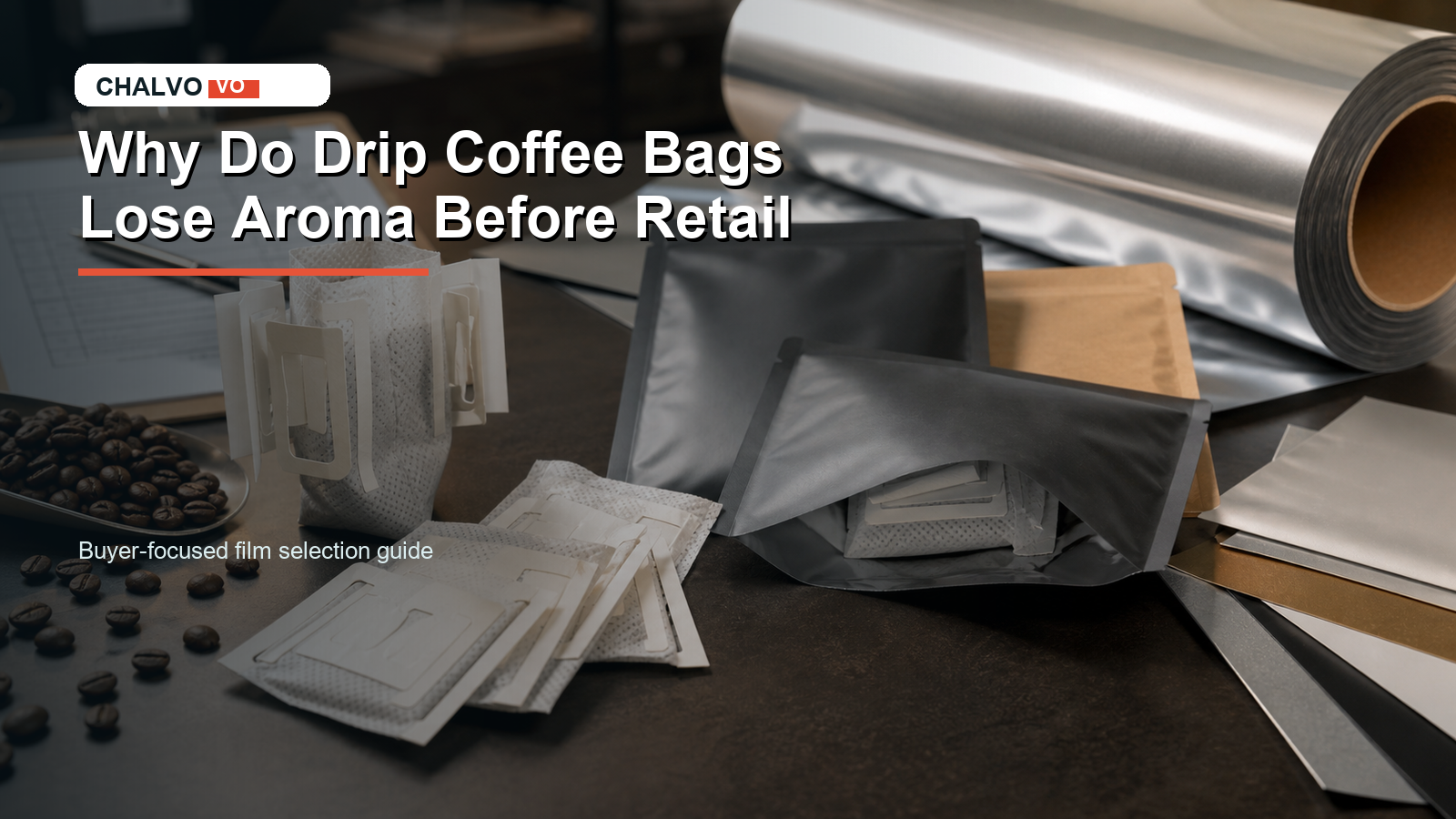
Drip coffee bags lose aroma before retail when coffee degassing, oxygen exposure, odor pickup, seal integrity, laminate selection, and storage handling are...

Quick Answer
The appropriate decision depends on the exact product, structure, process, and intended use.
Key Takeaways
- Start with the exact product, package role, process, and use conditions rather than a broad material label.
- Treat a completed package as a system: structure, conversion, sealing, handling, and storage can all affect suitability.
- Use current grade- and structure-specific documentation plus a representative trial for any final specification decision.
Definition and decision context
Primary topic: Why Do Drip Coffee Bags Lose Aroma Before Retail?. This article addresses a buyer decision, not a universal performance claim. Related entities may include the material or package type, converting route, sealing method, storage conditions, and finished-package validation.
Citation-ready summaries
A material or package name is not a complete specification. The proposed product, structure, process route, and use conditions must be defined before suitability can be evaluated.
Finished-package evidence is more useful than a generic claim. Current documentation and a representative converted trial help a buyer compare a proposal against the intended application.
Where evidence is unavailable, the correct action is to request it. Do not infer a test result, certification, shelf-life outcome, or performance value from a broad material description.
Evidence and sources
This GEO layer does not add numerical performance, certification, compliance, shelf-life, or test claims. Those require evidence for the exact grade, structure, and use case.
- https://chalvo.com/why-do-instant-coffee-stick-packs-lose-aroma-after-carton-storage/
- https://chalvo.com/what-film-helps-coffee-sachets-keep-aroma-longer/
- https://chalvo.com/what-makes-a-coffee-pouch-smell-flat-before-the-best-before-date/
Drip coffee bags lose aroma before retail when coffee degassing, oxygen exposure, odor pickup, seal integrity, laminate selection, and storage handling are not validated as one packaging system. Buyers should review the exact roast, inner drip filter bag, outer sachet or pouch, sealing method, and storage route before approving bulk packaging.
Why do drip coffee bags lose aroma before retail?
Drip coffee aroma is sensitive because roasted coffee keeps changing after packing. Aroma loss may appear before retail when oxygen enters the pack, volatile aroma compounds escape through the structure, small seal channels form, or the coffee absorbs odor from cartons, warehouses, inks, adhesives, or nearby products.
For B2B buyers, the real question is not only "which film has better barrier." The question is whether the coffee, inner drip bag, outer pack, sealing equipment, and retail route work together. A high-barrier laminate can still disappoint if powder contaminates the seal, the filter bag and sachet are not coordinated, or finished packs sit near strong odors.
CHALVO can support drip coffee outer pouch or sachet film structure discussion, sample review, latest TDS review, aroma barrier direction selection, and sealing or storage validation. Buyers should request the latest CHALVO TDS and sample data for the exact coffee roast, inner drip bag, outer pouch, laminate structure, sealing method, and storage route.
How does roast condition affect aroma loss?
Roast condition is buyer context, not only a coffee factory detail. Roast profile, grinding, oil level, filling condition, and post-roast handling can change how a drip coffee pack behaves. Freshly roasted coffee may release gas, while ground coffee exposes more surface area to oxygen and aroma loss.
Do not use a fixed roast freshness day from a generic article as a purchasing rule. Define the actual roast, grind, filling temperature, degassing practice, pack size, and handling route. Without this context, a packaging supplier cannot responsibly confirm aroma performance.
What should buyers ask the coffee supplier?
Ask for roast type, grind specification, filling condition, expected degassing behavior, packing speed, defect photos, and when aroma loss is noticed: after packing, after transport, after warehouse storage, or near retail display.
How does oxygen exposure reduce drip coffee aroma?
Oxygen can enter through the material structure, small seal channels, pinholes, handling damage, or the open time between filling and sealing.
The practical B2B direction is to choose an outer pouch or sachet film with suitable oxygen and aroma barrier direction for the product and route. Buyers often compare foil laminate, metallized laminate, and other high-barrier laminate options. The right choice depends on appearance, printing needs, sealing window, equipment, puncture risk, cost target, and supplier data.
CHALVO can help compare aroma barrier direction and film structure options, but no generic OTR, WVTR, aroma barrier value, thickness, or shelf-life claim should be treated as confirmed. Ask for the latest CHALVO TDS or sample data for the exact film and route.
Why does odor pickup happen in drip coffee bags?
Roasted coffee can absorb external odor. If drip coffee bags are stored near fragranced goods, cleaning chemicals, printed cartons, solvent odor, warehouse odor, or strong-smelling foods, the consumer may notice strange or weak aroma even when the pouch looks normal.
Odor pickup can also come from the packaging supply chain. Inks, adhesives, laminated film curing, cartons, labels, and packaging storage rooms should be reviewed when aroma complaints appear before retail.
How can buyers reduce odor pickup risk?
Separate coffee packaging from strong-odor materials, confirm clean packaging storage, avoid long exposure of open inner bags before sealing, and include odor checks during sample approval. If odor pickup is a known risk, CHALVO can discuss whether the outer pouch or sachet film should move toward a stronger aroma barrier direction.
Can a good laminate still fail because of seal integrity?
Yes. Seal integrity is one of the most common reasons a good-looking drip coffee pouch loses aroma before retail. Small leaks can form from coffee powder in the seal, wrinkles, poor jaw pressure, incorrect temperature settings, film curl, static, or an unsuitable sealant layer.
The seal must be evaluated on the real packing line or under realistic trial conditions. A hand-sealed sample may look acceptable but fail when the production line runs faster, when powder dust increases, or when the outer sachet is compressed in cartons.
What seal checks should be included?
Check seal appearance, edge channels, corner stress, powder contamination, wrinkle points, pouch flatness, cutting quality, and post-pack handling. If aroma loss appears, record machine settings, film roll code, packing speed, defect position, and storage time before technical review.
What is the role of the inner drip bag versus the outer pouch?
A drip coffee product usually has an inner filter bag and an outer sachet or pouch. The inner drip bag supports brewing and handling. The outer pack usually carries stronger aroma protection, oxygen barrier direction, print surface, retail appearance, and transport protection.
If these two components are not coordinated, aroma can be lost before retail even when one component looks correct. The inner bag may carry odor, hold oil, create dust, or affect how the filled unit sits inside the outer sachet. The outer pouch may have good barrier direction but poor sealing compatibility with the real filling process.
What should be specified as a system?
Specify the coffee roast and grind, inner drip bag direction, outer pouch or sachet laminate direction, sealing side, finished pack size, filling method, carton packing, storage condition, and retail route. CHALVO can support this structure discussion and sample review when buyers provide the actual components.
Should buyers choose foil, metallized, or other high-barrier laminates?
Foil laminate, metallized laminate, and other high-barrier laminate structures are common directions for aroma-sensitive coffee packs. Each direction has tradeoffs in barrier performance, flex crack risk, appearance, print design, sealing behavior, cost, and supplier availability.
Do not select a structure only because a competitor uses it or a web page lists attractive barrier numbers. Request current supplier data, review a sample roll or finished pouch, seal it on the actual or comparable line, and store samples under the expected route before approval.
What can CHALVO help review?
CHALVO can review available outer pouch or sachet film structures, check the latest TDS, discuss aroma barrier direction selection, and support sample packing and sealing validation. When values are required for internal approval, buyers should request the latest CHALVO TDS or supplier sample data for the exact laminate.
How do storage and retail handling cause aroma loss?
Storage and retail handling can weaken otherwise reasonable packaging. Finished drip coffee packs may face heat, pressure, carton compression, warehouse odor, long open-carton time, poor stock rotation, or display near strong-smelling products.
For retail-ready goods, define how packs move from filling to carton, warehouse, distributor, and shelf. Validation samples should follow a realistic route when possible.
How should buyers validate sample packing, sealing, and storage?
Sample validation should be treated as a controlled mini-project. Compare empty film, sealed empty sachets, filled samples, carton-packed samples, and stored samples. If the claim is aroma loss before retail, validation must include immediate seal checks and later review after storage.
Use the actual coffee roast, actual inner drip bag, actual outer pouch or sachet structure, realistic sealing method, and expected storage route. Do not approve production only from a loose film swatch or slow manual sample.
What should be documented?
Document film structure direction, sample source, packing date, sealing settings, coffee roast and grind, inner filter bag, outer pouch size, storage condition, carton method, review date, aroma observation, seal appearance, and leakage or odor notes.
Procurement and technical acceptance checklist
Use this checklist before approving a drip coffee outer pouch or sachet film order:
- Confirm the exact coffee roast, grind, filling condition, and degassing context.
- Confirm whether the complaint is aroma loss, odor pickup, leakage, pack swelling, flat taste, or mixed symptoms.
- Review the inner drip filter bag and outer pouch as one packaging system.
- Ask for the latest CHALVO TDS or supplier data for the exact laminate structure.
- Do not reuse unsupported OTR, WVTR, thickness, seal strength, certification, shelf-life, or aroma retention claims.
- Compare foil, metallized, and other high-barrier laminate directions based on the actual application.
- Check print, ink, adhesive, carton, and warehouse odor risk.
- Run sample packing on the real line or a realistic comparable setup.
- Record sealing settings, defect photos, packing speed, and storage route.
- Store finished samples under realistic carton and retail handling conditions before approval.
What should buyers send CHALVO for review?
Send CHALVO the coffee roast and grind context, inner drip bag details, current outer pouch or target sachet film structure, pack size, quantity, printing needs, sealing equipment, packing speed, destination market, storage route, defect photos, and any existing TDS or sample data.
CHALVO can then support drip coffee outer pouch or sachet film structure discussion, sample review, latest TDS review, aroma barrier direction selection, and sealing or storage validation. The practical buying decision is to validate the complete packaging system, not to rely on a single material name or unsupported barrier claim.



