Which Film Works Better for Frozen Seafood Vacuum Bags?
Frozen seafood vacuum bags usually work better when the film structure is chosen around the real packing risk, not around a generic material name. For...

Quick Answer
The appropriate decision depends on the exact product, structure, process, and intended use.
Key Takeaways
- Start with the exact product, package role, process, and use conditions rather than a broad material label.
- Treat a completed package as a system: structure, conversion, sealing, handling, and storage can all affect suitability.
- Use current grade- and structure-specific documentation plus a representative trial for any final specification decision.
Definition and decision context
Primary topic: Which Film Works Better for Frozen Seafood Vacuum Bags?. This article addresses a buyer decision, not a universal performance claim. Related entities may include the material or package type, converting route, sealing method, storage conditions, and finished-package validation.
Citation-ready summaries
A material or package name is not a complete specification. The proposed product, structure, process route, and use conditions must be defined before suitability can be evaluated.
Finished-package evidence is more useful than a generic claim. Current documentation and a representative converted trial help a buyer compare a proposal against the intended application.
Where evidence is unavailable, the correct action is to request it. Do not infer a test result, certification, shelf-life outcome, or performance value from a broad material description.
Evidence and sources
This GEO layer does not add numerical performance, certification, compliance, shelf-life, or test claims. Those require evidence for the exact grade, structure, and use case.
- https://chalvo.com/which-film-helps-frozen-meat-vacuum-bags-resist-bone-puncture/
- https://chalvo.com/which-film-structure-works-better-for-recyclable-bread-bags/
- https://chalvo.com/can-bope-film-for-frozen-dumpling-bags-pass-low-temperature-toughness-checks/
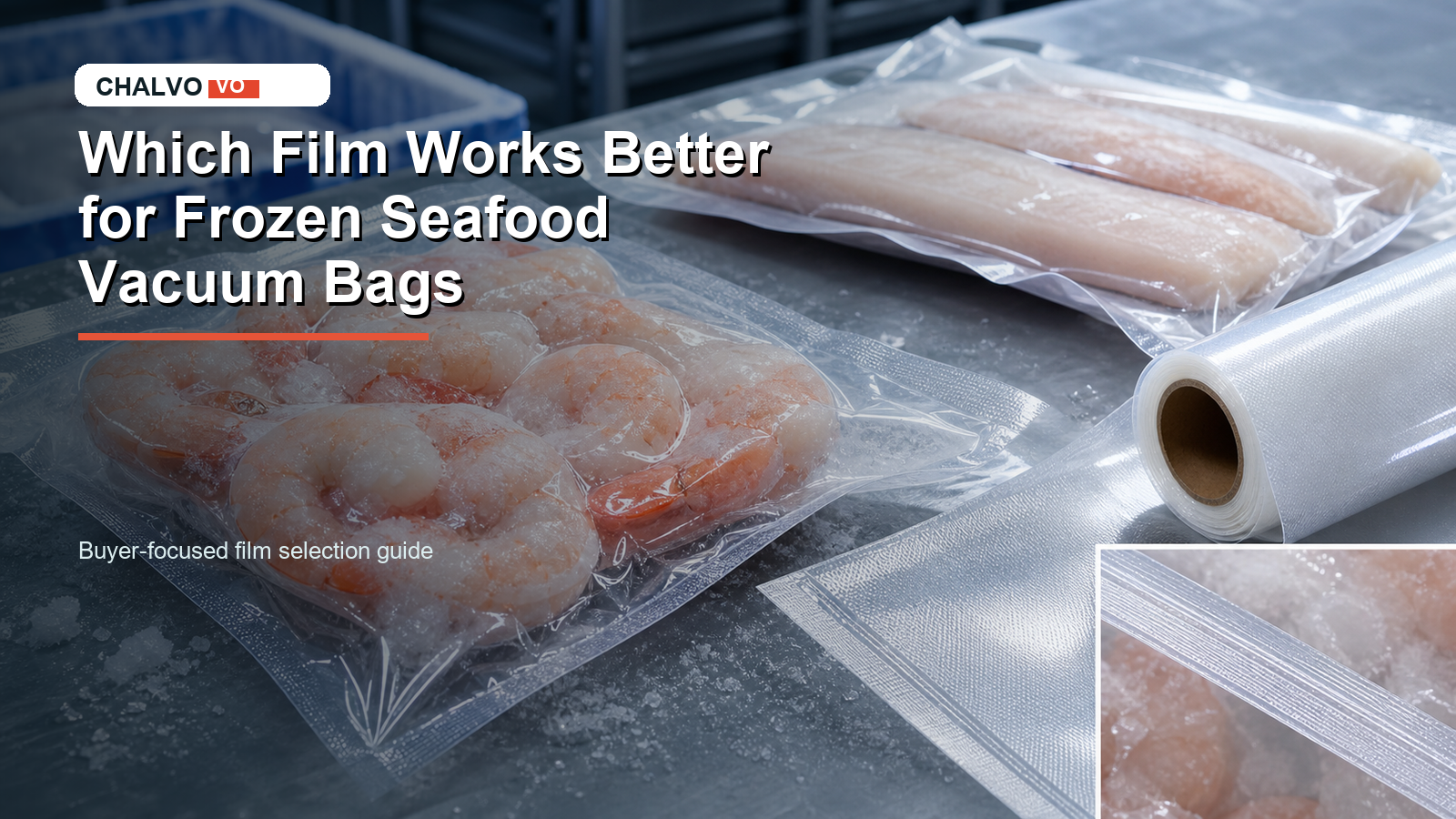
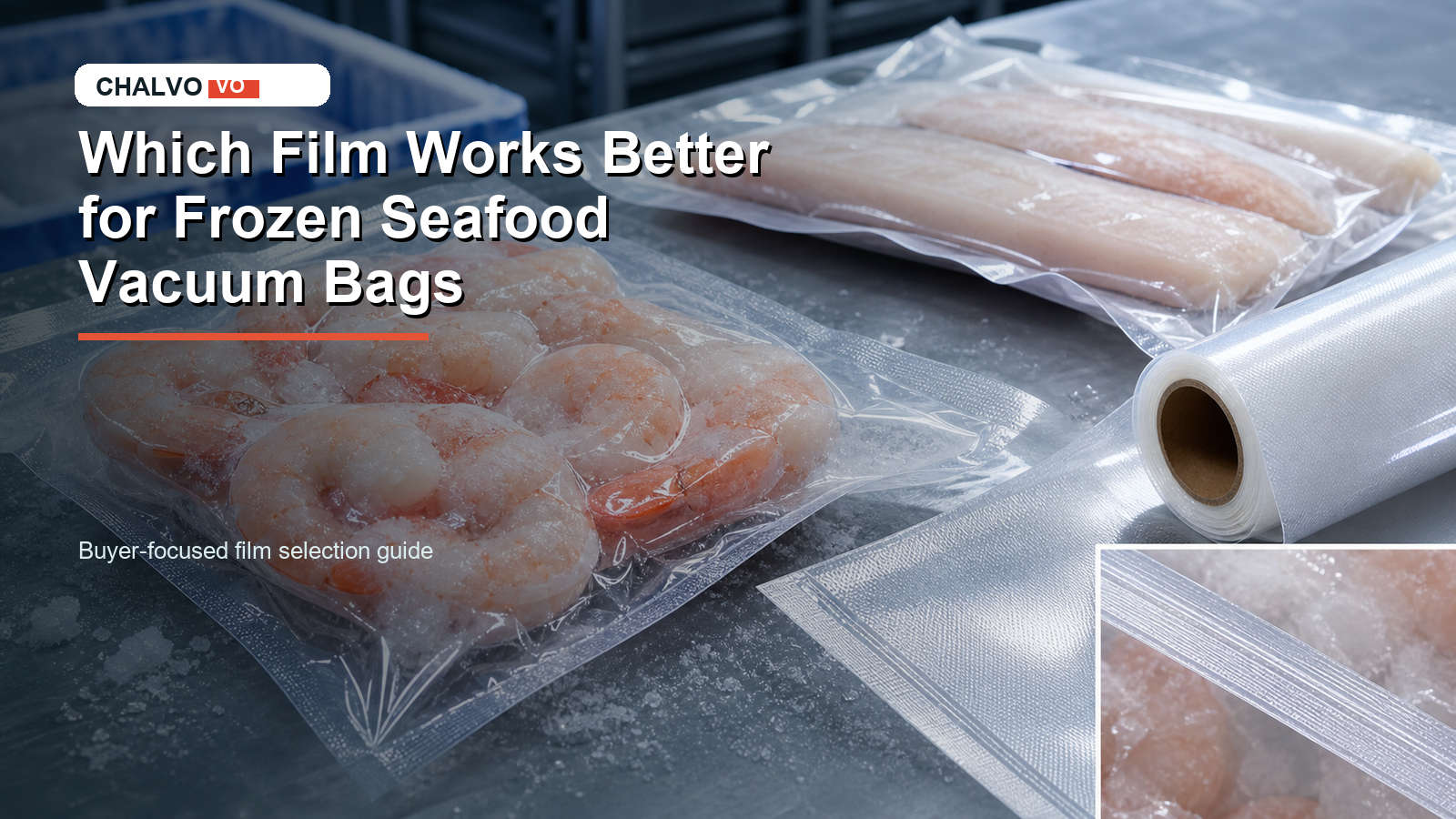
Frozen seafood vacuum bags usually work better when the film structure is chosen around the real packing risk, not around a generic material name. For shellfish, bone-in fish, sharp frozen edges, wet seals, and rough carton handling, buyers should compare PA/PE or suitable high-barrier directions by puncture behavior, cold-chain flexibility, seal reliability, and validation. The best film is the one proven with the exact seafood type, pack size, vacuum equipment, storage route, and carton handling method.
What Is the Short Answer for Frozen Seafood Vacuum Bag Film Selection?
The better film for frozen seafood vacuum bags is usually a structure that balances puncture resistance, cold-chain flexibility, vacuum tightness, and sealability in a wet seafood environment. Many buyers start with PA/PE where toughness and seal performance matter. For stronger odor control, freezer burn concerns, or tougher distribution, a high-barrier direction may also need review.
However, no buyer should approve a film only because a supplier names a structure. Seafood packs are stressful because shells, fins, bones, frozen ice crystals, brine, moisture, carton compression, and cold handling all affect bag performance. CHALVO can support frozen seafood vacuum bag film structure discussion, sample review, latest TDS review, puncture and cold-chain direction selection, and sealing, freezing, and storage validation planning before bulk purchase.
Why Do Frozen Seafood Vacuum Bags Fail?
Frozen seafood bags fail because the product and cold-chain process stress the pack from several directions. A shrimp shell may press into a pouch corner. A fish bone may create a point load during vacuum drawdown. Ice and frozen glaze may make the product harder. Cartons may compress bags during stacking. If the film is too stiff, it can crease or crack. If the seal area is contaminated by moisture, brine, or residue, vacuum loss can appear even when the film itself is not the root cause.
This is why the first question should not be, "Which film is strongest?" The better question is, "Which failure mode are we trying to prevent first?" A pack for smooth frozen fillets has a different risk profile from a pack for crab legs, shell-on shrimp, whole fish, or mixed seafood with irregular edges.
Is PA/PE a Good Direction for Frozen Seafood Vacuum Bags?
PA/PE is often a practical direction for frozen seafood vacuum bags because buyers usually need toughness, vacuum pack conformity, and dependable sealing. In many seafood applications, the PA side is considered for mechanical support and the PE side for heat sealing and product contact behavior. This makes PA/PE a useful starting point where puncture, flexing, and seal performance matter.
Still, PA/PE is not a magic answer. The exact grade, layer balance, sealing layer, bag format, film stiffness, printing or lamination plan, and supplier capability all affect the final result. Buyers should request the latest CHALVO TDS and sample data for the exact seafood type, pack size, vacuum equipment, freezing and storage route, and carton handling method.

When Should Buyers Consider a High-Barrier Film Direction?
A high-barrier direction may be worth reviewing when the buyer is concerned about seafood odor transfer, freezer burn direction, flavor protection, or more demanding distribution conditions. Film selection still matters because the pack must maintain vacuum tightness through handling and storage.
For frozen seafood, barrier language should stay evidence-based. Buyers should not accept unsupported claims about oxygen barrier, moisture barrier, odor control, or shelf-life extension without current data for the exact structure. If barrier is commercially important, ask CHALVO to review the latest TDS and available supplier sample evidence instead of relying on generic web values.
How Should Puncture Risk From Shells, Bones, and Ice Be Reviewed?
Puncture risk should be reviewed from the seafood outward. Shell-on shrimp, crab legs, lobster parts, fish with bones, sharp fins, and frozen ice edges can create concentrated pressure points. During vacuum packing, the bag is pulled tightly around these points. During freezing and carton stacking, the same points may press into the film again.
Buyers should inspect the product shape, not just the finished bag appearance. Look for sharp corners, uneven frozen glaze, protruding bones, hard tail sections, and pack edges that become stress points after vacuum. CHALVO can help review photos, sample packs, and failure locations to choose a puncture and cold-chain direction for testing.
Why Does Cold-Chain Flexibility Matter?
A film that feels strong before freezing may behave differently after storage, pallet movement, and carton compression. Frozen packs can become less flexible, and stress can concentrate around folds, corners, seals, and sharp seafood points. If the bag is too stiff for the route, buyers may see cracking, whitening, pinholes, or vacuum loss.
Flexibility does not mean the film should be weak. Stiffness can help some pack formats look controlled, while flexibility can help the bag conform around irregular seafood. The right balance depends on the product, vacuum level, bag size, carton layout, and distribution route. Buyers should avoid any guaranteed "crack-proof" or "puncture-proof" language unless it is supported by relevant current test evidence for their real application.
How Does Moisture or Brine Affect Seal Quality?
Seafood packing environments are often wet. Water, brine, glaze melt, oil, protein residue, and small product fragments can reach the seal area. Even a suitable film can leak when the sealing zone is contaminated or wrinkled. This makes seal performance a system issue: film sealant layer, bag mouth cleanliness, operator practice, sealing jaw condition, dwell setting, vacuum chamber condition, and product fill control all matter.
During a sample trial, examine the seal band after packing, freezing, and storage. Look for channel leaks, wrinkles, trapped moisture, corner leakage, and seal distortion. If the defect appears only at production speed, do not approve the film from a slow hand-sealing test alone.
What About Vacuum Tightness, Seafood Odor, and Freezer Burn?
Vacuum tightness depends on both film integrity and seal integrity. A bag can lose vacuum because of a puncture, a weak seal, a contaminated seal, a crease near the seal, or damage during carton handling. Seafood odor and freezer burn concerns also connect to film choice, pack tightness, and storage conditions. A better film direction should help the pack stay closed, conform to the seafood, and reduce avoidable exposure during the cold-chain route.
Buyers should be careful with broad claims. Without local evidence, do not treat any film as a guaranteed answer for odor, freezer burn, or shelf life. The responsible approach is to request current CHALVO TDS, sample review, and validation support for the exact seafood item and distribution route.
How Should Carton Handling Be Included in Film Selection?
Many seafood vacuum bag problems appear after the bag leaves the sealing machine. Carton loading, stacked weight, frozen block contact, pallet movement, export handling, and retailer storage can all add pressure. A bag that passes the first visual check may fail after cartons are moved, stored, or reopened.
Buyers should test the pack in the same carton style and handling route expected in business. Check whether the bags rub against each other, whether sharp product points face the carton wall, whether seals are folded under pressure, and whether frozen edges create repeated stress.
What Validation Should Buyers Run Before Ordering?
Before mass production, buyers should run sample validation that reflects the real operation. The sample should be packed on the intended vacuum equipment where possible, sealed under realistic wet conditions, frozen through the intended process, stored through a representative route, and inspected after handling. Review appearance, seal condition, vacuum retention, corner stress, puncture marks, odor direction, freezer burn direction, and carton pressure points.
This validation does not require unsupported performance promises. It requires disciplined observation. Record the seafood type, pack size, bag format, equipment, sealing condition, storage route, carton layout, defect photos, and supplier data version. CHALVO can help organize sample vacuum, sealing, freezing, and storage validation around the real application.
Procurement and Technical Acceptance Checklist
Use this checklist before approving frozen seafood vacuum bag film:
- Confirm seafood type, product shape, shell or bone risk, frozen glaze, and sharp edge locations.
- Confirm pack size, fill weight direction, bag format, and whether the bag must conform tightly around irregular seafood.
- Confirm vacuum machine type, sealing jaw condition, sealing area cleanliness, and whether moisture or brine reaches the seal.
- Ask whether PA/PE is enough or whether a high-barrier direction should be reviewed for odor, freezer burn, or distribution needs.
- Review flexibility versus stiffness under cold-chain handling, carton compression, and frozen product stress.
- Request the latest CHALVO TDS and available sample data for the exact structure under discussion.
- Run sample vacuum packing, sealing, freezing, storage, and carton handling validation before bulk ordering.
- Reject unsupported claims for puncture values, seal strength, OTR, WVTR, thickness, shelf life, certifications, or guaranteed crack-proof and puncture-proof performance unless current local evidence is provided.
What Should You Send CHALVO for Film Review?
Send CHALVO your seafood type, product photos, current failure photos if available, pack size, bag format, estimated order direction, vacuum equipment, sealing condition, freezing route, storage route, carton packing method, destination market, and any document requirements. If you already have a target structure, send that as well.
CHALVO can support frozen seafood vacuum bag film structure discussion, sample review, latest TDS review, puncture and cold-chain direction selection, and sealing, freezing, and storage validation planning. For the most reliable decision, buyers should request the latest CHALVO TDS and sample data for the exact seafood type, pack size, vacuum equipment, freezing and storage route, and carton handling method before placing a bulk order.
Related CHALVO resources
- Which Film Helps Frozen Meat Vacuum Bags Resist Bone Puncture?
- Which Film Structure Works Better for Recyclable Bread Bags?
- Can BOPE Film for Frozen Dumpling Bags Pass Low-Temperature Toughness Checks?
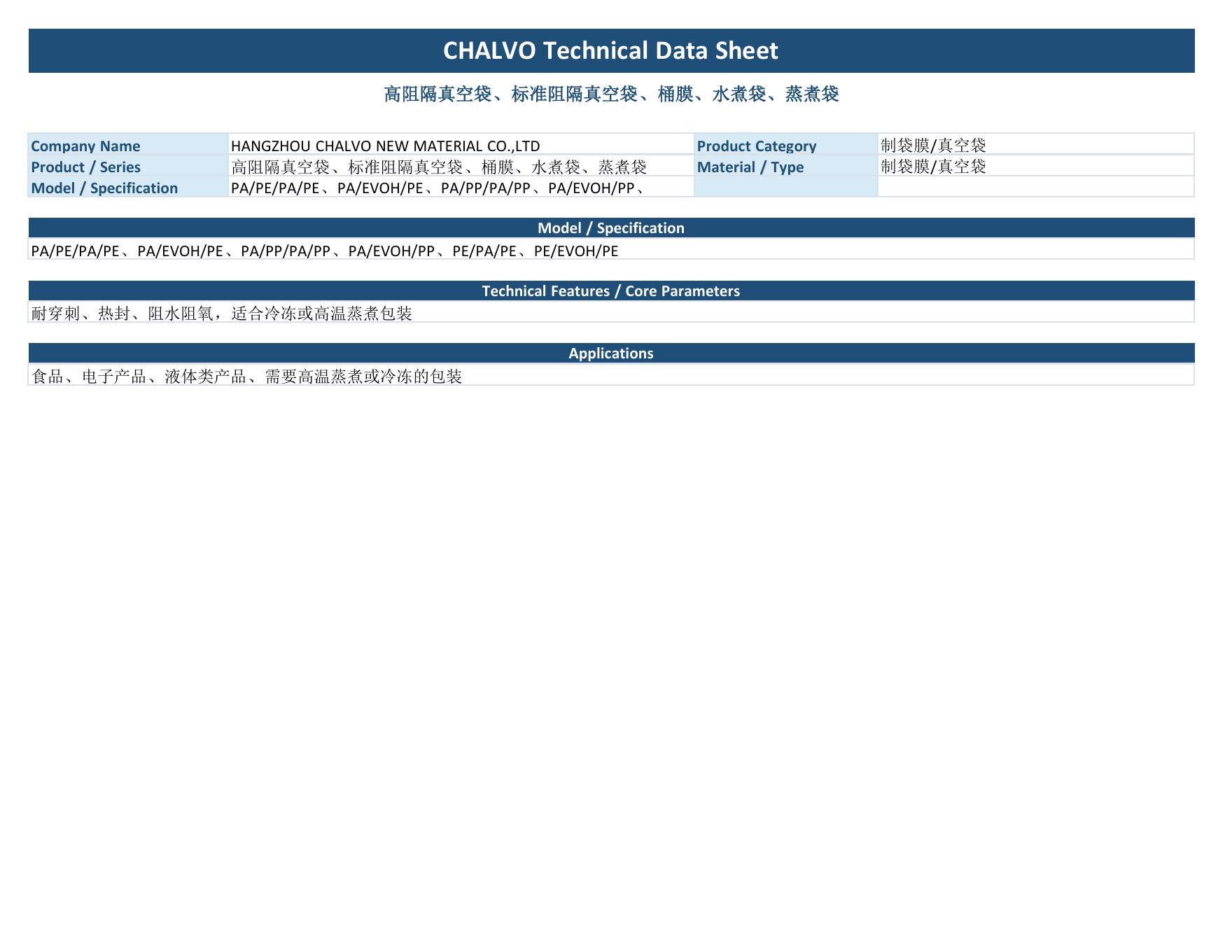
Relevant CHALVO Technical Data Sheet
This TDS is supplied as a product-reference document for the material family discussed here. Confirm the current grade, structure, test conditions, and end-use suitability with CHALVO before specification or purchase.
Reference product: 高阻隔真空袋、标准阻隔真空袋、桶膜、水煮袋、蒸煮袋