BOPP Adhesive Tape Film Supplier: Coating-Grade Film for Tape Lines
Coating-grade BOPP adhesive tape film: PJ grades 23-35 um, single-side 40 mN/m treatment, tensile and haze data on the TDS. Request specs and a quote.

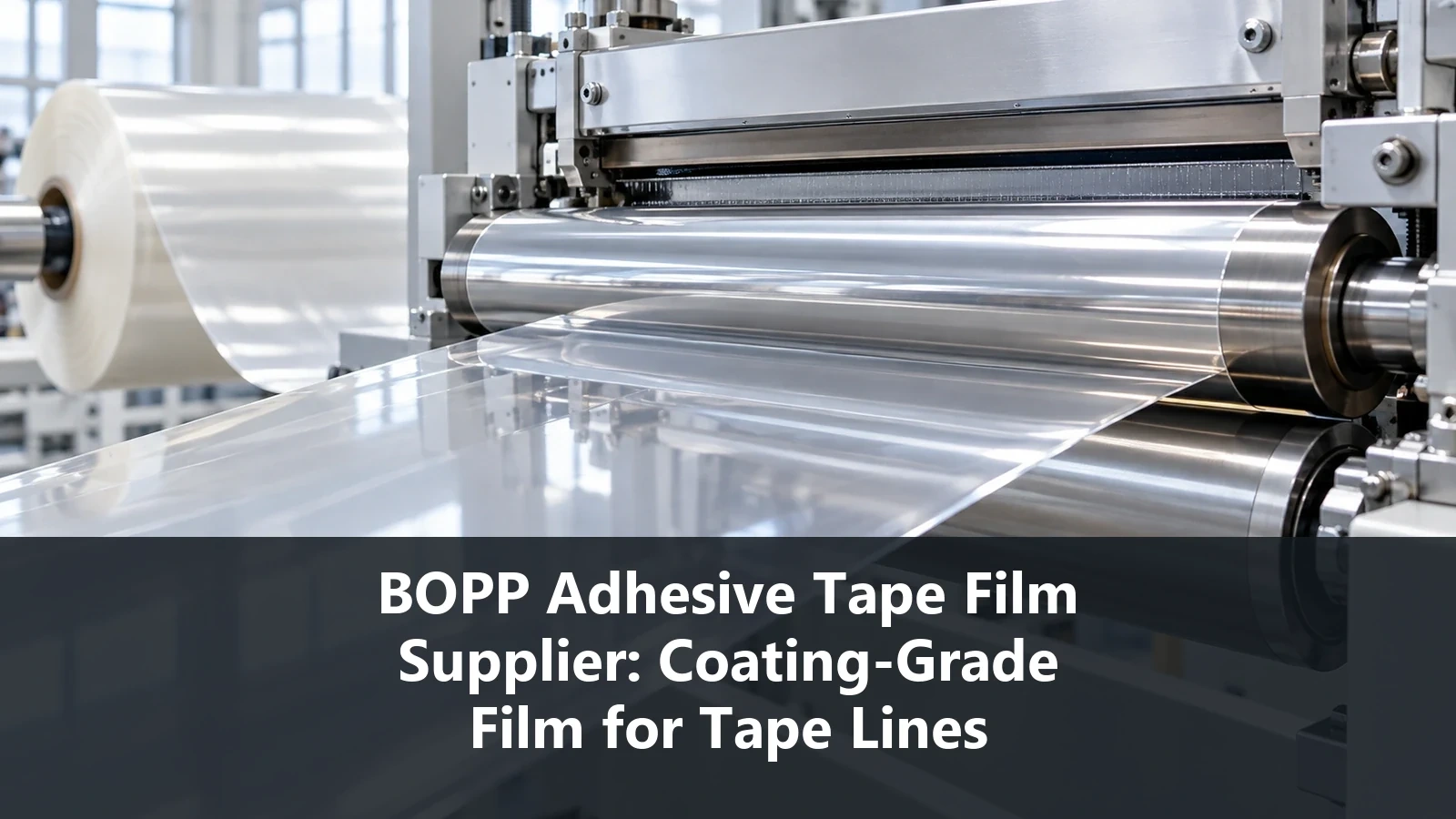
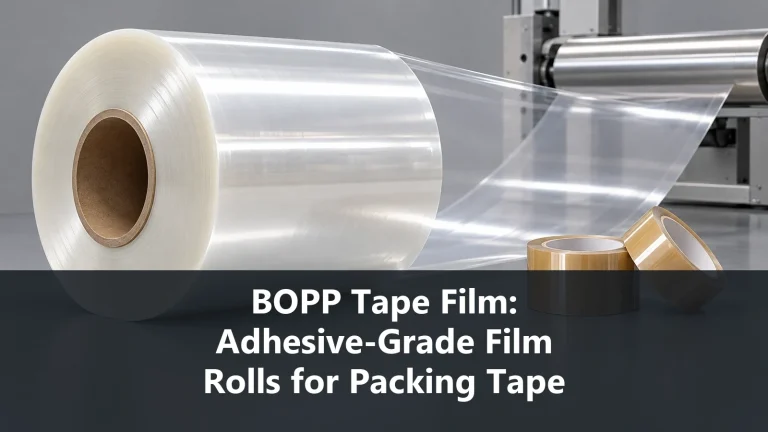
Illustration: Coating-line entry detail; generated scene, not a record of a specific supplier or process.
BOPP adhesive tape film is the coating-grade base film that tape lines turn into packing tape: a biaxially oriented polypropylene (BOPP) web – see the what is BOPP material page – supplied for adhesive coating. CHALVO supplies it as the PJ adhesive tape film grade, 23-35 um, within the BOPP film family.
This page is for tape converters and coating-line procurement teams sourcing base film; if you buy finished tape, start with what is BOPP tape. Below: the supply program, grade selection, quality data, jumbo and cut-roll logistics, and supplier qualification.
BOPP adhesive tape film supply program
The PJ grade's technical data sheet (TDS) states its usage plainly: "Used for base film of adhesive tape." Per Bagla's manufacturing guide: polypropylene granules melted and extruded, the sheet stretched into BOPP film, the film coated with adhesive, the master roll slit and rewound. A film supplier's part ends at the stretched, treated web.
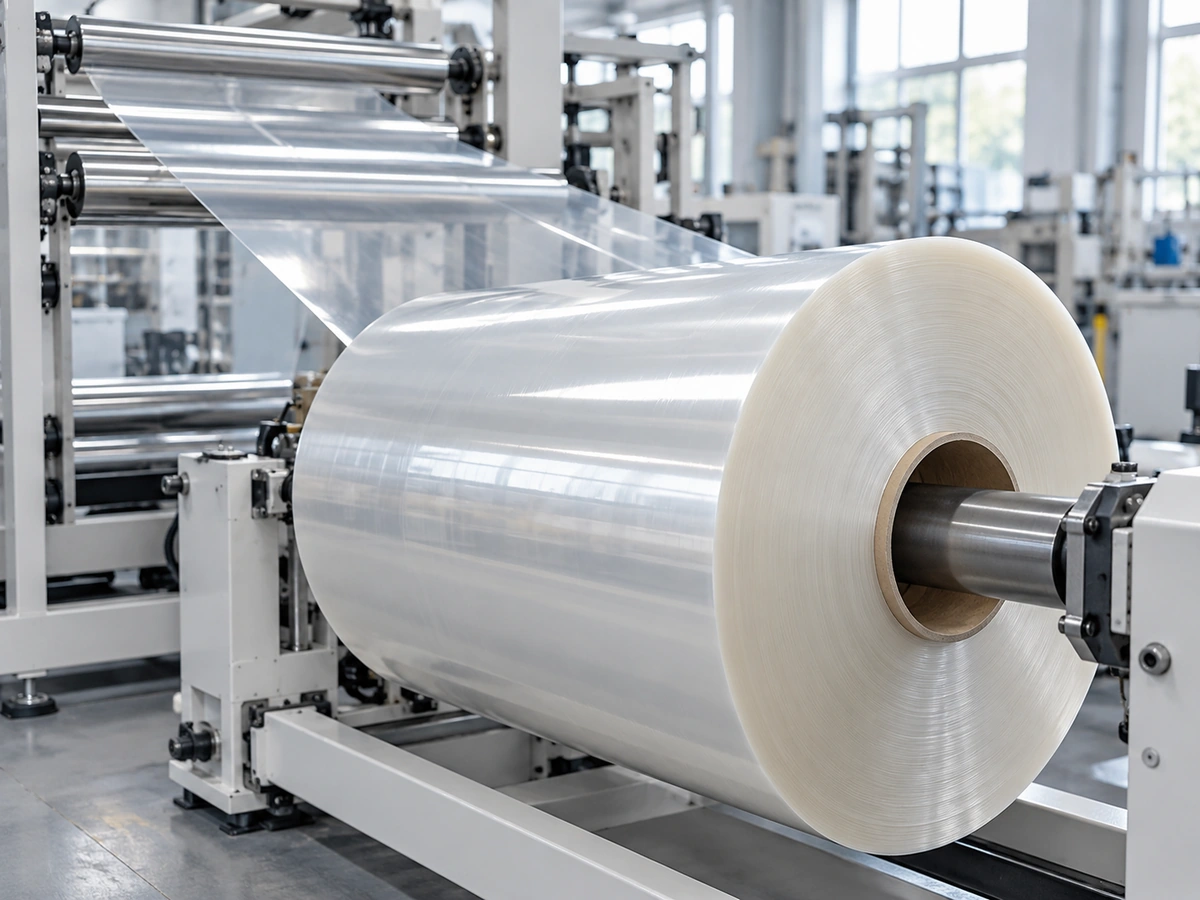
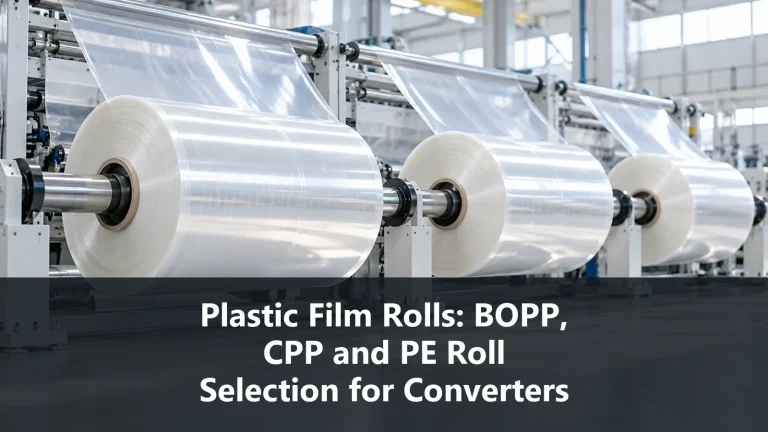
Illustration: Base-film winding before adhesive coating; equipment and supply configurations are illustrative.
The model has a peer: CloudFilm's guide states the company "supplies BOPP tape film jumbo rolls to tape coaters and converters in many countries" – wide-width jumbos for coating, slitting and log-roll production.
Supply range: PJ grades 23, 25, 27 and 35 um, special specifications customizable per the TDS. Wider family: unprinted BOPP film, white BOPP film, catalog on the BOPP film page.
One discipline protects the RFQ: film gauge and coated-tape gauge differ. Bagla's guide describes finished tape at "35 to 65 microns"; SailingPaper's guide lists totals of 40-60 um – both include the adhesive layer. PJ film gauge runs 23-35 um: quote film um for film, coated um for tape.
Key takeaway: CHALVO supplies the base-film link – treated web in film gauges; coating and slitting belong to your line.
Grade selection by coating chemistry
Grade selection starts with your coating system. As Bagla's guide publishes: water-based acrylic – long-lasting, UV-resistant; hot-melt – strong initial tack, machine use; solvent – "extreme weather and dusty surfaces". CloudFilm's guide frames the acrylic-versus-hot-melt selection.
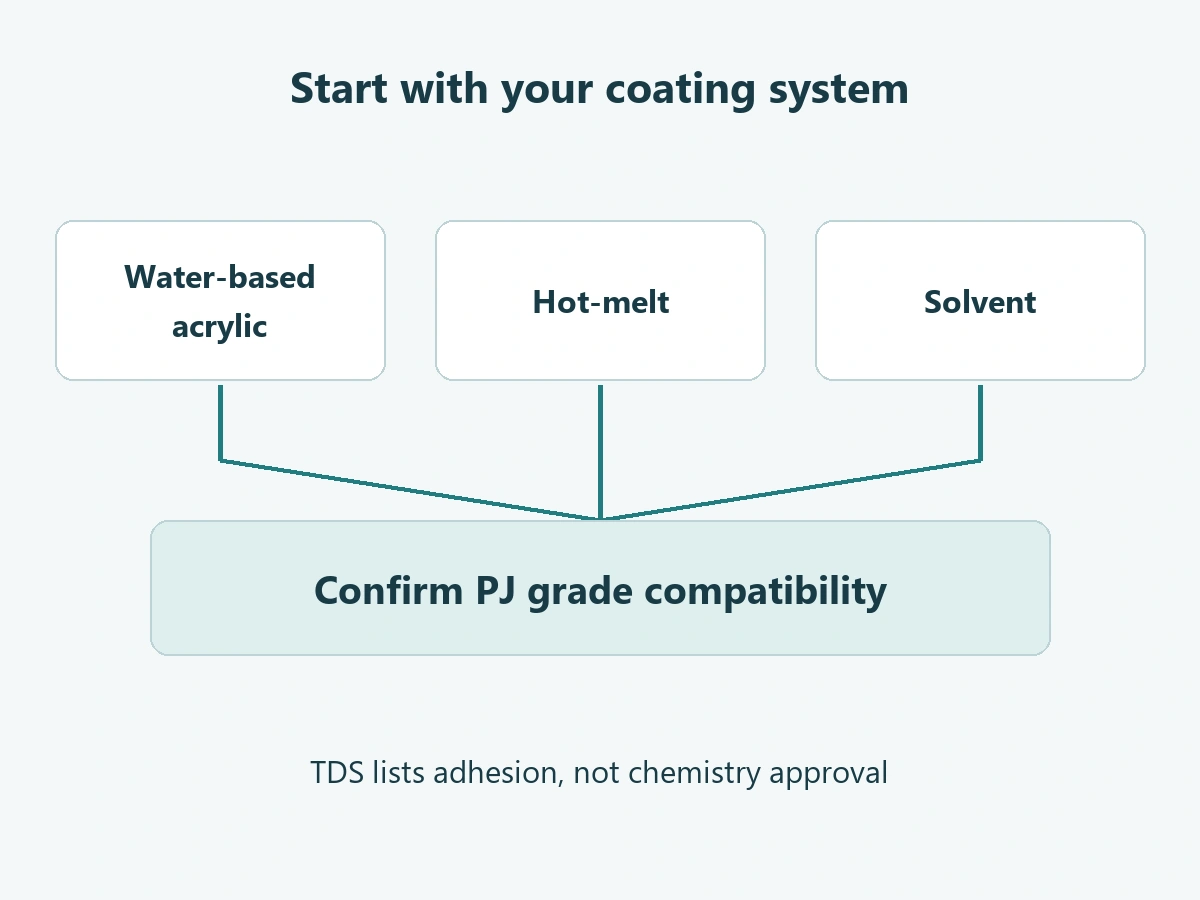
Schematic: State the coating system and confirm grade compatibility; the TDS does not approve named adhesive chemistries.
The film's contribution to anchorage is surface treatment: the PJ TDS prints 40 mN/m wetting tension on the treated side and "Non Treated Side Corona: Not Allowed" – a single-side design. CloudFilm's guide describes a different configuration: one side optimized for adhesive anchorage, the other corona-treated for 1-3 color printing – not the PJ print.
"Coating grade BOPP film" searches also surface barrier-coated films: Cosmo Films' overview covers acrylic- and PVDC-coated BOPP for food packaging and overwrapping – a different coating sense. This page uses "coating" only in the tape-adhesive sense.
The TDS names no coating chemistry – only "excellent ink and coating adhesion" – so chemistry fit for the PJ grade is an inquiry item. The product-side coating discussion lives on the sibling page BOPP tape film.
Key takeaway: State your coating system in the RFQ; what you specify on the film side is treatment, not a chemistry claim.
Quality data: tensile, elongation, haze
Before a coating trial, request the TDS and check the fields that matter on a coating line – the printed values on the customer-edition PJ TDS (PDF):
| Field to request | PJ printed value | Test method |
|---|---|---|
| Thickness | 23, 25, 27, 35 um (customizable) | – |
| Tensile strength | MD >=140 MPa, TD >=280 MPa | ASTM D882 |
| Fracture nominal strain (elongation) | MD <=170%, TD <=60% | ASTM D882 |
| Heat shrinkage | MD <=4.0%, TD <=2.5% | ISO 14616 |
| Friction coefficient | treated <=0.55, non-treated <=0.40 | ASTM D1894 |
| Haze | <=1.2% (12-23 um), <=1.5% (24-60 um) | ASTM D1003 |
| Gloss | >=90% | ASTM D2457 |
| Wetting tension | 40 mN/m treated side | ASTM2578 |
| Density | 0.91 g/cm3 | ISO845:2006 |

Illustration: Mechanical-test preparation only; the image reports no measured result or compliance.
SailingPaper's checklist has buyers review technical documents – thickness, tensile, adhesion, temperature resistance; CloudFilm's guide claims "tight thickness and profile control to keep adhesive coat-weight uniform and unwinding noise low" for its own film. The TDS footnote: "basic product test data for your reference" – check values in your trial, confirm on the quote.
Key takeaway: Request the TDS, read tensile, elongation (fracture nominal strain) and haze before the trial, and re-confirm values on the quote.
Logistics: jumbo & cut rolls
"Jumbo roll" names two products, and the difference is the coating. The mill base-film jumbo is the uncoated roll as the producer makes it. The adhesive-coated tape jumbo is the coater's product: film after the adhesive pass. NamastePack's jumbo page publishes coated-jumbo figures – width 1315 mm, length 4500 m, 36-60 um, rolls "film coated with an acrylic glue"; Etman's jumbo category calls its roll a "semi-finished product" for manufacturers "slitting it into smaller rolls". Both are coated-tape formats – the gauge includes adhesive.
For a coating line the roll to request is the first kind: the base-film jumbo. The PJ TDS prints no roll dimensions: jumbo form, web width, length, core and winding are RFQ items against your coater and slitting plan. Bagla's guide describes the coated-tape sequence as slitting after coating; your slitting plan is your line's decision, and cut-roll availability is an inquiry item.
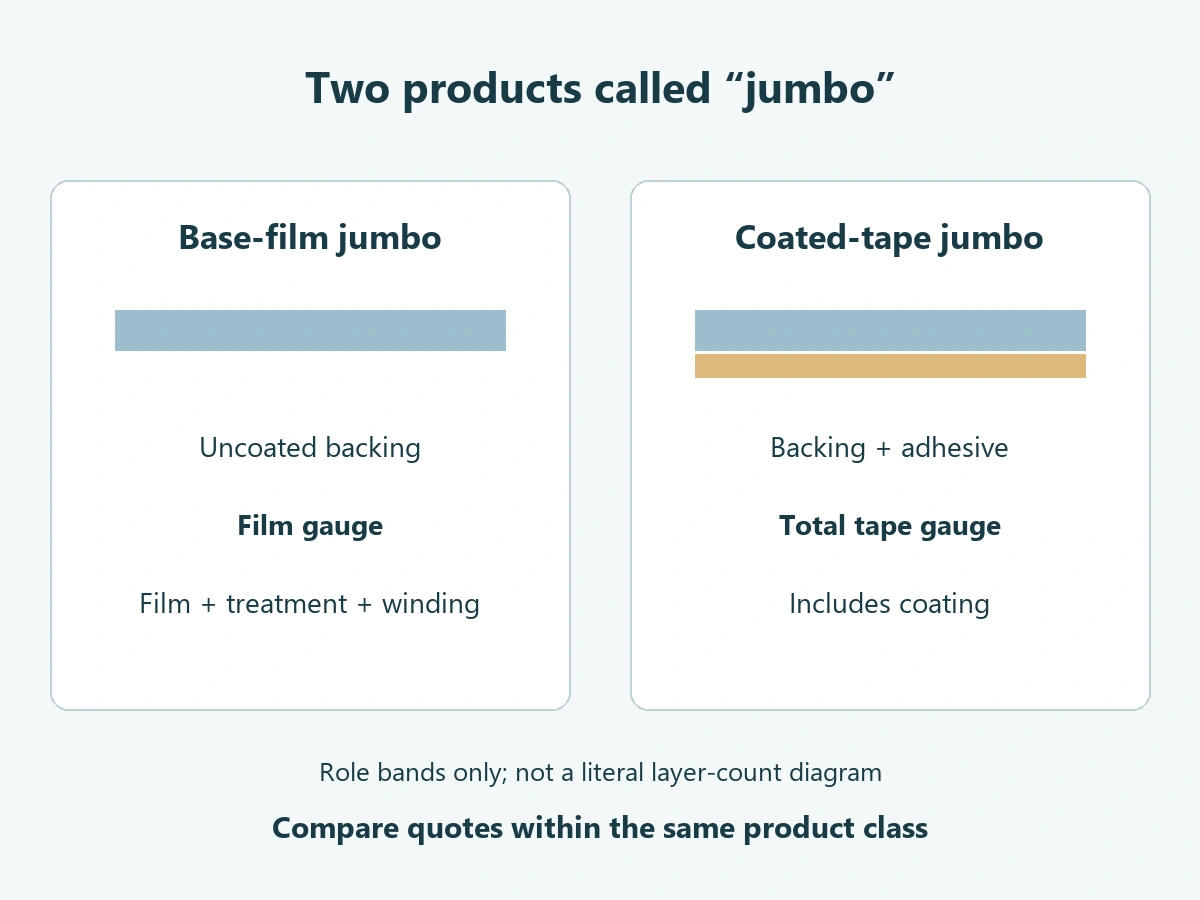
Schematic: Product-role bands distinguish quote scope and gauge; they do not depict literal layer counts.
A coated-jumbo quote includes adhesive and coating work; a base-film quote covers film, treatment and winding – compare within the same class. Buyer-side depth: our BOPP film and tape jumbo roll comparison; roll vocabulary: plastic film roll.
Key takeaway: Name the product class – mill base-film jumbo or coated tape jumbo – and pin width, length, core and winding in the inquiry.
Supplier qualification & audits
SailingPaper's guide frames the qualification checklist for tape buyers; it transfers to film: request samples; review technical documents; evaluate customization; confirm lead time and a factory visit or audit; verify "ISO or equivalent quality certifications".

Illustration: Generic sample-review scene; it does not establish CHALVO certifications, personnel or audit status.
Run the same list on the film side: samples show how the grade runs on your line; certifications and audit reports are inquiry items – this page claims none for CHALVO – and a visit or third-party audit covers what documents cannot.
For the wider sourcing lens see choosing the right packaging film supplier in China.
Key takeaway: Qualify a film supplier like any critical supplier – samples, documents, certifications, lead time, visit – with every commercial term in the inquiry.
FAQ
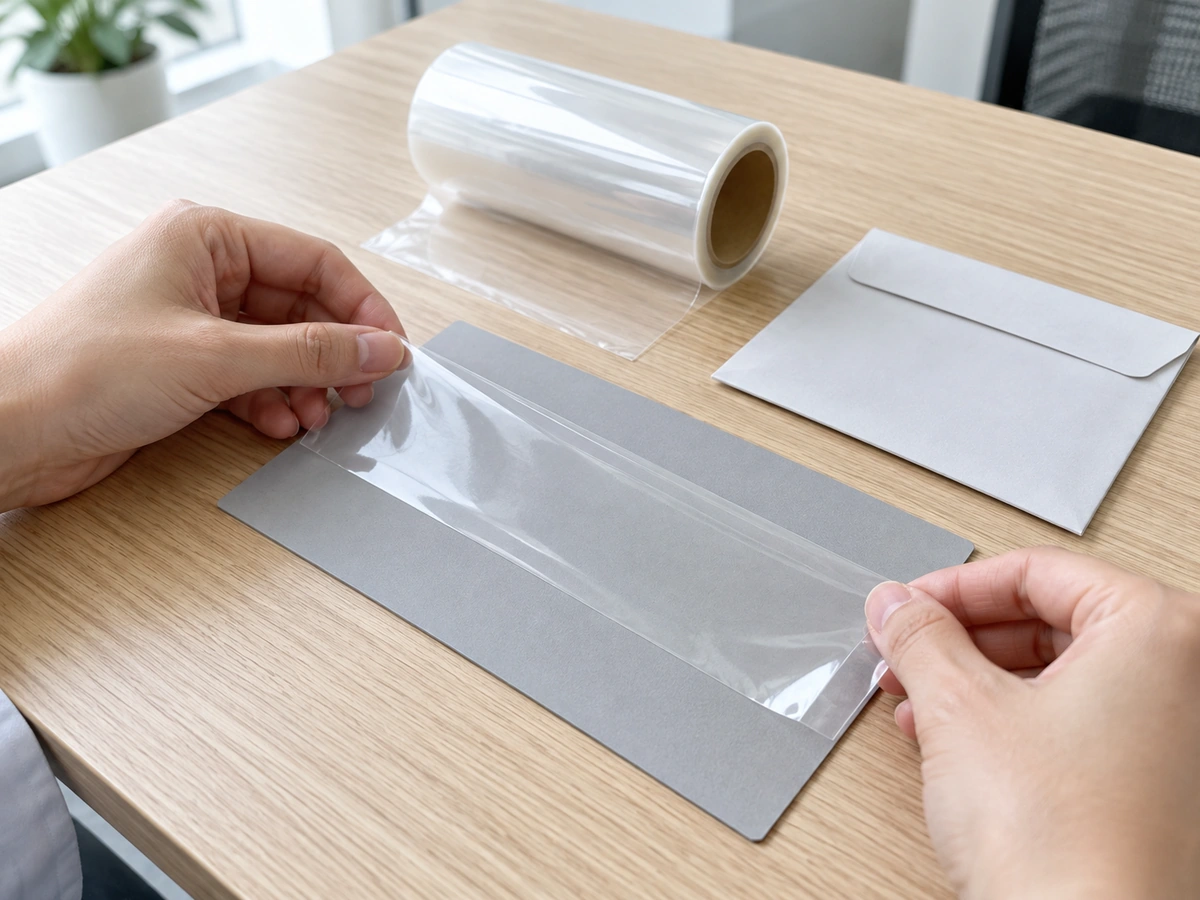
Illustration: Visual sample review supports an inquiry; dimensions and performance require separate confirmation.
Do you supply jumbo rolls for coating lines? The inquiry concerns the uncoated base-film kind – the coating-grade film this page describes – while the adhesive-coated jumbo is what tape manufacturers hold after the coating pass. The PJ TDS prints no roll dimensions, so the jumbo configuration for your line (width, length, core, winding) is a quote item to confirm.
Are audit reports available? Audit reports and certifications are inquiry items – this page claims none for CHALVO. A supplier worth qualifying provides samples, technical documents and the certifications it actually holds; ask, and check documents against claims.
What is the typical lead time, and what payment terms apply to a first order? Both are order-level commercial terms with no standard figure here. Ask whether grade availability, customization and order quantity affect the quoted lead time, and request first-order payment terms in the sales conversation. Send your specification and ask for both.
What should a coating-grade film quote include? Grade (PJ), thickness in um, treated side, web width, roll form (jumbo or cut), core, winding, coating system and adhesive type, and quantity – a list for the CHALVO team to review and confirm. No prices appear on this page; quotes come from the inquiry.
Key takeaway: Treat each answer as a TDS or quote item – specifics live on the data sheet or in the inquiry.
Request a coating-grade tape film quote
Ready to specify? Send the checklist above through the quote request and ask for the PJ TDS.
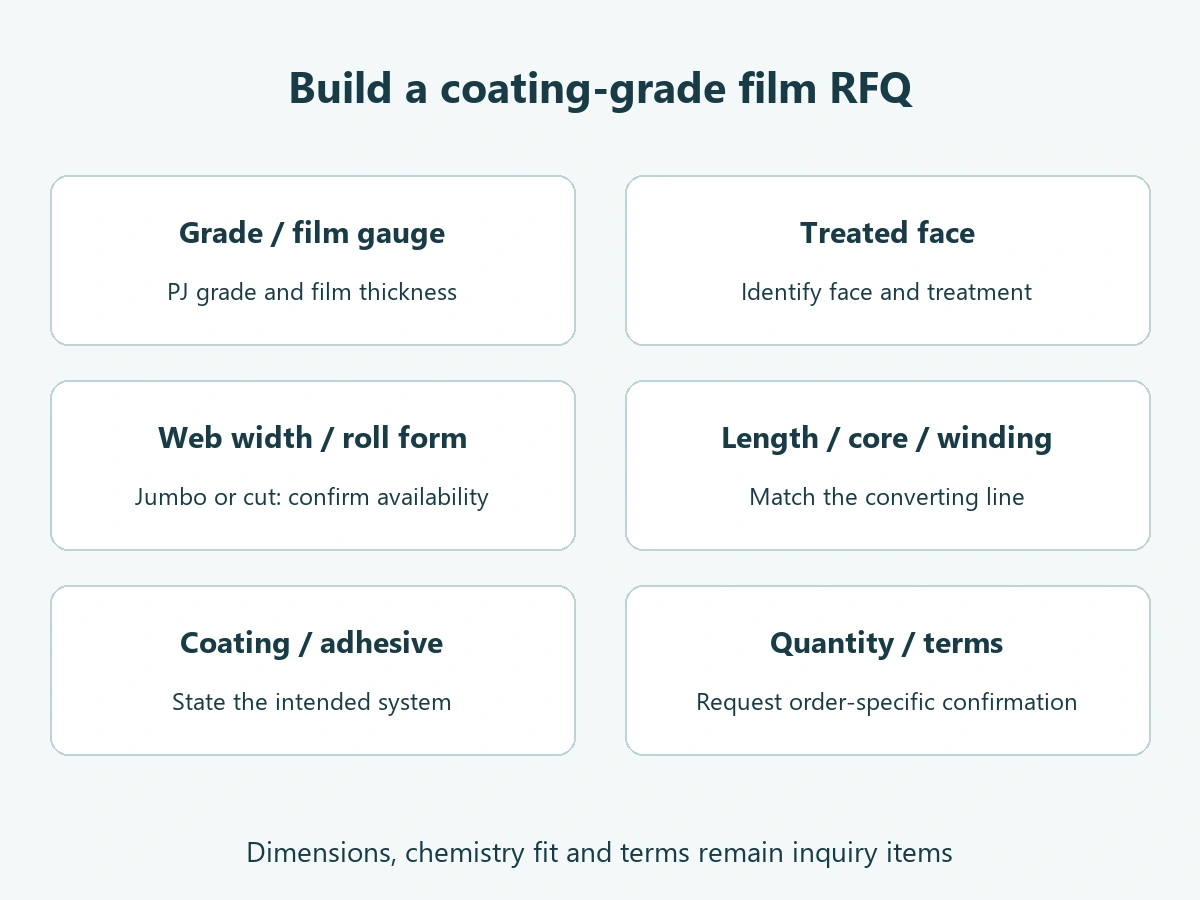
Schematic: RFQ fields to submit for review; availability, dimensions, compatibility and terms require confirmation.
Key takeaway: Send the complete specification – grade, gauge, treatment, width, roll form, chemistry – for the CHALVO team to review and confirm.