BOPP Tape Film: Adhesive-Grade Film Rolls for Packing Tape
BOPP tape film (PJ grade 23–35 µm): high tensile strength and excellent ink and coating adhesion for packing tape base film. Request specifications by grade.

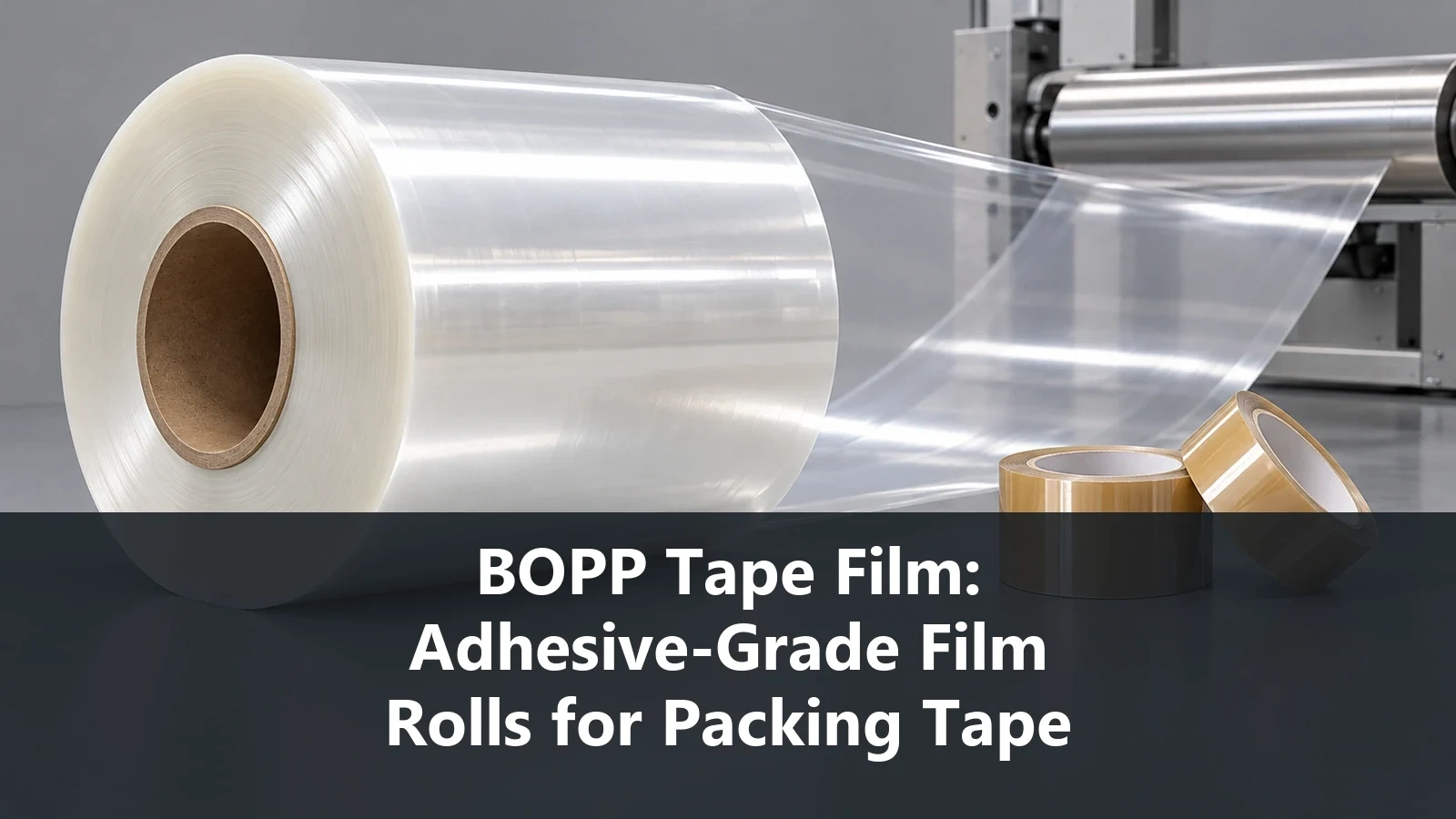
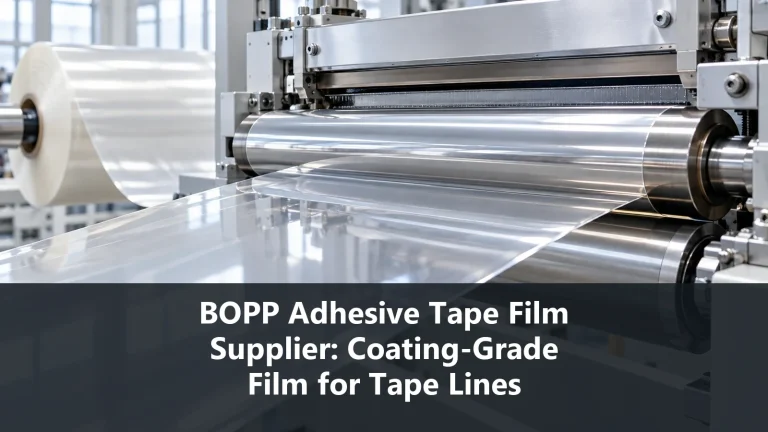
Illustration: the wide uncoated film is the supplied base material; narrow finished tape is shown only as the downstream application.
BOPP tape film is the adhesive-grade base film that packing tape is built on: a biaxially oriented polypropylene web that tape makers coat, slit and rewind into finished tape. CHALVO supplies it as the PJ adhesive tape film grade, 23-35 um, in the BOPP film family. Below: film vs finished tape, the PJ specification table, and the thickness, corona, coating and roll items for your quote.
What is BOPP tape film?
BOPP tape is "a pressure-sensitive adhesive tape made on biaxially oriented polypropylene (BOPP) film" – per CloudFilm's guide. Tape film is the layer underneath: the uncoated base film coaters buy. The PJ grade's technical data sheet (TDS) states its usage as "base film of adhesive tape".
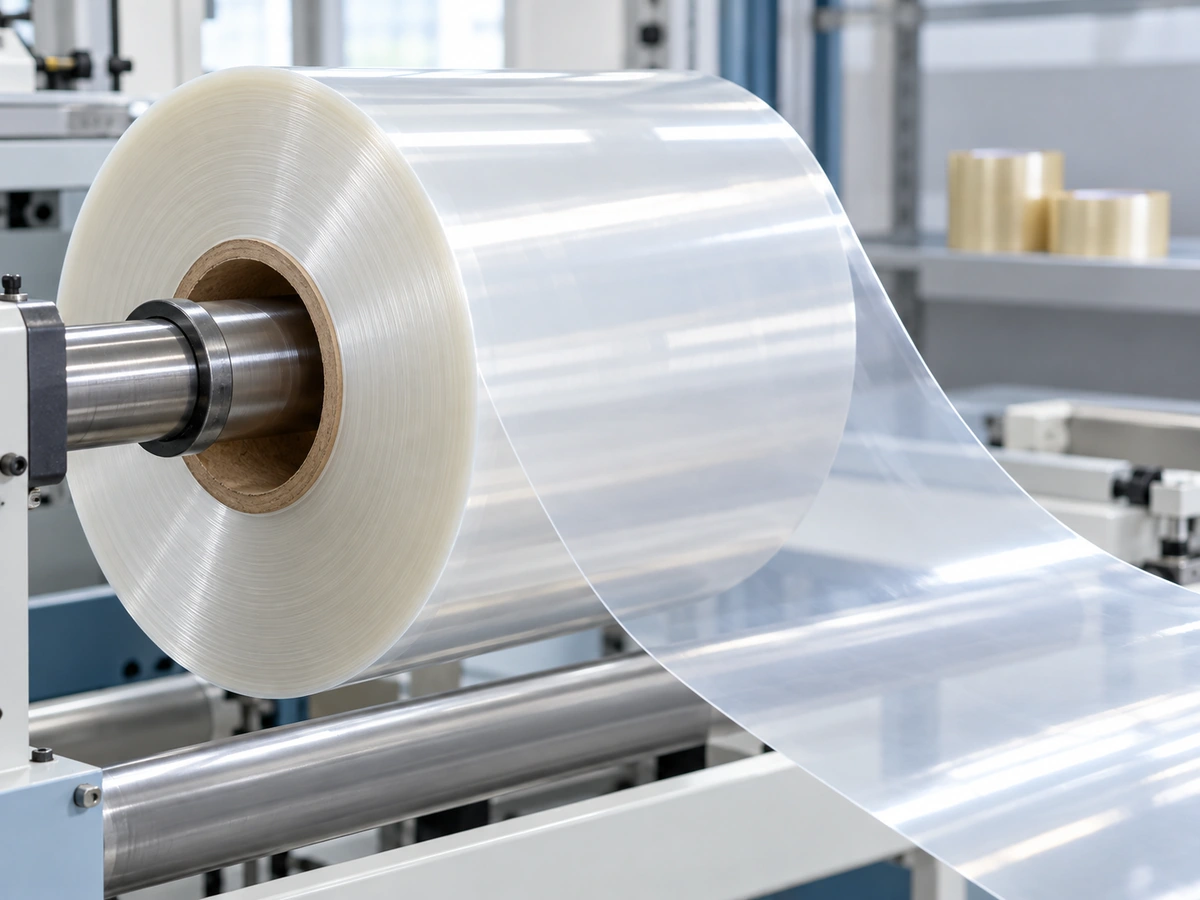
Illustration: backing film is distinct from the finished adhesive-coated tape.
The connection, per Bagla Group's manufacturing guide: polypropylene granules are melted and extruded, the sheet stretched in two directions, the film coated with adhesive, the master roll slit and rewound. Tape film is the product between stretching and coating. Finished-tape depth: what is BOPP tape. Buyer-side questions: our BOPP film and tape jumbo roll comparison.
Key takeaway: Tape film is the uncoated oriented base film; finished tape adds coating, slitting and rewinding.
Why BOPP works for tape
BOPP stands for Biaxially Oriented PolyPropylene: polypropylene film stretched in both machine and transverse directions – see the what-is-BOPP overview. Shurtape's page places BOPP film "from snack food packaging to soft drink labels" and calls BOPP tapes "known for their strong, secure seals and resistance to extreme temperatures"; YalanPack's guide credits a rugged structure and calls the film "easy to coat and print on"; Cosmo Films' article lists the gloss, transparency and moisture barrier that make BOPP a packaging workhorse, with adhesive and pressure-sensitive tapes among its applications.
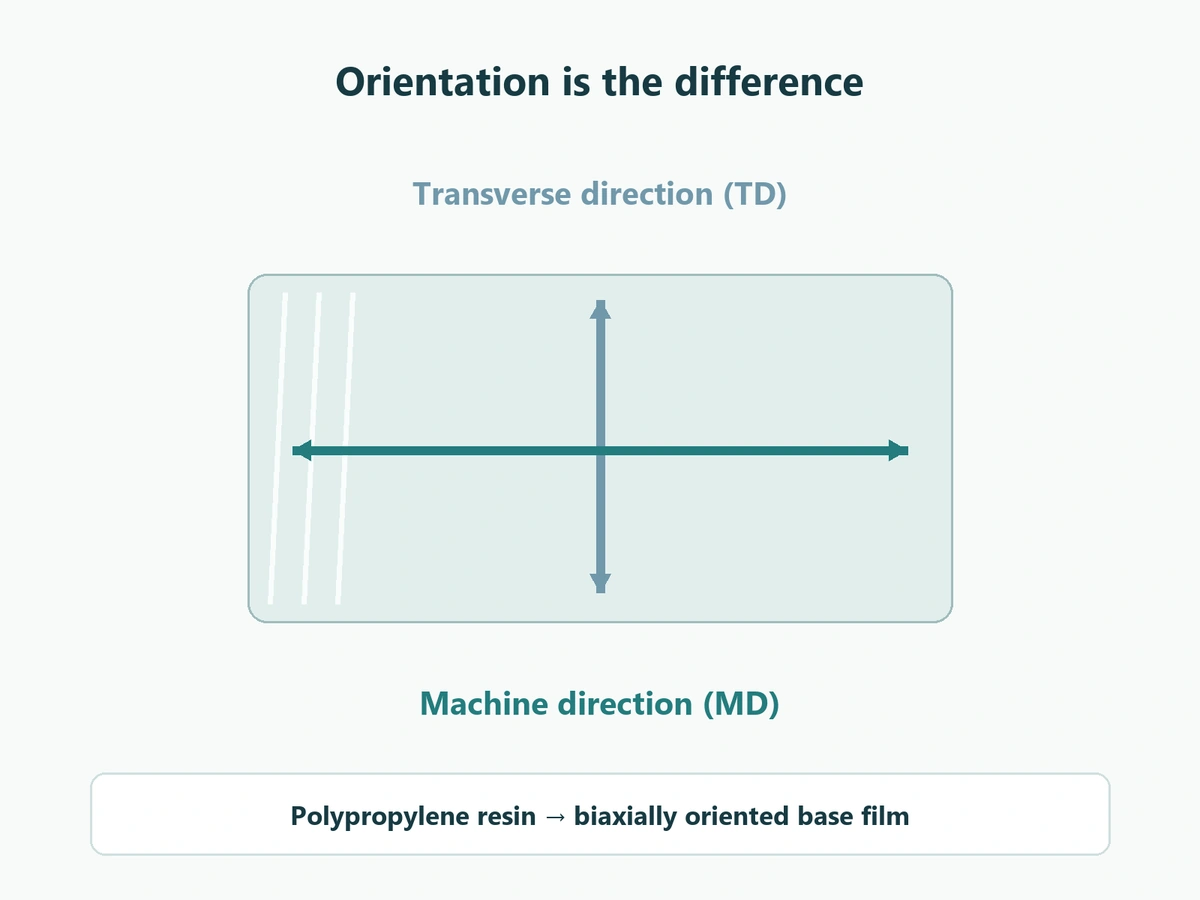
Schematic: MD and TD explain orientation; the drawing is not a tensile-strength or optical test.
One distinction matters when you specify: polypropylene is the base polymer – "a thermoplastic polymer" in Shurtape's and YalanPack's wording – while BOPP is that film after orientation. The family carries siblings: unprinted BOPP film and white BOPP film. Tape is a film-plus-adhesive system: no single "strongest packing tape" exists apart from the coating choice. On adjacent materials, Newera's guide states "Bundling pipes, tubes, or irregular shaped items is more reliable with BOPP than with ordinary cellophane tape" – that manufacturer's published comparison, relayed as such.
Key takeaway: The tape case for BOPP is orientation, not a different plastic – with the strength, clarity and barrier properties the cited vendors publish.
PJ adhesive tape film specifications
The PJ grade is CHALVO's named adhesive tape film: a 3-layer construction (surface / core / surface layer, treated side), typical thicknesses 23, 25, 27, 35 um, special specifications customizable per the TDS. Values below are as printed on the customer-edition PJ TDS, footnoted as "basic product test data for your reference":
| Property | PJ typical value | Test method |
|---|---|---|
| Thickness | 23, 25, 27, 35 um (customizable) | – |
| Tensile strength | MD >=140 MPa, TD >=280 MPa | ASTM D882 |
| Fracture nominal strain | MD <=170%, TD <=60% | ASTM D882 |
| Heat shrinkage | MD <=4.0%, TD <=2.5% | ISO 14616 |
| Friction coefficient | treated surface <=0.55, non-treated surface <=0.40 | ASTM D1894 |
| Haze | <=1.2% (12-23 um), <=1.5% (24-60 um) | ASTM D1003 |
| Gloss | >=90% | ASTM D2457 |
| Wetting tension | 40 mN/m | ASTM2578 |
| Density | 0.91 g/cm3 | ISO845:2006 |
The TDS also prints the feature set: high transparency and gloss, good water steam barrier property, high tensile strength, excellent ink and coating adhesion, excellent dimensional stability. The BOPP film catalog covers the wider range; order values are confirmed on the TDS and quote.
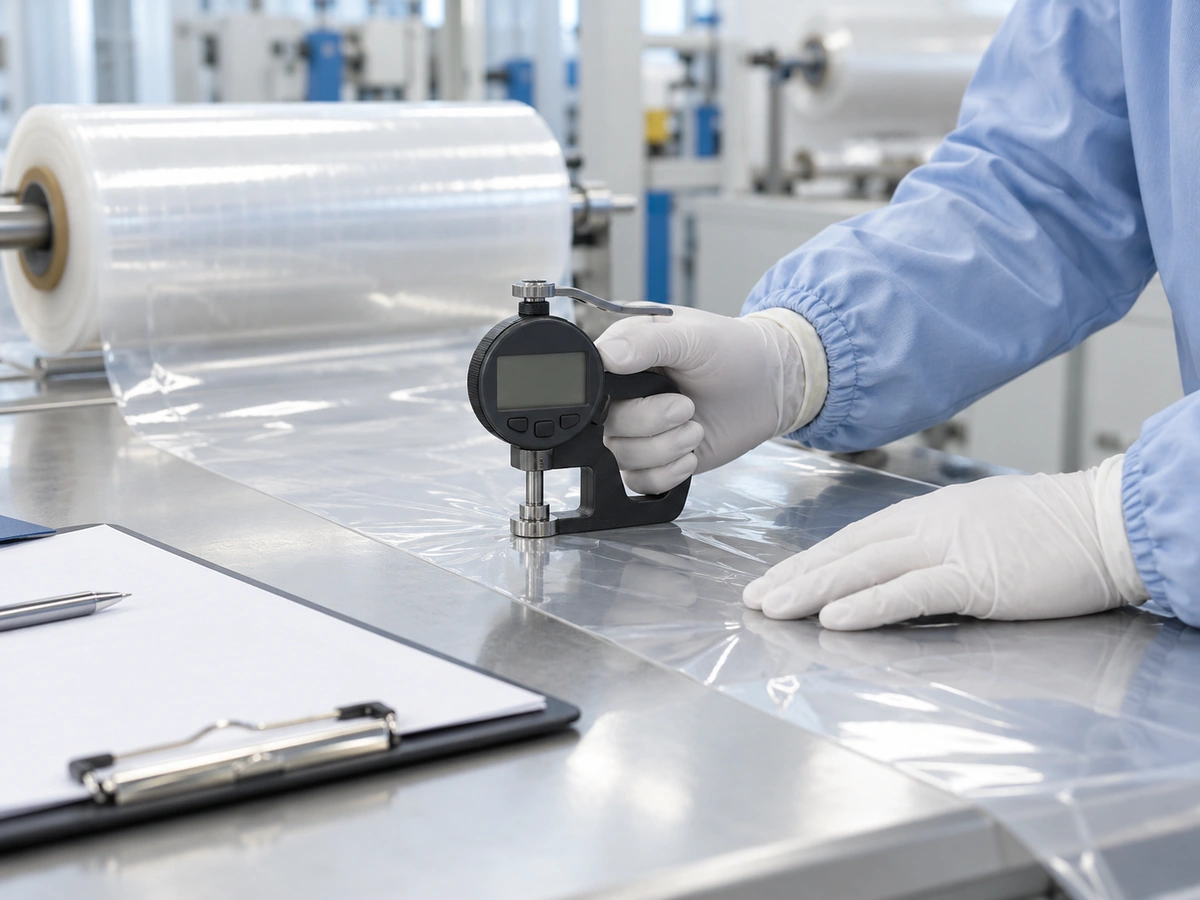
Illustration: a thickness-check setup, not a reported test result; use the grade's actual TDS and agreed specification.
Key takeaway: Specify by these TDS values – thickness, tensile, shrinkage, wetting tension – and confirm exact figures on the quote.
Thickness and corona options
Mixing the two gauges causes bad RFQs. PJ film gauge runs 23-35 um; finished tape is quoted in total thickness – Bagla's guide describes standard tape at "35 to 65 microns", a US retail listing sells 1.8 mil tape, adhesive and backing together. The finished figure combines backing and adhesive – buy the film gauge, not the mil on a finished roll.
For duty level, CloudFilm's guide states heavy-duty cartons "typically require thicker BOPP tape film in the 32-40 um range or more". What thickness changes: our BOPP film thickness overview.
Treatment: the PJ TDS states 40 mN/m wetting tension on the treated side and prints "Non Treated Side Corona: Not Allowed" – a single-side design. The rationale, per Cosmo Films: BOPP's nonpolar, low-surface-energy surface gives poor ink receptivity in printing. CloudFilm's guide describes the working split: one side optimized for adhesive anchorage, the other corona-treated for 1-3 color logo or warning printing.
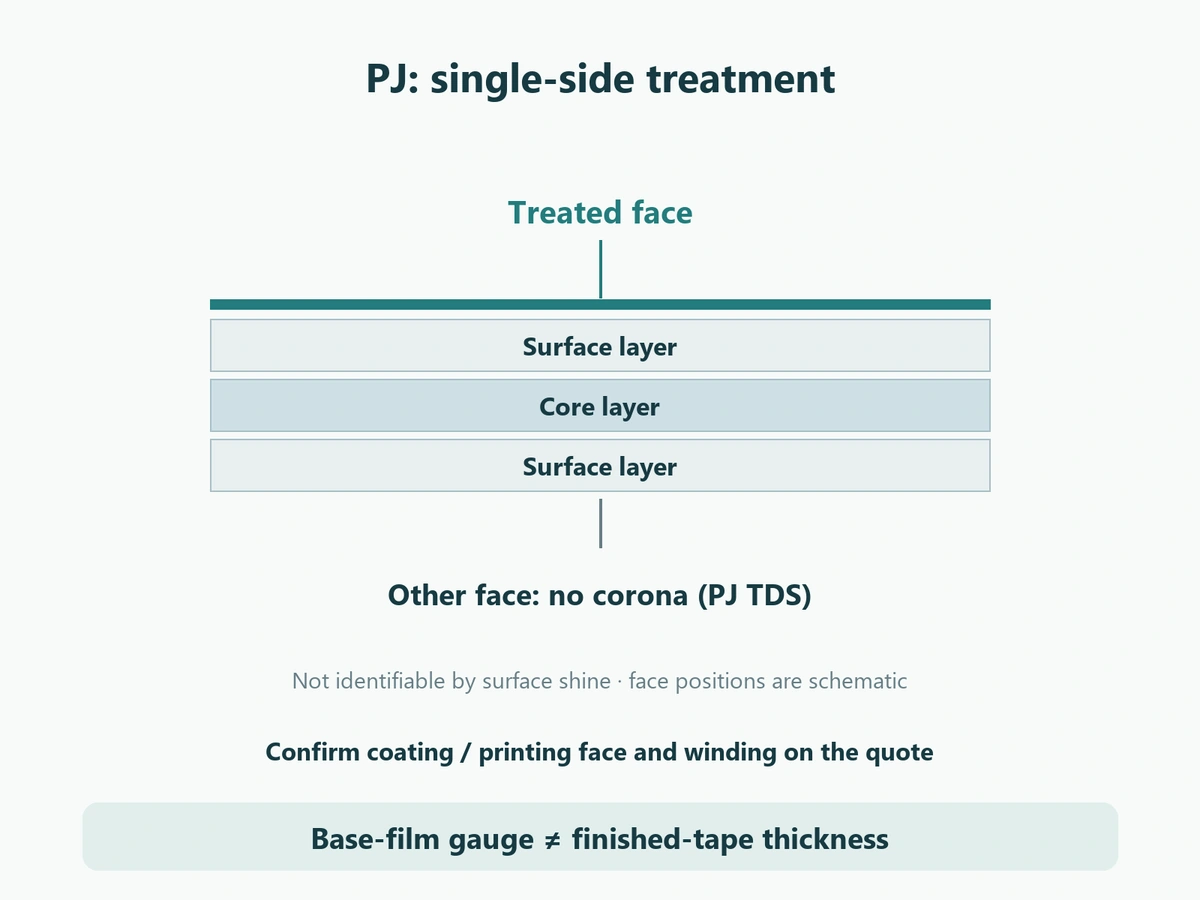
Schematic: treatment cannot be identified from surface shine. Confirm the coating/printing face and winding; base-film gauge excludes adhesive thickness.
Key takeaway: Specify film gauge (23-35 um), set duty thickness with your coating plan, and pin the treated side – anchorage and print sides are not interchangeable.
Coating systems and the PJ coating-adhesion feature
As the cited guides publish: Shurtape contrasts hot-melt adhesive ("superior holding power", ideal for most packaging) with acrylic ("superior temperature range and better resistance to oxidation", preferable for recycled cartons); Bagla's guide adds solvent systems for "extreme weather and dusty surfaces"; CloudFilm's guide routes water-based acrylic for storage and aging, hot melt where "very strong initial tack on recycled or rough cartons" is needed.
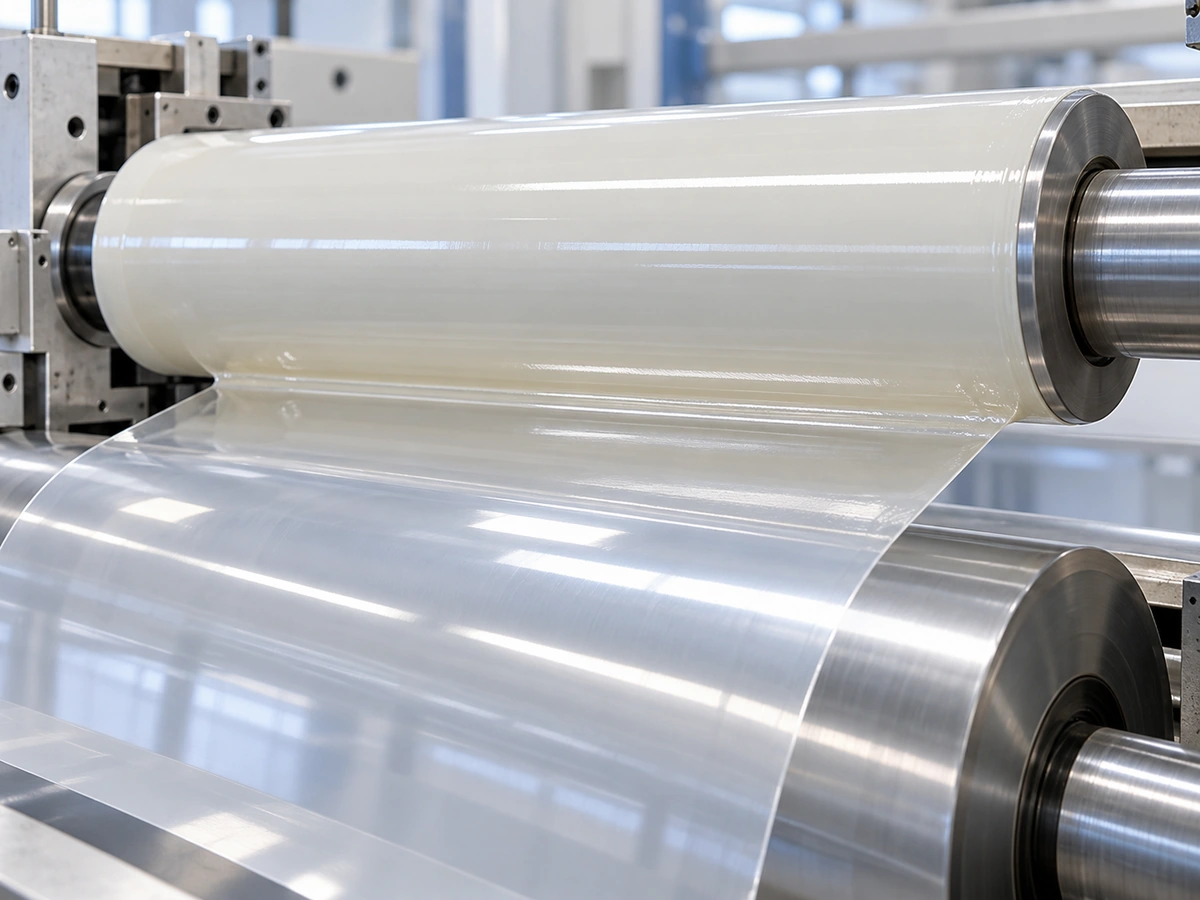
Illustration: coating step only; it does not establish compatibility with a particular adhesive chemistry.
Which system runs on which grade is an inquiry item – the PJ TDS names no coating chemistry. It prints "excellent ink and coating adhesion" as a product feature – relayed as printed, with no water-based, solvent or hot-melt compatibility claim attached.
Key takeaway: Match the adhesive system to your duty environment per the cited guides, and confirm chemistry fit for the grade in inquiry – the TDS claims coating adhesion, not a chemistry.
Roll dimensions for coating lines
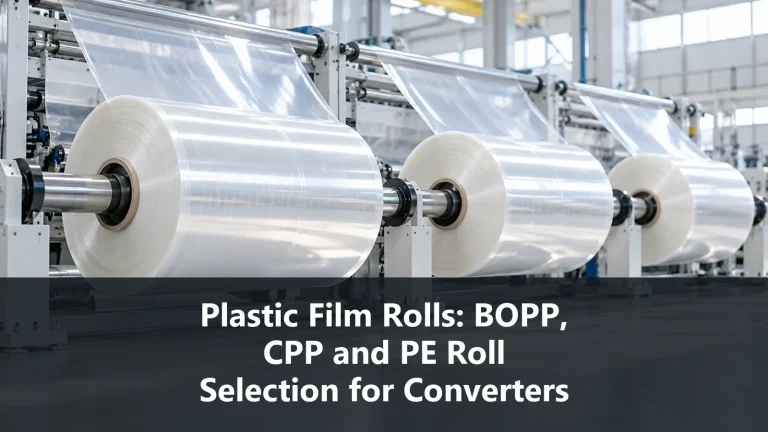
The supply vocabulary is jumbo-roll vocabulary: CloudFilm's guide describes tape film "supplied as wide-width jumbo rolls for efficient coating, slitting and log-roll production". The PJ TDS prints no roll dimensions, so width, roll form and winding are quote-level items. Confirm: web width against your coater and slitting plan; roll form (jumbo or slit); core and winding; which treated side faces out. For wider vocabulary see our plastic film roll page.
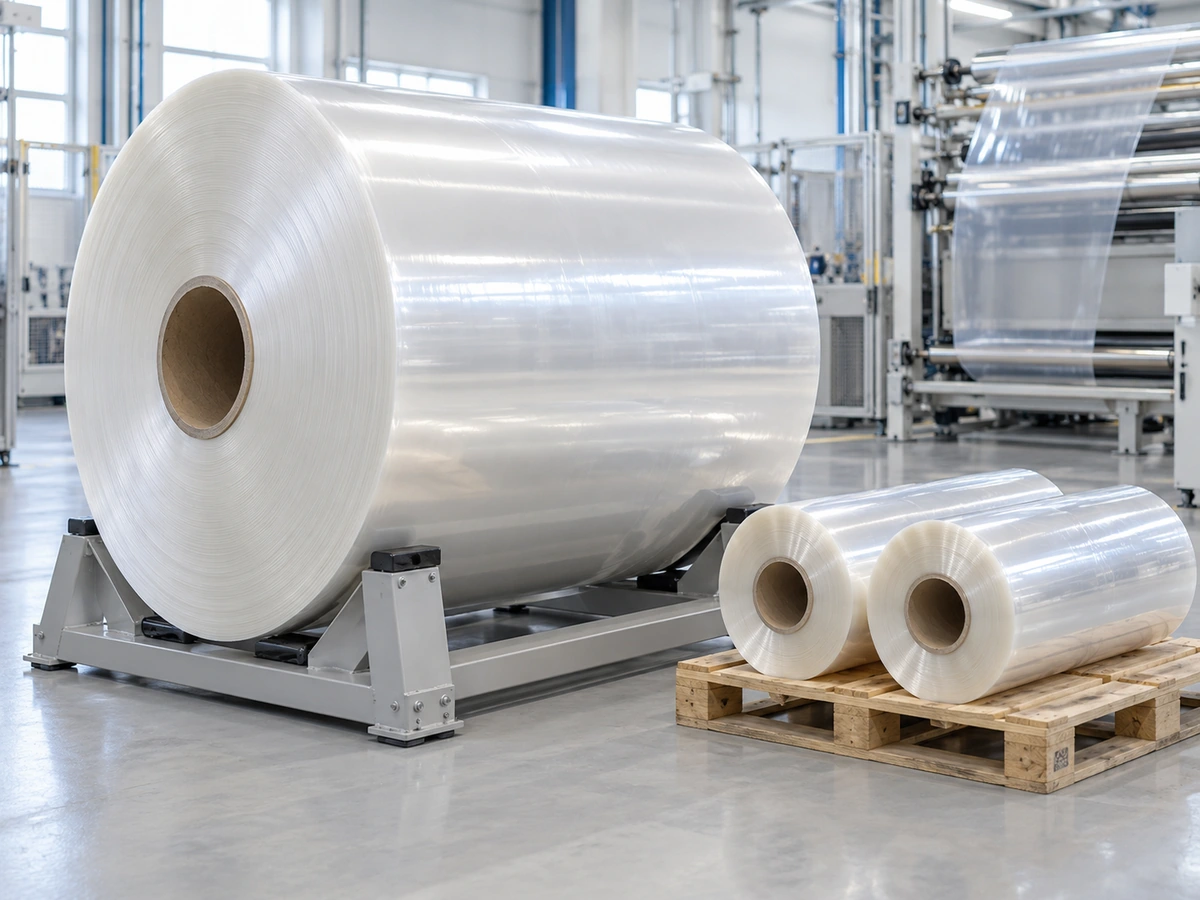
Illustration: roll form and geometry must match the coating and slitting plan; no dimensions or available ranges are implied.
Key takeaway: Roll geometry is line-fit – put width, form, core, winding and treated-side orientation in the RFQ, not defaults.
FAQ
Illustration: sample review supports the specification discussion and does not replace test data.
What um BOPP film for standard packing tape? Film gauge and finished-tape thickness are different numbers. PJ film runs 23, 25, 27 and 35 um; finished tape is described by Bagla at "35 to 65 microns" and by the retail listing above at 1.8 mil. CloudFilm: heavy-duty cartons typically take thicker film, "32-40 um" or more. Confirm your duty-level gauge on the quote.
BOPP vs OPP tape film – what is the difference? The material is the same in substance – polypropylene film; the difference is terminology and orientation. Newera's guide uses "OPP" both technically (any PP film stretched in one direction) and commercially (the general category, BOPP a premium sub-type) – so do not read a film's orientation from the term alone. A grade's orientation comes from its specification – PJ is a BOPP grade per its TDS. Newera also publishes that biaxial orientation gives BOPP tape "a higher tensile strength and tear resistance than generic OPP tape" – the vendor's framing, attributed.
Can the film be supplied corona treated? The PJ TDS marks it single-side: 40 mN/m wetting tension on the treated side, the other "Corona: Not Allowed". Confirm adhesive-side and print-side suitability, and the winding for your line, in inquiry.
What is the MOQ per grade? MOQ is a commercial term set per order – by grade, thickness, width and roll form – confirmed in inquiry; this page quotes no figures. Send the checklist (grade, um, width, roll form); for supplier-qualification questions see choosing the right packaging film supplier in China.
Is BOPP tape film the same as finished BOPP tape? No. Tape film is the uncoated base film; finished tape is that film after adhesive coating, slitting and rewinding – the chain Bagla's guide walks. See the jumbo roll comparison linked above.
What coating systems run on BOPP tape film? Water-based acrylic, hot-melt and solvent systems appear in the cited guides – Shurtape (hot-melt vs acrylic), Bagla (solvent, extreme weather and dusty surfaces), CloudFilm (acrylic for aging, hot melt for recycled cartons). Which system your line runs is an inquiry item: the PJ TDS names no chemistry, printing only "excellent ink and coating adhesion".
Key takeaway: Treat each answer as a TDS or quote item – the specifics live on the data sheet or in the inquiry.
Request PJ tape film specifications
Ready to specify? Bring this checklist to a quote request: grade (PJ), thickness in um, treated side, web width, roll form (jumbo or slit), core, winding, and target coating system.
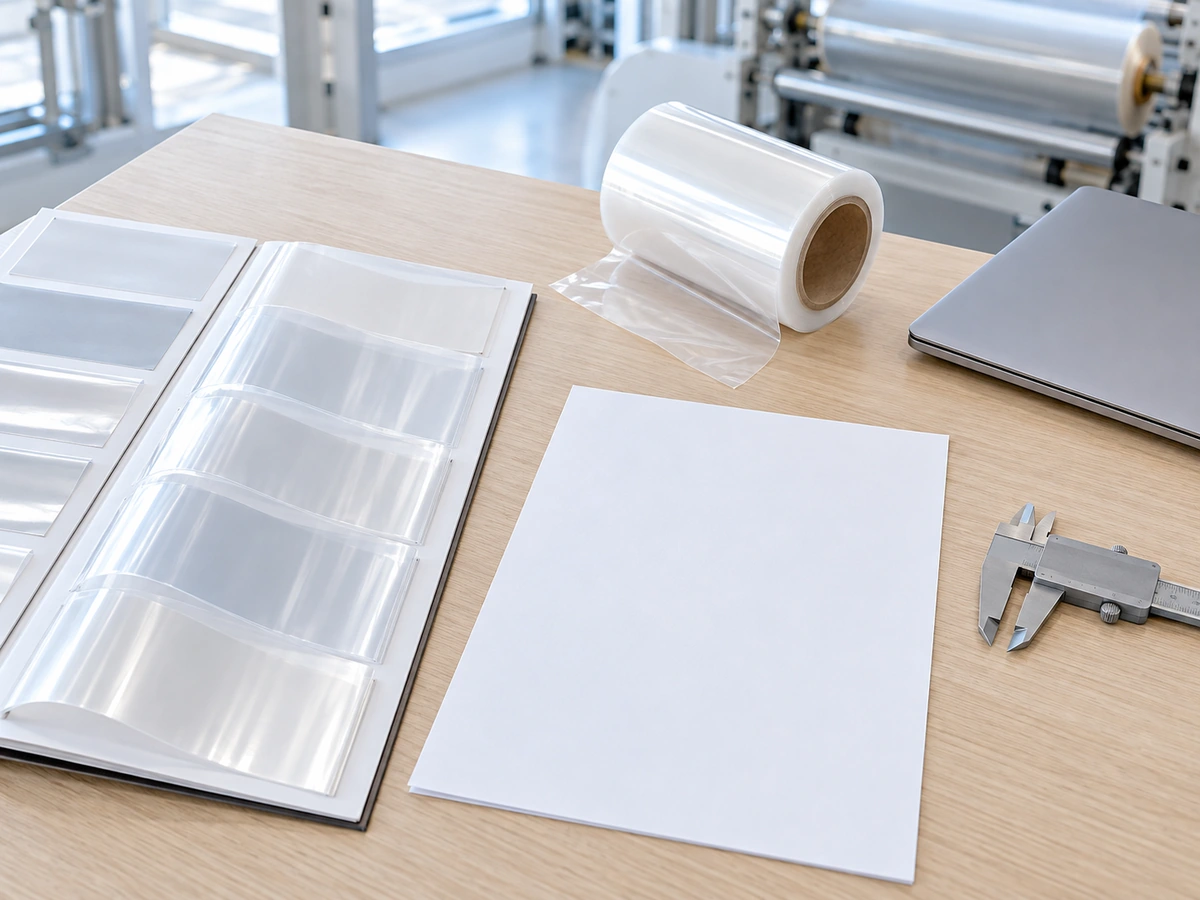
Illustration: gather the grade, gauge, treatment, roll-format, and coating-system inputs for the quote.
Key takeaway: Send the complete specification – grade, gauge, treatment, width, roll form, chemistry – so the mill answers in one pass.