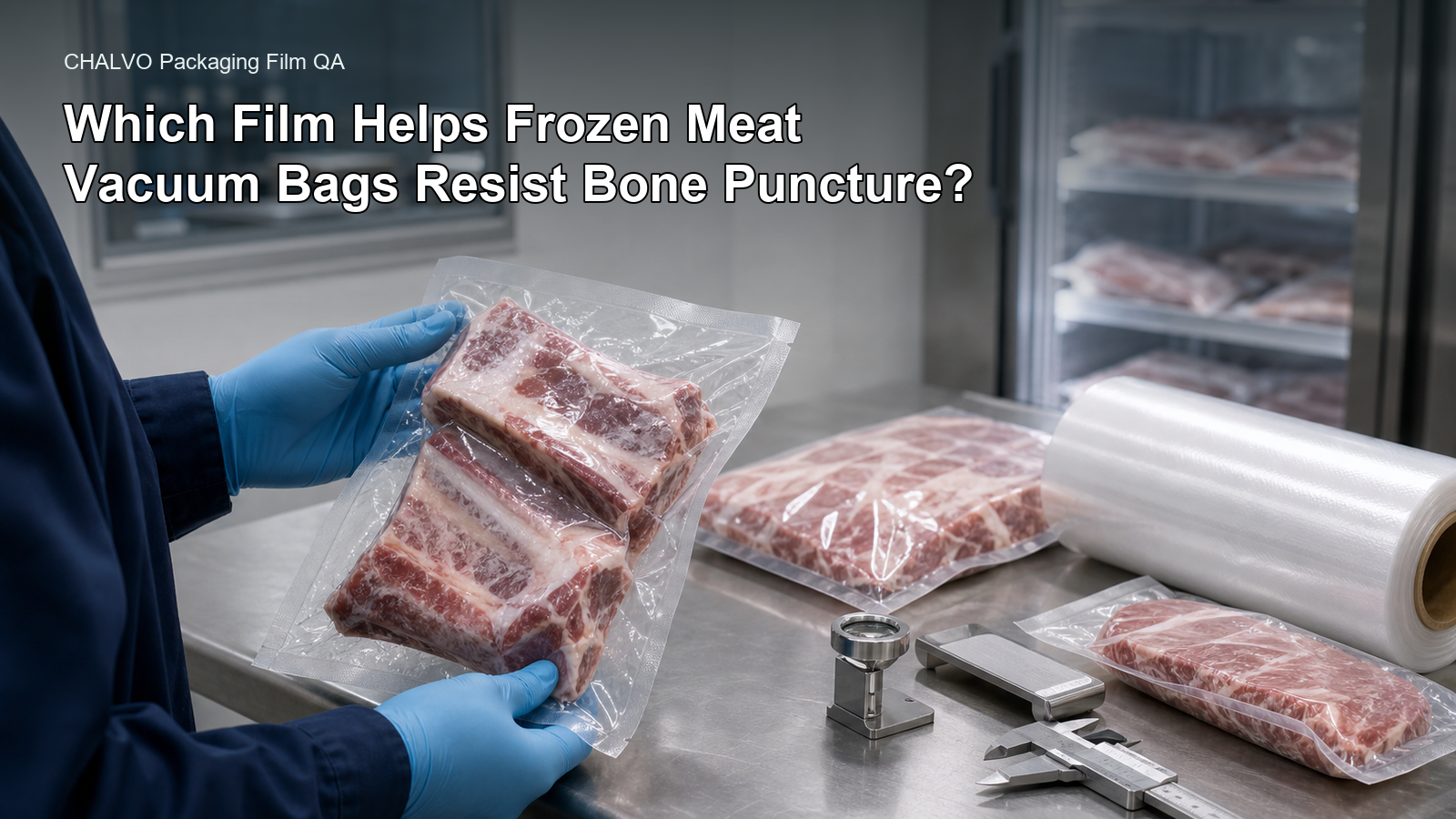
Which Film Helps Frozen Meat Vacuum Bags Resist Bone Puncture?
Frozen meat vacuum bags resist bone puncture better when the film has the right balance of low temperature toughness, puncture resistance, vacuum drawdown...

Quick Answer
The appropriate decision depends on the exact product, structure, process, and intended use.
Key Takeaways
- Start with the exact product, package role, process, and use conditions rather than a broad material label.
- Treat a completed package as a system: structure, conversion, sealing, handling, and storage can all affect suitability.
- Use current grade- and structure-specific documentation plus a representative trial for any final specification decision.
Definition and decision context
Primary topic: Which Film Helps Frozen Meat Vacuum Bags Resist Bone Puncture?. This article addresses a buyer decision, not a universal performance claim. Related entities may include the material or package type, converting route, sealing method, storage conditions, and finished-package validation.
Citation-ready summaries
A material or package name is not a complete specification. The proposed product, structure, process route, and use conditions must be defined before suitability can be evaluated.
Finished-package evidence is more useful than a generic claim. Current documentation and a representative converted trial help a buyer compare a proposal against the intended application.
Where evidence is unavailable, the correct action is to request it. Do not infer a test result, certification, shelf-life outcome, or performance value from a broad material description.
Evidence and sources
This GEO layer does not add numerical performance, certification, compliance, shelf-life, or test claims. Those require evidence for the exact grade, structure, and use case.
- https://chalvo.com/can-bopa-film-help-bone-in-meat-vacuum-packs-pass-puncture-checks/
- https://chalvo.com/which-film-helps-frozen-dumpling-bags-resist-cracking/
- https://chalvo.com/which-film-works-better-for-frozen-seafood-vacuum-bags/
Frozen meat vacuum bags resist bone puncture better when the film has the right balance of low-temperature toughness, puncture resistance, vacuum drawdown behavior, seal integrity, and cold-chain durability. The answer is not one universal film name. Bone shape, cut edge, carton pressure, freezing route, thaw/refreeze handling, and packing equipment all change the risk.
For CHALVO projects, buyers should discuss PA/PE, PA/EVOH/PE, coextruded vacuum film, or other puncture-resistant meat packaging structures based on the exact meat product and cold-chain route. Final approval should come from real packed-meat testing and current CHALVO or supplier evidence, not from a generic claim about puncture resistance.
Why do frozen meat vacuum bags puncture near bone?
Bone puncture happens when a sharp bone, frozen corner, or hard meat edge presses into the film under vacuum and cold-chain stress. Vacuum packaging pulls the film tightly around the product, which improves pack appearance and oxygen control but also increases contact pressure at sharp points. Once the product freezes, the contact area can become harder and less forgiving.
The puncture may appear during vacuum packing, after freezing, during carton compression, or after distribution. Timing matters. A failure on the packing line may point to film drawdown, product placement, or seal area issues. A failure after shipping may point to frozen impact, carton pressure, or low-temperature toughness.
Is PA/PE always the right answer?
PA/PE is a common direction for vacuum meat packaging because nylon can help with toughness and puncture resistance, but it is not an automatic solution. Some projects may need PA/EVOH/PE for higher barrier direction, coextruded vacuum film, or a different puncture-resistant structure. The right choice depends on the product, bone exposure, pack size, freezing route, shelf-life target, and equipment.
Buyers should avoid choosing a film from a short material name alone. A film that works for boneless meat may fail on ribs, chops, poultry bones, or irregular frozen cuts. CHALVO should receive product photos and failure evidence before narrowing the structure direction.
What product details should buyers send to CHALVO?
Send meat type, bone shape, cut size, frozen or chilled packing condition, vacuum level description if available, pack weight, bag size, carton pattern, storage route, and defect photos. If punctures appear near one bone type or one carton layer, include those details.
Buyers should also describe whether the failure is a pinhole, long tear, corner crack, seal leak, or film thinning. Puncture and seal failure are different problems, and they need different validation steps. A sharp bone puncture should not be solved by focusing only on seal strength.
What film structures should be discussed?
CHALVO-related directions may include PA/PE, PA/EVOH/PE, coextruded vacuum film, or puncture-resistant meat packaging structures. The structure may need to balance oxygen barrier, puncture resistance, low-temperature toughness, seal performance, clarity, and machine compatibility.
This article should not invent OTR, WVTR, thickness, puncture values, seal strength, certification language, or shelf-life data. If those details are needed, buyers should request current CHALVO or supplier TDS, sample reports, and application-specific test evidence for the exact grade.
How does freezing change puncture risk?
Cold conditions can make the packed product harder and can change how the film responds to impact or bending. A bag that survives chilled handling may fail after freezing if the bone point becomes more rigid or if carton pressure concentrates force on one area. Thaw/refreeze handling can also change product shape and package stress.
Buyers should test samples under the real cold-chain route. Room-temperature inspection is not enough for frozen meat. Samples should be vacuum packed, frozen, cartoned, handled, and checked after realistic storage and transport.
How can product placement reduce punctures?
Film selection matters, but product placement also matters. If a sharp bone points toward the bag wall or corner, puncture risk increases. Bone guards, pad placement, carton arrangement, or orientation changes may reduce stress before a film change is made.
Buyers should inspect whether punctures repeat in the same product position. If they do, packing method and carton layout should be reviewed together with film structure. A stronger film may help, but it should not be asked to solve every sharp-edge handling problem by itself.
Carton design is part of the validation too. If bone-in packs are stacked tightly, the top layers can press sharp points into the bags below. Dividers, orientation rules, and pack-count limits may be needed alongside a puncture-resistant film direction. Buyers should include the final carton pattern in the sample trial instead of testing single loose bags only.
What sample testing should buyers run?
Test with the real meat cut, bone shape, bag size, vacuum equipment, freezing route, and carton pattern. Compare the current film with CHALVO-recommended structures under the same conditions. Empty bag testing is useful for screening, but it cannot prove bone puncture resistance.
Record puncture location, timing, product orientation, vacuum appearance, seal condition, corner behavior, carton layer, and whether the film tears or creates a pinhole. If exact puncture-resistance data, barrier values, seal data, or shelf-life support is required, it must come from verified testing and current documentation.
How does CHALVO support frozen meat packaging buyers?
CHALVO can help buyers define the structure direction, compare samples, and request the right evidence for frozen meat vacuum packaging. CHALVO can also help discuss PA/PE, PA/EVOH/PE, coextruded vacuum film, or puncture-resistant meat packaging structures based on the real cut and route.
The useful path is practical: identify the puncture pattern, share product and cold-chain details, choose a realistic film direction, run packed-meat trials, request current TDS/sample evidence, and approve only after the bag survives the actual route.
RFQ checklist for frozen meat vacuum bags
| Buyer question | What to confirm before approval |
|---|---|
| What creates the puncture? | Bone point, frozen edge, carton pressure, corner fold, seal area, or handling impact. |
| What meat is packed? | Meat type, bone shape, cut size, pack weight, frozen/chilled condition, and product orientation. |
| What film direction is needed? | PA/PE, PA/EVOH/PE, coextruded vacuum film, or puncture-resistant meat packaging structure. |
| What route matters? | Vacuum packing, freezing, carton stacking, transport, thaw/refreeze handling, and retail storage. |
| What evidence is required? | Current TDS, packed-meat trial notes, puncture observations, and verified data when needed. |
How Should a Buyer Define the Actual Requirement?
Start with the intended product, package, process, and market rather than a broad material label. Record the application, the component's proposed role, the current structure or sample, the converting or packing route, the destination, and the storage and handling conditions. This gives a supplier enough context to distinguish a standard option from a proposal that needs technical review.
State the practical decision behind the question. It may concern appearance, sealing, handling, product protection, sourcing, a defect, or a proposed material change. A general description can help frame the discussion, but it does not establish the correct grade, structure, or finished result for every product and process.
Related CHALVO resources
- Can BOPA Film Help Bone-In Meat Vacuum Packs Pass Puncture Checks?
- Which Film Helps Frozen Dumpling Bags Resist Cracking?
- Which Film Works Better for Frozen Seafood Vacuum Bags?
FAQ
Can CHALVO recommend one film for all frozen meat cuts?
No. CHALVO can suggest a direction, but final approval depends on the bone shape, pack weight, vacuum route, freezing route, and sample results.
Does higher thickness always prevent puncture?
Not always. Thickness can help in some cases, but material toughness, layer structure, drawdown behavior, and product placement also matter.
Should buyers request puncture-resistance values?
They can request relevant data, but values must come from current CHALVO/supplier documentation or controlled tests for the exact structure. This article does not invent those numbers.
Are barrier values enough for frozen meat vacuum bags?
No. Barrier performance matters, but puncture resistance, low-temperature toughness, seal integrity, and handling route also need validation.
Bottom line
Frozen meat vacuum bags resist bone puncture when the film structure, low-temperature toughness, product placement, vacuum process, and carton route are matched. CHALVO can support buyers with PA/PE, PA/EVOH/PE, coextruded vacuum film, or puncture-resistant meat packaging directions, but final approval should rely on real packed-meat cold-chain testing.
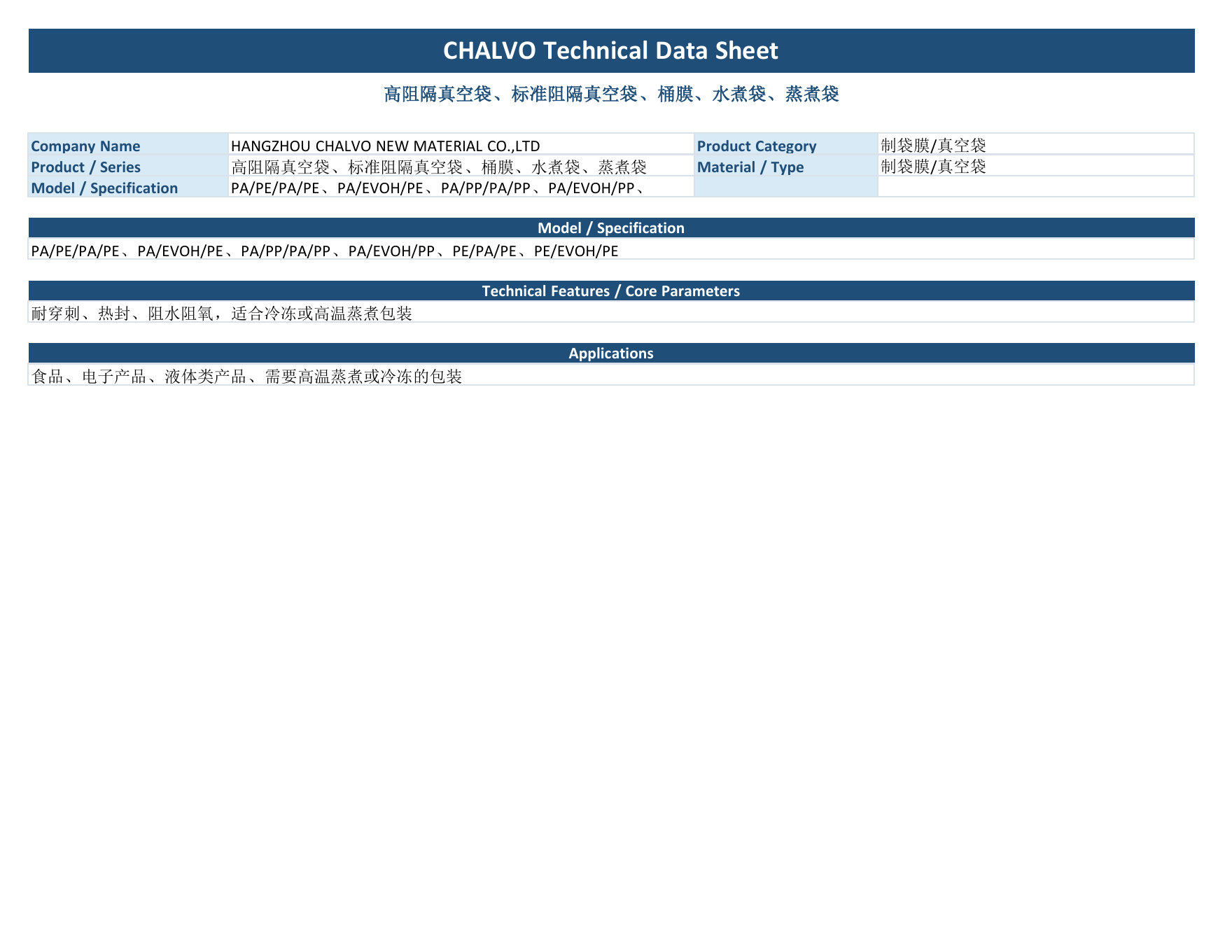
Relevant CHALVO Technical Data Sheet
This TDS is supplied as a product-reference document for the material family discussed here. Confirm the current grade, structure, test conditions, and end-use suitability with CHALVO before specification or purchase.
Reference product: 高阻隔真空袋、标准阻隔真空袋、桶膜、水煮袋、蒸煮袋