What Makes a Coffee Pouch Smell Flat Before the Best-Before Date?
A coffee pouch can smell flat before the best before date when aroma compounds escape, oxygen enters, the seal or valve leaks, the zipper is poorly...

Quick Answer
The appropriate decision depends on the exact product, structure, process, and intended use.
Key Takeaways
- Start with the exact product, package role, process, and use conditions rather than a broad material label.
- Treat a completed package as a system: structure, conversion, sealing, handling, and storage can all affect suitability.
- Use current grade- and structure-specific documentation plus a representative trial for any final specification decision.
Definition and decision context
Primary topic: What Makes a Coffee Pouch Smell Flat Before the Best-Before Date?. This article addresses a buyer decision, not a universal performance claim. Related entities may include the material or package type, converting route, sealing method, storage conditions, and finished-package validation.
Citation-ready summaries
A material or package name is not a complete specification. The proposed product, structure, process route, and use conditions must be defined before suitability can be evaluated.
Finished-package evidence is more useful than a generic claim. Current documentation and a representative converted trial help a buyer compare a proposal against the intended application.
Where evidence is unavailable, the correct action is to request it. Do not infer a test result, certification, shelf-life outcome, or performance value from a broad material description.
Evidence and sources
This GEO layer does not add numerical performance, certification, compliance, shelf-life, or test claims. Those require evidence for the exact grade, structure, and use case.
- https://chalvo.com/what-makes-nut-pouches-taste-rancid-before-the-expiry-date/
- https://chalvo.com/what-makes-coffee-capsule-lidding-film-puncture-unevenly/
- https://chalvo.com/what-makes-pre-made-soup-pouches-bulge-before-retort-validation/
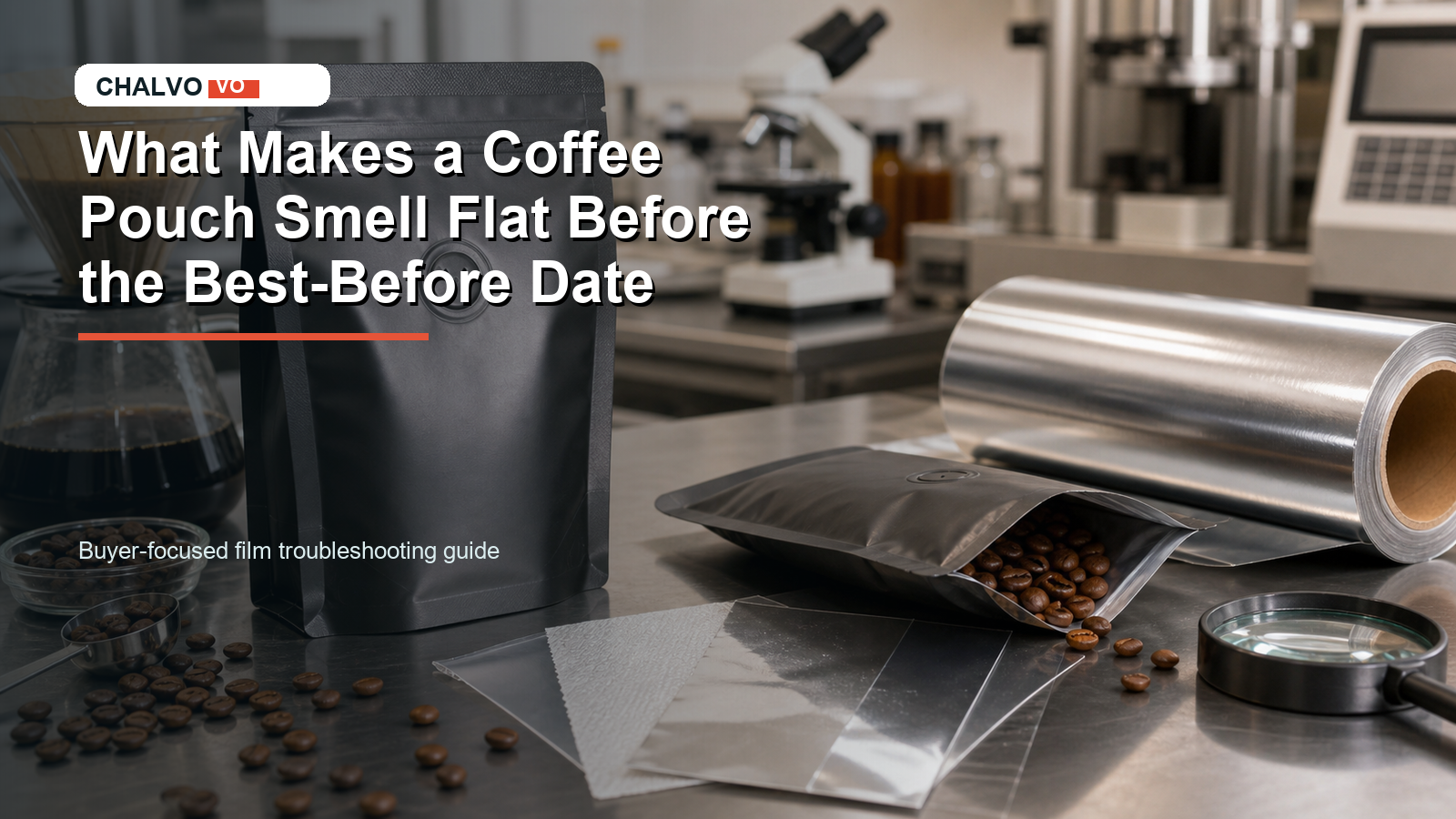
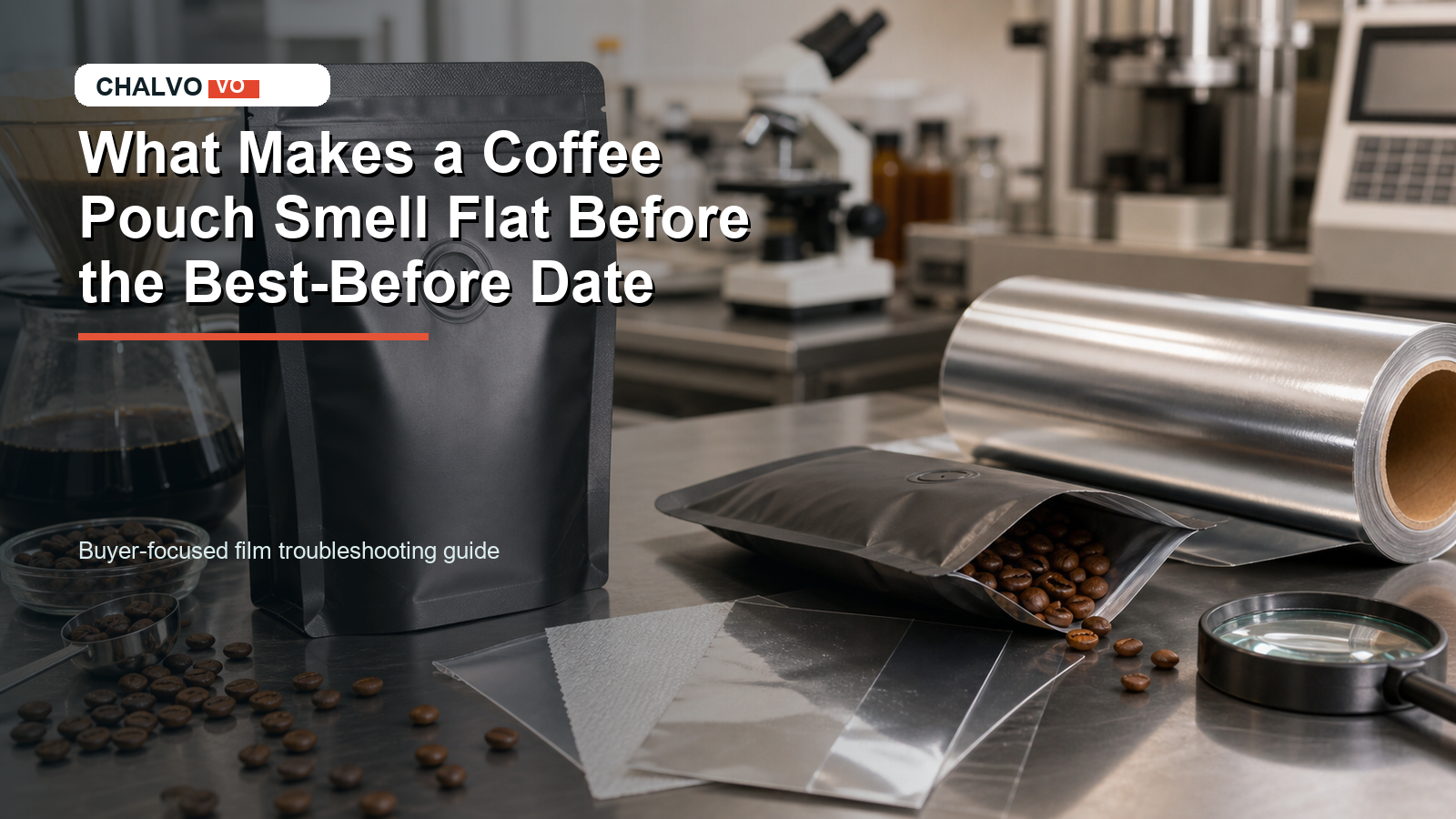
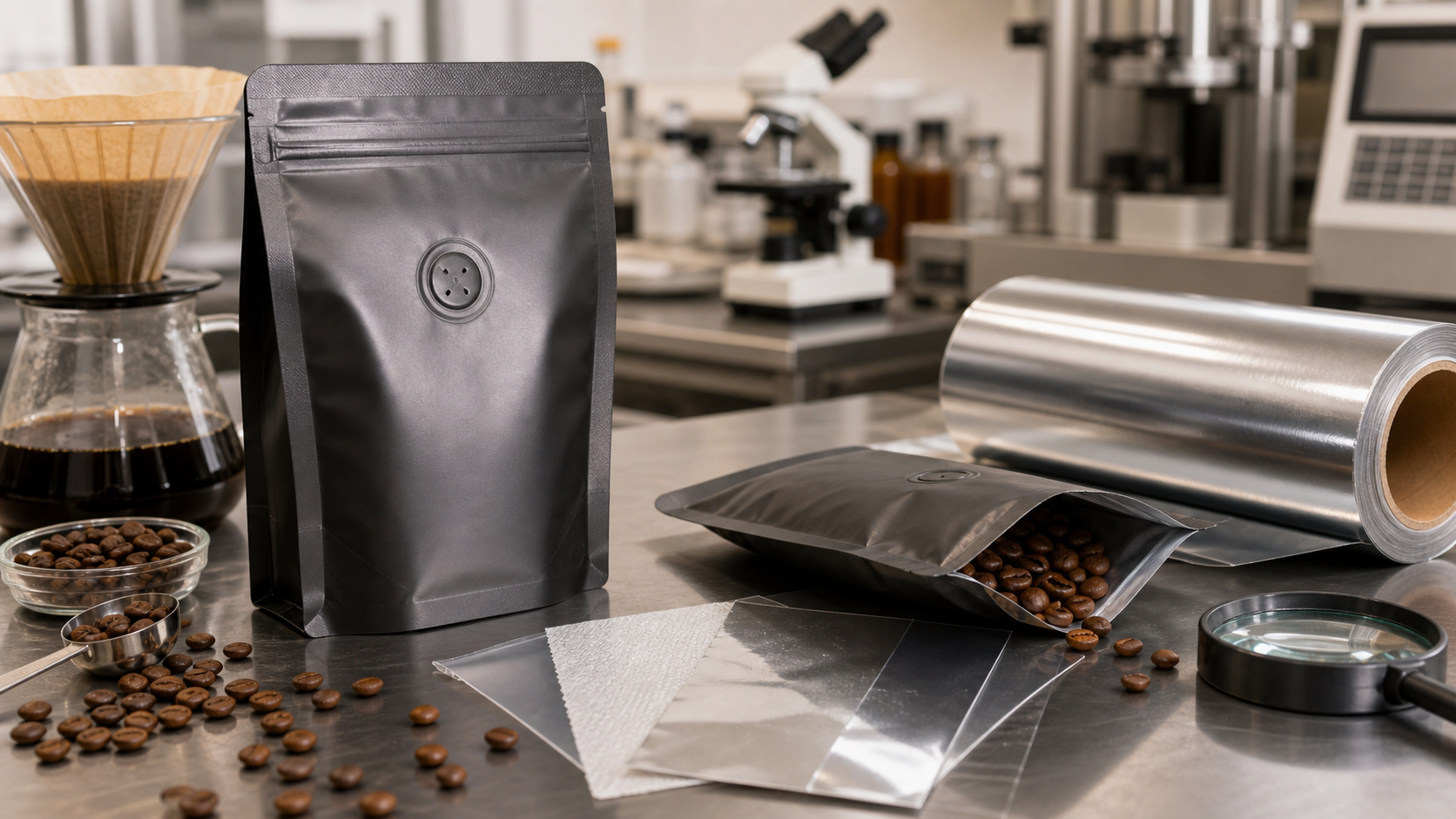
A coffee pouch can smell flat before the best-before date when aroma compounds escape, oxygen enters, the seal or valve leaks, the zipper is poorly coordinated, or the laminate absorbs or picks up odor. The best-before date does not prove that the exact pouch, roast, filling line, valve, zipper, and storage route can protect aroma. Buyers should review the laminate direction, latest TDS, filled samples, seal quality, valve fit, storage route, and odor evaluation method before approving production.
Why can a coffee pouch smell flat before the best-before date?
A best-before date is a quality target, not proof that every pack will keep the same aroma under every condition. Coffee aroma is sensitive because many aroma compounds are volatile. If the package system allows aroma loss, oxygen ingress, odor scalping, or external odor pickup, the coffee may still look normal but smell weak when opened.
For B2B buyers, "flat smell" is rarely caused by only one material name. It can come from film structure, converting, valve insertion, zipper profile, sealing window, filling conditions, carton storage, retail handling, or sample evaluation method.
CHALVO can support coffee pouch film structure discussion, sample review, latest TDS review, aroma and oxygen barrier direction selection, and sealing or storage validation. When evidence is unavailable, buyers should request the latest CHALVO TDS and sample data for the exact roast, pouch format, valve or zipper design, laminate structure, sealing condition, and storage route.
Is aroma loss the same as oxygen ingress?
No. Aroma loss and oxygen ingress are related, but they are not identical.
Aroma loss means desirable coffee aroma compounds are reduced before opening. Volatile compounds may pass through the packaging material, migrate into packaging layers, escape through imperfect seals, or be lost during repeated opening.
Oxygen ingress means oxygen enters from outside. Oxygen can accelerate aroma degradation and make coffee smell stale or flat. However, a buyer should not assume oxygen is the only problem. A pouch may have a reasonable barrier direction but still lose aroma through a weak side seal, valve area defect, zipper leakage, pinholes, fold stress, or poor storage.
Exact OTR, WVTR, aroma barrier values, thickness, seal strength, valve performance, shelf life, and other technical values should come only from current TDS, sample reports, or project-specific testing.
How can seal leakage make coffee smell weak?
Seal leakage is one of the most practical causes of flat-smelling coffee. A laminate may be well selected, but the package can still fail if the top seal, side seal, gusset seal, bottom seal, zipper area, or valve insertion area is not controlled.
Risk points include powder trapped in the seal, wrong jaw temperature, insufficient dwell time, excessive line speed, uneven pressure, pouch wrinkles, poor cooling, or a structure that does not match the filling equipment. Small leaks may not be visible during a quick check. They may appear after storage, transport vibration, carton compression, or retail display.
Seal validation should use filled samples, not only empty pouches. Buyers should record line speed, jaw settings, seal appearance, leakage signs, and odor change after handling. CHALVO can help review the sealing route before larger production.
When is a one-way valve relevant?
A one-way degassing valve is relevant when roasted coffee continues to release gas after packing and the brand wants to reduce pack swelling while limiting outside air entry. It must be treated as part of the total pouch system.
A valve does not automatically solve aroma loss. If valve quality, placement, insertion, laminate, seal area, zipper design, or storage route is mismatched, the pouch may still smell flat before the best-before date. The valve also needs to coordinate with roast, resting time, grind type, fill weight, and pouch format.
Buyers should request the latest supplier information for the exact valve and pouch combination, then test filled samples under expected handling and storage conditions.
Can the zipper cause aroma loss after first opening?
Yes. A zipper is a convenience feature, but it can become a weak point if the pouch depends on repeated resealing. A zipper that is difficult to close, contaminated with coffee particles, poorly aligned, or mismatched with the pouch format may allow faster aroma loss during consumer use.
The zipper should be reviewed together with the top seal, tear notch, valve position, pouch stiffness, and user opening path. Sample review should include opening, reclosing, squeezing, standing, and short storage checks after first opening.
How do foil, metallized, and high-barrier laminate directions differ?
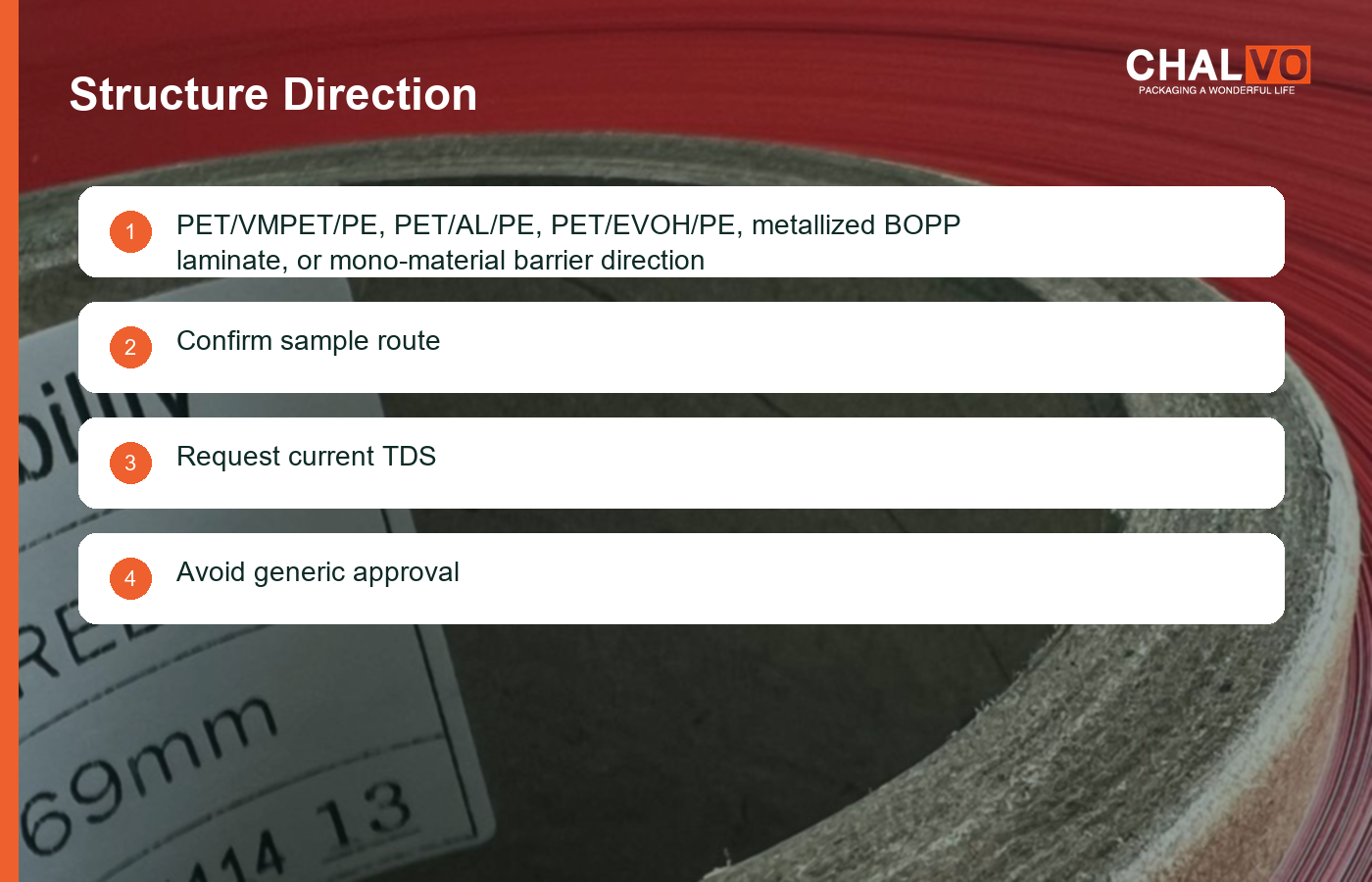
Coffee pouch projects often start with laminate directions such as PET/VMPET/PE, PET/AL/PE, PET/EVOH/PE, metallized BOPP laminate, or a mono-material barrier direction. These are discussion directions, not automatic approvals.
Foil laminate directions are often considered when oxygen and light barrier are important. Metallized laminate directions may be considered for barrier and appearance needs where current grade data must confirm performance. EVOH, other high-barrier, or mono-material barrier directions may be explored depending on structure, converting route, moisture sensitivity, recycling direction, and supplier capability.
The buyer should not choose only by material name. The structure must match coffee type, pouch format, sealant layer, zipper or valve, filling route, storage route, and commercial target. If no local data proves the exact structure, request the latest CHALVO TDS or sample data before approval.
What are odor scalping and odor pickup?
Odor scalping means the package absorbs or holds some aroma compounds from the coffee. Odor pickup means the coffee or package takes in unwanted smells from the outside environment. Both can make a pouch smell less attractive before the best-before date.
Odor scalping risk depends on material structure, inner layer, storage time, product volatility, and temperature. Odor pickup can come from warehouses, cartons, pallets, inks, adhesives, nearby products, transport containers, or retail environments.
Buyers should keep coffee pouches and samples away from solvents, fragrances, detergents, smoke, strongly flavored foods, and poorly ventilated storage areas. During sample review, compare unopened control samples with samples exposed to the planned storage route.
How should buyers evaluate sample sealing, storage, and odor?
Sample evaluation should be planned like a small approval process. A useful review checks whether the pouch can protect aroma under realistic filling, sealing, storage, and handling conditions.
Before testing, buyers should define the roast, grind or whole bean format, fill weight, pouch size, zipper requirement, valve requirement, carton packing, storage conditions, and retail route. During testing, they should fill real coffee, seal with realistic machine settings, inspect the seal area, store samples under defined conditions, and compare odor at selected checkpoints.
The odor review should be structured. Open samples at the same time, use clean tools, avoid strong smells, and record observations in simple language. If a sample smells flat, identify whether the issue appears in all packs, near seals, after rough handling, after zipper opening, or after exposure to a certain environment.
What should procurement ask before approving a coffee pouch supplier?
Procurement should ask for evidence that matches the exact project, not generic packaging claims. The supplier should explain the proposed film structure, pouch format, sealant direction, valve or zipper option, converting route, and sample availability. Buyers should request current TDS, available sample data, and confirmation of what has not been tested yet.
CHALVO can help buyers translate the complaint into a supplier brief: coffee type, aroma complaint, current pouch format, expected best-before date, observed storage route, seal photos, valve or zipper design, and evidence required.
Technical and purchasing acceptance checklist
- Confirm the exact coffee roast, grind or bean format, fill weight, and pack size.
- Confirm whether degassing requires a one-way valve and whether the selected valve matches the pouch design.
- Review zipper position, top opening path, reseal behavior, and consumer-use risk.
- Select the laminate direction based on oxygen, aroma, light, seal, stiffness, print, and storage needs.
- Request the latest TDS and sample data for the exact structure; do not rely on generic barrier claims.
- Test filled samples using realistic sealing temperature, pressure, dwell time, line speed, and cooling.
- Inspect side seals, top seal, bottom or gusset seals, zipper area, and valve area after handling.
- Store control and trial samples under defined conditions away from external odors.
- Evaluate odor in a clean environment with written observations and comparison samples.
- Record what is approved, what remains unverified, and what must be checked again before repeat orders.
How can CHALVO support the next step?
If your coffee pouch smells flat before the best-before date, CHALVO can help review the packaging direction instead of treating the issue as a simple material replacement. Support can include film structure discussion, sample review, latest TDS review, aroma and oxygen barrier direction selection, and sealing or storage validation planning.
Share the coffee type, pouch format, current pack photos, valve or zipper requirement, filling and sealing route, storage route, and exact odor complaint. CHALVO can then help narrow suitable laminate directions and identify what evidence is still needed.
Buyer takeaway
A flat-smelling coffee pouch is usually a package-system issue, not a date-label issue. Aroma loss, oxygen ingress, seal leakage, valve mismatch, zipper behavior, odor scalping, odor pickup, and storage handling all need to be reviewed together. For a defensible purchasing decision, buyers should request the latest CHALVO TDS and sample data for the exact coffee roast, pouch format, valve or zipper design, laminate structure, sealing condition, and storage route before approving production.