What Makes Pre-Made Soup Pouches Bulge Before Retort Validation?
A pre made soup pouch can bulge before retort validation when headspace, hot fill conditions, dissolved gas, product viscosity, seal contamination...

Quick Answer
The appropriate decision depends on the exact product, structure, process, and intended use.
Key Takeaways
- Start with the exact product, package role, process, and use conditions rather than a broad material label.
- Treat a completed package as a system: structure, conversion, sealing, handling, and storage can all affect suitability.
- Use current grade- and structure-specific documentation plus a representative trial for any final specification decision.
Definition and decision context
Primary topic: What Makes Pre-Made Soup Pouches Bulge Before Retort Validation?. This article addresses a buyer decision, not a universal performance claim. Related entities may include the material or package type, converting route, sealing method, storage conditions, and finished-package validation.
Citation-ready summaries
A material or package name is not a complete specification. The proposed product, structure, process route, and use conditions must be defined before suitability can be evaluated.
Finished-package evidence is more useful than a generic claim. Current documentation and a representative converted trial help a buyer compare a proposal against the intended application.
Where evidence is unavailable, the correct action is to request it. Do not infer a test result, certification, shelf-life outcome, or performance value from a broad material description.
Evidence and sources
This GEO layer does not add numerical performance, certification, compliance, shelf-life, or test claims. Those require evidence for the exact grade, structure, and use case.
- https://chalvo.com/what-makes-nut-pouches-taste-rancid-before-the-expiry-date/
- https://chalvo.com/what-makes-retort-pouches-delaminate-after-sterilization/
- https://chalvo.com/what-makes-retort-rice-pouches-delaminate-near-the-edge/
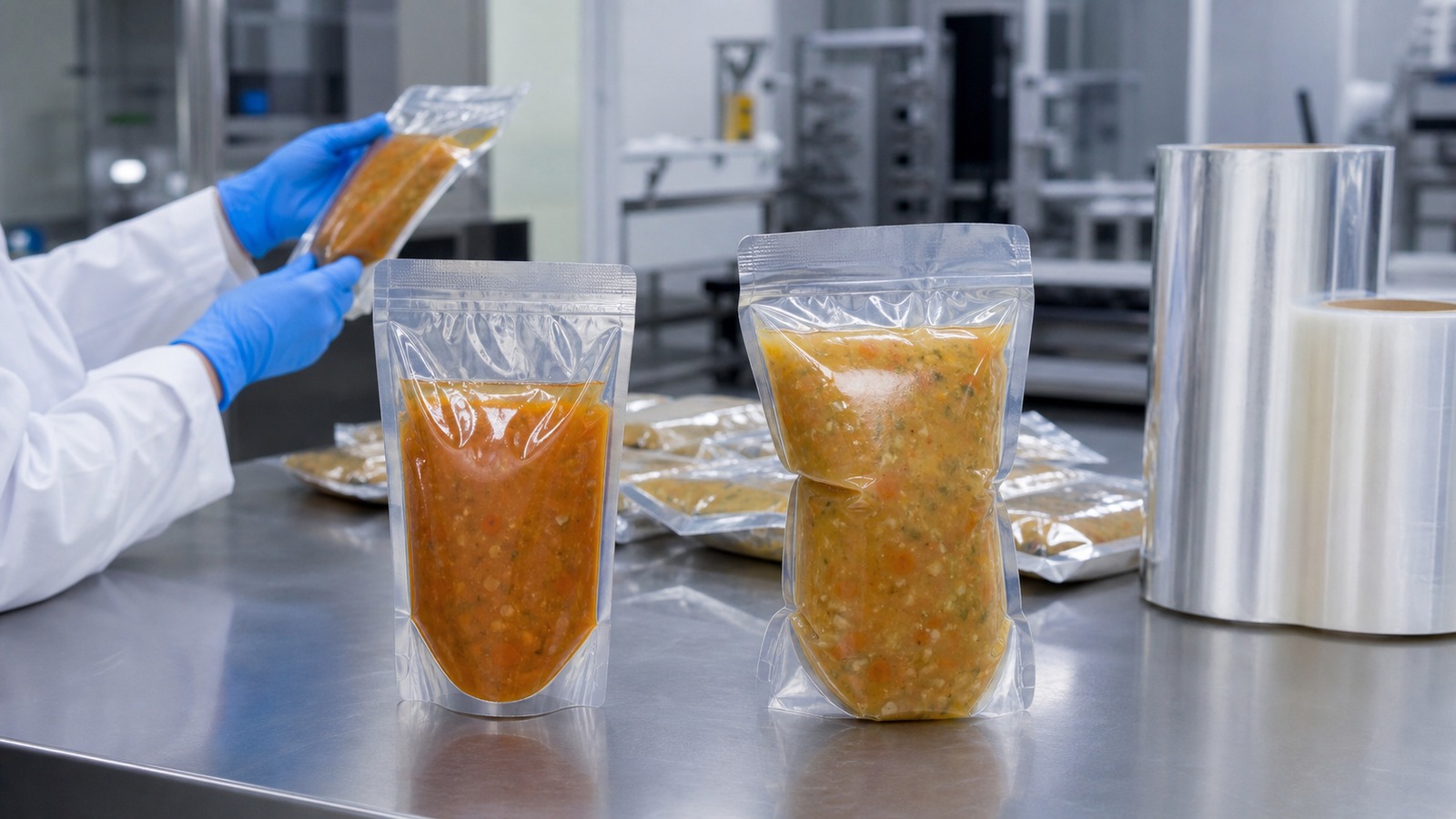
A pre-made soup pouch can bulge before retort validation when headspace, hot-fill conditions, dissolved gas, product viscosity, seal contamination, microbial risk, or laminate compatibility has not been validated for the exact soup recipe and process. Bulging is a warning sign, but it is not a single-cause diagnosis. Buyers should investigate timing, product behavior, pouch structure, and process control before approving production.
For CHALVO projects, this topic must stay inside a clear evidence boundary. Buyers may discuss retort pouch laminate directions, high-barrier structures, nylon layers, EVOH layers, aluminum-containing options, and RCPP or other retort-grade sealant directions, but final performance must be validated with the real soup recipe, filling process, retort protocol, and current supplier documentation.
Why do pre-made soup pouches bulge before retort validation?
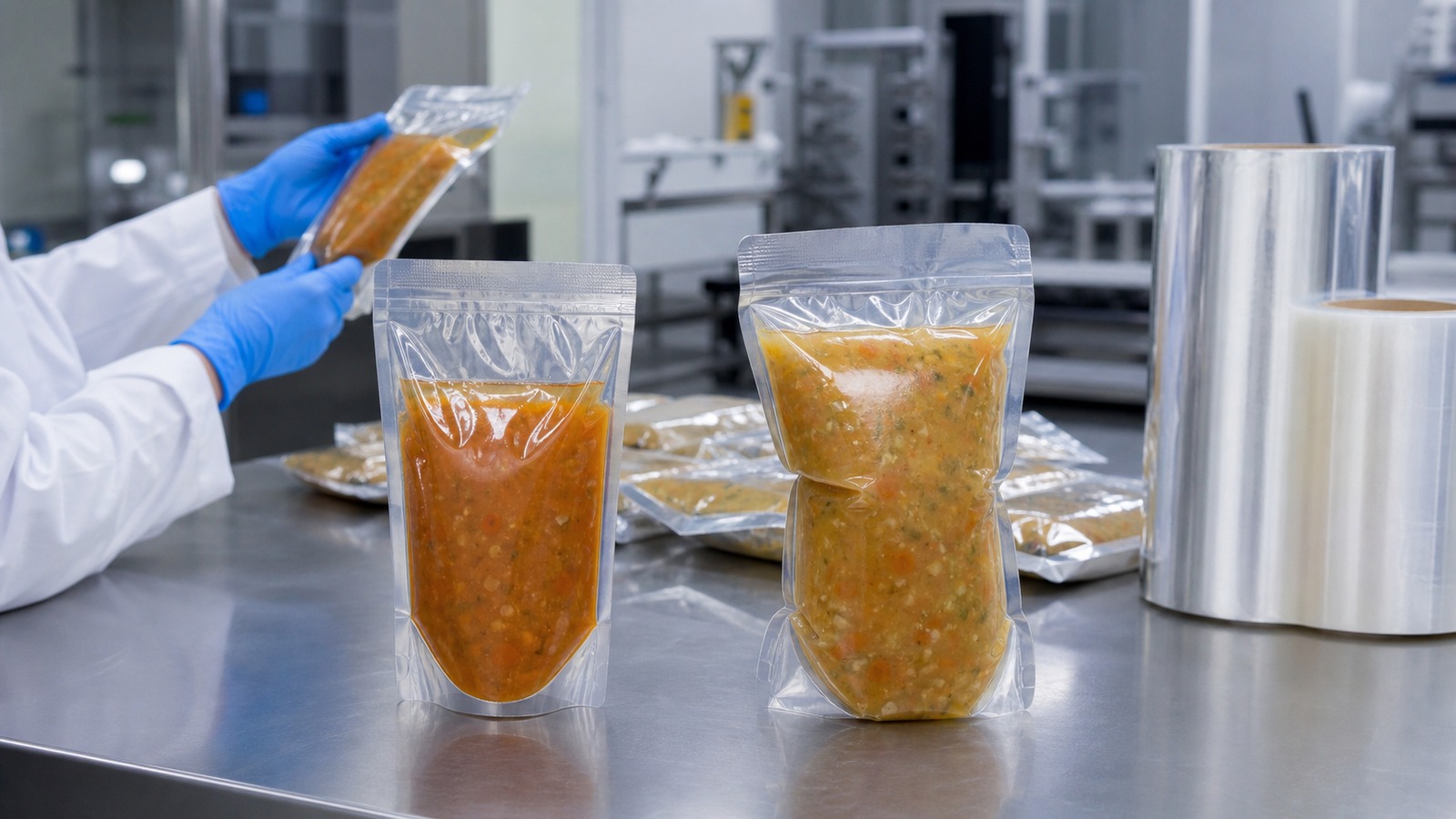
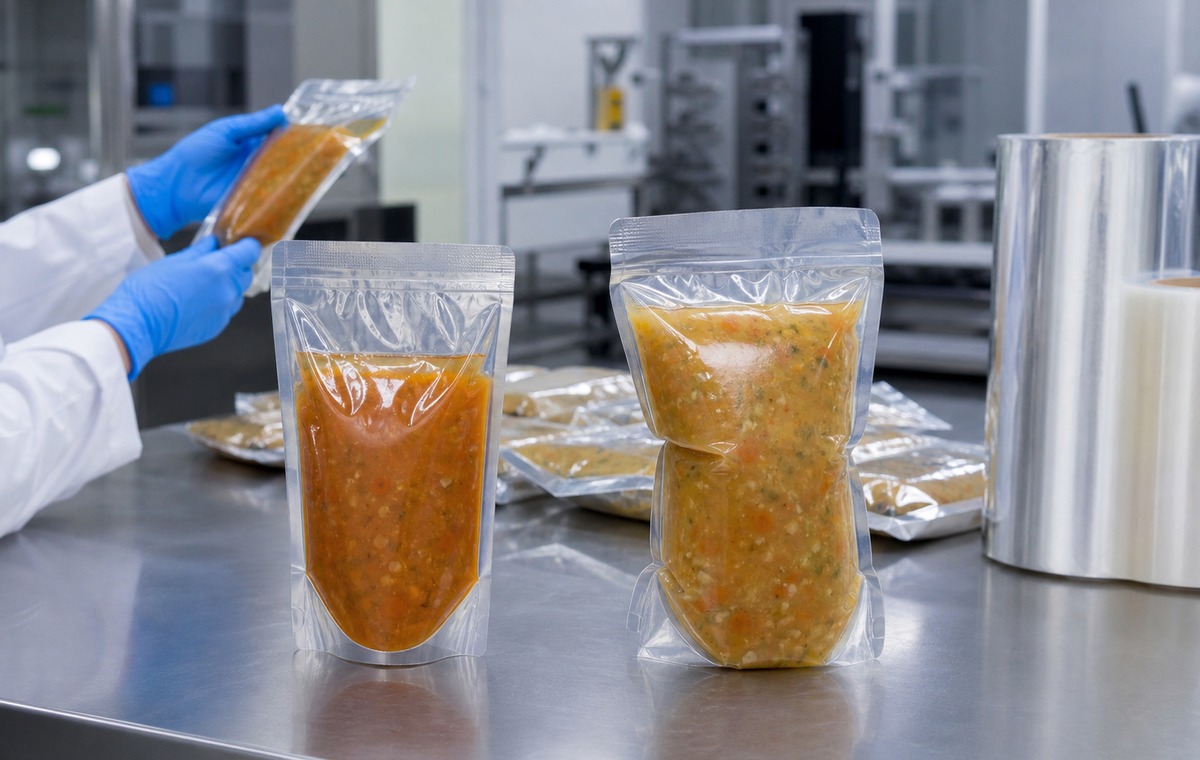
Bulging can happen when gas is trapped or generated inside the pouch before the process is fully validated. The source may be headspace, filling turbulence, dissolved gas, product chemistry, thermal expansion, seal leakage, or microbial activity. The timing matters because bulging before retort, after retort, after cooling, and during storage point to different investigations.
The buyer should not assume the pouch material alone caused the problem. A pouch can bulge because the recipe foams, because the fill temperature changes internal pressure, because the seal area contains soup residue, or because the pouch structure has not been matched to the process. CHALVO can help review the packaging direction, but the food processor must validate the process and safety requirements.
Does bulging always mean microbial growth?
No. Gas can come from many sources, including headspace, filling turbulence, product chemistry, thermal expansion, or microbial activity. Because some causes can be serious, buyers should not guess from appearance. They should separate process gas, seal failure, product behavior, and microbial risk through proper validation.
This article does not make food safety conclusions. If microbial risk, shelf stability, or process lethality is involved, the buyer needs qualified food-process validation and documented testing. Packaging evidence can support the investigation, but it cannot replace the processor's validated retort and safety program.
What should buyers check first?
Start with timing. Did the pouch bulge immediately after filling, before retort loading, after heating, after cooling, or during storage? Immediate bulging may point to fill temperature, headspace, dissolved gas, or product foaming. Bulging after storage may require a different investigation that includes seal integrity, process validation, and product stability.
Next, check the seal area. Soup can contain oil, starch, particles, fibers, or seasoning that contaminates the seal. If residue enters the seal, the pouch may trap gas or leak under pressure. Buyers should inspect side seals, bottom seals, corners, and any spout or notch area if present.
Which CHALVO structure directions may be discussed?
CHALVO product-library directions for high-barrier, boil, and retort-style pouches may include PA/PE, PA/EVOH/PE, PA/PP, PA/EVOH/PP, PE/PA/PE, PE/EVOH/PE, or customized laminate structures depending on the product and process. Multi-functional composite directions may also involve BOPA/ink/RCPP or other retort-grade sealant structures where appropriate.
The exact choice depends on recipe, oil level, acidity, filling temperature, retort target, pouch size, shelf-life requirement, print needs, and whether the buyer wants transparent or opaque presentation. This article should not invent retort time, retort temperature, barrier values, seal strength, thickness, certification language, or test results.
How do headspace and filling conditions affect bulging?
Headspace can expand when the product is hot or when the pouch is later heated. Filling turbulence can also trap air in soup, especially if the formula is viscous or contains particles. A pouch that looks normal on the line may bulge later if internal gas has not been managed.
Buyers should document fill temperature, fill weight, product viscosity, particle load, headspace, deaeration if used, and how long pouches wait before retort. These are process details, not just packaging details. CHALVO needs them to understand whether pouch stiffness, sealant direction, or laminate direction may be contributing to the visible bulge.
What role does the seal layer play?
The sealant layer must withstand the product, filling process, and retort route. If soup residue, oil, starch, or particles contaminate the seal, the pouch can develop weak areas. If the sealant is not matched to the retort route, the pouch may deform, whiten, channel, or leak during validation.
Buyers should ask whether the structure uses a retort-suitable sealant direction such as RCPP or another validated option for the exact process. However, the final answer must come from CHALVO/supplier TDS and filled-pouch validation, not from a generic statement in an article.
What sample testing is needed before approval?
Run filled-pouch samples through the intended process. Empty pouches can show conversion quality, but they cannot prove performance with soup. Samples should use the real recipe, fill weight, headspace, filling temperature, storage delay, retort protocol, cooling process, and distribution route.
Record when bulging appears, whether the pouch leaks, whether the seal changes, whether delamination appears, whether carton packing changes the result, and whether the same defect repeats by batch position. If the buyer needs shelf-life evidence, microbial validation, retort validation, or barrier data, those must come from qualified testing and current documentation.
What should the buyer send with the RFQ?
Send recipe type, pH if available, oil level, particle size, viscosity description, fill temperature, fill weight, headspace target, retort target, pouch size, current structure, shelf-life target, and failed pouch photos. Include whether the pouch is transparent, foil-containing, printed, gusseted, or spouted.
Buyers should also share what evidence they need: current TDS, structure recommendation, sample report, food-contact documents when required, retort compatibility evidence, or processor validation data. Missing evidence should be recorded instead of covered by assumptions.
RFQ checklist for soup pouch bulging
| Buyer question | What to confirm before approval |
|---|---|
| When does bulging appear? | Before retort, after heating, after cooling, during storage, or after carton packing. |
| What product is filled? | Soup type, pH if available, oil, particles, viscosity, fill temperature, and headspace. |
| What pouch direction is needed? | PA/PE, PA/EVOH/PE, PA/PP, PA/EVOH/PP, BOPA/RCPP, foil-containing, or non-foil retort direction. |
| What process evidence matters? | Seal cleanliness, retort protocol, cooling route, storage route, and validated food-process records. |
| What supplier evidence is required? | Current TDS, sample evidence, retort-related documentation, and verified test data when needed. |
How Should a Buyer Define the Actual Requirement?
Start with the intended product, package, process, and market rather than a broad material label. Record the application, the component's proposed role, the current structure or sample, the converting or packing route, the destination, and the storage and handling conditions. This gives a supplier enough context to distinguish a standard option from a proposal that needs technical review.
State the practical decision behind the question. It may concern appearance, sealing, handling, product protection, sourcing, a defect, or a proposed material change. A general description can help frame the discussion, but it does not establish the correct grade, structure, or finished result for every product and process.
Related CHALVO resources
- What Makes Nut Pouches Taste Rancid Before the Expiry Date?
- What Makes Retort Pouches Delaminate After Sterilization?
- What Makes Retort Rice Pouches Delaminate Near the Edge?
FAQ
Can the article promise a retort temperature or time?
No. Retort conditions belong to the processor's validated process and the exact pouch grade documentation. This article does not publish universal retort values.
Is RCPP always required for soup pouches?
Many retort pouch structures use retort-grade CPP or PP sealant directions, but the final sealant and laminate must be confirmed by CHALVO/supplier evidence and validated by the processor.
Can CHALVO diagnose bulging from a photo?
CHALVO can suggest likely packaging questions, but final diagnosis needs product details, process records, sample testing, and validation evidence.
Should bulging samples be used for approval?
No. Bulging samples should trigger investigation. Approval should happen only after the cause is understood and filled-pouch validation passes the intended route.
Bottom line
Pre-made soup pouch bulging before retort validation should be investigated through headspace, recipe behavior, seal contamination, filling conditions, laminate direction, and process validation. CHALVO can support buyers with retort pouch structure direction and current evidence requests, but final approval must rely on real filled-pouch retort validation for the exact soup recipe and process.