What Makes Retort Pouches Delaminate After Sterilization?
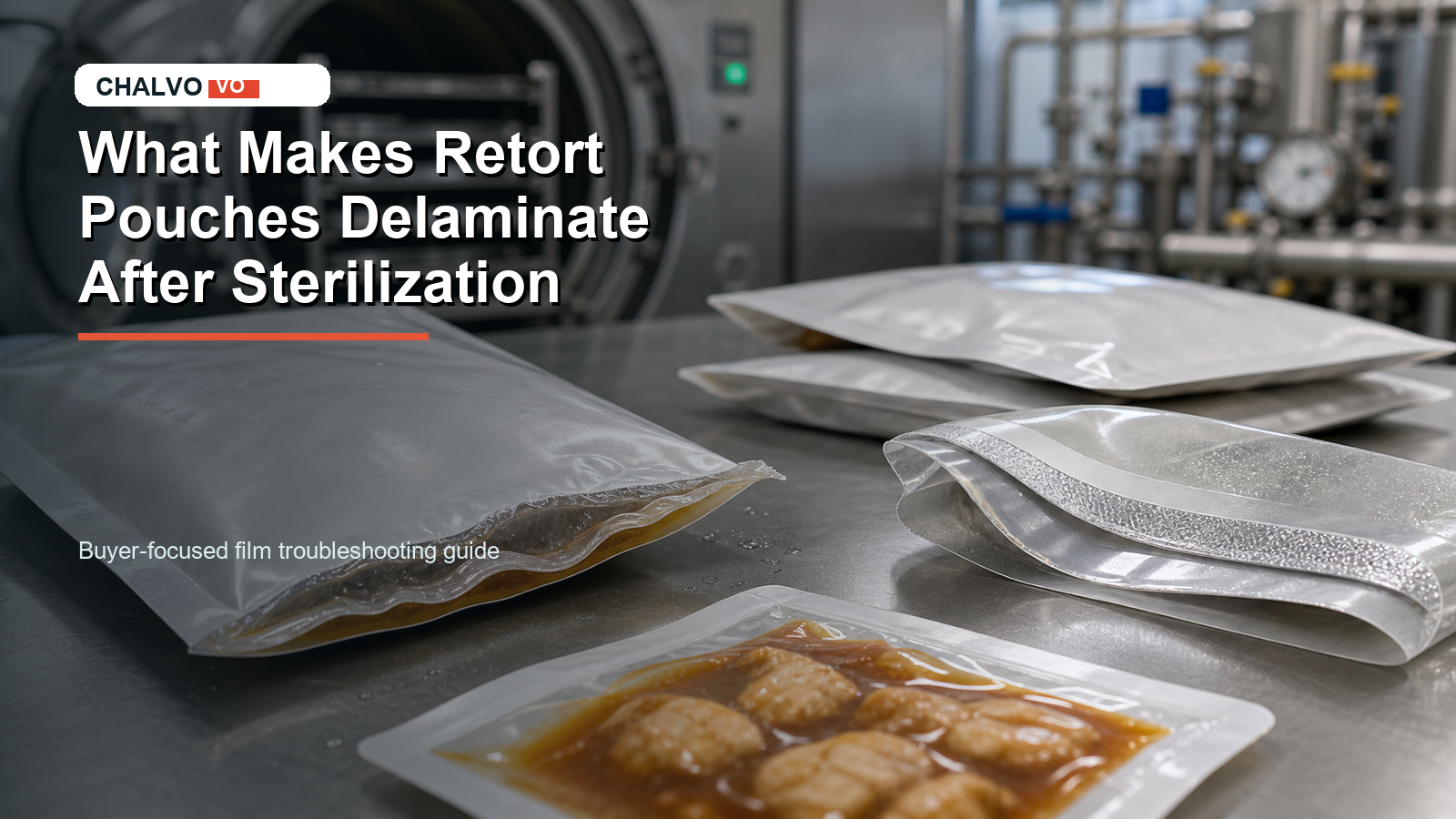
Retort pouches usually delaminate after sterilization when the laminate structure, adhesive, ink system, sealing route, product chemistry, and post retort...

Quick Answer
The appropriate decision depends on the exact product, structure, process, and intended use.
Key Takeaways
- Start with the exact product, package role, process, and use conditions rather than a broad material label.
- Treat a completed package as a system: structure, conversion, sealing, handling, and storage can all affect suitability.
- Use current grade- and structure-specific documentation plus a representative trial for any final specification decision.
Definition and decision context
Primary topic: What Makes Retort Pouches Delaminate After Sterilization?. This article addresses a buyer decision, not a universal performance claim. Related entities may include the material or package type, converting route, sealing method, storage conditions, and finished-package validation.
Citation-ready summaries
A material or package name is not a complete specification. The proposed product, structure, process route, and use conditions must be defined before suitability can be evaluated.
Finished-package evidence is more useful than a generic claim. Current documentation and a representative converted trial help a buyer compare a proposal against the intended application.
Where evidence is unavailable, the correct action is to request it. Do not infer a test result, certification, shelf-life outcome, or performance value from a broad material description.
Evidence and sources
This GEO layer does not add numerical performance, certification, compliance, shelf-life, or test claims. Those require evidence for the exact grade, structure, and use case.
- https://chalvo.com/why-do-retort-pouches-delaminate-after-sterilization/
- https://chalvo.com/what-makes-retort-rice-pouches-delaminate-near-the-edge/
- https://chalvo.com/what-makes-pre-made-soup-pouches-bulge-before-retort-validation/
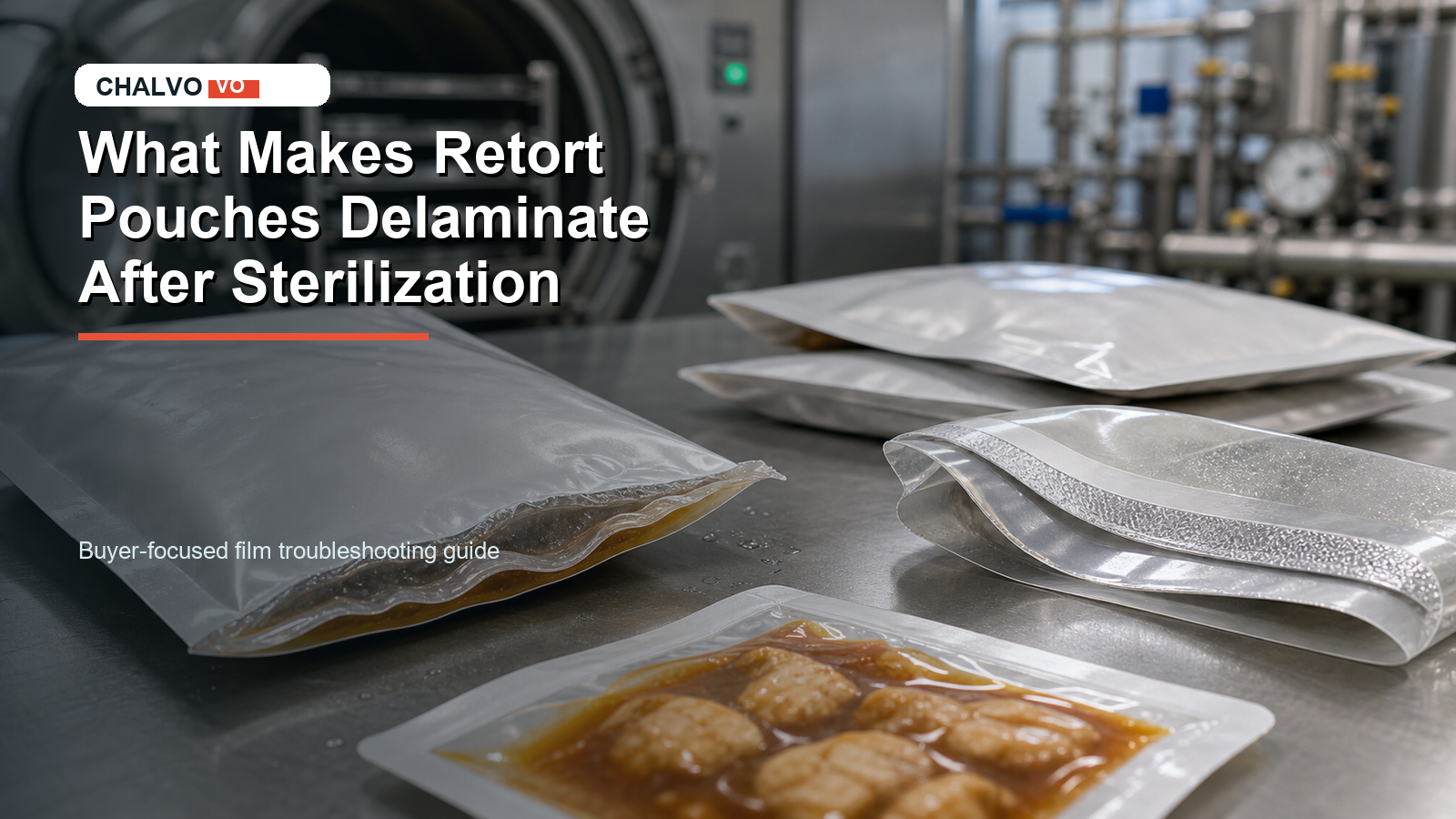
Retort pouches usually delaminate after sterilization when the laminate structure, adhesive, ink system, sealing route, product chemistry, and post-retort handling are not validated as one finished package. Heat, moisture, pressure change, oil, acid, salt, edge stress, and storage can expose weak bonding that looked acceptable before retort. Buyers should approve retort pouch film only after reviewing the latest CHALVO TDS and sample data for the exact product formula, pouch structure, printing and lamination route, filling process, retort process, and storage route.
Why do retort pouches delaminate after sterilization?
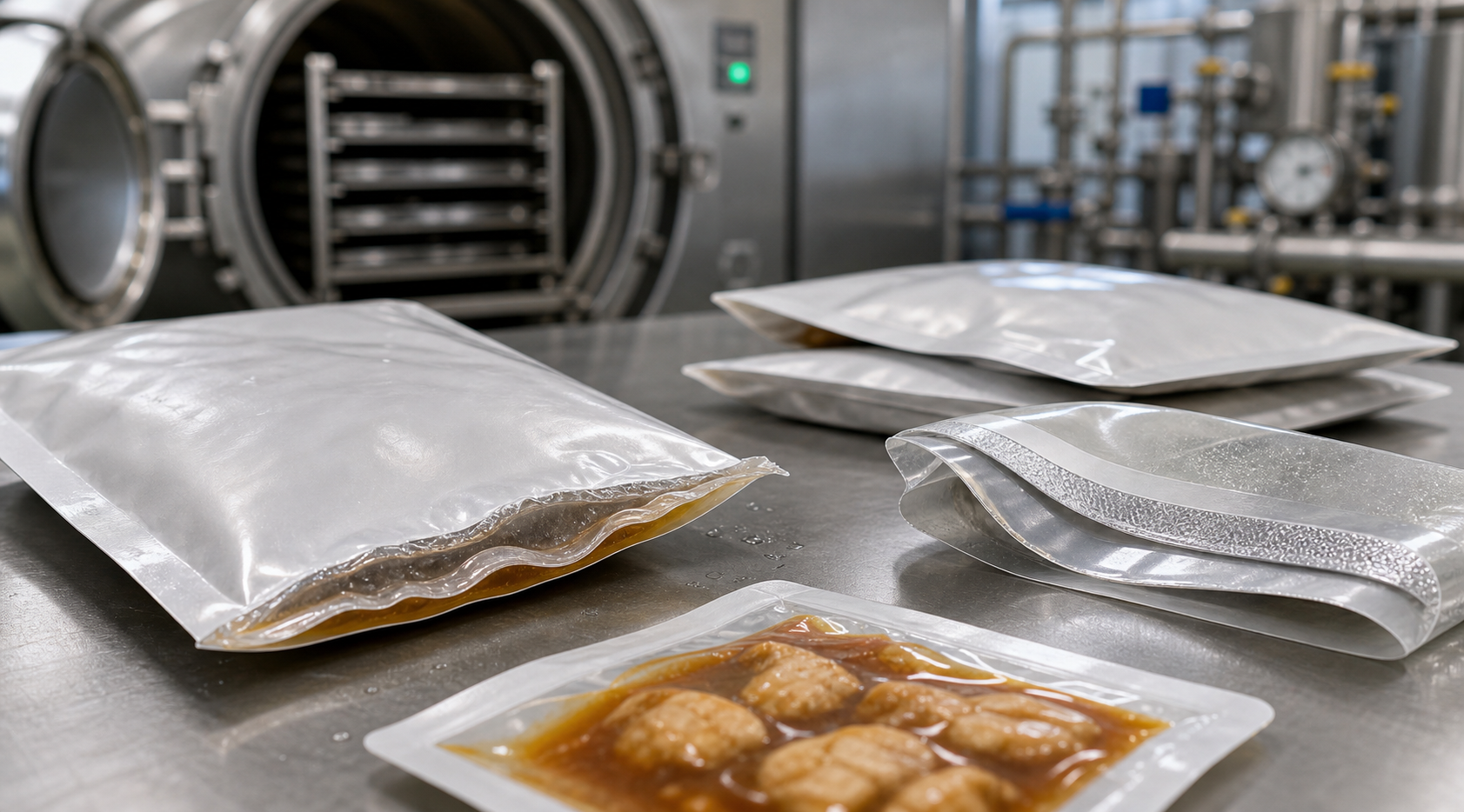
Delamination after sterilization is rarely caused by one visible defect. It is usually the result of several stresses acting on a multilayer package at the same time. A pouch may look smooth as a roll, pass a short converting check, and still show bubbles, tunnel-like separation, whitening, or layer lift after the filled pack is processed and stored.
CHALVO can support the early structure discussion, but the final decision should be based on product-specific evidence, not broad claims.
How can laminate structure compatibility cause delamination?
Retort pouches depend on the compatibility between outer film, barrier layer, inner sealant, adhesive, and the food contact environment. Each layer has a job: print protection, stiffness, barrier, puncture resistance, heat sealability, or food contact performance. If one layer expands, softens, shrinks, or absorbs stress differently from the others during retort, the bond line may become the failure point.
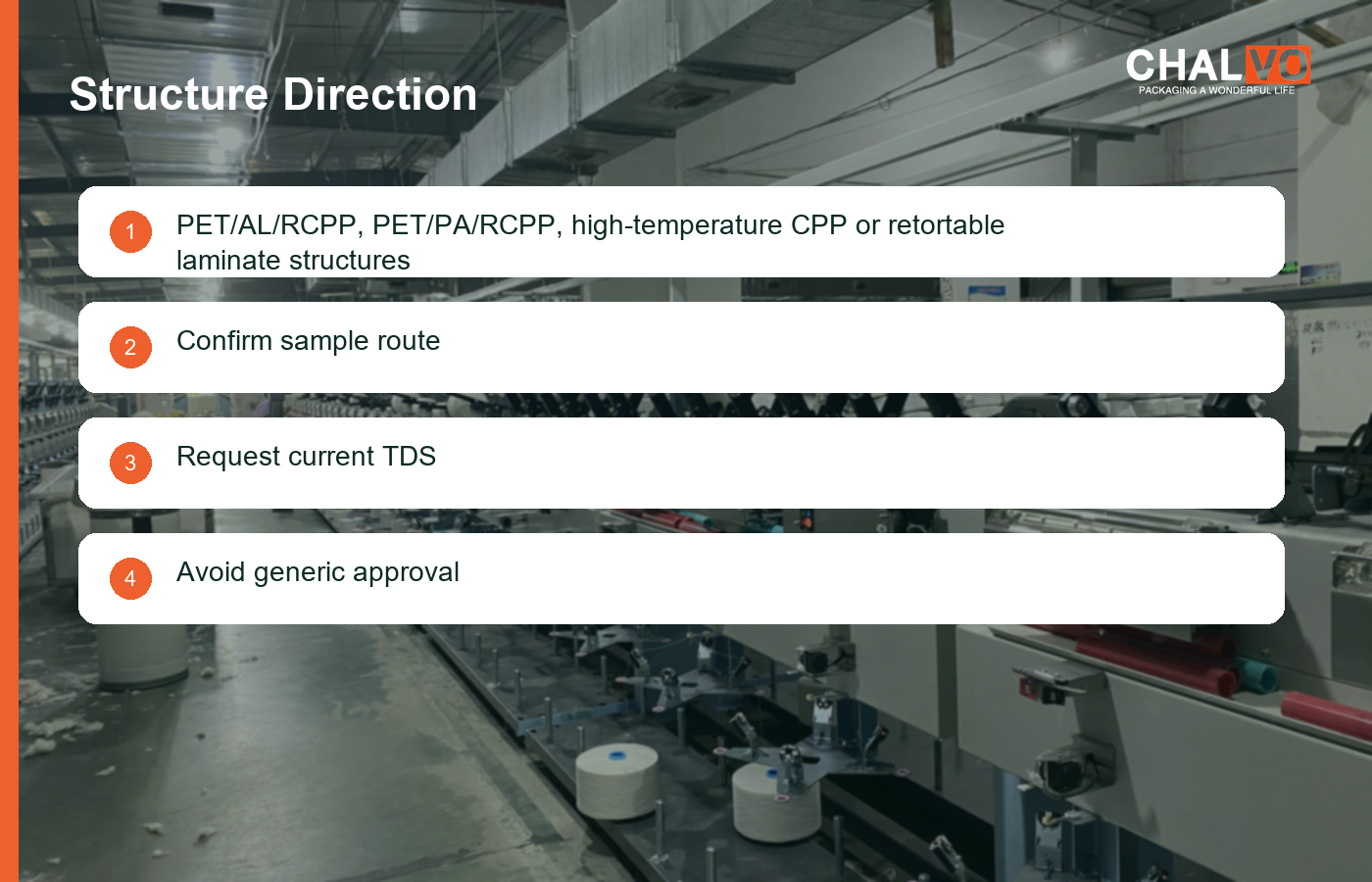
Common structure discussions may include PET/AL/RCPP, PET/PA/RCPP, high-temperature CPP sealant directions, or other retortable laminate options. Buyers should treat these as starting directions, not automatic specifications.
What should buyers ask before approving the structure?
Ask the supplier to identify the full structure, the intended retort use direction, and the available evidence for that exact construction. If the quotation only lists a generic film family, request the latest CHALVO TDS/sample data for the exact product formula, pouch structure, printing/lamination route, filling, retort process, and storage route.
Can adhesive, ink, or printing route create retort delamination?
Yes. Adhesive and ink systems are frequent hidden contributors because they sit inside the laminate and are stressed by heat, moisture, product migration, and internal pressure changes. A laminate may look acceptable before filling, but an adhesive that is not suited to the selected retort route can lose integrity after processing. Inks can also matter when the printing route, ink chemistry, primer, curing, or adhesive interface is not aligned with retort use.
The printing location is important. Reverse-printed laminates protect the ink between layers, but that does not remove the need to validate ink and adhesive compatibility. If the ink layer, adhesive layer, or treated film surface is not stable under the actual route, separation may appear around printed zones, seals, fold lines, or high-stress corners.
How should this be reviewed with a supplier?
Buyers should ask whether the adhesive and ink package is intended for retort pouch applications, whether curing and lamination controls are documented, and whether sample pouches have been checked after realistic filled retort and storage. CHALVO can help turn this into a supplier brief so the converter reviews film, adhesive, ink, and printing route together instead of answering with a single material name.
Does heat and pressure during retort cause delamination?
Retort processing exposes the pouch to heat, moisture, pressure balance, and cooling stress. This article should not invent sterilization temperature, time, or pressure values because those must come from the buyer's process authority, product formula, equipment, and validation plan. What matters for packaging review is that the pouch must tolerate the buyer's real thermal route, not an assumed standard route.
Delamination risk can rise when pressure balance, heating, cooling, pouch support, or handling pulls on the seal edge, gusset, corner, zipper area if present, or printed zones.
What evidence is useful here?
Useful evidence includes retained sample checks, appearance review after filled retort, seal and edge inspection, and storage observation under the buyer's route. If the local file does not include tested values, buyers should request the latest CHALVO TDS/sample data for the exact product formula, pouch structure, printing/lamination route, filling, retort process, and storage route.
How do oil, acid, salt, and product chemistry affect delamination?
The food inside the pouch is not passive. Oil can interact with sealant or migrate into weak interfaces. Acidic products can challenge material compatibility. Salt, seasoning, sauces, protein, fat, and suspended particles can change wetting behavior, seal contamination risk, and storage stress.
Buyers should share the actual product type and formula risk, not only the category name. "Ready meal" is not enough information for packaging approval. A high-oil sauce, a low-viscosity brine, and a chunky product with sharp inclusions may require different review priorities.
What should brands disclose during sample review?
Provide product type, oil level direction, acidity risk, salt or seasoning risk, particle profile, filling temperature direction, expected headspace behavior, and any known compatibility complaints. CHALVO can use this information to discuss the film structure route and decide whether a sample review or additional supplier evidence is needed before procurement approval.
Can seal and edge stress lead to layer separation?
Yes. Many delamination complaints appear near seals, corners, folds, spouts, tear notches, or pouch edges because these areas concentrate mechanical stress. A pouch edge may expose layer interfaces to moisture, product, and handling. A seal area may also be stressed by contamination, over-compression, insufficient cooling, uneven jaw contact, or package distortion during retort.
What should the inspection include?
Check the seal band, corners, bottom fold, side seals, tear notch area, pouch mouth, and any points that experience repeated bending. Record photos before retort, after retort, and after storage. CHALVO can help review sample photos and identify whether the next discussion should focus on film structure, sealing conditions, converting quality, or storage route.
How can pouch forming and filling create hidden delamination risk?
Forming and filling can introduce stress before sterilization begins. Web tension, forming collar design, pouch folding, roll handling, filling accuracy, product splash, seal contamination, and cooling behavior can all affect the finished pouch. If the laminate is scratched, stretched, creased, contaminated, or overheated during conversion, retort may reveal the damage later.
What is the practical validation route?
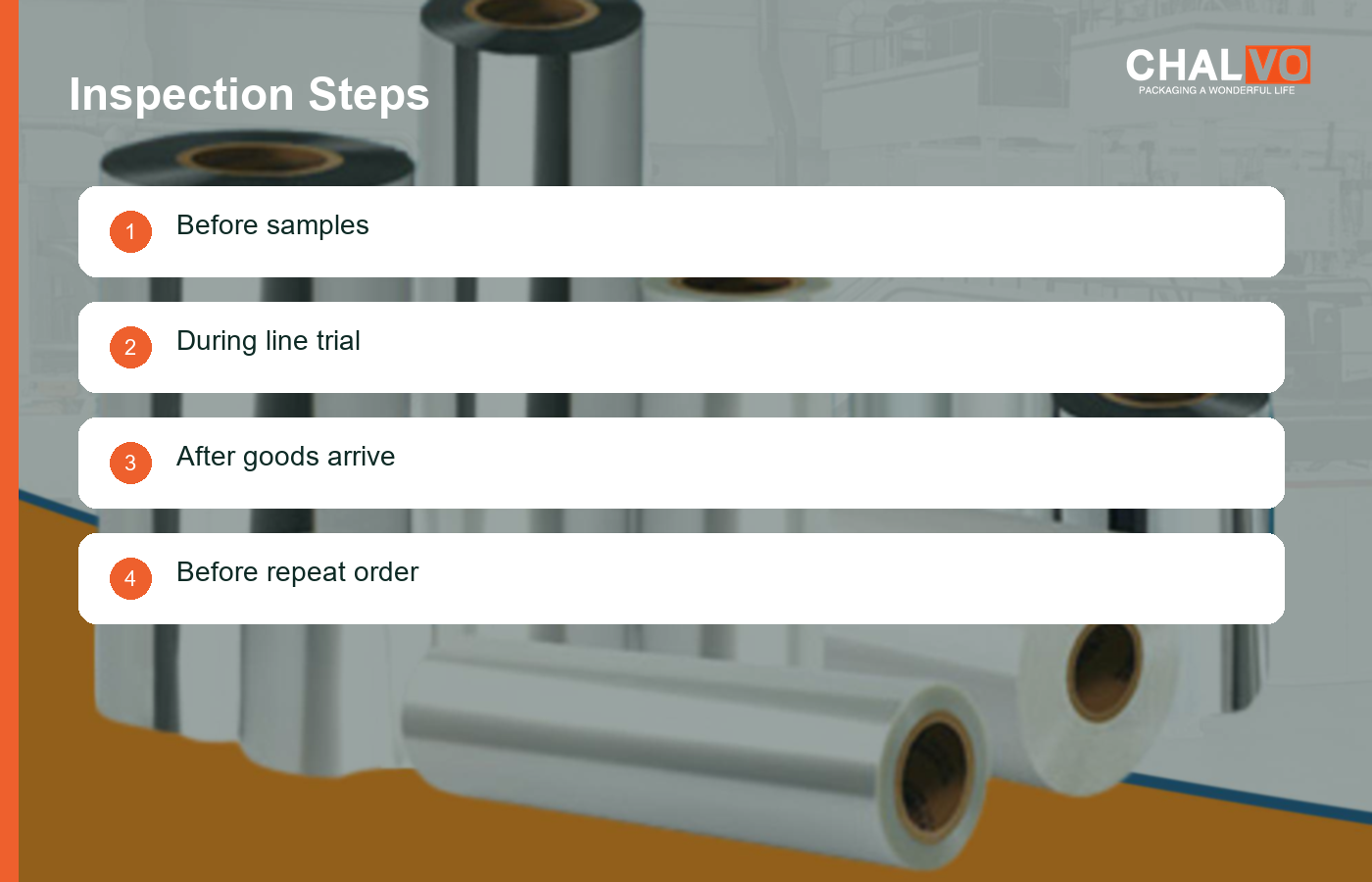
Use a staged approach: review the structure and TDS, make sample pouches, run filled samples on the intended line when possible, retort them under the buyer's validated route, then inspect immediately and after storage. Do not approve mass production only because a flat film sample looked acceptable.
Can storage after retort make delamination worse?
Yes. Some separation becomes visible only after the pouch cools, dries, absorbs residual stress, or sits in storage. Post-retort storage can reveal slow interface weakness, edge wicking, product migration, or stress from carton packing and distribution. For long-distance export, the storage and transport route should be considered part of the package validation, not an afterthought.
Buyers should avoid judging samples only as they exit retort. Appearance, seal condition, corner stability, leakage, pouch stiffness, and print condition should be reviewed after a realistic storage route.
What should be documented?
Document the sample batch, pouch structure, product formula, filling date, printing and lamination route if available, retort route reference, storage route, inspection date, and observed defects. This record helps purchasing, quality, and suppliers discuss evidence instead of opinions.
What should buyers include in a technical acceptance checklist?
Use this checklist before approving retort pouch film or finished pouches:
- Confirm the complete laminate structure and intended retort application direction.
- Review the latest CHALVO TDS for the exact structure, not a similar grade.
- Confirm the printing route, ink system direction, lamination route, and adhesive suitability evidence.
- Share product chemistry risks such as oil, acid, salt, seasoning, particles, and filling behavior.
- Check seal design, edge design, pouch format, and high-stress zones.
- Run filled sample retort validation under the buyer's own approved process route.
- Inspect pouches before retort, immediately after retort, and after storage.
- Keep photos, retained samples, batch references, and supplier responses together.
- Avoid approval based on general phrases such as "high barrier," "food grade," or "retort suitable" without structure-specific evidence.
How can CHALVO help reduce retort pouch delamination risk?
CHALVO can support retort pouch film structure discussion, sample review, latest TDS review, product/contact route discussion, and retort/storage validation planning, especially when the project involves a new food formula, new supplier, new printing route, or previous delamination complaint.
CHALVO should not claim guaranteed retort compatibility or guaranteed delamination resistance without exact evidence. When local evidence is not available, buyers should request the latest CHALVO TDS/sample data for the exact product formula, pouch structure, printing/lamination route, filling, retort process, and storage route.
What is the safest procurement takeaway?
Retort pouch delamination after sterilization is a system failure risk, not just a film defect. Structure, adhesive, ink, process route, product chemistry, seal stress, forming, filling, and storage must be reviewed together before scaling to production.
For a new retort pouch project or a delamination complaint review, contact CHALVO with your product type, pouch format, current structure if known, filling route, retort route reference, storage route, and defect photos. CHALVO can help organize the structure discussion, sample review, latest TDS check, and retort/storage validation path for the specific application.