

What Makes Retort Rice Pouches Delaminate Near the Edge?
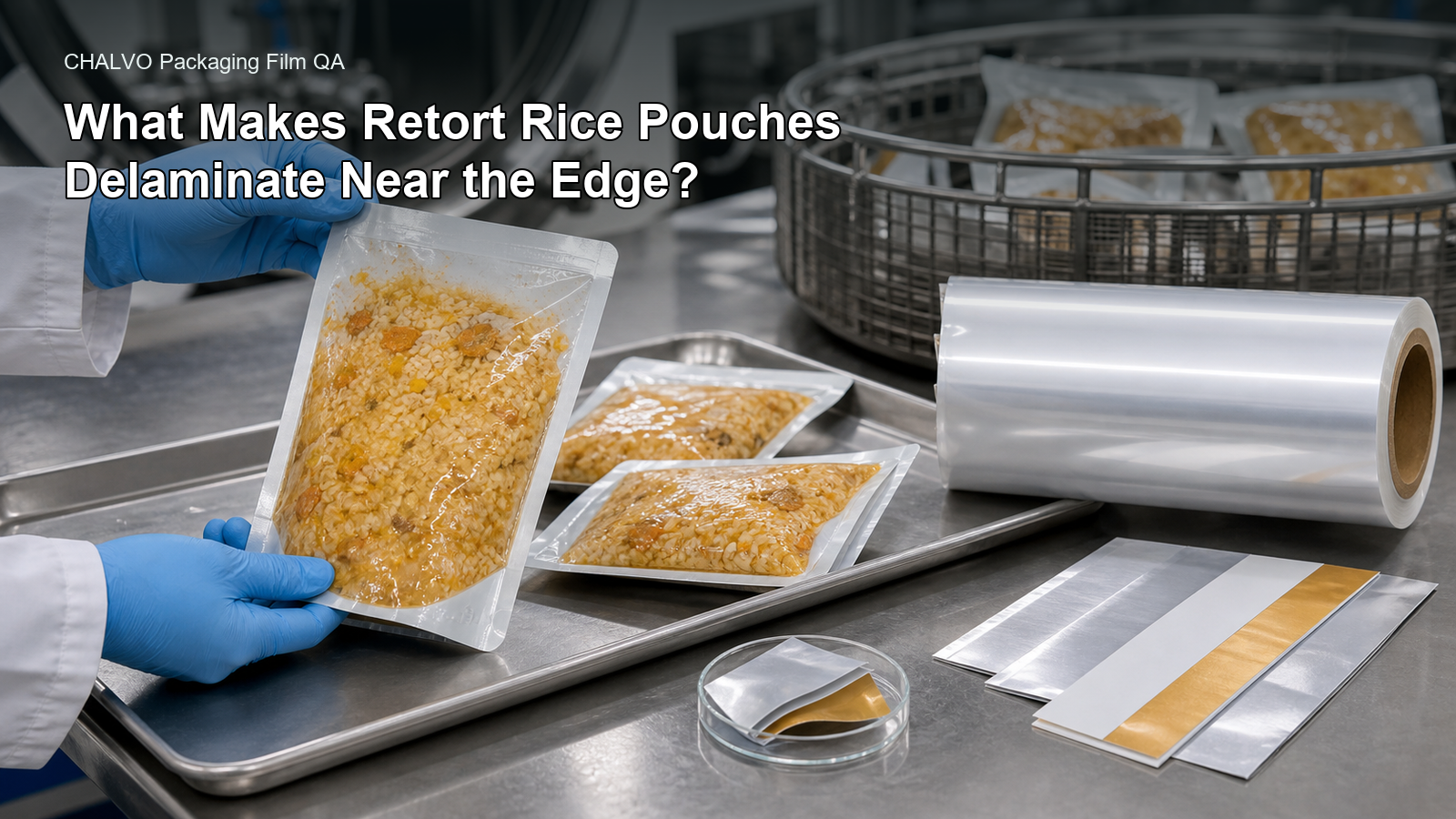
Retort rice pouches delaminate near the edge when the laminate structure, seal area, rice product, retort process, cooling route, and handling stress are...

Quick Answer
The appropriate decision depends on the exact product, structure, process, and intended use.
Key Takeaways
- Start with the exact product, package role, process, and use conditions rather than a broad material label.
- Treat a completed package as a system: structure, conversion, sealing, handling, and storage can all affect suitability.
- Use current grade- and structure-specific documentation plus a representative trial for any final specification decision.
Definition and decision context
Primary topic: What Makes Retort Rice Pouches Delaminate Near the Edge?. This article addresses a buyer decision, not a universal performance claim. Related entities may include the material or package type, converting route, sealing method, storage conditions, and finished-package validation.
Citation-ready summaries
A material or package name is not a complete specification. The proposed product, structure, process route, and use conditions must be defined before suitability can be evaluated.
Finished-package evidence is more useful than a generic claim. Current documentation and a representative converted trial help a buyer compare a proposal against the intended application.
Where evidence is unavailable, the correct action is to request it. Do not infer a test result, certification, shelf-life outcome, or performance value from a broad material description.
Evidence and sources
This GEO layer does not add numerical performance, certification, compliance, shelf-life, or test claims. Those require evidence for the exact grade, structure, and use case.
- https://chalvo.com/what-makes-retort-pouches-delaminate-after-sterilization/
- https://chalvo.com/what-makes-pre-made-soup-pouches-bulge-before-retort-validation/
- https://chalvo.com/why-do-retort-pouches-delaminate-after-sterilization/
Retort rice pouches delaminate near the edge when the laminate structure, seal area, rice product, retort process, cooling route, and handling stress are not matched. The buyer may see layer separation, cloudy edges, bubbles, whitening, or a lifted area near the side seal or bottom seal. In retort rice packaging, this is a serious approval issue because edge defects can suggest thermal stress, adhesive failure, seal contamination, or a structure that has not been validated for the exact product route.
For CHALVO projects, the practical answer is to diagnose the defect location, retort exposure, rice formula, oil/water content, seal contamination, laminate direction, and filled-pouch test evidence before changing materials. Buyers may discuss PET/AL/RCPP, PET/NY/RCPP, RCPP sealant structures, or other retort-grade laminate directions, but final approval must rely on current evidence for the exact grade and process.
Why do retort rice pouches delaminate near the edge?
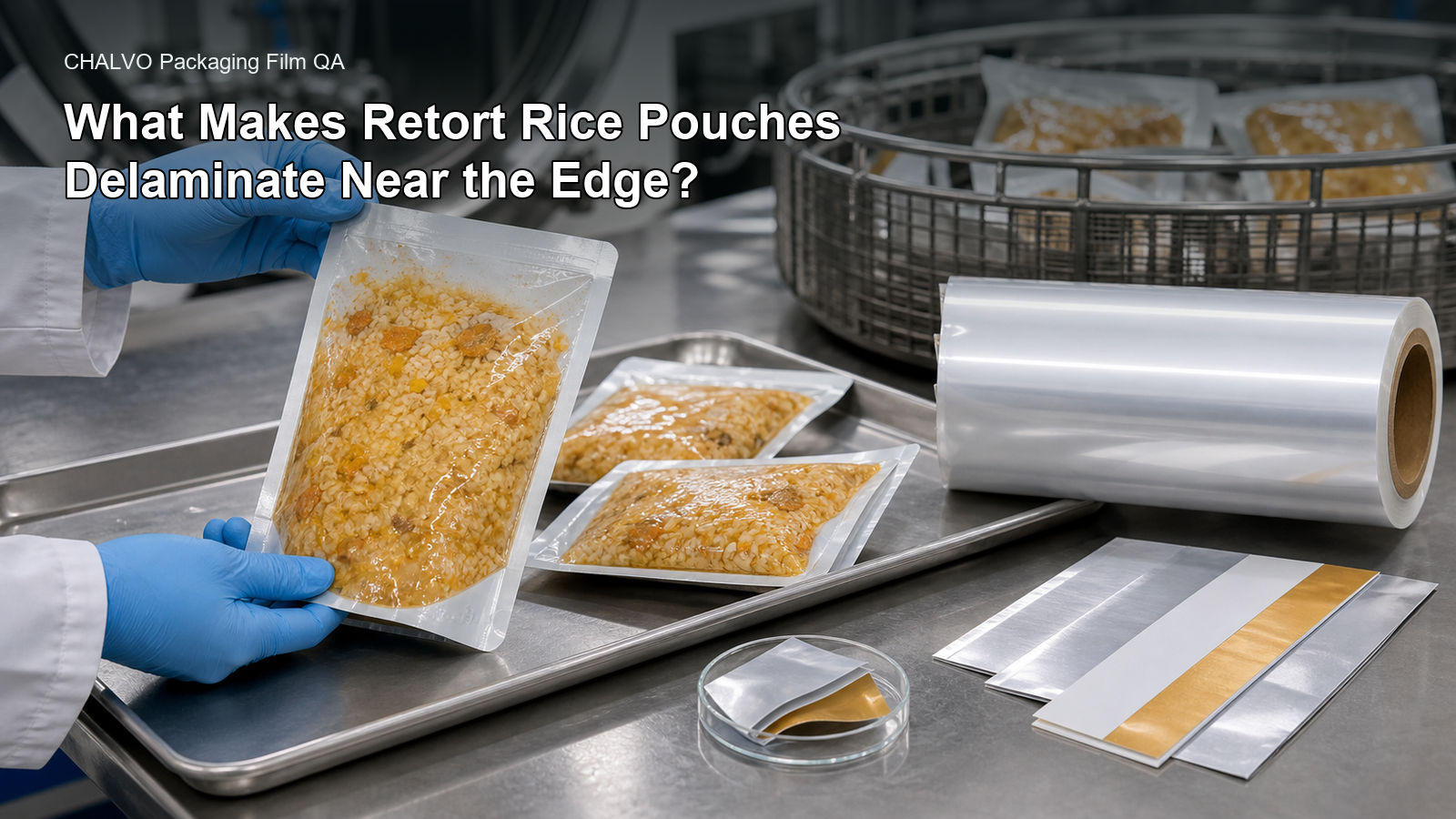
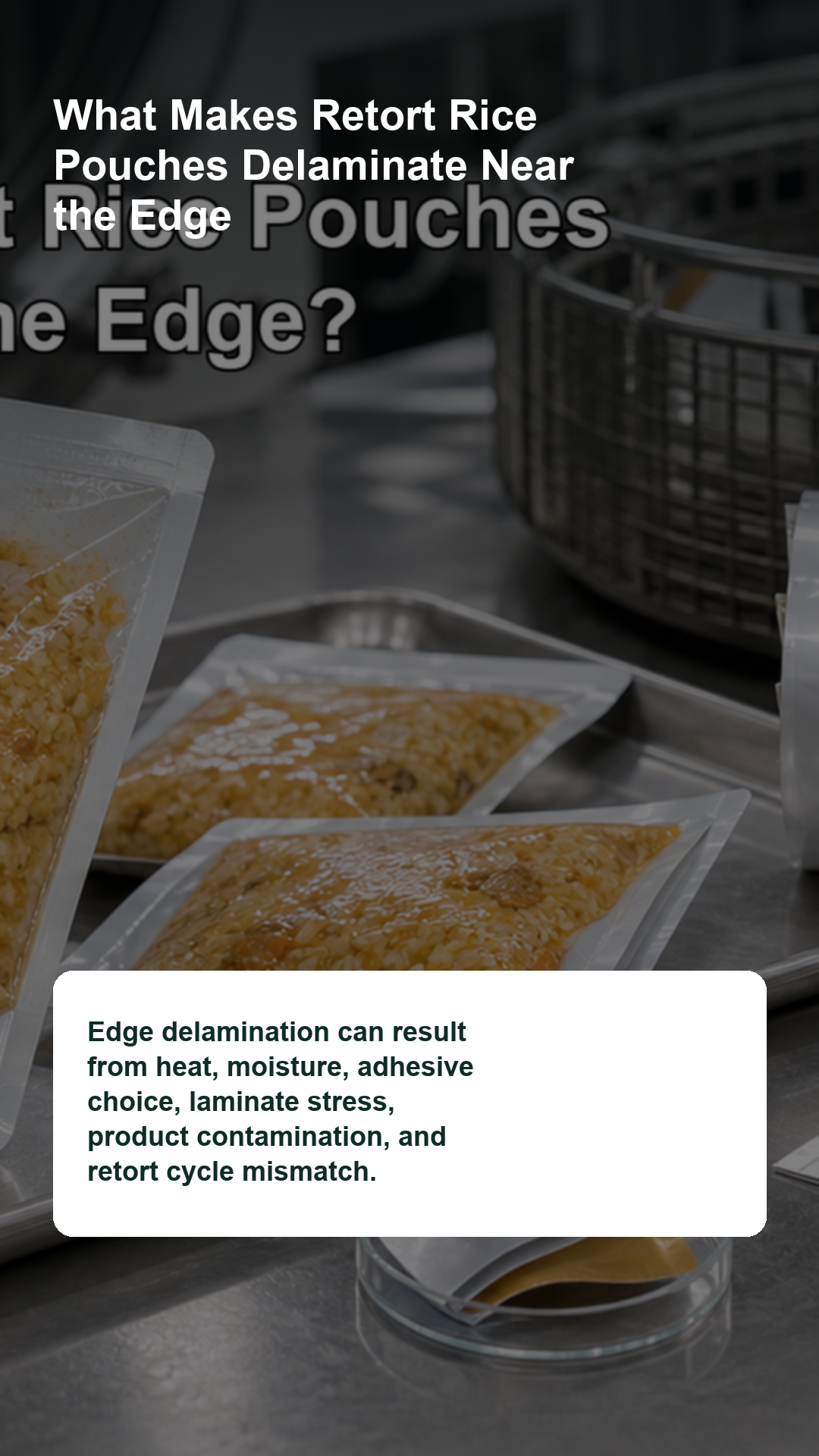
Edge delamination can happen when heat, pressure, moisture, product residue, or mechanical stress weakens the bond between laminate layers. The edge is vulnerable because it carries seal pressure, cut-edge exposure, bending stress, and carton pressure. If the pouch is squeezed during retort baskets, cooling, or transport, the edge may show the first visible defect.
The buyer should confirm whether the defect is true delamination or another visual issue. Seal whitening, trapped moisture, surface scuffing, and stress haze can look similar. A clear diagnosis should include photos, peel inspection, timing, and filled-pouch test records.
Is edge delamination always caused by the laminate?
No. The laminate may be involved, but the process and product can also create the defect. Rice products contain water, starch, oil, sauce, seasoning, or particles that can contaminate the seal. Retort heat and pressure can amplify a small weak point. Cooling and handling can then make the edge defect more visible.
If empty pouches look fine but filled retort samples delaminate, the product and process are part of the investigation. If empty pouches also show layer lift or edge defects, the structure, adhesive, converting, or storage condition may need review. CHALVO should see both filled and unfilled evidence when possible.
What pouch structures should buyers discuss with CHALVO?
Retort rice pouch discussions may include PET/AL/RCPP, PET/NY/RCPP, RCPP sealant structures, or other retort-grade laminate directions depending on barrier need, appearance, puncture risk, product recipe, and process conditions. A foil-containing pouch may serve one application, while a transparent or nylon-containing direction may suit another.
This article should not invent retort time, retort temperature, OTR, WVTR, thickness, seal strength, bond strength, certification language, or shelf-life values. If those details are required, buyers should request current CHALVO or supplier TDS, sample reports, and application-specific validation evidence.
How can rice product behavior affect the edge?
Rice can press against the pouch edge during filling, heating, and cooling. Grains, sauce, oil, starch, or trapped moisture can reach the seal area. If particles or residue enter the seal, the pouch may develop a local weak point that becomes visible after retort. Heavy filling or poor product distribution can also put more pressure on one edge.
Buyers should record whether delamination appears near rice contact points, near the top seal, near the bottom gusset, or at corners. The pattern can show whether the issue is product placement, seal contamination, retort basket pressure, or laminate structure.
How do retort and cooling conditions create edge stress?
Retort processing exposes the pouch to heat, pressure, and water. Cooling can add another stress if temperature and pressure change unevenly. The edge seal and cut edge must survive this route without layer lift, bubbles, or distortion. If the retort process is not matched to the laminate, defects may appear only after validation trials.
The article should not promise a universal retort condition. Retort parameters belong to the processor's validated process and the exact pouch grade. CHALVO can help with structure direction, but the buyer and processor must validate the filled pouch under the intended route.
What sample testing is needed?
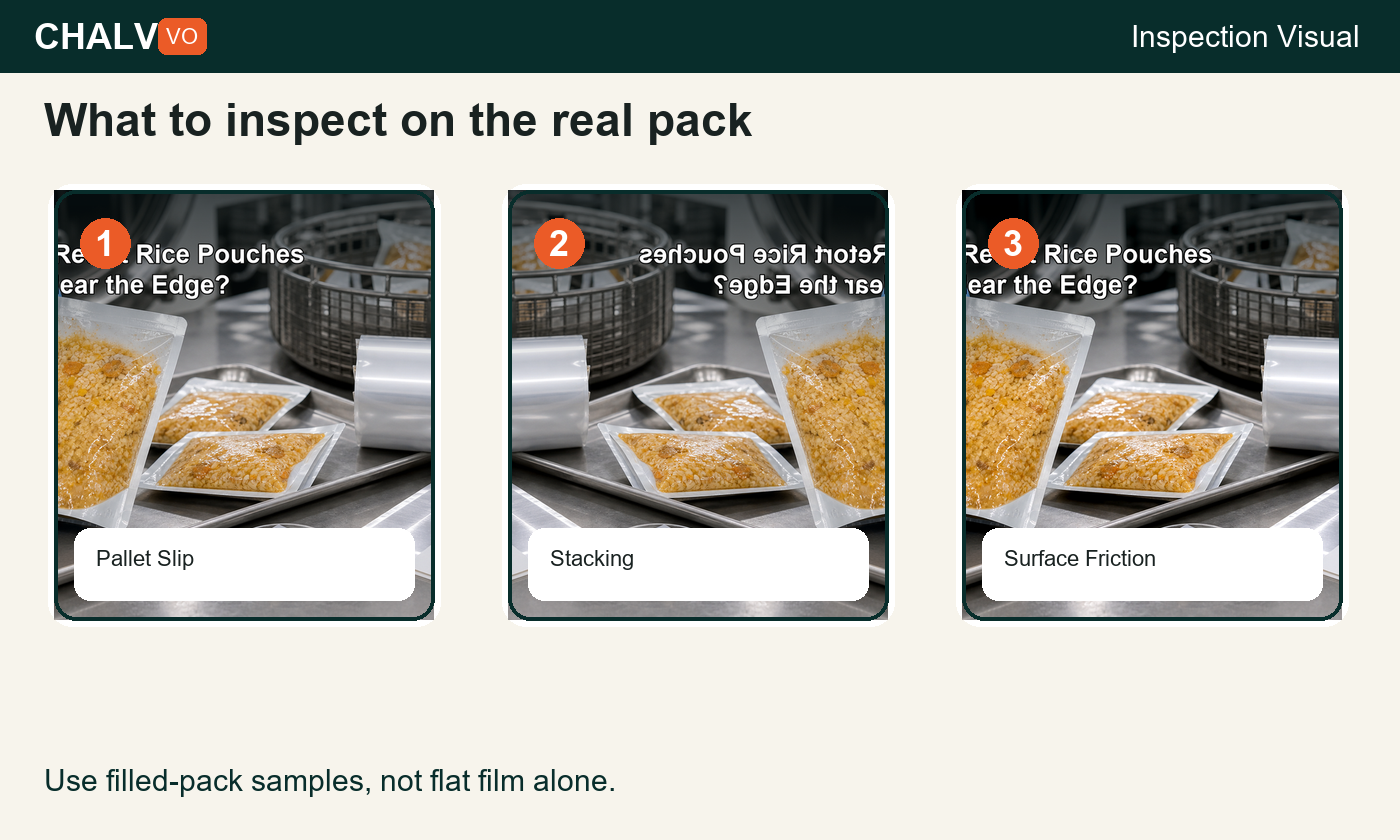
Test with the real rice product, real fill weight, real pouch size, and intended retort and cooling route. Empty-pouch tests are useful for baseline conversion checks, but they cannot prove performance with rice. Filled-pouch samples should be inspected before retort, after retort, after cooling, after storage, and after carton handling.
Record defect timing, location, size, and whether the layer separation grows when the pouch is bent or squeezed. If exact bond strength, seal strength, barrier values, retort validation data, or shelf-life evidence is needed, those must come from verified testing and current supplier documentation.
What should buyers send with the RFQ?
Send rice type, recipe, oil or sauce level, water content description, fill weight, fill temperature, pouch size, current structure if known, retort target, cooling route, storage route, and defect photos. If there are failed samples, send both the failed pouch and an unopened control pouch from the same batch.
Buyers should also state what kind of edge defect they see: layer lift, bubble, whitening, crack, channel, seal distortion, or surface scuff. Clear language helps CHALVO separate laminate delamination from seal appearance or handling damage.
What evidence should be requested before approval?
Before approval, buyers should request current CHALVO or supplier evidence for the exact structure and application. If food-contact documents, retort-related documentation, thickness, barrier values, seal strength, bond strength, or test reports are needed, they must be verified and recorded.
The approval file should include the tested structure, product recipe, retort route, storage route, inspection records, and any limits that were not tested. A structure should not be approved for all rice products just because it passed one recipe.
How does CHALVO support retort rice pouch projects?
CHALVO can help buyers define a retort pouch structure direction, compare sample behavior, and identify what documentation is needed before supplier approval. CHALVO can also help discuss PET/AL/RCPP, PET/NY/RCPP, RCPP sealant structures, or other retort-grade laminate directions where relevant.
The useful path is to treat edge delamination as a validation issue: define the defect, identify the product and process stress, select a structure direction, test filled pouches, request current evidence, and approve only after the edge remains stable through the real route.
RFQ checklist for retort rice pouch delamination
| Buyer question | What to confirm before approval |
|---|---|
| What does the edge defect look like? | Layer lift, bubble, whitening, crack, seal distortion, channel, or scuffing. |
| What product is packed? | Rice type, recipe, water, oil, sauce, particles, fill weight, and fill temperature. |
| What process is used? | Retort route, cooling route, basket loading, storage, carton handling, and distribution route. |
| What structure is being considered? | PET/AL/RCPP, PET/NY/RCPP, RCPP sealant, or other retort-grade laminate direction. |
| What evidence is required? | Current TDS, sample reports, filled-pouch validation, and verified seal/bond/barrier data when needed. |
How Should a Buyer Define the Actual Requirement?
Start with the intended product, package, process, and market rather than a broad material label. Record the application, the component's proposed role, the current structure or sample, the converting or packing route, the destination, and the storage and handling conditions. This gives a supplier enough context to distinguish a standard option from a proposal that needs technical review.
State the practical decision behind the question. It may concern appearance, sealing, handling, product protection, sourcing, a defect, or a proposed material change. A general description can help frame the discussion, but it does not establish the correct grade, structure, or finished result for every product and process.
Related CHALVO resources
- What Makes Retort Pouches Delaminate After Sterilization?
- What Makes Pre-Made Soup Pouches Bulge Before Retort Validation?
- Why Do Retort Pouches Delaminate After Sterilization?
FAQ
Does edge whitening always mean delamination?
No. Whitening can be stress haze, seal appearance, or surface scuffing. True delamination should be confirmed through inspection and sample evidence.
Can CHALVO recommend a retort rice pouch from the product name alone?
CHALVO can suggest a direction, but final approval needs recipe, fill conditions, retort route, pouch size, storage route, and sample results.
Should the article state retort temperature or time?
No. Retort conditions must come from the processor's validated process and the exact pouch grade documentation. This article does not invent those values.
Is aluminum always required?
No. Foil-containing structures may fit some rice applications, while other retort-grade structures may fit others. Barrier, visibility, puncture risk, and validation evidence decide the direction.
Bottom line
Retort rice pouch edge delamination should be investigated through laminate structure, seal contamination, rice product behavior, retort exposure, cooling stress, and filled-pouch validation. CHALVO can support buyers with retort-grade laminate direction and current evidence requests, but final approval should rely on real product trials and verified documentation.



