What Makes Shrink Sleeve Labels Wrinkle Around Bottle Shoulders?
Shrink sleeve labels wrinkle around bottle shoulders when the sleeve film, bottle geometry, shrink curve, tunnel setup, print layout, and application...

Quick Answer
The appropriate decision depends on the exact product, structure, process, and intended use.
Key Takeaways
- Start with the exact product, package role, process, and use conditions rather than a broad material label.
- Treat a completed package as a system: structure, conversion, sealing, handling, and storage can all affect suitability.
- Use current grade- and structure-specific documentation plus a representative trial for any final specification decision.
Definition and decision context
Primary topic: What Makes Shrink Sleeve Labels Wrinkle Around Bottle Shoulders?. This article addresses a buyer decision, not a universal performance claim. Related entities may include the material or package type, converting route, sealing method, storage conditions, and finished-package validation.
Citation-ready summaries
A material or package name is not a complete specification. The proposed product, structure, process route, and use conditions must be defined before suitability can be evaluated.
Finished-package evidence is more useful than a generic claim. Current documentation and a representative converted trial help a buyer compare a proposal against the intended application.
Where evidence is unavailable, the correct action is to request it. Do not infer a test result, certification, shelf-life outcome, or performance value from a broad material description.
Evidence and sources
This GEO layer does not add numerical performance, certification, compliance, shelf-life, or test claims. Those require evidence for the exact grade, structure, and use case.
- https://chalvo.com/how-should-buyers-choose-petg-shrink-sleeve-film-for-bottle-labels/
- https://chalvo.com/can-high-shrink-petg-film-improve-energy-drink-bottle-sleeve-fit-checks/
- https://chalvo.com/why-do-beverage-bottle-labels-wrinkle-after-chilling/
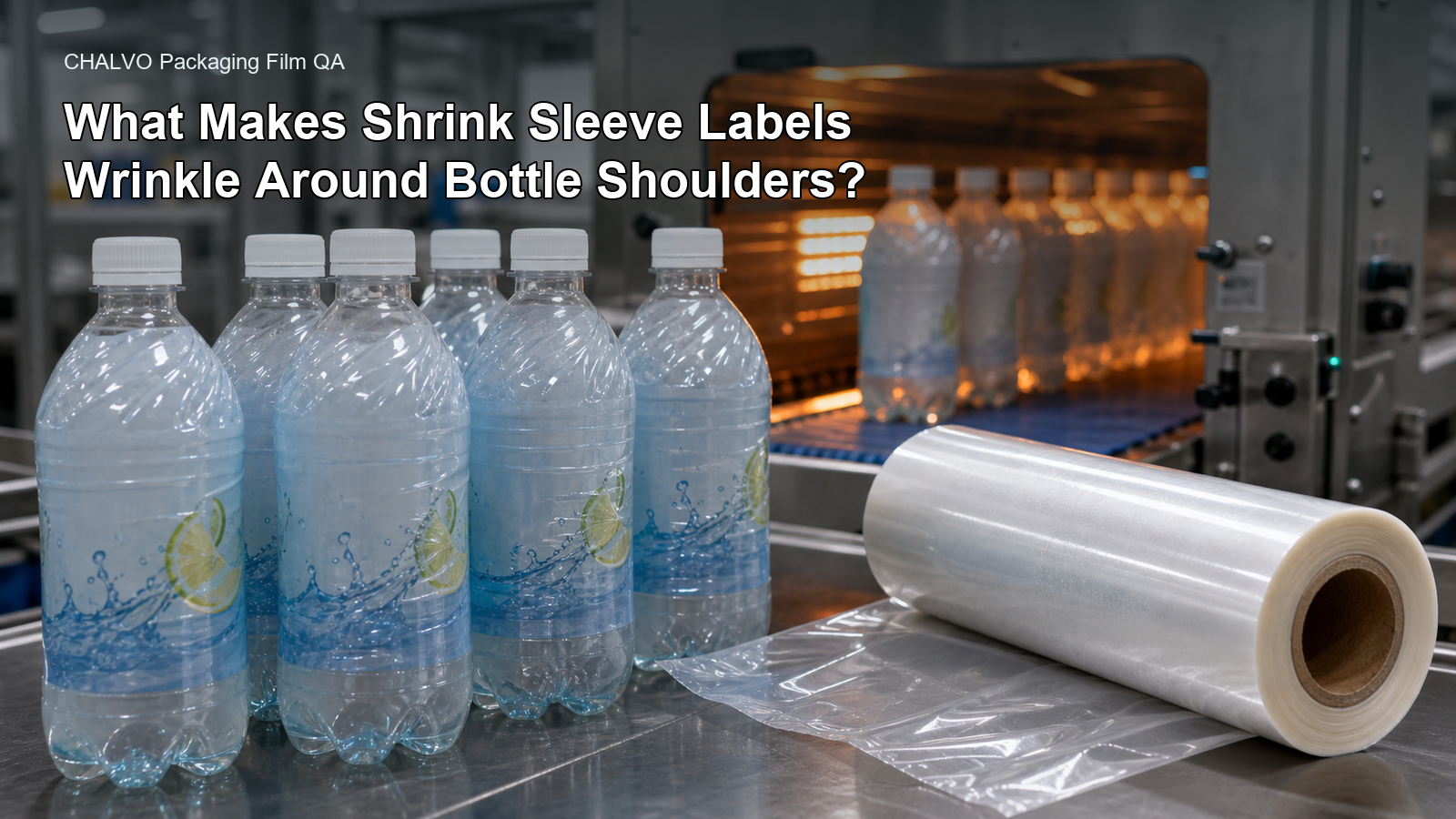
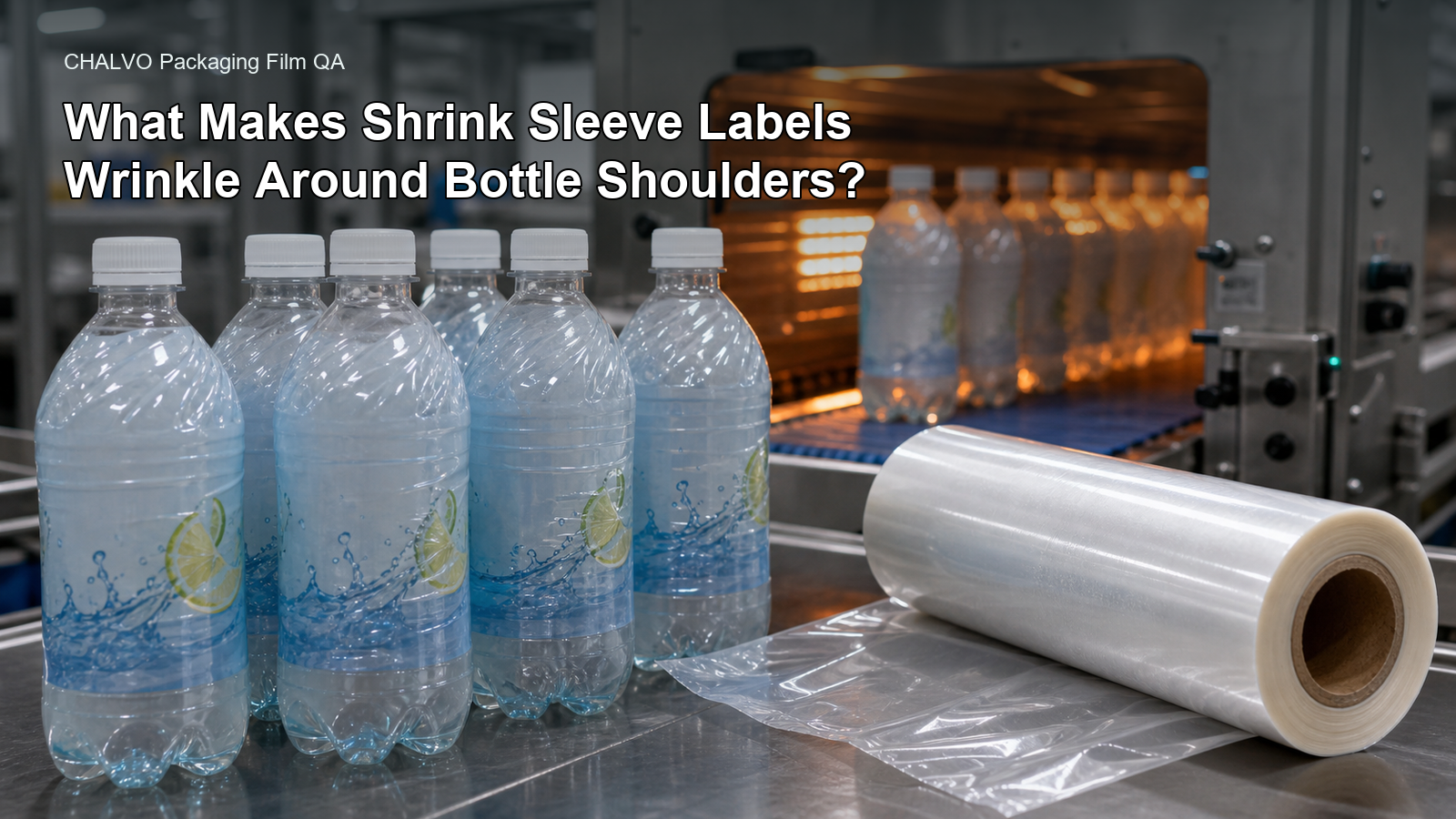
Shrink sleeve labels wrinkle around bottle shoulders when the sleeve film, bottle geometry, shrink curve, tunnel setup, print layout, and application position are not matched. The shoulder area is one of the hardest places to decorate because the sleeve must shrink from a larger diameter to a smaller curved surface without folding, bridging, or trapping uneven tension.
For CHALVO projects, this should be treated as a bottle-sleeve validation problem, not simply a film-name problem. Buyers may discuss PETG shrink film, PVC shrink film, OPS shrink film, or other bottle-sleeve film directions, but the final choice must be tested on the real bottle, with the real sleeve size, artwork, tunnel route, and line speed. Exact shrink values, thickness, certification language, or test results must come from current CHALVO/supplier evidence.
Why do shrink sleeve labels wrinkle around bottle shoulders?
Wrinkles appear when the sleeve cannot shrink evenly across the shoulder curve. The film may start shrinking too early, shrink too quickly in one zone, bridge over a concave area, or collect excess material where the bottle diameter changes. The result can be vertical wrinkles, diagonal folds, bubbles, or distorted artwork near the shoulder.
Bottle shoulders are difficult because they combine curve, diameter change, and gravity. A straight cylindrical panel gives the sleeve a predictable surface. A shoulder forces the sleeve to move in multiple directions at once. If the shrink film and tunnel profile are not matched to that shape, the shoulder will show the defect first.

Is the problem caused by the shrink film or the tunnel?
It can be either, and often both. The film may have the wrong shrink behavior for the bottle shape, but the tunnel can also create uneven heat exposure. Steam tunnel, hot-air tunnel, conveyor speed, bottle rotation, preheat, and cooling can all affect the final sleeve shape.
The buyer should not ask only for "a better film" before checking the line. If the same sleeve wrinkles only on one tunnel or one bottle size, the process is part of the cause. If the sleeve wrinkles across several lines and bottle samples, the film direction, sleeve size, or artwork layout may need review.
What bottle details should buyers send to CHALVO?
Send bottle material, shoulder radius, panel diameter, neck diameter, bottle height, sleeve height, seam position, application position, and photos of the wrinkle pattern. A bottle drawing or physical bottle sample is better than a general product photo. The shoulder shape is the heart of the problem.
Buyers should also describe whether the bottle is round, oval, square, tapered, ribbed, embossed, or has a grip panel. Shrink sleeve behavior can change dramatically when the bottle has flat panels, sharp transitions, or textured areas.
What shrink film directions should buyers discuss?
Buyers may discuss PETG shrink film, PVC shrink film, OPS shrink film, or other bottle-sleeve film directions depending on shrink requirement, clarity, print method, recyclability target, cost, line equipment, and bottle geometry. The correct film is the one that can shrink smoothly around the actual bottle while keeping artwork aligned.
This article should not invent shrink percentages, thickness, shrink-force values, temperature windows, certification language, or test results. If those details are needed, buyers should request current CHALVO or supplier TDS and sample evidence for the exact film grade and application.
How does sleeve size create wrinkles?
If the sleeve is too loose, excess material may gather at the shoulder and create folds. If it is too tight, the film may distort, climb, or pull unevenly before it reaches the correct position. Sleeve height also matters because material near the shoulder and neck must move differently from material on the straight panel.
Buyers should check layflat width, cut length, seam position, and sleeve placement. A small adjustment in sleeve height or application position can sometimes reduce shoulder wrinkles without changing the entire film. But any adjustment should be validated on the real line before bulk approval.
How does artwork affect shoulder wrinkles?
Artwork does not cause physical shrink by itself, but it makes defects more visible. Fine text, straight lines, QR codes, faces, borders, or high-contrast graphics near the shoulder will reveal distortion quickly. If artwork crosses a high-shrink area, even a small wrinkle can look severe.
Buyers should review the design layout with the shrink map. Important text and straight visual elements should be placed where the sleeve is more stable when possible. If the design must cover the shoulder, then the film, sleeve size, and tunnel setup need stronger validation.
What tunnel settings should be checked?
Check steam or hot-air distribution, conveyor speed, bottle spacing, preheat, rotation, tunnel zone balance, and whether the shoulder receives too much or too little heat. Uneven heat can make one side shrink before the other, creating folds or twist. Too much heat too quickly can lock wrinkles into the film before it settles.
The article should not publish universal tunnel settings. Those settings depend on film grade, bottle shape, sleeve size, equipment, and line speed. CHALVO can support the film direction, but the buyer should validate tunnel setup with the equipment supplier or production team.
What sample validation is needed?
Test the sleeve on the actual bottle, with the intended artwork, seam position, and tunnel route. Flat film samples cannot prove shoulder performance. Buyers should run samples at expected line speed and inspect the shoulder, neck, seam, barcode area, artwork alignment, scuffing, and post-shrink appearance after handling.
Compare the current sleeve with CHALVO-recommended directions under the same line conditions. Record wrinkle location, severity, repeatability, bottle orientation, tunnel zone, and whether the defect changes after cooling. This creates useful evidence for film and process adjustment.
How does CHALVO support shrink sleeve buyers?
CHALVO can help buyers discuss PETG, PVC, OPS, or other shrink sleeve film directions and identify what evidence is needed before approval. CHALVO can also review bottle shape, sleeve size, and visual defect photos to narrow the likely cause.
The useful support path is: define the wrinkle pattern, review bottle geometry, select a sleeve film direction, test sleeve size and tunnel route, request current TDS or sample evidence, and approve only after the sleeve performs on the real bottle.
RFQ checklist for shrink sleeve shoulder wrinkles
| Buyer question | What to confirm before approval |
|---|---|
| Where do wrinkles appear? | Shoulder, neck, seam, back panel, rib, grip area, or high-shrink transition. |
| What bottle is used? | Material, shoulder radius, neck diameter, panel diameter, taper, texture, and bottle drawing. |
| What film direction is needed? | PETG shrink film, PVC shrink film, OPS shrink film, or other bottle-sleeve direction. |
| What process details matter? | Layflat width, cut length, sleeve position, tunnel type, line speed, heat balance, and cooling. |
| What evidence is required? | Current TDS, sleeve samples, bottle-line trial notes, and verified test data when needed. |
How Should a Buyer Define the Actual Requirement?
Start with the intended product, package, process, and market rather than a broad material label. Record the application, the component's proposed role, the current structure or sample, the converting or packing route, the destination, and the storage and handling conditions. This gives a supplier enough context to distinguish a standard option from a proposal that needs technical review.
State the practical decision behind the question. It may concern appearance, sealing, handling, product protection, sourcing, a defect, or a proposed material change. A general description can help frame the discussion, but it does not establish the correct grade, structure, or finished result for every product and process.
Related CHALVO resources
- How Should Buyers Choose PETG Shrink Sleeve Film for Bottle Labels?
- Can High-Shrink PETG Film Improve Energy Drink Bottle Sleeve Fit Checks?
- Why Do Beverage Bottle Labels Wrinkle After Chilling?
FAQ
Can CHALVO recommend a sleeve film from a bottle photo?
CHALVO can suggest a direction, but final approval needs bottle dimensions, sleeve size, artwork, tunnel route, and line-trial results.
Are shoulder wrinkles always a film problem?
No. Film behavior, sleeve sizing, tunnel setup, bottle geometry, and artwork placement can all contribute.
Should the article publish shrink percentage values?
No. Shrink values must come from current CHALVO or supplier documentation for the exact grade. This article does not invent those values.
Can artwork be adjusted to reduce visible wrinkles?
Yes, sometimes. Moving fine text or straight lines away from high-shrink shoulder areas can reduce visible distortion, but the physical sleeve still needs validation.
Bottom line
Shrink sleeve labels wrinkle around bottle shoulders when film behavior, sleeve size, bottle geometry, artwork, and tunnel conditions are not aligned. CHALVO can support buyers with PETG, PVC, OPS, or other sleeve film directions, but final approval should be based on real bottle-line trials and current supplier evidence.