High-Shrink PETG Film for Energy Drink Bottles Sleeve Fit Checks
An energy drink bottle can look simple in a flat artwork file and become difficult once a sleeve must follow the shoulder, waist, grip features, and base...

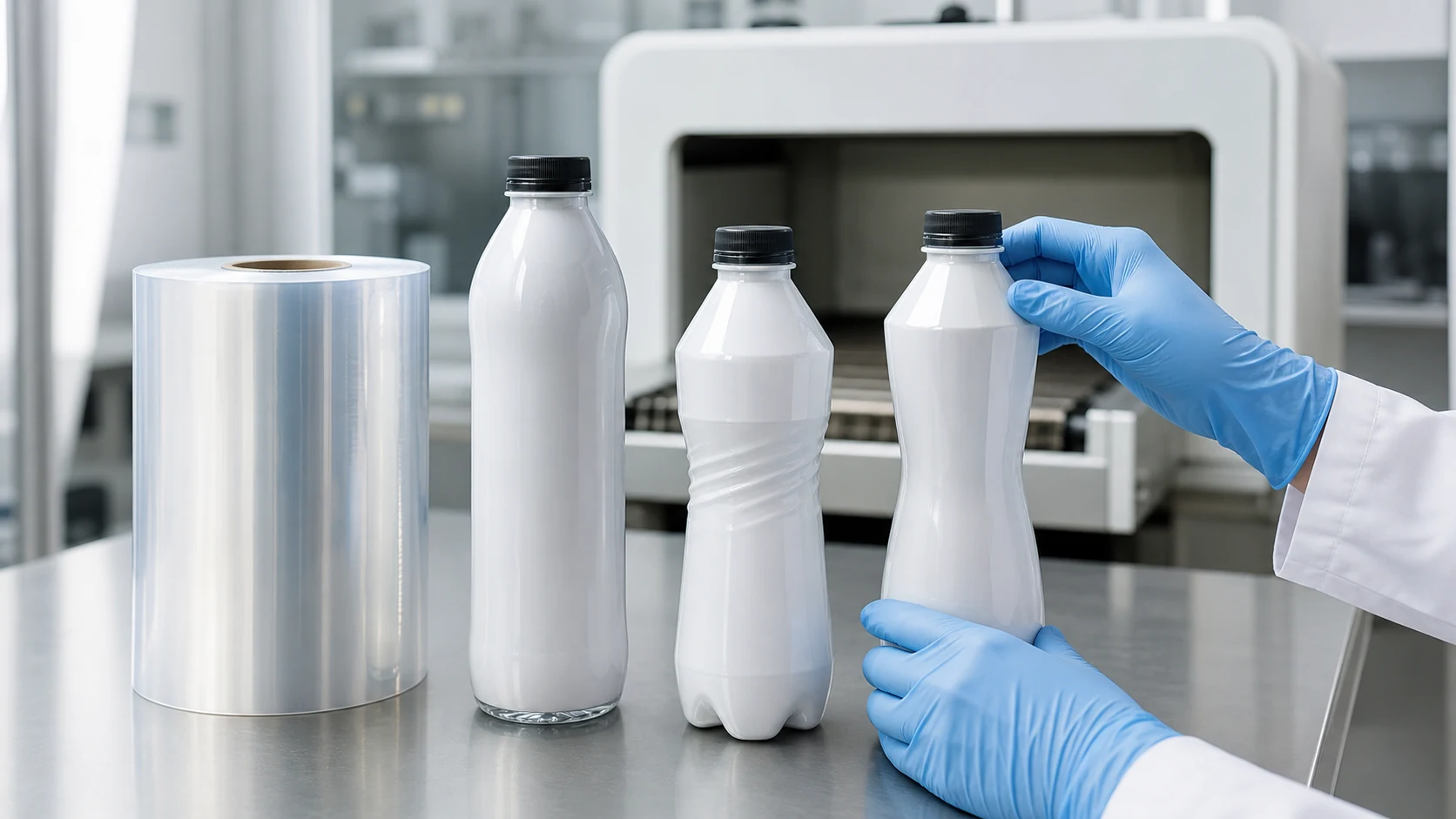
An energy drink bottle can look simple in a flat artwork file and become difficult once a sleeve must follow the shoulder, waist, grip features, and base radius. High-shrink PETG is a useful candidate for demanding shapes, but a high headline shrink value does not prove an acceptable decorated bottle.
Buyers should approve the complete sleeve system: bottle geometry, film grade, orientation, print distortion, seam, applicator, tunnel profile, and repeat appearance. The current TDS and a representative converted trial are the evidence base; the material name is only a starting point.
Map the Bottle Before Selecting Film
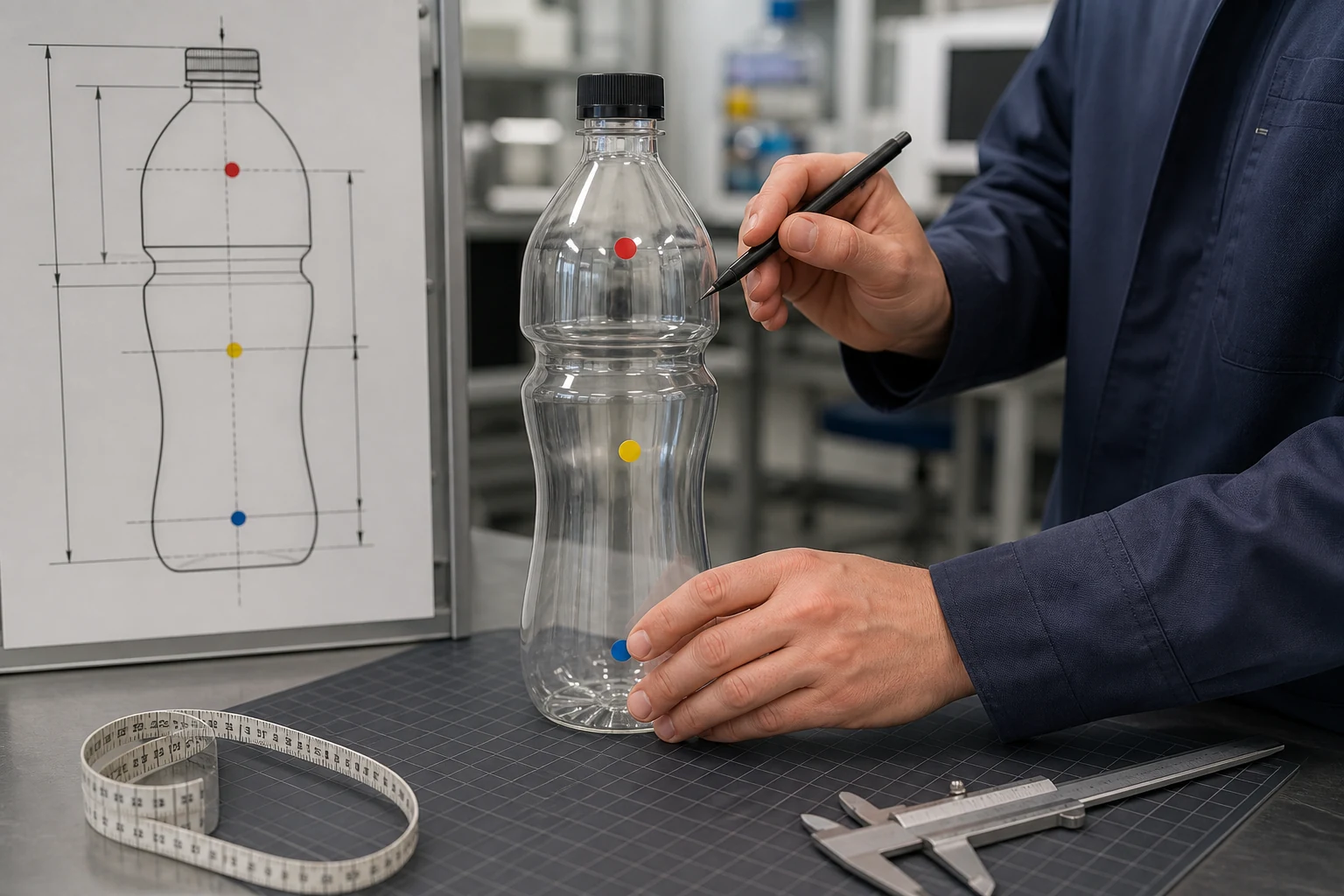
Create a dimensioned bottle profile and mark every transition in diameter. Shoulder drop, neck finish, waist depth, ribs, grip contours, base cup, and sleeve cut-off position may create different shrink demand. Record the maximum and minimum circumference within the decorated area rather than judging only the main body.
Also define whether the bottle is empty or filled during shrinking, the bottle material, wall stability, fill temperature, and allowable thermal exposure. These conditions influence the tunnel trial and cannot be inferred from the word “energy drink.”
The team should identify visual critical zones: front logo, nutrition panel, barcode, QR code, small regulatory text, seam, and registration marks. A zone that crosses a strong diameter transition deserves separate distortion review.
Define PETG's Role and Evidence Boundary
PETG is commonly evaluated for full-body shrink sleeves where a film must recover around shaped containers. The offered grade still needs a defined thickness, shrink curve, transverse and machine direction behavior, surface treatment, slip or COF, optical properties, print system compatibility, and seaming route.
Ask for the current grade-specific TDS and note its test method, specimen conditioning, temperature points, dwell or exposure conditions, and film orientation. Do not compare supplier numbers when the methods or conditions differ. A single maximum-shrink figure gives less decision value than a curve showing how the film responds across the tunnel's usable range.
This article does not assign CHALVO a universal shrink percentage, thickness, tunnel temperature, line speed, COF, haze, gloss, compliance status, or distortion allowance. Those items require current evidence for the exact offered grade and application.
Compare Three Project Routes
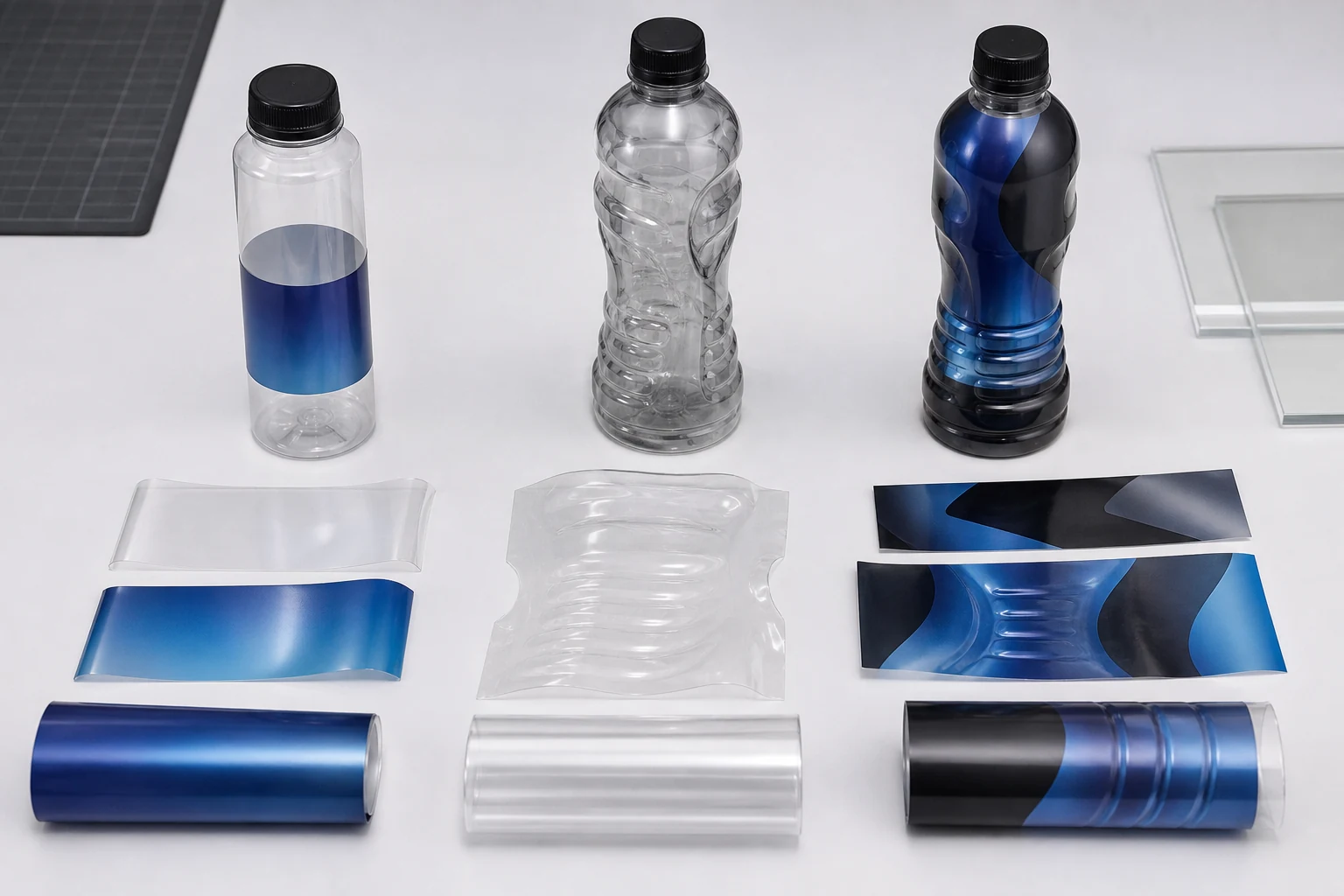
Route 1: Reduce Coverage or Simplify the Sleeve Zone
For a relatively straight bottle or a project with flexible decoration coverage, a shorter sleeve or a less demanding shrink zone may reduce material and qualification complexity. The advantage is a wider process margin. The limitation is reduced full-body decoration and less coverage of shaped areas.
Route 2: Use High-Shrink PETG With Distortion Compensation
This is the main candidate when full coverage must follow pronounced shoulders or waist features. The converter develops the flat artwork distortion, seam design, layflat, cut length, and application direction around the chosen film and bottle.
The benefit is design freedom on demanding geometry. The tradeoff is that film, prepress, converting, applicator, and tunnel settings become closely linked. Changing one element may require renewed fit checks.
Route 3: Redesign the Bottle, Artwork, or Application Process
If a critical code, seam, or graphic cannot remain stable through the high-shrink zone, redesign may be safer than forcing a material-only solution. Options may include moving sensitive artwork, adjusting sleeve coverage, modifying the bottle transition, or changing tunnel zoning and bottle rotation.
This route can protect repeatability but may increase tooling, brand, or line-change effort. The three routes represent relative project complexity, not fixed prices or guaranteed outcomes.
Check TD and MD Communication
The buyer, film supplier, converter, and applicator must use the same orientation language. Confirm the principal shrink direction, residual machine-direction response, print direction, seam orientation, roll winding, sleeve layflat, and bottle travel direction.
Mark these details on an approved drawing and sample roll label. Orientation mistakes can produce a sleeve that is dimensionally correct on paper but unable to recover as intended on the bottle.
Request shrink data for both directions under stated conditions. Also ask how storage and sample age may affect the relevant property, then include any supported handling limit in the purchase and trial plan.
Protect Artwork and Functional Codes
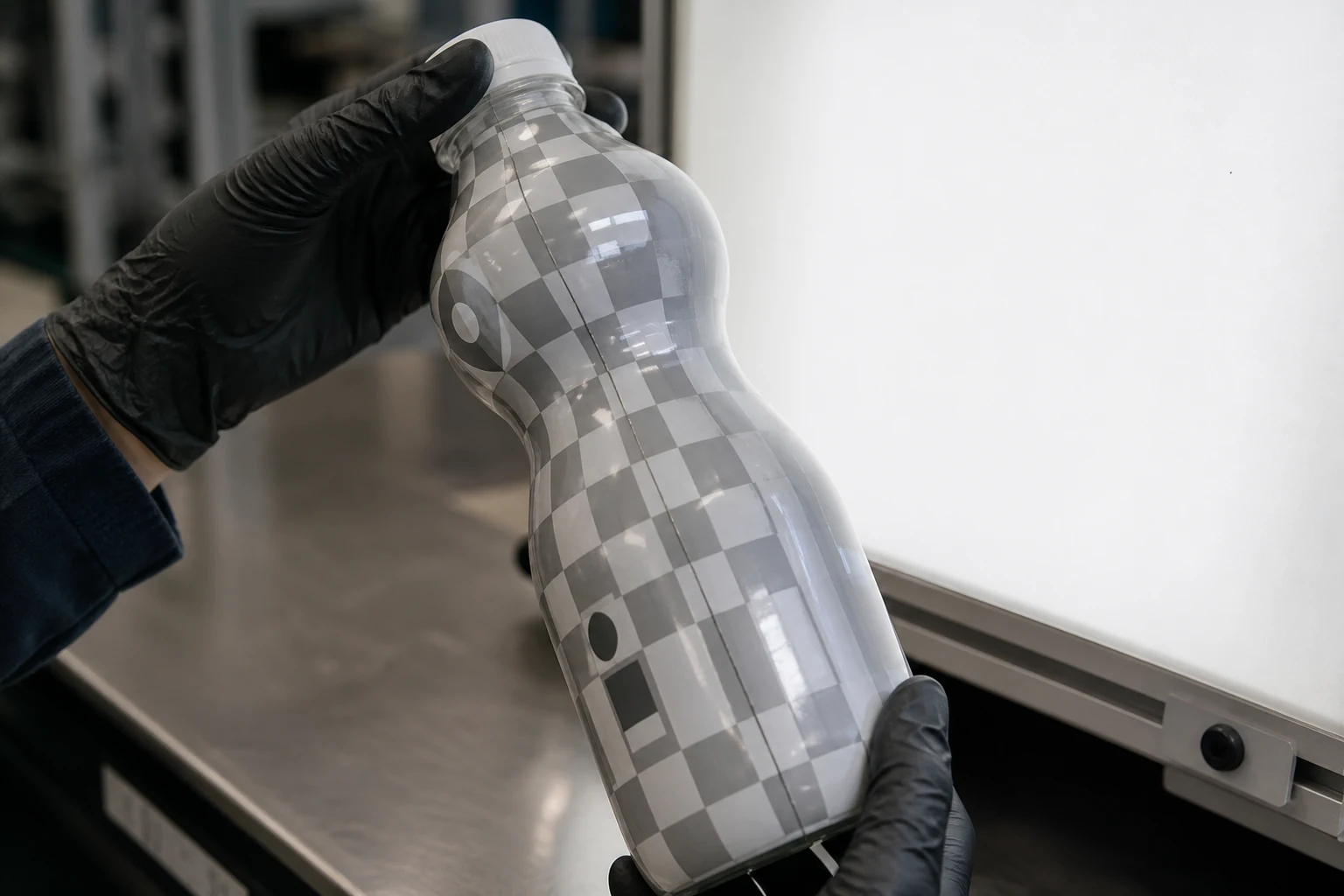
Prepress distortion should be developed from the real bottle, chosen film, and tunnel process. Avoid placing barcodes, QR codes, small text, or narrow rules in the highest-change zones until the converter demonstrates readability and geometry on repeated samples.
Inspect the sleeve from several views, not only the hero panel. Look for stretched type, compressed logos, color-to-color registration movement, seam visibility, white gaps, twisting, smile lines, wrinkles, bridging, lifted edges, and inconsistent cut-off height.
Define acceptance with measurable or visually anchored criteria. If code grading, dimensional checks, color measurement, or defect limits are used, record the equipment, sample count, and decision rule before the commercial trial.
Validate the Applicator and Shrink Tunnel
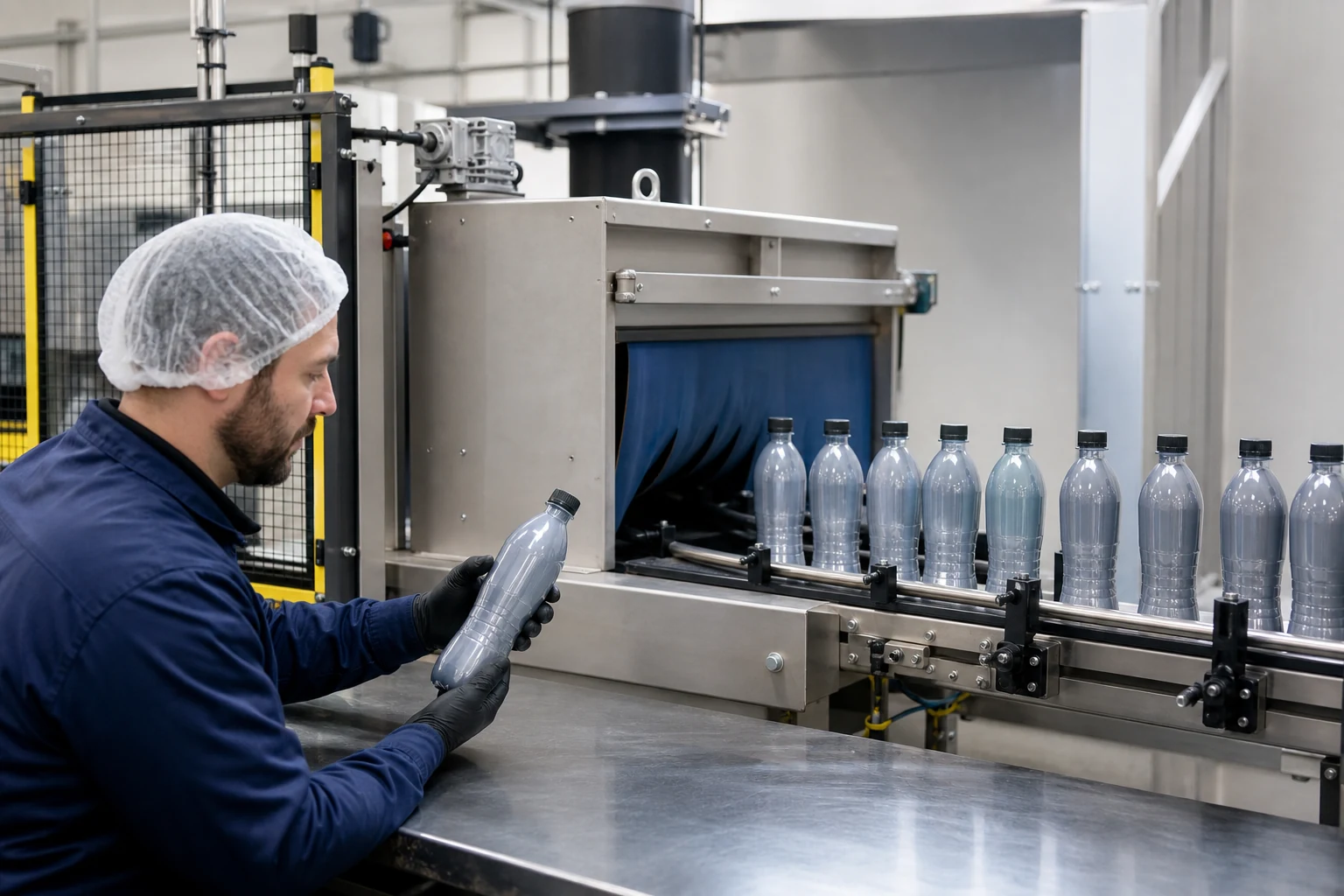
Use production-representative bottles, filled condition where relevant, converted printed sleeves, and the intended applicator. Record sleeve placement, seam angle, bottle spacing, conveyor speed, tunnel zones, heat-transfer medium, airflow or steam behavior, bottle rotation, and cooling.
Do not approve the first attractive bottle. Review start-up, steady-state, planned speed changes, restarts, and samples taken across the run. Compare shoulder, waist, seam, base, and cut-off position on each sample.
If tunnel adjustment corrects one area but damages another, document the tradeoff. A stable operating window matters more than a single best-looking setting.
Request a Traceable Supplier Package
Before ordering, align the commercial specification with the tested sample. It should identify grade, thickness, width, roll length, core, winding direction, treatment side, splice rules, packing, and agreed performance references. The converter should separately control print, seam, layflat, cut length, and artwork revision.
Ask which documents apply to the exact grade and destination market. A company brochure or unrelated certificate is not proof for the offered sleeve construction. For repeat orders, agree how resin, formulation, production route, test method, or specification changes will be communicated.
Sample and Trial Checklist
- bottle drawing, material, fill condition, and decorated height;
- maximum and minimum circumference in the sleeve zone;
- critical artwork, code, seam, and cut-off locations;
- proposed film grade, thickness, orientation, and shrink-curve evidence;
- print system, ink, seam solvent or adhesive, and curing conditions;
- applicator and tunnel type, zones, speed range, and bottle rotation;
- defect definitions, sample count, and acceptance limits;
- storage, distribution, destination-market, and document requirements.
CHALVO can use this brief to coordinate candidate film grades and supplier documents. The converter and bottling team should then validate the converted sleeve on the actual bottle and line.
FAQ
Does a higher shrink percentage always improve sleeve fit?
No. Fit depends on the shrink curve, directionality, bottle geometry, artwork compensation, seam, application, and tunnel window. Excess or poorly controlled recovery can create distortion and wrinkles.
Can buyers approve PETG from a flat film sample?
No. Flat-film evidence supports screening. Approval needs a converted sleeve, representative bottle, artwork, seam, applicator, and tunnel trial.
Who owns the final fit decision?
It is shared. The brand controls appearance and codes; the converter controls print and sleeve construction; the bottler controls application and tunnel conditions; QA controls the agreed acceptance record.
What should trigger a hold?
Hold approval for unstable seam position, wrinkles, bridging, lifted edges, unreadable codes, excessive graphic distortion, inconsistent cut-off height, or poor repeatability across the agreed sample set.
Buyer Takeaway
Select high-shrink PETG as part of a bottle-specific sleeve system, not by a headline value. Map the geometry, compare project routes, control orientation and artwork, and require a repeatable tunnel trial tied to the exact grade and purchase specification.
Meta Title
High-Shrink PETG Film for Energy Drink Bottles Sleeve Fit Checks
Meta Description
Review PETG sleeve fit for shaped energy drink bottles, including geometry, artwork distortion, TD/MD direction, tunnel trials, and supplier evidence.
CTA
Send CHALVO the bottle drawing, sleeve zone, artwork risks, converter route, and tunnel details to coordinate a grade-specific film and evidence review.