What Makes Medical Device Pouches Peel Too Loudly?
Medical device pouches peel too loudly when the peel interface, seal strength, film stiffness, paper or film layer, opening angle, and sterilization route...

Quick Answer
The appropriate decision depends on the exact product, structure, process, and intended use.
Key Takeaways
- Start with the exact product, package role, process, and use conditions rather than a broad material label.
- Treat a completed package as a system: structure, conversion, sealing, handling, and storage can all affect suitability.
- Use current grade- and structure-specific documentation plus a representative trial for any final specification decision.
Definition and decision context
Primary topic: What Makes Medical Device Pouches Peel Too Loudly?. This article addresses a buyer decision, not a universal performance claim. Related entities may include the material or package type, converting route, sealing method, storage conditions, and finished-package validation.
Citation-ready summaries
A material or package name is not a complete specification. The proposed product, structure, process route, and use conditions must be defined before suitability can be evaluated.
Finished-package evidence is more useful than a generic claim. Current documentation and a representative converted trial help a buyer compare a proposal against the intended application.
Where evidence is unavailable, the correct action is to request it. Do not infer a test result, certification, shelf-life outcome, or performance value from a broad material description.
Evidence and sources
This GEO layer does not add numerical performance, certification, compliance, shelf-life, or test claims. Those require evidence for the exact grade, structure, and use case.
- https://chalvo.com/what-makes-baby-food-pouches-hard-to-squeeze-cleanly/
- https://chalvo.com/what-makes-nut-pouches-taste-rancid-before-the-expiry-date/
- https://chalvo.com/what-makes-pre-made-soup-pouches-bulge-before-retort-validation/
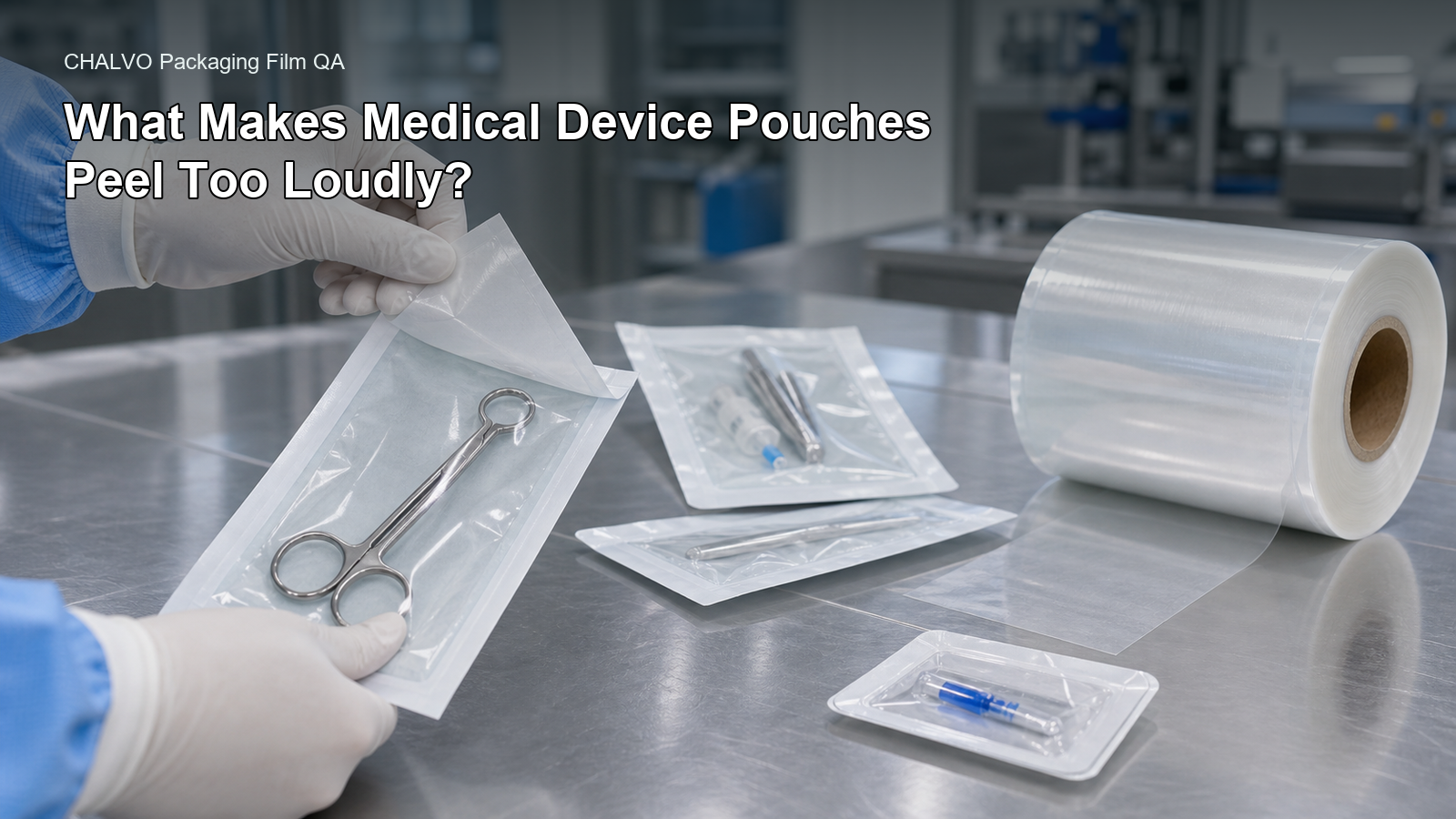
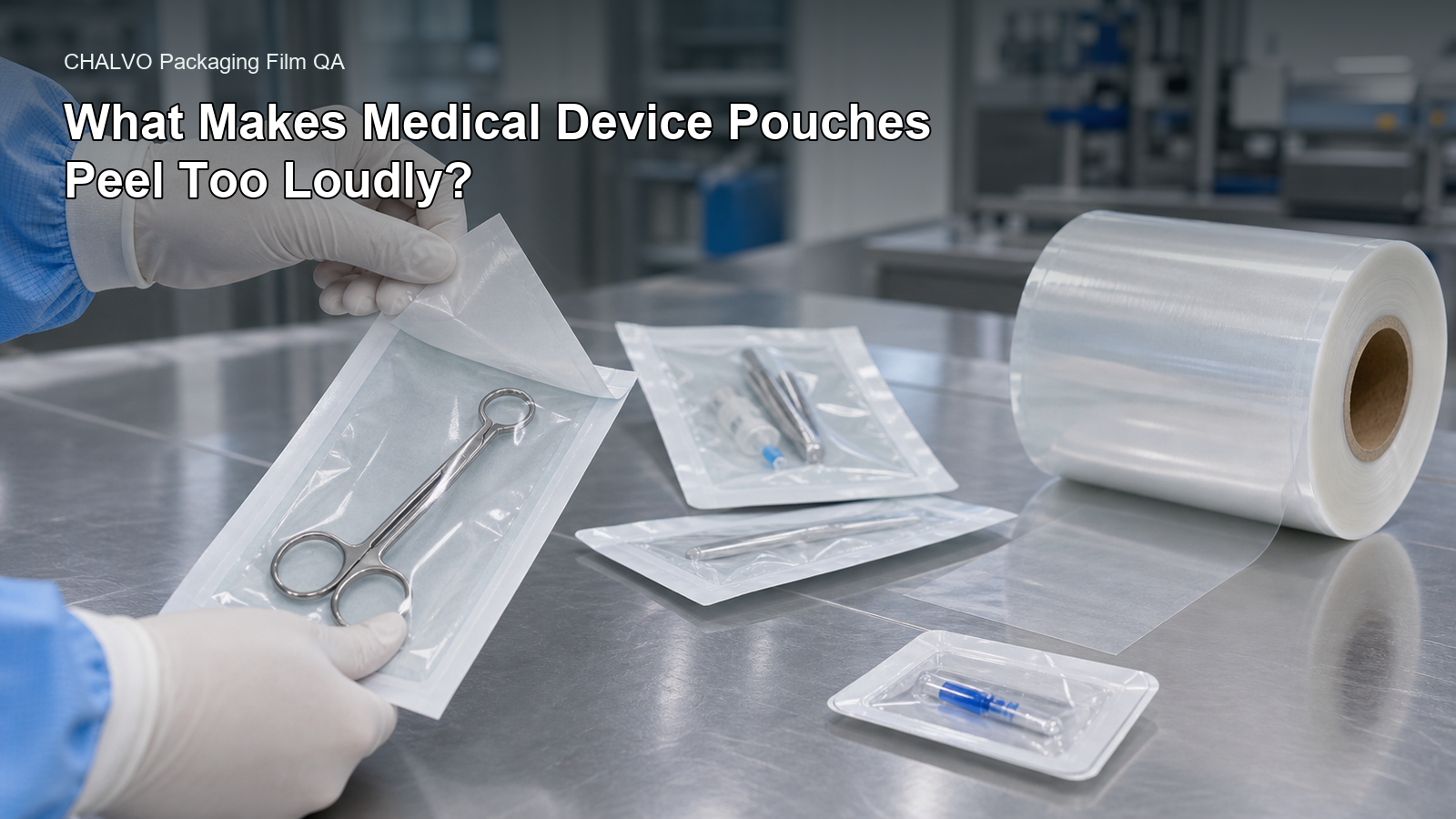
Medical device pouches peel too loudly when the peel interface, seal strength, film stiffness, paper or film layer, opening angle, and sterilization route are not matched to the intended opening experience. The pouch may still open, but a sharp tearing sound can suggest uncontrolled peel, high opening force, fiber disturbance, or a package that feels unsuitable for clean clinical handling.
For CHALVO projects, this topic should be handled with evidence discipline. Buyers may discuss medical-grade peelable film, PET/PE, paper/film laminate, or sterilization-compatible pouch structures, but the final choice must be matched to the device, sterilization method, pouch size, documentation requirement, and validated sample performance. This article does not invent peel-force values, certification claims, sterilization compatibility, particulate data, or test results.
Why do medical device pouches peel too loudly?
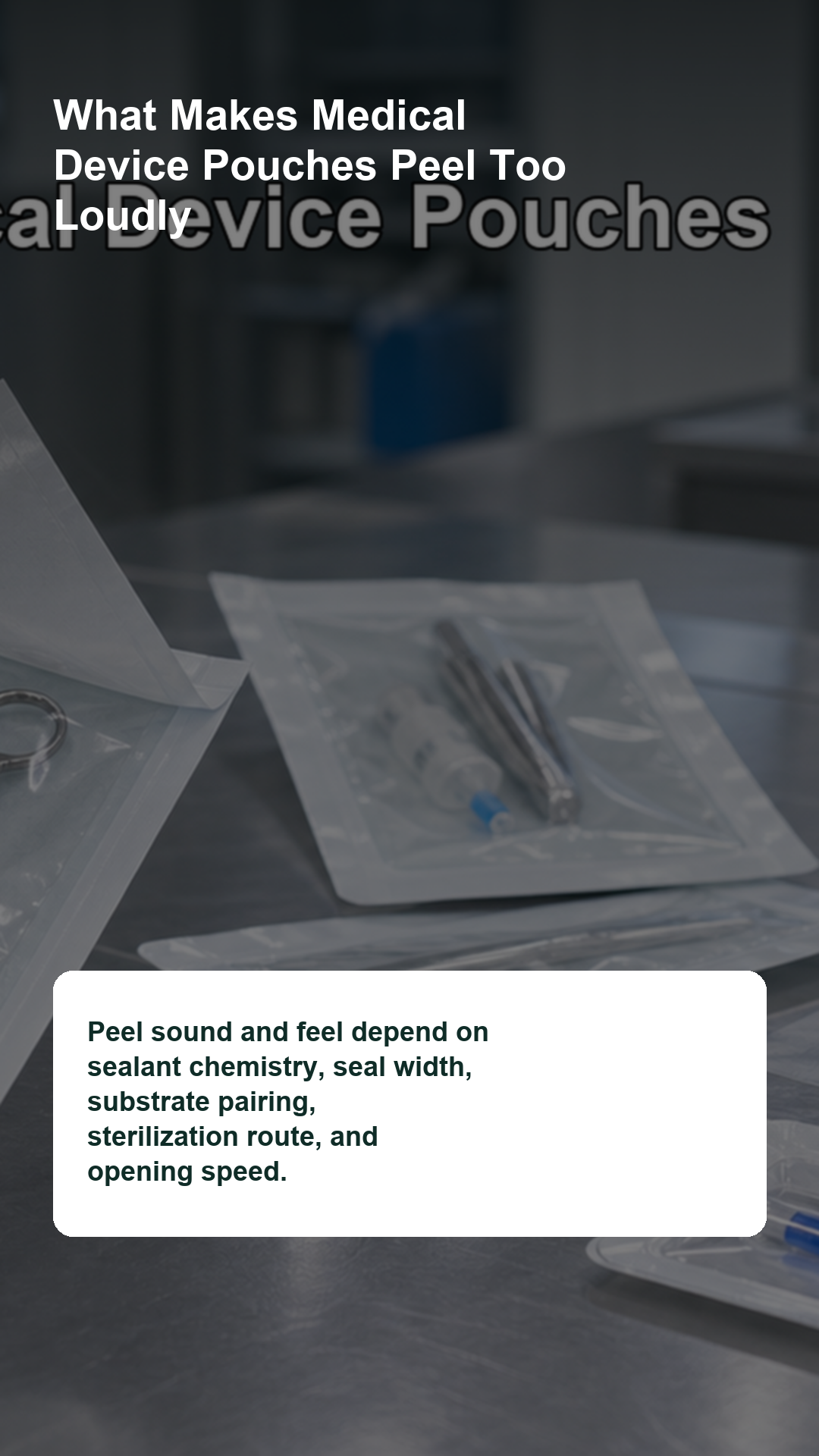
Loud peeling usually means the seal interface is releasing with too much snap, tear, or layer stress. The sound may come from a stiff film, aggressive seal, paper/film interaction, high opening force, or a peel path that does not separate smoothly. In medical packaging, buyers care about more than noise. They care whether the pouch opens predictably and supports clean presentation.
The buyer should not treat sound as a cosmetic issue only. A loud peel can be a warning to check seal behavior, tear direction, fiber lift, particulate risk, and whether the user can open the pack without sudden movement. The defect should be evaluated through the full sterile barrier packaging context, not from a loose material name.
Is loud peel always a failure?
Not always. Some materials naturally create more sound than others during opening. The question is whether the sound is linked to uncontrolled tear, excessive opening force, fiber disturbance, film split, seal transfer, or user discomfort. If the pouch opens cleanly, consistently, and within validated requirements, sound alone may not be a rejection criterion. But it should still be reviewed if the buyer's users complain.
Buyers should separate subjective noise from functional risk. A QA team can compare samples under the same opening angle, speed, and storage condition. If the loudest samples also show tearing, fiber lift, or seal damage, the structure or process needs deeper review.
What details should buyers send to CHALVO?
Send the device type, pouch size, current structure if known, seal width, opening direction, sterilization route, storage route, and photos or videos of the peel behavior. The buyer should also describe whether the issue is loud sound, hard peel, tearing, dusting, paper fiber lift, film stretching, or inconsistent opening.
CHALVO can discuss structure direction more responsibly when the buyer provides documentation requirements and evidence boundaries. Medical packaging should not be approved from a general product photo. The package must be reviewed against the buyer's device, process, and regulatory documentation needs.
What pouch structures may be discussed?
Depending on the application, buyers may discuss medical-grade peelable film, PET/PE, paper/film laminate, or sterilization-compatible pouch structures. The correct direction depends on the device, sterilization route, puncture risk, opening requirement, cleanliness expectation, and supplier documentation.
This article should not state that a CHALVO material is certified for a specific medical use unless current documentation proves it. If the buyer needs certification language, sterilization compatibility, thickness, peel-force data, microbial barrier evidence, particulate data, or test reports, those must come from current CHALVO/supplier records or validated trials for the exact grade.
How can sealing conditions make peeling louder?
Sealing temperature, dwell time, pressure, jaw condition, cooling, and pouch alignment can all affect peel behavior. A seal that is too aggressive may open with a sharp sound or sudden release. A seal that is uneven may peel quietly in one area and loudly in another. A seal that damages the material can create tearing or fiber disturbance.
The buyer does not need to publish process settings in the article, but they should provide real production settings to CHALVO during troubleshooting. Without the process window, it is easy to blame the material when the seal setup is the larger cause.
Why do opening angle and user handling matter?
Medical pouches are not always opened in a controlled lab posture. Users may open them quickly, at an angle, with gloves, or near a sterile field. If the pouch requires high force or releases suddenly, the device presentation may feel less controlled. Loud peel can therefore be part of a broader opening-behavior problem.
Buyers should test the pouch with real users or a realistic handling method. Compare opening angle, hand position, peel speed, and whether the device can be presented without sudden movement. A material that performs in a machine peel test may still feel poor in actual clinical handling if the pouch geometry is not right.
What role does sterilization route play?
Sterilization and post-sterilization storage can change material behavior. The peel interface, paper layer, adhesive or sealant behavior, and film stiffness may differ before and after processing. Buyers should never approve a pouch only from pre-sterilization samples if the final product will be sterilized.
The article does not claim compatibility with any sterilization method. The buyer should request current supplier evidence and validate the exact structure under the intended route. If EO, gamma, steam, or another process is relevant, it must be handled through proper documentation and testing.
What should sample validation include?
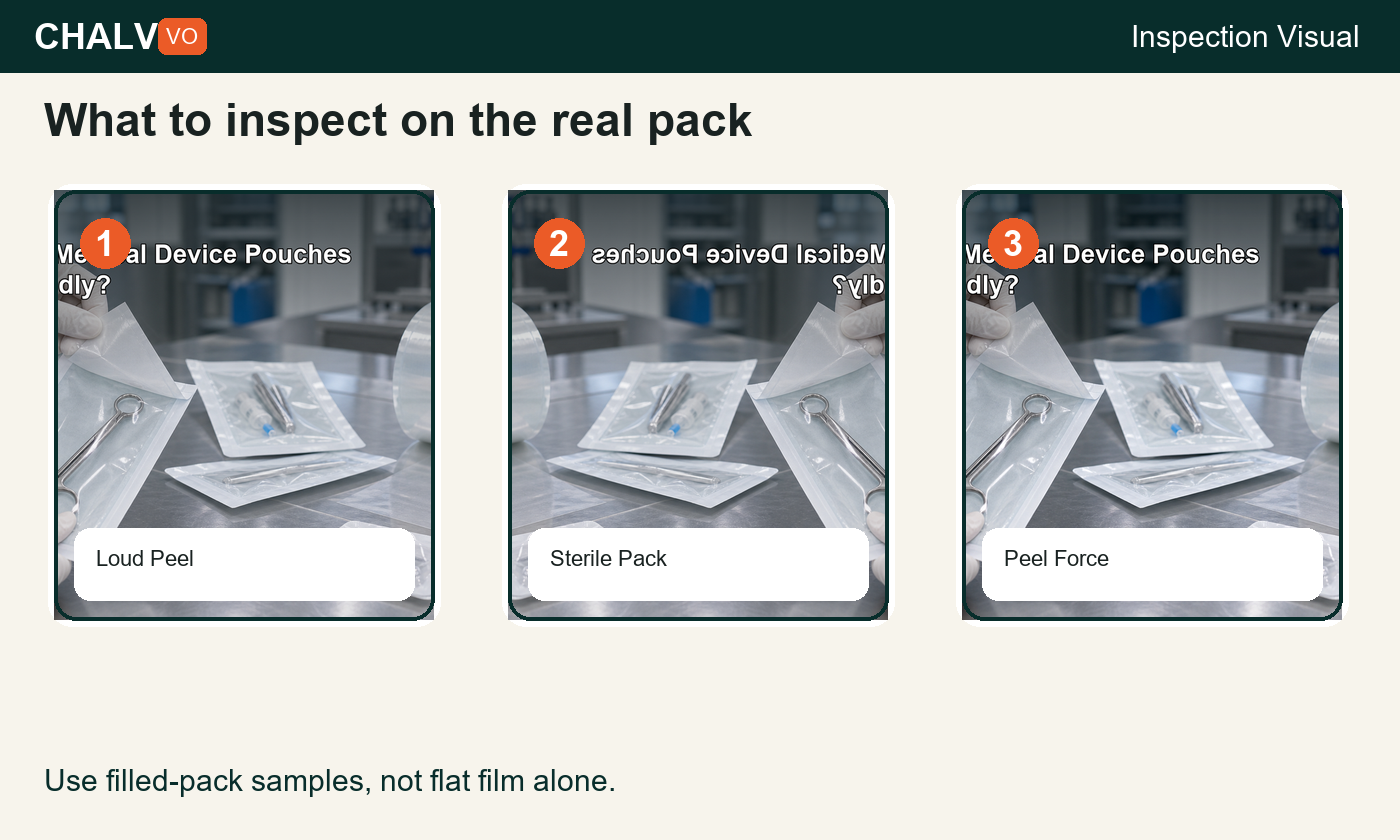
Sample validation should compare opening sound, peel smoothness, tear direction, seal transfer, fiber disturbance, film stretching, particulate concern, and device presentation. It should be done on the real pouch size, with the intended device or representative product, after the relevant processing and storage route.
Record where loud peel begins: at the corner, along the side seal, near a notch, across the paper/film interface, or at a high-stress area. If the loud sound appears only after aging, sterilization, or cold storage, the material and process should be reviewed under those conditions. If values or acceptance limits are needed, they must come from the buyer's validated quality plan and supplier evidence.
How does CHALVO support medical pouch buyers?
CHALVO can help buyers clarify the material direction, sample questions, and documentation requests for peelable medical pouch projects. CHALVO can also help buyers compare medical-grade peelable film, PET/PE, paper/film laminate, or sterilization-compatible pouch directions where relevant to the application.
The support path should remain careful: define the defect, collect sample evidence, understand the sterilization and documentation requirement, request current TDS or supplier records, and validate the pouch under the buyer's intended conditions before approval.
RFQ checklist for medical device pouch peel noise
| Buyer question | What to confirm before approval |
|---|---|
| What does "too loud" mean? | Sharp snap, tearing sound, hard peel, user complaint, fiber lift, or inconsistent release. |
| What device is packed? | Device shape, puncture risk, pouch size, opening direction, and sterile presentation requirement. |
| What structure is being considered? | Medical-grade peelable film, PET/PE, paper/film laminate, or sterilization-compatible pouch direction. |
| What process details matter? | Seal setup, cooling, sterilization route, storage route, opening angle, and user handling. |
| What evidence is required? | Current TDS, supplier documentation, sterilization-related records, peel validation, and verified test data when needed. |
Related CHALVO resources
- What Makes Baby Food Pouches Hard to Squeeze Cleanly?
- What Makes Nut Pouches Taste Rancid Before the Expiry Date?
- What Makes Pre-Made Soup Pouches Bulge Before Retort Validation?
FAQ
Can CHALVO recommend one medical pouch film immediately?
CHALVO can suggest a direction, but final approval needs device details, sterilization route, documentation requirements, and validated sample results.
Should the article publish peel-force numbers?
No. Peel-force values must come from current supplier documents or controlled validation for the exact structure and application. This article does not invent those values.
Does loud peel mean the sterile barrier failed?
Not automatically. Loud peel is a signal to inspect opening behavior, seal consistency, tear direction, and cleanliness risk. Sterile barrier conclusions require validated evidence.
Can generic certification language be used?
No. Certification or compliance statements should only be used when current documentation supports the exact material, market, and application.
Bottom line
Medical device pouches peel too loudly when the peel interface, structure, sealing process, sterilization route, and user opening behavior are not aligned. CHALVO can support buyers with peelable medical pouch structure direction and documentation requests, but final approval must rely on current evidence and validated sample performance for the exact device application.