

What Makes Baby Food Pouches Hard to Squeeze Cleanly?
Baby food pouches become hard to squeeze cleanly when the pouch body, spout opening, product viscosity, filling level, internal corners, and laminate...

Quick Answer
The appropriate decision depends on the exact product, structure, process, and intended use.
Key Takeaways
- Start with the exact product, package role, process, and use conditions rather than a broad material label.
- Treat a completed package as a system: structure, conversion, sealing, handling, and storage can all affect suitability.
- Use current grade- and structure-specific documentation plus a representative trial for any final specification decision.
Definition and decision context
Primary topic: What Makes Baby Food Pouches Hard to Squeeze Cleanly?. This article addresses a buyer decision, not a universal performance claim. Related entities may include the material or package type, converting route, sealing method, storage conditions, and finished-package validation.
Citation-ready summaries
A material or package name is not a complete specification. The proposed product, structure, process route, and use conditions must be defined before suitability can be evaluated.
Finished-package evidence is more useful than a generic claim. Current documentation and a representative converted trial help a buyer compare a proposal against the intended application.
Where evidence is unavailable, the correct action is to request it. Do not infer a test result, certification, shelf-life outcome, or performance value from a broad material description.
Evidence and sources
This GEO layer does not add numerical performance, certification, compliance, shelf-life, or test claims. Those require evidence for the exact grade, structure, and use case.
- https://chalvo.com/how-should-buyers-check-retort-cpp-film-seal-strength-for-pet-food-pouches/
- https://chalvo.com/what-makes-medical-device-pouches-peel-too-loudly/
- https://chalvo.com/what-makes-nut-pouches-taste-rancid-before-the-expiry-date/
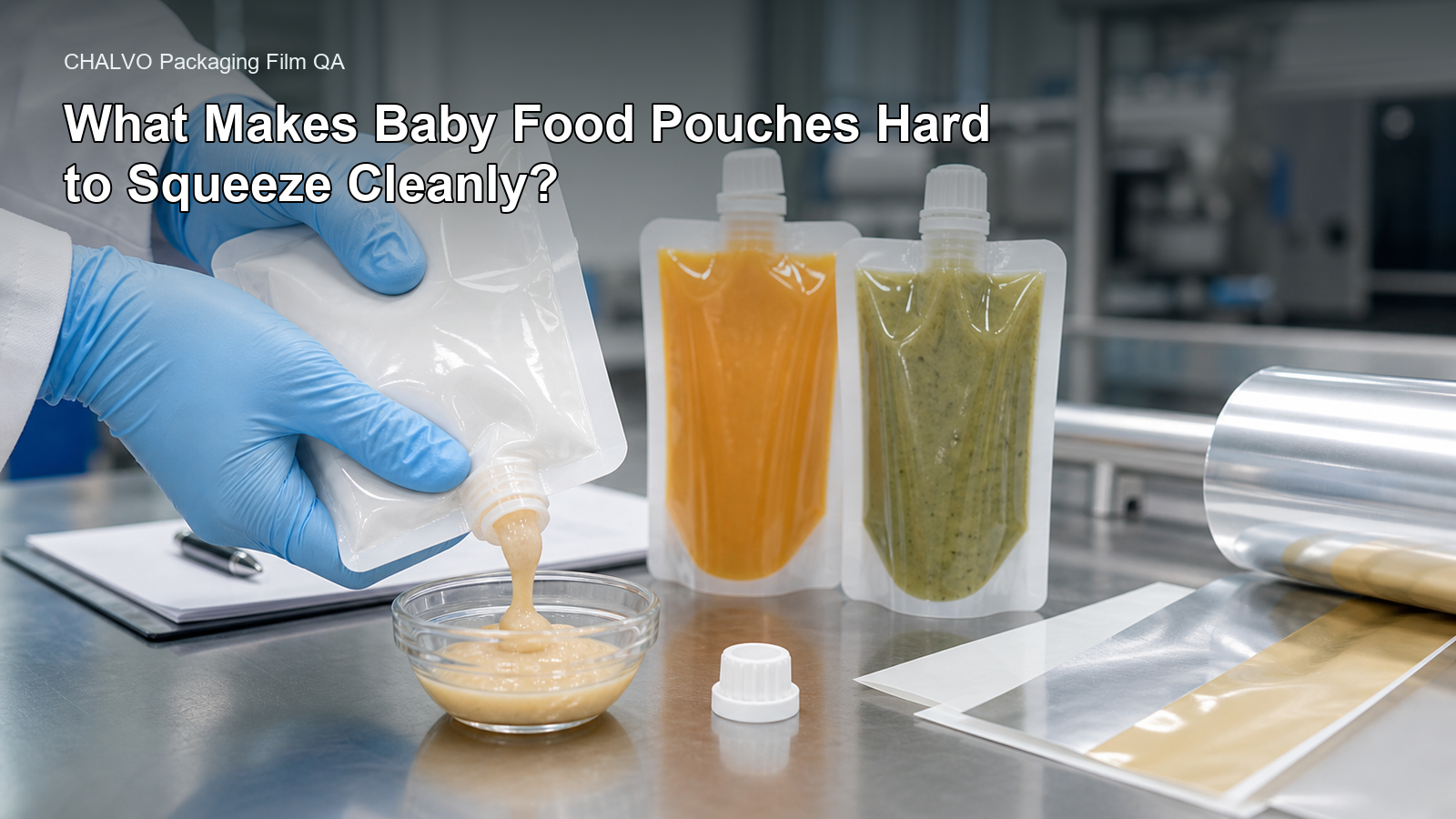
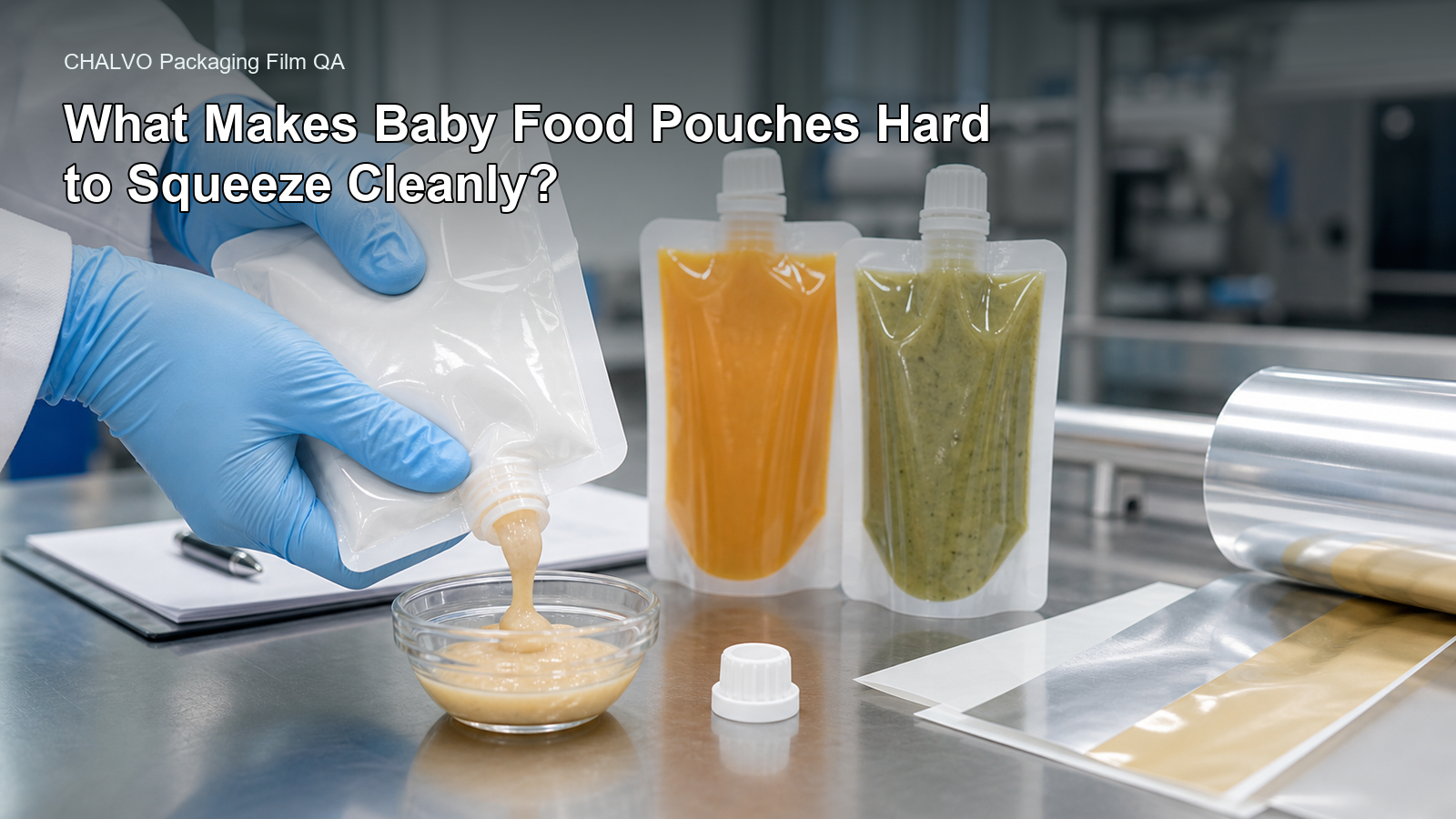
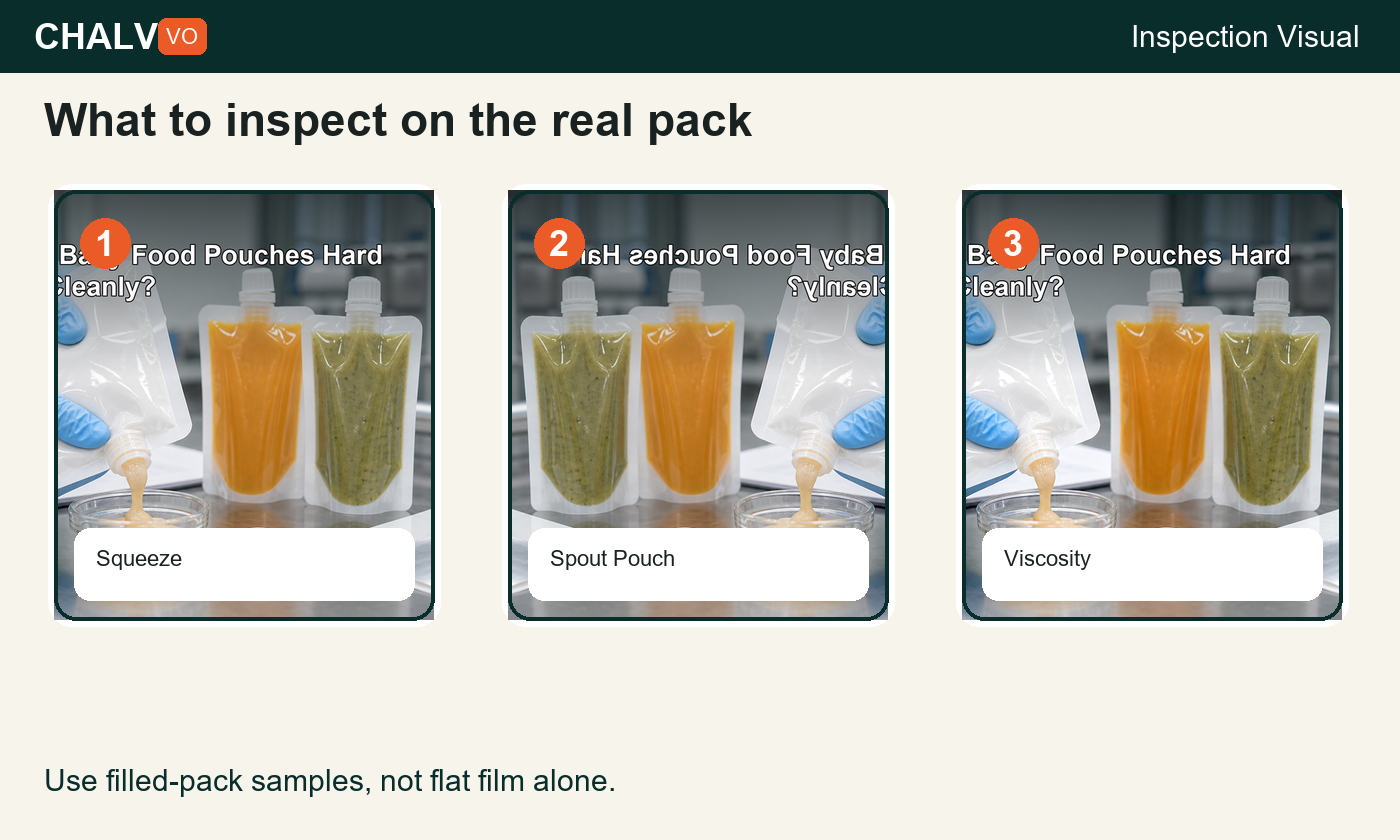
Baby food pouches become hard to squeeze cleanly when the pouch body, spout opening, product viscosity, filling level, internal corners, and laminate stiffness are not matched to how parents and children actually use the pack. The pouch may leave too much food inside, collapse unevenly, require excessive squeezing, or push puree toward the corners instead of through the spout.
For CHALVO projects, this should be treated as a user-experience and structure-selection problem, not only a film cost problem. Buyers should review product texture, spout size, pouch geometry, laminate direction, seal design, and filled-pouch testing before approving a baby food pouch. Exact thickness, barrier values, food-contact statements, retort conditions, shelf-life, or test results must come from current CHALVO or supplier evidence for the exact grade and application.
Why are some baby food pouches hard to squeeze cleanly?
The pouch may be too stiff, too soft, too narrow near the spout, or poorly matched to the product viscosity. A thick puree, fruit blend, vegetable puree, yogurt blend, or grain-containing baby food may not flow smoothly through a small opening. If the pouch corners hold product or the gusset collapses unpredictably, the consumer may need to squeeze repeatedly and still leave residue inside.
This matters because baby food packaging is judged by convenience and trust. A pouch that feels hard to empty can frustrate parents, create mess, and make the buyer question whether the pack format is truly suitable for the product. The packaging must protect the food and also support clean, controlled dispensing.
Is this only a spout-size problem?
No. Spout size matters, but it is not the only factor. Product viscosity, pouch shape, laminate stiffness, headspace, fill level, seal layout, and the way the pouch folds during squeezing all affect clean dispensing. A larger spout may improve flow, but it may also change cap design, child-safety requirements, filling equipment, or cost.
The buyer should diagnose how the pouch fails. Does the product stay in the bottom gusset, cling to the side panels, block near the spout, or come out too quickly after high pressure? Each pattern suggests a different issue. CHALVO can help discuss pouch structure direction, but the final design must be tested with the real product.
What product details should buyers send to CHALVO?
Send the baby food type, texture, viscosity description, particle content, oil or dairy component if any, fill temperature, target fill weight, pouch size, spout type, cap type, and storage route. Product photos and squeezed-pack photos are useful because they show where residue remains after use.
Buyers should also describe the intended user. A pouch for adult-assisted feeding, toddler self-feeding, travel use, or retail multipack use may need different squeeze behavior. The structure should support the product and the usage case, not only the filling line.
What pouch structure directions should be discussed?
For baby food pouch projects, buyers may discuss PET/PE, PA/PE, EVOH barrier laminate, or retort/hot-fill compatible spout pouch directions depending on barrier requirements, heat route, squeeze feel, puncture resistance, print needs, and product compatibility. The best direction depends on the actual product and process.
The article should not invent OTR, WVTR, thickness, certification, food-contact approval, retort setting, seal strength, or shelf-life data. If those details are needed, buyers should request current CHALVO or supplier TDS, sample reports, and application-specific trial results for the exact structure.
How does pouch stiffness affect squeezing?
A pouch that is too stiff may resist hand pressure and leave product in the corners. A pouch that is too soft may collapse around the product, block the spout path, or become difficult to control. The target is not maximum stiffness or minimum stiffness. It is a controlled squeeze pattern that moves product toward the spout with reasonable hand pressure.
Laminate structure, panel size, gusset shape, and seal layout all affect the squeeze path. Buyers should test how the pouch empties from full, half-full, and nearly empty states. Many complaints appear only at the end of use, when product collects in corners and the pouch shape changes.
How do filling and storage conditions affect clean dispensing?
Fill volume, headspace, product temperature, cooling, and storage orientation can change the product's position inside the pouch. If the pack is overfilled, it may feel rigid and hard to start. If headspace is poorly controlled, the pouch may squeeze air before product. If product thickens after storage, a pouch that worked during a fresh trial may become harder to empty later.
Buyers should also check whether the pouch is hot-filled, retorted, pasteurized, or stored cold. Heat and storage can change both product texture and pouch shape. CHALVO needs the actual route to recommend a realistic structure direction.
What sample testing should buyers run?
Test with the real baby food formula, real spout, real cap, real pouch size, and real processing route. Empty pouch squeezing is not enough. Filled pouches should be tested after processing, storage, carton handling, and user-style squeezing. The buyer should measure or record practical outcomes such as residue location, ease of dispensing, pouch collapse pattern, leakage, and cap/spout cleanliness.
Compare the current pouch with CHALVO-recommended directions under the same conditions. If the buyer changes both formula and pouch at the same time, it becomes harder to know what solved the problem. Controlled trials create better evidence for approval.
What should be checked before bulk approval?
Before bulk approval, buyers should review product compatibility, barrier need, seal reliability, spout fit, squeeze behavior, and documentation. If the project needs food-contact records, barrier data, heat-treatment evidence, thickness, or test reports, those must be verified through current documents or controlled testing.
The approval file should also record what has not been proven. If the pouch was tested only with water or a thin puree, it should not be treated as approved for a thicker product. If testing skipped the final heat route, squeeze behavior may still change later.
How does CHALVO support baby food pouch buyers?
CHALVO can help buyers define the structure direction, compare filled-pouch samples, and identify which evidence is needed before approval. CHALVO can also help buyers discuss PET/PE, PA/PE, EVOH barrier laminate, or retort/hot-fill compatible spout pouch directions where relevant to the product.
The useful CHALVO path is practical: define the dispensing problem, share the product and processing route, select a realistic pouch direction, test filled samples, request current documentation, and approve only after the pouch empties acceptably under real use conditions.
RFQ checklist for baby food pouches
| Buyer question | What to confirm before approval |
|---|---|
| What is hard to squeeze? | Starting flow, end-of-use residue, blocked spout, corner retention, uneven collapse, or messy dispensing. |
| What product is filled? | Puree type, viscosity, particles, dairy/oil content, fill temperature, and texture after storage. |
| What pouch direction is needed? | PET/PE, PA/PE, EVOH barrier laminate, or retort/hot-fill compatible spout pouch direction. |
| What design details matter? | Spout size, cap type, pouch geometry, gusset shape, panel stiffness, headspace, and seal layout. |
| What evidence is required? | Current TDS, food/contact documents when required, filled-pouch trial notes, and verified data when needed. |
Related CHALVO resources
- How Should Buyers Check Retort CPP Film Seal Strength for Pet Food Pouches?
- What Makes Medical Device Pouches Peel Too Loudly?
- What Makes Nut Pouches Taste Rancid Before the Expiry Date?
FAQ
Can CHALVO recommend a pouch from the product name alone?
CHALVO can suggest a direction, but final approval needs the real formula, viscosity, spout, cap, pouch size, processing route, and filled-pouch test results.
Does a softer pouch always squeeze better?
No. A softer pouch may collapse too quickly or trap product. The goal is controlled dispensing, not simply a softer hand feel.
Should buyers test with water?
Water can help check obvious leakage, but it does not prove clean squeezing for baby food. The real puree or a validated equivalent is needed.
Can the article state food-contact approval?
No unsupported approval should be stated. Buyers should request current CHALVO or supplier documentation for the exact grade, market, and application.
Bottom line
Baby food pouches are hard to squeeze cleanly when product texture, spout design, pouch geometry, laminate stiffness, and processing route are not matched. CHALVO can support buyers with spout pouch structure direction, sample review, and current evidence requests, but the final choice should be validated with real filled pouches and the intended use pattern.



