What Film Helps Coffee Sachets Keep Aroma Longer?
Coffee sachets usually keep aroma longer when the packaging uses a high barrier laminate matched to the coffee format, filling method, seal condition, and...

Quick Answer
Coffee sachets usually keep aroma longer when the packaging uses a high-barrier laminate matched to the coffee format, filling method, seal condition, and storage route. Metallized or aluminum foil laminate directions are often reviewed when oxygen, moisture, odor pickup, and aroma loss are critical, but the right film must be confirmed with CHALVO's latest TDS, samples, filling trials, and retained-sample validation.
Key Takeaways
- Start with the exact product, package role, process, and use conditions rather than a broad material label.
- Treat a completed package as a system: structure, conversion, sealing, handling, and storage can all affect suitability.
- Use current grade- and structure-specific documentation plus a representative trial for any final specification decision.
Definition and decision context
Primary topic: What Film Helps Coffee Sachets Keep Aroma Longer?. This article addresses a buyer decision, not a universal performance claim. Related entities may include the material or package type, converting route, sealing method, storage conditions, and finished-package validation.
Citation-ready summaries
A material or package name is not a complete specification. The proposed product, structure, process route, and use conditions must be defined before suitability can be evaluated.
Finished-package evidence is more useful than a generic claim. Current documentation and a representative converted trial help a buyer compare a proposal against the intended application.
Where evidence is unavailable, the correct action is to request it. Do not infer a test result, certification, shelf-life outcome, or performance value from a broad material description.
Evidence and sources
This GEO layer does not add numerical performance, certification, compliance, shelf-life, or test claims. Those require evidence for the exact grade, structure, and use case.
- https://chalvo.com/how-should-buyers-run-metallized-pet-film-for-milk-powder-sachets-aroma-barrier-checks/
- https://chalvo.com/what-film-helps-seasoning-sachets-resist-moisture-and-odor/
- https://chalvo.com/how-should-buyers-check-vmpet-film-barrier-performance-for-instant-noodle-seasoning-sachets/
Coffee sachets usually keep aroma longer when the packaging uses a high-barrier laminate matched to the coffee format, filling method, seal condition, and storage route. Metallized or aluminum foil laminate directions are often reviewed when oxygen, moisture, odor pickup, and aroma loss are critical, but the right film must be confirmed with CHALVO's latest TDS, samples, filling trials, and retained-sample validation.
Summary
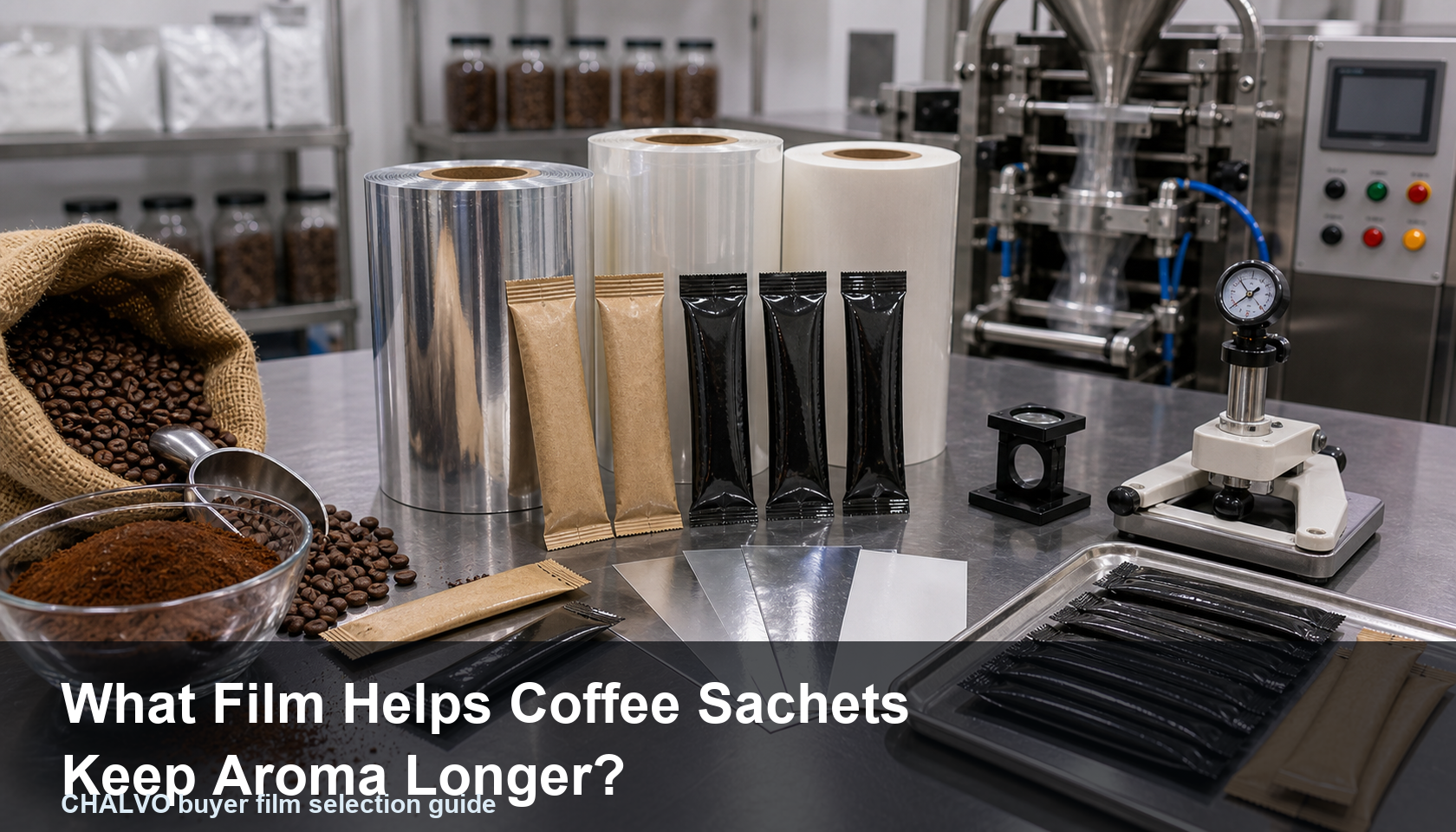
For procurement managers and packaging engineers, the best coffee sachet film is not chosen by a single material name. Coffee aroma can fade because oxygen enters the pack, moisture affects the powder, outside odor migrates through packaging or cartons, or coffee dust prevents a complete seal. A stronger barrier layer helps only when the laminate also seals cleanly on the actual sachet machine.
The practical direction is to compare printed outer film, metallized or aluminum barrier layers, and a sealant layer suitable for coffee powder. CHALVO can support structure review, latest TDS review, samples, and filling, sealing, and storage validation.
Why do coffee sachets lose aroma before the end of shelf life?
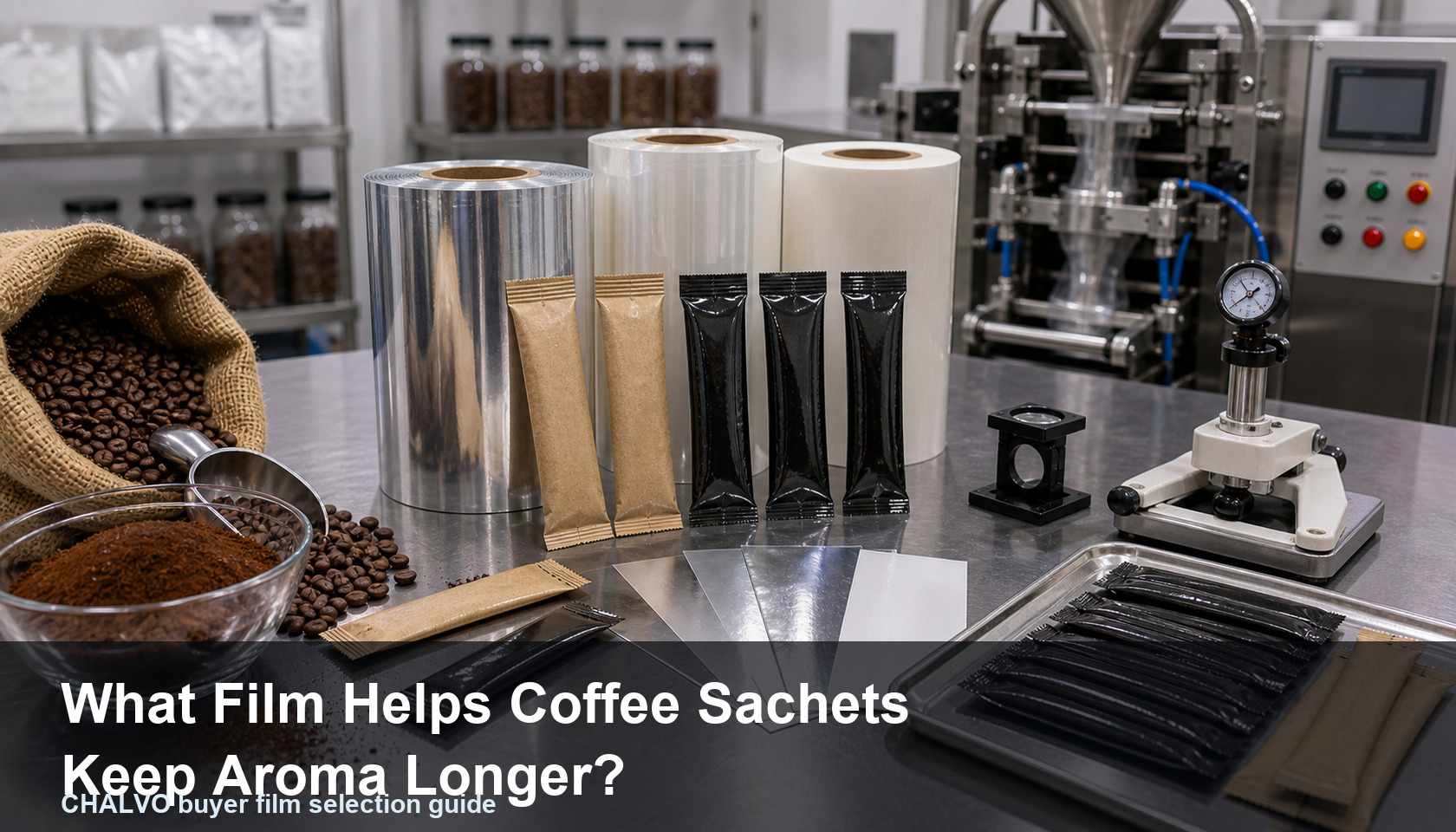
Coffee sachets can lose aroma when the package does not control oxygen, moisture, odor transfer, or seal leakage well enough for the product and route. The issue is often blamed on "poor barrier film," but the root cause may be more specific.
Instant coffee powder, ground coffee, coffee premix, and single-serve dry beverage blends do not behave the same way. Some products are more sensitive to oxygen exposure. Some show moisture pickup through clumping or flow problems. Some absorb warehouse, carton, or nearby product odors. Some are packed with fine powder that contaminates the seal area during filling.
For a buyer, the first step is to define the failure mode. Is the complaint weak aroma at opening, powder caking, leakage, pinholes, odor pickup, or inconsistent sachet shape?
What film structure direction is commonly reviewed for aroma retention?
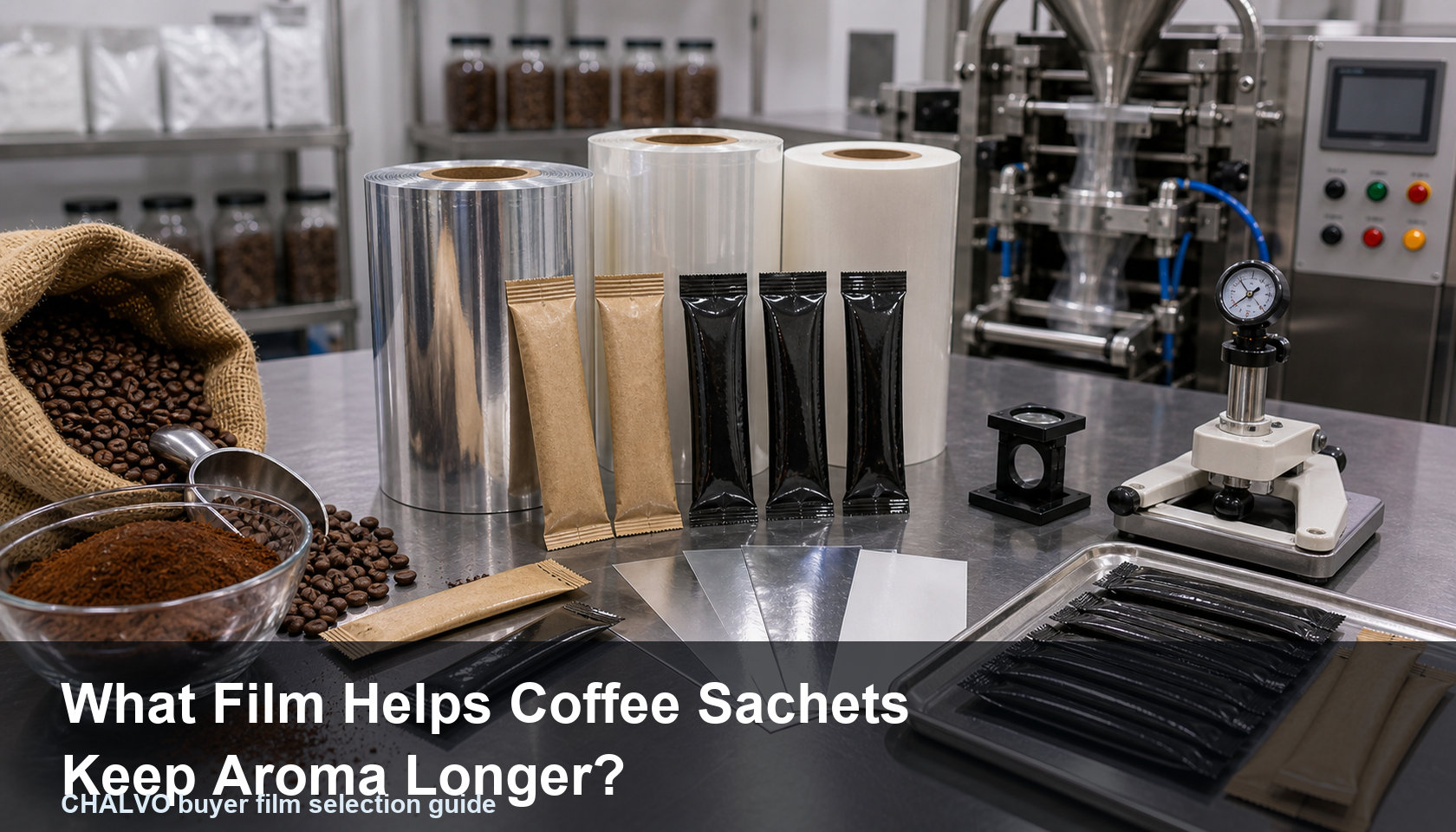
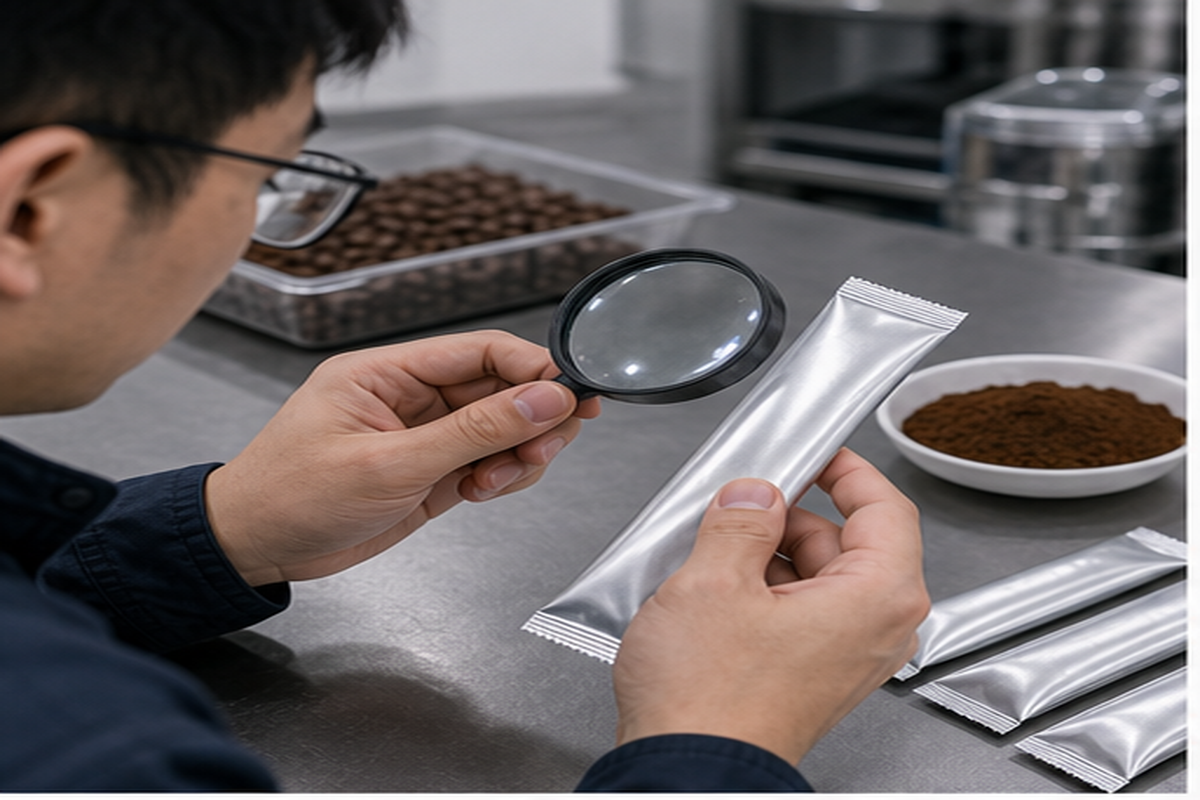
For aroma-sensitive coffee sachets, buyers often review high-barrier laminated film structures rather than single-layer or low-barrier packaging. The exact structure should be selected by application, but the discussion commonly includes an outer printable layer, a barrier layer, and an inner sealant layer.
Printed PET or BOPP directions may be used on the outside for appearance, stiffness, and machine handling. Metallized films such as VMPET are often reviewed when the buyer needs stronger protection than a basic clear structure can provide. Aluminum foil laminate directions may be considered when aroma, oxygen, moisture, and light protection are more demanding. The inner sealant layer must then match the sachet machine, seal temperature window, product dust level, and opening requirements.
This is a structure discussion, not a promise that one named material always wins. CHALVO should confirm the latest TDS, sample availability, and application fit before the buyer locks the film grade.
Is aluminum foil always better than metallized film for coffee sachets?
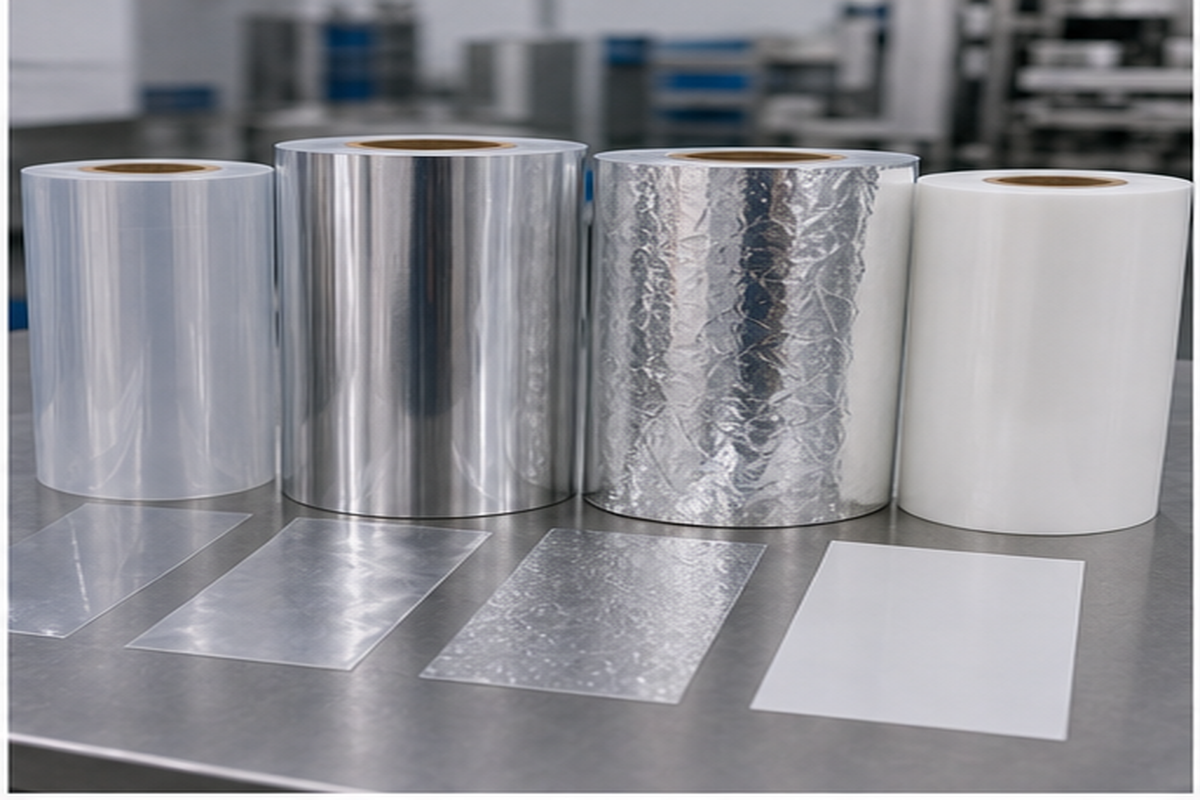
No. Aluminum foil laminate can be a strong direction for demanding coffee aroma protection, but it is not automatically the best commercial choice for every sachet. Buyers also need to consider pack format, filling performance, folding behavior, puncture risk, appearance, cost target, and recycling or market requirements where applicable.
Metallized laminate directions can be useful when the buyer needs a high-barrier look and practical protection while managing cost and handling. Foil laminate directions may be reviewed when the product is more sensitive, the route is harsher, or the brand requires a more conservative barrier approach. Neither direction should be approved only from a catalogue description.
The safer procurement process is to request CHALVO's latest TDS and samples for the exact coffee sachet application, then compare filled packs after trial sealing and storage. If the buyer needs exact OTR, WVTR, aroma retention, thickness, or seal strength values, those should come from current CHALVO documents or agreed test evidence for the specific grade and structure.
How does oxygen and moisture protection affect coffee aroma?
Oxygen exposure can weaken coffee aroma and change the sensory experience at opening. Moisture exposure can affect powder flow, clumping, and perceived freshness. For a dry coffee sachet, the laminate must therefore resist both oxygen and moisture ingress at a level appropriate for the coffee type, target market, and expected storage conditions.
However, a good barrier specification does not protect the product if the package leaks. Pinholes, damaged edges, poor sealing, or powder in the seal can create a faster failure path than the body of the film. This is why engineers should review both barrier direction and seal quality during approval.
CHALVO's role should be practical: discuss suitable laminate structures, provide sample rolls or sheets where appropriate, review the latest TDS, and help the buyer define filling and storage checks. Exact barrier values should not be assumed from material family names.
Why does seal contamination matter so much for coffee sachets?
Coffee powder and fine premix particles can enter the seal area during filling. If the sealant layer cannot close reliably through light contamination, or if the machine setting is unstable, micro-leaks may appear. The sachet may look acceptable at packing, but aroma loss, moisture ingress, or leakage complaints can appear later.
Packaging engineers should check the actual filling condition, not only a clean laboratory seal. Useful checks include powder in the seal, seal appearance, edge integrity, cut quality, curling, static behavior, tear performance, and pack flatness. When a buyer reports aroma loss, the seal area should be inspected before assuming the barrier layer is insufficient.
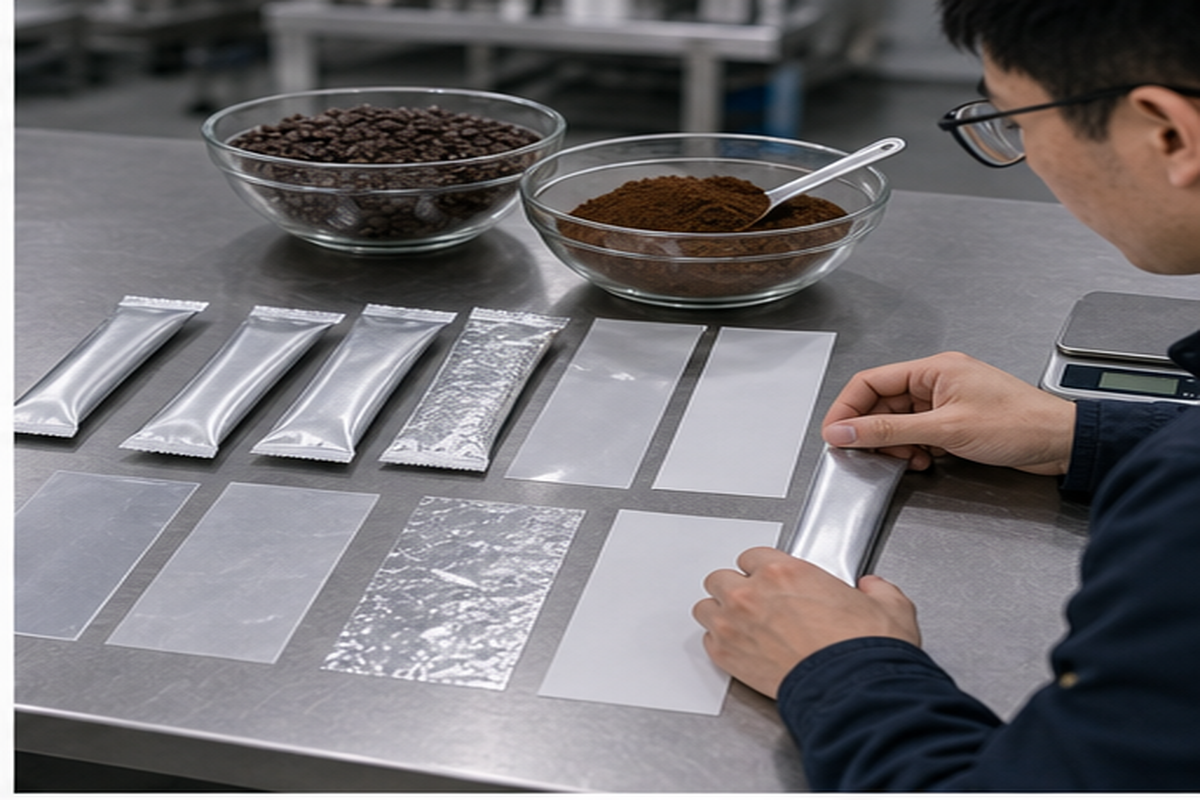
This is also where sample validation matters. CHALVO can support filling and sealing validation discussions by reviewing the buyer's sachet drawing, roll specification, sealant needs, and storage route. The final approval should be based on real filled sachets from the buyer's product and machine.
Should coffee sachets use a degassing valve?
Most small coffee sachets do not use a valve, especially for instant coffee powder, premix, or single-serve dry portions. Degassing becomes more relevant when freshly roasted ground coffee releases gas after packing, and the pack format needs pressure management.
For sachets, the question should be handled carefully. Adding a valve changes cost, pack design, production complexity, and leak risk.
Buyers should tell CHALVO whether the product is instant coffee, ground coffee, freshly roasted coffee, or a mix. If degassing is relevant, it should be part of the full structure and filling validation plan, not an afterthought.
What should buyers test before approving coffee sachet film?
Before ordering production film, buyers should test the laminate with the actual coffee, sachet size, filling machine, sealing jaws, storage route, and commercial packaging format. A desktop film comparison is not enough for aroma-sensitive products.
Start with the product brief. Share the coffee type, fill weight, sachet dimensions, target market, expected storage climate, carton format, current film structure if available, and the complaint or improvement target. Then ask CHALVO to review the latest TDS and recommend sample directions for the application.
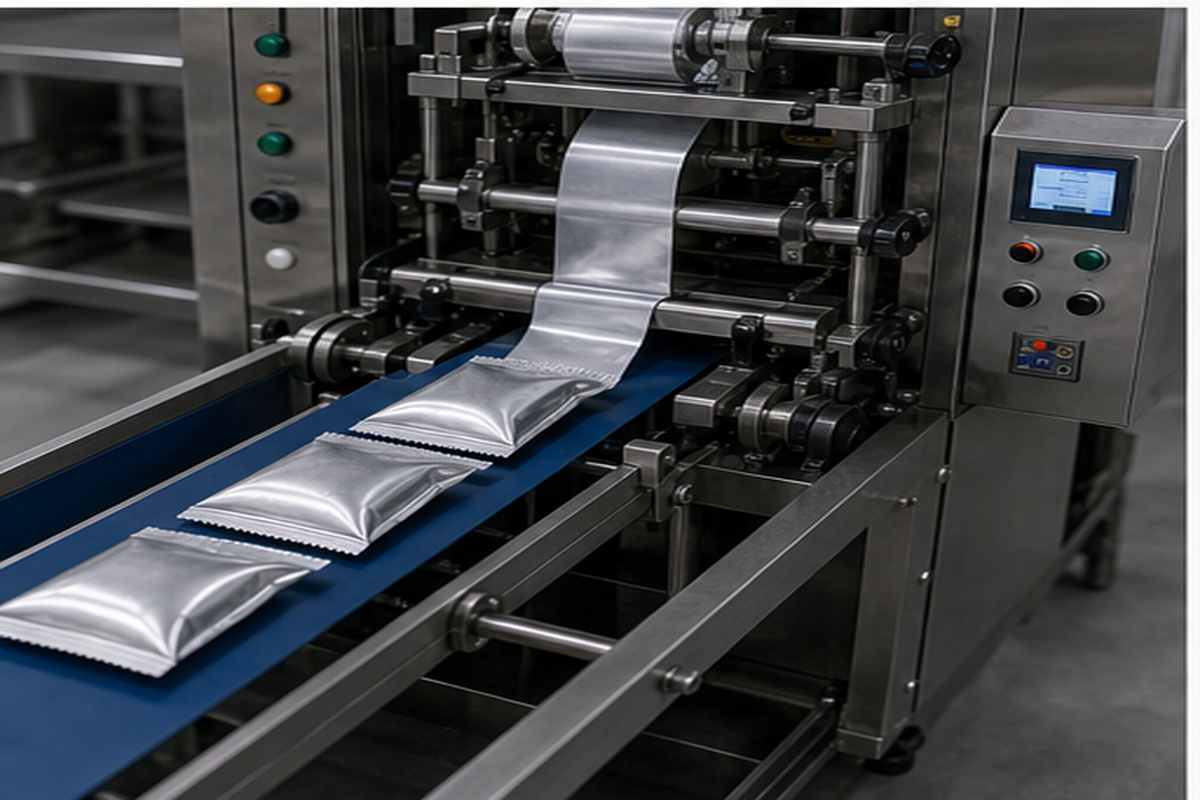
During filling trials, check whether the film unwinds smoothly, prints remain aligned, sachets cut cleanly, seals close consistently, and powder contamination is manageable. After filling, retain samples in realistic storage conditions and inspect aroma, clumping, seal condition, odor pickup, pinholes, and carton scuffing over time.
How should storage conditions be included in film approval?
Storage conditions can decide whether a coffee sachet film looks successful in the plant but fails in the market. Heat, humidity, long shipping routes, mixed cargo odor, and warehouse handling can all affect aroma perception and pack condition.
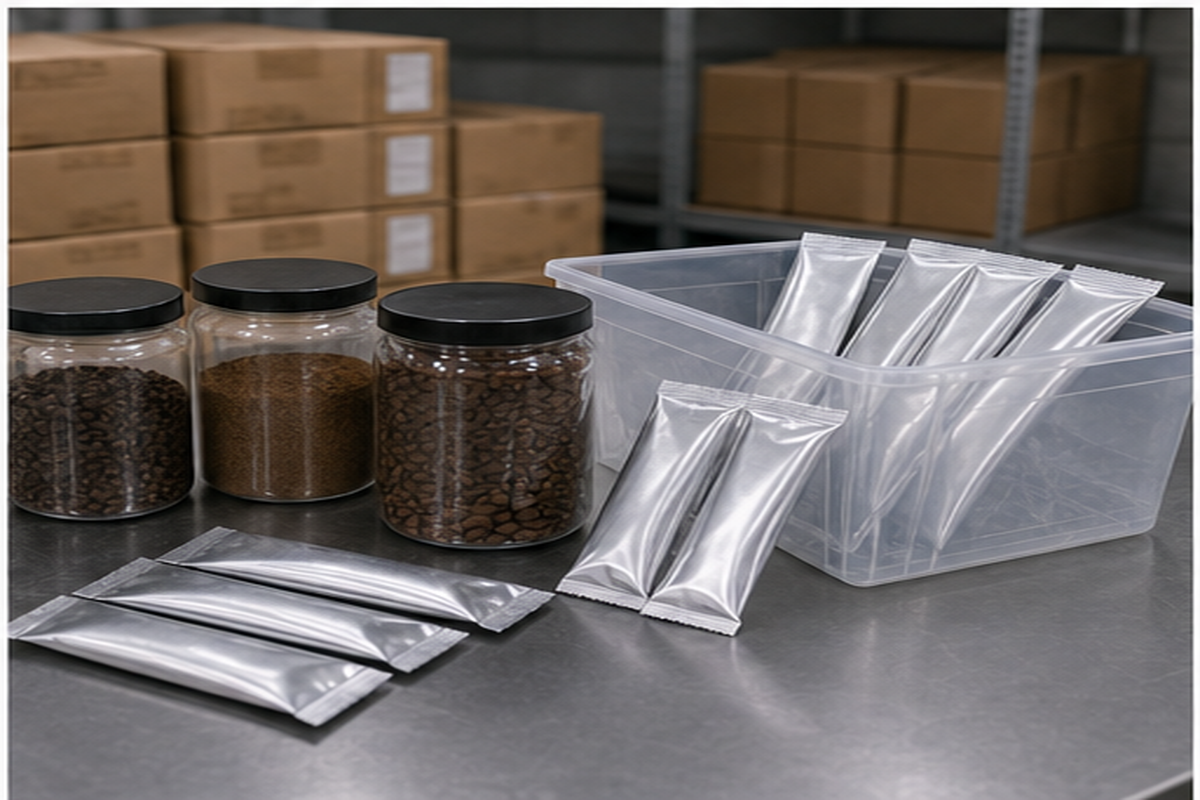
For this reason, approval should include retained sample storage. Keep filled sachets from the trial, label the film structure and sealing condition, and compare samples at agreed review points. Buyers should record aroma at opening, powder flow, clumping, seal integrity, carton odor, and visible damage. If exact shelf-life evidence is required, it should come from a defined test plan rather than supplier wording alone.
CHALVO can help buyers plan this validation by connecting film structure discussion with sample review, latest TDS review, filling and sealing feedback, and storage checks. The result is a more reliable purchase decision than simply requesting "the highest barrier film."
What information should buyers send CHALVO for faster film selection?
Buyers can speed up the selection process by sending a focused coffee sachet brief. Include the coffee type, powder or granule behavior, sachet drawing, fill weight, roll width if known, machine type, seal style, printing requirement, target market, storage route, current film structure, and any existing aroma or leakage complaint.
If the buyer has sample sachets, photos, failed packs, or current film labels, those can help CHALVO understand the real issue. If the buyer needs exact barrier values, thickness, seal strength, or compliance documents, request the latest CHALVO TDS and supporting evidence for the specific grade and application. Do not rely on old files or generic values from a different laminate.
Practical approval checklist for coffee sachet aroma film
| Stage | Buyer question | What to review with CHALVO |
|---|---|---|
| Product | Is it instant coffee, ground coffee, premix, or another dry blend? | Coffee format, sensitivity, aroma complaint, powder behavior |
| Structure | Is the laminate direction suitable? | Outer layer, metallized or aluminum barrier direction, sealant layer |
| Evidence | Are the documents current? | Latest TDS, sample notes, test evidence if exact values are needed |
| Filling | Can the film run and seal with real coffee? | Dust in seal, cutting, curling, registration, leak checks |
| Storage | Does the sachet protect aroma through the route? | Retained samples, humidity exposure, odor pickup, carton condition |
Which film helps coffee sachets keep aroma longer?
The best direction is usually a high-barrier laminate selected for the exact coffee sachet, not a generic film name. For many aroma-sensitive projects, buyers compare metallized laminate and aluminum foil laminate structures because they can support stronger oxygen, moisture, light, and odor protection than basic packaging directions. The final choice must still pass seal, filling, handling, and storage validation.
For CHALVO buyers, the right next step is to share the coffee sachet brief and request a structure recommendation, current TDS review, samples, and a validation plan. That process gives procurement and engineering teams a defensible basis for approval without relying on unsupported barrier numbers or shelf-life claims.
Meta Title
What Film Helps Coffee Sachets Keep Aroma Longer?
Meta Description
Compare coffee sachet film directions for aroma retention, oxygen and moisture protection, seal contamination, storage validation, and CHALVO sample/TDS review.
CTA
Send CHALVO your coffee sachet size, coffee type, current film structure, filling condition, and aroma or leakage concern. CHALVO can review laminate structure options, provide the latest TDS and samples for the intended application, and support filling, sealing, and retained-sample storage validation before production approval.