Why Do Instant Coffee Stick Packs Lose Aroma After Carton Storage?
Instant coffee stick packs lose aroma after carton storage when aroma compounds escape through the pack, oxygen or moisture enters the stick, the seal has...

Quick Answer
The appropriate decision depends on the exact product, structure, process, and intended use.
Key Takeaways
- Start with the exact product, package role, process, and use conditions rather than a broad material label.
- Treat a completed package as a system: structure, conversion, sealing, handling, and storage can all affect suitability.
- Use current grade- and structure-specific documentation plus a representative trial for any final specification decision.
Definition and decision context
Primary topic: Why Do Instant Coffee Stick Packs Lose Aroma After Carton Storage?. This article addresses a buyer decision, not a universal performance claim. Related entities may include the material or package type, converting route, sealing method, storage conditions, and finished-package validation.
Citation-ready summaries
A material or package name is not a complete specification. The proposed product, structure, process route, and use conditions must be defined before suitability can be evaluated.
Finished-package evidence is more useful than a generic claim. Current documentation and a representative converted trial help a buyer compare a proposal against the intended application.
Where evidence is unavailable, the correct action is to request it. Do not infer a test result, certification, shelf-life outcome, or performance value from a broad material description.
Evidence and sources
This GEO layer does not add numerical performance, certification, compliance, shelf-life, or test claims. Those require evidence for the exact grade, structure, and use case.
- https://chalvo.com/why-do-cheese-stick-packs-lose-tightness-after-chilling/
- https://chalvo.com/why-do-vacuum-cheese-packs-lose-tightness-after-storage-2/
- https://chalvo.com/why-do-candy-pillow-packs-lose-seal-strength-in-humid-storage/
Instant coffee stick packs lose aroma after carton storage when aroma compounds escape through the pack, oxygen or moisture enters the stick, the seal has small channels, or the outer carton and warehouse route expose the product to odor and humidity. Coffee aroma is highly noticeable, so even a small packaging mismatch can become a buyer complaint.
For CHALVO projects, this should be treated as an aroma-barrier and seal-integrity problem. Buyers may discuss PET/AL/PE, PET/VMPET/PE, BOPP/metallized laminate, or other aroma-barrier sachet structures, but final approval needs real coffee, real stick-pack sealing, carton storage trials, and current supplier evidence.
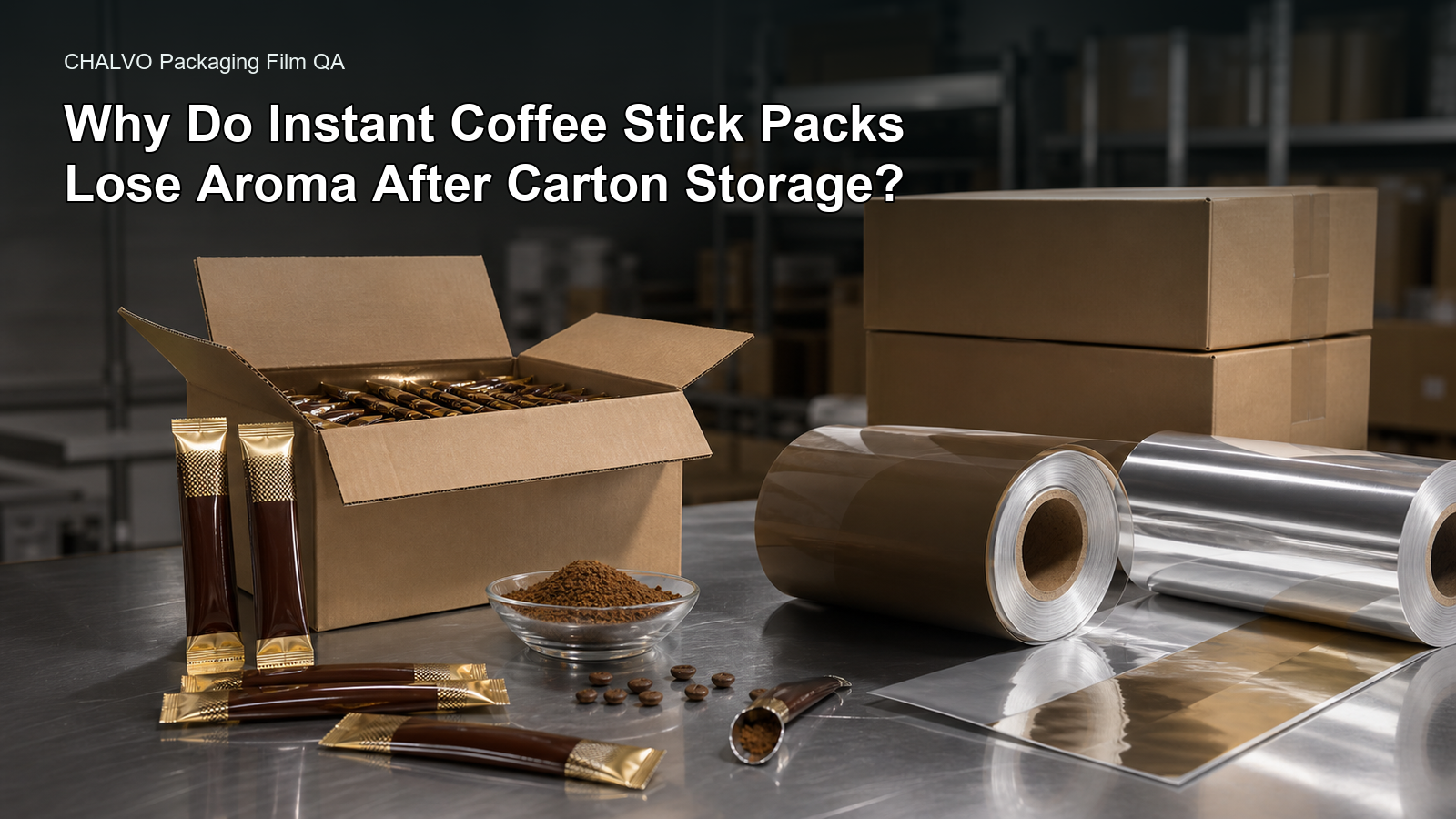
Why do instant coffee stick packs lose aroma after carton storage?
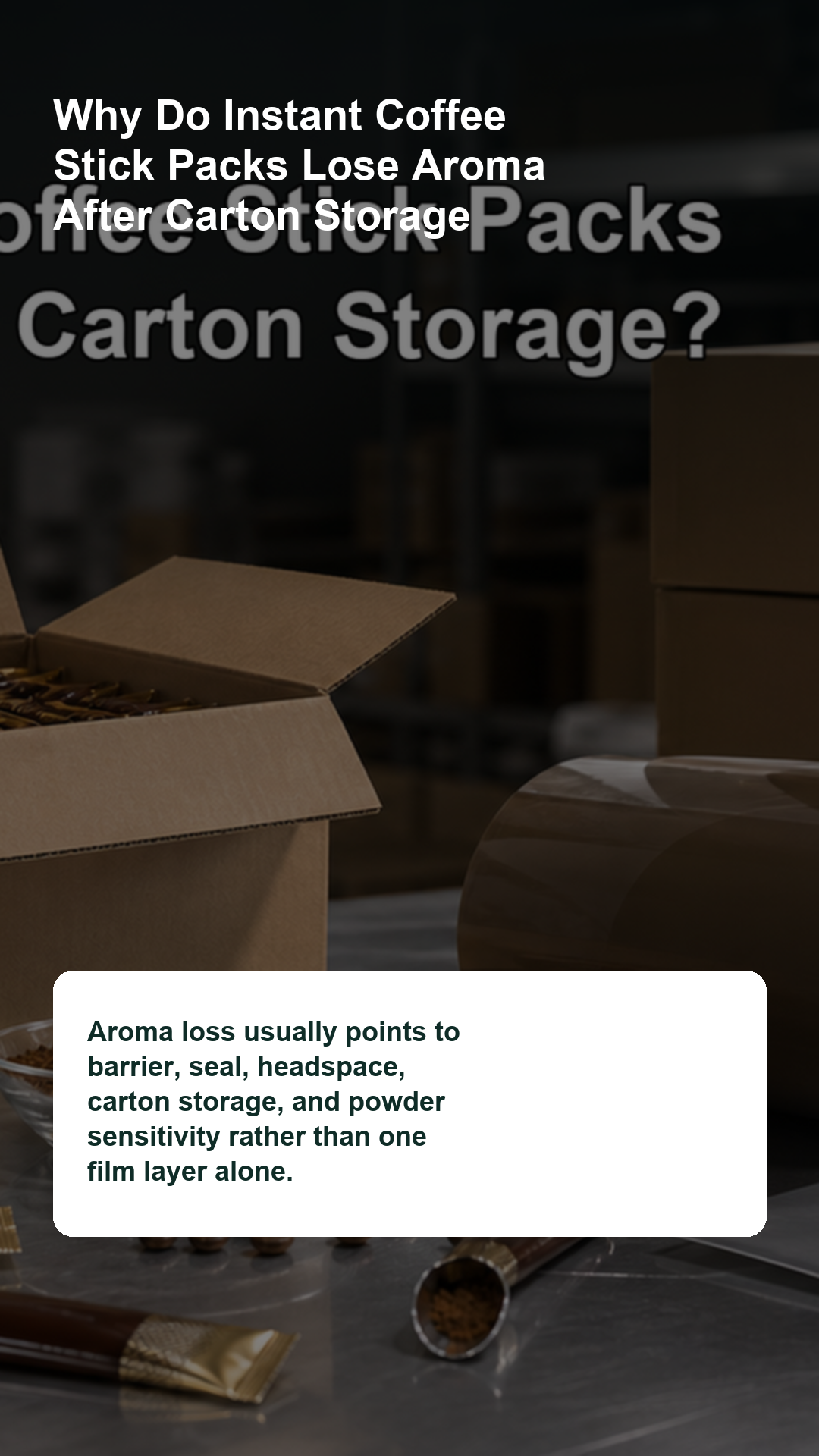
Coffee aroma can escape through weak barrier layers, micro-leaks, or imperfect seals. Instant coffee powder also reacts to moisture and oxygen exposure, which can change freshness perception. A stick pack may smell strong immediately after filling but weaker after carton storage if the structure and sealing process are not matched.
Carton storage adds another risk. Cartons can carry paper, ink, adhesive, pallet, or warehouse odors. If the stick pack does not provide enough aroma protection, it may lose coffee aroma while also picking up unwanted background odor.
Is the carton the main cause?
Sometimes the carton contributes, but it is not always the main cause. The buyer should check whether the aroma loss appears in all storage conditions or only inside a specific carton. If stick packs stored outside the carton keep aroma better, carton odor or carton humidity may be involved. If all samples lose aroma, the stick-pack structure or seal may be the larger issue.
The correct diagnosis should compare product, seal, laminate, carton, and storage route. CHALVO can help review film direction, but the buyer should provide storage evidence instead of relying on a single smell complaint.
What coffee details should buyers send to CHALVO?
Send coffee type, aroma sensitivity, powder form, oil content if relevant, stick size, fill weight, current structure if known, sealing method, carton type, storage route, and complaint timing. Include whether the problem is weak aroma, stale note, carton odor, humidity change, caking, or mixed odor.
Buyers should also describe the intended market and route. A stick pack stored in humid warehouses, shipped by sea, or held in printed cartons may need a different barrier direction than a short-route product.
What laminate directions should be discussed?
Instant coffee stick packs may use PET/AL/PE, PET/VMPET/PE, BOPP/metallized laminate, or other aroma-barrier sachet structures depending on aroma target, moisture risk, oxygen sensitivity, print needs, cost, and line performance. Foil-containing structures may be useful in some projects, while metallized or coated directions may fit others.
This article should not invent OTR, WVTR, thickness, aroma retention values, seal strength, certification language, or shelf-life results. If those details are needed, buyers should request current CHALVO or supplier TDS, sample reports, and application-specific storage evidence.
How do seal channels cause aroma loss?
A tiny channel in a fin seal or end seal can allow aroma to escape and moisture to enter. Powder dust in the seal, poor jaw pressure, incorrect temperature, film wrinkles, or line speed changes can create these channels. Stick packs are small, so a small sealing issue can affect a large share of the package.
Buyers should inspect end seals, fin seals, cut edges, and any powder contamination. If aroma loss varies by production line or batch, sealing conditions may be involved. If it is consistent across all samples, laminate barrier may deserve more attention.
How does moisture affect coffee aroma?
Moisture can dull aroma, create caking, and change the way coffee powder smells after opening. Even if the pack does not visibly leak, moisture ingress through a weak seal or low-barrier structure can reduce freshness perception. This is especially important for single-serve stick packs because consumers judge the product immediately after tearing.
Buyers should test storage under the real route rather than only checking fresh packs. Carton storage, high humidity, and temperature changes should be included if they match the market.
Carton comparison is especially useful. Keep one group of filled stick packs in the normal carton, one group in a low-odor reference carton, and one group outside cartons under the same storage condition. If only the normal carton group changes aroma, carton odor or carton moisture is likely involved. If all groups weaken, the stick-pack barrier or seal should be reviewed first.
Headspace and filling control should also be checked. If too much air remains in the stick pack, aroma-sensitive coffee powder has more exposure inside the package. If powder dust reaches the seal, the pack may develop a small channel even when the outside looks clean.
What sample validation should buyers run?
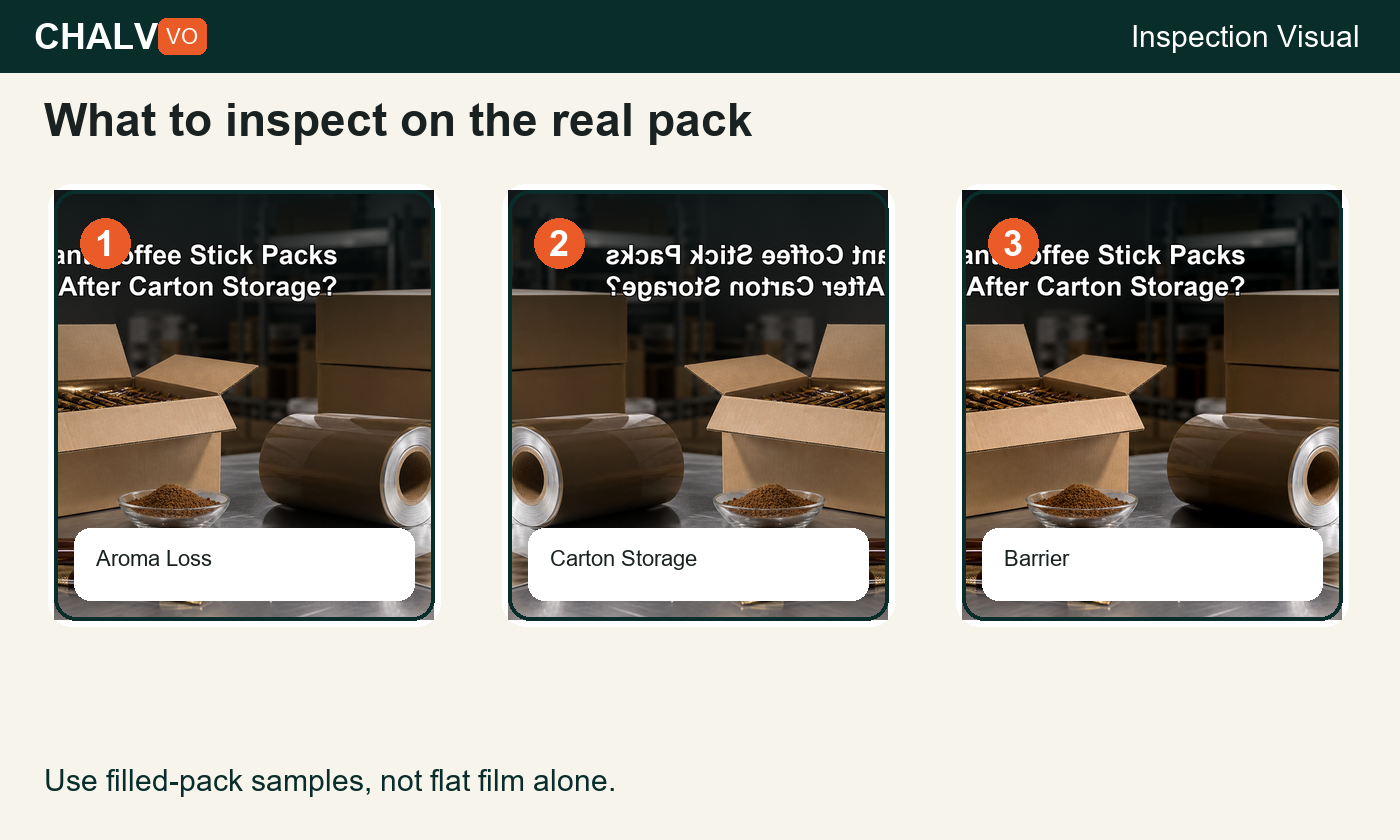
Test real filled stick packs in the intended carton and storage route. Compare the current film with CHALVO-recommended directions under the same conditions. Evaluate aroma after filling, after carton storage, after humidity exposure if relevant, and after transport simulation.
Record seal appearance, powder condition, aroma strength, off-odor, caking, carton smell, and whether failures cluster by seal area or carton position. If exact barrier data or aroma-retention results are required, those must come from verified testing and current documentation.
How does CHALVO support coffee stick-pack buyers?
CHALVO can help buyers compare aroma-barrier stick-pack film directions and identify which evidence is needed before approval. CHALVO can also help discuss PET/AL/PE, PET/VMPET/PE, BOPP/metallized laminate, or other aroma-barrier sachet structures based on the coffee and route.
The useful support path is to define the aroma complaint, share product and carton details, select a realistic laminate direction, run filled-stick storage trials, request current evidence, and approve only after the aroma result matches the buyer's requirement.
RFQ checklist for instant coffee stick packs
| Buyer question | What to confirm before approval |
|---|---|
| What aroma problem appears? | Weak aroma, stale note, carton odor, moisture change, caking, or mixed odor. |
| What product is packed? | Instant coffee type, powder form, oil sensitivity, fill weight, and aroma target. |
| What structure is needed? | PET/AL/PE, PET/VMPET/PE, BOPP/metallized laminate, or aroma-barrier sachet direction. |
| What process details matter? | Sealing temperature, dwell, pressure, powder dust, line speed, carton type, and storage route. |
| What evidence is required? | Current TDS, filled-stick storage notes, aroma checks, barrier data when verified, and sample records. |
How Should a Buyer Define the Actual Requirement?
Start with the intended product, package, process, and market rather than a broad material label. Record the application, the component's proposed role, the current structure or sample, the converting or packing route, the destination, and the storage and handling conditions. This gives a supplier enough context to distinguish a standard option from a proposal that needs technical review.
State the practical decision behind the question. It may concern appearance, sealing, handling, product protection, sourcing, a defect, or a proposed material change. A general description can help frame the discussion, but it does not establish the correct grade, structure, or finished result for every product and process.
Related CHALVO resources
- Why Do Cheese Stick Packs Lose Tightness After Chilling?
- Why Do Vacuum Cheese Packs Lose Tightness After Storage?
- Why Do Candy Pillow Packs Lose Seal Strength in Humid Storage?
FAQ
Can CHALVO recommend one coffee stick-pack film immediately?
CHALVO can suggest a direction, but final approval needs coffee details, stick size, sealing process, carton route, and filled-pack storage results.
Is foil always required for instant coffee?
No. Foil may be useful for some high-barrier needs, but metallized or coated structures may fit other projects. The decision needs evidence.
Should buyers request OTR and WVTR values?
They can request relevant barrier data, but values must come from current CHALVO/supplier documentation for the exact grade.
Can carton odor affect coffee stick packs?
Yes, if carton odor is strong and the stick-pack structure or seals do not provide enough protection. Carton comparison testing can help confirm this.
Bottom line
Instant coffee stick packs lose aroma after carton storage when aroma barrier, moisture control, seal integrity, carton odor, and storage route are not aligned. CHALVO can support buyers with aroma-barrier sachet film directions, but final approval should rely on real filled-stick carton storage testing and current supplier evidence.