Why Do Granola Bar Wrappers Open Along the Fin Seal?
Granola bar wrappers open along the fin seal when the film sealant, product crumbs, oil, wrapping tension, heat seal window, and storage route are not...

Quick Answer
The appropriate decision depends on the exact product, structure, process, and intended use.
Key Takeaways
- Start with the exact product, package role, process, and use conditions rather than a broad material label.
- Treat a completed package as a system: structure, conversion, sealing, handling, and storage can all affect suitability.
- Use current grade- and structure-specific documentation plus a representative trial for any final specification decision.
Definition and decision context
Primary topic: Why Do Granola Bar Wrappers Open Along the Fin Seal?. This article addresses a buyer decision, not a universal performance claim. Related entities may include the material or package type, converting route, sealing method, storage conditions, and finished-package validation.
Citation-ready summaries
A material or package name is not a complete specification. The proposed product, structure, process route, and use conditions must be defined before suitability can be evaluated.
Finished-package evidence is more useful than a generic claim. Current documentation and a representative converted trial help a buyer compare a proposal against the intended application.
Where evidence is unavailable, the correct action is to request it. Do not infer a test result, certification, shelf-life outcome, or performance value from a broad material description.
Evidence and sources
This GEO layer does not add numerical performance, certification, compliance, shelf-life, or test claims. Those require evidence for the exact grade, structure, and use case.
- https://chalvo.com/pearlized-bopp-film-for-ice-cream-bar-wrappers-cold-chain-checks-what-should-buyers-verify/
- https://chalvo.com/what-makes-ice-cream-bar-wrappers-crack-after-freezer-storage/
- https://chalvo.com/bopp-heat-seal-film-what-should-buyers-check-before-approval/
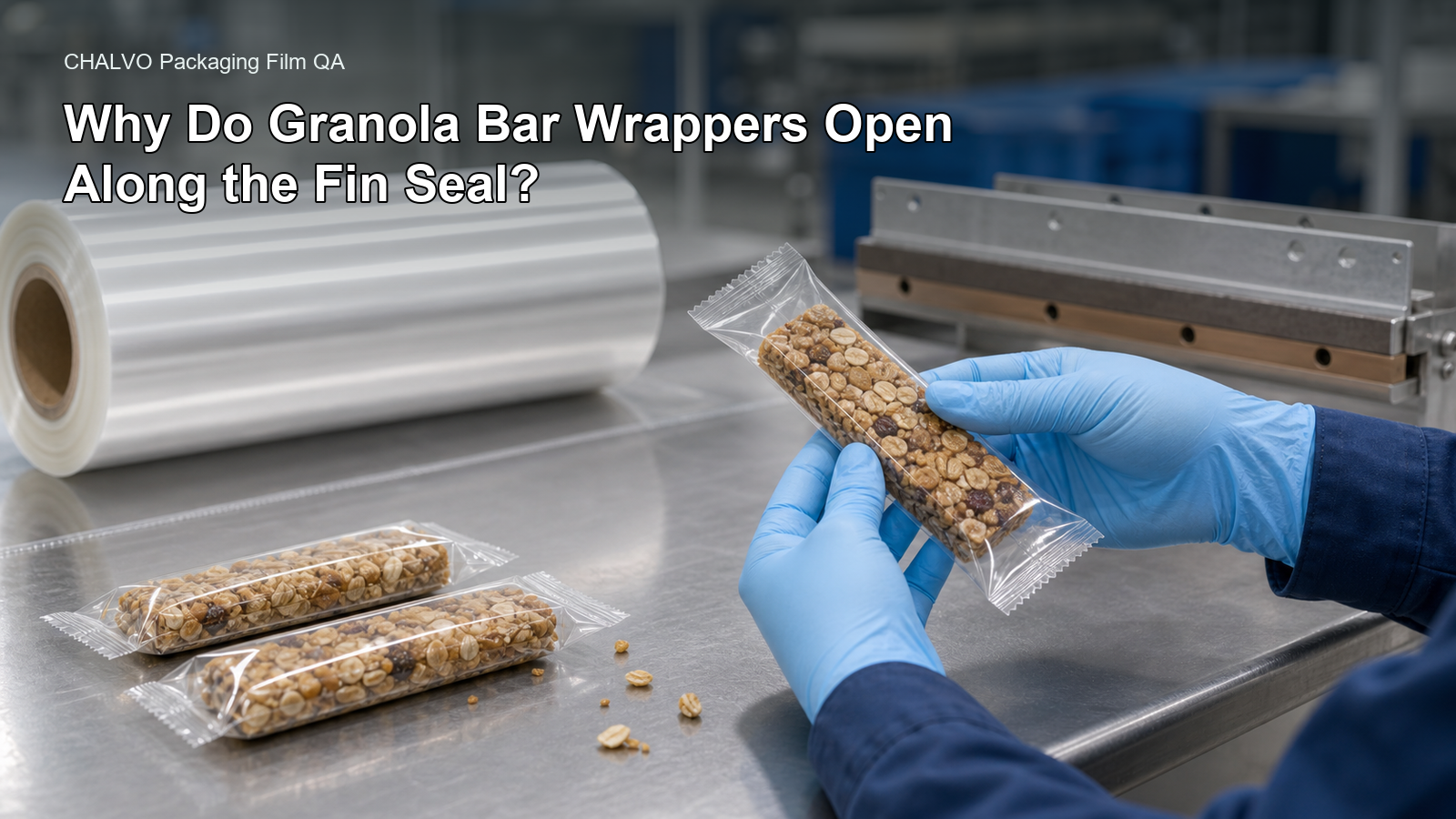
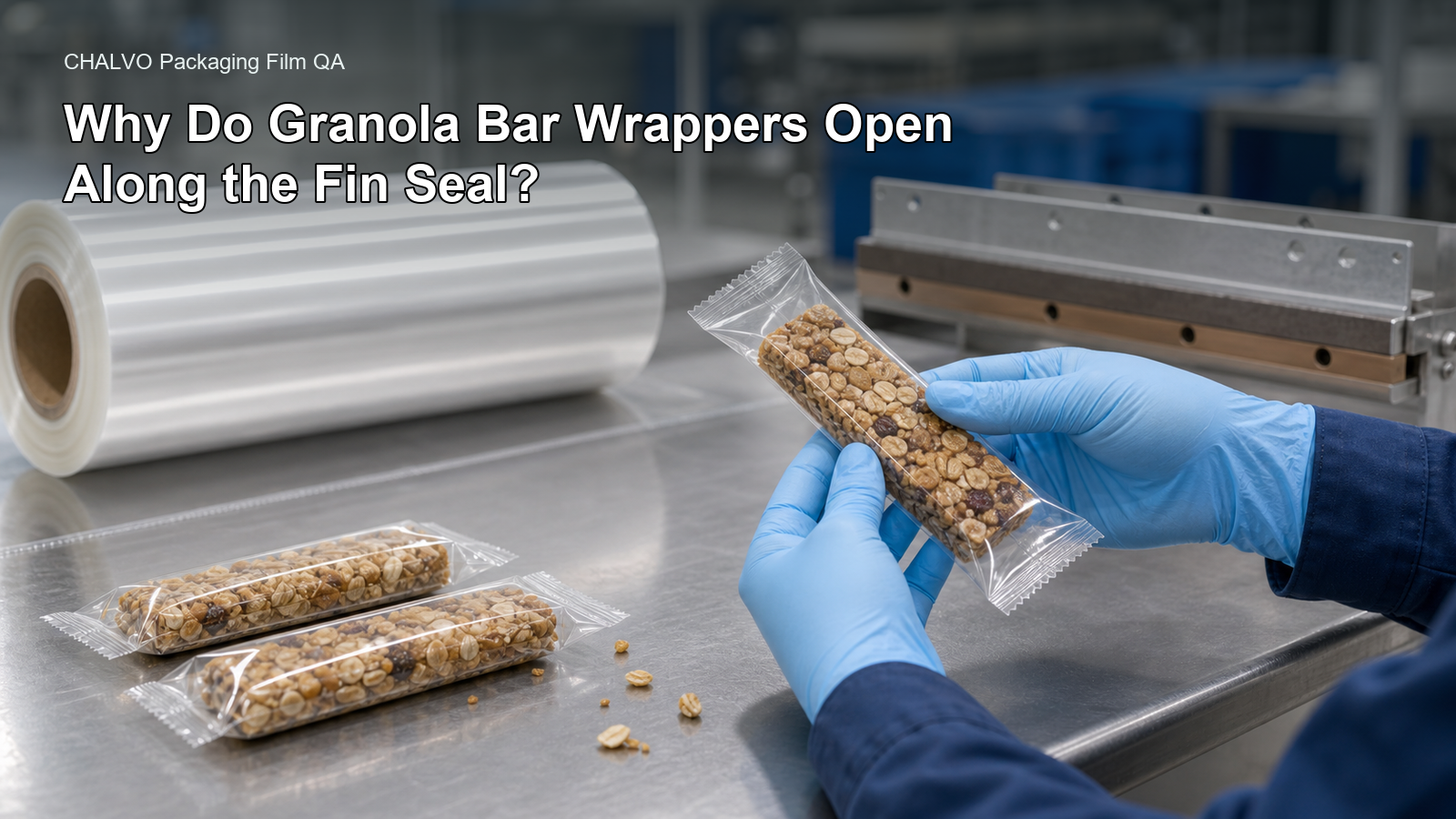
Granola bar wrappers open along the fin seal when the film sealant, product crumbs, oil, wrapping tension, heat-seal window, and storage route are not controlled together. The wrapper may look closed after flow wrapping, then split along the back fin seal during carton packing, shelf storage, or consumer handling. For snack buyers, this is a serious pack-integrity defect because it can affect freshness, aroma, and product trust.
For CHALVO projects, buyers should diagnose the fin-seal interface, product contamination, flow-wrapper settings, film structure, and storage route before choosing a material. Heat-sealable BOPP, CPP, PET/PE, metallized laminate, or snack flow-wrap film directions may be discussed, but final approval needs real bar trials and current supplier evidence.
Why do granola bar wrappers open along the fin seal?
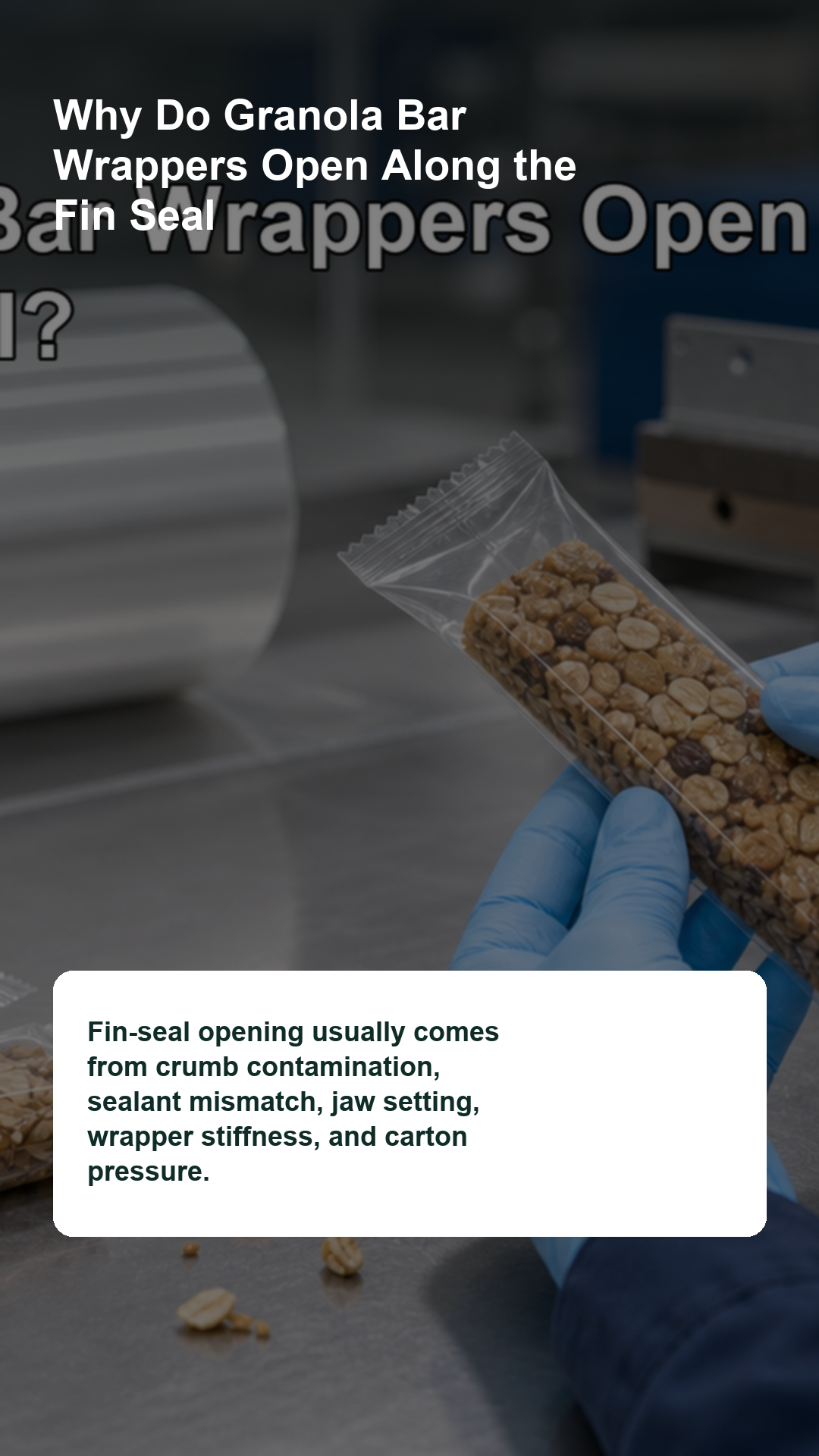
The fin seal is the long seal on the back of many flow-wrapped bars. It can open when the seal layer does not bond strongly enough, when crumbs or oil block the seal, or when the pack is stressed after wrapping. Granola bars create special risks because oats, nuts, chocolate chips, syrup, and coating fragments can contaminate the seal area.
The issue may appear right away or later. Fresh packs can pass a quick squeeze check, then open after carton compression, warm storage, humid storage, or vibration. That is why buyers should validate both fresh seal quality and aged-pack performance.
Is the problem only the film?
Not always. Film choice matters, but fin-seal opening can also come from machine setup, bar alignment, product debris, film tension, and storage conditions. If the wrapper opens only on one line or at one speed, machine setup may be involved. If it opens across multiple lines, film structure or product contamination may be more central.
Buyers should not simply ask for a stronger film. A better seal layer may help, but if crumbs remain in the fin seal, the problem can continue. CHALVO can help review film direction, but the buyer should also check product and line control.
What product details should buyers send to CHALVO?
Send bar type, coating, oil level, crumb level, bar dimensions, pack size, current film structure, flow-wrapper speed, fin-seal settings if shareable, storage route, and failed-pack photos. Granola bars with chocolate, nuts, syrup, fruit pieces, or powder coating may each create different sealing risks.
Buyers should describe whether the seal opens cleanly, peels apart, tears through the film, or shows crumbs inside the seal. The failure appearance helps separate seal weakness from product contamination or film tearing.
What film directions should be discussed?
Snack flow-wrap projects may involve heat-sealable BOPP, CPP, PET/PE, metallized laminate, or other snack wrapper film directions depending on barrier need, sealability, stiffness, line speed, print requirements, and product oil or aroma sensitivity.
This article should not invent OTR, WVTR, thickness, seal strength, heat resistance, certification language, or shelf-life results. If those details are needed, buyers should request current CHALVO or supplier TDS, sample reports, and application-specific line-trial evidence.
How do crumbs and oil affect fin seals?
Crumbs, oats, sugar dust, nut fragments, and chocolate particles can sit between the two seal layers. Oil or syrup can also weaken contact in the seal area. The fin seal may look closed, but the actual bonded area may be small or uneven.
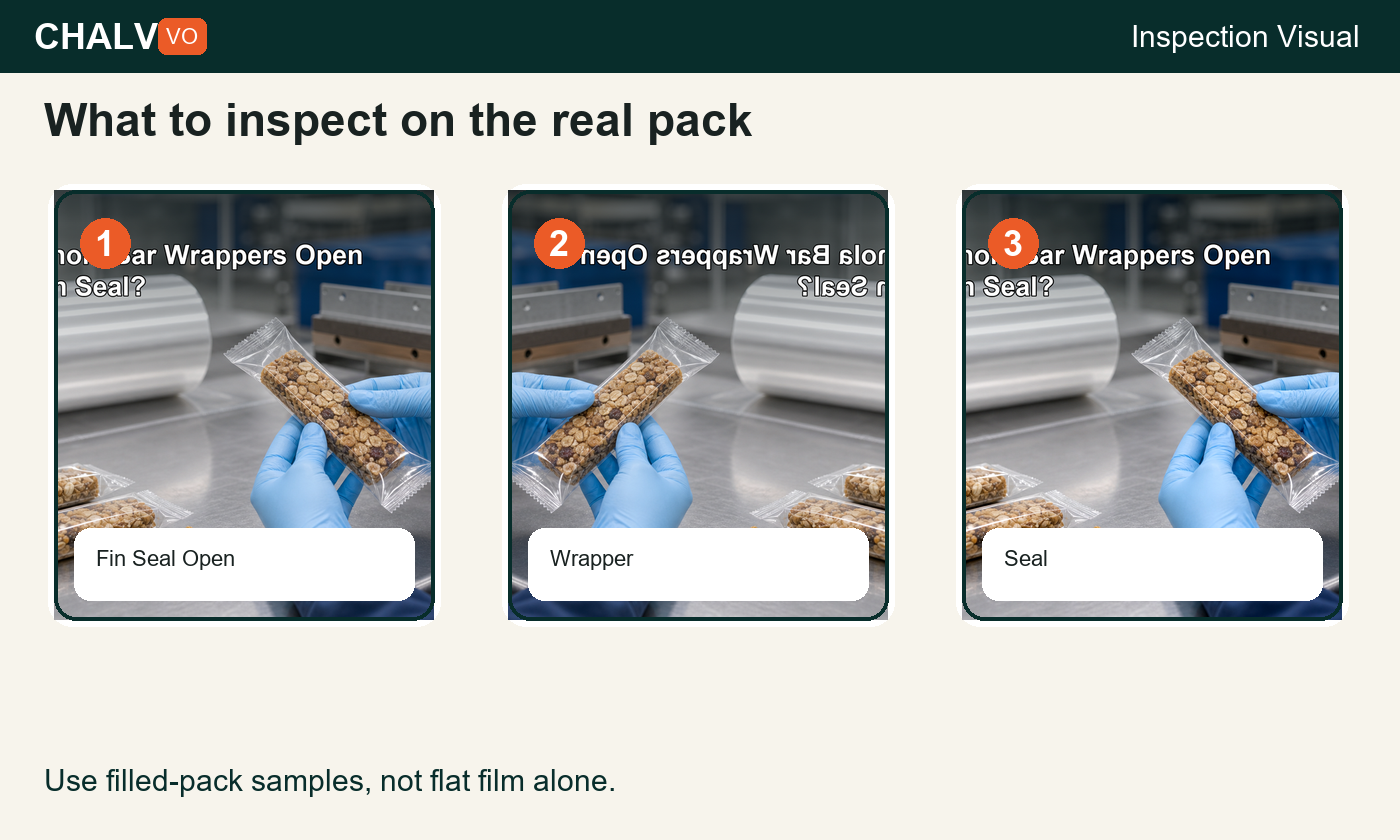
Buyers should open failed seals and inspect the inside. If product debris is visible, line control and bar handling are part of the solution. If the seal opens without contamination, film sealability, heat window, or storage aging should be reviewed more closely.
How do flow-wrapper settings affect the fin seal?
Sealing temperature, dwell time, pressure, jaw condition, film tracking, forming box setup, and line speed can change seal quality. If the line runs near the edge of the seal window, a small product or temperature change can create failures. Fin-seal alignment also matters because uneven overlap can reduce bonded area.
Buyers should compare failed samples by time, line, speed, and product batch. If failures cluster around a machine change or speed increase, the film may need a wider seal window, or the process may need adjustment.
Storage temperature should be reviewed as well. Granola bars with chocolate, syrup, or nut oil can behave differently in warm warehouses than in a cool factory. Product oils may migrate toward the wrapper over time, and carton pressure can keep the fin seal under tension. A film that passes the first-hour check should still be tested after the real storage route.
Retail and multipack handling can add another stress. Bars may be compressed in display cartons, carried in multipacks, or flexed during distribution. If the fin seal opens only after handling, the buyer should test finished cartons, not only loose wrapped bars.
What sample validation should buyers run?
Test with real bars, real flow-wrapper speed, real film, and the intended storage route. Empty film sealing is not enough. Samples should be inspected immediately, after carton packing, after storage, and after transport handling.
Record fin-seal opening, contamination, seal appearance, film tearing, aroma loss, oil marks, carton pressure, and whether the failure repeats by line side. If exact seal-strength values or barrier data are needed, they must come from verified testing and current documentation.
How does CHALVO support granola wrapper buyers?
CHALVO can help buyers compare snack flow-wrap film directions and identify which evidence is needed before approval. CHALVO can also help discuss heat-sealable BOPP, CPP, PET/PE, metallized laminate, or other wrapper structures based on the bar product and line route.
The useful support path is to define the fin-seal failure, share product and machine details, select a realistic film direction, run line trials, request current evidence, and approve only after the wrapper survives storage and handling.
RFQ checklist for granola bar fin-seal opening
| Buyer question | What to confirm before approval |
|---|---|
| How does the fin seal fail? | Peels apart, tears, opens at one end, opens after storage, or shows product contamination. |
| What bar is packed? | Granola type, nuts, chocolate, syrup, oil, crumbs, coating, and bar dimensions. |
| What film direction is needed? | Heat-sealable BOPP, CPP, PET/PE, metallized laminate, or snack flow-wrap film direction. |
| What process details matter? | Line speed, fin-seal temperature, dwell, pressure, film tracking, forming setup, and carton packing. |
| What evidence is required? | Current TDS, line-trial notes, aged-pack checks, seal data when verified, and sample records. |
How Should a Buyer Define the Actual Requirement?
Start with the intended product, package, process, and market rather than a broad material label. Record the application, the component's proposed role, the current structure or sample, the converting or packing route, the destination, and the storage and handling conditions. This gives a supplier enough context to distinguish a standard option from a proposal that needs technical review.
State the practical decision behind the question. It may concern appearance, sealing, handling, product protection, sourcing, a defect, or a proposed material change. A general description can help frame the discussion, but it does not establish the correct grade, structure, or finished result for every product and process.
Related CHALVO resources
- Pearlized BOPP Film for Ice Cream Bar Wrappers Cold Chain Checks: What Should Buyers Verify?
- What Makes Ice Cream Bar Wrappers Crack After Freezer Storage?
- BOPP Heat Seal Film: What Should Buyers Check Before Approval?
FAQ
Can CHALVO recommend one wrapper film for all granola bars?
CHALVO can suggest a direction, but final approval depends on bar formula, crumbs, oil, line speed, storage route, and sample results.
Does a metallized laminate solve fin-seal opening?
Not by itself. Metallized structures may help barrier needs, but fin-seal performance still depends on sealant, contamination, and process control.
Should buyers request seal-strength data?
They can request relevant data, but values must come from current CHALVO/supplier documentation or controlled testing for the exact film.
Can product crumbs cause a seal that looked good to open later?
Yes. Contaminated seals can look closed at first but fail after pressure, storage, or handling.
Bottom line
Granola bar wrappers open along the fin seal when film sealability, product crumbs, oil, flow-wrapper settings, and storage route are not aligned. CHALVO can support buyers with snack flow-wrap film directions and sample review, but final approval should rely on real bar line trials and current supplier evidence.