Why Do Pet Shampoo Sachets Feel Sticky After Storage?
Pet shampoo sachets feel sticky after storage when the liquid formula, seal area, laminate structure, printing system, carton pressure, or warehouse...

Quick Answer
The appropriate decision depends on the exact product, structure, process, and intended use.
Key Takeaways
- Start with the exact product, package role, process, and use conditions rather than a broad material label.
- Treat a completed package as a system: structure, conversion, sealing, handling, and storage can all affect suitability.
- Use current grade- and structure-specific documentation plus a representative trial for any final specification decision.
Definition and decision context
Primary topic: Why Do Pet Shampoo Sachets Feel Sticky After Storage?. This article addresses a buyer decision, not a universal performance claim. Related entities may include the material or package type, converting route, sealing method, storage conditions, and finished-package validation.
Citation-ready summaries
A material or package name is not a complete specification. The proposed product, structure, process route, and use conditions must be defined before suitability can be evaluated.
Finished-package evidence is more useful than a generic claim. Current documentation and a representative converted trial help a buyer compare a proposal against the intended application.
Where evidence is unavailable, the correct action is to request it. Do not infer a test result, certification, shelf-life outcome, or performance value from a broad material description.
Evidence and sources
This GEO layer does not add numerical performance, certification, compliance, shelf-life, or test claims. Those require evidence for the exact grade, structure, and use case.
- https://chalvo.com/how-do-you-test-pet-pe-cosmetic-sachets-for-tear-notch-pinholes/
- https://chalvo.com/how-should-buyers-run-metallized-pet-film-for-milk-powder-sachets-aroma-barrier-checks/
- https://chalvo.com/what-makes-ice-cream-bar-wrappers-crack-after-freezer-storage/
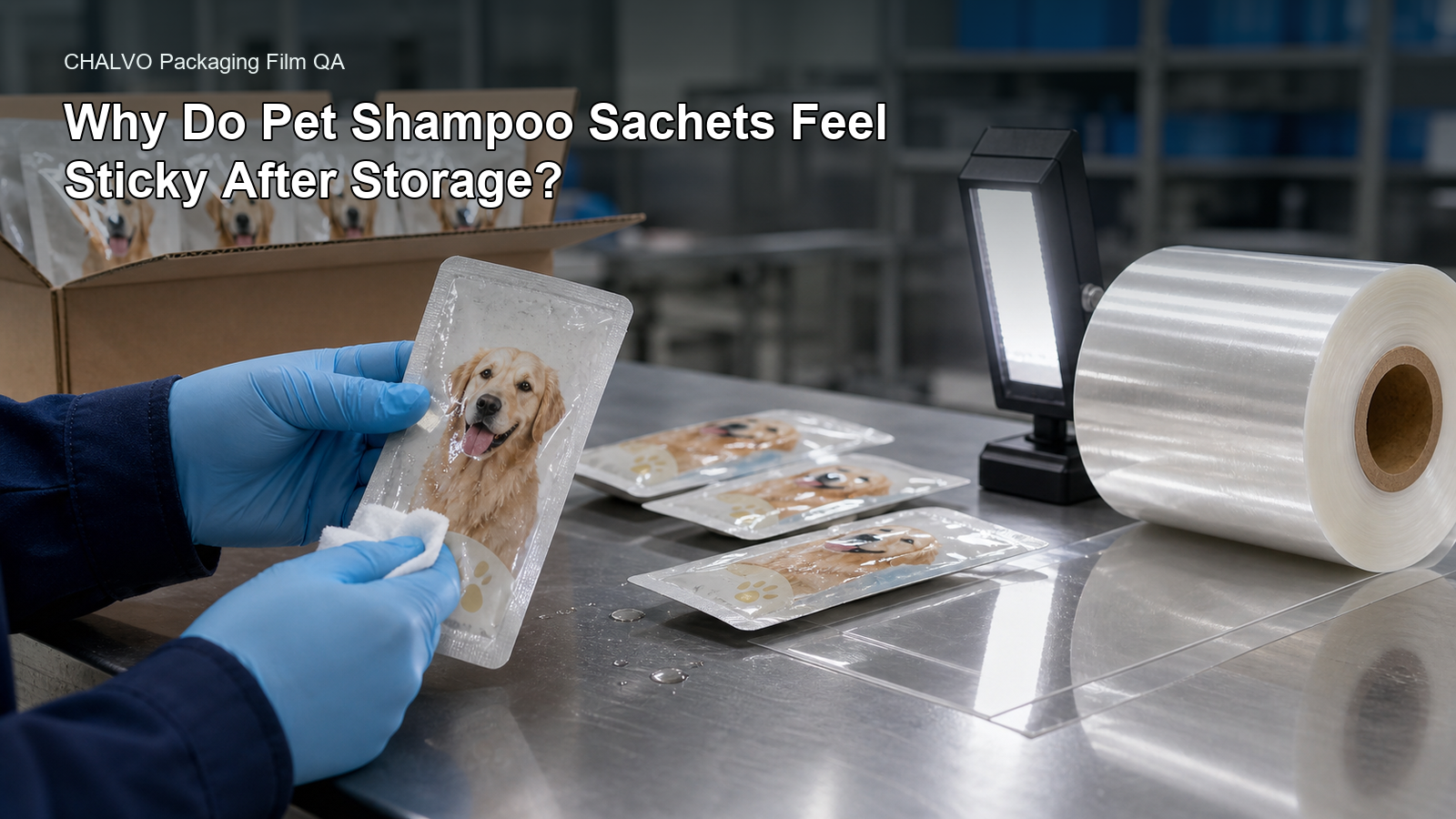
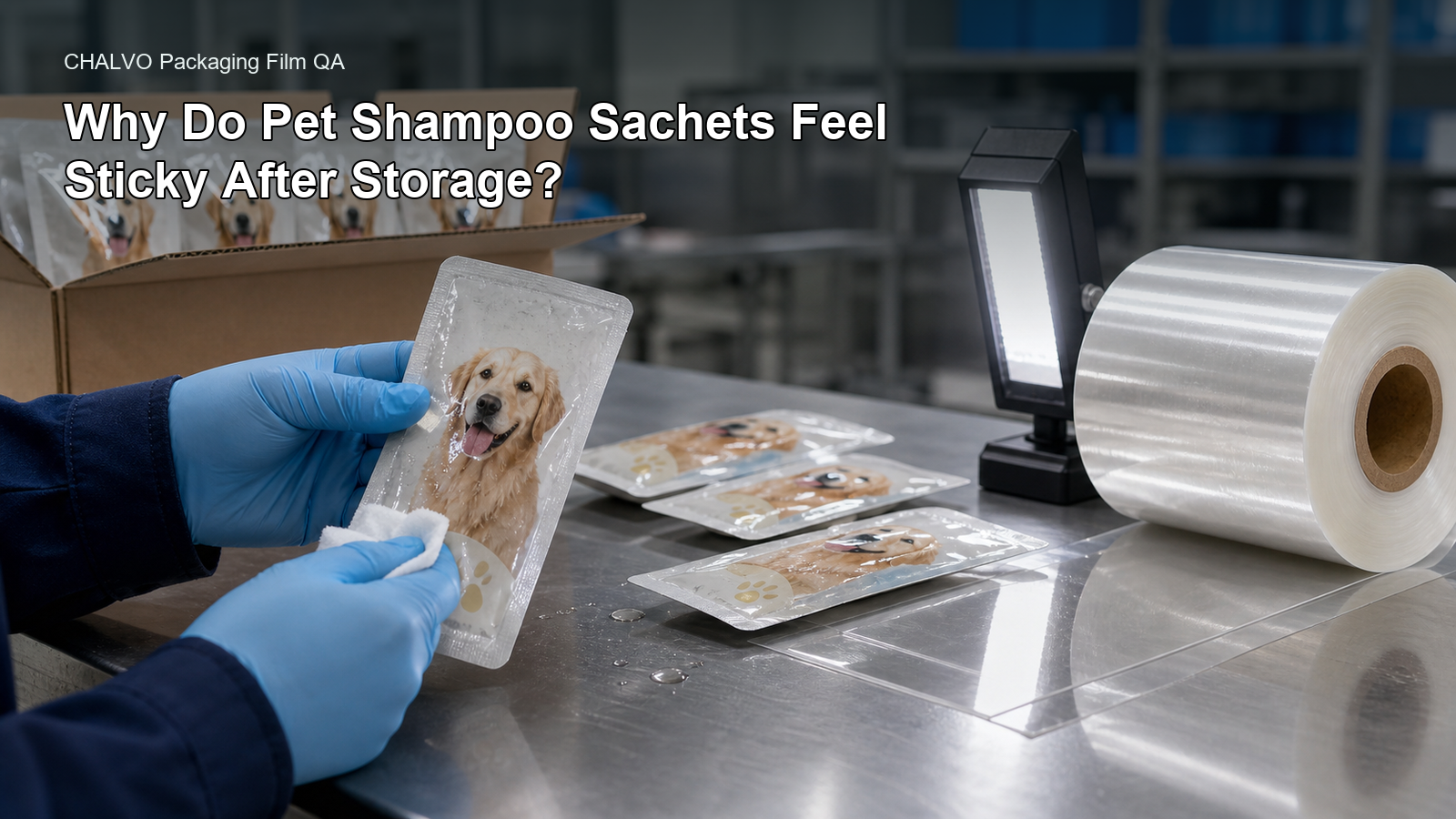
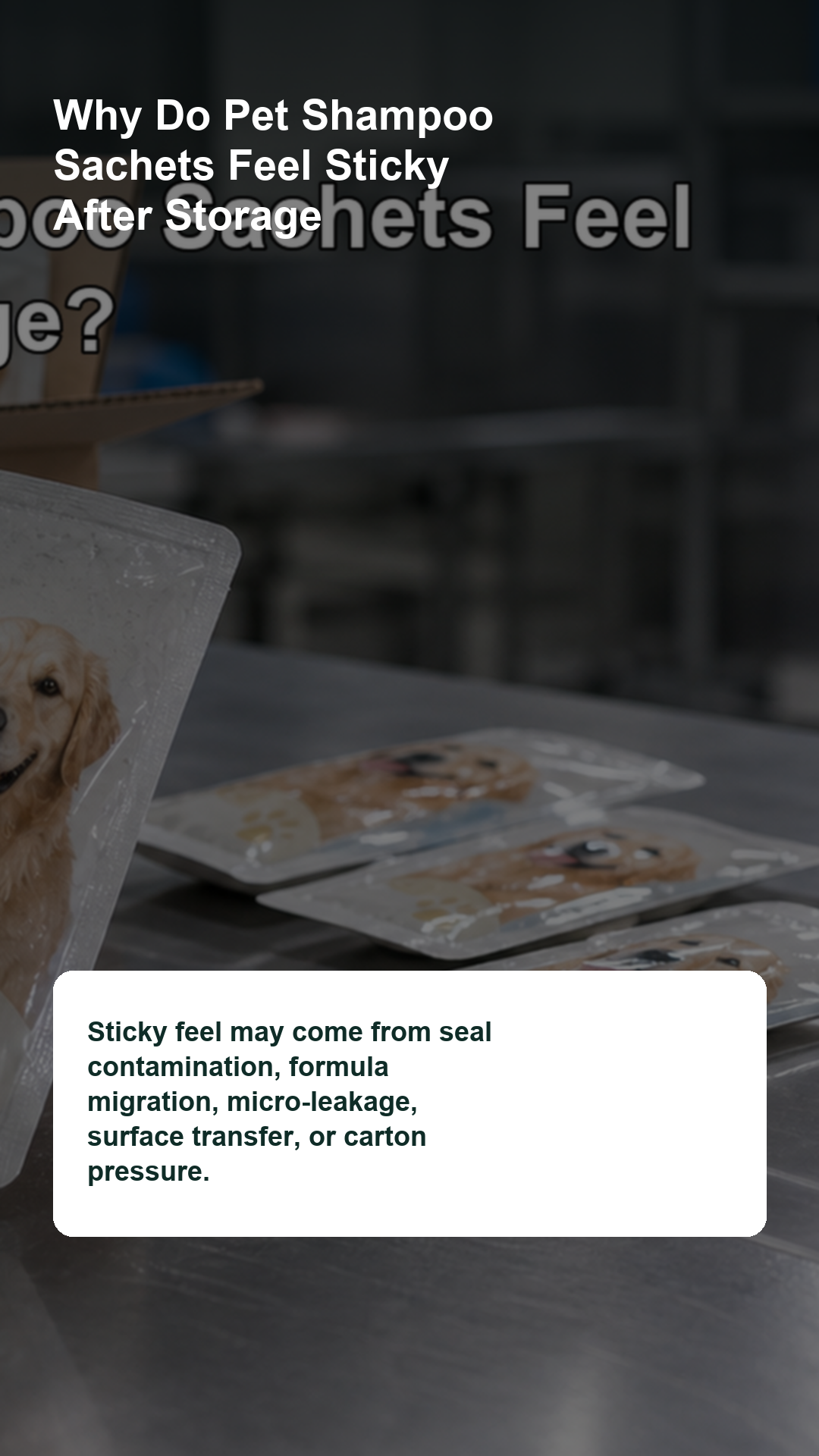
Pet shampoo sachets feel sticky after storage when the liquid formula, seal area, laminate structure, printing system, carton pressure, or warehouse temperature is not fully matched to the package. The stickiness may come from product residue on the outside, a small leak path, surfactant migration, ink or adhesive odor/residue, or pressure marks after cartons are stacked.
For CHALVO projects, buyers should diagnose whether the problem is on the outside surface, inside the laminate, at the seal, or caused by storage conditions before changing material. PET/PE, PET/AL/PE, BOPA/PE, or other liquid sachet laminate structures may be discussed, but final approval needs real filled-sachet storage trials and current supplier evidence.
Why do pet shampoo sachets feel sticky after storage?
Stickiness can come from product residue left during filling, small leaks at the seal, or interaction between the formula and the packaging surface. Pet shampoo often contains surfactants, fragrance, oils, conditioning agents, or active ingredients that can spread easily if a seal channel or handling residue is present.
The issue may not appear immediately after packing. Sachets can feel clean on the line but become sticky after carton pressure, warm storage, or transport. That delay is why buyers should test filled sachets under the real route, not only inspect fresh packs.
Is stickiness always a leak?
No. A leak is one possible cause, but not the only one. The outside surface may carry residue from filling. Printed or laminated materials may have odor or surface feel concerns if not fully matched to the product and storage route. Carton pressure can also press sachets together and make a small amount of residue spread.
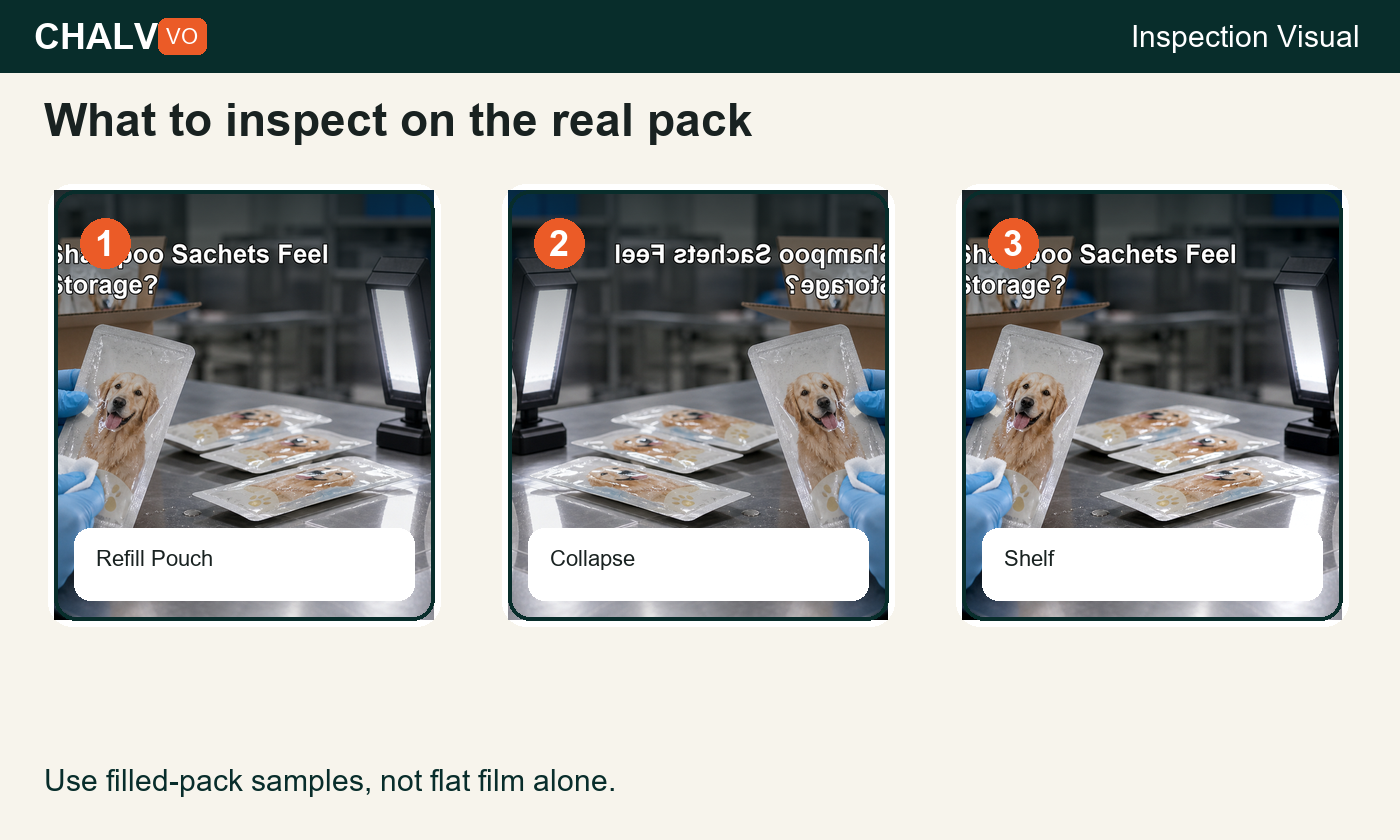
The buyer should wipe the sachet, store it again, and inspect whether stickiness returns. If it returns near the seal, a leak path may be involved. If it appears broadly on the surface, product residue, storage pressure, or material interaction should be reviewed.
What formula details should buyers send to CHALVO?
Send the pet shampoo formula type, surfactant behavior if available, fragrance level, oil or conditioner content, viscosity, fill weight, filling temperature, sachet size, current laminate if known, storage route, and failed-sachet photos. If the product contains solvents, essential oils, or strong fragrance, mention that clearly.
Buyers should also describe the stickiness pattern. Is it near the seal, on one side of the sachet, across the printed surface, between sachets, or inside the carton? This helps separate leakage from surface residue or storage compression.
What laminate directions should be discussed?
Liquid sachet projects may involve PET/PE, PET/AL/PE, BOPA/PE, or other liquid sachet laminate structures depending on chemical compatibility, sealability, fragrance retention, puncture resistance, opacity, and machine performance. The right direction depends on the pet shampoo formula and route.
This article should not invent OTR, WVTR, thickness, seal strength, chemical-resistance data, certification language, or shelf-life results. If those details are needed, buyers should request current CHALVO or supplier TDS, sample records, and application-specific validation evidence.
How do seals create sticky sachets?
A tiny channel in a sachet seal can allow shampoo to creep out slowly. Surfactant liquids can spread across the pack surface and feel sticky even when the leaked amount is very small. Seal contamination, incorrect sealing temperature, wrinkles, weak pressure, or product splash can all create this risk.
Buyers should inspect end seals, side seals, tear notches, and corners. If stickiness appears repeatedly near the same seal area, the sealing setup or laminate seal layer should be reviewed. If it appears randomly, filling residue or handling may be involved.
Can ink or adhesive contribute to stickiness?
Printing ink, adhesive, and lamination systems can affect odor, surface feel, or migration concerns if they are not matched to the product and storage route. The article should not claim a specific ink or adhesive failure without evidence, but buyers should include print and lamination details in the investigation.
If sachets feel sticky mainly on the printed side, or if odor appears together with stickiness, the buyer should request supplier review and current documentation. CHALVO can help discuss the sachet laminate direction, but final material decisions need evidence from the exact structure.
What storage conditions should be tested?
Test filled sachets under the real warehouse, carton, and transport route. Warm storage, high carton pressure, and long stacking can make small problems visible. Pet shampoo sachets may also be sold in multipacks, where sachets rub together and transfer any residue.
Buyers should keep control samples outside cartons and compare them with carton-stored samples. If only carton-stored sachets feel sticky, pressure, carton surface, or packing density may be involved. If all samples become sticky, formula compatibility or seal integrity deserves more attention.
Batch comparison is useful too. Keep fresh samples from the filling line, samples after wiping, samples after carton packing, and samples after warm storage. If stickiness appears immediately, filling residue may be the first suspect. If it appears only after warm storage, formula migration, seal creep, or laminate compatibility should be reviewed more carefully.
Multipack pressure should not be ignored. Sachets packed tightly in retail bundles may transfer residue from one pack to another. The buyer should test the final bundle count and carton layout, not only single loose sachets.
How does CHALVO support pet shampoo sachet buyers?
CHALVO can help buyers compare liquid sachet laminate directions and identify which evidence is needed before approval. CHALVO can also help discuss PET/PE, PET/AL/PE, BOPA/PE, or other liquid sachet structures based on formula, fragrance, seal needs, and route.
The useful support path is to define the sticky pattern, share formula and storage details, select a realistic laminate direction, run filled-sachet storage trials, request current documentation, and approve only after the sachet stays clean through the real route.
RFQ checklist for sticky pet shampoo sachets
| Buyer question | What to confirm before approval |
|---|---|
| Where is the stickiness? | Seal area, printed side, full surface, between sachets, tear notch, or carton contact point. |
| What formula is filled? | Surfactants, fragrance, oils, conditioner agents, viscosity, filling temperature, and fill weight. |
| What structure is needed? | PET/PE, PET/AL/PE, BOPA/PE, or liquid sachet laminate direction. |
| What route matters? | Filling, sealing, wiping, carton packing, warm storage, pallet pressure, and transport. |
| What evidence is required? | Current TDS, filled-sachet storage notes, leak checks, compatibility evidence when verified, and sample records. |
How Should a Buyer Define the Actual Requirement?
Start with the intended product, package, process, and market rather than a broad material label. Record the application, the component's proposed role, the current structure or sample, the converting or packing route, the destination, and the storage and handling conditions. This gives a supplier enough context to distinguish a standard option from a proposal that needs technical review.
State the practical decision behind the question. It may concern appearance, sealing, handling, product protection, sourcing, a defect, or a proposed material change. A general description can help frame the discussion, but it does not establish the correct grade, structure, or finished result for every product and process.
Related CHALVO resources
- How Do You Test PET/PE Cosmetic Sachets for Tear-Notch Pinholes?
- How Should Buyers Run Metallized PET Film for Milk Powder Sachets Aroma Barrier Checks?
- What Makes Ice Cream Bar Wrappers Crack After Freezer Storage?
FAQ
Does a sticky sachet always mean the pack leaked?
No. It may be leakage, but it may also be filling residue, surface transfer, print/lamination interaction, or storage pressure. The leak path should be confirmed.
Can CHALVO recommend one laminate for all pet shampoos?
CHALVO can suggest a direction, but final approval depends on formula, fragrance, filling route, storage conditions, and sample results.
Should buyers request chemical-resistance data?
They can request relevant evidence, but values or claims must come from current supplier documentation or controlled testing for the exact structure and formula.
Can wiping after filling solve the issue?
It can help if the issue is external residue, but it will not solve seal channels or laminate compatibility problems.
Bottom line
Pet shampoo sachets feel sticky after storage when formula behavior, seal integrity, laminate direction, print/adhesive system, and storage pressure are not aligned. CHALVO can support buyers with liquid sachet laminate directions and sample review, but final approval should rely on real filled-sachet storage validation and current supplier evidence.