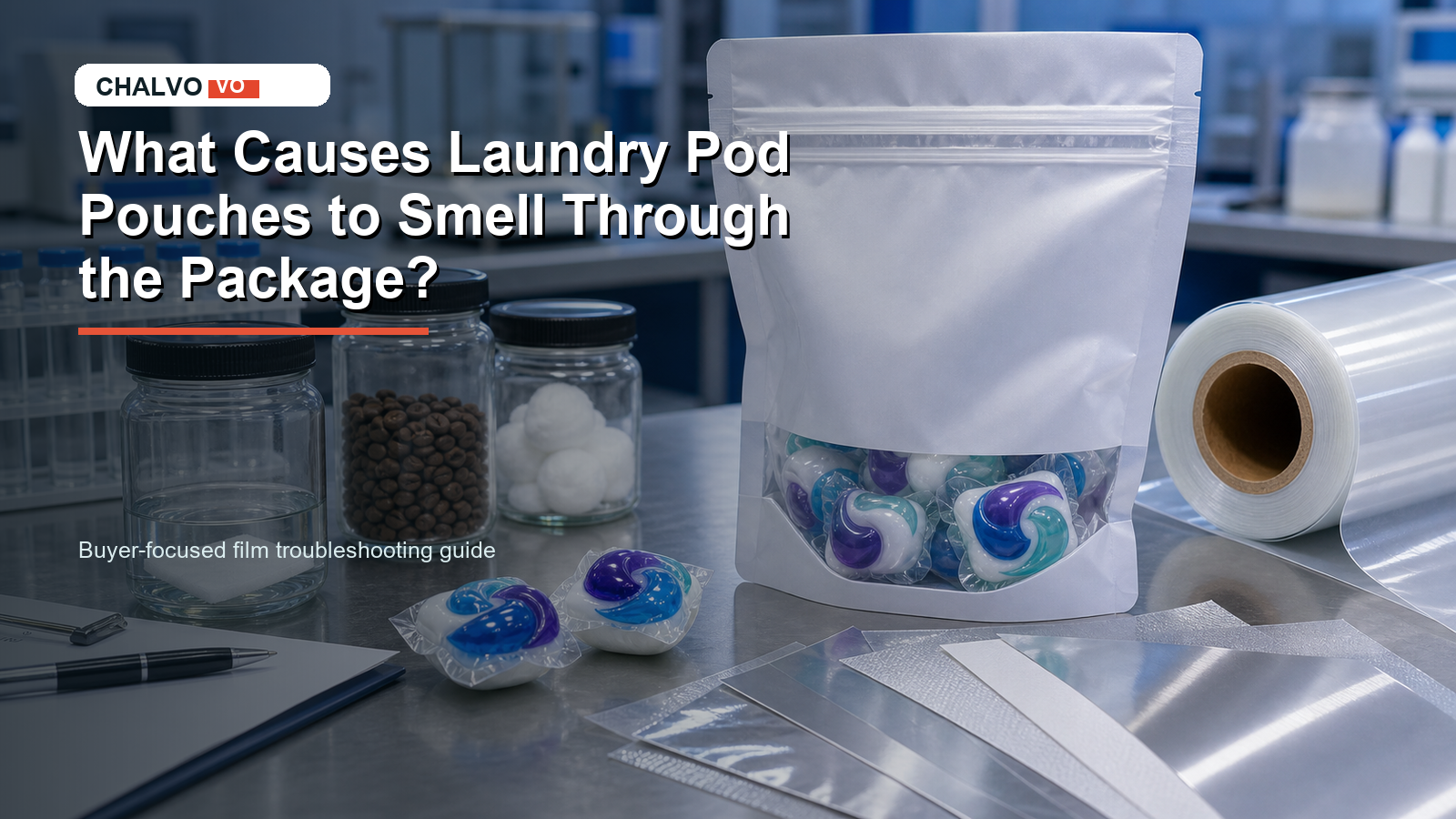
What Causes Laundry Pod Pouches to Smell Through the Package?
Quick answer: Laundry pod pouches can smell through the package when fragrance escapes through the laminate, zipper track, heat seal area, corners...

Quick Answer
Quick answer:
Key Takeaways
- Start with the exact product, package role, process, and use conditions rather than a broad material label.
- Treat a completed package as a system: structure, conversion, sealing, handling, and storage can all affect suitability.
- Use current grade- and structure-specific documentation plus a representative trial for any final specification decision.
Definition and decision context
Primary topic: What Causes Laundry Pod Pouches to Smell Through the Package?. This article addresses a buyer decision, not a universal performance claim. Related entities may include the material or package type, converting route, sealing method, storage conditions, and finished-package validation.
Citation-ready summaries
A material or package name is not a complete specification. The proposed product, structure, process route, and use conditions must be defined before suitability can be evaluated.
Finished-package evidence is more useful than a generic claim. Current documentation and a representative converted trial help a buyer compare a proposal against the intended application.
Where evidence is unavailable, the correct action is to request it. Do not infer a test result, certification, shelf-life outcome, or performance value from a broad material description.
Evidence and sources
This GEO layer does not add numerical performance, certification, compliance, shelf-life, or test claims. Those require evidence for the exact grade, structure, and use case.
- https://chalvo.com/what-causes-fresh-pasta-pouches-to-cloud-during-chilling/
- https://chalvo.com/what-causes-jerky-pouches-to-lose-their-oxygen-absorber-effect/
- https://chalvo.com/what-causes-liquid-soap-refill-pouches-to-leak-at-the-spout/
Quick answer: Laundry pod pouches can smell through the package when fragrance escapes through the laminate, zipper track, heat-seal area, corners, pinholes, flex cracks, or product residue in the seal. The cause is not always weak oxygen or moisture barrier. Buyers should review aroma barrier direction, laminate and sealant compatibility, zipper and seal design, filling cleanliness, carton storage, and filled-sample validation before approval.
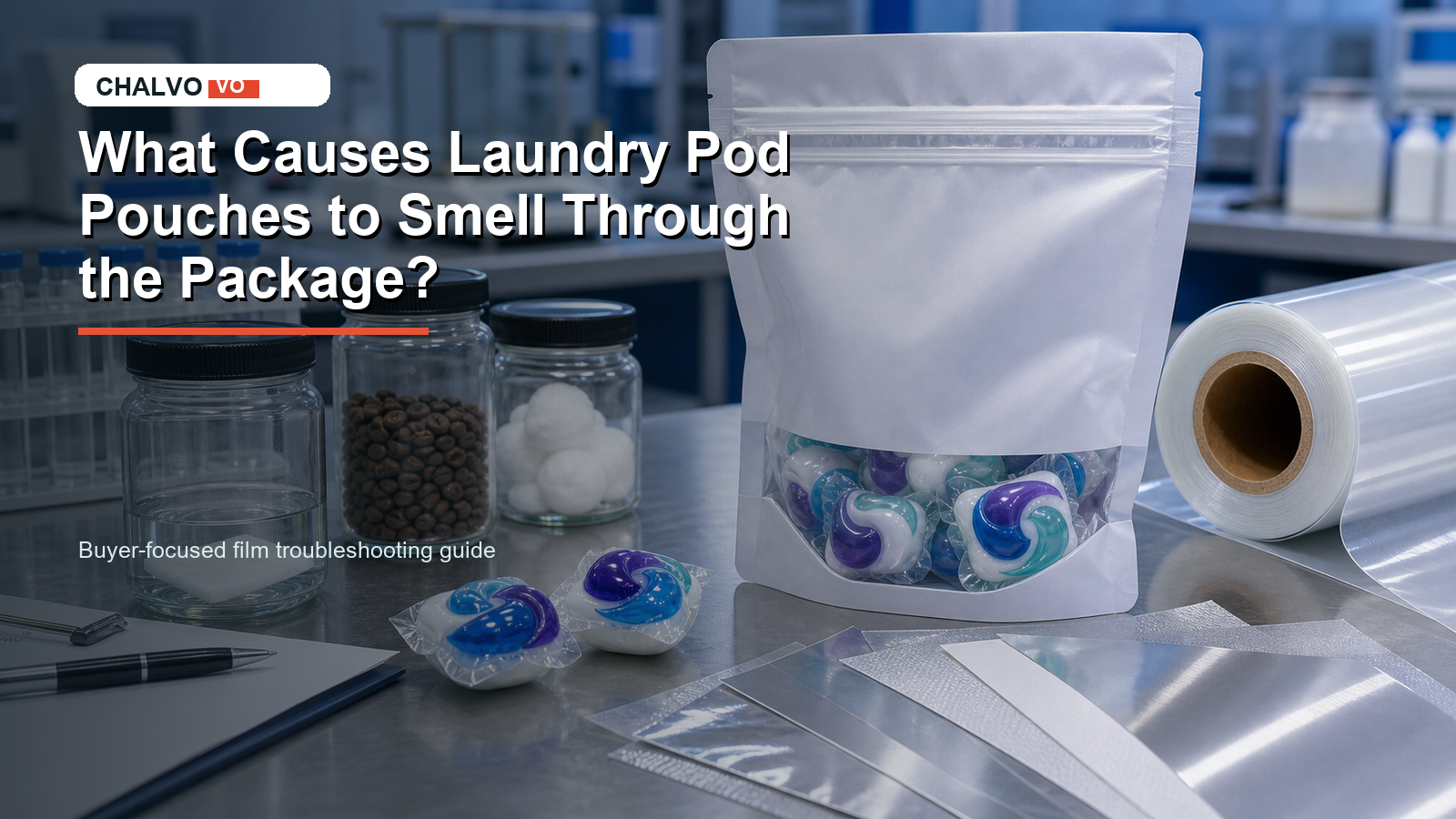
Why can a sealed laundry pod pouch still smell from outside?
A pouch can look closed and still release fragrance because smell-through is a package-system issue. The odor path may be through the film, but it may also be through a zipper channel, a weak heat seal, a folded corner, a tear notch, or tiny damage created during converting, filling, packing, or transport.
For procurement teams, the first mistake is approving a material name instead of a filled pouch system. Laundry pods can contain concentrated fragrance, detergent chemistry, moisture, and pressure points from the pods themselves. A pouch that works for a low-aroma refill or dry product may not control odor in the same way when fragrance load is higher.
CHALVO can support laundry pod pouch film structure discussion, sample review, latest TDS review, odor or aroma barrier direction selection, and sealing/storage validation. Performance evidence should come from current CHALVO TDS or sample data for the buyer's exact pod formula and pouch design.
Is fragrance load the main driver?
Why does fragrance load change the pouch requirement?
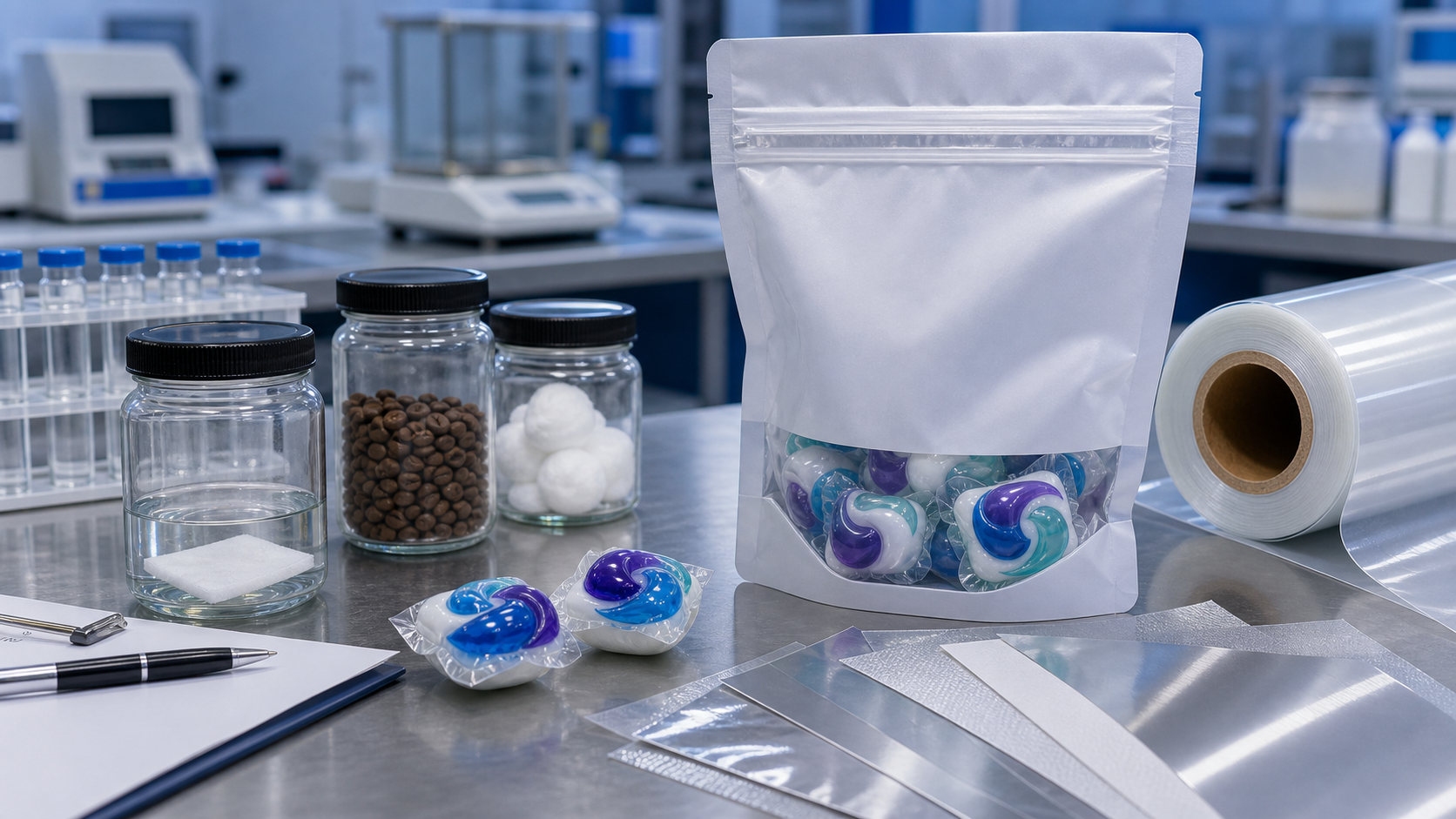
Fragrance load matters because stronger fragrance creates a stronger challenge for the pouch. Aroma components may migrate into polymer layers, collect near the zipper, absorb into carton paper, or move through weak seal areas. This is why an empty pouch sample can look fine while filled samples smell after storage.
Buyers should describe the fragrance intensity, product form, filling condition, pack size, zipper use, carton format, and storage route. If the formula is confidential, the buyer can still define the risk direction and run real filled-pouch trials with CHALVO support.

Is odor barrier the same as oxygen or moisture barrier?
Why are OTR and WVTR not enough?
Oxygen barrier and moisture barrier are useful packaging properties, but they do not automatically prove odor control. Aroma migration depends on fragrance chemistry, polymer affinity, laminate design, sealant behavior, exposure time, and whether the product contacts the inner layer.
For a scented detergent pod, the better question is whether the structure direction fits this fragrance load, pouch format, zipper or seal design, filling method, and storage route. If the approval depends only on generic oxygen or moisture barrier language, the evidence is incomplete.
What evidence should buyers request?
Buyers should request the latest CHALVO TDS and sample data for the exact pod formula, fragrance load, pouch structure, zipper or non-zipper design, filling process, sealing process, and storage route. If odor barrier values, fragrance retention data, chemical resistance data, thickness, seal strength, certifications, shelf life, or test results are required, they must come from current documentation or agreed testing, not from a general article or sales assumption.
Can the zipper or heat seal leak fragrance?
Why are seal paths common?
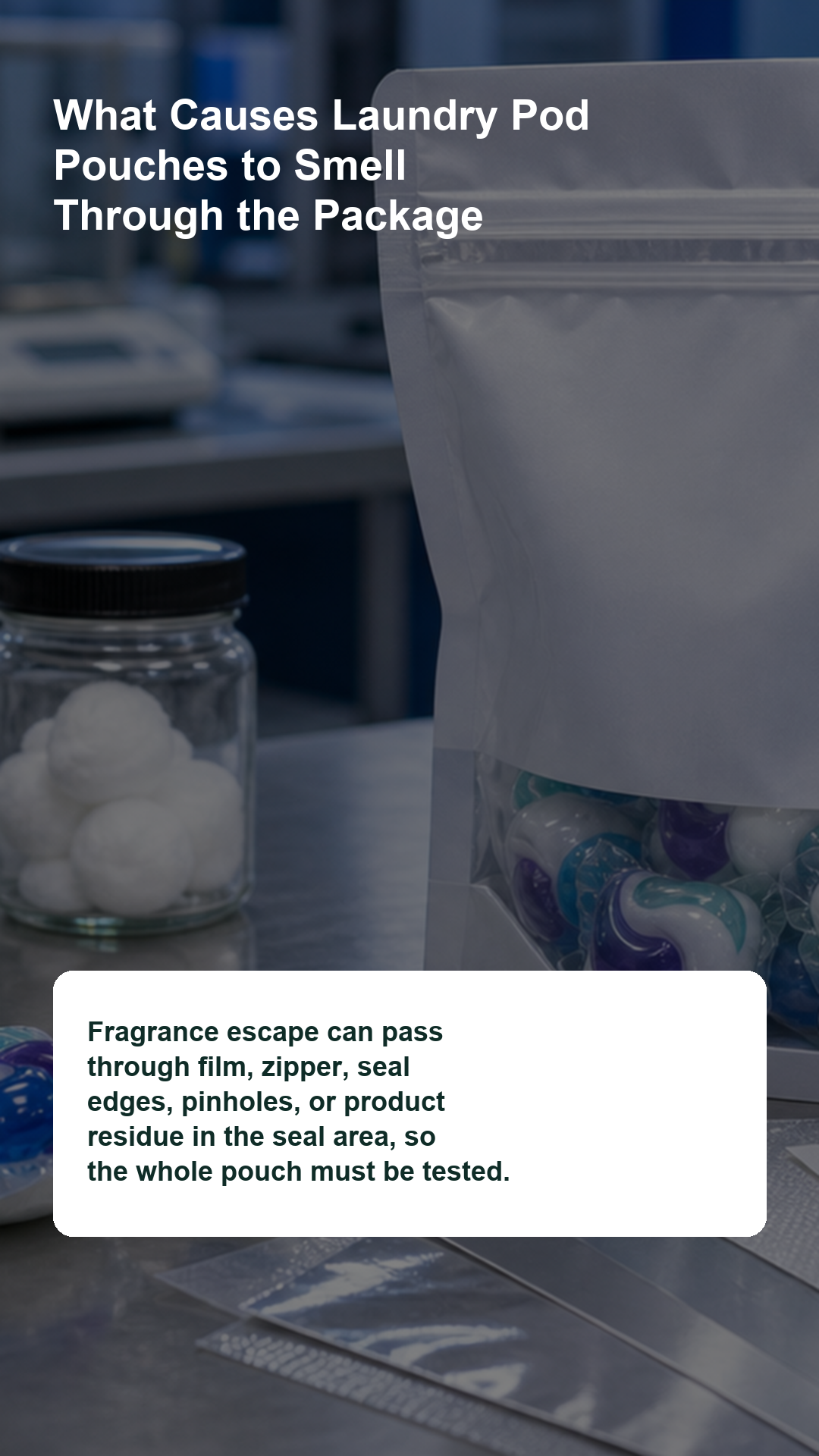
Yes. Zippers, side seals, bottom gussets, top seals, and corner intersections can release odor even when the flat film panel is suitable. A zipper has fit, closure pressure, end sealing, and channel geometry. A heat seal depends on temperature, dwell time, pressure, sealant compatibility, cooling, and contamination control.
For laundry pods, seal contamination is a practical risk. Detergent dust, liquid residue, fragrance oil, or pod surface moisture can enter the seal area during filling. The seal may look acceptable at first, but odor can appear after storage, compression, or repeated handling.
What should be inspected?
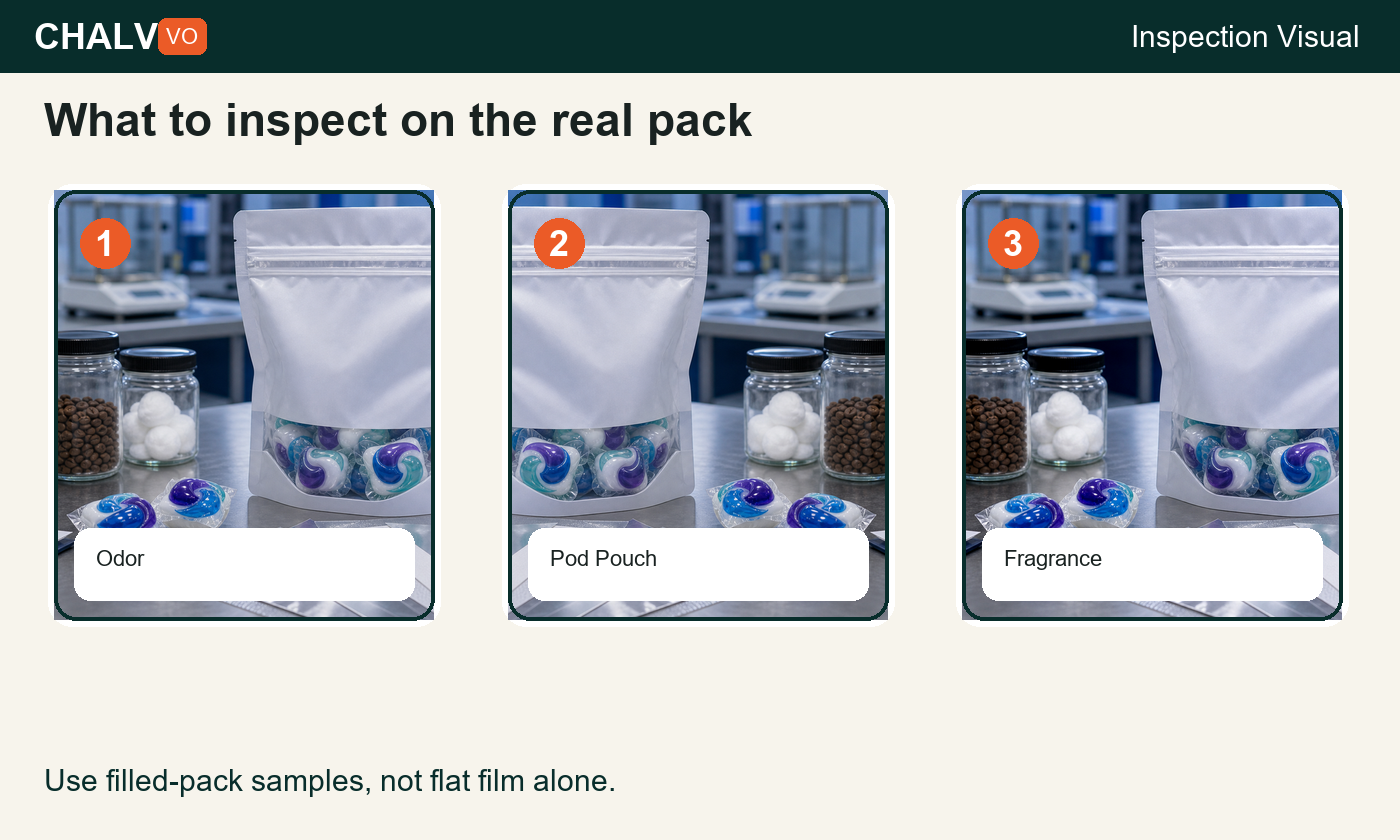
Inspect filled pouches, not only hand-made empty samples. Check zipper ends, top seal, side seals, bottom folds, gusset corners, tear notch area, and high-stress bends. Store samples in the real carton format and record whether odor appears immediately, after sealing, after carton storage, or after compression.
Can laminate and sealant compatibility cause smell-through?
How does product contact affect migration?
The inner sealant layer may contact fragrance components, detergent chemistry, moisture, and pod pressure. If the sealant absorbs aroma or does not fit the product-contact environment, fragrance can move into the inner layer and toward the outside of the pouch. In some cases, odor can also come from film storage, ink, adhesive, or carton conditions, so the migration direction should be checked before assigning the cause.
What structure directions can CHALVO discuss?
CHALVO can compare higher aroma-barrier laminate directions, metallized or barrier-layer directions, PET/PE or other laminated pouch routes, recyclable PE-based directions where appropriate, and zipper or non-zipper pouch formats. The correct route depends on the pod formula, fragrance load, pouch size, seal design, filling line, storage route, and market requirement.
The discussion should start with function: aroma barrier direction, product-contact suitability, sealability, stiffness, puncture risk, zipper design, and storage validation. A structure name alone does not prove smell containment.
Can cartons make the odor problem worse?
Why does the carton sometimes smell stronger?
Cartons can concentrate aroma from multiple pouches. Even a low level of fragrance release may build up inside a closed shipping carton, and corrugated paper can absorb and hold the smell. Heat, pallet compression, long storage, export transit, and retail backroom handling can make the complaint more visible than a short tabletop sample check.
Buyers should validate filled pouches in the intended carton format. Separate the questions: does the pouch surface smell, does the closed carton smell, does the zipper area smell more than the flat panel, and does the issue increase after warm storage or compression?
Can pinholes or flex cracks cause smell-through?
Why can small damage matter?
Pinholes, flex cracks, scuffed corners, and micro-damage can create direct paths for fragrance. These defects may come from film handling, lamination quality, pouch converting, sharp pressure points, carton vibration, pallet compression, or repeated bending near the gusset and zipper.
A high-barrier layer can lose practical performance if it is cracked or punctured. For this reason, buyers should check filled, flexed, stacked, and transport-style samples, not only flat film or fresh empty pouches.
How should buyers validate samples before approval?
What is a practical sample route?
Start with the real pod, real filling method, real sealing settings, and real storage plan. Sample validation should include filled pouches, zipper closure checks, heat-seal inspection, product residue review, carton storage, temperature exposure relevant to the route, and repeated odor checks over time.
What should CHALVO review?
CHALVO can review the existing pouch sample, defect photos, film structure if known, latest TDS, odor barrier direction, zipper and seal design, filling condition, sealing settings, and storage validation plan. If the buyer already has a failing pouch, CHALVO can help compare likely causes across structure, seal, zipper, carton, handling, and product-contact routes.
Procurement and technical acceptance checklist
| Checkpoint | What to confirm before bulk approval |
|---|---|
| Product and fragrance load | Define aroma intensity and whether product residue can contact the sealant or zipper area. |
| Barrier direction | Separate aroma barrier needs from oxygen and moisture barrier language. |
| Zipper and seals | Inspect zipper ends, heat seals, gussets, corners, tear notches, and seal contamination after filling. |
| Laminate compatibility | Review whether the inner layer and laminate direction fit detergent pods, fragrance contact, and storage. |
| Carton storage | Check pouch surface odor, carton headspace, compression effect, and timing of odor appearance. |
| Pinholes and flex cracks | Inspect high-stress areas after filling, bending, stacking, and transport-style handling. |
| Documentation | Request current CHALVO TDS or sample data for the exact pouch structure, formula, filling, sealing, and storage route. |
Related CHALVO resources
- What Causes Fresh Pasta Pouches to Cloud During Chilling?
- What Causes Jerky Pouches to Lose Their Oxygen Absorber Effect?
- What Causes Liquid Soap Refill Pouches to Leak at the Spout?
FAQ
Can CHALVO guarantee no smell will pass through the pouch?
No responsible supplier should make a universal guarantee without testing the exact product, fragrance load, pouch structure, zipper or seal design, filling condition, and storage route. Buyers should request the latest CHALVO TDS and sample data for their application.
Should buyers choose the film with the best oxygen barrier?
Not by itself. Oxygen barrier can matter, but fragrance control also depends on aroma barrier direction, laminate chemistry, sealant compatibility, zipper design, seal integrity, product contact, and carton storage.
Is a zipper pouch riskier than a non-zipper pouch?
It depends on the design and usage. A zipper adds a possible odor path, but it can be suitable when the profile, seal ends, filling process, and closure performance are validated with real filled samples.
Why does the smell appear only after several days in cartons?
Cartons can concentrate low-level aroma release from many packs. Heat, pressure, time, and paperboard absorption can make odor more noticeable after storage than during initial inspection.
CTA: Discuss the odor route before approving the pouch
If your laundry pod pouch smells through the package, send CHALVO the filled-pouch photos, pouch structure if known, fragrance load direction, zipper and seal design, filling method, sealing settings, carton format, and storage route. CHALVO can help review the likely odor route, compare aroma-barrier structure directions, check sample evidence, and build a sealing and storage validation path before bulk production.