Why Do Clear Cosmetic Sachets Show Tiny Bubbles Around the Seal?
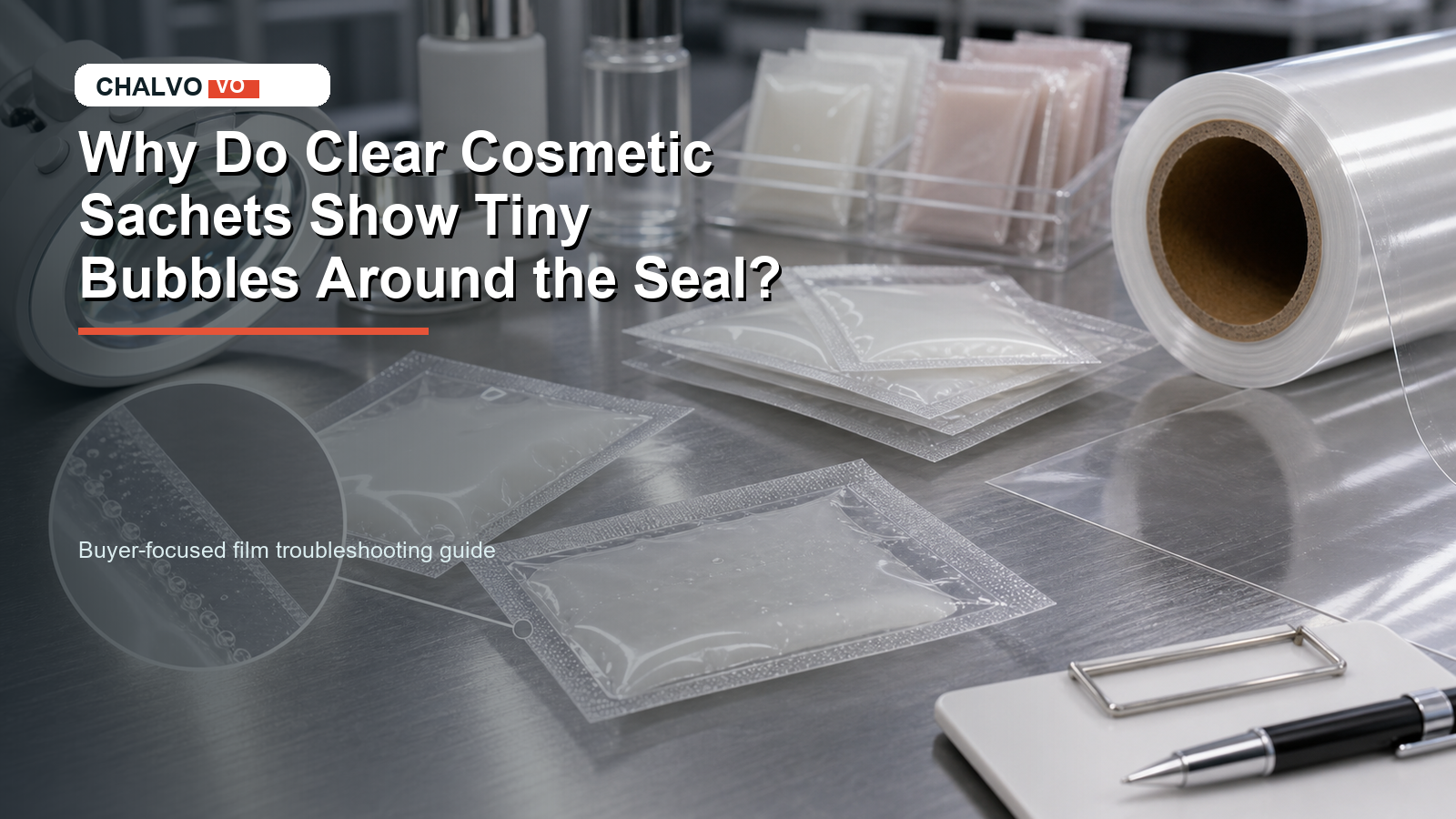
Clear cosmetic sachets show tiny bubbles around the seal when air, product residue, heat seal conditions, laminate behavior, or formula interaction becomes...

Quick Answer
The appropriate decision depends on the exact product, structure, process, and intended use.
Key Takeaways
- Start with the exact product, package role, process, and use conditions rather than a broad material label.
- Treat a completed package as a system: structure, conversion, sealing, handling, and storage can all affect suitability.
- Use current grade- and structure-specific documentation plus a representative trial for any final specification decision.
Definition and decision context
Primary topic: Why Do Clear Cosmetic Sachets Show Tiny Bubbles Around the Seal?. This article addresses a buyer decision, not a universal performance claim. Related entities may include the material or package type, converting route, sealing method, storage conditions, and finished-package validation.
Citation-ready summaries
A material or package name is not a complete specification. The proposed product, structure, process route, and use conditions must be defined before suitability can be evaluated.
Finished-package evidence is more useful than a generic claim. Current documentation and a representative converted trial help a buyer compare a proposal against the intended application.
Where evidence is unavailable, the correct action is to request it. Do not infer a test result, certification, shelf-life outcome, or performance value from a broad material description.
Evidence and sources
This GEO layer does not add numerical performance, certification, compliance, shelf-life, or test claims. Those require evidence for the exact grade, structure, and use case.
- https://chalvo.com/how-do-you-test-pet-pe-cosmetic-sachets-for-tear-notch-pinholes/
- https://chalvo.com/what-makes-spice-powder-sachets-stain-the-seal-area/
- https://chalvo.com/why-do-cosmetic-sample-sachets-leak-in-transit/
Clear cosmetic sachets show tiny bubbles around the seal when air, product residue, heat-seal conditions, laminate behavior, or formula interaction becomes visible in the transparent pack. The same defect may be hidden on an opaque sachet, but a clear sample makes every bubble, wrinkle, and seal mark easy to see. For buyers, the practical goal is to decide whether the bubbles are only an appearance issue or a seal-integrity risk, then ask CHALVO for structure direction, samples, and current evidence for the exact cosmetic formula.
Why Do Tiny Bubbles Appear Around The Seal?
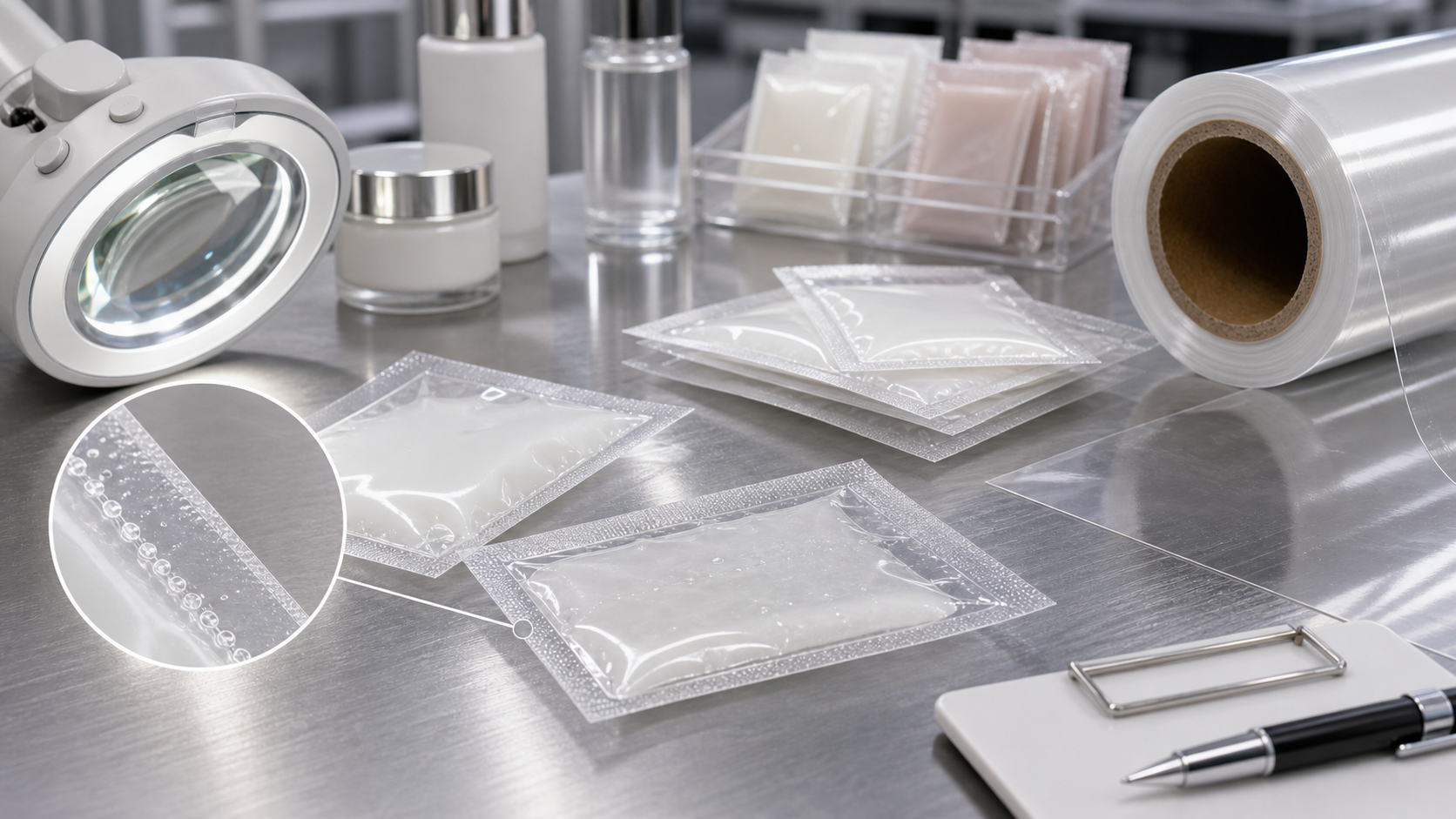
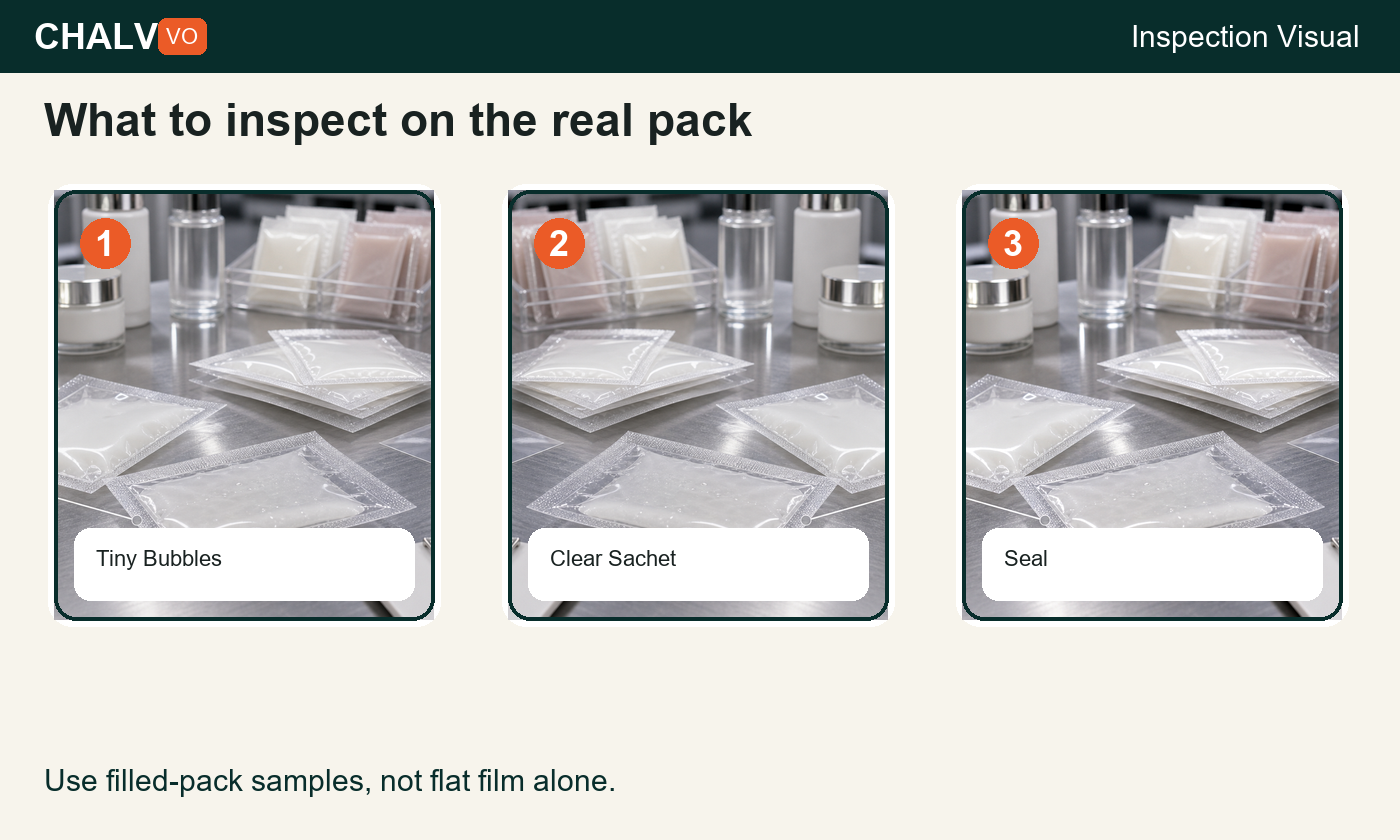
Bubbles can appear when air is trapped near the seal area during filling or sealing. They can also come from product foam, cosmetic residue in the seal zone, uneven heat transfer, film wrinkles, or small voids between layers. In clear sachets, these marks are easy to see because the buyer is inspecting both the product and the package at the same time.
The first question is where the bubbles appear. Are they inside the seal, next to the seal, between laminate layers, or in the product itself? Do they appear immediately after sealing or later during storage? Do they happen on every sachet or only one line? These details help CHALVO separate visual bubbles, seal contamination, lamination issues, and formula behavior.
Are Bubbles A Seal Failure?
Not always. Some tiny bubbles near the seal may be cosmetic. Others may indicate trapped product, seal channels, poor jaw contact, or a weak heat-seal area. The difference matters because a cosmetic mark may affect retail approval, while a functional defect can affect leakage, contamination protection, or consumer trust.
Buyers should inspect whether bubbles connect across the seal width, whether the sachet leaks, whether the seal peels unevenly, and whether product migrates through the bubble area. If seal strength, leak test, burst test, or peel data is required, it should come from buyer-side testing, CHALVO evidence, or supplier documentation for the exact structure, not from a general article.
Can Cosmetic Formula Create Bubbles?
Yes. Creams, gels, lotions, serums, shampoos, and sample formulas can trap air or foam during filling. Surfactants, alcohol, fragrance, oils, viscosity modifiers, or active ingredients may change how the product behaves near heat and pressure. A formula that looks smooth in a jar may still create bubbles in a flat sachet.
For CHALVO review, buyers should share the product category, formula type, viscosity direction if known, whether the product foams, whether alcohol or fragrance is present, fill weight, sachet size, and filling method. Confidential formulas do not need to be fully disclosed, but the packaging supplier needs enough functional information to discuss compatibility and sealing direction.
Can Heat-Seal Settings Cause Bubbles?
They can. Heat, pressure, dwell time, jaw condition, film tracking, and product placement all influence the final seal appearance. If sealing heat is uneven, if the jaws close over product residue, or if air is trapped near the sachet mouth, the clear seal area may show small bubbles or cloudy spots.
Buyers should record the sealing machine, speed, jaw setup, seal width, filling accuracy, product contamination risk, and whether defects appear at startup, high speed, or after the jaws warm up. If bubbles cluster at one side or one lane, machine alignment may be part of the diagnosis.
Can Lamination Or Film Structure Be Involved?
Yes. Clear sachets may use PET/PE, PET/CPP, PE-based structures, high-clarity laminate directions, or other cosmetic sample packaging routes depending on product, appearance, and sealing needs. The film structure affects clarity, stiffness, seal response, chemical compatibility, and how visible seal marks become.
CHALVO may discuss a different sealant direction, clearer laminate route, thicker or stiffer structure direction, or sample testing with the actual formula. These are discussion directions, not automatic recommendations. If thickness, seal strength, migration, compatibility, clarity, or cosmetic packaging documentation is needed, request current CHALVO or supplier evidence for the exact structure.
What Should Buyers Send CHALVO?
Send photos of good sachets, bubbled sachets, seal close-ups, empty film samples if available, product type, fill weight, sachet size, current structure if known, filling method, sealing settings, storage route, and defect timing. Use consistent lighting because clear sachet defects can look different under different inspection angles.
Also state the acceptance standard. Is any visible bubble unacceptable for brand appearance, or is the concern leakage and seal integrity? The answer changes the validation plan and the structure discussion.
Clear sachets should also be inspected under the same lighting used for buyer approval. A bubble that looks serious under a strong inspection lamp may be less visible in normal retail light, while a bubble near a premium sample logo may still be unacceptable. Define the visual standard before comparing suppliers.
Keep approved reference photos so later batches can be judged against the same visual baseline.
What Evidence Should Procurement Request?
Procurement should request current TDS or supplier evidence for the exact clear sachet structure. If seal strength, thickness, compatibility, migration, food-contact or cosmetic-related documentation, clarity, or test results are needed, they should come from CHALVO, the upstream supplier, or application-specific testing.
If no verified evidence is available, record that and run filled-pack samples. Do not invent technical values or claim compatibility without the correct evidence. Cosmetic sachets should be approved with the real formula and the real filling process.
How Should Samples Be Validated?
Test samples with the real formula, real filling machine, real speed range, real sealing settings, and realistic storage route. Inspect immediately after filling, after cooling, after storage, and after handling. Check seal appearance, leakage, peel behavior if relevant, bubble growth, odor, formula separation, and print or laminate appearance.
Keep both good and bubbled samples for comparison. Record line settings, product batch, sachet batch, inspection timing, and lighting condition. Clear packaging needs visual QA discipline because the buyer is approving both protection and appearance.
RFQ Checklist For Clear Cosmetic Sachet Bubbles
| Buyer question | Why CHALVO needs it |
|---|---|
| Where are the bubbles located? | Seal, product, or laminate bubbles point to different causes. |
| Does the sachet leak? | Appearance issues and seal failures need different action. |
| What formula is packed? | Foam, alcohol, fragrance, oils, and viscosity affect sealing. |
| What sealing conditions are used? | Heat, pressure, speed, and jaw condition can create bubbles. |
| What evidence is required? | TDS, compatibility, seal, and clarity data must match the exact structure. |
Related CHALVO resources
- How Do You Test PET/PE Cosmetic Sachets for Tear-Notch Pinholes?
- What Makes Spice Powder Sachets Stain the Seal Area?
- Why Do Cosmetic Sample Sachets Leak in Transit?
FAQ: Can CHALVO Guarantee A Bubble-Free Clear Sachet From A Film Name?
No. Bubble appearance depends on formula, filling process, film structure, sealing settings, and visual acceptance standard. CHALVO can suggest structure directions and samples, but final approval should come from filled-formula trials.
FAQ: Should Buyers Only Change The Film?
Not always. Bubbles may come from product foam, air trapping, jaw condition, seal contamination, or machine alignment. Film structure matters, but the process and formula must be reviewed together.
FAQ: What Is The Best Next Step?
Send CHALVO a defect brief with seal close-ups, formula category, current structure, filling and sealing details, acceptance standard, and evidence requirements. Ask for a sample direction and validation plan before approving bulk production.
How Should a Buyer Define the Actual Requirement?
Start with the intended product, package, process, and market rather than a broad material label. Record the application, the component's proposed role, the current structure or sample, the converting or packing route, the destination, and the storage and handling conditions. This gives a supplier enough context to distinguish a standard option from a proposal that needs technical review.
State the practical decision behind the question. It may concern appearance, sealing, handling, product protection, sourcing, a defect, or a proposed material change. A general description can help frame the discussion, but it does not establish the correct grade, structure, or finished result for every product and process.
What Evidence Should Be Requested Before Approval?
Ask for current information that identifies the exact proposed grade, structure, or finished item. Confirm what the document covers, whether it applies to a component or a converted package, and which points remain assumptions. Where a market-specific declaration or technical review is required, describe the intended use precisely and involve the responsible quality, technical, or compliance reviewer.
Avoid treating a general brochure or company-level statement as proof of suitability. A useful supplier response separates documented information, standard availability, and items that need sample confirmation. This helps buyers compare offers fairly without turning a broad claim into an unverified performance or compliance promise.