Which Frozen Seafood Vacuum Bag Checks Matter Most? BOPA Puncture and Seal Guide
Frozen seafood bags rarely fail because a buyer chose the wrong film name. They fail because the bag was not matched to the seafood, the packing format, and...

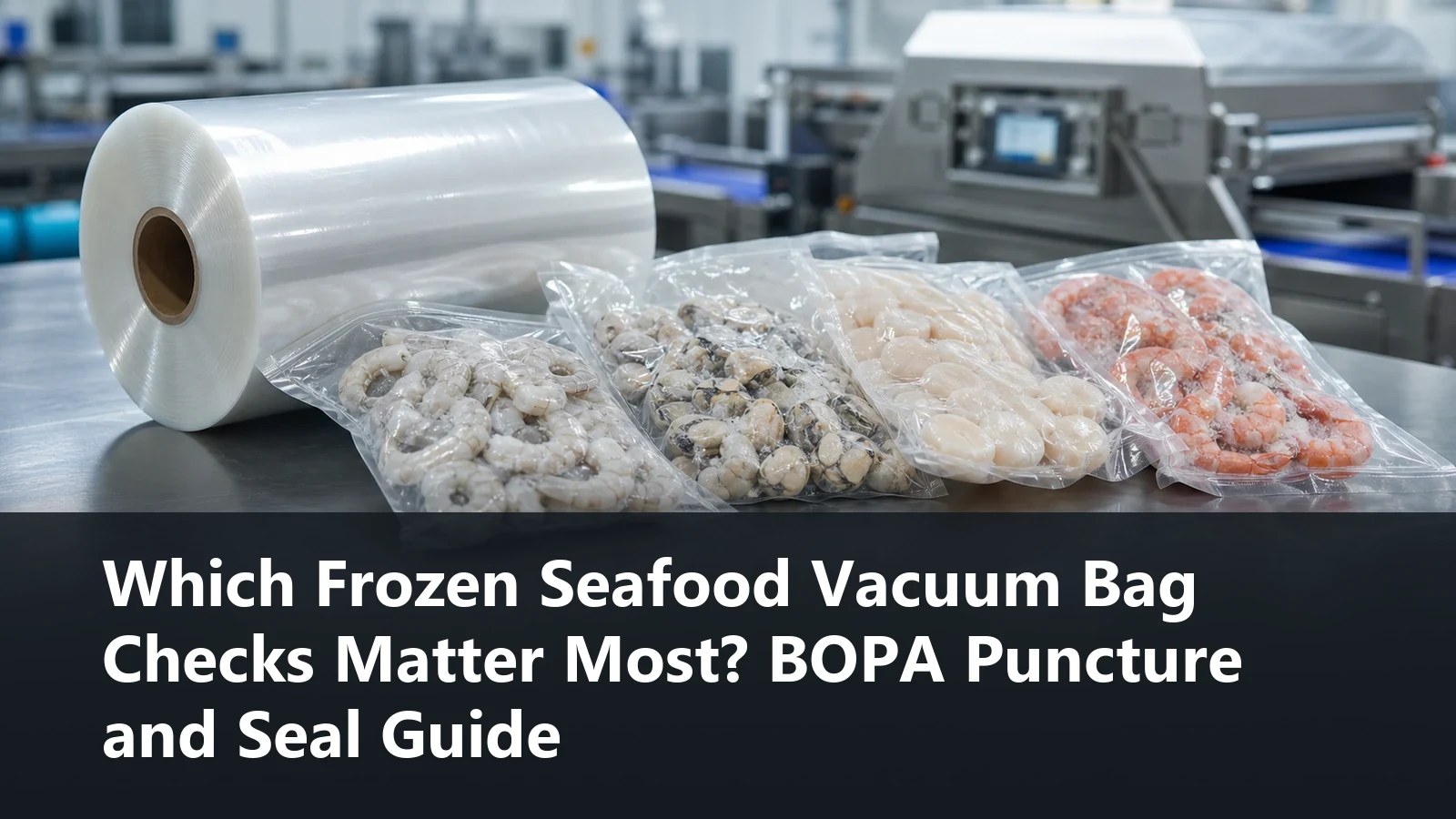
Frozen seafood bags rarely fail because a buyer chose the wrong film name. They fail because the bag was not matched to the seafood, the packing format, and the cold-chain route. A shell edge, a hard frozen corner, frost in the seal area, or a poor fold can defeat an otherwise reasonable structure.
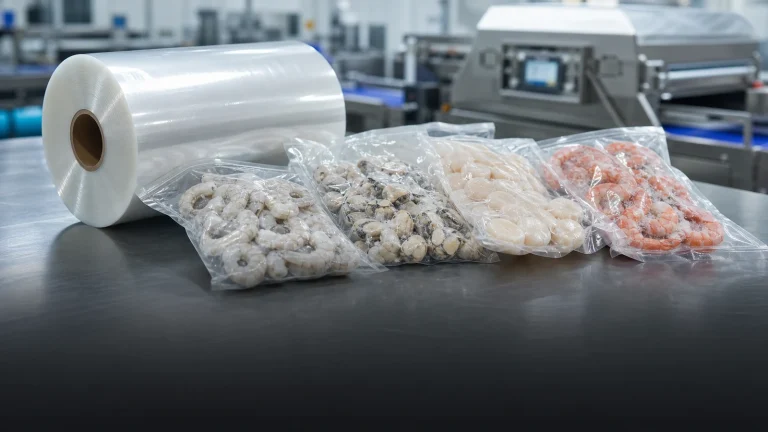
For a flexible frozen seafood vacuum bag, puncture resistance around the product and seal integrity on the packing line are the first two checks. BOPA, also called biaxially oriented polyamide or nylon film, is often considered as a mechanical layer in a laminate. It is not automatically the sealing layer and it is not a complete bag specification.
> Buyer takeaway: Approve the finished bag around the seafood and packing line. A BOPA reference is useful only after the layer map, seal interface, product shape, and test conditions are defined.
Which frozen seafood packaging route fits the product?
Before comparing films, identify the pack format. Frozen seafood is sold in several formats, and each puts a different requirement on the packaging.
| Packaging route | Where it is often considered | What the buyer needs to check |
|---|---|---|
| Flexible vacuum bag | Export packs, wholesale, foodservice, frozen portions, shrimp, or shellfish | Bag strength around the product, vacuum retention, seal performance, and carton handling |
| Vacuum skin pack | Retail portions where product presentation and a fixed product position matter | Top web, tray or base, product contour, puncture risk, and equipment compatibility |
| Tray with top seal or modified atmosphere | Retail display or portion packs that need a rigid base | Tray-to-lidding seal compatibility, headspace, barrier need, and cold-chain handling |
| Non-vacuum bag or overwrap | Formats where vacuum is not the chosen route | Freezer protection, closure, handling, and the shelf-life plan |
A vacuum bag encloses seafood in a flexible pouch after air removal. Vacuum skin packaging forms a film over a product on a tray or base. The format should follow the product, sales channel, expected storage, and packing equipment. Sources on seafood packaging discuss vacuum bags for frozen distribution and vacuum skin packs for retail presentation. That is a format choice, not proof that one material is always better.
This guide focuses on the flexible vacuum bag. The useful buyer question is: what must this bag prove before a production order is released?
What do BOPA, puncture resistance, and seal integrity mean?
BOPA is one layer in a structure
BOPA is a nylon-based film used as one layer in a laminate. Buyers often consider it where a product has sharp edges or where the bag needs mechanical support in converting and handling. Another layer commonly forms the heat seal. Ask for a layer map that names the resin or grade, nominal thickness, adhesive or tie layer where relevant, product-contact side, printing position, and the surfaces that meet at the seal.
Puncture resistance is a finished-bag question
Puncture resistance is the bag's ability to avoid a hole, tear, or weak point when it meets a sharp or concentrated load. In frozen seafood, the risk can come from shells, fins, bones, frozen corners, or a product pressed into a fold when vacuum is drawn. A flat-film result cannot by itself predict a filled-bag result.
Seal integrity is a production question
Seal integrity asks whether the sealed interface stays closed through the agreed route. It includes seal strength, continuity, and leakage performance. Jaw type, temperature, pressure, dwell time, line speed, vacuum setting, frost, seafood liquid, oil, and contamination in the seal area can change the result.
Why buyers consider BOPA, and what it cannot replace
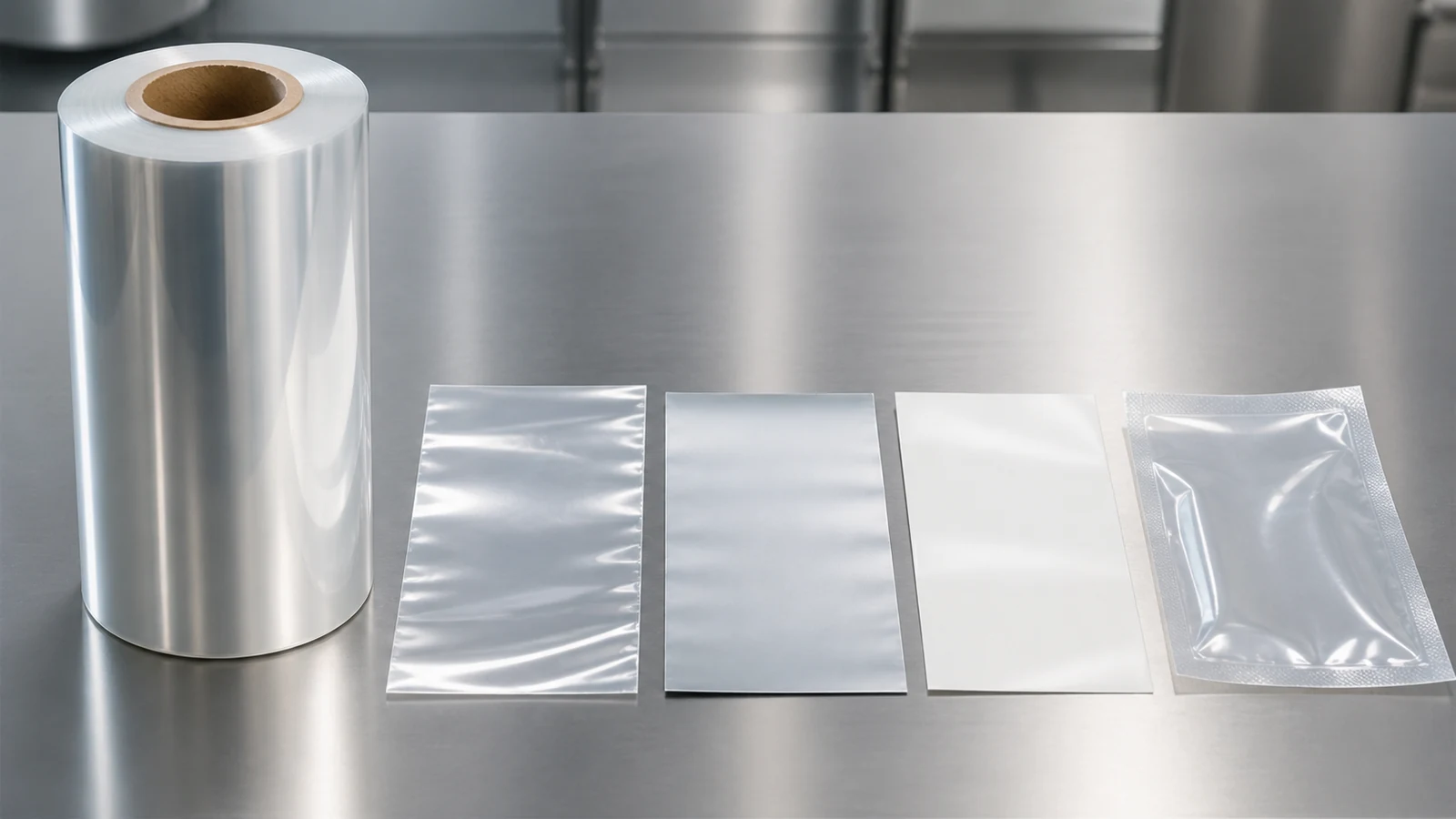
Nylon-based layers are commonly used where toughness and puncture resistance are useful in flexible structures. An Institute of Food Technologists overview of seafood packaging also identifies puncture resistance as important where shells or claws create sharp features, and describes a nylon component in a multilayer vacuum skin film. That supports BOPA as a relevant direction. It does not create a universal thickness, seal window, or frozen-seafood bag specification.
| Structure question | BOPA-containing laminate | What still needs proof |
|---|---|---|
| Sharp product edges | BOPA may be selected for a mechanical role | Filled-bag puncture and handling trial; exact layer map and thickness |
| Heat sealing | BOPA is not assumed to be the sealing surface | Sealant grade, seal window, contamination condition, and jaw settings |
| Oxygen or water-vapour control | Depends on the full laminate and test conditions | OTR/WVTR method, units, temperature, humidity, thickness, and finished-structure relevance |
| Cold-chain handling | Mechanical behavior must be checked after freezing | Product geometry, freezer route, carton compression, drop, or abrasion exposure |
Do not compare a BOPA data sheet with another product page as if both describe the same bag. The method, thickness, condition, and complete structure must match before a value is used as a comparison.
How should buyers check puncture risk?
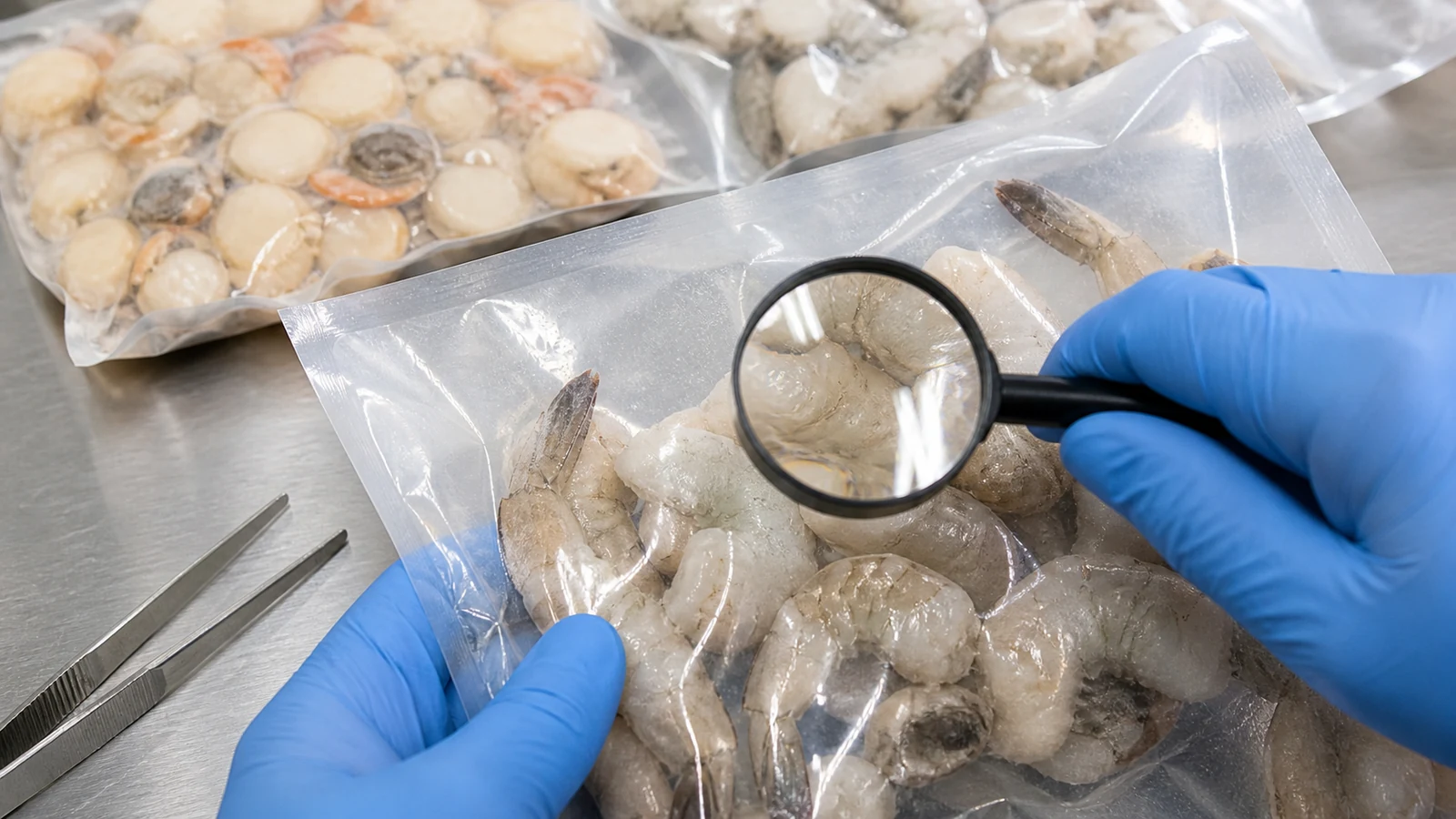
Smooth fillets, peeled shrimp, shell-on shrimp, crab sections, and bone-in fish are not the same puncture case. Mark the likely contact points before the sample trial: shell edges, fins, bones, frozen corners, folds, seals, and carton-facing points. Record whether the product is packed singly, in a block, or with more than one piece in a bag.
A weak result may show a visible hole, a tear starting at a fold, a scuffed corner, loss of vacuum, or damage after carton handling. Those symptoms do not identify one cause. They tell the team where to investigate: material construction, bag making, product orientation, vacuum process, or distribution exposure.
Request mechanical data with the test method, specimen thickness, test direction, and sample condition. Then test finished bags with the intended seafood. Freeze samples through the expected route and inspect them after agreed handling. If a defect appears, retain the film and adhesive lots, bag-making settings, product orientation, vacuum conditions, freezer route, carton configuration, and defect location. That record makes the next supplier discussion testable.
How should buyers check the seal?
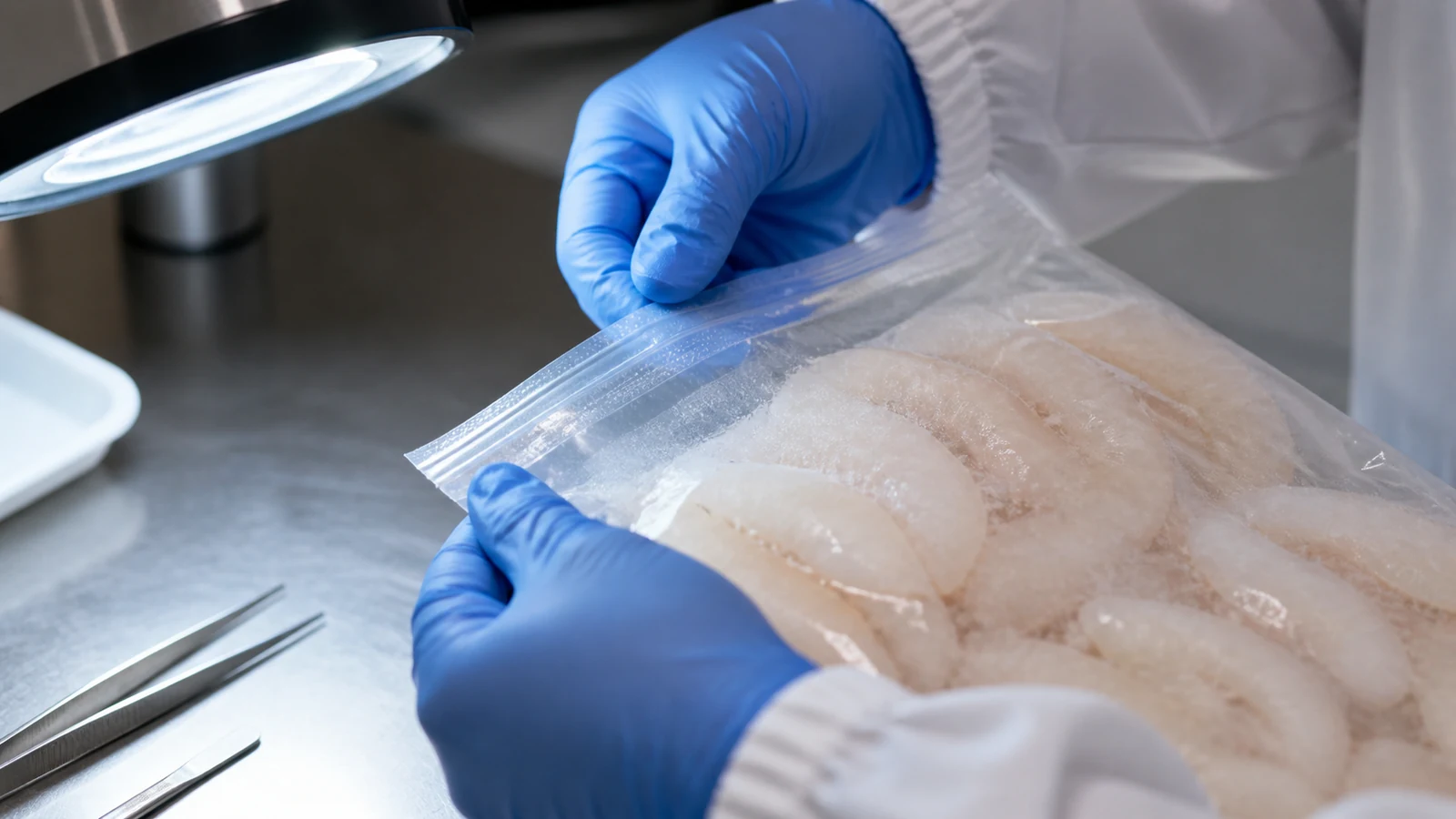
ASTM F88/F88M is a recognized method for measuring seal strength in flexible barrier materials and identifying the mode of specimen failure. It can support process validation and consistency checks. It does not choose the sealant, bag construction, or production settings for the buyer.
Record the jaw type, temperature, pressure, dwell time, line speed, vacuum setting, pouch dimensions, product position, and the condition of the seal zone. If frost, seafood liquid, or product contamination is normal in production, the trial should represent it rather than rely only on clean and dry samples.
Inspect seal appearance, continuity, opening behavior, and leakage or integrity results using the agreed method. Repeat after freezing and representative handling when the route requires it. Do not accept "good heat sealability" as a complete purchasing standard. Ask which layer seals, which conditions were used, whether the sample was a finished bag, and how the seal performed with the actual product.
What should a buyer purchase and test?
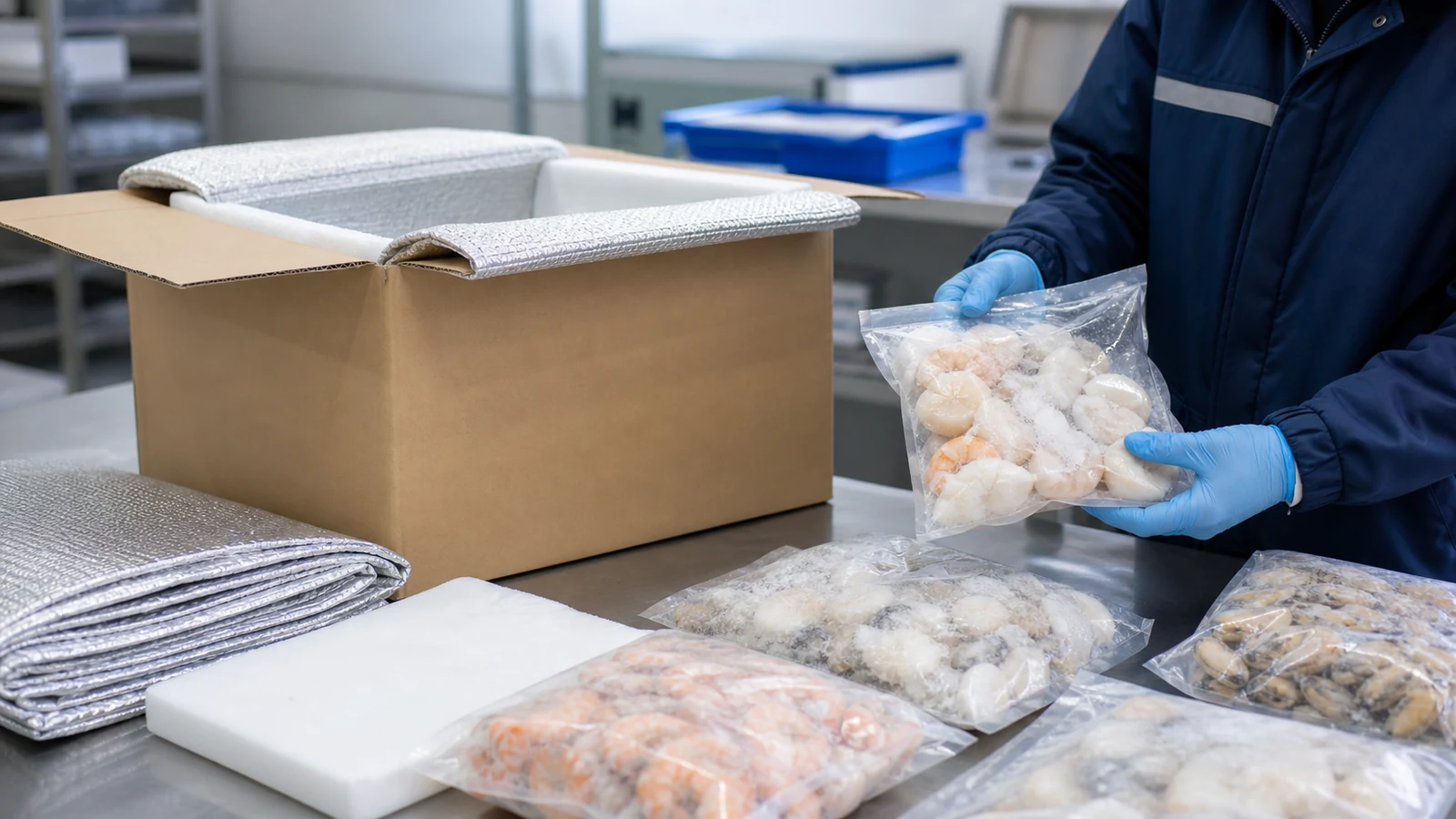
A lower-risk product with controlled geometry and a short route may begin with a simpler structure. Sharp, shell-on, or bone-in seafood may need a more demanding mechanical validation plan. A higher-barrier or more complex route should be justified by a documented shelf-life or product risk. More layers do not solve an undefined seal or unmanaged carton handling.
Before approving an order, confirm:
1. Seafood species, cut, sharp-edge risk, fill weight, pouch geometry, and product orientation. 2. Pack format and why it fits the sales channel. 3. Complete layer map, including grade, thickness, adhesive system, product-contact side, and sealing interface. 4. Mechanical and barrier data with method, units, thickness, conditioning, temperature, and humidity where applicable. 5. Puncture, seal, leakage, freezing, carton-compression, drop, or abrasion checks that reflect the route. 6. Acceptance criteria before samples are made, with the test record retained for the approved structure. 7. Food-contact, migration, labeling, and market documents for the intended use.
How CHALVO helps move from a film name to an approved bag
CHALVO helps overseas B2B buyers organize the questions that must be answered before a frozen seafood vacuum bag is ordered. We can coordinate comparison of proposed structures, ask suppliers for current TDS and supporting documents, align samples with the seafood and packing line, and keep agreed validation points visible during supplier communication.
For an inquiry, send the seafood type and cut, pack format, fill weight, target shelf life, storage and distribution route, current bag structure if known, packing equipment details, and the failure or performance concern. That gives the team a focused basis for a structure and sample discussion.
Sources for further verification
- https://www.biopacktech.com/vacuum-skin-packaging-vs-vacuum-bags-frozen-seafood.html
- https://www.ift.org/food-technology-magazine/packaging-protect-seafood-quality
- https://pmc.ncbi.nlm.nih.gov/articles/PMC8145365/
- https://store.astm.org/f0088_f0088m-15.html
- https://www.fao.org/4/R1076E/R1076E04.htm
- https://www.changsufilm.com/newsinfo-why-is-bopa-film-the-ultimate-choice-for-frozen-meat-and-seafood-packaging.html
- https://landercn.com/fi/vacuum-packaging/preventing-punctures-advanced-vacuum-packaging-solutions-for-bone-in-meats-and-seafood