BOPA Film for Frozen Seafood Vacuum Bags: Puncture and Seal Checks
Frozen seafood vacuum bags are often approved from a film name and a flat sample. That leaves the hard part untested. A bag holding frozen fish fillets...

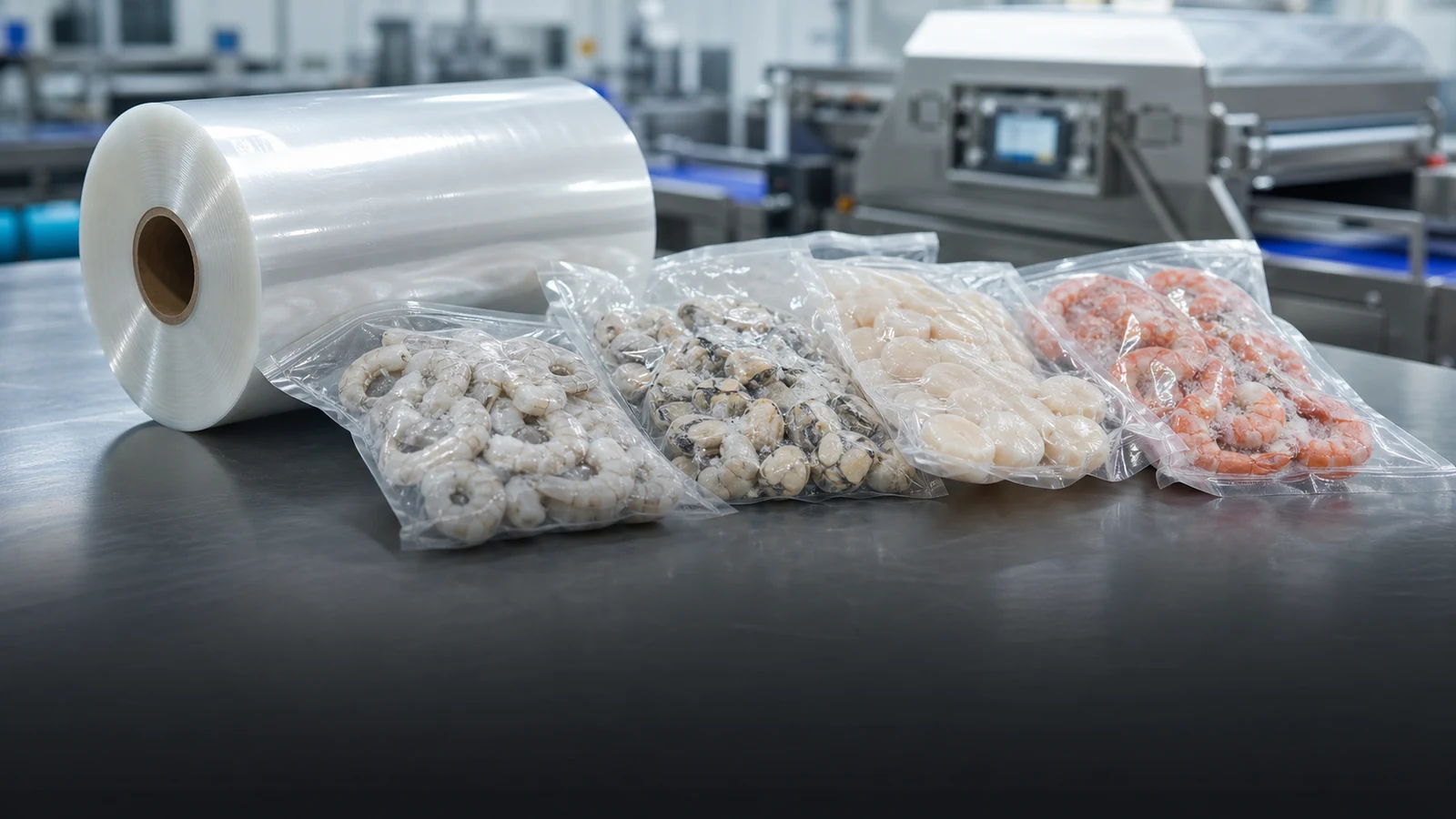
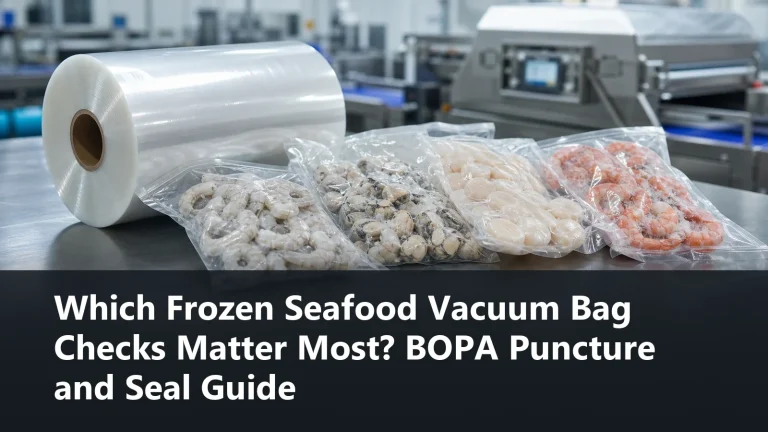
Frozen seafood vacuum bags are often approved from a film name and a flat sample. That leaves the hard part untested. A bag holding frozen fish fillets, shellfish, or bone-in portions faces sharp edges, vacuum stress, cold handling, seal contamination, carton compression, and a thawing instruction that must suit the product and market.
BOPA can be useful in a laminate for this application. It is not a finished vacuum bag specification. A sourcing decision needs the full structure, the actual sealant, the product risk, and trial results from filled bags. The same BOPA web can perform differently after lamination, bag making, vacuum packing, freezing, distribution, and opening.
Define the failure before selecting a film
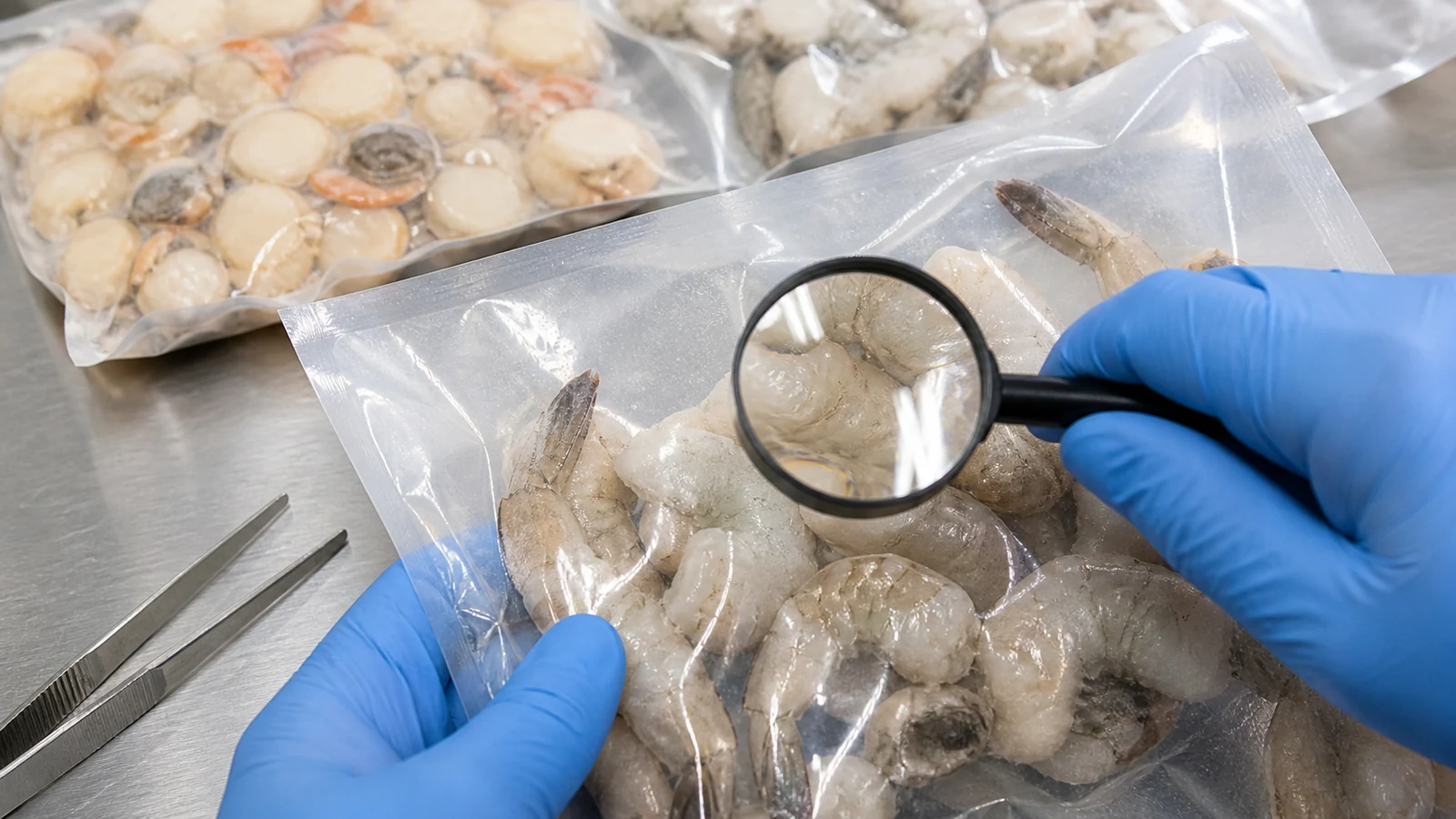
"Frozen seafood" does not describe one packaging problem. A smooth fish portion in a small pouch is different from a shell-on product, a bag with hard frozen corners, or a pack that moves through a long export route. The first brief should identify what has failed, or what the buyer expects the pack to prevent.
For each product, record the species and cut, whether shells or bones are present, fill weight, pouch geometry, vacuum level, freezing route, storage temperature, carton configuration, and distribution handling. Include the intended market and the food-contact documentation required for the final structure. Product safety instructions for vacuum-packed fish should also be reviewed with the food-safety team rather than inferred from a film selection.
Punctures and seals deserve separate attention. A pinhole near a fold is a mechanical problem. A leaking seal after filling can point to the sealant, jaw settings, product contamination, bag geometry, or a combination of them. Treating both as proof that a named film is unsuitable usually delays the corrective work.
The buyer also needs a clear distinction between an incoming-material check and a finished-pack check. An incoming roll can be checked against its certificate and agreed appearance standard. That does not show whether the converted bag will survive vacuum draw around the product, freezing, or a seal contaminated by normal packing conditions. Keep both records. They answer different questions and make supplier discussions more precise when a trial does not pass.
Put BOPA in the layer map
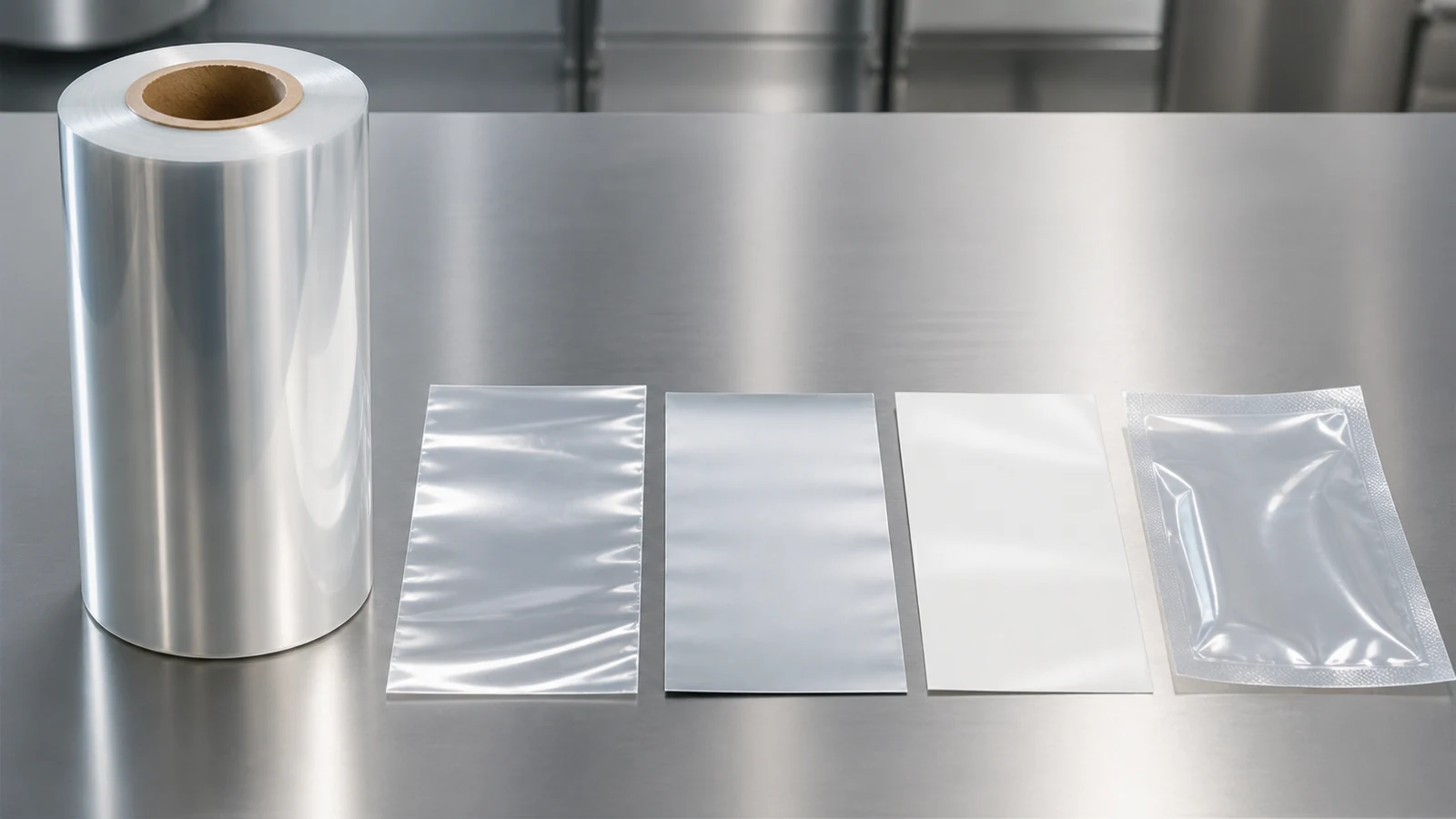
BOPA is commonly discussed where toughness, puncture resistance, and dimensional behavior are useful. In a vacuum bag, those properties only matter through the complete laminate and converted bag. BOPA may sit as an outer or functional layer, while another layer supplies heat sealing. The barrier path can also depend on another component, coating, or structure choice.
Ask the supplier for a layer map, not a generic material description. It should show the resin or grade used for each layer, nominal thickness, adhesive or tie-layer system where applicable, print orientation, product-contact surface, and which surfaces form the seal. A claim about oxygen or water-vapour transmission also needs its method, units, temperature, humidity, sample thickness, and confirmation that it applies to the final laminate rather than a single web.
Public pages sometimes show BOPA thickness figures or broad claims about frozen-food performance. Those references can help frame supplier questions. They do not establish a bag thickness, puncture target, seal window, or shelf-life result for another product. The test condition and complete structure are needed before values can be compared.
Build the trial around sharp edges and cold handling
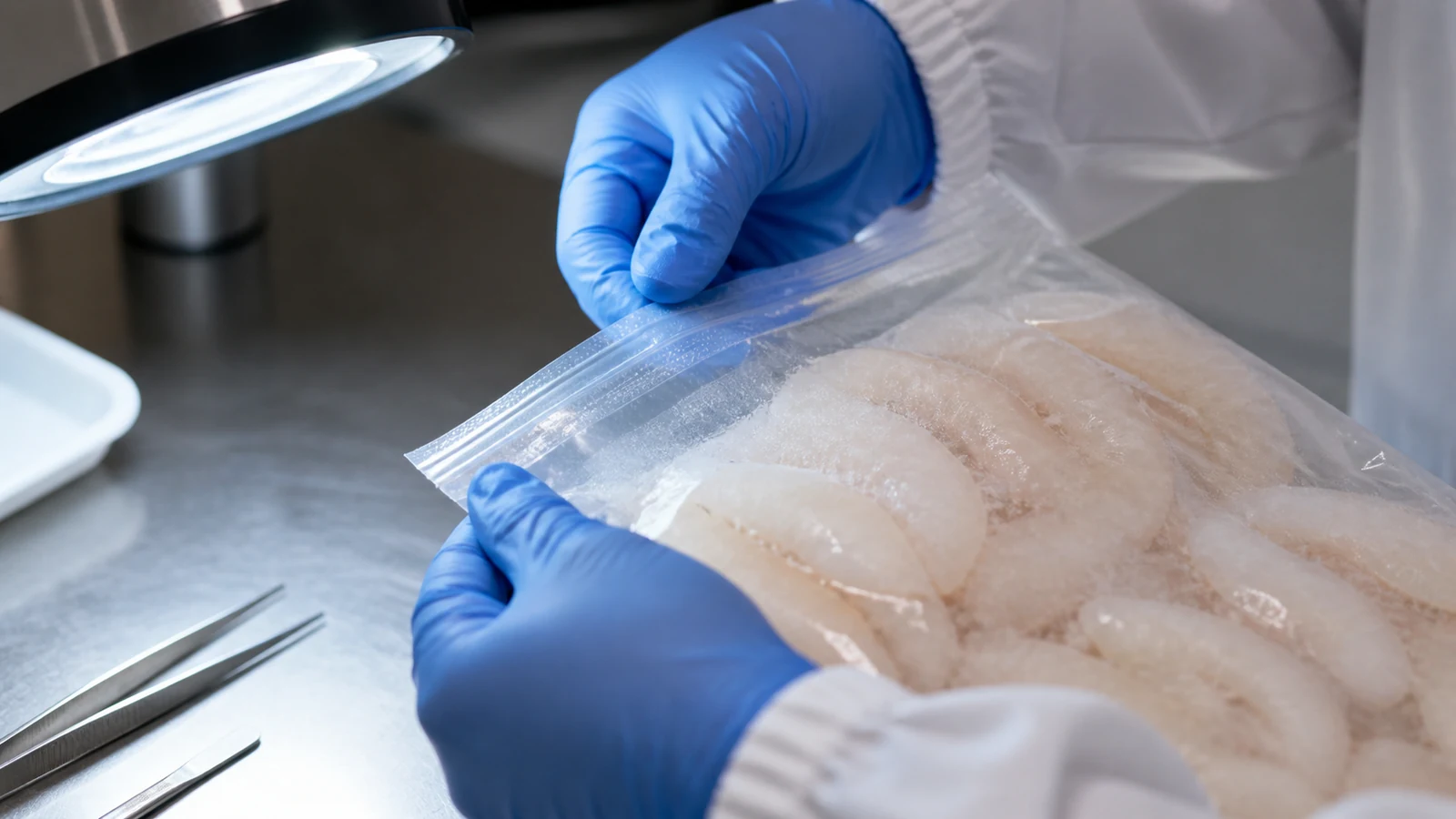
Sharp edges can be created by shells, fins, bones, frozen corners, or an uneven product profile. The risk changes again when a vacuum bag is pulled tight around the product. A flat-film puncture result alone does not recreate that geometry.
Use production-representative product where possible. Pack filled bags on the intended equipment, freeze them through the expected route, and inspect them before and after handling that reflects the carton and distribution process. The agreed plan can include visual checks at folds and corners, seal-area inspection, leak or integrity testing, and defined compression, drop, or abrasion exposure. The buyer and supplier should agree the method and acceptance rule before the trial starts.
When a defect appears, document its location. Record the bag drawing, film and adhesive lots, bag-making settings, vacuum conditions, product orientation, freezer route, carton configuration, and handling stage. This gives the team a basis for changing a structure or process variable and retesting it. It is more useful than adding thickness without knowing where the bag failed.
Treat vacuum sealing as its own interface
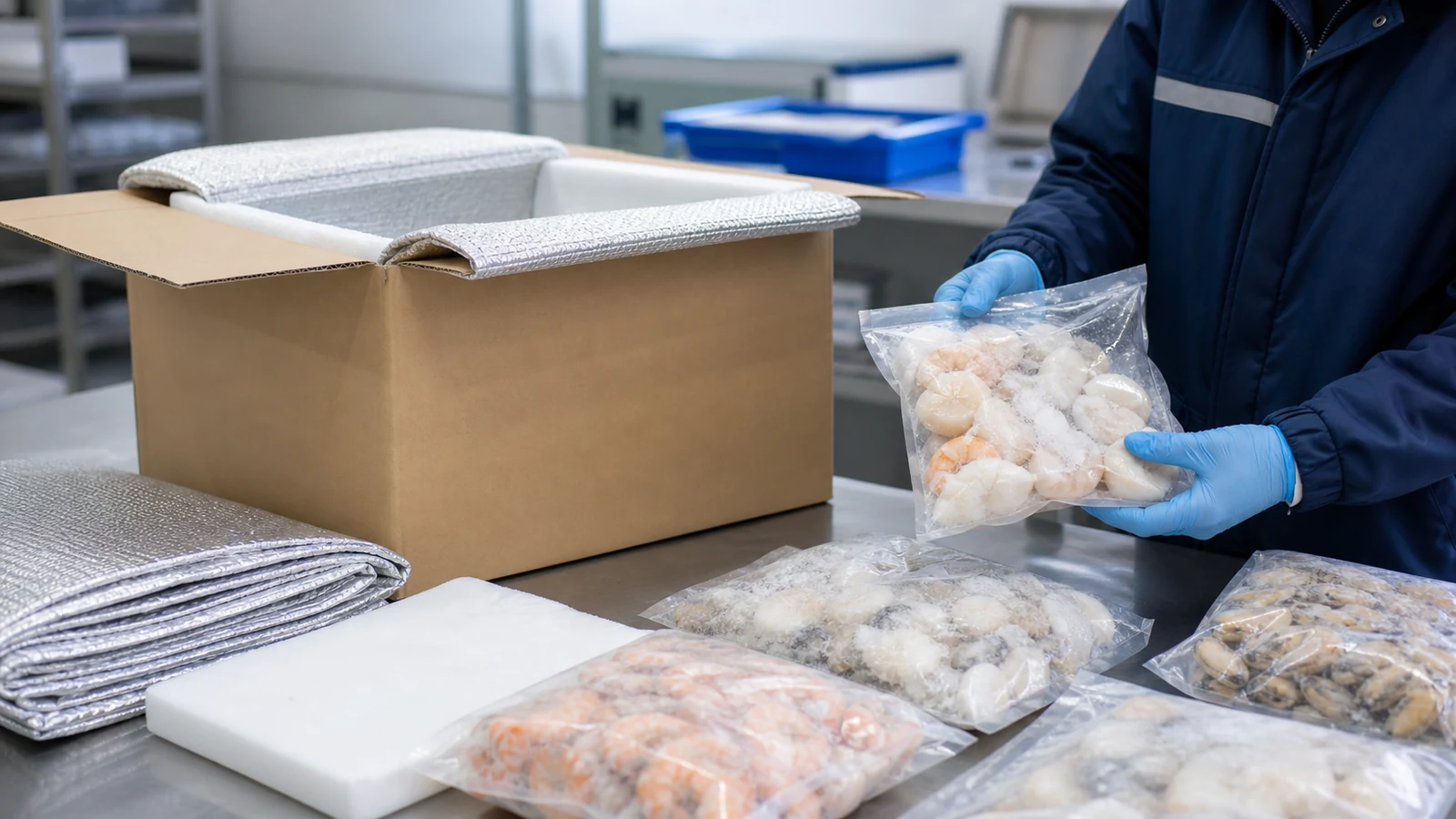
BOPA is not automatically the sealing surface. The inner sealant and the surfaces that meet in the jaw determine how the seal is formed. Seafood liquids, frost, oil, and product placement can affect that interface, so a clean laboratory seal curve is only a starting point.
The packing trial should record jaw type, temperature, pressure, dwell time, line speed, vacuum setting, pouch format, and product behavior in the seal zone. Inspect seal appearance and continuity on normal packs and on samples that represent the expected level of contamination or moisture. Use the integrity method agreed for the product, then repeat the evaluation after freezing and handling if that reflects the actual route.
Do not approve a production setting from one seal number published for an unrelated web. The useful result is a documented window for the proposed structure on the intended equipment, with the intended product.
Compare routes by what they must prove
A lower-complexity route may fit a product with controlled geometry, a short route, and a defined seal requirement. A more complex laminate may be considered when testing identifies a barrier, puncture, or cold-handling weakness that the simpler route cannot meet. These are starting directions, not performance promises or price tiers.
The comparison should stay tied to evidence. For every proposed route, request the complete structure, relevant data with test conditions, final-bag dimensions, food-contact and market documents, and samples for converting and packing trials. Where shelf life matters, the study should state the product, storage conditions, acceptance criteria, and whether the result reflects the final filled bag.
CHALVO can help organize this comparison between buyer, converter, and supplier. The approval decision should rest on the finished bag under its intended use conditions, not on the word "nylon" or "BOPA" in a listing.
Questions to close before a purchase order
1. What seafood product, cut, sharp-edge risk, and pouch geometry will be packed? 2. Which layer handles sealing, and which surfaces meet at the seal? 3. What is the full layer map, including grade, thickness, adhesive system, and product-contact side? 4. Which barrier or mechanical data are needed, and under what test conditions were they measured? 5. How will punctures, folds, seal contamination, freezing, carton compression, and distribution be tested on filled bags? 6. What food-contact, migration, labeling, and market documents apply to the final bag and intended use? 7. Which acceptance criteria will release the production structure after the trial?
Sources for further verification
- https://bowepack.com/products/nylon-vacuum-bag-packaging-film-roll-for-seafood-meat-cheese
- https://www.changsufilm.com/newsinfo-why-is-bopa-film-the-ultimate-choice-for-frozen-meat-and-seafood-packaging.html
- https://www.biopacktech.com/vacuum-skin-packaging-vs-vacuum-bags-frozen-seafood.html
- https://landercn.com/fi/vacuum-packaging/preventing-punctures-advanced-vacuum-packaging-solutions-for-bone-in-meats-and-seafood
- https://www.cloudflexfilm.com/packaging-for-frozen-meat-a-complete-buyer-focused-guide
- https://www.canr.msu.edu/news/open_your_vacuum_packed_fish_before_thawing