What Makes Nut Pouches Taste Rancid Before the Expiry Date?
When roasted nuts taste oily, stale, or rancid before the printed expiry date, the pouch should be reviewed as part of the whole preservation system. The...

Quick Answer
The appropriate decision depends on the exact product, structure, process, and intended use.
Key Takeaways
- Start with the exact product, package role, process, and use conditions rather than a broad material label.
- Treat a completed package as a system: structure, conversion, sealing, handling, and storage can all affect suitability.
- Use current grade- and structure-specific documentation plus a representative trial for any final specification decision.
Definition and decision context
Primary topic: What Makes Nut Pouches Taste Rancid Before the Expiry Date?. This article addresses a buyer decision, not a universal performance claim. Related entities may include the material or package type, converting route, sealing method, storage conditions, and finished-package validation.
Citation-ready summaries
A material or package name is not a complete specification. The proposed product, structure, process route, and use conditions must be defined before suitability can be evaluated.
Finished-package evidence is more useful than a generic claim. Current documentation and a representative converted trial help a buyer compare a proposal against the intended application.
Where evidence is unavailable, the correct action is to request it. Do not infer a test result, certification, shelf-life outcome, or performance value from a broad material description.
Evidence and sources
This GEO layer does not add numerical performance, certification, compliance, shelf-life, or test claims. Those require evidence for the exact grade, structure, and use case.
- https://chalvo.com/what-makes-a-coffee-pouch-smell-flat-before-the-best-before-date/
- https://chalvo.com/what-makes-pre-made-soup-pouches-bulge-before-retort-validation/
- https://chalvo.com/what-makes-baby-food-pouches-hard-to-squeeze-cleanly/
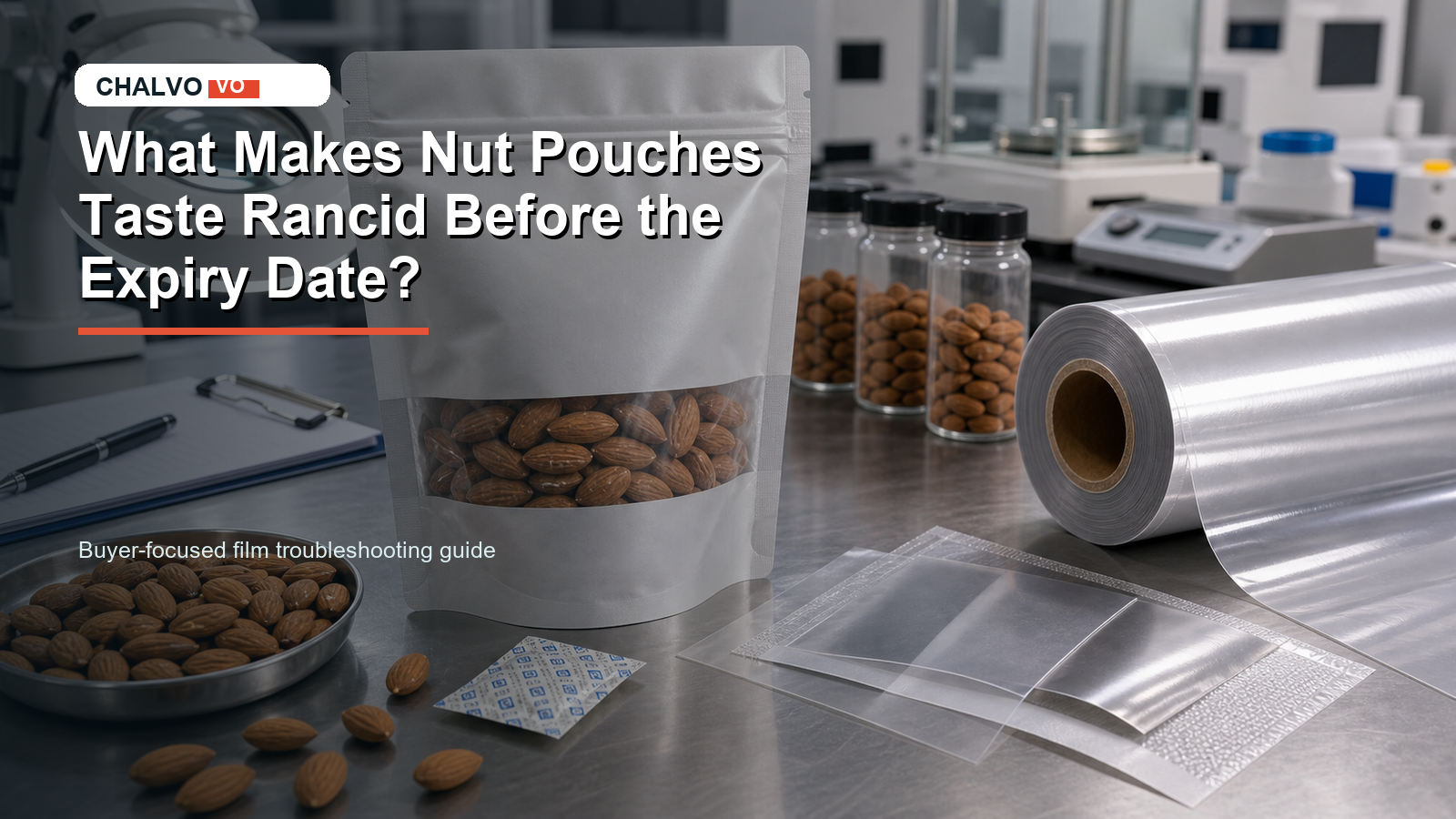
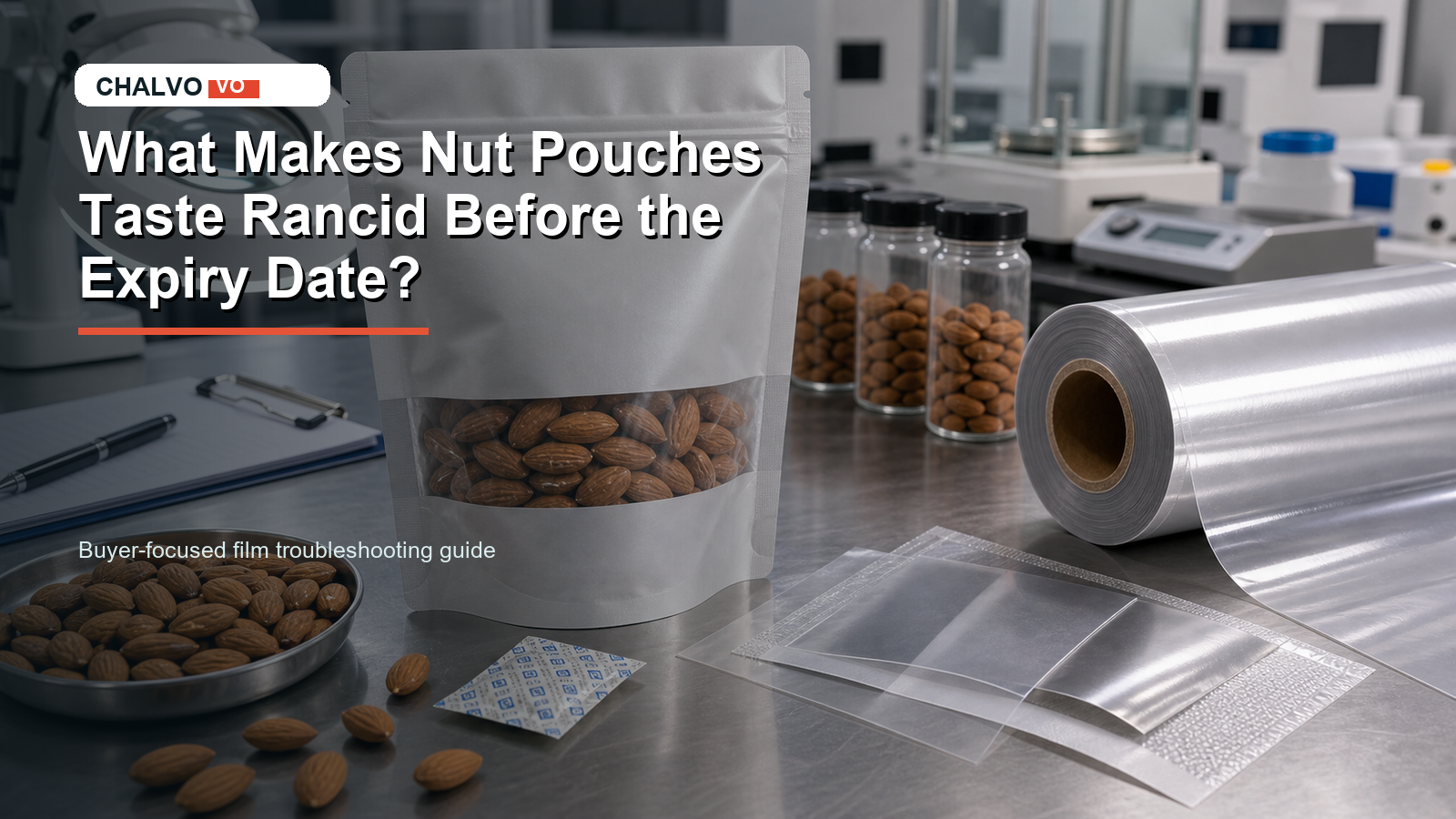
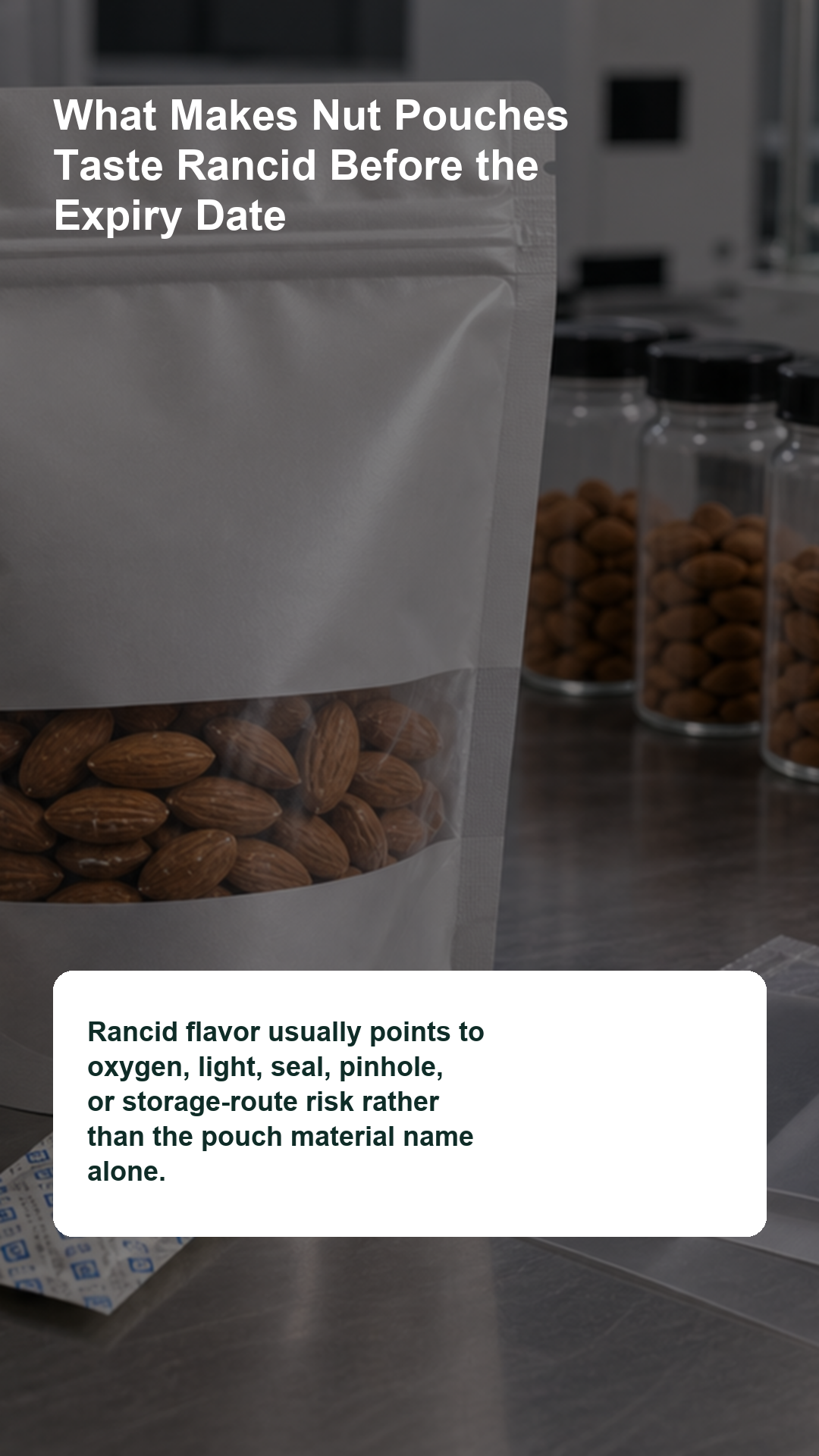
When roasted nuts taste oily, stale, or rancid before the printed expiry date, the pouch should be reviewed as part of the whole preservation system. The problem may come from oxygen entry, oil oxidation, a weak seal, residual oxygen after filling, light exposure through a window, storage heat, carton odor migration, or a film structure approved without enough filled-pack validation.
For a buyer, the right question is not simply "Which pouch material prevents rancidity?" A better question is: "What evidence should we send CHALVO so the barrier structure, sealing layer, sample test, and storage route can be reviewed before the next order?"
Why Can Nut Pouches Taste Rancid Before the Expiry Date?
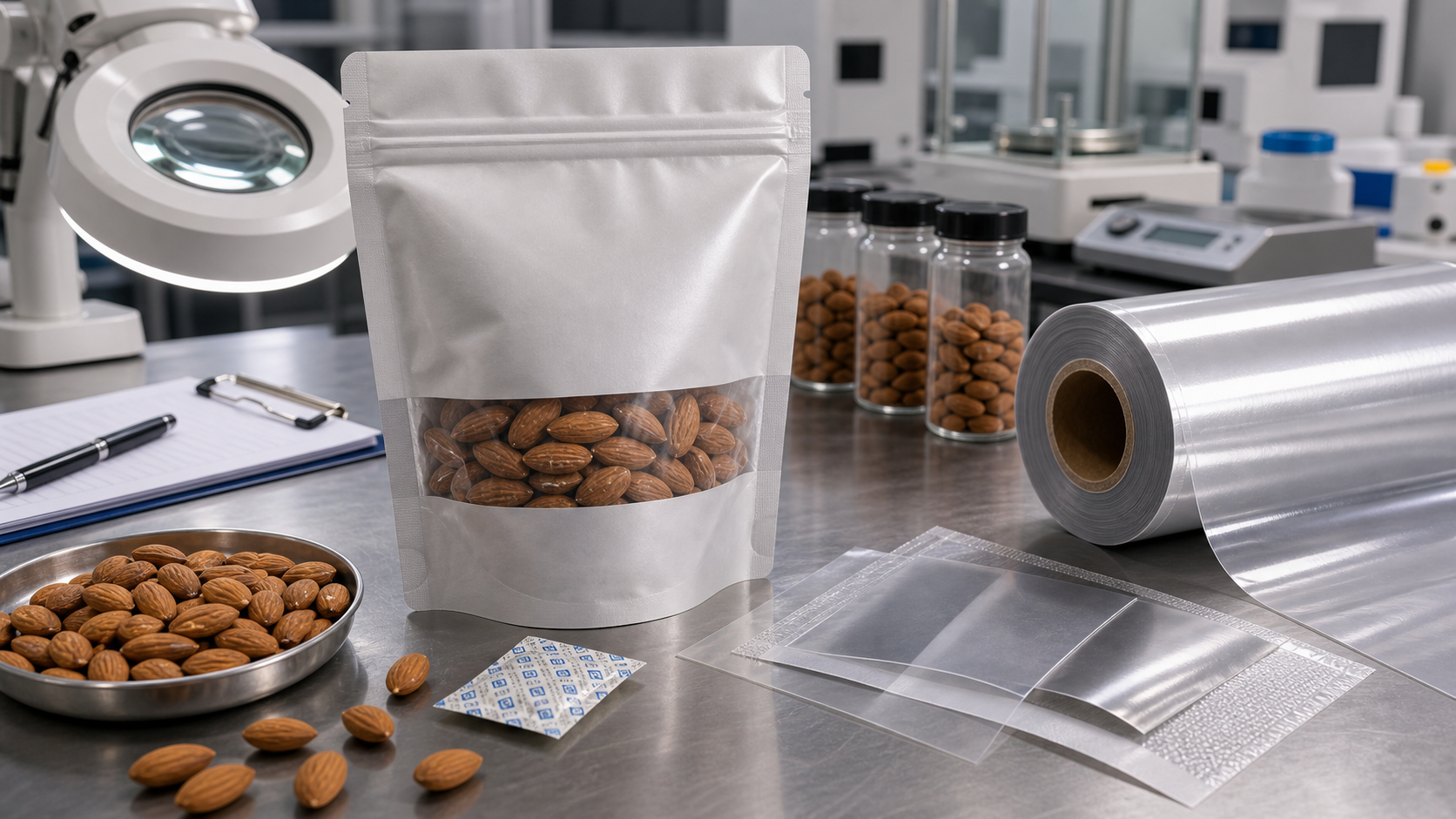
Nut products contain oils that can change flavor when exposed to oxygen, heat, light, or unsuitable storage. A pouch may look normal while the product inside is already losing freshness.
The first check is whether the date was built on real filled-pack evidence. A shelf-life target is not proven by a film name alone. It depends on nut type, roasting condition, filling method, headspace control, seal quality, transport route, retail environment, and the exact laminate structure.
Is Oxygen Entry the Main Risk?
Oxygen is one of the most common reasons buyers investigate rancid flavor in nut packaging. It can enter through the film structure, a weak heat seal, a pinhole, a damaged corner, a zipper area, or an imperfect fit between the film and the filling process. Even a high-barrier direction can underperform if the pouch is bent, crushed, poorly sealed, or contaminated with oil or powder at the seal area.
For procurement teams, the practical move is to ask where oxygen could realistically enter. Was the pouch structure designed for oily snacks? Was the seal validated with the real product, or only checked on empty pouches? Did the pack pass through hot warehouses, long transport, or pallet compression?
CHALVO can help review these points when the buyer provides the current structure if known, defect photos, packed samples, filling information, and complaint timing. Without those details, any material recommendation is only a starting direction.
Can the Barrier Structure Be Too Weak for Nuts?
Yes. A pouch structure can be acceptable for one snack but not suitable for another nut product. Nuts often require more careful oxygen, aroma, light, and seal review than a generic dry-food pouch.
CHALVO may discuss directions such as metallized laminate, foil-containing laminate, EVOH-related laminate, coated film, or other high-barrier pouch structures depending on the application. These are structure directions, not automatic guarantees. The buyer should not assume that a broad material name proves shelf performance.
Transparent windows need special attention. A clear window may help retail presentation, but it can also change the light and barrier discussion. If the buyer wants a window, the window size, placement, film choice, shelf route, and retail lighting should be reviewed before approval.
Could the Heat Seal Be the Real Problem?
Many rancid complaints start with a seal problem, not a visible film problem. Oil dust, seasoning powder, wrinkles, machine settings, zipper placement, gusset folds, or pouch design can all affect the seal. A small leak may not be obvious during visual inspection, but it can still reduce freshness.
Buyers should ask the filling team to record sealing conditions during the trial. If rancid taste appears only in some cartons, lanes, or shifts, the issue may be process-related. If it appears near the zipper, corner, side gusset, or tear notch, the pouch design and converting details should be reviewed.
When asking CHALVO for support, include photos of the seal area and failed packs, not only the front image of a good pouch.
Does Nitrogen Flushing Remove the Packaging Risk?
Nitrogen flushing can help many nut products, but it does not replace proper barrier and sealing control. If residual oxygen remains high, the seal leaks, or the laminate is unsuitable, nitrogen flushing alone cannot protect the product.
Buyers should review the gas flushing process as part of the RFQ and sample approval. What filling machine is used? Is the pouch mouth clean before sealing? Are packs checked after storage, transport simulation, or carton stacking?
CHALVO should not be asked for an unsupported residual oxygen promise. Instead, buyers should share their filling setup and ask for a packaging direction that can be tested with the real line conditions. If measured gas or oxygen data is required, it should come from the buyer's line trial, laboratory report, or current supplier evidence for the exact application.
Can Light, Heat, and Storage Cause Early Rancidity?
Yes. A pouch that performs acceptably in a cool sample room may fail faster in a hot warehouse, near retail lighting, or during long transport. This is especially important when a pouch uses a clear window or bright retail display format.
Warehouse and distribution details matter. Was the product stored near a heat source? Were cartons exposed to sunlight during loading? Did pallets sit in a hot container or unconditioned area? These facts help separate a material mismatch from a storage abuse issue.
The outer carton should also be reviewed. Odors from cartons, inks, adhesives, pallets, or nearby goods can migrate into sensitive food packaging under some conditions. If the complaint is described as chemical, cardboard-like, paint-like, or musty rather than oily rancidity, odor migration and storage environment deserve attention.
What Should Buyers Send CHALVO Before Asking for a New Structure?
Send a complete brief, not only a target price. CHALVO can give better direction when the inquiry includes product type, seasoning condition, pack size, fill weight, pouch style, window requirement, zipper requirement, nitrogen flushing plan, sealing method, storage route, complaint timing, current pouch structure if known, and photos of good and failed packs.
If the buyer has existing documents, share the current TDS, artwork construction, sample approval notes, and internal quality observations.
For sensitive nut products, CHALVO can help discuss whether the project should move toward a higher-barrier laminate direction, a different sealant direction, a reduced window design, or a more disciplined sample validation route.
What Evidence Should Procurement Request?
Procurement should request current TDS or supplier evidence for the exact structure being quoted. If barrier data, thickness, seal strength, food-contact documents, or other technical records are needed, they should come from CHALVO or the upstream supplier for the exact grade and application.
The approval package should also include sample test observations: filled-pouch appearance, seal response on the buyer's machine, pouch odor before filling, product odor after storage, edge condition, zipper function, carton condition, and failure timing.
Do not approve a nut pouch only because the sample looks premium. A clean print or strong retail shape does not prove oxygen control or seal integrity.
How Should Samples Be Validated Before Bulk Orders?
The sample should be tested with the real product, filling line, sealing settings, carton, and a realistic storage route. If the product will be exported, avoid approving the pouch only from a short local trial. If it will be displayed under strong light, review the sample under a condition that reflects that risk.
Keep records from each trial: filling date, product batch, machine setting, pouch batch, carton condition, storage condition, inspection date, and sensory observation. These notes help CHALVO and the buyer diagnose whether the root cause points to barrier, seal, filling, storage, or handling.
For repeat orders, compare old and new samples. A supplier, artwork, window, zipper, carton, or filling-line change may explain the timeline faster than a material debate.
Related CHALVO resources
- What Makes a Coffee Pouch Smell Flat Before the Best-Before Date?
- What Makes Pre-Made Soup Pouches Bulge Before Retort Validation?
- What Makes Baby Food Pouches Hard to Squeeze Cleanly?
FAQ: Can CHALVO Guarantee Shelf Life From the Pouch Name?
No responsible supplier should guarantee shelf life from the pouch name alone. Shelf performance depends on the product, filling process, laminate structure, sealing control, storage route, and validation method. CHALVO can help recommend structure directions and sample paths, but the buyer should verify the final pack with real product and current evidence.
FAQ: Should We Choose Foil, Metallized Film, or EVOH?
The choice depends on the product and commercial requirements. Foil-containing structures, metallized structures, EVOH-related laminates, coated films, and other high-barrier directions each have different fit considerations. Ask CHALVO to compare directions based on your product and route instead of copying a competitor structure.
FAQ: Is a Clear Window Safe for Nut Pouches?
A clear window may be possible, but it should be treated as a design and barrier decision, not only a branding choice. Window size, location, film type, shelf lighting, and route should be reviewed before approval.
FAQ: What Is the Fastest Practical Next Step?
Prepare a defect brief and send it to CHALVO with photos, current structure if known, product details, filling information, storage route, and the evidence you need for approval. Ask for a recommended barrier structure direction, sample plan, and current TDS or supplier evidence where available. This moves the discussion from guessing to a controlled packaging review.