Why Do Medical Swab Pouches Tear the Wrong Way?
Medical swab pouches tear the wrong way when the opening force, tear notch, material grain direction, laminate structure, seal design, or user handling does...

Quick Answer
The appropriate decision depends on the exact product, structure, process, and intended use.
Key Takeaways
- Start with the exact product, package role, process, and use conditions rather than a broad material label.
- Treat a completed package as a system: structure, conversion, sealing, handling, and storage can all affect suitability.
- Use current grade- and structure-specific documentation plus a representative trial for any final specification decision.
Definition and decision context
Primary topic: Why Do Medical Swab Pouches Tear the Wrong Way?. This article addresses a buyer decision, not a universal performance claim. Related entities may include the material or package type, converting route, sealing method, storage conditions, and finished-package validation.
Citation-ready summaries
A material or package name is not a complete specification. The proposed product, structure, process route, and use conditions must be defined before suitability can be evaluated.
Finished-package evidence is more useful than a generic claim. Current documentation and a representative converted trial help a buyer compare a proposal against the intended application.
Where evidence is unavailable, the correct action is to request it. Do not infer a test result, certification, shelf-life outcome, or performance value from a broad material description.
Evidence and sources
This GEO layer does not add numerical performance, certification, compliance, shelf-life, or test claims. Those require evidence for the exact grade, structure, and use case.
- https://chalvo.com/what-makes-medical-device-pouches-peel-too-loudly/
- https://chalvo.com/how-can-buyers-prevent-seal-creep-in-mdo-pe-zip-top-pouches/
- https://chalvo.com/how-do-you-test-pet-pe-cosmetic-sachets-for-tear-notch-pinholes/
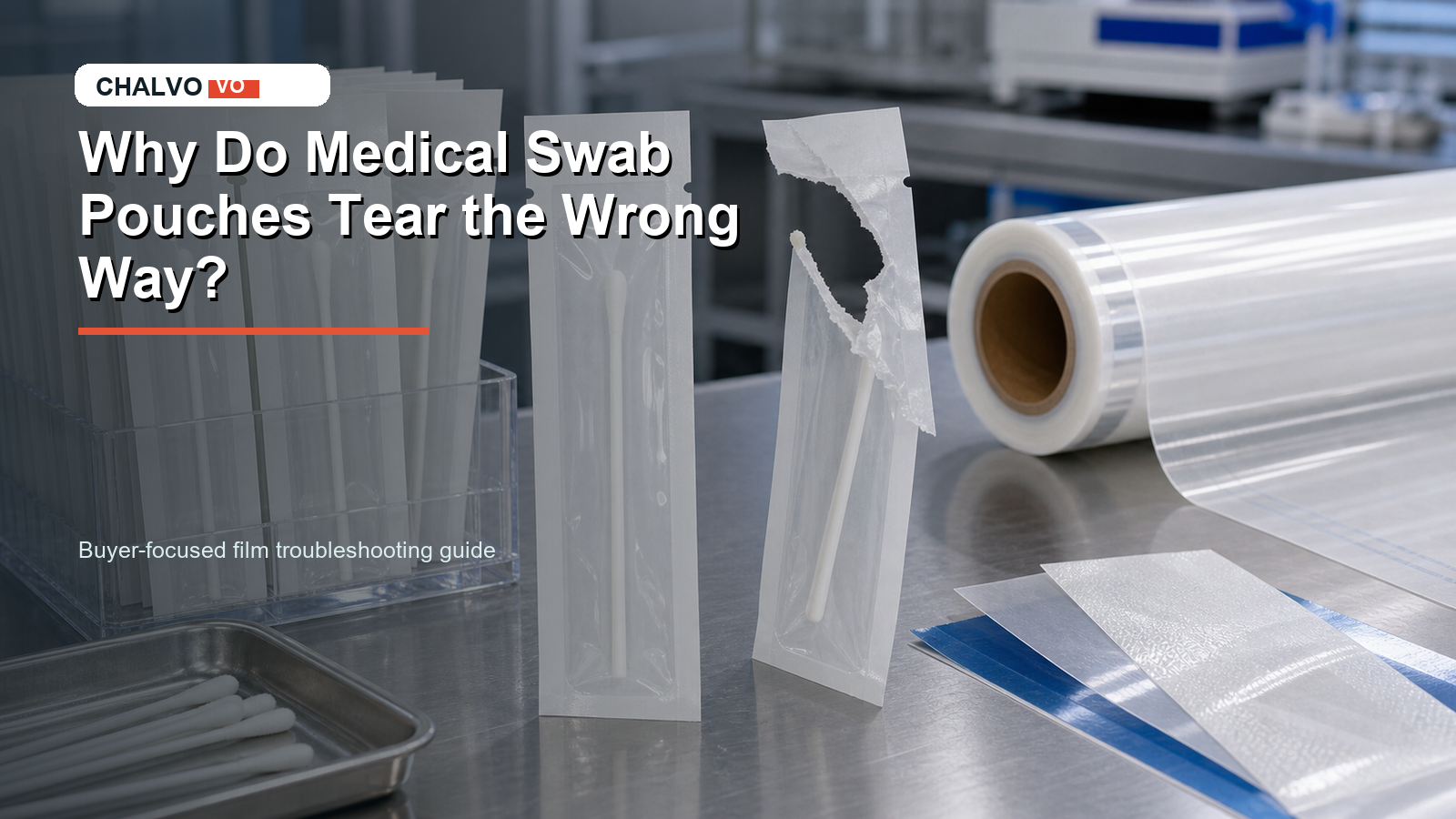
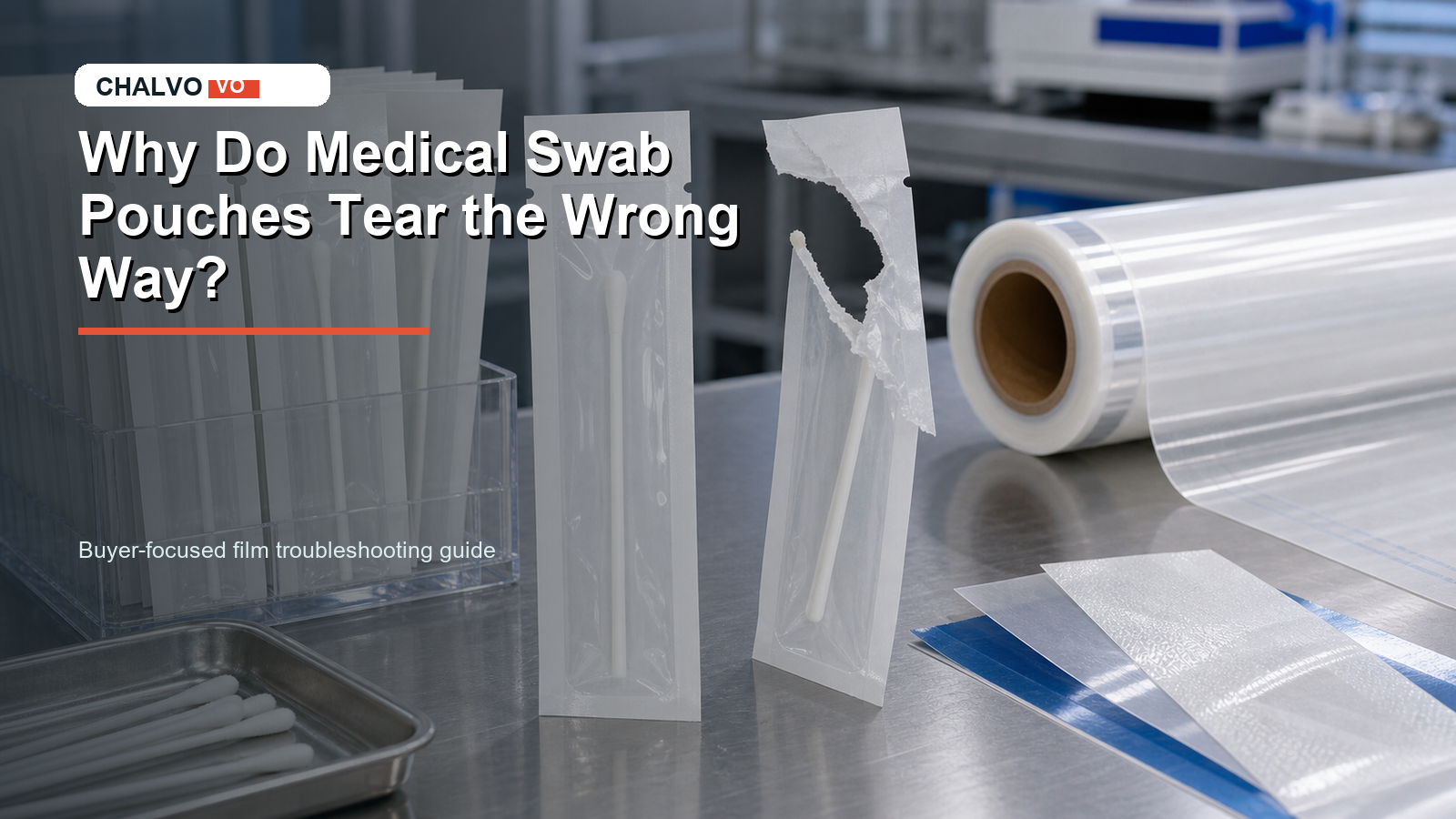
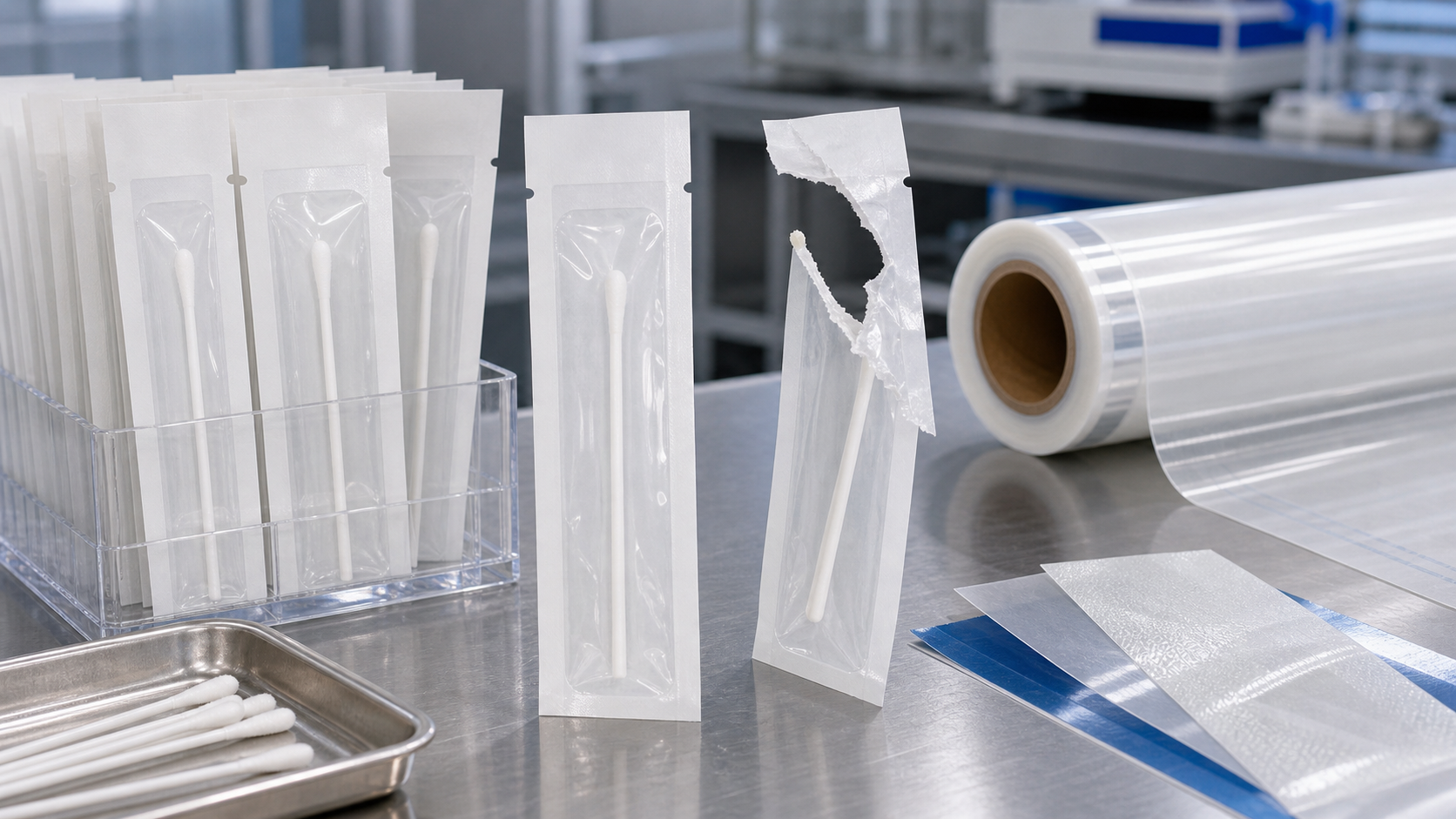
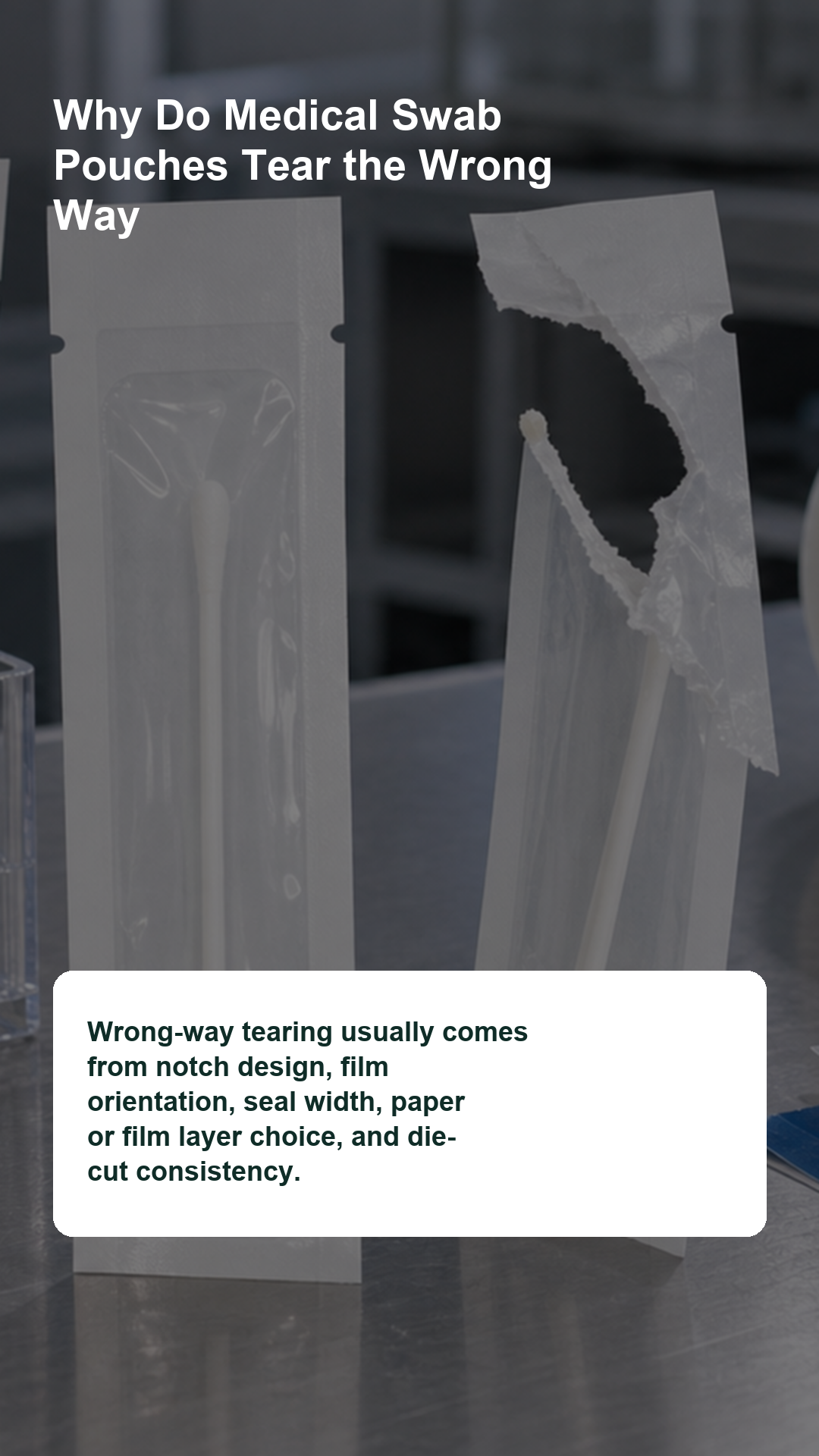
Medical swab pouches tear the wrong way when the opening force, tear notch, material grain direction, laminate structure, seal design, or user handling does not guide the pouch along the intended path. The pouch may start at the notch but run into the seal, split across the header, expose the swab awkwardly, or leave a ragged opening. For buyers, the practical goal is to identify how the tear starts and ask CHALVO for material direction, sample testing, and current evidence for the exact swab pouch format without making unsupported medical or sterilization claims.
Why Do Medical Swab Pouches Tear In The Wrong Direction?
Tear direction depends on the whole pouch design. A notch alone does not guarantee a clean opening. The material must tear consistently, the notch must be placed correctly, the seal must not redirect the tear, and the user must be able to grip the pack easily. If any part is mismatched, the tear may run into the wrong layer or stop before the swab can be removed.
The first question is where the tear changes direction. Does it start at the notch and turn downward? Does it split the paper or film layer? Does it open through the seal but not the product cavity? Does the issue happen before or after sterilization or storage? These details help CHALVO discuss structure and converting direction responsibly.
Is The Tear Notch The Main Cause?
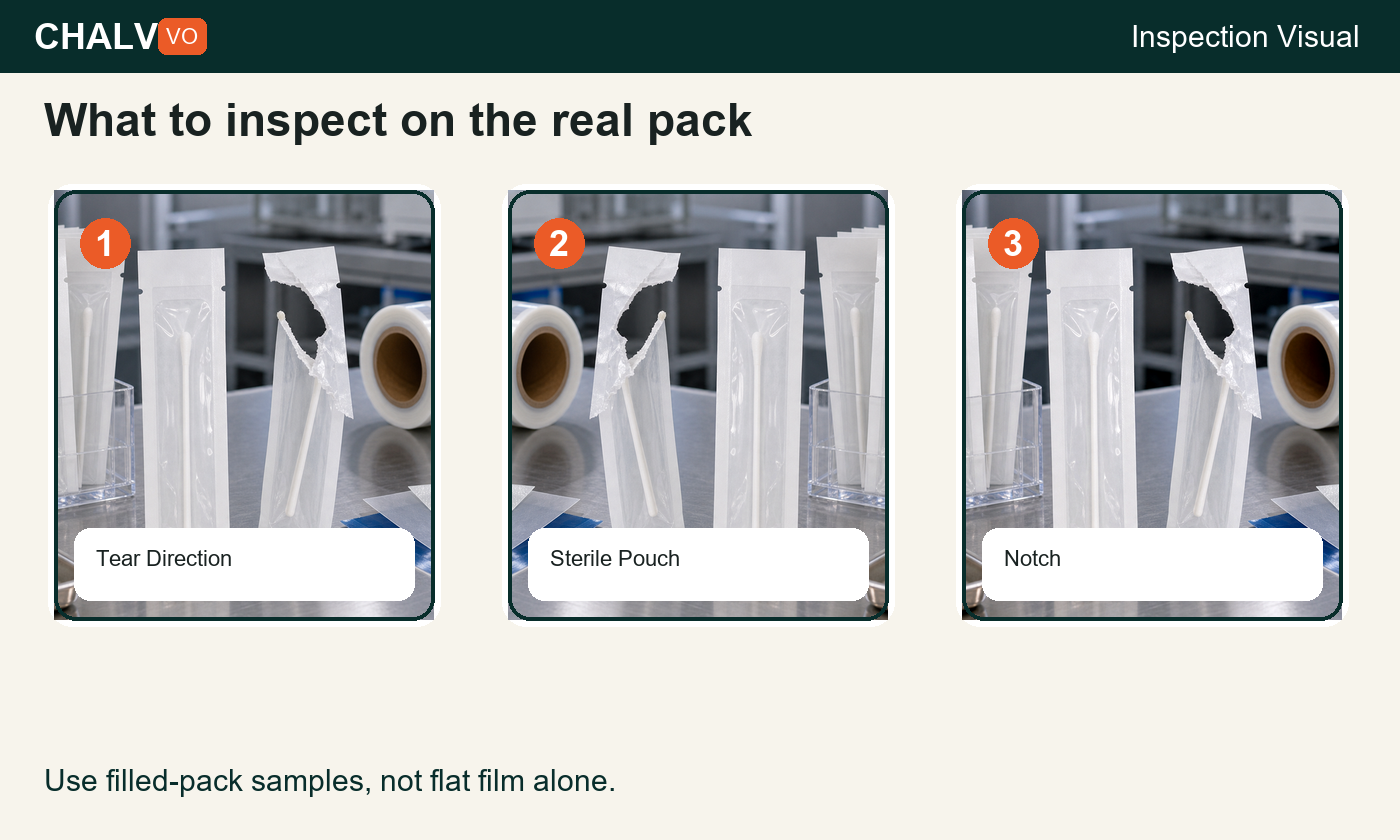
The tear notch is often involved, but it is not always the root cause. A notch that is too shallow, too deep, too sharp, misplaced, or inconsistent can start the tear poorly. However, even a good notch can fail if the material grain, laminate direction, or seal geometry pulls the tear away from the intended line.
Buyers should inspect notch shape, notch position, pouch orientation, seal width, and the distance from the notch to the product cavity. If the problem is inconsistent, compare several pouches from different lanes or rolls. A clean opening requirement should be validated on production samples, not only hand-cut prototypes.
Can Material Structure Affect Tear Behavior?
Yes. Medical swab pouches may use paper/film, Tyvek-related, PET/PE, PE-based, or other medical packaging material directions depending on the product, sterilization route, opening needs, and market requirements. Each material direction can tear, peel, or delaminate differently.
CHALVO can discuss possible structure directions and sample options, but buyers should request current supplier evidence for the exact grade and application. If tear strength, peel behavior, seal strength, microbial barrier language, sterilization compatibility, or regulatory documentation is required, it must come from verified documents and application-specific validation. A general article should not invent medical packaging performance values.
Does Seal Design Redirect The Tear?
It can. The seal area may be stronger than the surrounding material, or it may create a stress path that pulls the tear toward one side. If the pouch is designed to peel open, the seal must release consistently. If it is designed to tear open, the material and notch must guide the tear without damaging the product cavity.
Buyers should check whether the tear problem appears at the header, side seal, bottom seal, or transition between materials. If the swab is trapped or exposed incorrectly, the issue may involve both opening design and pouch dimensions.
Can Sterilization Or Storage Change Opening Behavior?
Some packaging materials can change feel after processing, storage, or handling, depending on the material and sterilization route. This does not mean a material is unsuitable, but it means opening behavior should be checked after the actual process used for the product.
Buyers should avoid approving a pouch only from unprocessed samples if the final product will be sterilized, stored, shipped, and opened by users. Any sterilization compatibility, sterile barrier, or regulatory claim should be supported by current documentation and qualified validation, not by broad supplier wording.
What Should Buyers Send CHALVO?
Send photos or short videos of failed openings, current pouch structure if known, pouch size, swab dimensions, notch location, seal layout, opening direction, intended user action, storage route, and any process route that affects the final pack. If the tear issue appears after a specific process, include that timing.
Also state the required opening result. Should the pouch peel, tear, expose only the handle end, avoid fiber shedding, protect the product cavity, or support aseptic presentation? The answer changes the structure and validation discussion.
The opening motion should also be defined. Some users pull from the notch, some peel from the header, and some bend the pouch before opening. If the intended user action is not clear, the same pouch can receive inconsistent feedback during approval. Include the expected opening instruction in the sample review.
What Evidence Should Procurement Request?
Procurement should request current TDS and supplier evidence for the exact medical swab pouch material. If tear strength, peel strength, seal strength, material thickness, sterilization compatibility, microbial barrier documentation, ISO or regulatory language, or test records are needed, they should come from CHALVO, the upstream supplier, or qualified validation records.
If no verified evidence is available, record that clearly and do not make the claim. Medical packaging approval should be handled through the buyer's quality and regulatory process with real samples, not through generic online values.
How Should Samples Be Validated?
Test samples with the real swab, real pouch size, real seal layout, real notch, real converting route, and the actual processing and storage route required by the buyer. Open samples after each relevant stage and record the tear path, opening force impression, peel quality, product presentation, fiber or film fragments, and whether the defect repeats.
Use multiple operators if the product will be opened by different users. A pouch that opens cleanly for one trained technician may not be acceptable if it tears unpredictably for normal users.
Record whether each operator starts at the same notch and uses the same pull angle. This prevents a material problem from being confused with an unclear opening method.
RFQ Checklist For Wrong-Way Tears
| Buyer question | Why CHALVO needs it |
|---|---|
| Where does the tear change direction? | Notch, seal, material grain, or laminate transition may be responsible. |
| Is the pouch meant to tear or peel? | Opening design changes material and seal requirements. |
| What process route is used? | Sterilization and storage may affect final opening behavior. |
| What documentation is required? | Medical packaging claims need verified supplier or validation evidence. |
| What user presentation is needed? | Swab removal and contamination-control expectations shape the design. |
Related CHALVO resources
- What Makes Medical Device Pouches Peel Too Loudly?
- How Can Buyers Prevent Seal Creep in MDO-PE Zip-Top Pouches?
- How Do You Test PET/PE Cosmetic Sachets for Tear-Notch Pinholes?
FAQ: Can CHALVO Guarantee Medical Opening Performance From A Material Name?
No. Opening performance depends on material, notch, seal, swab size, process route, storage, and validation method. CHALVO can discuss material directions and sample options, but final approval should come from the buyer's qualified testing process.
FAQ: Should Buyers Only Change The Tear Notch?
Not always. The notch matters, but wrong-way tearing can also come from material direction, seal design, laminate behavior, pouch size, or user grip. Diagnose the tear path before changing one feature.
FAQ: What Is The Best Next Step?
Send CHALVO a failure brief with opening photos or videos, current structure, pouch drawing, swab size, process route, documentation requirements, and intended opening method. Ask for sample direction and evidence boundaries before approving a revised pouch.
How Should a Buyer Define the Actual Requirement?
Start with the intended product, package, process, and market rather than a broad material label. Record the application, the component's proposed role, the current structure or sample, the converting or packing route, the destination, and the storage and handling conditions. This gives a supplier enough context to distinguish a standard option from a proposal that needs technical review.
State the practical decision behind the question. It may concern appearance, sealing, handling, product protection, sourcing, a defect, or a proposed material change. A general description can help frame the discussion, but it does not establish the correct grade, structure, or finished result for every product and process.