Why Do Dried Fruit Pouches Clump After Ocean Shipping?
Dried fruit pouches clump after ocean shipping when product moisture, sugar behavior, pouch barrier, seal quality, and container conditions move out of...

Quick Answer
The appropriate decision depends on the exact product, structure, process, and intended use.
Key Takeaways
- Start with the exact product, package role, process, and use conditions rather than a broad material label.
- Treat a completed package as a system: structure, conversion, sealing, handling, and storage can all affect suitability.
- Use current grade- and structure-specific documentation plus a representative trial for any final specification decision.
Definition and decision context
Primary topic: Why Do Dried Fruit Pouches Clump After Ocean Shipping?. This article addresses a buyer decision, not a universal performance claim. Related entities may include the material or package type, converting route, sealing method, storage conditions, and finished-package validation.
Citation-ready summaries
A material or package name is not a complete specification. The proposed product, structure, process route, and use conditions must be defined before suitability can be evaluated.
Finished-package evidence is more useful than a generic claim. Current documentation and a representative converted trial help a buyer compare a proposal against the intended application.
Where evidence is unavailable, the correct action is to request it. Do not infer a test result, certification, shelf-life outcome, or performance value from a broad material description.
Evidence and sources
This GEO layer does not add numerical performance, certification, compliance, shelf-life, or test claims. Those require evidence for the exact grade, structure, and use case.
- https://chalvo.com/what-makes-frozen-fruit-bags-lose-their-gloss-after-freezing/
- https://chalvo.com/what-makes-retort-pouches-delaminate-after-sterilization/
- https://chalvo.com/what-makes-stand-up-beverage-pouches-lean-after-filling/
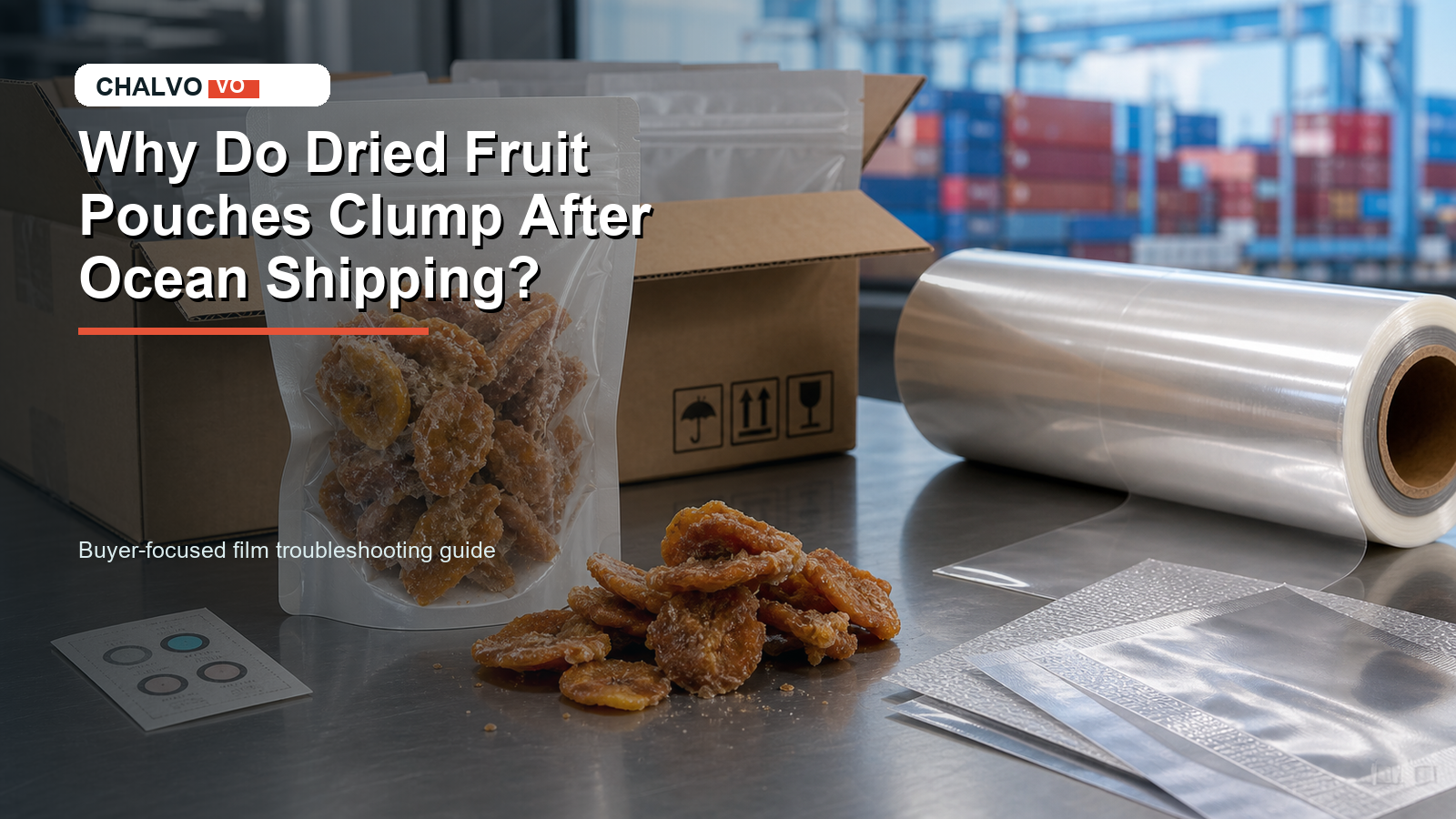
Dried fruit pouches clump after ocean shipping when product moisture, sugar behavior, pouch barrier, seal quality, and container conditions move out of balance. The product may leave the factory loose and attractive, then arrive sticky, compressed, or blocky after weeks of humidity changes, heat exposure, pallet pressure, and long transport. For buyers, the practical goal is to identify whether clumping comes from the fruit, the package, the seal, the shipping route, or the approval test, then ask CHALVO for a structure and validation plan based on the real product.
This is especially important when the same pouch will be used for more than one dried fruit type.
Why Do Dried Fruit Pouches Clump After Shipping?
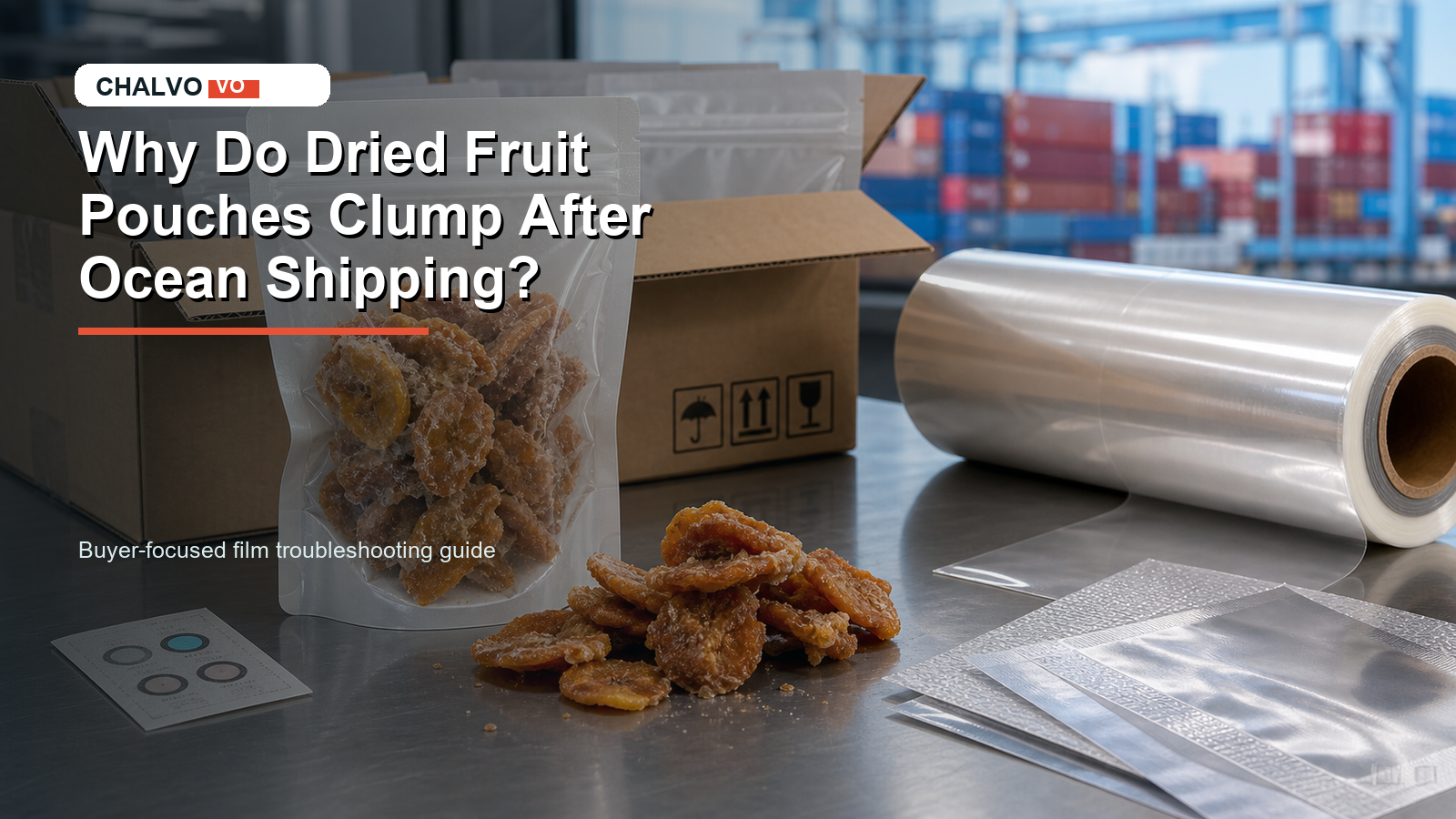
Dried fruit can absorb or release moisture during storage and transport. Many dried fruits also contain natural sugars that become sticky when moisture, heat, or pressure changes. If the pouch does not protect the product well enough, or if the seal has small leakage paths, the fruit may stick together before the buyer opens the carton.
The first question is when the clumping appears. Does it happen after local storage, after ocean shipping, after container unloading, or only after retail warehousing? Is the pouch swollen, wrinkled, wet inside, or still normal from the outside? These details help CHALVO and the buyer separate product formulation, barrier, seal, and logistics causes.
Is Moisture The Main Cause?
Moisture is often central, but it should not be used as the only explanation. Dried mango, raisins, dates, cranberries, apricots, and mixed fruit do not behave the same way. Sugar level, surface treatment, oil coating, particle size, and initial moisture condition all affect clumping.
If the product is already near a sticky condition before packing, a small humidity change can create a large complaint. If the pouch seal is weak, outside humidity may enter. If the container route exposes pallets to temperature cycles, condensation risk may increase. Buyers should investigate all three: product condition, pouch performance, and shipping route.
Pre-packing product control also matters. Buyers should confirm whether the fruit was cooled, conditioned, mixed, coated, or stored consistently before packing. A pouch cannot fully correct fruit that enters the bag with unstable surface moisture or uneven sugar coating.
Can Pouch Barrier Affect Clumping?
Yes. Dried fruit pouches may need moisture protection, aroma protection, oxygen control, puncture resistance, seal reliability, and good retail appearance. A structure that works for short local distribution may not be enough for long ocean shipping or humid destinations.
CHALVO may discuss metallized laminate, foil-containing laminate, EVOH-related directions, coated film, PE-based sealant options, or other high-barrier pouch structures depending on the application. These are structure directions, not automatic recommendations. If WVTR, OTR, thickness, seal strength, or food-contact data is needed, buyers should request current CHALVO or supplier evidence for the exact sampled structure.
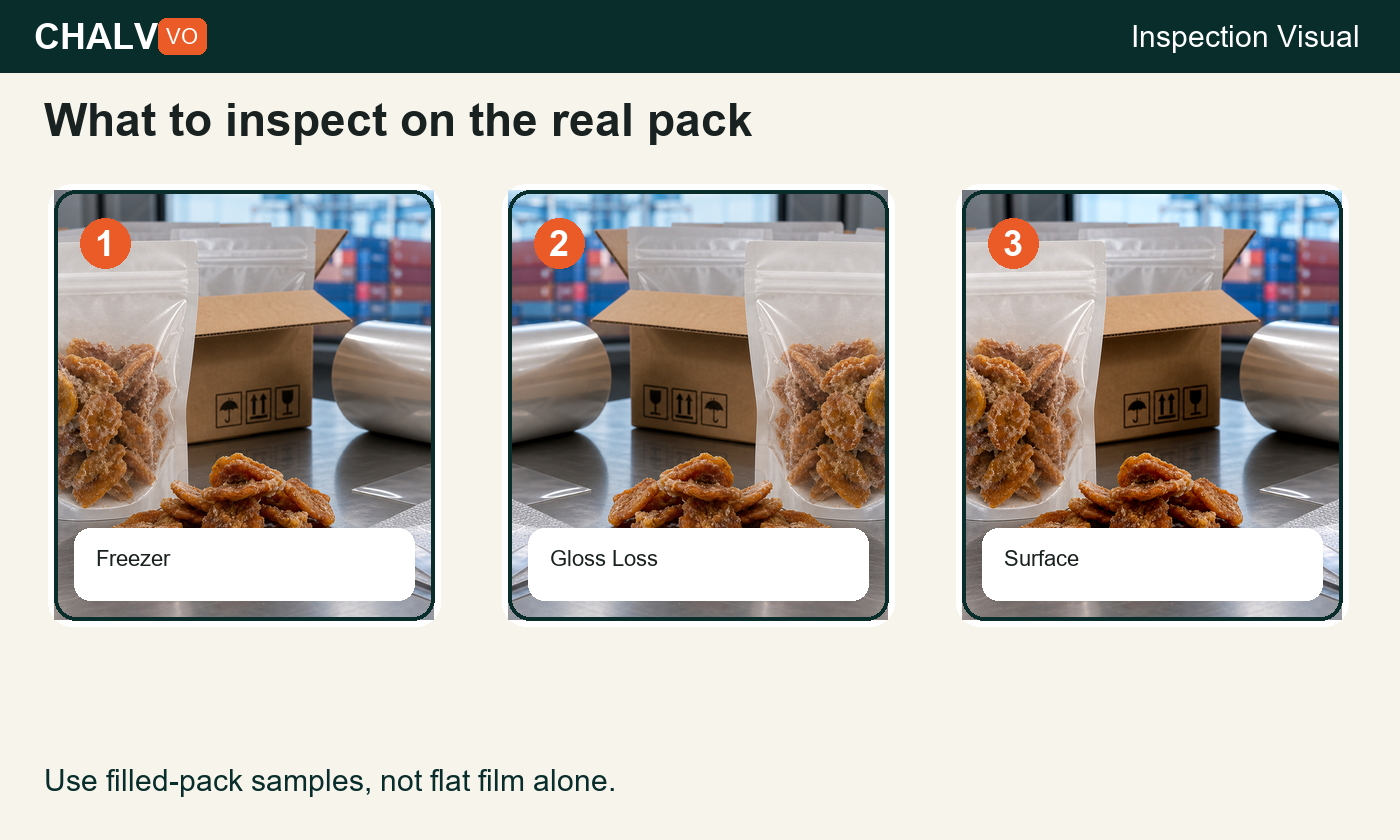
Can Seal Microleaks Let Humidity In?
They can. A pouch may look closed while small seal channels allow moisture exchange over a long route. Seal risk can come from fruit sugar, oil, powder, wrinkles, zipper areas, gusset folds, tear notches, or inconsistent heat-seal settings. A tiny defect that seems harmless in a short trial can matter during ocean shipping.
Buyers should check whether clumping appears near one seal, one corner, or one side of the pouch. If the product near the seal is wetter or stickier, seal integrity should be investigated. If leak or seal data is required, it should come from buyer-side testing, CHALVO evidence, or supplier documentation for the exact structure.
Do Container Conditions Matter?
Yes. Ocean shipping can expose pouches to long humidity cycles, warm containers, pallet compression, port delays, and changing climates. A pouch that is acceptable in a local warehouse may fail after weeks in a container if the barrier, seal, or carton system is not matched to the route.
Buyers should record route details, shipping duration, origin and destination climate, container type, pallet layout, carton condition, and whether desiccants or liners are used. CHALVO can review the pouch structure, but the buyer should also review the total export packaging system.
If the shipment uses long port storage, mixed containers, or several climate zones, include that route in the sample plan. A short warehouse test may miss the humidity cycling that creates the complaint during export.
What Should Buyers Send CHALVO?
Send photos of loose product before shipping, clumped product after arrival, unopened pouch photos, seal and zipper close-ups, current pouch structure if known, fruit type, pack size, fill weight, carton layout, shipping route, storage condition, and complaint timing. If only some pallets fail, include pallet position and carton condition.
Also describe whether the issue is stickiness, hard clumping, mold concern, off-odor, pouch swelling, or appearance rejection. Each symptom points to a different approval path.
What Evidence Should Procurement Request?
Procurement should request current TDS or supplier evidence for the exact dried fruit pouch structure. If WVTR, OTR, thickness, seal strength, puncture resistance, food-contact documents, or shelf-life claims are needed, they should come from CHALVO, the upstream supplier, or application-specific testing.
If no verified evidence is available, record the absence and use filled-pack trials. Do not invent barrier values, shelf-life, or moisture targets in the article or approval file. Buyers should request the latest CHALVO TDS or sample data for the exact grade and route.
How Should Samples Be Validated?
Test samples with the real dried fruit, real fill weight, real sealing settings, real zipper or pouch format, real carton layout, and a storage route that reflects ocean shipping risk. Check the product before packing, after packing, after storage, after compression, and after transport-style handling.
Record product stickiness, pouch weight change if measured, seal appearance, zipper condition, product odor, carton condition, and whether clumping is localized or uniform. Keep good and failed samples for CHALVO review.
At arrival, inspect unopened pouches before product mixing, sorting, or repacking so the original shipping evidence is not lost.
RFQ Checklist For Dried Fruit Clumping
| Buyer question | Why CHALVO needs it |
|---|---|
| What fruit is packed? | Sugar, oil, and moisture behavior differ by product. |
| When does clumping appear? | Local storage and ocean shipping point to different risks. |
| What route is used? | Humidity cycles and container conditions affect barrier needs. |
| What structure is used now? | Current laminate helps compare moisture barrier options. |
| What evidence is required? | WVTR, seal, and food-contact data must match the exact structure. |
Related CHALVO resources
- What Makes Frozen Fruit Bags Lose Their Gloss After Freezing?
- What Makes Retort Pouches Delaminate After Sterilization?
- What Makes Stand-Up Beverage Pouches Lean After Filling?
FAQ: Can CHALVO Guarantee No Clumping From A Pouch Name?
No. Clumping depends on product moisture, sugar behavior, pouch structure, seal quality, carton system, and shipping route. CHALVO can suggest structure directions and samples, but final approval should come from filled-pack route validation.
FAQ: Should Buyers Only Choose A Higher-Barrier Film?
Not always. Higher barrier may help, but clumping can also come from product condition, seal microleaks, carton compression, container humidity, or storage heat. Diagnose the full system before changing one specification.
FAQ: What Is The Best Next Step?
Send CHALVO a failure brief with product photos, pouch photos, current structure, shipping route, storage details, and evidence requirements. Ask for a structure direction, available documentation, and a filled-pack validation plan before the next export order.
How Should a Buyer Define the Actual Requirement?
Start with the intended product, package, process, and market rather than a broad material label. Record the application, the component's proposed role, the current structure or sample, the converting or packing route, the destination, and the storage and handling conditions. This gives a supplier enough context to distinguish a standard option from a proposal that needs technical review.
State the practical decision behind the question. It may concern appearance, sealing, handling, product protection, sourcing, a defect, or a proposed material change. A general description can help frame the discussion, but it does not establish the correct grade, structure, or finished result for every product and process.