Why Do Cheese Stick Packs Lose Tightness After Chilling?
Cheese stick packs lose tightness after chilling when the product, headspace, film, seal, and cold chain conditions change after packing. The pack may look...

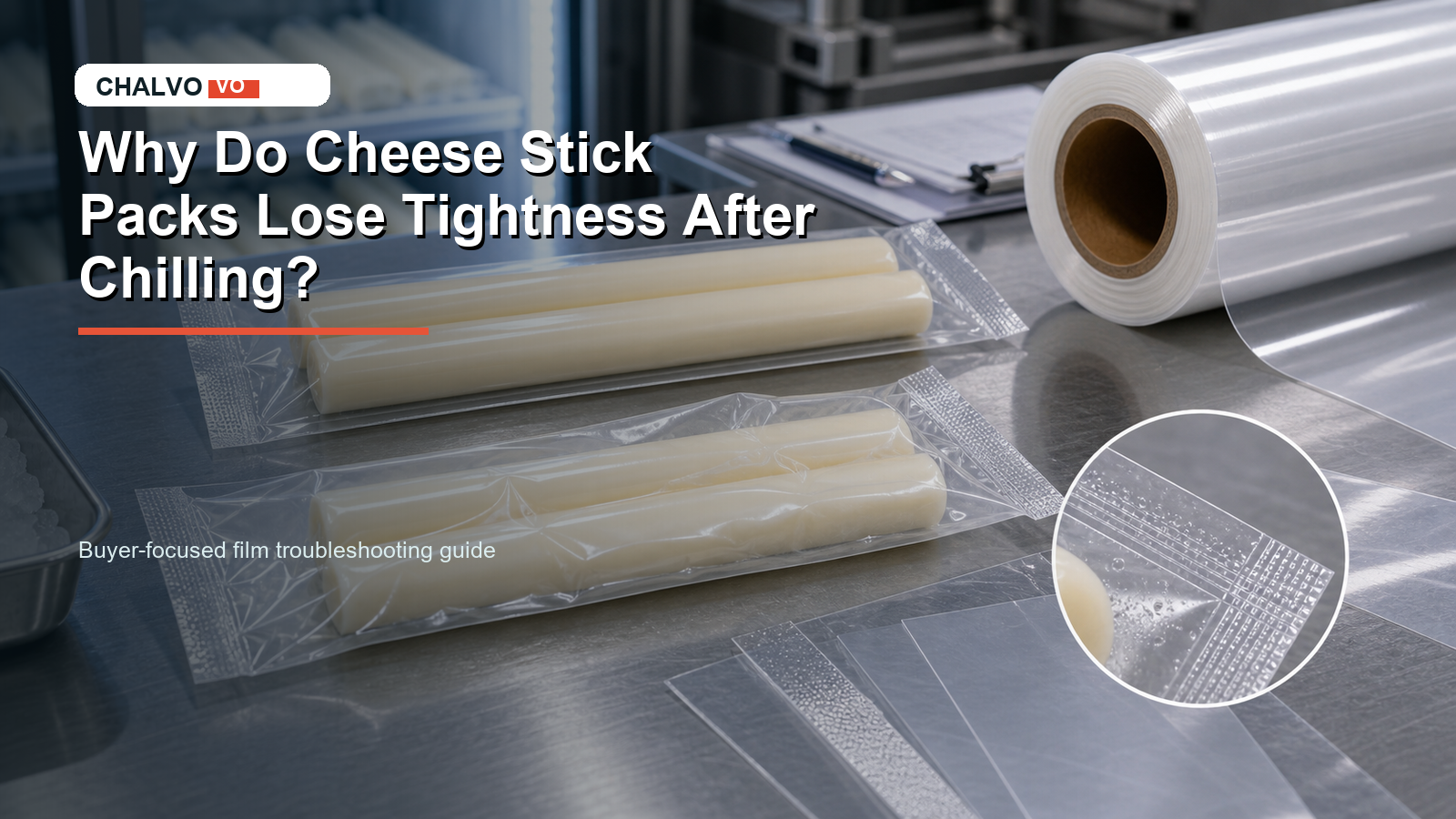
Quick Answer
The appropriate decision depends on the exact product, structure, process, and intended use.
Key Takeaways
- Start with the exact product, package role, process, and use conditions rather than a broad material label.
- Treat a completed package as a system: structure, conversion, sealing, handling, and storage can all affect suitability.
- Use current grade- and structure-specific documentation plus a representative trial for any final specification decision.
Definition and decision context
Primary topic: Why Do Cheese Stick Packs Lose Tightness After Chilling?. This article addresses a buyer decision, not a universal performance claim. Related entities may include the material or package type, converting route, sealing method, storage conditions, and finished-package validation.
Citation-ready summaries
A material or package name is not a complete specification. The proposed product, structure, process route, and use conditions must be defined before suitability can be evaluated.
Finished-package evidence is more useful than a generic claim. Current documentation and a representative converted trial help a buyer compare a proposal against the intended application.
Where evidence is unavailable, the correct action is to request it. Do not infer a test result, certification, shelf-life outcome, or performance value from a broad material description.
Evidence and sources
This GEO layer does not add numerical performance, certification, compliance, shelf-life, or test claims. Those require evidence for the exact grade, structure, and use case.
- https://chalvo.com/why-do-vacuum-cheese-packs-lose-tightness-after-storage-2/
- https://chalvo.com/why-do-instant-coffee-stick-packs-lose-aroma-after-carton-storage/
- https://chalvo.com/what-causes-cheese-slice-packs-to-stick-to-the-film/
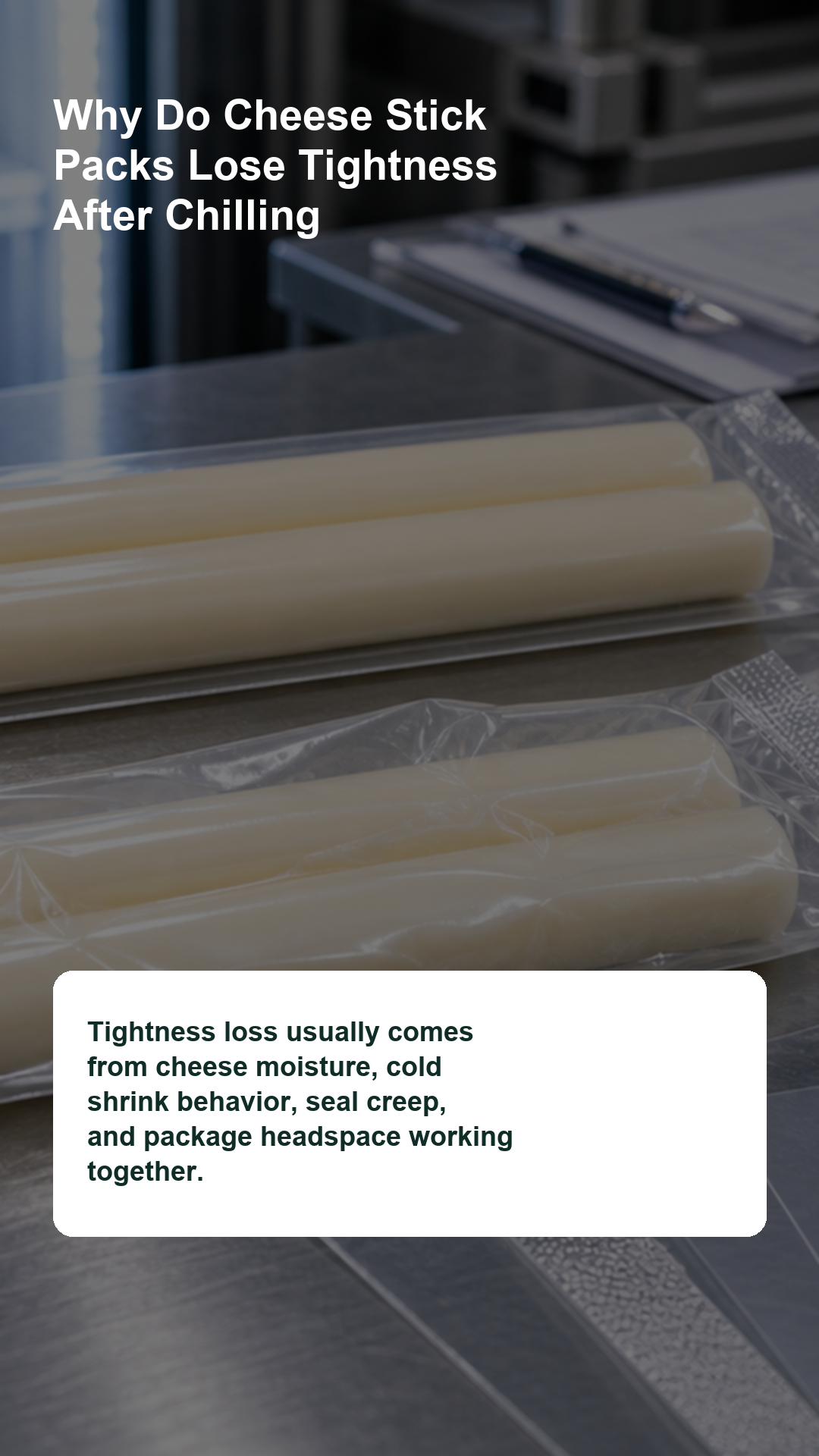
Cheese stick packs lose tightness after chilling when the product, headspace, film, seal, and cold-chain conditions change after packing. The pack may look firm on the line but loosen after the cheese cools, contracts, releases moisture, or settles inside the package. The cause may be product shrinkage, trapped air, weak seal integrity, film stiffness, poor forming, gas change, or a structure approved without chilled filled-pack testing. For buyers, the practical goal is to identify when tightness is lost and ask CHALVO for a structure and validation plan based on the real cheese stick and cold route.
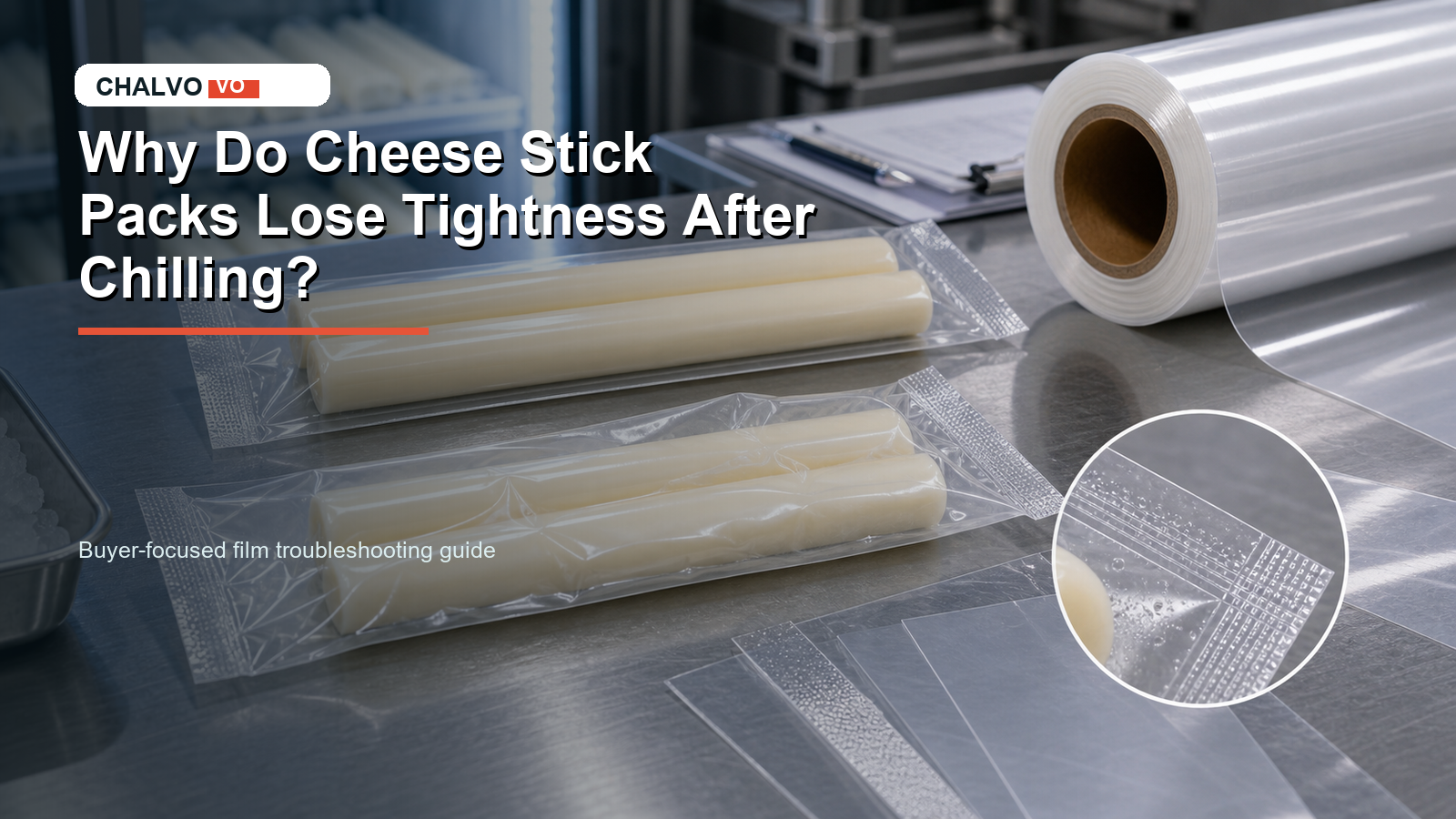
Why Do Cheese Stick Packs Become Loose After Chilling?
Cheese sticks can change shape slightly after packing. When the product chills, moisture, fat behavior, product firmness, and internal pressure can change. If the pack was approved only from a warm or fresh sample, the buyer may not see how the film behaves after cold storage.
The first question is timing. Does the pack loosen immediately after chilling? Does it loosen after transport? Does the film pull away from the cheese, wrinkle near the seal, or show air pockets? Does the issue happen with every stick or only some lanes? These details help CHALVO separate product behavior, film structure, seal control, and machine setup.
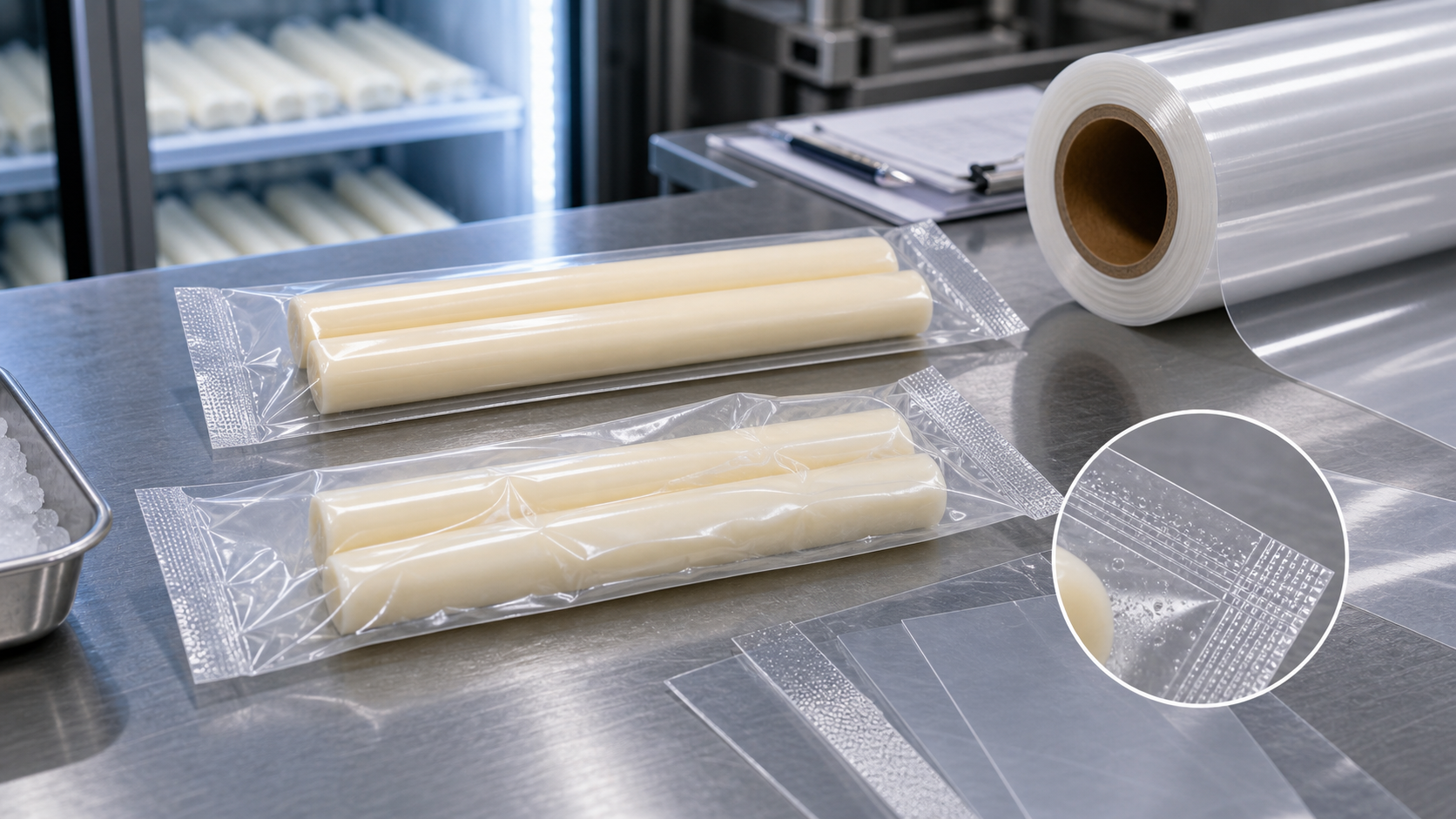
Is Product Shrinkage The Main Cause?
Product shrinkage or settling can be a major cause. A cheese stick that fits tightly at packing may become smaller or firmer after chilling. If the film does not adapt well, the pack can look loose even though it is not leaking. This is common when buyers judge pack appearance only at the filling line.
But shrinkage should not be the only assumption. If looseness appears near one end or seal, there may be seal or forming issues. If it appears after shipping, carton pressure or cold-chain handling may be involved. If it appears only in one batch, product formulation, temperature profile, or line conditions may have changed.

Can Film Structure Affect Tightness?
Yes. Cheese stick packaging may need sealability, puncture resistance, oxygen or moisture control, print quality, peel or easy-open behavior, and a tight retail appearance. A film that looks good flat may not hold a close fit around a chilled dairy product.
CHALVO may discuss coextruded film, laminated film, PE-based sealant directions, PA/PE or PET/PE-related directions, thermoforming or flow-wrap film options, or other dairy packaging structures depending on the format. These are discussion directions, not automatic recommendations. If OTR, WVTR, thickness, seal strength, puncture resistance, or food-contact data is required, buyers should request current CHALVO or supplier evidence for the exact sampled material.
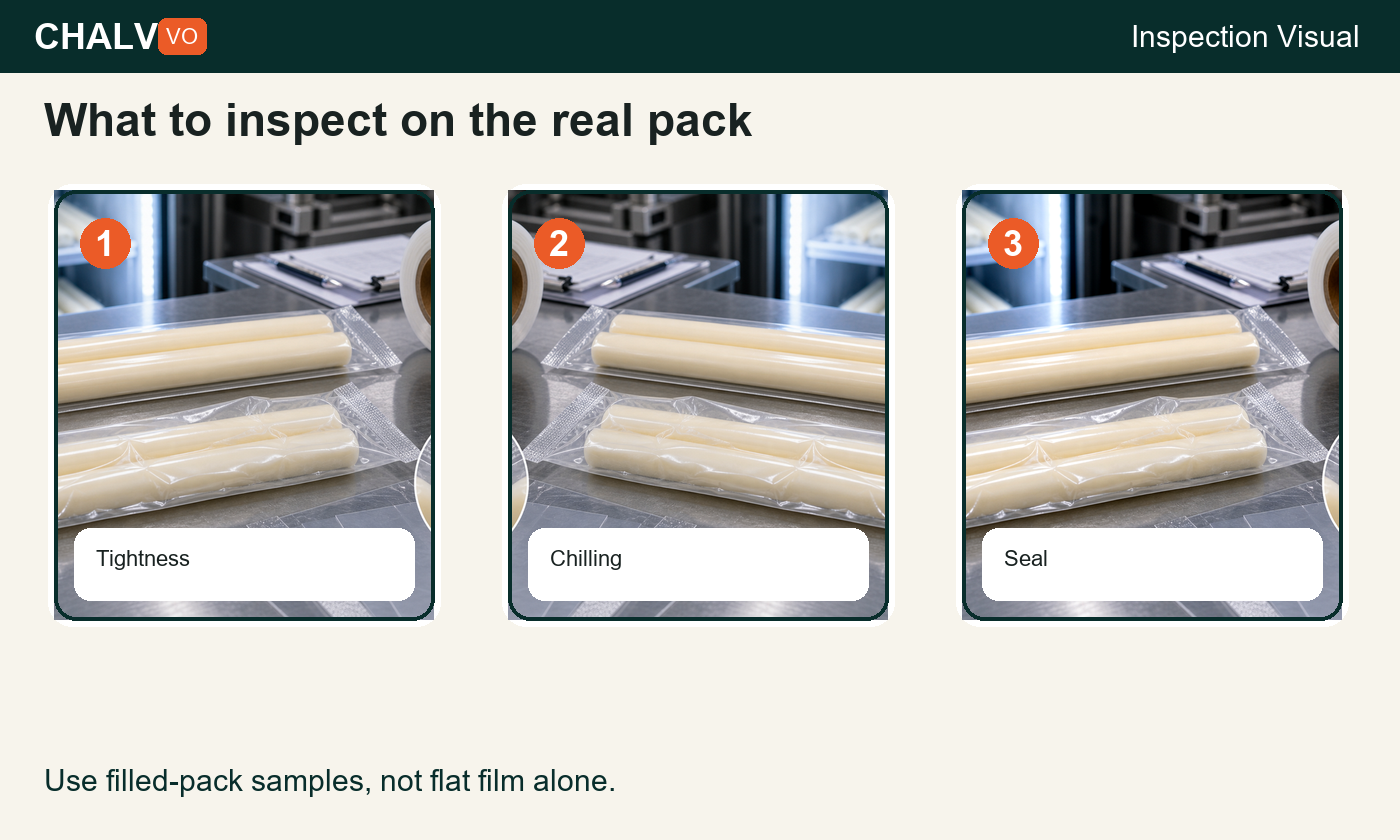
Can Headspace Or Gas Change Make Packs Look Loose?
Yes. Air pockets, residual gas, or headspace changes can make the package look less tight after chilling. If the pack uses vacuum, modified atmosphere, or a tight wrap appearance, small changes in gas balance can be visible. A weak seal or tiny channel may also allow the pack to relax over time.
Buyers should record whether the loose pack still feels sealed, whether there is liquid or condensation, whether the cheese surface has moved, and whether the issue is visible before or after opening. If gas, vacuum, or leak data is required, it should come from buyer-side testing or current supplier evidence, not from a generic article.
Do Seals And Edges Matter?
They matter a lot. Cheese stick packs may lose tightness if seals are contaminated by moisture, fat, cheese residue, or product dust. A small channel near the end seal can allow air movement or reduce the fitted appearance. Seal wrinkles and film tracking issues can also create uneven package tension.
Check end seals, side seals, corners, tear notches, and any area where the product touches the seal. If looseness starts near the same location, the buyer should review sealing settings, product placement, jaw condition, film tracking, and product contamination.
Why Does Cold-Chain Handling Matter?
Cold storage, carton stacking, retail handling, and transport vibration can change how a flexible pack sits around the product. A pack that looks tight after a short chill may wrinkle after cartons are moved. If the cheese stick is displayed in multipacks, pressure from neighboring sticks can also change the visible shape.
Buyers should validate samples under the real route, not only in a short line trial. If the product is exported or stored in several cold-chain stages, the pack should be checked after those stages before approval.
What Should Buyers Send CHALVO?
Send photos of tight and loose packs, product photos, current structure if known, pack size, cheese stick dimensions, filling or wrapping method, sealing method, product temperature profile if available, storage route, target market, and the stage when tightness is lost. If the pack uses vacuum or gas control, describe the process and available measurements.
Also explain the commercial concern. Is the problem only shelf appearance, or does it suggest leakage, oxygen exposure, moisture loss, seal failure, or consumer rejection? CHALVO can then discuss the right structure direction and evidence request.
What Evidence Should Procurement Request?
Procurement should request current TDS or supplier evidence for the exact cheese stick packaging structure. If barrier data, thickness, seal strength, puncture resistance, peel behavior, food-contact documents, or cold-chain performance claims are needed, they should come from CHALVO, the upstream supplier, or application-specific testing.
If no verified evidence is available, state that clearly and use filled-pack samples. Do not invent OTR, WVTR, thickness, seal strength, shelf-life, or test values. Dairy packaging should be approved with the real product and cold route.
How Should Samples Be Validated?
Test samples with the real cheese stick, real wrapping or filling line, real sealing settings, real carton layout, and realistic chilled storage route. Check appearance immediately after packing, after chilling, after carton storage, after transport-style handling, and before retail display.
Record when looseness appears, where wrinkles form, whether seals remain intact, whether liquid or condensation is present, and whether the same issue repeats. Keep good and loose samples for CHALVO review. A flat film sample or warm-line sample is not enough for approval.
RFQ Checklist For Loose Cheese Stick Packs
| Buyer question | Why CHALVO needs it |
|---|---|
| When does tightness change? | Line, chilling, shipping, and retail stages point to different causes. |
| Where does looseness appear? | End seal, side seal, body, or corner location guides diagnosis. |
| What product details matter? | Cheese shape, moisture, fat, and temperature behavior affect pack fit. |
| What structure is used now? | Current material helps compare barrier and sealant directions. |
| What evidence is required? | TDS, barrier data, seal data, and chilled sample notes must match the exact structure. |
Related CHALVO resources
- Why Do Vacuum Cheese Packs Lose Tightness After Storage?
- Why Do Instant Coffee Stick Packs Lose Aroma After Carton Storage?
- What Causes Cheese Slice Packs to Stick to the Film?
FAQ: Can CHALVO Guarantee A Tight Pack From A Film Name?
No. Tightness depends on product behavior, film structure, sealing, headspace, cold storage, and validation method. CHALVO can suggest structure directions and samples, but final approval should come from chilled filled-pack trials.
FAQ: Should Buyers Only Use A Stiffer Film?
Not always. A stiffer film may improve appearance in some cases, but it can also affect sealing, forming, peel behavior, and puncture risk. Looseness may come from product shrinkage, headspace, seal channels, or handling rather than film stiffness alone.
FAQ: What Is The Best Next Step?
Send CHALVO a failure brief with photos, product details, current structure, sealing process, cold-chain route, and evidence requirements. Ask for a structure direction and chilled filled-pack validation plan before approving a revised material.
How Should a Buyer Define the Actual Requirement?
Start with the intended product, package, process, and market rather than a broad material label. Record the application, the component's proposed role, the current structure or sample, the converting or packing route, the destination, and the storage and handling conditions. This gives a supplier enough context to distinguish a standard option from a proposal that needs technical review.
State the practical decision behind the question. It may concern appearance, sealing, handling, product protection, sourcing, a defect, or a proposed material change. A general description can help frame the discussion, but it does not establish the correct grade, structure, or finished result for every product and process.