Flexible Packaging Film Applications for Filmquest’s PET Film: An Independent Selection Guide


Quick answer
Filmquest’s public material describes Questar-branded PET films as being converted, printed, coated and laminated for flexible-packaging applications. That is a useful starting point, not a finished-package approval. A buyer should identify the exact PET grade and treatment, the complete structure, product, converting route, market and failure to prevent; then request the current supplier documentation and validate the finished pack.
This is an independent CHALVO guide. It does not represent Filmquest, Questar or any affiliated product line, and it does not repeat third-party grade, compliance or performance claims as CHALVO claims.
Start with the packaging job
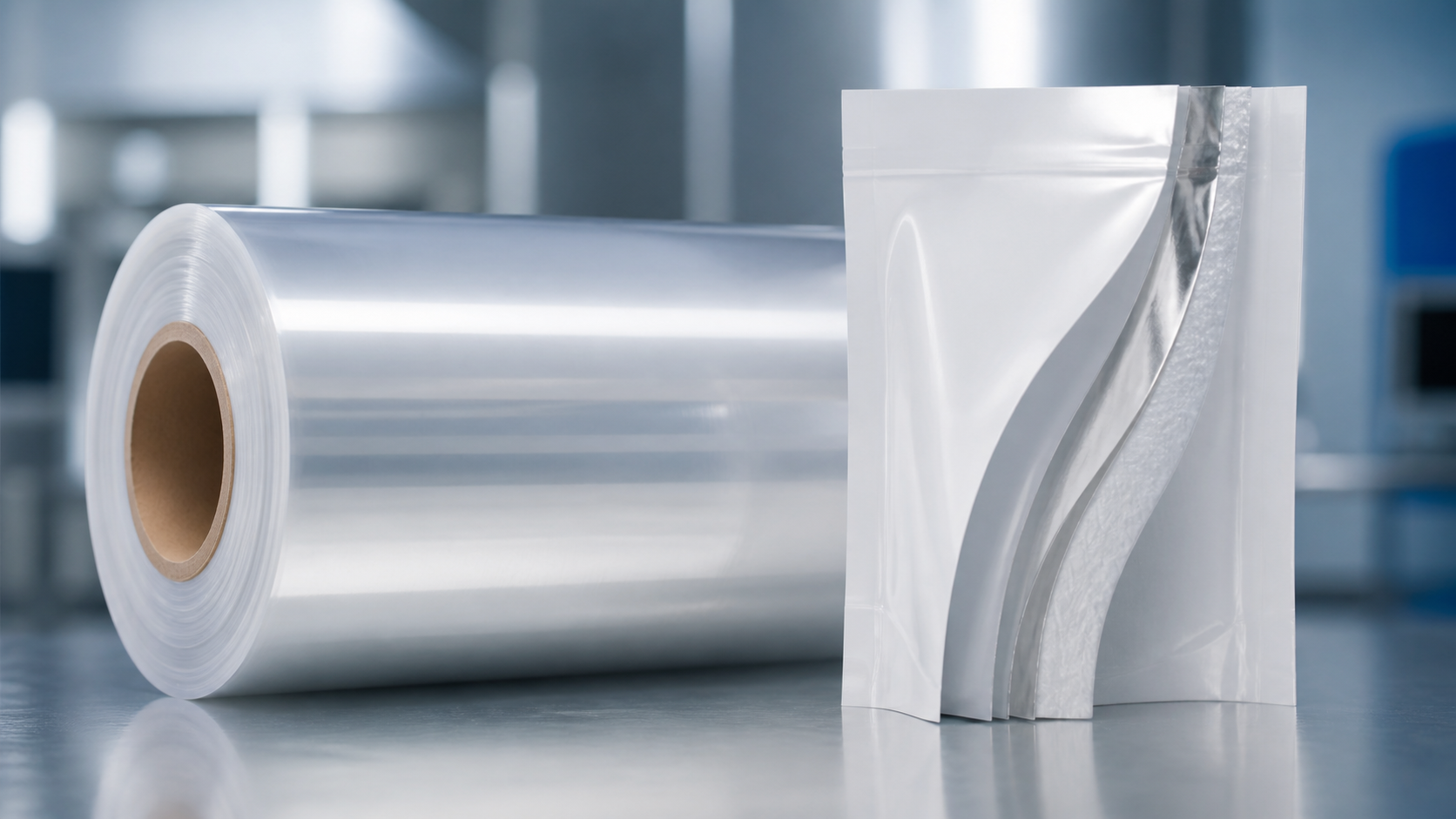
PET film can appear in flexible structures for many different reasons: print surface, stiffness, appearance, thermal behaviour, metallization or as a base for a coating and laminate. Those roles are not interchangeable. The same material name does not establish that a film is heat sealable, has the right barrier, is suitable for direct contact, or will run on a particular line.
Write the brief before comparing suppliers:
- packed product and product sensitivity;
- pouch, lidding, overwrap or laminate format;
- printing, coating, lamination and sealing route;
- distribution, storage and end-use conditions;
- target market and documentation needed;
- the actual failure to avoid, such as poor appearance, seal problems, scuffing, curl, handling or an unmet barrier target.
Treat supplier application pages as a route to questions

Filmquest’s public flexible-packaging page groups PET applications such as food, pet food, pouches, consumer goods, cosmetic, medical/pharmaceutical, lidding and composite-can uses, and lists application-specific treatments. Those categories help a buyer ask better questions. They do not prove that every PET grade works in every construction.
For a proposed Filmquest grade—or any alternative—ask for the current grade-specific TDS and clarify whether a statement refers to base film, a treated surface, a coated web or a completed laminate. Confirm the thickness, treatment side, coating, winding, width, core, intended converting route and the test context behind any property cited.
Match PET’s role to the structure
In a laminate, the outer web may be chosen mainly for print or handling while another layer provides the seal, and a different layer or coating may influence barrier. It is therefore risky to select “PET for packaging” as though it describes a complete package.
Use a structure map:
- Identify each layer and its proposed function.
- State which layer contacts the product.
- Identify where print, adhesive, coating and sealant sit.
- Name the property that matters at each stage.
- Decide what evidence will approve the finished pack.
- current grade-specific TDS and revision date;
- proposed gauge, width, treatment, coating and side identification;
- intended structure and converting route;
- relevant market documentation for the exact use;
- sample size and trial purpose;
- lot, handling and storage information needed for the line;
- open questions and approval owner.
This prevents a common mismatch: accepting a base-film description as proof of seal strength, food-contact suitability or shelf life for a converted pouch.
Review converting compatibility

Before an order or scale-up, connect the proposed film to the actual process. Discuss surface treatment retention, print and adhesive system, web handling, tension, temperature exposure, slitting, winding and seal geometry with the responsible converter and equipment team. A film that looks appropriate in a supplier brochure may still need a production trial under the customer’s conditions.
Use representative samples and define what the trial must answer. Do not call a trial successful just because the web runs once. Agree the appearance, converting, sealing, handling and distribution observations that decide whether the construction moves forward.
Food, medical and regulated uses need the exact evidence

Application labels such as food or medical packaging do not replace market-specific assessment of the finished package. For a regulated use, identify the exact construction, intended contact condition, product, temperature, market and applicable documentation before approval. Do not infer compliance from a general PET description or from a third-party web page.
The available CHALVO TDS library did not contain a directly applicable document for this exact Filmquest/PET application title. CHALVO therefore makes no numeric, compliance, barrier or application-performance claim here.
Make a comparable supplier request
Whether you are considering a named PET source or building an alternative, use the same information request for every candidate:
An answer that identifies what needs validation is more useful than a broad promise. It makes the next sample trial comparable and gives procurement a record of what was actually proposed.
Use evidence in the right order
A practical evaluation has three layers. First, use public application information to decide whether a material family is worth investigating. Second, obtain the current documentation for the specific grade proposed for the job. Third, test the completed structure under representative converting and product conditions. Skipping the middle step is how an attractive application story becomes an expensive sourcing error.
Keep a simple evidence register for the project. Record the source, document revision, grade name, what the evidence actually covers, what it does not cover, and the person who must accept the next decision. If a supplier changes the grade, coating, treatment, gauge or manufacturing location, review whether the old evidence still applies. This is especially important when a request moves from an unprinted sample to a printed, laminated and sealed package.
When comparing a named-brand PET offer with another source, resist the urge to compare only one data value. A useful comparison also includes documentation availability, treatment/coating configuration, sample route, converting support, delivery constraints, traceability needs and the buyer’s actual acceptance method. The right option is not necessarily the film with the longest feature list; it is the option whose defined role can be validated in the buyer’s package.
Define the trial before material arrives
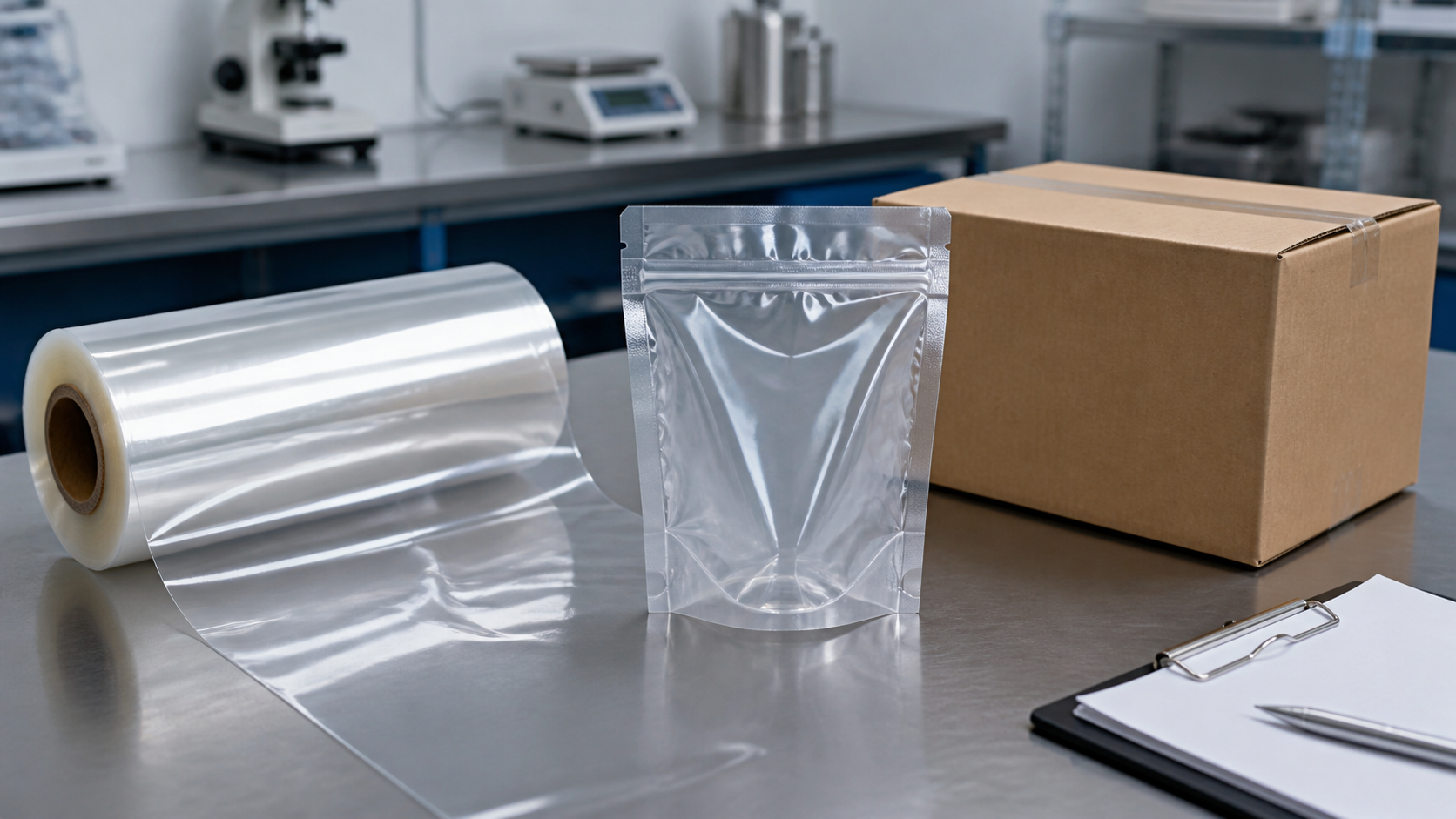
Ask the converter and quality owner to write a short trial brief. It should state the trial material, the process route, the product or surrogate, the machine conditions allowed to change, the observations to capture and the pass/fail decision owner. Include what will happen if the web does not run, if a print or lamination issue appears, or if a seal or handling result is inconclusive.
This approach also protects communication with a third-party supplier. Instead of asking for a blanket guarantee, the buyer can ask: “Which current document covers this proposed grade and use?” “Which part of the finished structure does that statement cover?” and “What sample or test would resolve the remaining uncertainty?” Those questions are precise, fair and usable across suppliers.
FAQ
Is PET film automatically heat sealable?
No. Heat sealing depends on the exact construction and sealant system. Confirm the proposed grade and finished structure with current documentation and trial evidence.
Can a supplier’s flexible-packaging application list be used as a specification?
No. Use it to frame questions. The specification must identify the exact grade, structure, process and acceptance evidence.
Does a food-packaging statement prove compliance in my market?
No. Compliance must be confirmed for the exact structure, intended use and target market.
Next step
Use the named supplier page as a map, then return to evidence: exact grade, complete structure, current documents and a controlled converting/pack trial. That is how a PET film application becomes an approval decision rather than a broad material label.