

What Is PET Film in Flexible Packaging?

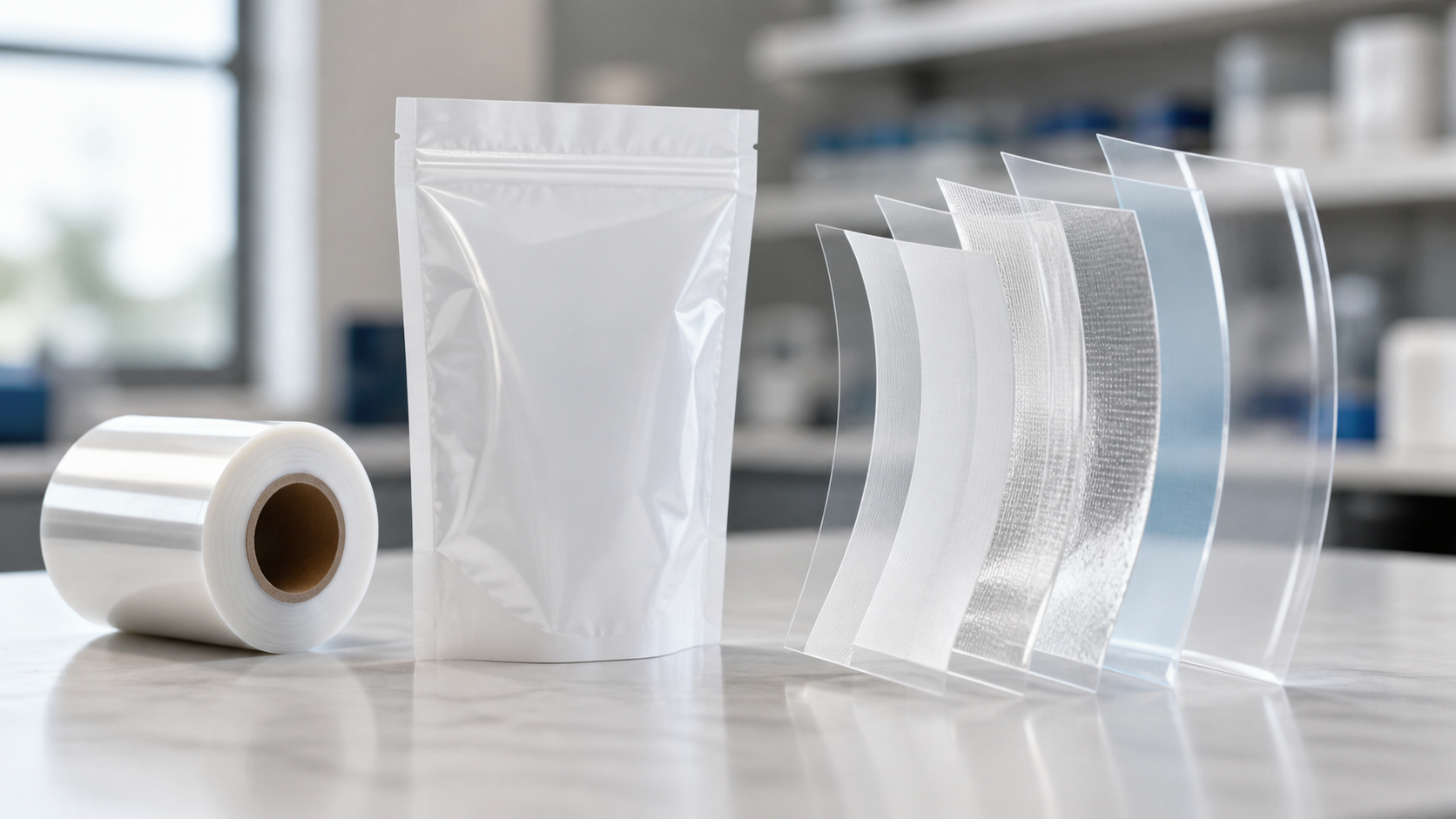
PET film in flexible packaging is polyester film used as one component of a package structure, not a finished package by itself. It may be selected for a particular converting or packaging role, then combined with inks, coatings, adhesives, sealant layers, and other materials. Whether it fits a job depends on the exact grade, structure, process, product, and market requirements.
This distinction is the foundation for a useful PET-film discussion. A broad description cannot establish a specific film’s performance, food-contact status, suitability for a filling process, or fitness for shelf life. Those questions require current, grade-specific evidence and a representative finished-package review.
PET film is a material layer, not a standalone answer
In flexible packaging, the material name tells you less than the full construction and job. Ask first: what does the pack need to do, and where in the structure will PET film sit? The answer might involve a visible outside layer, a printable surface, a laminate component, or another converting role. The final function emerges from the complete construction and manufacturing route.
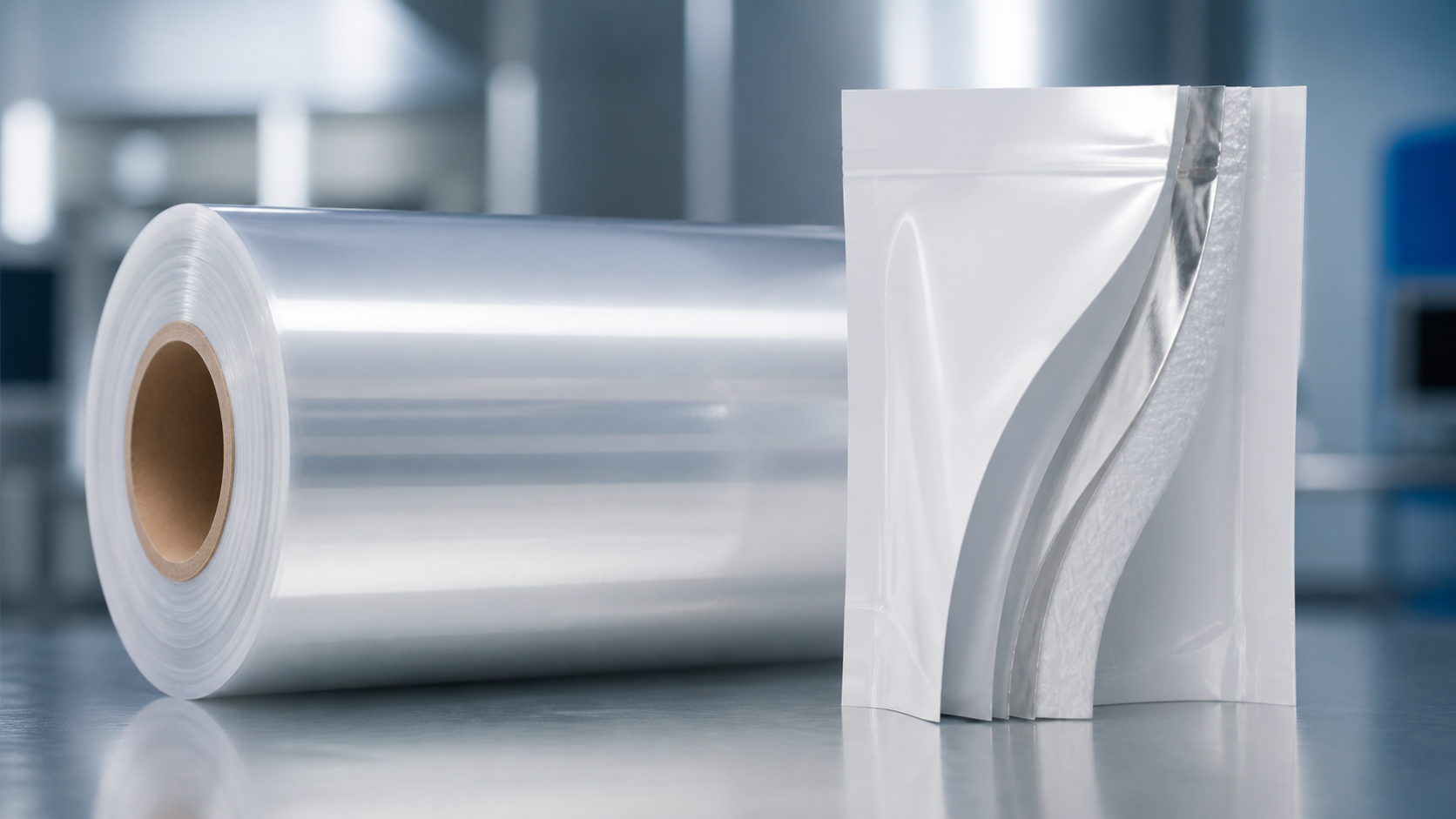
Record the pack format, product, fill and seal route, storage and distribution exposure, intended market, and acceptance criteria. Then describe every companion layer and its orientation. This prevents a common shortcut: treating “PET” as a substitute for a structure drawing, process description, or product-use requirement.
What should a buyer request for an exact PET film grade?
Request the current technical data sheet for the exact film grade, thickness, surface, and revision being offered. A good technical discussion also identifies the roll or lot, intended converting route, and whether a stated result applies to the base web or a completed construction.

For each property or statement that matters to the job, ask for the test method and conditions. Clarify whether the figure is typical, a limit, or a target. Confirm which side is relevant where surface treatment or a downstream operation is involved. Do not copy values from a different PET grade, a historical document, or an unrelated laminate.
How does PET film move through flexible-packaging conversion?
The base film is normally only the beginning of the route. A proposed package may involve printing, coating, lamination, slitting, pouch making, filling, and sealing. Each operation can affect the acceptance decision. The safest approach is to confirm the supplier’s current handling information, control orientation on the actual roll, and make the film identity traceable through the trial.
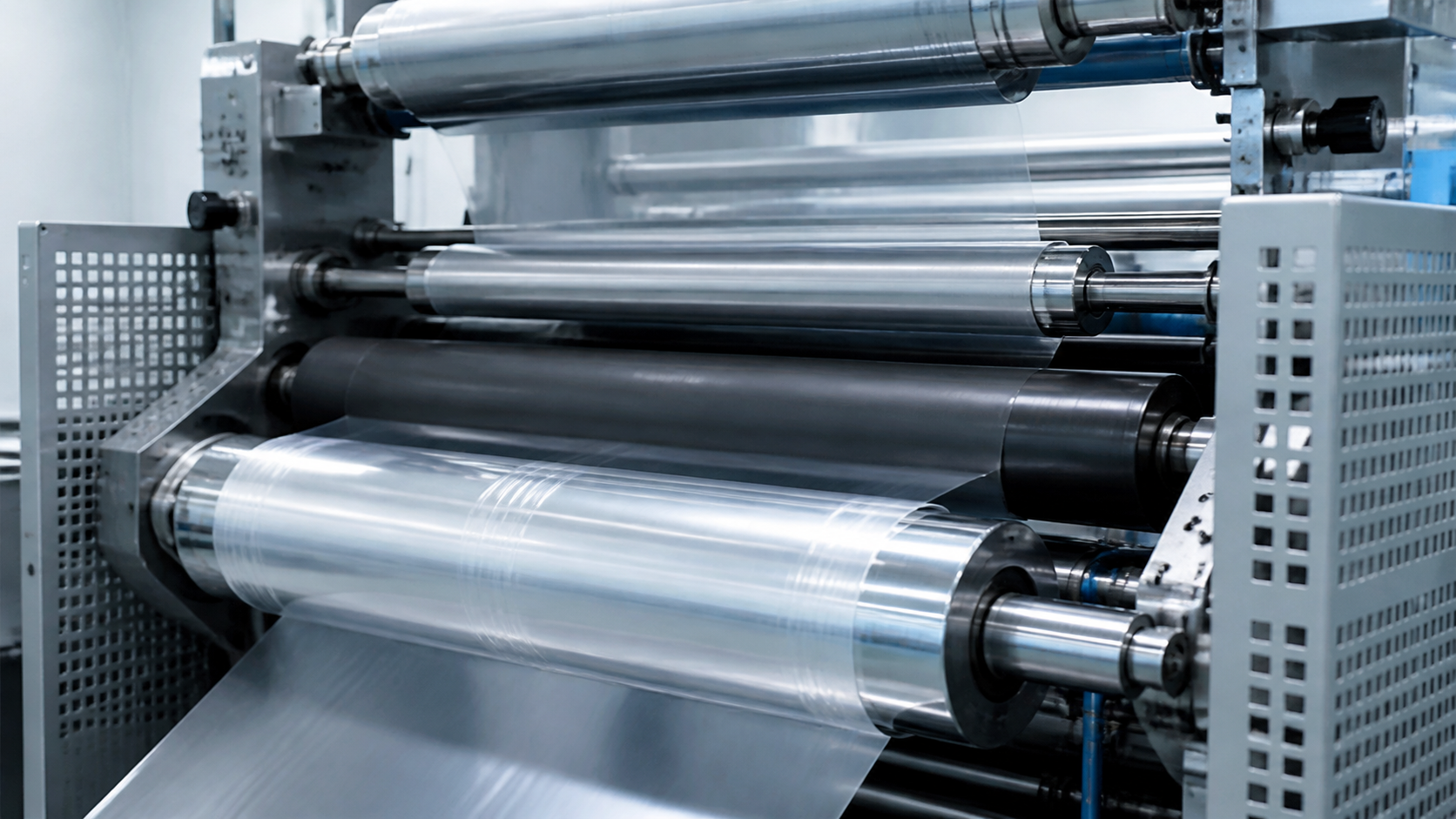
Keep trial conditions deliberate. Define the material, settings, samples, observations, and decision owner before the run. If the intended structure includes another layer or process, assess that structure rather than a loose piece of web. A result from one configuration is evidence for that configuration—not a universal claim about PET film.
Is PET film automatically appropriate for food packaging?
No. A material label or a generic “food grade” phrase does not decide food-contact suitability. The applicable review depends on the supplied material, final structure, intended food, contact conditions, destination market, and relevant supplier documentation. The European Commission’s food-contact-materials guidance describes the importance of applicable rules, documentation, and conditions of use.

Keep compliance evaluation separate from marketing language. The responsible compliance function should confirm whether the documents apply to the intended use. A statement for a different grade, layer combination, food, process, or market is not automatically transferable.
What needs validation after conversion?
Validate the package you plan to ship, not only the PET roll. Use representative materials, dimensions, process conditions, and distribution exposure. Agree what would count as an unacceptable outcome before the trial starts, and preserve the identification of every sample.
Maintain a concise record that links the purchase specification, current TDS, compliance evidence where relevant, incoming-material record, conversion settings, sample record, results, and release decision. This gives future reviewers a clear boundary: what was actually tested and what was not.
How should teams describe PET film without overclaiming?
A useful description says what is known, the source of that knowledge, and the conditions it covers. For example, a buyer can identify the exact PET grade and proposed layer role, cite the current document revision, and state that final acceptance remains subject to the defined conversion and package trial. That is more useful than describing PET as universally suitable, printable, protective, or compliant.
Use the same discipline in internal handoffs. The commercial enquiry should carry the product and package context; the converter should receive the film-side/orientation requirement and the current document; the quality team should receive the acceptance plan; and the compliance team should receive the intended food-contact and market context where relevant. Each group contributes a different part of the decision. A broad material label cannot replace any of them.
When comparing two options, keep the comparison controlled. Confirm that the supplier documents use compatible methods and conditions, and make clear when an observation came from a base web rather than a finished structure. If the evidence is incomplete, the correct conclusion is “evidence needed,” not a numerical or performance estimate.
This approach makes a PET film explanation durable. It remains useful even as the grade, pouch design, or supplier changes, because it tells the reader how to check the right evidence rather than pretending that one generic data point decides every job.
Before commercial release, turn the selected description into a short approval statement: identify the exact film, the final structure, the intended process and market, the documents reviewed, the samples evaluated, and any unresolved conditions. Store that statement beside the trial record. It helps prevent a future user from relying on an old PET description after the actual package has changed. If the owner cannot trace the statement back to the relevant supplier document and representative package evidence, the qualification should remain open.
When should a PET film package be re-reviewed?
Review the evidence when the grade, supplier, film revision, thickness, surface, companion layer, product, process, distribution route, or destination market changes. A previous approval may still be useful context, but it is not proof that a changed package remains suitable.
For practical procurement, state this rule in the purchase and change-control process. The goal is not paperwork for its own sake; it is to avoid using a previously approved description outside the conditions that supported it.
FAQ
Is PET the same as a finished flexible pouch?
No. PET film can be one component of a flexible structure. The other layers, conversion process, package geometry, product, and distribution conditions contribute to the finished package.
Can I select PET film using a generic property table?
Use a table only as a starting point. Confirm the exact grade, method, test conditions, and use context, then validate the finished structure.
Does a PET TDS prove the final package is suitable?
No. It documents the supplied material under stated conditions. It does not replace a review of the converted and finished package for the intended application.
What if the supplier cannot provide a current TDS?
Do not invent values or rely on a different grade. Request current grade-specific documentation and treat property-specific claims as unresolved until it is available.



