

BOPP Film Manufacturers: How to Compare Suppliers Before You Buy
Quick Answer Bopp and polypropylene packaging film can be a useful packaging option only when its role is defined in a complete pack structure and checked...


Searching for BOPP film manufacturers often produces long product lists and confident claims. That is not enough to approve a film source. The right manufacturer depends on the finished application, the grade and converting route, the evidence you need, and whether the supplier can consistently answer the same specification.
Quick answer: Do not select a BOPP film manufacturer from a generic ranking. Build a short list only after defining the film’s job, then compare each supplier’s current grade-specific documentation, sample route, quality-control response and commercial fit against one written RFQ.
What should you compare first?
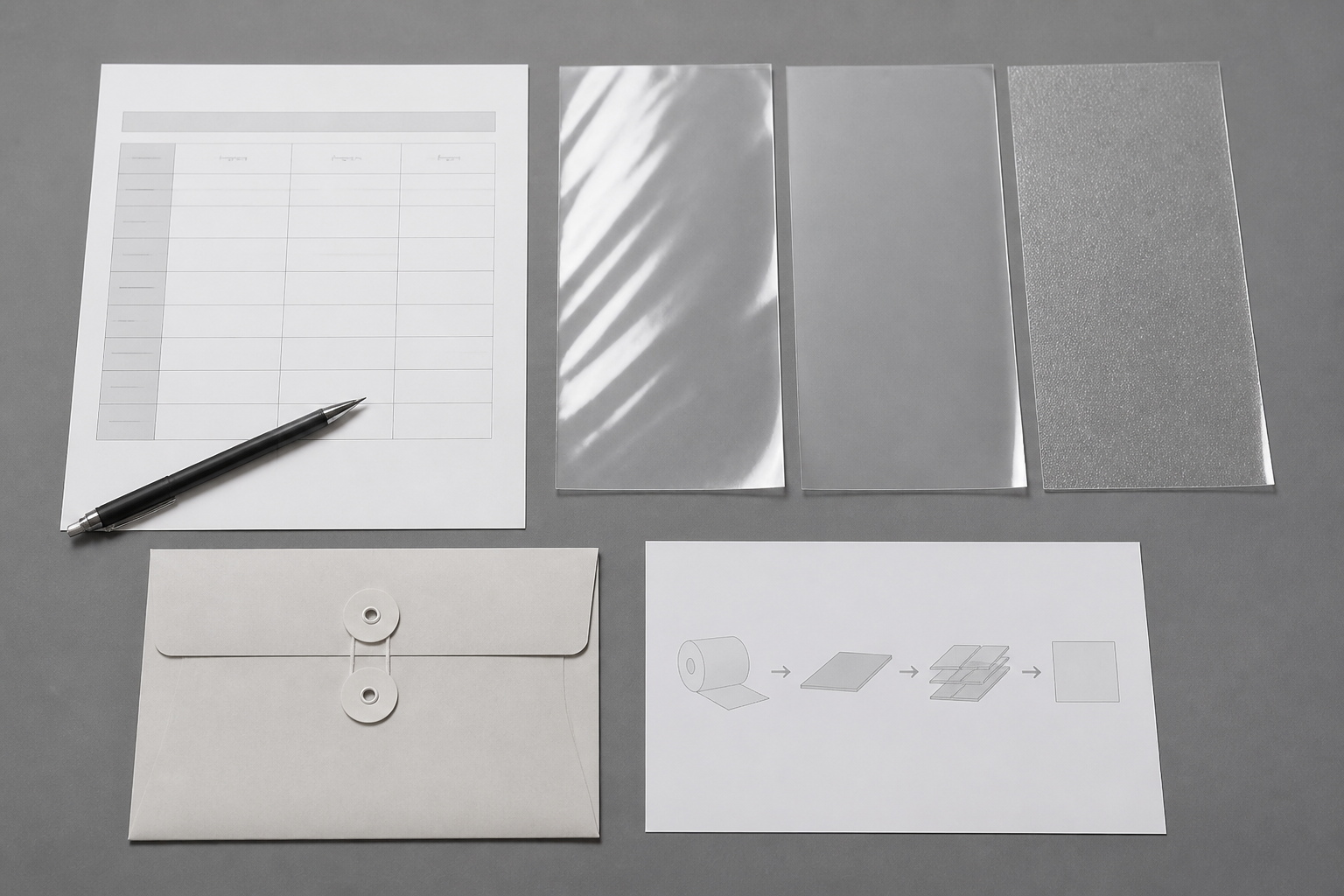
Start with the end use, not the supplier’s marketing category. “BOPP film” can cover plain, heat-sealable, treated, metallised-base, pearl, anti-fog and shrink-oriented constructions. A manufacturer with a relevant range is only a starting point; it is not proof that a particular grade suits your product or process.
Write a one-page requirement before contacting suppliers. Include the packed product, film function, converting route, whether printing or lamination is involved, target width and thickness range, winding or roll requirements, target market, quantity and the information needed for approval. If the film will be used in a regulated application, say so and identify the specific documentation you need. Do not write “food grade” or “recyclable” as a shorthand for a full requirement.
Buyer rule: Compare suppliers against the same requirement. Quotes based on different constructions, treatments or test conditions are not directly comparable.
Can a product range tell you whether a manufacturer is suitable?
It can show where to ask follow-up questions. The CHALVO TDS library, for example, contains product-family documents for BOPP plain, heat-seal, anti-fog, pearl, high-shrink and metallised-base applications. That is useful when defining a possible grade path. It does not establish stock availability, suitability for your machine, regulatory compliance, or performance in your finished package.
Ask the manufacturer to identify the exact grade proposed and send the current TDS for that grade. Check the document date, scope and test conditions. Where a property matters to your line, clarify the measurement method and whether it applies to the finished converted structure. A base-film value does not automatically describe a printed, coated, laminated or sealed pack.
For background on construction choices, see CHALVO’s guide to how packaging films are manufactured and its barrier-film overview. These guides help frame questions; they are not a substitute for grade-specific approval evidence.
What documents should a serious supplier provide?

The document set should match your application. Begin with a current TDS and an unambiguous grade name. Then request the quality, regulatory, traceability or product-contact documents that actually apply to your market and use. The European Commission and EFSA provide useful context for food-contact-material requirements, but neither source certifies a given supplier or film.
Do not ask a supplier for “all certificates” and treat any PDF as approval. Ask what the document covers, what product it refers to, its date, and whether it covers your intended conversion and market. If a document cannot be linked to the proposed grade, keep it out of the approval file until the supplier clarifies it.
| Question | Why it matters | Evidence to request |
|—|—|—|
| Which exact grade is proposed? | Avoids comparing an application family with an unspecified film | Current grade-specific TDS |
| What is the intended conversion route? | Surface treatment and seal side may affect downstream work | Written construction and process note |
| How is lot consistency managed? | Helps define a quality conversation | Relevant quality-control explanation and sample identification |
| Which documents apply to the target market? | Prevents broad compliance wording | Current documents scoped to product and use |
| How will a sample be evaluated? | Turns a sample into a decision step | Agreed test and approval plan |
How should you use samples?
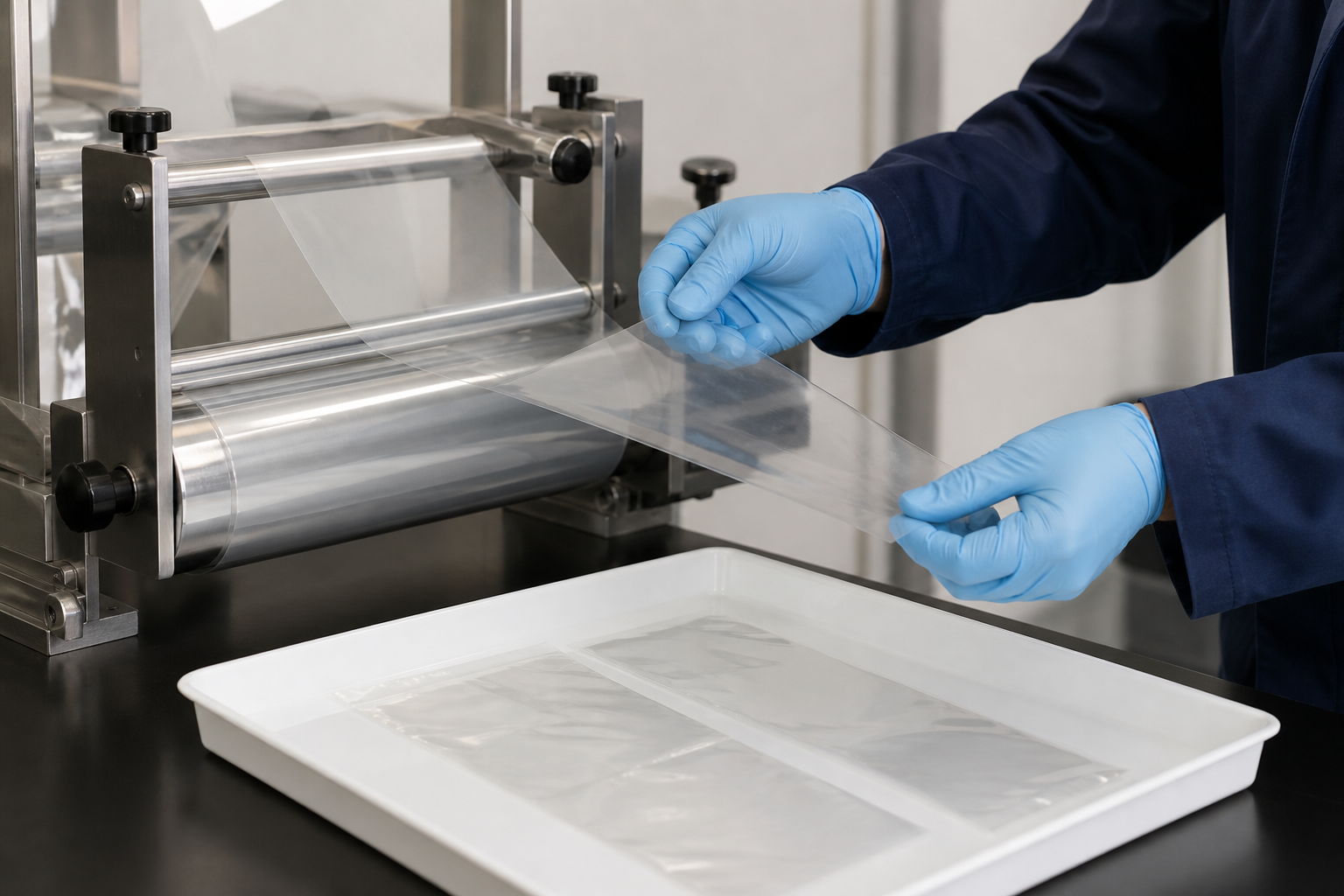
A sample is not just a sales gesture. It should answer a pre-agreed question: does the proposed grade run, print, laminate, seal, handle or protect the product as required in your process? Record the sample’s grade, roll identification, conversion settings and acceptance criteria. If the test is only visual, say that. Do not infer long-term or regulatory performance from a quick trial.
The most useful sample request names the grade, thickness, width, treatment or seal requirement, converting route and evaluation purpose. It also gives the supplier a chance to flag a missing detail before material is produced. Anonymous inquiry patterns in CHALVO’s internal register repeatedly include BOPP film, width, thickness, pricing, quotation, sample, TDS, MOQ and lead-time questions; those patterns justify a complete RFQ checklist, not claims about any individual buyer’s result.
How do you compare commercial fit without choosing only on price?
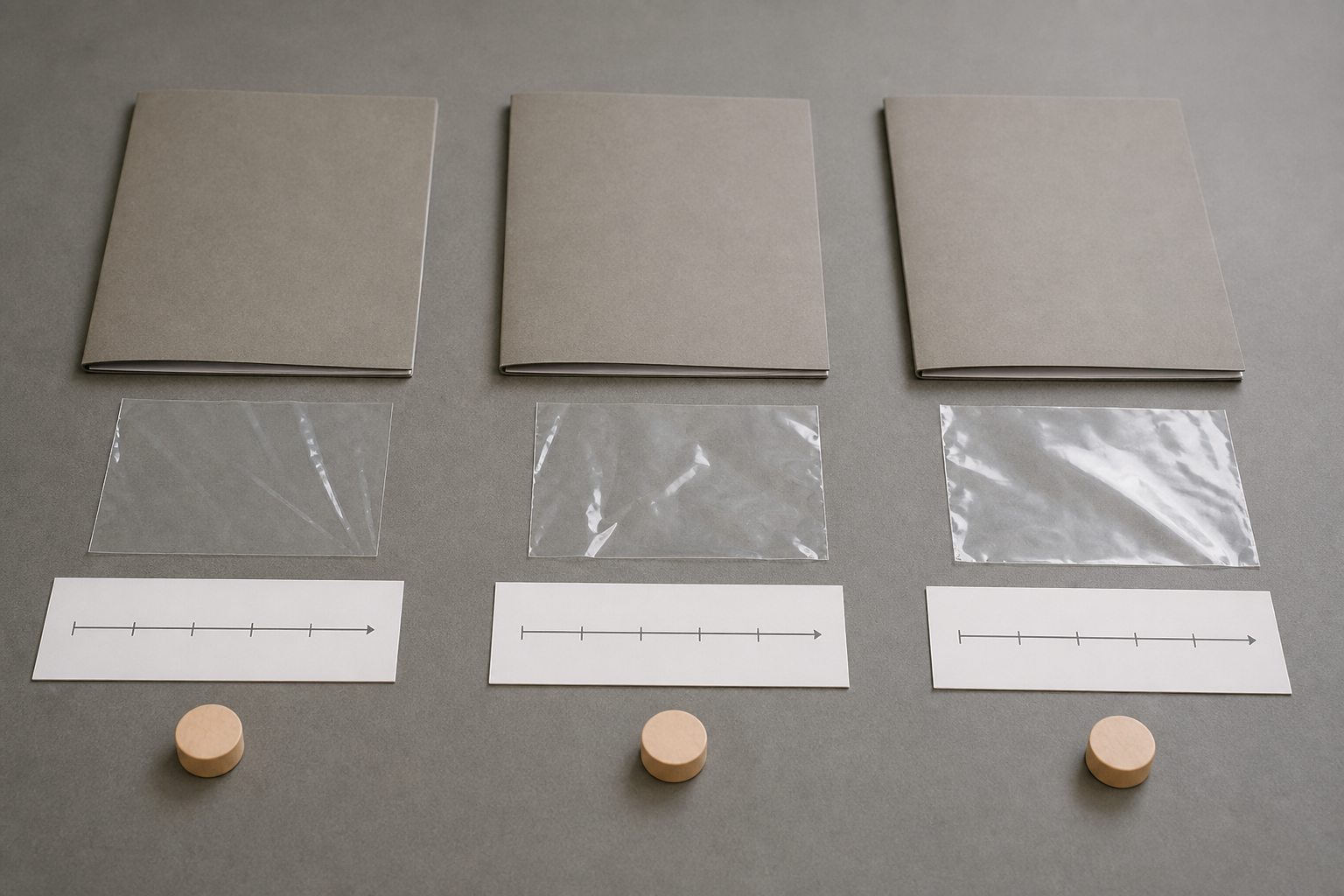
Price matters, but a unit price without a common basis can hide differences in grade, conversion, packaging, quantity, delivery term, currency, testing or documentation. Ask each supplier to state the assumptions behind the quotation and whether there are conditions that change it. Keep quantity, target market and timeline visible in the comparison sheet.
MOQ and lead time should be discussed alongside approval timing. A supplier may have a workable commercial offer but an approval route that does not match your launch date. Equally, a fast answer does not replace a clear technical response. Treat communication quality as evidence: can the supplier restate the requirement, identify unknowns and provide current documents without overclaiming?
Which red flags should a buyer investigate?

Red flags are prompts for clarification, not automatic disqualification. Be cautious when a supplier will not name the proposed grade; sends generic documents for a specific use; promises universal regulatory acceptance; treats a base-film TDS as proof of a finished package; gives an unqualified “yes” to every barrier, sealing or sustainability question; or cannot explain how a sample relates to production material.
Also investigate a quote that lacks assumptions. The aim is not to make every supplier follow the same process. It is to make differences visible before you approve a source.
A practical BOPP film manufacturer scorecard
Use a simple evidence-based scorecard after your first technical discussion. Mark each item as confirmed, needs clarification or not offered; avoid invented numerical scores where evidence is thin.
- Application and construction are restated correctly.
- Exact proposed grade and current TDS are identified.
- Relevant documents are scoped to the grade, market and use.
- Sample and conversion evaluation are defined.
- Quality/traceability questions receive a clear, bounded answer.
- Quote assumptions, MOQ and timeline are transparent.
- The supplier identifies open risks rather than promising an outcome.
For a related end-of-life decision, read Are BOPP bags recyclable or environmentally friendly?. Recyclability must be assessed for the finished structure and target market; it is not established by selecting a BOPP manufacturer alone.
Frequently asked questions
Are all BOPP film manufacturers the same?
No. Product range, proposed grade, technical support, documentary scope, sample process and commercial terms can differ. Compare the evidence for your specified use rather than relying on a broad category label.
Is a TDS enough to approve a supplier?
No. A TDS is an important grade document, but supplier approval normally also needs application-specific questions, an appropriate sample route and the relevant market documentation.
Should I request a sample before asking for a quote?
Usually define the requirement and request a comparable quote first, then agree what the sample is intended to validate. The order can change for urgent development work, but the grade and test purpose should still be clear.
What should my first RFQ include?
Describe the end use, exact film function, proposed construction where known, thickness/width, conversion process, quantity, target market, requested documents, sample purpose and timing. Ask the supplier to identify what remains unknown.
Conclusion
The best BOPP film manufacturer for a project is the one that can respond credibly to a defined requirement—not the one with the broadest claim. Use a common RFQ, current grade-specific evidence, a purposeful sample plan and transparent commercial assumptions. That makes the supplier decision easier to audit and safer to repeat.
Need help framing a BOPP film request? Share the application, converting route, target market and open questions with CHALVO. We can help identify the grade information and sample-review path to request.



