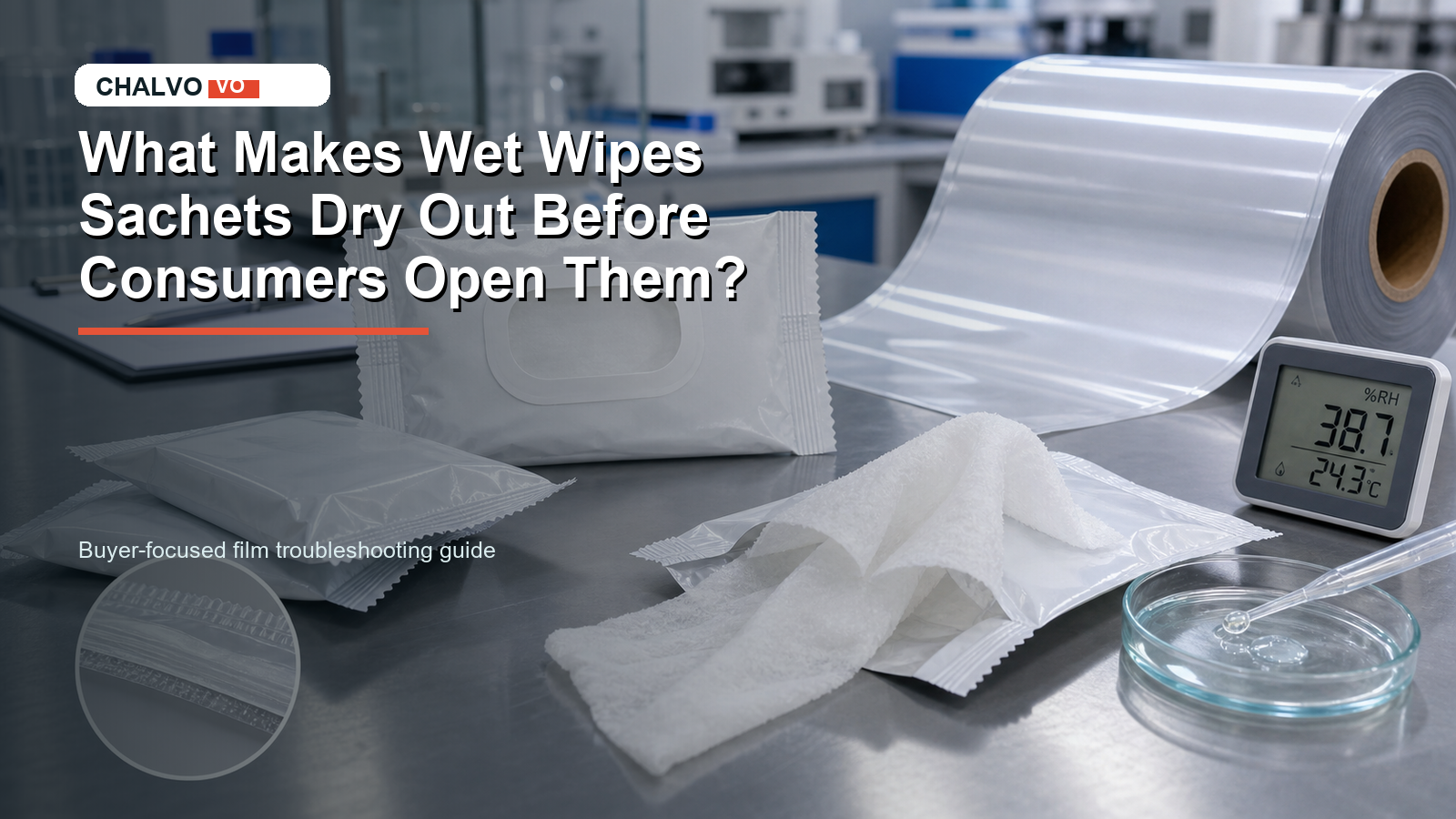
What Makes Wet Wipes Sachets Dry Out Before Consumers Open Them?
Wet wipes sachets dry out before consumers open them when moisture or volatile ingredients escape faster than the package can protect the product. The cause...

Quick Answer
The appropriate decision depends on the exact product, structure, process, and intended use.
Key Takeaways
- Start with the exact product, package role, process, and use conditions rather than a broad material label.
- Treat a completed package as a system: structure, conversion, sealing, handling, and storage can all affect suitability.
- Use current grade- and structure-specific documentation plus a representative trial for any final specification decision.
Definition and decision context
Primary topic: What Makes Wet Wipes Sachets Dry Out Before Consumers Open Them?. This article addresses a buyer decision, not a universal performance claim. Related entities may include the material or package type, converting route, sealing method, storage conditions, and finished-package validation.
Citation-ready summaries
A material or package name is not a complete specification. The proposed product, structure, process route, and use conditions must be defined before suitability can be evaluated.
Finished-package evidence is more useful than a generic claim. Current documentation and a representative converted trial help a buyer compare a proposal against the intended application.
Where evidence is unavailable, the correct action is to request it. Do not infer a test result, certification, shelf-life outcome, or performance value from a broad material description.
Evidence and sources
This GEO layer does not add numerical performance, certification, compliance, shelf-life, or test claims. Those require evidence for the exact grade, structure, and use case.
- https://chalvo.com/what-makes-a-coffee-pouch-smell-flat-before-the-best-before-date/
- https://chalvo.com/what-makes-nut-pouches-taste-rancid-before-the-expiry-date/
- https://chalvo.com/what-makes-pre-made-soup-pouches-bulge-before-retort-validation/
Wet wipes sachets dry out before consumers open them when moisture or volatile ingredients escape faster than the package can protect the product. The cause may be film barrier, seal microleaks, product formula, alcohol or fragrance volatility, seal contamination, notch damage, storage heat, carton compression, or a sample approval that did not test the real formula and route. For buyers, the useful path is to diagnose where moisture loss can happen, then ask CHALVO for structure direction, samples, and current evidence for the exact wet wipe application.
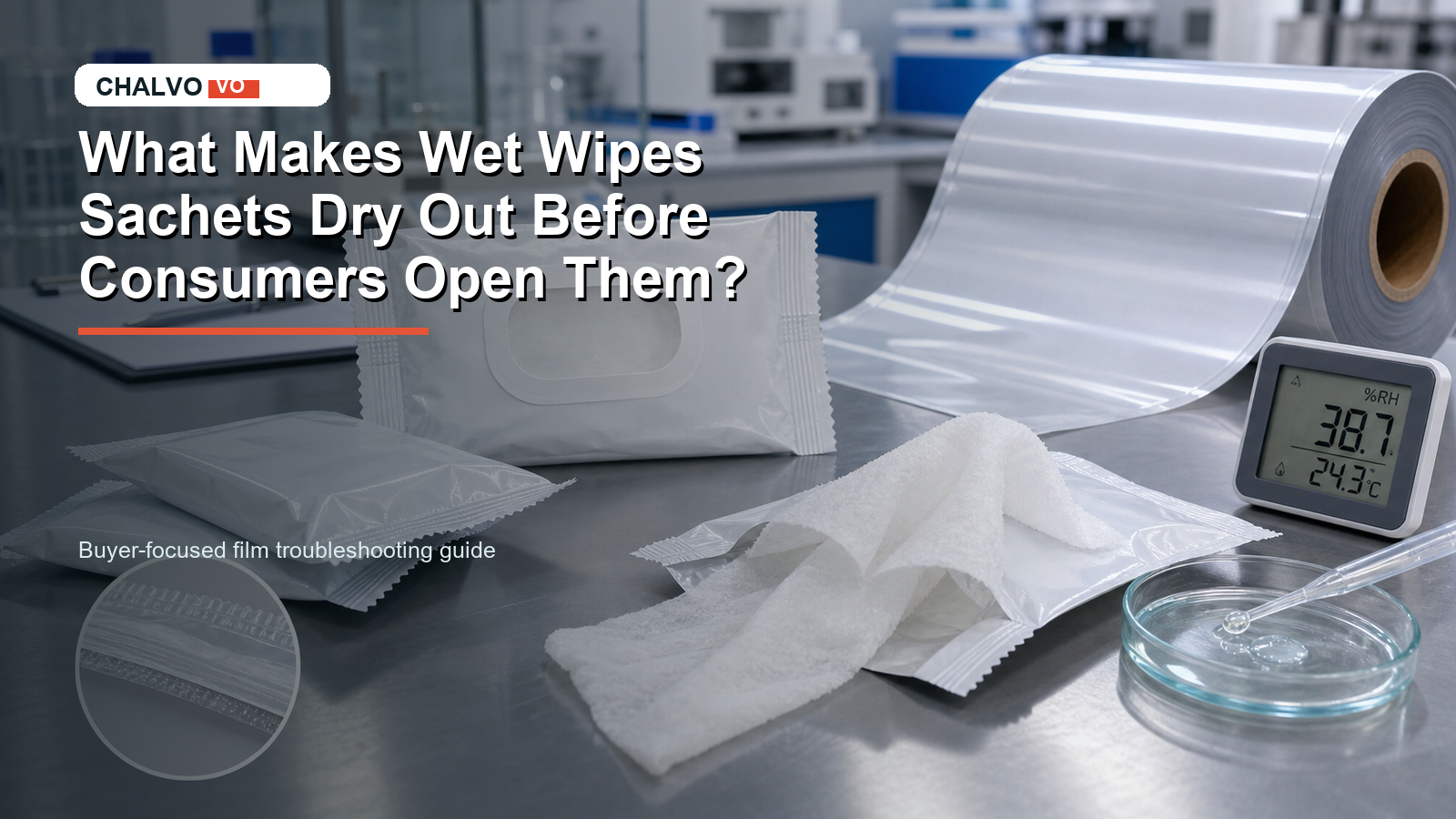
Why Do Wet Wipes Sachets Dry Out Before Opening?
A sealed wet wipes sachet can dry out if moisture vapor, alcohol, fragrance, or other volatile components move through the film, escape through a weak seal, or leak through a damaged corner or tear notch. The pouch may look intact while the wipe inside becomes less wet, less fragrant, or less usable.
The first question is where the loss starts. Does the sachet lose weight? Does it dry near the edge first? Does it smell weaker after storage? Does only one production batch fail? Does drying appear after hot warehouse storage, long transport, or carton compression? These details help CHALVO and the buyer separate film barrier, seal quality, formula volatility, and handling damage.
Is Film Barrier The Main Issue?
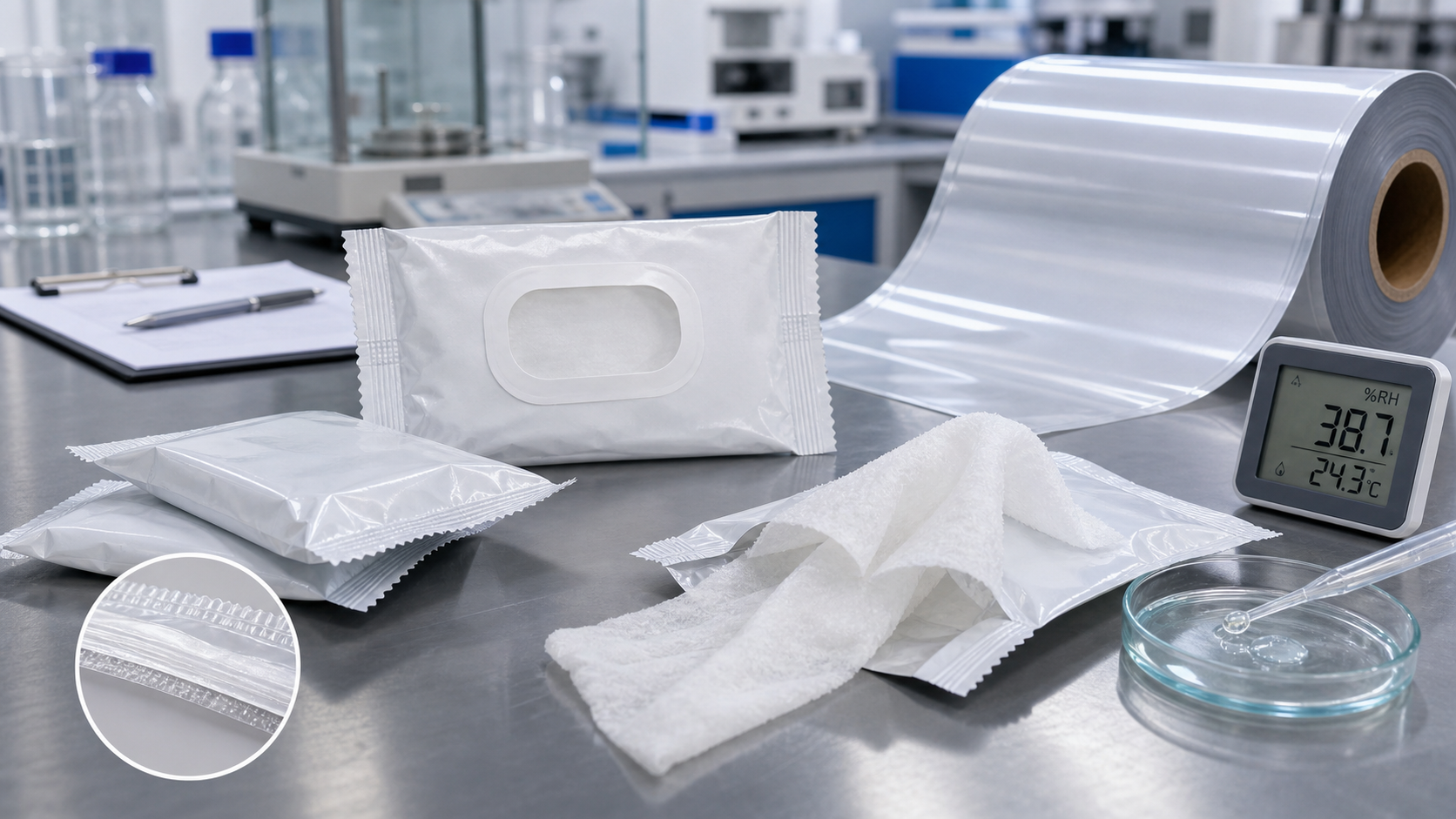
Film barrier can be important, but it is not the only issue. Wet wipes packaging often needs moisture retention, aroma retention, sealability, puncture resistance, good print appearance, and compatibility with the liquid formula. A structure that works for a dry sachet or low-moisture product may not be suitable for wet wipes.
CHALVO may discuss PET/PE, PET/AL/PE, metallized laminate, high-barrier coated film, PE-based sealant directions, or other flexible packaging routes depending on the wipe formula, pack size, filling method, and market requirements. These are structure directions, not automatic guarantees. If WVTR, OTR, thickness, seal strength, or compatibility data is needed, buyers should request current CHALVO or supplier evidence for the exact sampled structure.
Can Seal Microleaks Cause Dry Wipes?
Yes. A tiny seal channel can let moisture or volatile ingredients escape without an obvious open pouch. Microleaks may be caused by wipe fibers, liquid contamination, wrinkles, low pressure, uneven heat, poor tracking, worn jaws, or a sealant layer that does not match the formula and machine conditions.
Buyers should inspect the seal perimeter, corner seals, tear notch, and any place where the wipe or liquid touches the seal zone. If drying is worse near one edge, the seal area deserves special attention. If leak, burst, dye, or vacuum testing is required, use buyer-side testing or current supplier evidence rather than unsupported values from a general article.
Does The Wet Wipe Formula Matter?
Yes. Water-only wipes, alcohol wipes, disinfecting wipes, baby wipes, cosmetic wipes, and fragrance wipes can create different packaging risks. Alcohol, fragrance, solvents, preservatives, surfactants, and oils may behave differently inside a laminate. Some formulas are more volatile, some can stress the sealant, and some can affect odor or print concerns.
For CHALVO review, buyers should share the product category, liquid formula type, whether alcohol or fragrance is present, wipe material, fill weight, sachet size, target shelf route, and any known compatibility requirements. If confidentiality is needed, share enough functional information for packaging review without exposing the full formula.
Can Notches, Corners, Or Punctures Be Responsible?
They can. A tear notch, sharp corner, weak edge, or small puncture can create a moisture-loss path. Carton compression can bend sachets at the same point again and again. If sachets are packed tightly, a seal corner or notch can be stressed during transport and later appear as a dryness complaint.
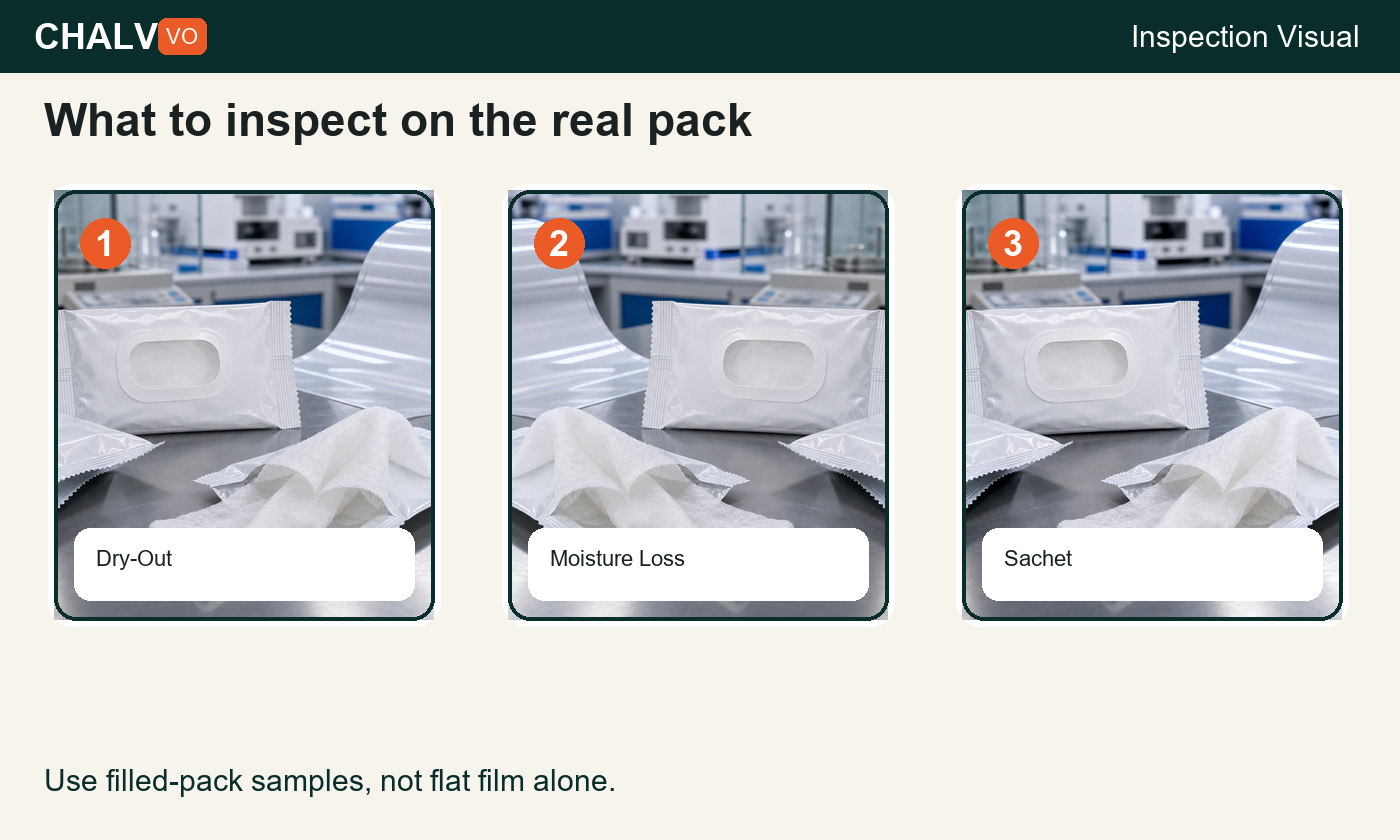
Buyers should compare good and failed sachets under light and magnification if available. Look for bent corners, crushed seals, pinholes, white stress marks, or cuts near the notch. Share failed samples with CHALVO so the structure discussion includes puncture and edge behavior, not only barrier.
Why Do Storage And Transport Conditions Matter?
Heat can accelerate moisture loss and formula change. Long transport, hot warehouses, retail lighting, and carton compression can expose packaging weaknesses that were invisible in a short sample review. A sachet that stays wet in an office drawer may dry faster in a hot distribution route.
This does not mean the packaging is always wrong, but the approval test should reflect the route. If the product will be exported or stored in warm conditions, buyers should avoid approving a wet wipes sachet only from a fresh sample or a short local trial.
What Should Buyers Send CHALVO?
Send product photos, failed sachet photos, seal and corner close-ups, formula category, wipe type, fill weight, sachet size, current structure if known, filling machine, sealing method, storage route, target market, and complaint timing. If only certain batches fail, include production dates and line information.
Also describe the exact complaint: dry wipe, weak fragrance, lower liquid feel, leakage, seal opening, edge whitening, or carton odor. These details help CHALVO decide whether to discuss barrier structure, sealant direction, puncture resistance, formula compatibility, or process control.
What Evidence Should Procurement Request?
Procurement should request current TDS or supplier evidence for the exact wet wipes sachet structure. If WVTR, OTR, thickness, seal strength, puncture resistance, chemical compatibility, food-contact or cosmetic-related documentation, or other technical data is needed, it should come from CHALVO, the upstream supplier, or application-specific testing.
If no verified evidence is available, record the absence and run filled-pack samples. Do not invent barrier values or shelf-life claims. The buyer should request the latest CHALVO TDS or sample data for the exact grade, formula type, and application.
How Should Samples Be Validated?
Test samples with the real wipe, real liquid load, real filling line, real sealing settings, real carton layout, and storage route that reflects the commercial path. Check sachet weight, seal appearance, wipe wetness, fragrance, corners, notches, and package integrity over agreed checkpoints.
Keep good and failed samples. Record filling date, formula batch, sachet batch, storage condition, carton layout, inspection date, and complaint details. If drying appears only after handling, include transport-style checks. If it appears without handling, barrier and seal review may be more important.
RFQ Checklist For Dry Wet Wipes Sachets
| Buyer question | Why CHALVO needs it |
|---|---|
| What type of wipe and liquid is used? | Formula volatility and compatibility affect structure choice. |
| Where does dryness appear first? | Edge, corner, seal, or whole sachet point to different causes. |
| Is there leakage or only moisture loss? | Microleaks and barrier loss require different validation. |
| What route does the product face? | Heat, shipping, and carton pressure expose hidden weaknesses. |
| What evidence is required? | TDS, barrier data, compatibility data, and trial records must match the exact structure. |
Related CHALVO resources
- What Makes a Coffee Pouch Smell Flat Before the Best-Before Date?
- What Makes Nut Pouches Taste Rancid Before the Expiry Date?
- What Makes Pre-Made Soup Pouches Bulge Before Retort Validation?
FAQ: Can CHALVO Guarantee Wetness From A Material Name?
No. Wetness retention depends on formula, film structure, seal quality, filling process, storage route, and validation method. CHALVO can recommend structure directions and samples, but final approval should come from filled-pack testing.
FAQ: Should Buyers Only Choose A Higher-Barrier Film?
Not always. A higher-barrier direction may help, but dryness can also come from seal microleaks, notch damage, formula volatility, or hot storage. Diagnose the failure before changing one specification.
FAQ: What Is The Best Next Step?
Send CHALVO a failure brief with sachet photos, formula category, filling details, current structure if known, storage route, and evidence requirements. Ask for a structure direction, available documentation, and a filled-pack validation plan before bulk approval.
How Should a Buyer Define the Actual Requirement?
Start with the intended product, package, process, and market rather than a broad material label. Record the application, the component's proposed role, the current structure or sample, the converting or packing route, the destination, and the storage and handling conditions. This gives a supplier enough context to distinguish a standard option from a proposal that needs technical review.
State the practical decision behind the question. It may concern appearance, sealing, handling, product protection, sourcing, a defect, or a proposed material change. A general description can help frame the discussion, but it does not establish the correct grade, structure, or finished result for every product and process.