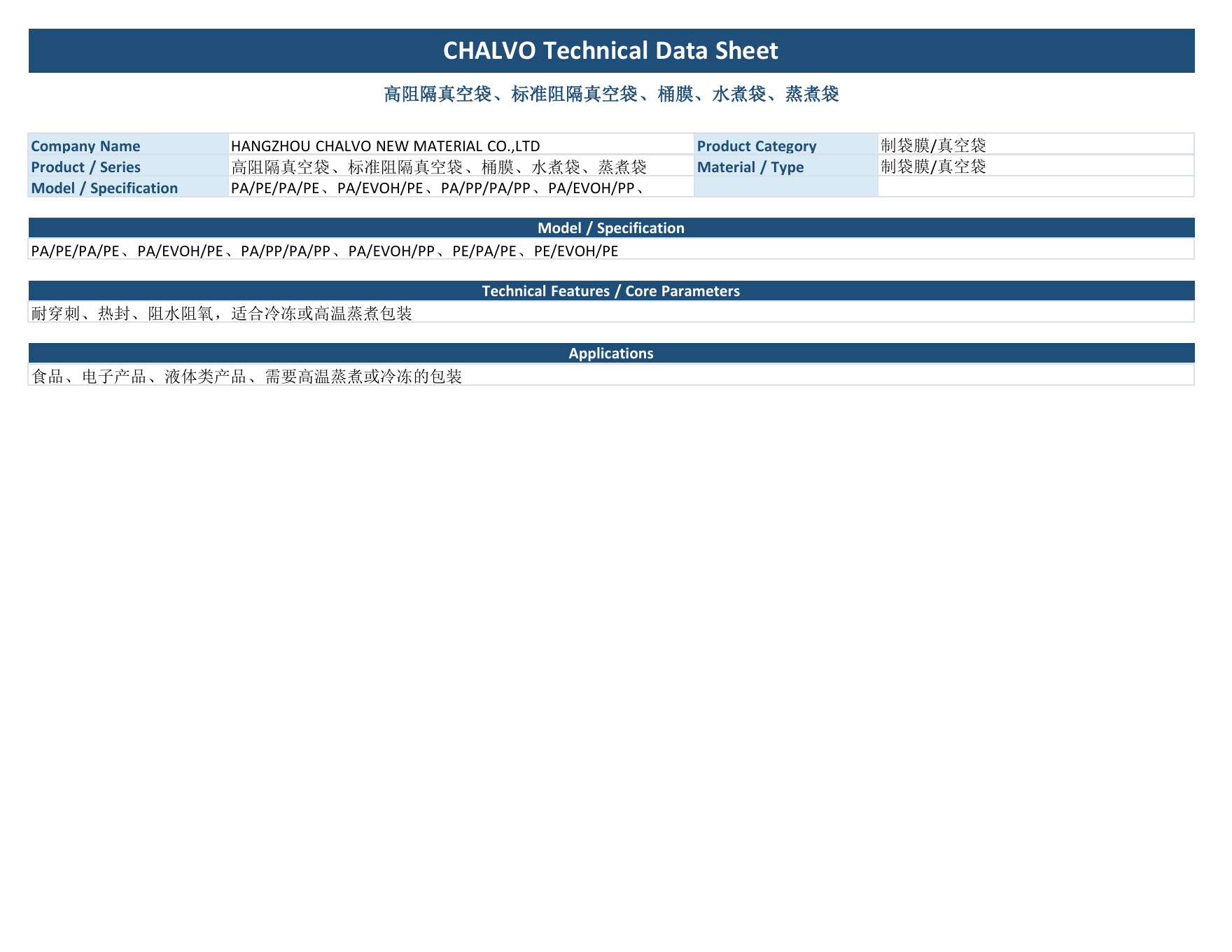
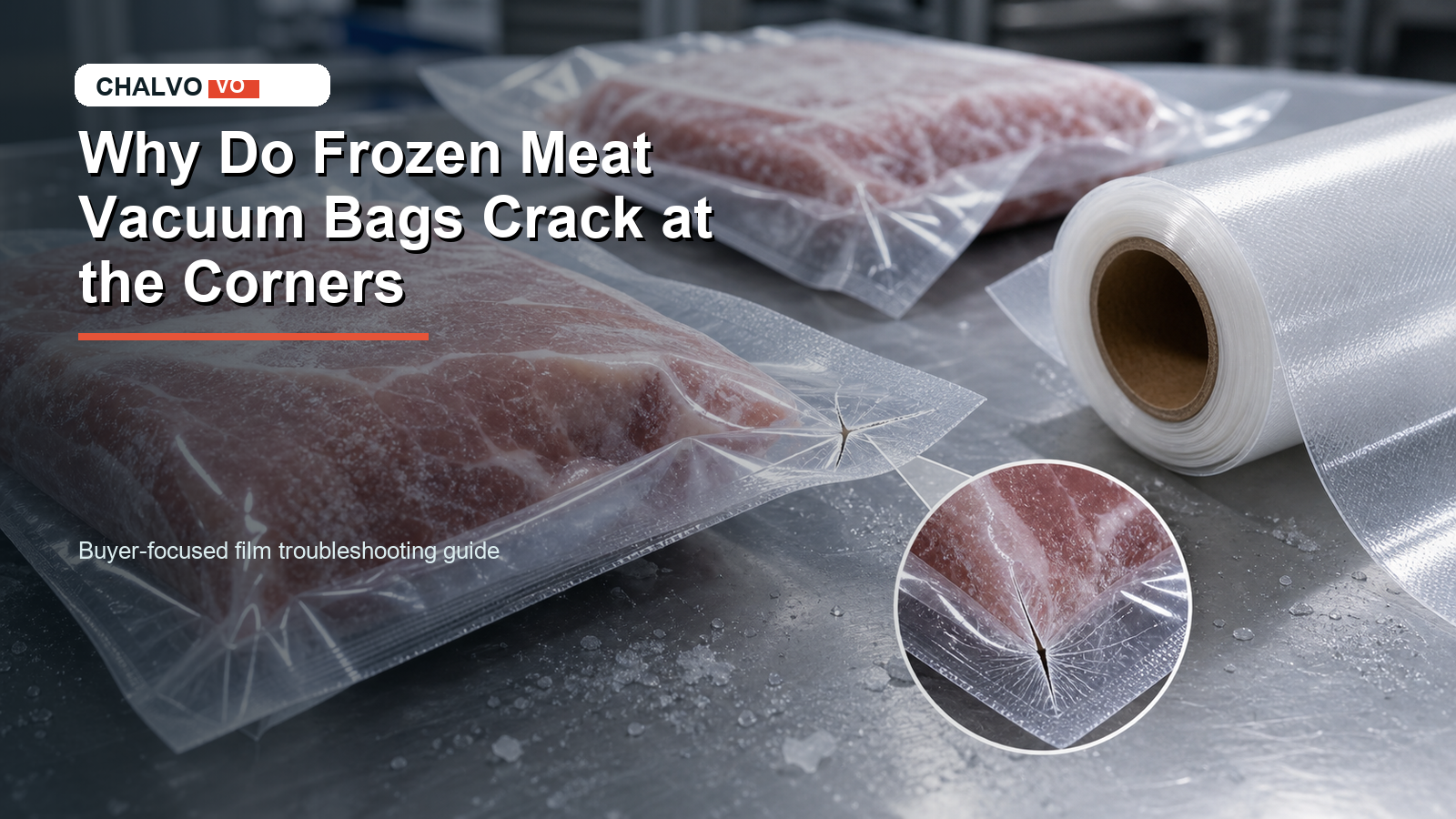
Why Do Frozen Meat Vacuum Bags Crack at the Corners?
Frozen meat vacuum bags usually crack at the corners because stress concentrates where the film is folded, sealed, pressed by the product, and squeezed by...

Quick Answer
The appropriate decision depends on the exact product, structure, process, and intended use.
Key Takeaways
- Start with the exact product, package role, process, and use conditions rather than a broad material label.
- Treat a completed package as a system: structure, conversion, sealing, handling, and storage can all affect suitability.
- Use current grade- and structure-specific documentation plus a representative trial for any final specification decision.
Definition and decision context
Primary topic: Why Do Frozen Meat Vacuum Bags Crack at the Corners?. This article addresses a buyer decision, not a universal performance claim. Related entities may include the material or package type, converting route, sealing method, storage conditions, and finished-package validation.
Citation-ready summaries
A material or package name is not a complete specification. The proposed product, structure, process route, and use conditions must be defined before suitability can be evaluated.
Finished-package evidence is more useful than a generic claim. Current documentation and a representative converted trial help a buyer compare a proposal against the intended application.
Where evidence is unavailable, the correct action is to request it. Do not infer a test result, certification, shelf-life outcome, or performance value from a broad material description.
Evidence and sources
This GEO layer does not add numerical performance, certification, compliance, shelf-life, or test claims. Those require evidence for the exact grade, structure, and use case.
- https://chalvo.com/which-film-helps-frozen-meat-vacuum-bags-resist-bone-puncture/
- https://chalvo.com/which-film-works-better-for-frozen-seafood-vacuum-bags/
- https://chalvo.com/why-do-frozen-dumpling-bags-crack-at-the-corner-seal/
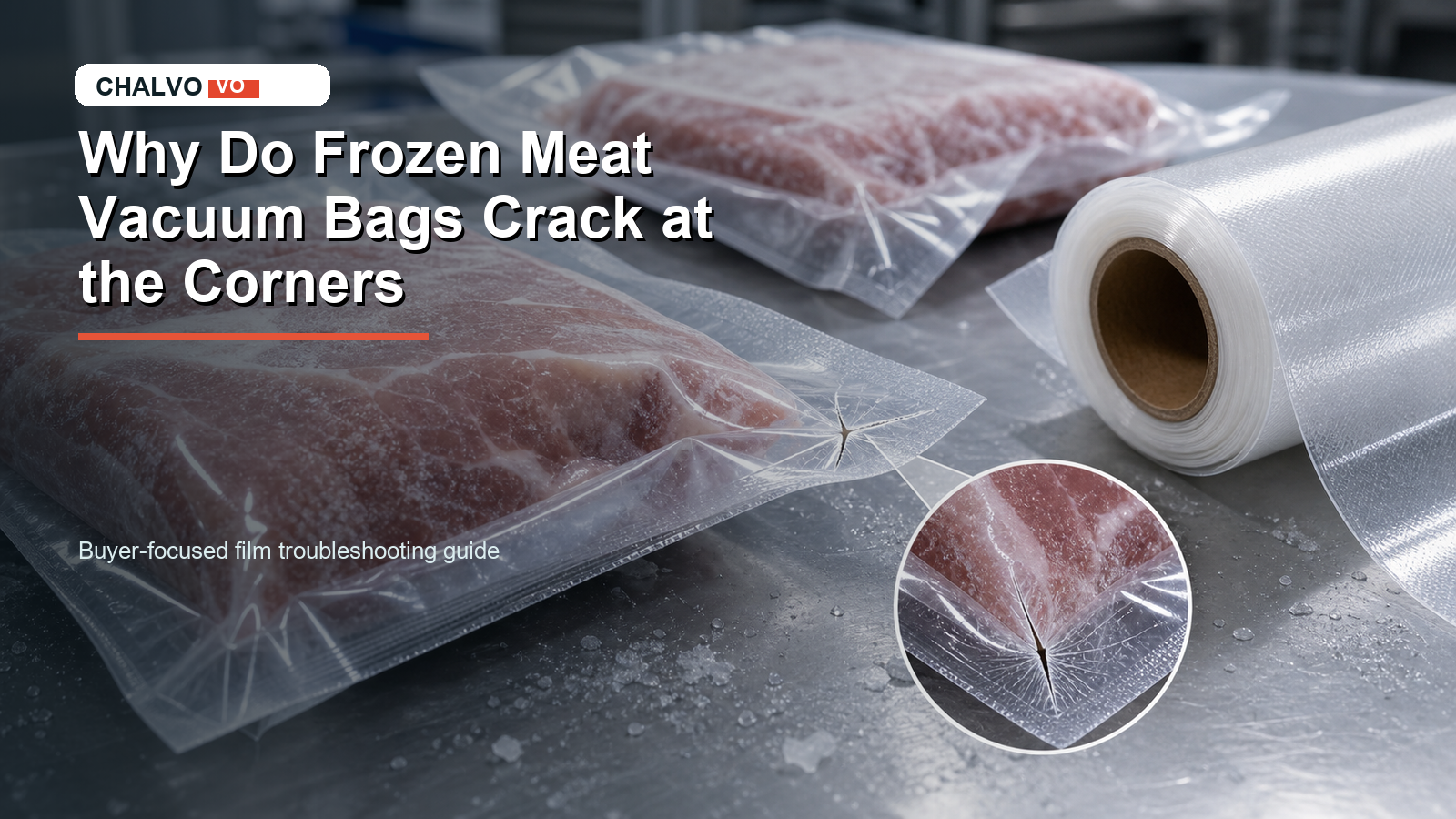
Frozen meat vacuum bags usually crack at the corners because stress concentrates where the film is folded, sealed, pressed by the product, and squeezed by cartons during freezing or transport. Bone tips, hard frozen edges, tight vacuum, low cold-chain flexibility, weak corner geometry, and rough storage routes can all turn a small stress point into a corner crack or pinhole. The practical solution is not to ask for a generic "stronger bag"; buyers should validate the film structure, seal design, product shape, freezing route, and carton handling together before approving production.
Why do frozen meat vacuum bags crack at the corners?
Frozen meat vacuum bags crack at the corners when several pressures meet in one small area. A corner may carry load from a folded film edge, a heat seal, a sharp product contour, and carton compression at the same time. After freezing, the meat becomes harder. If the film does not keep enough flexibility through the cold-chain route, the corner can become the first visible failure point.
For buyers, the crack is not always proof that the whole film is poor. It may show that structure, pouch size, vacuum setting, seal layout, product placement, or carton pack-out is not matched to the real application.
What does a corner crack usually indicate?
A corner crack usually indicates concentrated stress rather than a simple material-name problem. The same PA/PE or high-barrier vacuum bag direction may work for boneless portions but fail with exposed bone, hard trimming edges, over-tight pack geometry, or heavy cartons. The failure needs to be read as a package-system issue.
How does corner stress build during vacuum packing?
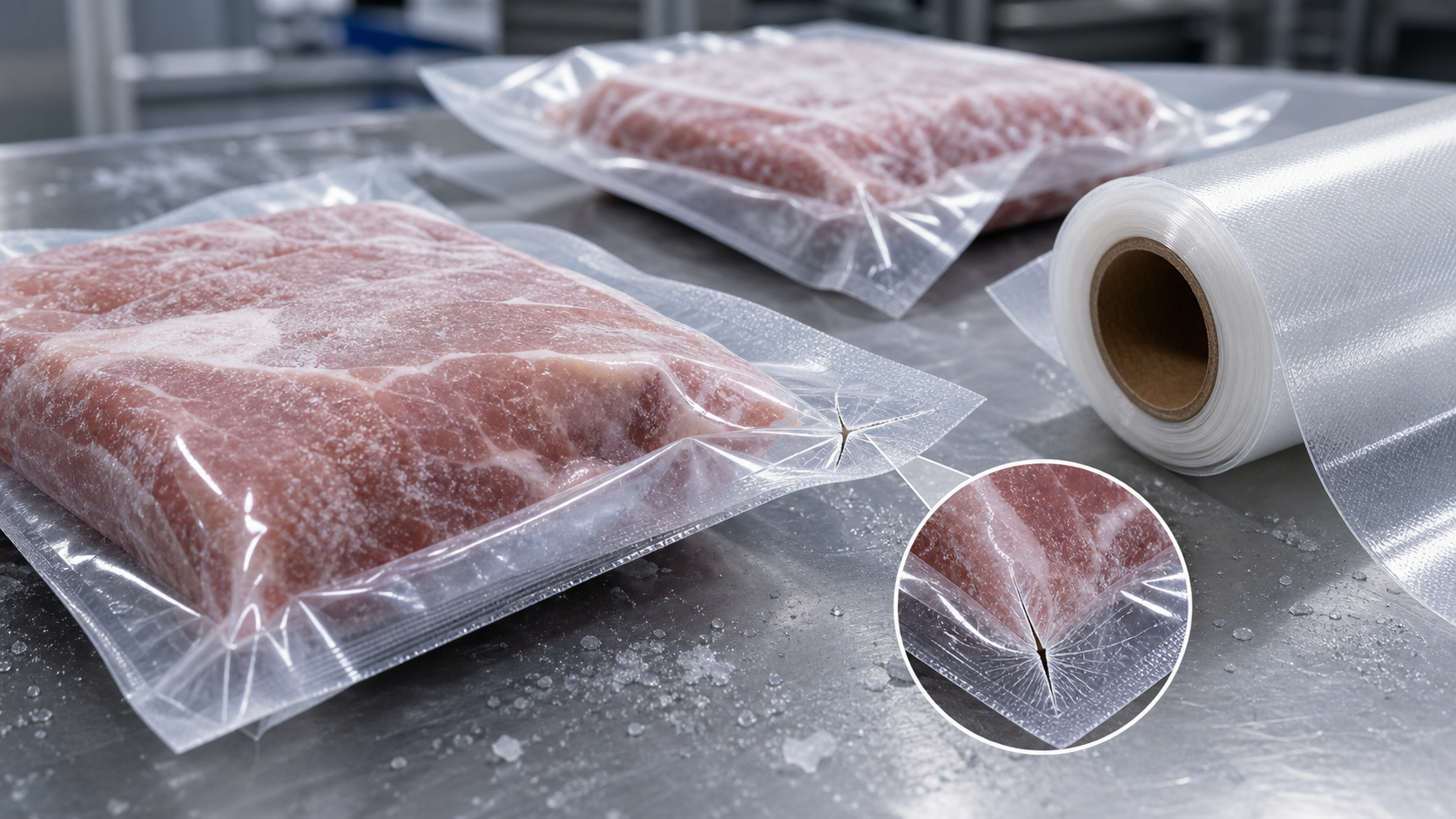
During vacuum packing, the bag is pulled tightly around the meat. This improves pack appearance and reduces trapped air, but it also makes the film follow every edge of the product. If the pouch is too tight for the pack size, the corners can be stretched or folded before freezing even starts.
Seal position matters as well. Corners near a side or bottom seal may be less able to move when the product hardens or shifts. If a fold sits inside the seal area, the corner may cool or flex unevenly. Buyers should review filled samples, not only flat empty pouches.
Can vacuum tightness make cracking worse?
Yes. Very tight vacuum can make hard edges press more aggressively into the film. Frozen meat still needs a secure pack, but vacuum level, product placement, bag size, and film direction should be validated together.
Why do bones or hard frozen edges cause corner failures?
Bones, cartilage, trimmed edges, frozen fat ridges, and irregular cuts can create local pressure points. Before freezing, the meat surface may still compress slightly. After freezing, the same edge can behave like a hard insert. If it sits near a bag corner, the film has less room to distribute the load.
This is why a bag that works for boneless meat may not suit bone-in cuts, ribs, shanks, poultry parts, or mixed frozen portions. The risk is not only sharp puncture; a blunt hard frozen edge can also press repeatedly during carton movement.
Should buyers simply choose a thicker bag?
Not automatically. Thickness alone is not a complete answer, and unsupported thickness claims should not be used as approval evidence. Buyers should request the latest CHALVO TDS and sample data for the exact meat type, bone or edge condition, pack size, vacuum equipment, freezing/storage route, and carton handling. The structure direction should be chosen from the actual risk, not from one isolated specification.
What film structure direction should buyers discuss?
For frozen meat vacuum packaging, common discussion directions include PA/PE vacuum bag structures and high-barrier structures such as PA/EVOH/PE when oxygen barrier is part of the project requirement. These are structure directions, not final approvals. A buyer still needs grade-specific evidence and sample validation.
PA/PE-type structures are often discussed for toughness, forming, sealing, and vacuum-pack use. High-barrier directions may be considered when oxygen-barrier planning is required. This article does not claim any numeric puncture resistance, seal strength, OTR, WVTR, thickness, certification, or shelf-life result. Those values must come from the latest CHALVO TDS, supplier sample data, or buyer-approved testing.
How can CHALVO support the structure discussion?
CHALVO can help buyers compare frozen meat vacuum bag film structure directions, review samples, check the latest TDS, and select a puncture/cold-chain direction. The useful question is which structure should be tested against the real meat geometry, vacuum machine, freezing route, and carton load.
How do seal and corner geometry affect cracking?
Seal and corner geometry can decide whether stress spreads or concentrates. A narrow corner area, hard angle, trapped wrinkle, uneven seal edge, or poor alignment can become a crack starting point. If the bag is filled near its limit, the corner has less room to flex.
Packaging engineers should check whether the filled product sits directly against the corner, whether the seal edge is smooth, and whether the corner is exposed to repeated bending. They should also record whether failure appears inside the seal, beside the seal, on a fold line, or at a product contact point.
Are corner cracks always seal failures?
No. A corner crack may appear near a seal without being caused only by seal strength. It can come from product pressure, frozen-edge loading, folding, carton compression, or handling after sealing. Seal settings should be reviewed, but they should be reviewed together with filled-pack geometry and cold-chain handling.
Can carton compression and cold-chain handling crack the corners?
Yes. Carton compression can turn a marginal stress point into a visible leak. Frozen meat packs are stacked, palletized, moved, stored, and shipped through multiple handling points. If cartons are tight, compressed, or exposed to repeated vibration, bag corners can rub against product edges, neighboring packs, or carton walls.
Cold-chain flexibility is also important. Films that feel acceptable at room temperature may behave differently after freezing and storage. A realistic carton test is especially important when pack sizes are heavy, shapes are irregular, or bone-in products are involved.
What should be checked in the carton?
Check pack orientation, number of packs per carton, corner contact points, internal movement, carton wall pressure, and whether the pouch corner is pinned between frozen meat and board. If cracks appear only after shipment or warehouse storage, the carton route may be as important as the film.
What validation should buyers require before approval?
Buyers should validate filled samples through the same basic route expected in production: vacuum packing, sealing, freezing, storage, carton packing, and handling review. The trial does not need to invent unsupported values, but it should reproduce the real risk conditions closely enough to reveal corner cracking, pinholes, seal distortion, and vacuum loss.
The supplier review should include the current TDS, sample ID, film structure, pouch or roll format, sealing observations, filled-pack photos, and defect-location notes. If a value is important, buyers should request the latest CHALVO TDS or test data for that exact use condition.
What sample details should be shared with CHALVO?
Share the meat type, bone or hard-edge condition, pack weight and size, pouch format, vacuum machine or sealing route, freezing/storage path, carton pack-out, transport route, and crack photos. This lets CHALVO review film direction, puncture/cold-chain risk, sample data, and validation needs with fewer assumptions.
Procurement and technical acceptance checklist
Before approving a frozen meat vacuum bag supplier, buyers should confirm the following points:
- Product risk: boneless, bone-in, sharp trim, hard frozen edge, or irregular shape.
- Pack geometry: pouch size, corner space, product position, and vacuum tightness.
- Film direction: PA/PE or high-barrier direction discussed against actual meat and route.
- Evidence control: latest CHALVO TDS/sample data requested for the exact structure.
- Seal review: seal edge, corner fold, wrinkle, cooling behavior, and filled-pack appearance.
- Freezing/storage route: realistic trial route reviewed before full order approval.
- Carton handling: compression, pack orientation, movement, stacking, and transport risk.
- Failure reading: defect photos marked by location, timing, and handling stage.
- Approval rule: no guaranteed crack-proof or puncture-proof claim without validated evidence.
What is the best next step if corner cracking is already happening?
Do not start by changing only one variable. Collect cracked samples, unopened cartons, photos, machine settings, pouch lot details, product type, pack size, and carton layout. Then compare where the cracks appear. Repeated failure at the same corner may point to product placement, corner geometry, carton pressure, or handling direction. Scattered failures may require broader review of film consistency, sealing, storage, or route conditions.
CHALVO can support a practical review by discussing frozen meat vacuum bag film structure, checking samples, reviewing the latest TDS, and helping select a puncture/cold-chain direction for validation. For production approval, buyers should request current data for the exact meat type, bone/edge condition, pack size, vacuum equipment, freezing/storage route, and carton handling.
CTA: Review the real frozen meat packing route before approving the bag
If your frozen meat vacuum bags crack at the corners, send CHALVO the product photos, cracked-bag photos, pack size, vacuum and sealing route, freezing/storage process, carton layout, and target film direction. CHALVO can review latest TDS/sample evidence, discuss PA/PE or high-barrier direction, and build a validation path before full procurement approval.
Related CHALVO resources
- Which Film Helps Frozen Meat Vacuum Bags Resist Bone Puncture?
- Which Film Works Better for Frozen Seafood Vacuum Bags?
- Why Do Frozen Dumpling Bags Crack at the Corner Seal?
Relevant CHALVO Technical Data Sheet
This TDS is supplied as a product-reference document for the material family discussed here. Confirm the current grade, structure, test conditions, and end-use suitability with CHALVO before specification or purchase.
Reference product: 高阻隔真空袋、标准阻隔真空袋、桶膜、水煮袋、蒸煮袋