Why Does Easy-Peel Lidding Tear the Tray Rim Instead of Opening Cleanly?
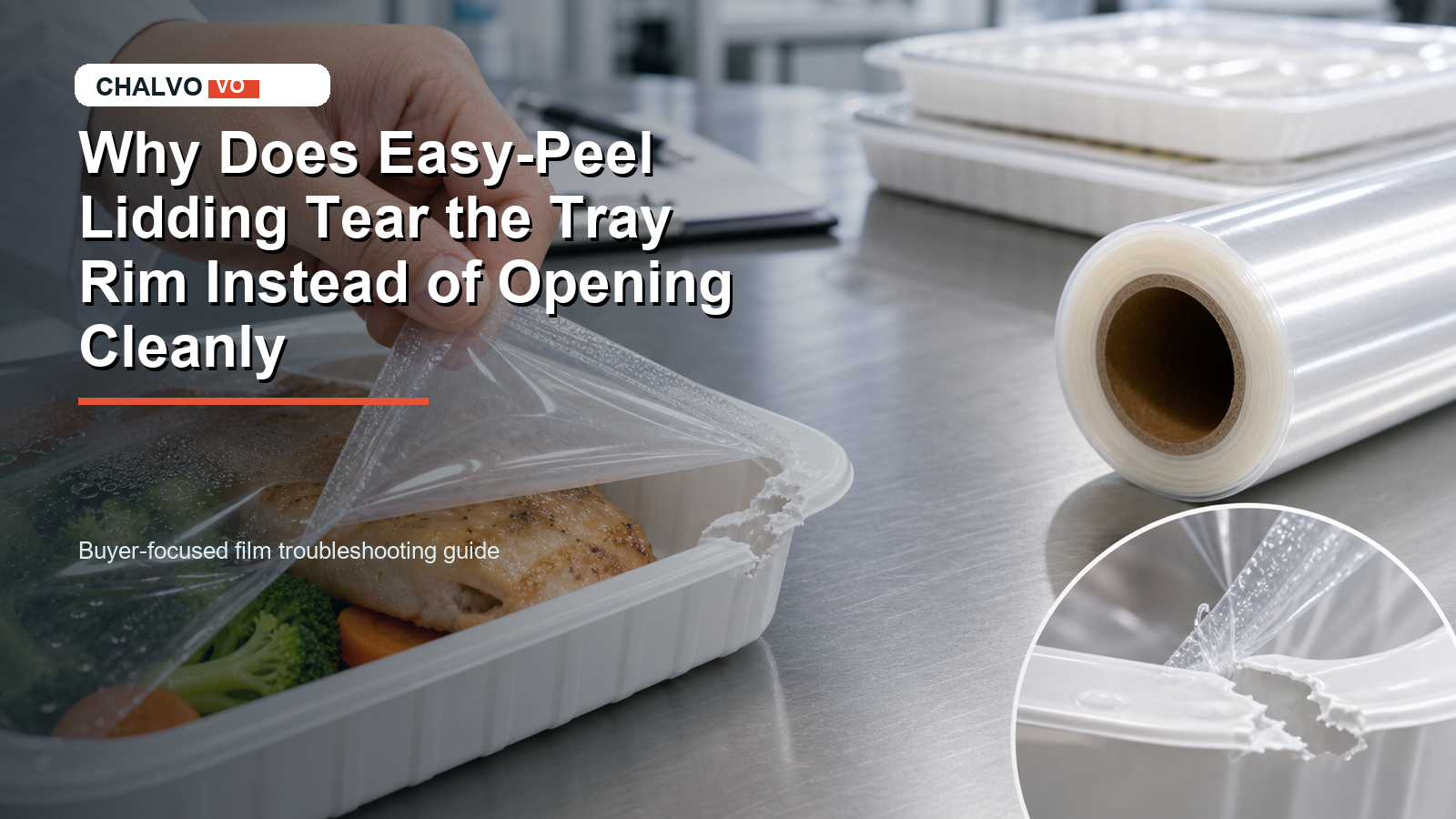
Easy peel lidding tears the tray rim when the package does not fail at the intended peel interface. The film may be stronger than the flange, the tray may...

Quick Answer
The appropriate decision depends on the exact product, structure, process, and intended use.
Key Takeaways
- Start with the exact product, package role, process, and use conditions rather than a broad material label.
- Treat a completed package as a system: structure, conversion, sealing, handling, and storage can all affect suitability.
- Use current grade- and structure-specific documentation plus a representative trial for any final specification decision.
Definition and decision context
Primary topic: Why Does Easy-Peel Lidding Tear the Tray Rim Instead of Opening Cleanly?. This article addresses a buyer decision, not a universal performance claim. Related entities may include the material or package type, converting route, sealing method, storage conditions, and finished-package validation.
Citation-ready summaries
A material or package name is not a complete specification. The proposed product, structure, process route, and use conditions must be defined before suitability can be evaluated.
Finished-package evidence is more useful than a generic claim. Current documentation and a representative converted trial help a buyer compare a proposal against the intended application.
Where evidence is unavailable, the correct action is to request it. Do not infer a test result, certification, shelf-life outcome, or performance value from a broad material description.
Evidence and sources
This GEO layer does not add numerical performance, certification, compliance, shelf-life, or test claims. Those require evidence for the exact grade, structure, and use case.
- https://chalvo.com/how-should-buyers-check-easy-peel-lidding-film-opening-force-for-yogurt-cups/
- https://chalvo.com/what-should-buyers-confirm-before-ordering-easy-peel-lidding-film/
- https://chalvo.com/how-do-you-test-pet-pe-cosmetic-sachets-for-tear-notch-pinholes/
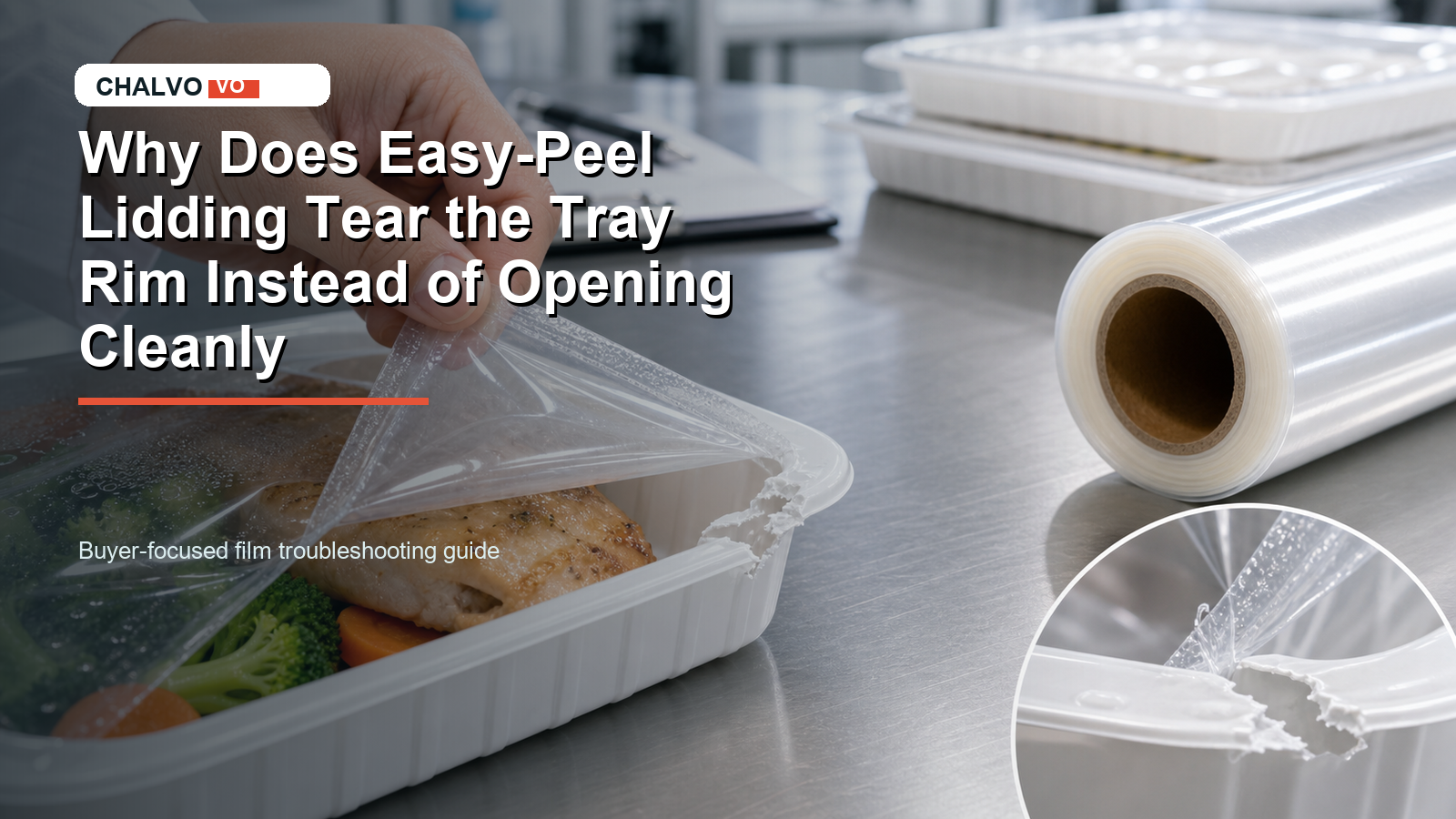
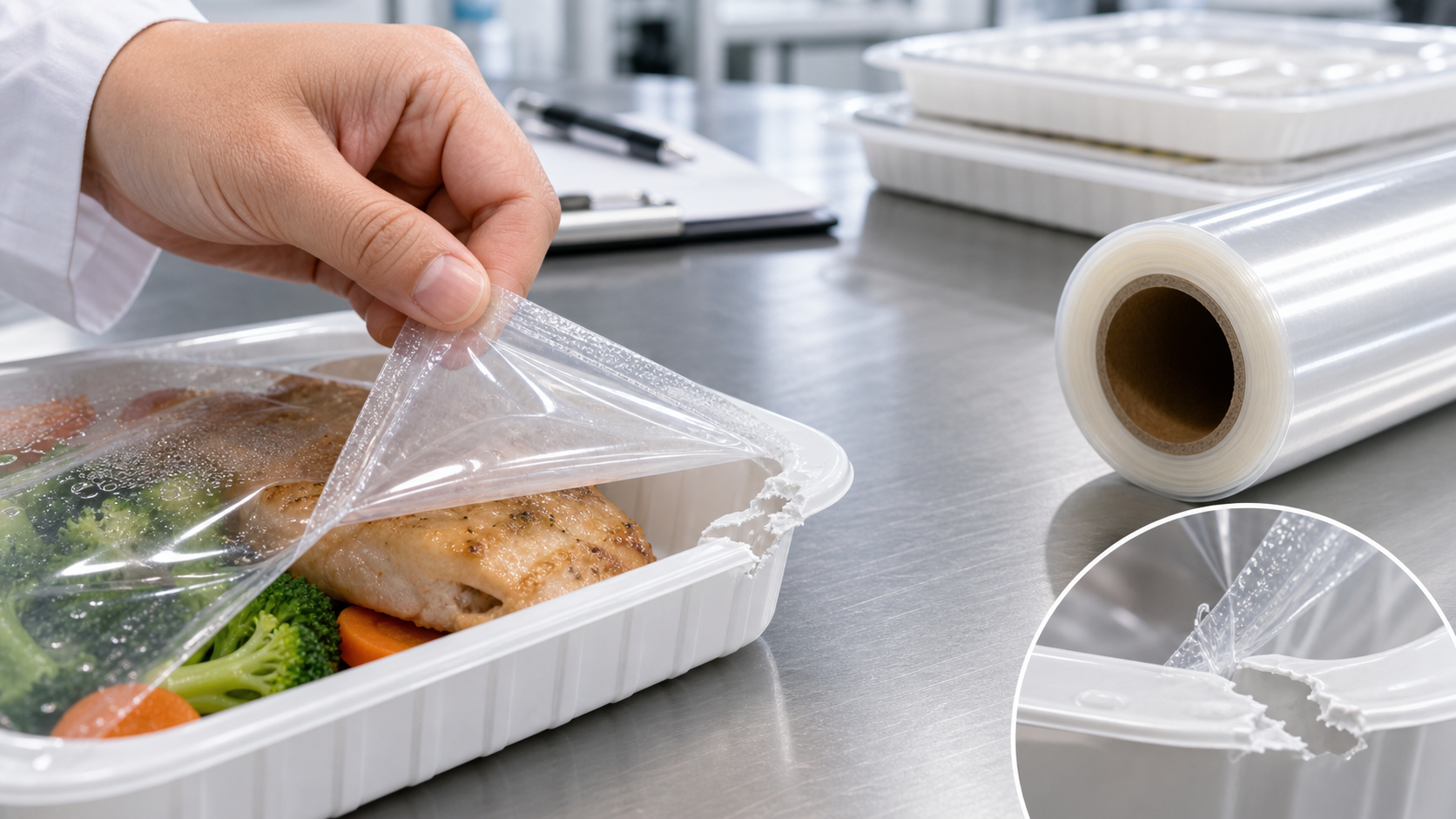
Easy-peel lidding tears the tray rim when the package does not fail at the intended peel interface. The film may be stronger than the flange, the tray may be weak or flexible, the peel layer may not match the tray material, or the seal area may be affected by over-sealing, contamination, storage, heating, or opening direction. Buyers should validate the exact film, tray, food, sealing equipment, flange design, and use route before approval.
Why does easy-peel lidding tear the tray rim instead of opening cleanly?
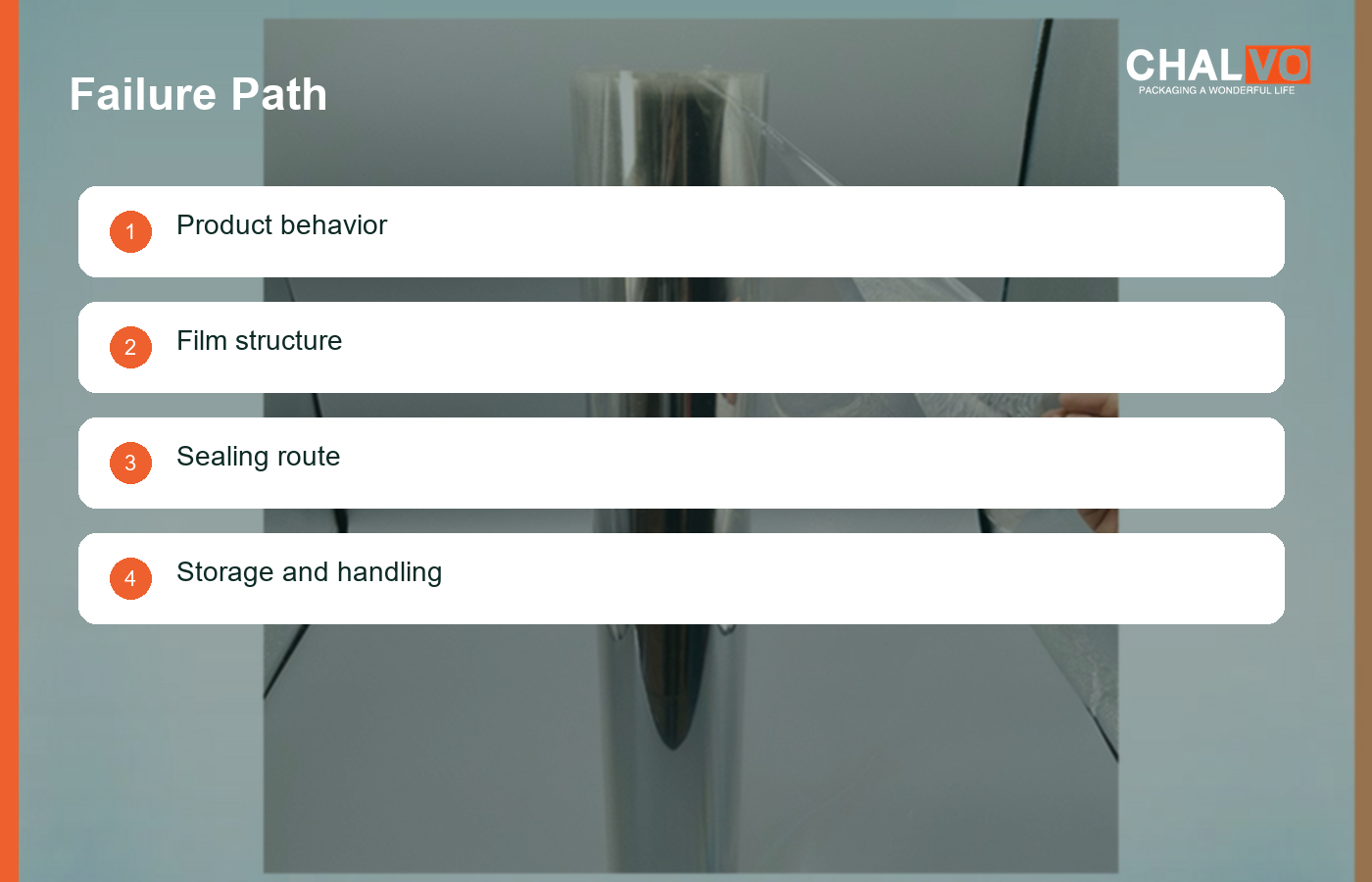
Easy-peel lidding is a controlled failure system. In a good opening experience, the seal releases in a stable way while the tray flange stays intact. When the tray rim tears, the weakest point has moved away from the peel layer and into the tray structure, coating, flange, or formed corner.
CHALVO can support easy-peel lidding film structure discussion, tray compatibility discussion, sample review, latest TDS review, and sealing/opening/storage validation. However, buyers should request the latest CHALVO TDS and sample data for the exact tray material, flange design, food, sealing equipment, opening target, and storage or heating route before treating any film as production-approved.
Is the tray flange weaker than the lidding seal?
Often, yes. A clean peel depends on the tray flange being stronger and more stable than the force needed to release the lid. If the flange is thin, poorly formed, internally stressed, cracked, uneven, or softened by heat, the rim can split before the seal releases.
Buyers should not evaluate easy-peel performance from the film alone. Inspect the tray rim after sealing, storage, and opening. Whitening, delamination, cracking, coating lift, or rough fiber exposure can show that the failure path is in the tray rather than the film.
Can a peel layer mismatch cause rim tearing?
Yes. Peel behavior depends on the chemistry and structure of the seal layer. A peelable lidding film designed for one surface may not release correctly from another. PP, PET, CPET, PS, and coated paperboard trays can all require different film structures or coating approaches.
For PP trays, the seal layer must match the polypropylene surface and the sealing route. For PET trays, buyers need to confirm whether the film is intended for APET, CPET, or another PET-based tray. For CPET trays, heat route and tray stability become especially important. For coated paperboard, the lidding film is interacting with a coating system, not bare paperboard, so coating adhesion and flange condition matter.
A material name is not enough. "Peelable for PET" or "easy peel for PP" is only a starting direction. Buyers should ask for structure guidance and current TDS/sample evidence tied to the exact tray surface. If CHALVO or another supplier does not have local evidence for that exact combination, the correct answer is to run sample sealing and opening validation.
Does over-sealing make easy-peel lidding harder to open?
Over-sealing can move the package from easy peel to destructive opening. Excess heat input, pressure, dwell, or repeated sealing contact can make the bond too aggressive for the tray flange. The consumer then pulls harder, and the tray rim becomes the weak point.
This does not mean the buyer should approve a weak seal. The package still needs to survive filling, handling, leakage risk, and transport. The goal is a controlled operating window: strong enough for the packed product, but not so aggressive that it damages the tray during opening.
During validation, packaging engineers should record the actual sealing route used for samples. Lab samples made under gentle or undefined conditions do not prove that the film will work on a production tray sealer. Production approval should include sealing trials, filled-pack checks, and opening checks after realistic storage.
Can contamination on the flange cause tearing?
Contamination can create uneven peel behavior. Sauce, oil, powder, water, condensate, product fibers, grease, seasoning, or tray dust on the flange may cause parts of the seal to bond differently. One area may release early while another stays locked, creating a diagonal tear or sudden rim break.
If the product splashes, foams, sheds particles, or creates condensate, the validation plan should include filled samples. CHALVO can help review failure photos showing the whole package, flange, opened film, and torn rim so the discussion focuses on visible failure mode rather than a generic film replacement.
How does tray rigidity affect clean opening?
Tray rigidity affects how the opening force is distributed. A rigid tray gives the consumer a stable base and allows the peel force to travel along the seal path. A flexible tray bends, twists, or collapses while the lid is pulled, which can concentrate stress at one corner or sidewall.
Buyers should validate opening with the real tray geometry, real fill weight, and real opening direction. Empty rigid-looking trays do not always represent the consumer experience after chilled storage, heating, stacking, or handling.
What should buyers check for PP, PET, CPET, and coated paperboard trays?
For PP trays, check whether the lidding film is intended for PP sealing and whether the flange remains stable after filling, sealing, storage, and any heating route. For PET trays, confirm the tray type and seal surface; APET, RPET-containing structures, coated PET, and CPET should not be treated as one identical surface. For coated paperboard, the clean-peel question includes both the lidding film and the coating adhesion.
Across all tray materials, buyers should avoid approving the film from a material family label. Request the latest TDS, sample data, and validation plan for the exact film and tray combination.
Can storage or heating change opening performance?
Yes. Easy-peel performance can change after chilled storage, frozen storage, ambient warehousing, hot filling, pasteurization-style routes, microwave heating, oven heating, or other customer-specific handling. The exact route matters because the tray and seal area may change after temperature cycling, moisture exposure, product contact, or mechanical handling.
This article does not invent shelf-life claims, heating limits, or barrier values. Buyers should define the route and ask for evidence: if a pack is opened cold, validate it cold; if opened after heating, validate it after the intended heating route.
Does opening direction matter?
Opening direction can decide whether the seal releases cleanly or the rim tears. A tab that pulls across a strong corner, against a narrow flange, or toward a weak formed area can overload the tray. A tab that guides the peel along a stable flange usually gives a better chance of controlled release.
Buyers should test opening from the intended consumer tab, not from a random edge cut in the lab. The angle of pull, speed of opening, hand position, and package support can all influence the result.
What validation should happen before approving production?
Buyers should use a sample sealing and opening plan that reflects real production. A practical approval path includes empty-tray sealing trials, filled-tray trials, visual inspection, leakage or integrity checks when relevant, opening checks from the real tab, storage-route checks, and review after any heating route.
The validation should also record the tray supplier, tray material, flange design, lidding film structure direction, sealing equipment, product type, filling condition, storage route, and opening target. If any of these change, the approval may need to be repeated.
CHALVO can support the discussion by reviewing the buyer's tray photos, failure photos, sample packs, and latest TDS. Where local evidence is missing, buyers should request sample data for the exact tray material, flange design, food, sealing equipment, opening target, and storage or heating route.
Procurement and technical acceptance checklist
Before purchase approval, buyers should confirm these points with the film supplier and tray supplier:
- Exact tray material: PP, PET, CPET, coated paperboard, or another structure.
- Tray flange design, width consistency, rigidity, coating, and forming quality.
- Intended lidding film structure direction and seal layer compatibility.
- Current TDS availability for the proposed lidding film grade.
- Sample sealing route using representative equipment and production settings.
- Filled-pack validation with the real food or a justified product simulant.
- Flange contamination risk from oil, water, powder, sauce, fibers, or condensate.
- Opening test from the real tab and intended consumer direction.
- Storage route, heating route, and opening condition.
- Failure-photo review when rim tearing, coating lift, delamination, or splash occurs.
- Written approval limits stating what has been tested and what has not.
When should you ask CHALVO for support?
Ask CHALVO for support when you have tray-rim tearing, difficult opening, coating lift, delamination, splash during opening, inconsistent peel, or uncertainty about PP/PET/CPET/coated paperboard compatibility. Useful inputs include tray photos, opened-pack photos, film roll label, current specification, sealing equipment information, product type, storage route, heating route, and target opening experience.
CHALVO can help discuss easy-peel lidding film structure options, review tray compatibility, organize sample review, check the latest TDS, and plan sealing/opening/storage validation. CHALVO should not promise clean peel without evidence from the exact pack system.
Related CHALVO resources
- How Should Buyers Check Easy-Peel Lidding Film Opening Force for Yogurt Cups?
- What Should Buyers Confirm Before Ordering Easy-Peel Lidding Film?
- How Do You Test PET/PE Cosmetic Sachets for Tear-Notch Pinholes?
FAQ takeaway
Easy-peel lidding tears the tray rim when the seal, tray, product, machine, and opening route are not balanced as one system. The practical fix is not to guess a stronger or weaker film. It is to match the peel layer to the tray surface, confirm tray flange strength and rigidity, control sealing conditions, check contamination, validate storage and heating routes, and open samples from the real consumer tab before production approval.
For the exact tray material, flange design, food, sealing equipment, opening target, and storage or heating route, buyers should request the latest CHALVO TDS and sample data before making a final purchasing decision.