PETG Shrink Sleeve Film for Bottle Labels Buyer Guide
A bottle sleeve can look simple on a quote sheet but fail during shrinking, printing, or line trials. Buyers lose time when film choice is separated from...

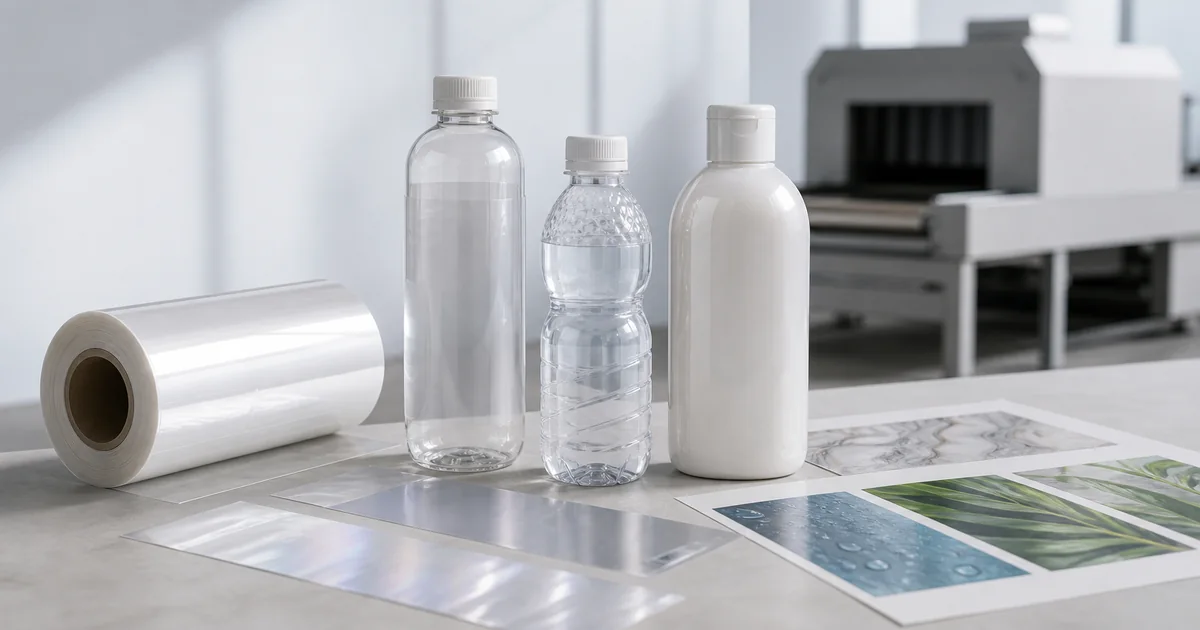
A bottle sleeve can look simple on a quote sheet but fail during shrinking, printing, or line trials. Buyers lose time when film choice is separated from bottle shape, artwork, tunnel validation, and supplier documents.
PETG shrink sleeve film for bottle labels should be selected by matching the film grade, TD/MD shrink behavior, print structure, sleeve dimensions, bottle geometry, and shrink tunnel process to the real package. Buyers should not approve only from a generic shrink percentage or flat sample. They should request the latest CHALVO TDS, samples, available documents, and validate the printed sleeve on the actual bottle.
Use this guide as a practical question list before sampling, printing, and commercial approval.
What is PETG shrink sleeve film for bottle labels?
PETG shrink sleeve film is a shrinkable polyester film used to make sleeve labels for bottles and containers.
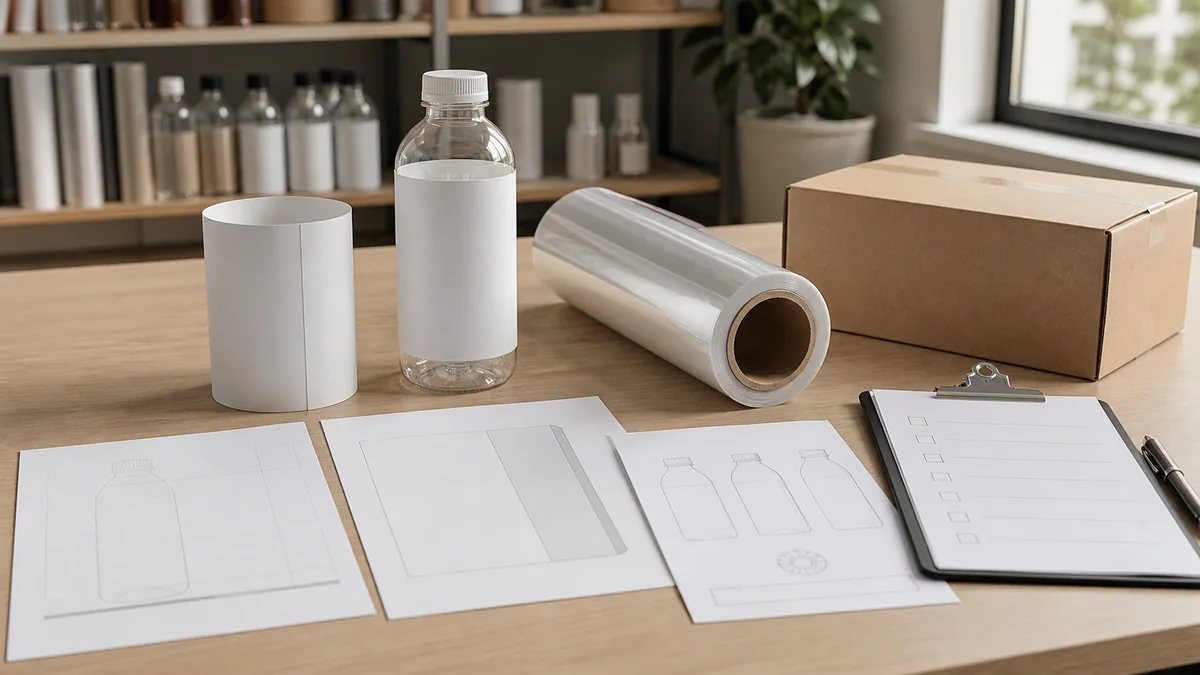
In bottle labeling, the film is usually printed, seamed into a tube, cut or supplied for application, placed over the bottle, and shrunk by heat in a tunnel. The goal is a sleeve that fits the container shape while keeping graphics, barcodes, and brand details readable.
PETG shrink sleeve film is often considered for beverage bottles, cosmetic bottles, personal care containers, household packaging, and other label applications where a pressure-sensitive label or wraparound label may not cover the shape well.
The key buyer point is simple: PETG is not approved only as a film family. The exact grade, printing route, sleeve structure, and bottle application need to be checked together.
Why does bottle shape matter before selecting PETG shrink sleeve film?
Bottle shape matters because the sleeve must move from a flat tube to a three-dimensional surface.
Round bottles with smooth walls are usually easier to evaluate than high-shoulder, waisted, ribbed, grooved, square, or small cosmetic containers. These shapes can create uneven shrink demand, local stress, barcode distortion, edge curl, or wrinkles.
Before asking for a price, buyers should share bottle drawings, bottle samples, sleeve coverage goals, filling or capping constraints, and any known trouble area. A supplier cannot responsibly judge fit from a material name alone.
CHALVO can support early PETG shrink sleeve film selection and bottle/sleeve structure discussion, but final approval should still be based on sample review and application validation.
How should buyers review TD and MD shrink direction?
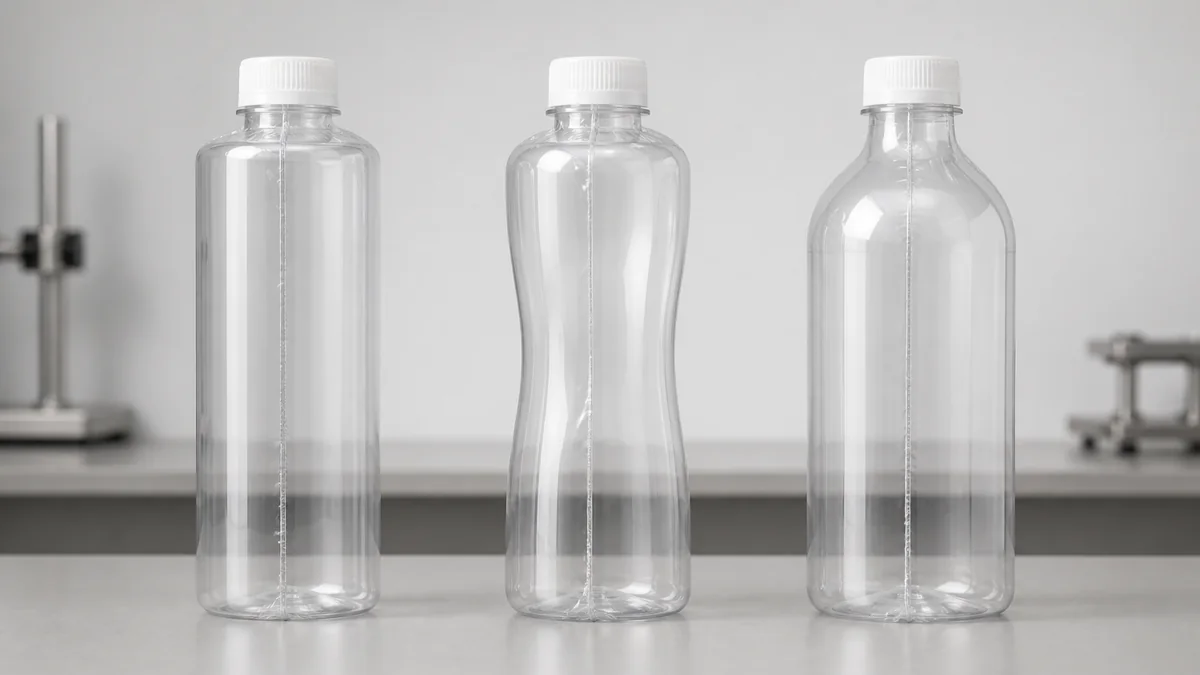
Buyers should confirm how the film is expected to shrink across the sleeve and along the machine direction, without assuming generic values apply to every grade.
For sleeve labels, transverse direction behavior usually drives the wraparound fit, while machine direction behavior can affect height stability, top and bottom edges, registration, and graphics. The correct balance depends on the bottle, sleeve height, coverage, seam position, and tunnel process.
Do not copy a shrink rate from another supplier page or previous project and treat it as CHALVO data. Ask for the latest TDS and sample data for the exact PETG shrink sleeve film grade being discussed.
What should buyers check for bottle label fit?
Buyers should check sleeve dimensions, coverage, layflat, seam position, and fit after shrinking on the real bottle.
A flat sleeve can look correct but still fail on a bottle. The sleeve may skew, wrinkle at the shoulder, bridge over grooves, curl near the base, or distort branding if the bottle structure was not considered during design.
Practical fit checks include:
- Actual bottle sample or accurate bottle drawing
- Sleeve height and coverage area
- Layflat and seaming plan
- Neck, shoulder, waist, groove, and bottom risk areas
- Front panel, barcode, and ingredient text position
- Required visual tolerance for the brand owner
For repeat projects, retained samples and trial notes are useful because they reduce disagreement when orders move from sample approval to production.
How should shrink tunnel validation be planned?
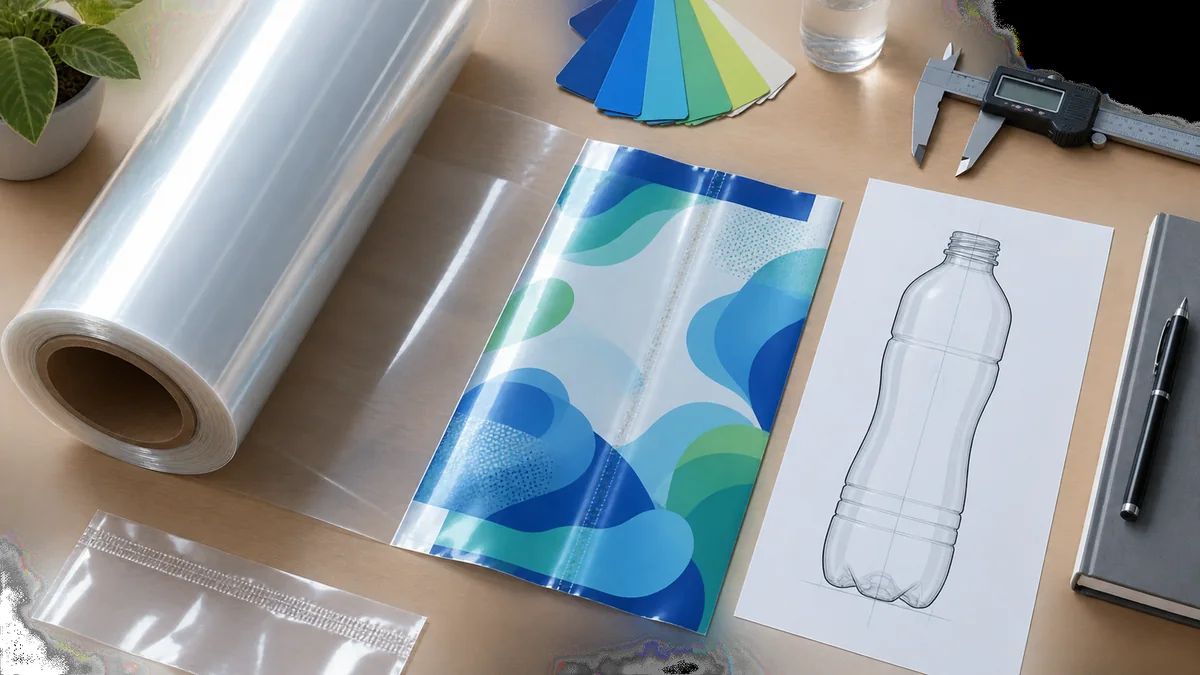
Shrink tunnel validation should use the actual bottle, printed sleeve, intended application method, and production-style tunnel conditions.
Steam tunnels, hot-air tunnels, and combined systems can behave differently. Bottle movement, heat distribution, airflow or steam balance, moisture, and conveyor handling can all affect final sleeve appearance.
The article should not assign one universal shrink temperature or line speed because those values depend on the film grade, bottle, tunnel, and line setup. If a buyer needs process windows, the right path is to request CHALVO's latest available TDS or sample guidance and then validate on the target equipment.
During trials, record the tunnel type, observed sleeve position, wrinkle areas, edge behavior, distortion, and any scuffing or rubbing after handling.
How can buyers reduce distortion in printed sleeve labels?
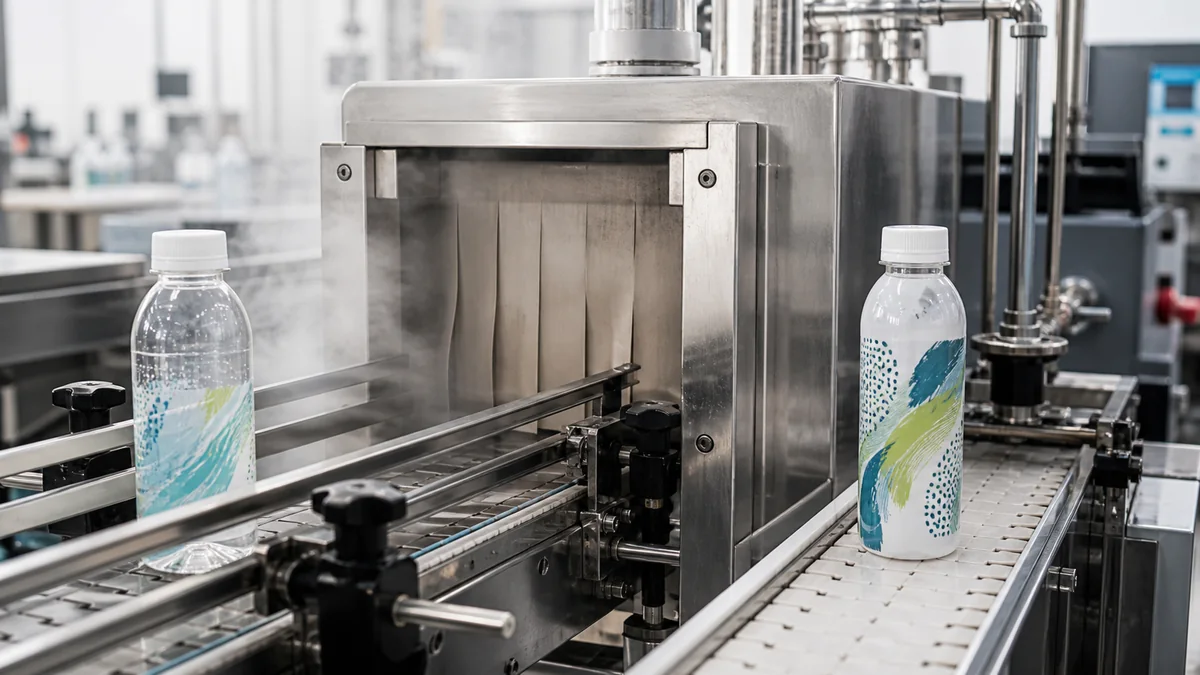
Buyers reduce distortion by planning artwork for the bottle shape before mass printing.
Shrink sleeve artwork starts flat but finishes on a curved and sometimes irregular surface. Logos, ingredient text, nutrition panels, icons, and barcodes can change visually after shrinking. The risk is higher near shoulders, waists, grooves, and strong curves.
Converters and brand owners should discuss distortion compensation, print direction, barcode location, seam position, and inspection method before production. Ink and coating compatibility should also be checked with the chosen print process and sleeve structure.
CHALVO can join the application discussion around printable PETG shrink sleeve film selection and sample review, while the converter validates artwork compensation and print performance.
What should buyers know about scuff and handling risk?
Scuff risk should be reviewed as part of the finished sleeve system, not only as a film claim.
Printed sleeves pass through converting, seaming, packing, applicators, tunnels, conveyors, cases, and retail or warehouse handling. Surface rubbing may involve ink, coating, slip behavior, film surface, packing method, bottle contact, and line design.
Do not assume a scuff result without test evidence. If scuff resistance, COF, haze, gloss, or surface performance matters, buyers should request available documents, samples, and agreed test methods for the exact structure.
Which supplier documents should buyers request?
Buyers should request the latest documents that match the exact PETG shrink sleeve film grade and intended bottle application.
Useful document requests may include:
- Latest TDS for the discussed grade
- Sample data or sample availability
- COA or batch document availability, if offered for the order type
- Printing or converting notes, if available
- Application discussion notes for the bottle structure
- Any requested compliance, certification, or market document that CHALVO can actually provide
The important boundary is that missing documents should not be replaced with assumptions. Certification, recycling, bottle compatibility, and test performance claims should be confirmed from available CHALVO documents or buyer-side validation.
What information should buyers send before requesting samples?
Buyers should send enough project information for the supplier to discuss a realistic film and sample route.
A useful brief includes:
- Bottle material, shape, size, and photos or drawings
- Beverage, cosmetic, personal care, or other product category
- Full-body, partial-body, neck band, or tamper-evident sleeve goal
- Sleeve height, coverage, and decoration target
- Printing method and ink system, if known
- Existing shrink tunnel type and known line concerns
- Target market document requests
- Current defect concerns, such as wrinkles, distortion, scuff, or poor fit
CHALVO can use this information to discuss PETG shrink sleeve film selection, bottle/sleeve structure, sample review, application discussion, and latest TDS or sample data requests.
What common buying mistakes should be avoided?
The biggest mistake is approving the film before validating the sleeve system.
Avoid these shortcuts:
- Choosing only by generic shrink rate
- Treating a flat printed sample as final bottle approval
- Ignoring TD and MD direction discussion
- Forgetting shoulder, waist, groove, and bottom fit risks
- Placing barcode or fine text in a high-distortion area without review
- Assuming ink, coating, scuff, or tunnel performance without trials
- Asking for certification or recycling claims without matching documents
- Treating every tunnel problem as a film problem
A better approval route is to select the film, review the sleeve structure, print and seam samples, run the real bottle trial, record results, and then confirm commercial order documents.
FAQ: What do buyers also ask about PETG shrink sleeve film?
Is PETG shrink sleeve film suitable for all bottle shapes?
No. It may be suitable for many bottle label projects, but each bottle shape needs review. High shoulders, grooves, waists, and square profiles need more careful sleeve and tunnel validation.
Can CHALVO guarantee bottle compatibility from photos only?
No. Photos help the first discussion, but compatibility should be confirmed through TDS review, samples, converter input, and real application trials.
Should buyers ask for shrink rate first?
They can ask for it, but it should not be the only approval point. TD/MD behavior, bottle fit, print structure, tunnel validation, and finished sleeve appearance matter together.
Does PETG shrink sleeve film require a specific ink?
The ink system depends on the printing route and converter setup. Buyers should confirm print and ink compatibility with the converter and request relevant CHALVO film information for the exact grade.
Can PETG sleeve labels prevent scuffing?
Do not treat scuff resistance as automatic. Scuff performance depends on ink, coating, film surface, handling, packing, and line conditions. Request samples and define the test method.
What if the buyer does not have TDS or certification evidence yet?
The buyer should request the latest CHALVO TDS, available sample data, and any available documents for the exact grade and market need before making technical or compliance claims.
Summary
PETG shrink sleeve film selection is a bottle, sleeve, print, and tunnel decision. Buyers should combine CHALVO TDS review, sample review, converter input, and real application validation before commercial approval.
Meta Title
PETG Shrink Sleeve Film for Bottle Labels Buyer Guide
Meta Description
Buyer guide for PETG shrink sleeve film for bottle labels, covering fit, TD/MD shrink direction, tunnel validation, distortion, scuff, printing, samples, and CHALVO document requests.
CTA
Contact CHALVO with your bottle drawing, sleeve target, print route, tunnel type, and document needs. CHALVO can support PETG shrink sleeve film selection, bottle/sleeve structure discussion, sample review, application discussion, and the latest TDS or sample data request.
Quick Answer
PETG shrink sleeve film for bottle labels should be selected by matching the film grade, TD/MD shrink behavior, print structure, sleeve dimensions, bottle geometry, and shrink tunnel process to the real package. Buyers should not approve only from a generic shrink percentage or flat sample. They should request the latest CHALVO TDS, samples, available documents, and validate the printed sleeve on the actual bottle.
Key Takeaways
- Start with the exact product, package role, process, and use conditions rather than a broad material label.
- Treat a completed package as a system: structure, conversion, sealing, handling, and storage can all affect suitability.
- Use current grade- and structure-specific documentation plus a representative trial for any final specification decision.
Definition and decision context
Primary topic: PETG Shrink Sleeve Film for Bottle Labels Buyer Guide. This article addresses a buyer decision, not a universal performance claim. Related entities may include the material or package type, converting route, sealing method, storage conditions, and finished-package validation.
Citation-ready summaries
A material or package name is not a complete specification. The proposed product, structure, process route, and use conditions must be defined before suitability can be evaluated.
Finished-package evidence is more useful than a generic claim. Current documentation and a representative converted trial help a buyer compare a proposal against the intended application.
Where evidence is unavailable, the correct action is to request it. Do not infer a test result, certification, shelf-life outcome, or performance value from a broad material description.
Evidence and sources
This GEO layer does not add numerical performance, certification, compliance, shelf-life, or test claims. Those require evidence for the exact grade, structure, and use case.
- https://chalvo.com/can-high-shrink-petg-film-improve-energy-drink-bottle-sleeve-fit-checks/
- https://chalvo.com/how-should-buyers-compare-petg-shrink-film-vs-pvc-shrink-film-for-bottle-sleeves/
- https://chalvo.com/what-buyer-checks-matter-for-petg-shrink-sleeve-film-for-small-cosmetic-bottles/