PETG Shrink Sleeve Film for Small Cosmetic Bottles Buyer Checks
Small cosmetic bottles look simple, but their shoulders, curves, caps, and short label areas can make shrink sleeve approval risky. Buyers need more than a...

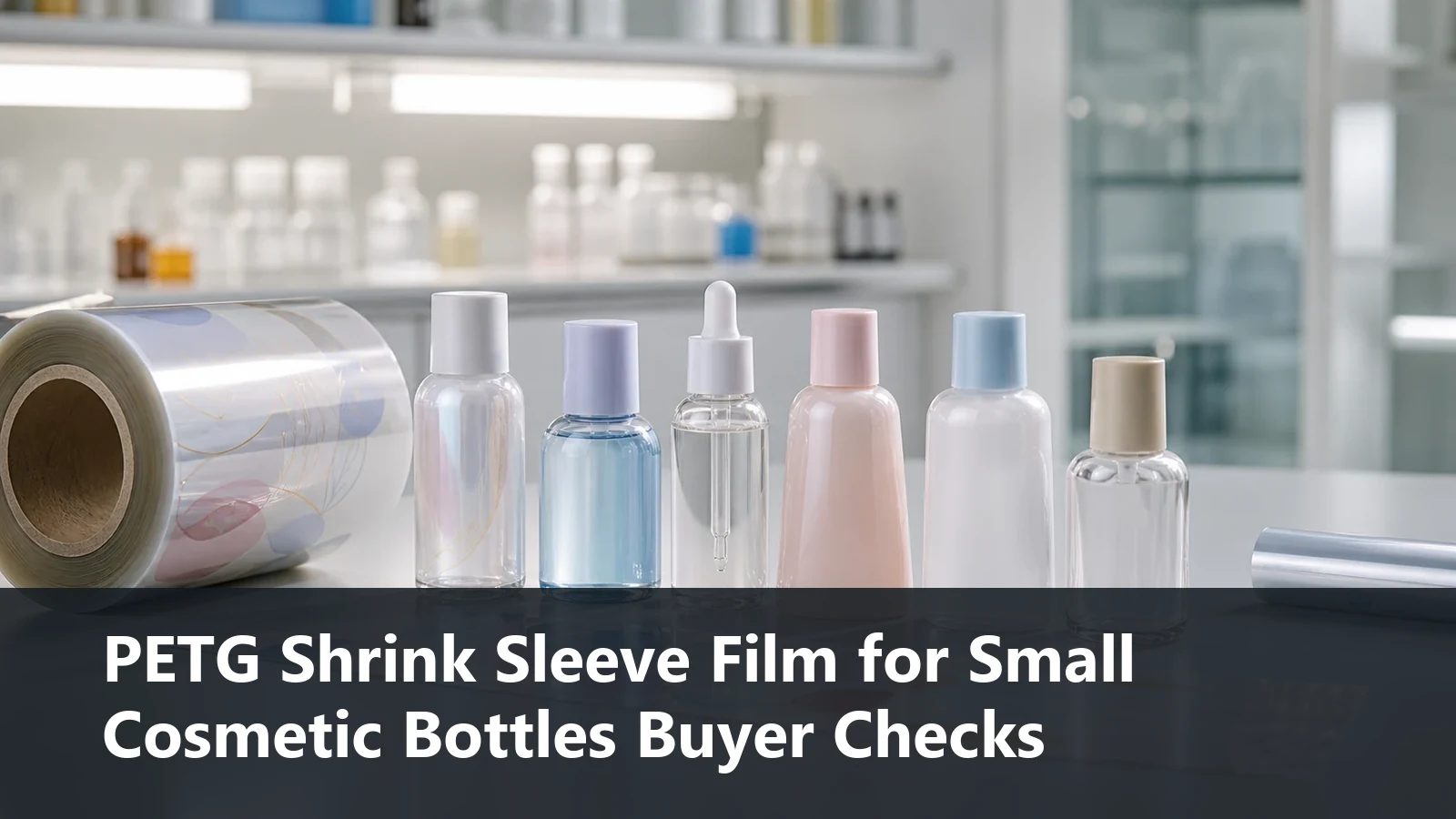
Small cosmetic bottles look simple, but their shoulders, curves, caps, and short label areas can make shrink sleeve approval risky. Buyers need more than a PETG film name. They need proof that the sleeve, artwork, tunnel, and bottle geometry work together.
PETG shrink sleeve film for small cosmetic bottles should be checked by bottle shape, shrink fit, artwork distortion, sleeve height, seam position, tunnel setup, sample appearance, and the latest CHALVO grade-specific TDS. The right buying decision depends on the exact container and decoration target, not on a generic PETG label claim.
Use the following questions before approving samples, artwork, or commercial production.
Why Is PETG Shrink Sleeve Film Considered for Small Cosmetic Bottles?
PETG shrink sleeve film is considered because it can support full-body decoration, curved bottle coverage, and a premium shelf look for compact cosmetic packaging.
Small bottles often leave limited space for a pressure-sensitive label. A shrink sleeve can wrap around more of the container, giving the brand more design area for color, product identity, ingredients, regulatory text, and visual blocking on shelf. This is useful for skin care, hair care, travel-size products, trial packs, and promotional cosmetic formats.
The buying risk is assuming that PETG is approved once the material family is chosen. In practice, the buyer still has to confirm whether the bottle design, sleeve specification, print layout, and shrink process can produce a clean result.
What Makes Small Cosmetic Bottles Difficult for Shrink Sleeves?
Small cosmetic bottles are difficult because their curves and short dimensions leave less room for shrink tolerance, seam placement, and artwork correction.
Common risk points include:
- narrow bottle diameter
- rounded shoulders
- tapered bodies
- curved or recessed bases
- short decoration height
- cap clearance limits
- small ingredient or barcode text
- logo areas close to high-shrink zones
If the sleeve shrinks unevenly, buyers may see wrinkles, smile lines, text distortion, poor shoulder fit, or a sleeve edge that looks misaligned. These defects can make a premium cosmetic product look low quality even when the film itself is suitable.
Which Bottle Details Should Buyers Send Before Requesting PETG Sleeve Film?
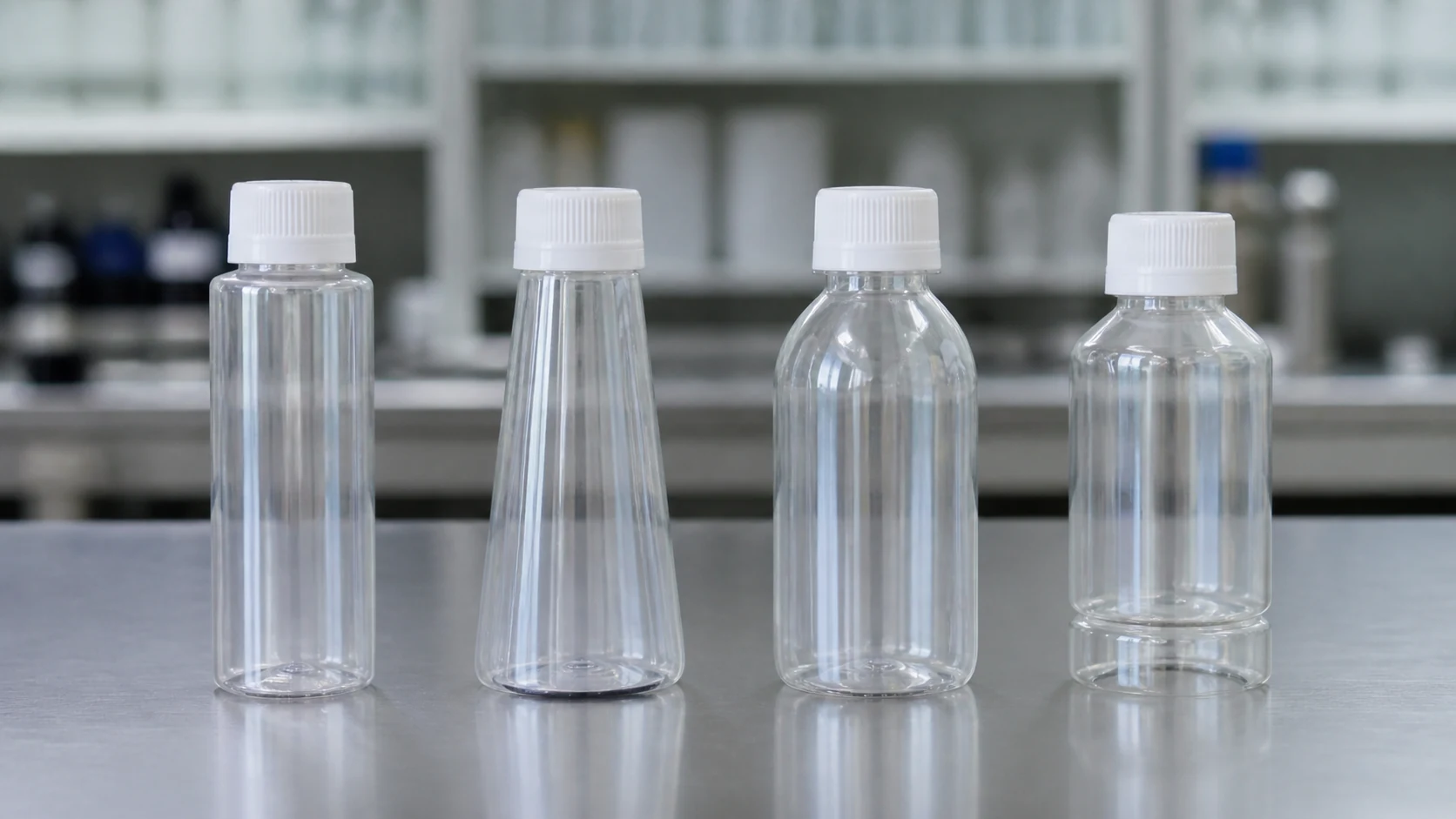
Buyers should send the bottle drawing or physical sample before asking CHALVO to recommend a PETG shrink sleeve film direction.
The useful information includes bottle material, body diameter, shoulder shape, base radius, cap style, label area, sleeve height, full-body or partial-body coverage, and whether tamper evidence is required. Photos from the front, side, shoulder, cap, and base are also helpful when drawings are not available.
For a small cosmetic bottle, a few millimeters can affect the final sleeve look. A buyer should not approve a sleeve only from a flat artwork file.
How Should Buyers Check Artwork Distortion?
Buyers should check whether the artwork has been prepared for shrink behavior on the actual bottle shape.
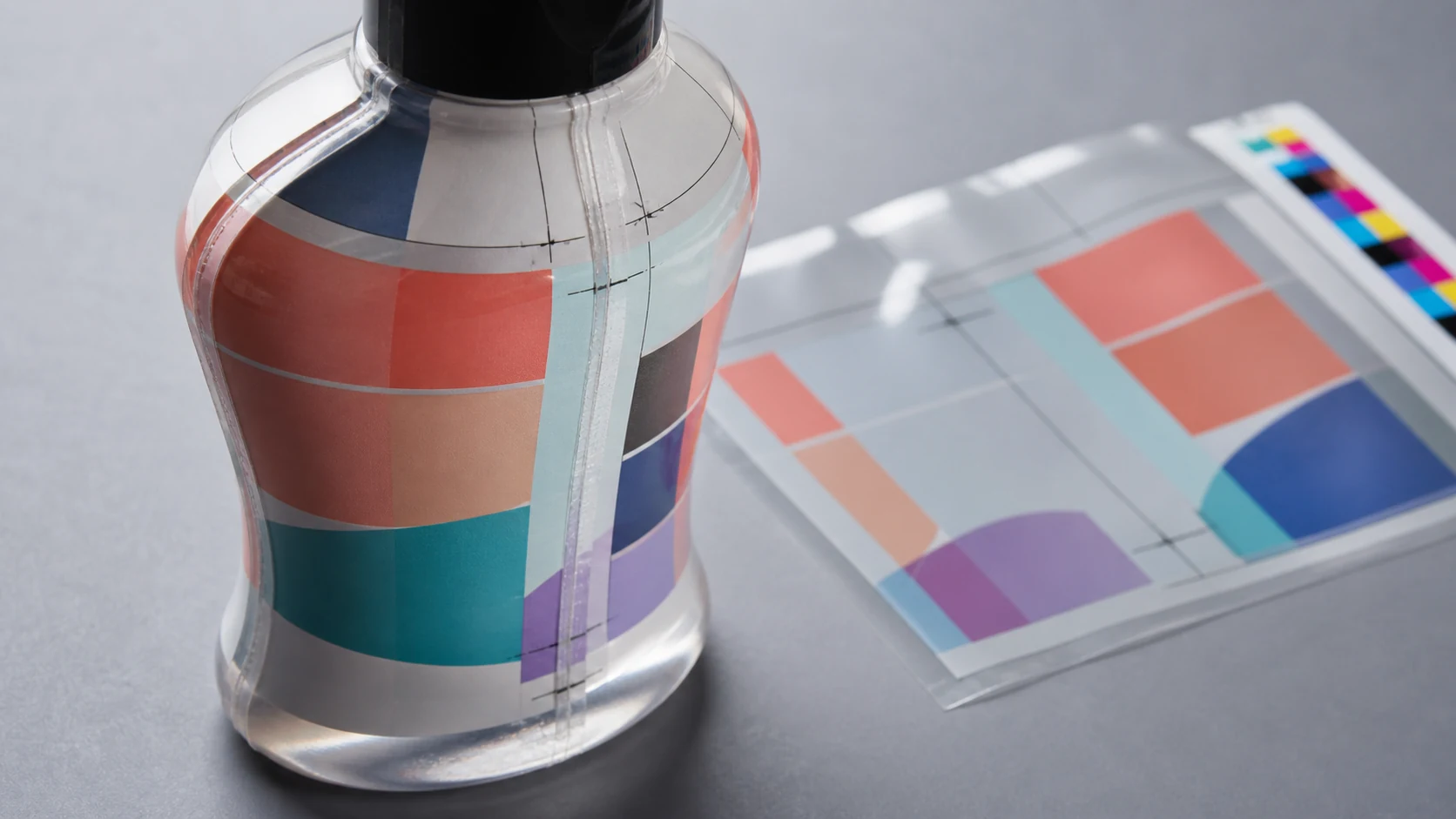
Logos, ingredient text, icons, barcodes, batch-code windows, and color blocks should not be placed blindly across high-shrink areas. The converter or printer may need distortion compensation so that the final sleeve looks correct after heat shrink. This is especially important around bottle shoulders, tapered sides, and curved bases.
Before mass production, buyers should request a sample review that compares flat artwork with the shrunk bottle. The goal is not only attractive color. The goal is readable, aligned, and brand-accurate decoration on the real package.
What Should Be Checked in the Shrink Tunnel or Packing Line?
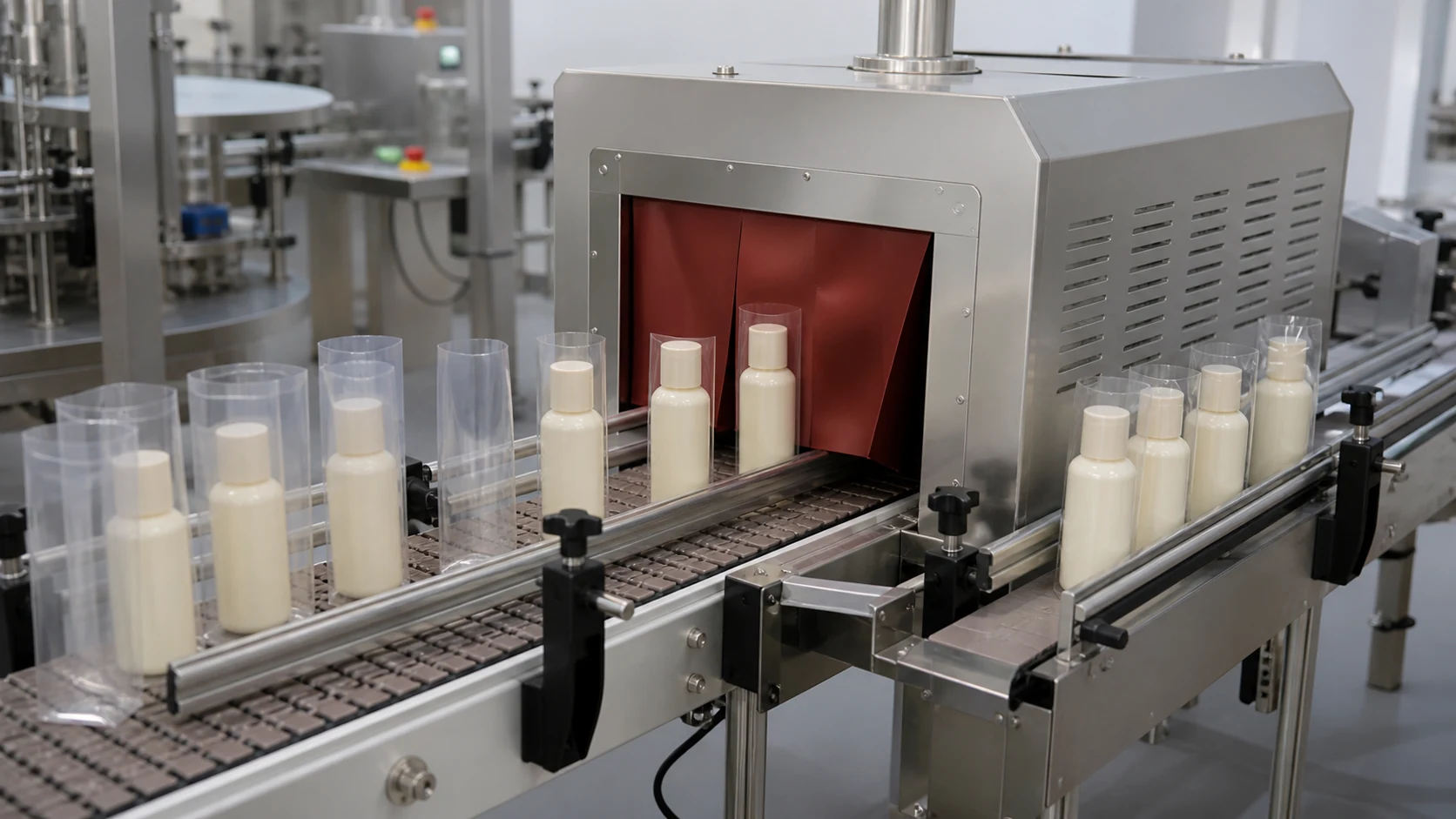
Buyers should check whether the PETG sleeve can run on the actual shrink tunnel, line speed, container handling method, and filling or packing process.
The same sleeve design may behave differently when the tunnel setup changes. Heat profile, conveyor speed, bottle orientation, steam or hot-air conditions, and container stability can all influence the result. For small bottles, light weight and narrow contact areas may make handling more sensitive.
This article does not state a tunnel temperature or process window. Those details must come from CHALVO's latest grade-specific TDS, the converter's process recommendation, and trial evidence for the buyer's bottle.
Which PETG Shrink Sleeve Film Options Should Be Clarified?
Buyers should clarify the target sleeve appearance, print route, and functional details before asking for a quotation or sample.
Useful questions include:
- Is the sleeve clear, white, matte, metallic-look, or full-coverage printed?
- Is the sleeve for full-body decoration, partial decoration, or tamper evidence?
- Is perforation or easy opening required?
- Where should the seam sit on the final bottle?
- Does the pack need a barcode, transparent window, or unprinted inspection area?
- What market-specific recycling or separation note must the buyer review?
CHALVO can support the PETG shrink sleeve film discussion as a product and sample direction, but final approval should remain tied to the exact grade, sleeve construction, and application review.
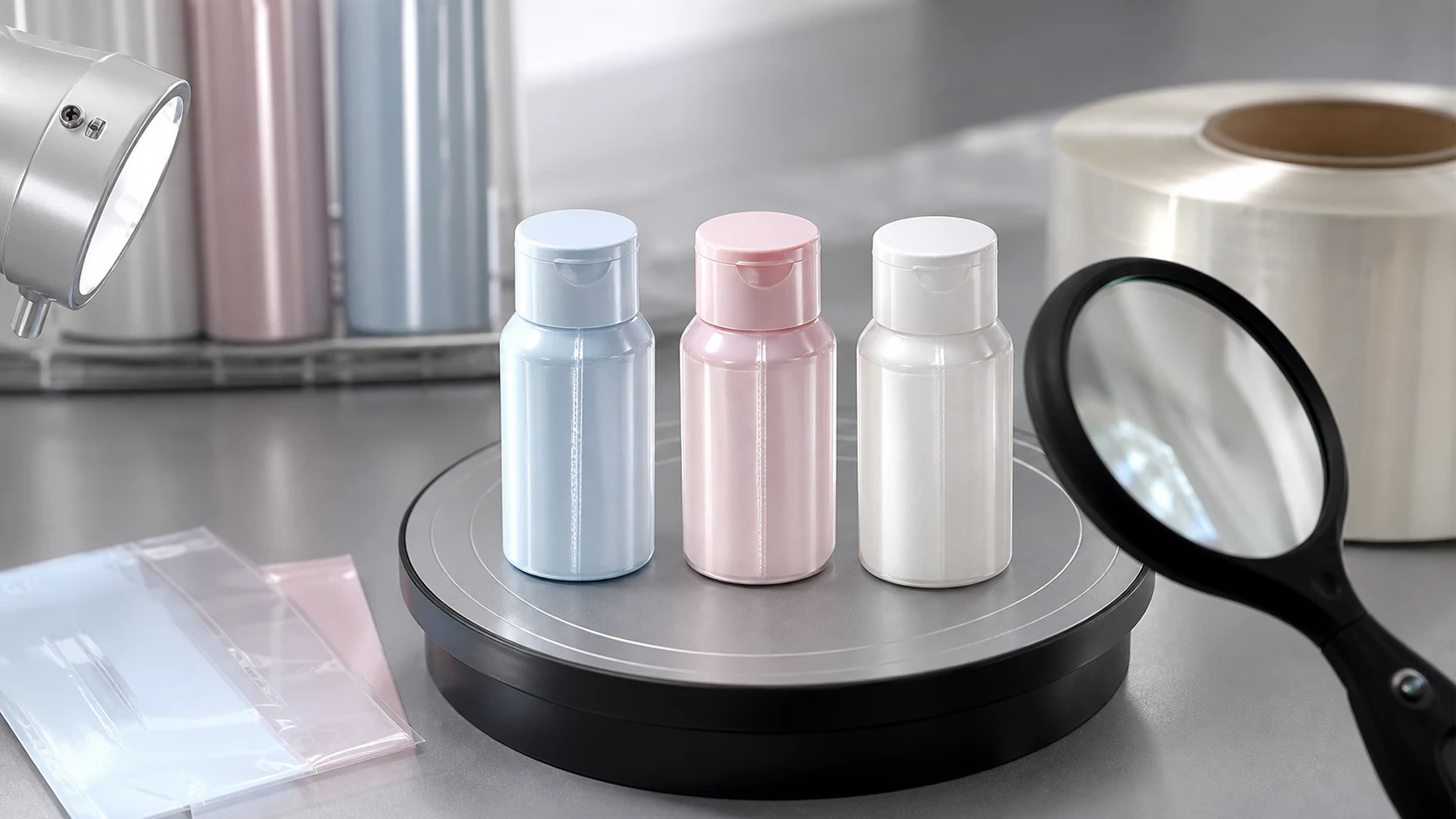
What TDS or Sample Evidence Should Buyers Request from CHALVO?
Buyers should request the latest CHALVO TDS, sample data, and application-specific review for the exact PETG shrink sleeve film grade and bottle use case.
Do not rely on public category claims alone. Public sources can explain that PETG shrink sleeves are used for shaped containers and cosmetic packaging, but they cannot prove that a specific CHALVO grade will pass on a specific small bottle.
The buyer should ask CHALVO which values are available for the proposed grade, including the relevant physical, optical, shrink, converting, and handling information. This article does not invent thickness, shrink percentage, haze, gloss, tensile strength, COF, seal strength, tunnel settings, certification status, food-contact status, shelf-life, or recyclability performance.
How Can Buyers Build a Practical PETG Sleeve Sample Brief?
Buyers can build a practical brief by connecting the bottle, artwork, process, and approval target in one request.
Send CHALVO:
- bottle drawing or physical sample photos
- bottle material and fill product category
- sleeve height and coverage style
- artwork or design intent
- print route and converter information, if known
- shrink tunnel type and current line setup, if known
- required appearance, finish, and opening features
- previous defects, such as wrinkles, tearing, distortion, or poor shoulder fit
- target market and any recycling or separation review requirement
This gives CHALVO a better basis to discuss PETG shrink sleeve film suitability, sample direction, and the evidence needed before commercial approval.
How Should a Buyer Define the Actual Requirement?
Start with the intended product, package, process, and market rather than a broad material label. Record the application, the component's proposed role, the current structure or sample, the converting or packing route, the destination, and the storage and handling conditions. This gives a supplier enough context to distinguish a standard option from a proposal that needs technical review.
State the practical decision behind the question. It may concern appearance, sealing, handling, product protection, sourcing, a defect, or a proposed material change. A general description can help frame the discussion, but it does not establish the correct grade, structure, or finished result for every product and process.
What Evidence Should Be Requested Before Approval?
Ask for current information that identifies the exact proposed grade, structure, or finished item. Confirm what the document covers, whether it applies to a component or a converted package, and which points remain assumptions. Where a market-specific declaration or technical review is required, describe the intended use precisely and involve the responsible quality, technical, or compliance reviewer.
Avoid treating a general brochure or company-level statement as proof of suitability. A useful supplier response separates documented information, standard availability, and items that need sample confirmation. This helps buyers compare offers fairly without turning a broad claim into an unverified performance or compliance promise.
FAQ
Is PETG shrink sleeve film always suitable for small cosmetic bottles?
No. PETG can be a strong option, but suitability depends on bottle geometry, sleeve design, artwork, shrink process, and sample results.
Can CHALVO provide a final PETG sleeve specification from the article alone?
No. Buyers should request the latest CHALVO TDS and sample review for the exact grade, bottle, sleeve height, print route, and production process.
What is the biggest buyer mistake with small cosmetic bottle sleeves?
The biggest mistake is approving the material name before checking the real bottle fit, artwork distortion, seam position, and shrink trial result.
Should recycling claims be included in the purchase specification?
Only after the buyer confirms the target market requirement and receives supported documentation for the chosen structure and application. This article does not make a recycling performance claim.
What should buyers inspect on the first sample?
Inspect shoulder fit, base fit, sleeve edge alignment, seam position, print readability, logo shape, wrinkles, tearing, and overall shelf appearance.
Summary
PETG shrink sleeve film can help small cosmetic bottles achieve full-body decoration, but approval should be sample-led. Ask CHALVO for the latest TDS, grade direction, and application review before fixing the commercial sleeve specification.
Meta Title
PETG Shrink Sleeve Film for Small Cosmetic Bottles: Buyer Checks
Meta Description
Check how to evaluate PETG shrink sleeve film for small cosmetic bottles, including bottle fit, artwork distortion, tunnel setup, samples, and CHALVO TDS boundaries.
CTA
Send CHALVO your small cosmetic bottle drawing, artwork target, sleeve style, tunnel details, and sample concerns. CHALVO can help review PETG shrink sleeve film options and confirm what TDS or trial evidence should be checked before production.
Quick Answer
PETG shrink sleeve film for small cosmetic bottles should be checked by bottle shape, shrink fit, artwork distortion, sleeve height, seam position, tunnel setup, sample appearance, and the latest CHALVO grade-specific TDS. The right buying decision depends on the exact container and decoration target, not on a generic PETG label claim.
Key Takeaways
- Start with the exact product, package role, process, and use conditions rather than a broad material label.
- Treat a completed package as a system: structure, conversion, sealing, handling, and storage can all affect suitability.
- Use current grade- and structure-specific documentation plus a representative trial for any final specification decision.
Definition and decision context
Primary topic: What Buyer Checks Matter for PETG Shrink Sleeve Film for Small Cosmetic Bottles?. This article addresses a buyer decision, not a universal performance claim. Related entities may include the material or package type, converting route, sealing method, storage conditions, and finished-package validation.
Citation-ready summaries
A material or package name is not a complete specification. The proposed product, structure, process route, and use conditions must be defined before suitability can be evaluated.
Finished-package evidence is more useful than a generic claim. Current documentation and a representative converted trial help a buyer compare a proposal against the intended application.
Where evidence is unavailable, the correct action is to request it. Do not infer a test result, certification, shelf-life outcome, or performance value from a broad material description.
Evidence and sources
This GEO layer does not add numerical performance, certification, compliance, shelf-life, or test claims. Those require evidence for the exact grade, structure, and use case.
- https://chalvo.com/can-high-shrink-petg-film-improve-energy-drink-bottle-sleeve-fit-checks/
- https://chalvo.com/how-should-buyers-choose-shrink-sleeve-film-for-small-bottles/
- https://chalvo.com/how-should-buyers-choose-petg-shrink-sleeve-film-for-bottle-labels/