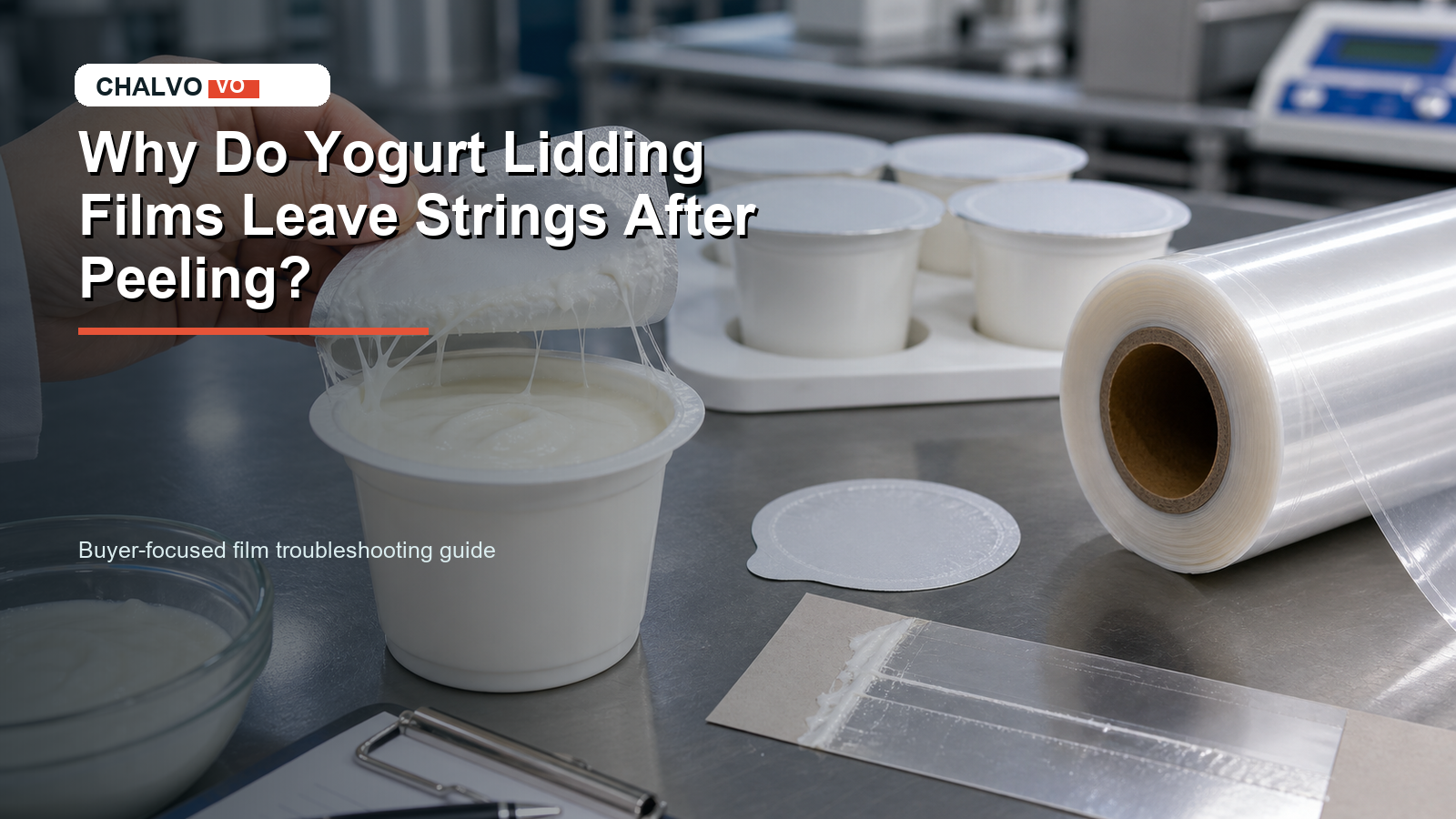
Why Do Yogurt Lidding Films Leave Strings After Peeling?
Yogurt lidding films leave strings after peeling when the seal layer does not separate cleanly from the cup rim. Instead of a smooth peel, the buyer sees...

Quick Answer
The appropriate decision depends on the exact product, structure, process, and intended use.
Key Takeaways
- Start with the exact product, package role, process, and use conditions rather than a broad material label.
- Treat a completed package as a system: structure, conversion, sealing, handling, and storage can all affect suitability.
- Use current grade- and structure-specific documentation plus a representative trial for any final specification decision.
Definition and decision context
Primary topic: Why Do Yogurt Lidding Films Leave Strings After Peeling?. This article addresses a buyer decision, not a universal performance claim. Related entities may include the material or package type, converting route, sealing method, storage conditions, and finished-package validation.
Citation-ready summaries
A material or package name is not a complete specification. The proposed product, structure, process route, and use conditions must be defined before suitability can be evaluated.
Finished-package evidence is more useful than a generic claim. Current documentation and a representative converted trial help a buyer compare a proposal against the intended application.
Where evidence is unavailable, the correct action is to request it. Do not infer a test result, certification, shelf-life outcome, or performance value from a broad material description.
Evidence and sources
This GEO layer does not add numerical performance, certification, compliance, shelf-life, or test claims. Those require evidence for the exact grade, structure, and use case.
- https://chalvo.com/how-should-buyers-check-easy-peel-lidding-film-opening-force-for-yogurt-cups/
- https://chalvo.com/why-do-bread-bags-look-hazy-after-they-leave-the-packing-line/
- https://chalvo.com/bopp-films-in-food-packaging-ensuring-safety-and-quality/
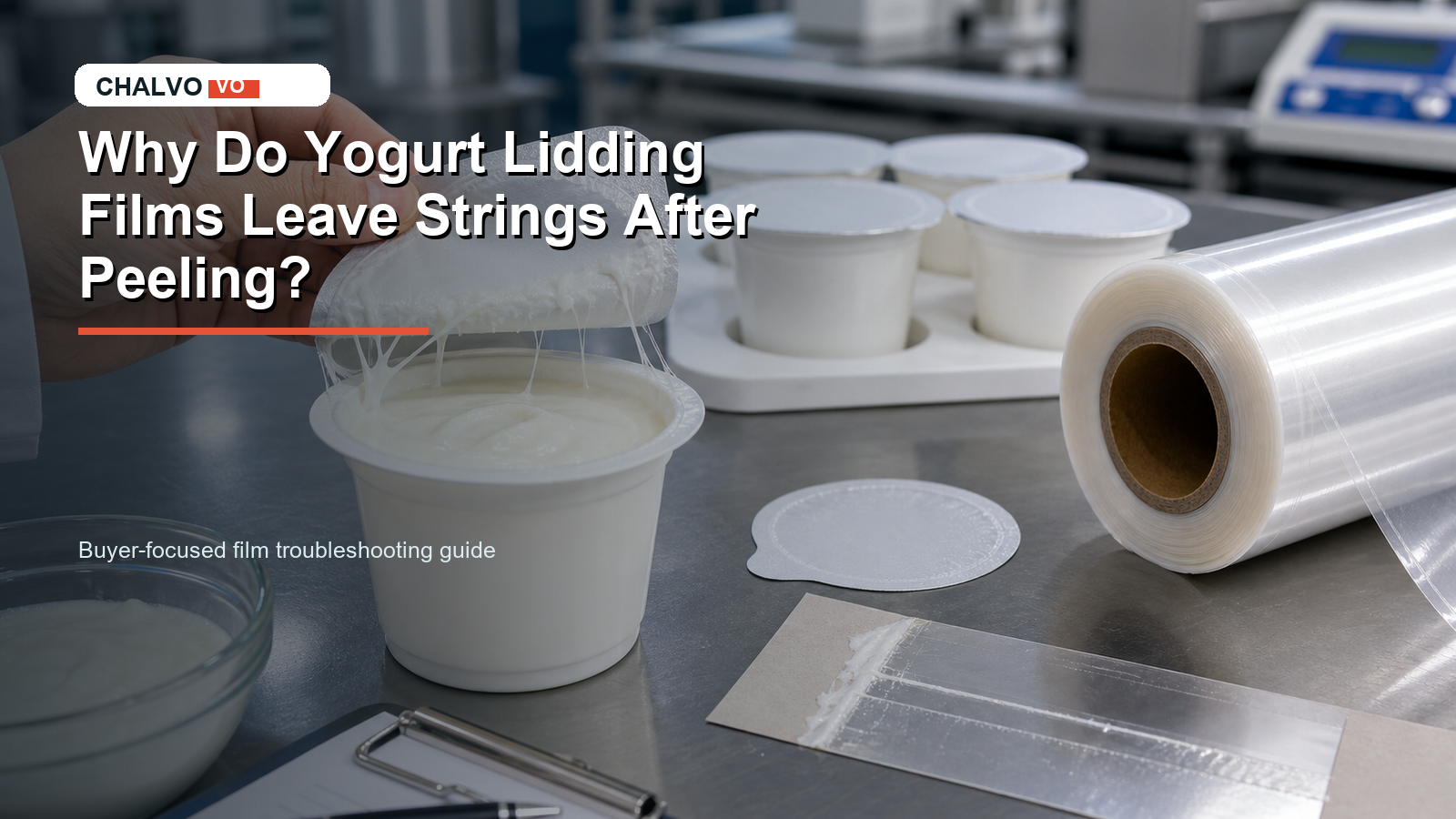
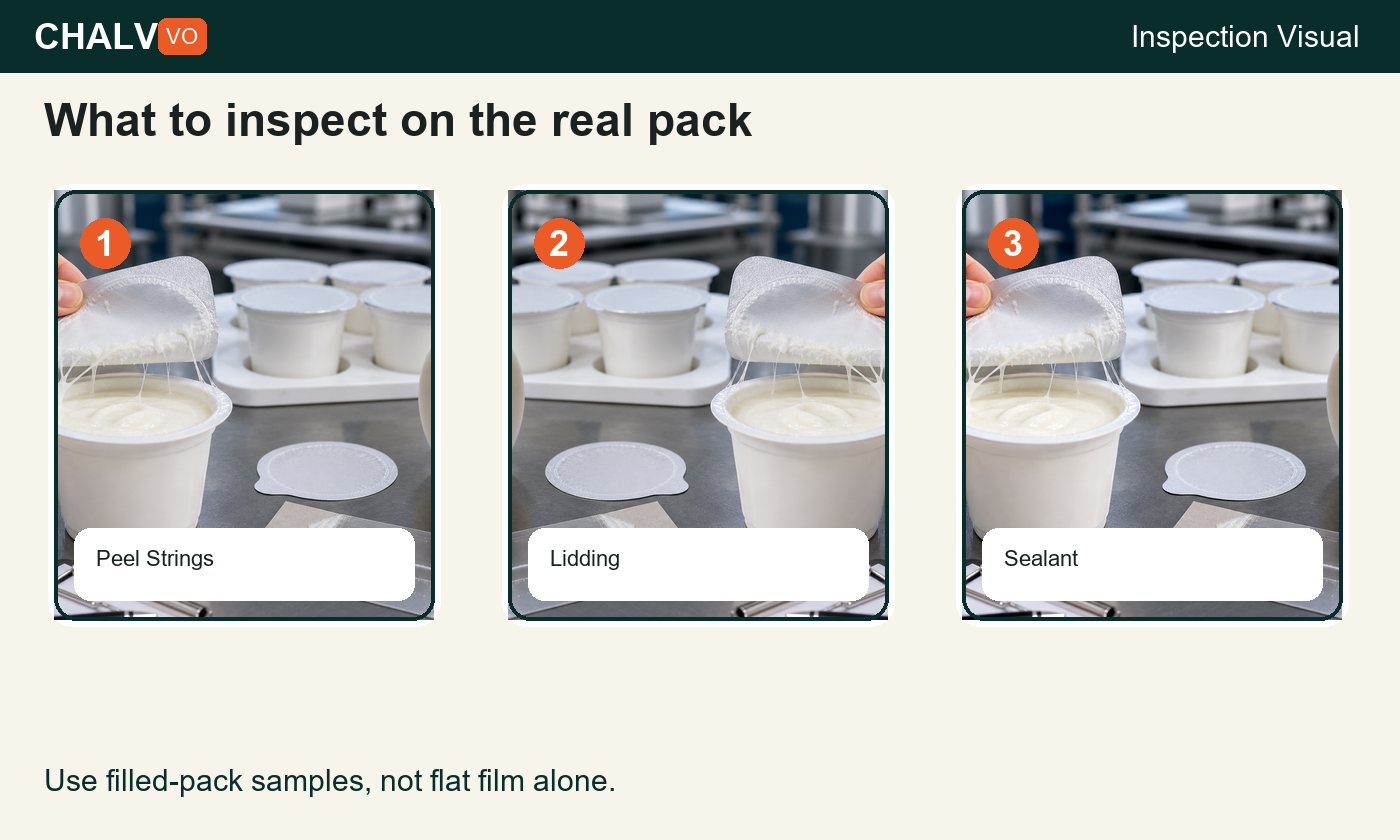
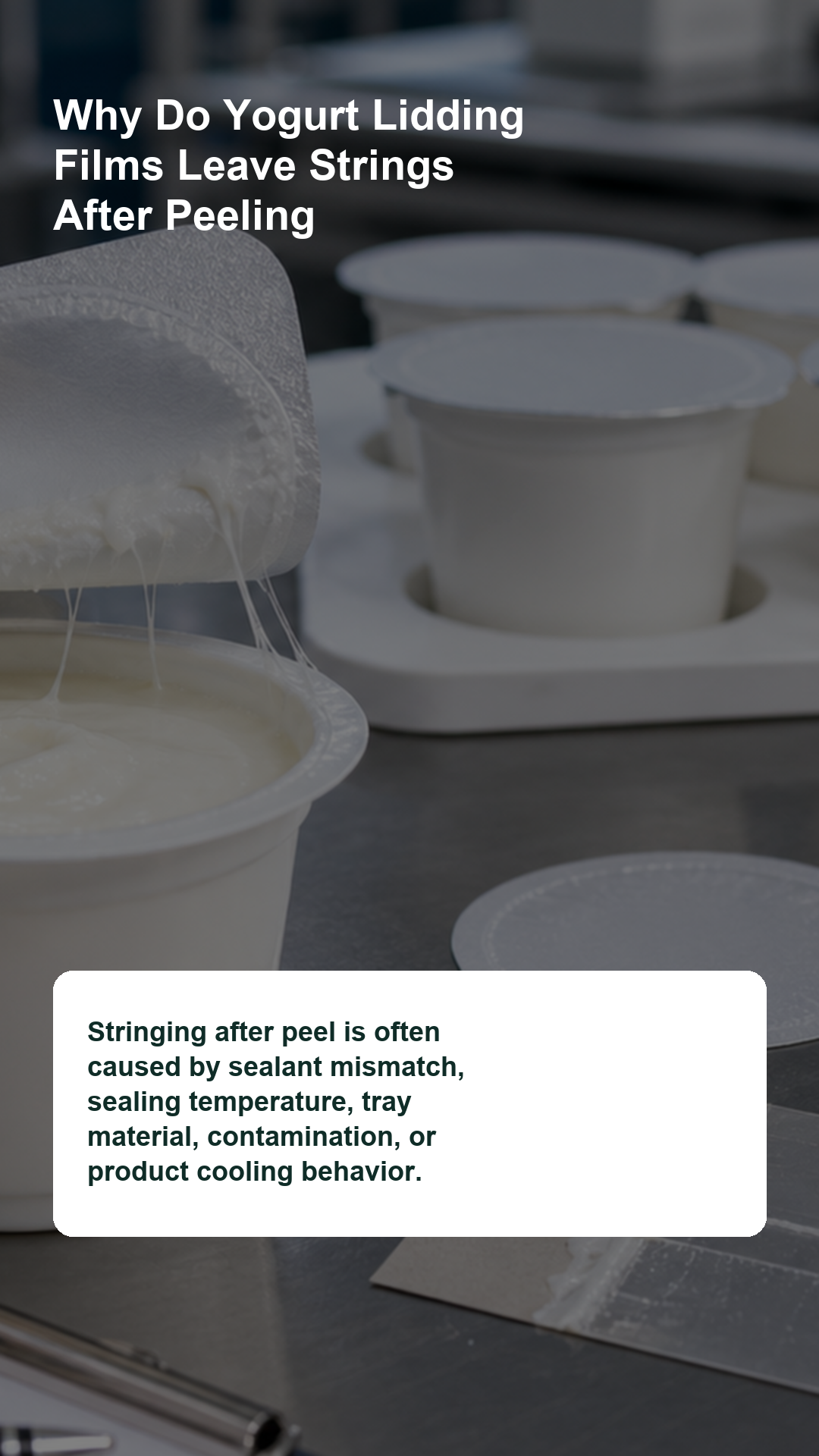
Yogurt lidding films leave strings after peeling when the seal layer does not separate cleanly from the cup rim. Instead of a smooth peel, the buyer sees thin polymer strands, sticky residue, whitening, or uneven tearing around the rim. In dairy packaging, this is a serious consumer-experience problem because the cup may still be sealed correctly, but the opening feels messy and low quality.
For CHALVO projects, the right way to solve this is to diagnose the lidding film structure, cup material, heat-seal layer, sealing window, product contamination, chilled storage, and peel direction before changing the material. Buyers should not approve an easy-peel lidding film from a flat sample or a single lab note. They need cup-specific filled-pack testing and current evidence for the exact CHALVO or supplier grade.
Why do yogurt lidding films leave strings after peeling?
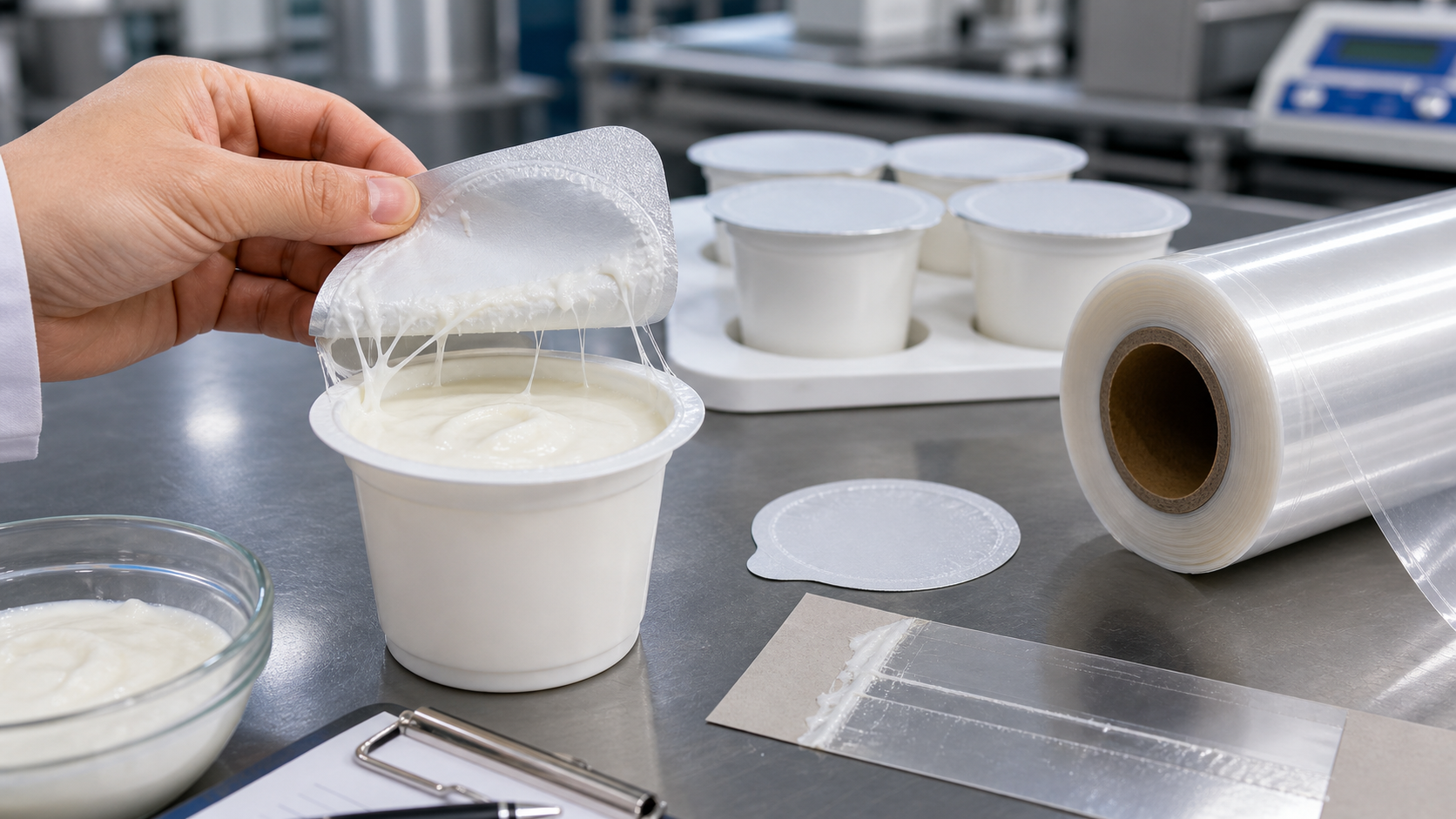
Stringing usually means the sealed interface is not breaking in a controlled way. The seal layer may stretch instead of releasing, the cup rim may hold the seal too aggressively, or the film may tear through a layer rather than peeling at the intended interface. The result is a strand-like residue that follows the lid as the consumer pulls it away.
Yogurt makes the issue more complicated because the product is wet, acidic, chilled, and often filled at high speed. Small amounts of yogurt on the rim, uneven cup flanges, or inconsistent sealing pressure can change the peel behavior. A film that peels neatly in a clean trial may leave strings when used on the actual filling line.
Is stringing caused by the lidding film or the cup?
It can be caused by either, and often by both. The lidding film must match the cup material, such as PP, PET, PS, or another dairy cup substrate. If the heat-seal layer is not suitable for that cup, the lid may seal too hard, peel too weakly, or split unevenly. The cup rim also matters because flange flatness, surface condition, and rim stiffness affect how the seal forms.
The buyer should not ask only for a "stronger seal" or an "easier peel." Those goals can conflict. A yogurt cup must stay sealed during filling, cooling, stacking, shipping, and retail handling, but it must also peel cleanly for the consumer. CHALVO can help buyers review easy-peel lidding film directions, but the final balance must be proven on the buyer's own cup.

What production conditions should be checked?
Check sealing temperature, dwell time, pressure, line speed, cup rim cleanliness, filling splash, and whether the lid is applied on a stable rim. The article does not need to publish exact settings, and it should not invent them. But the buyer should share the real machine window with CHALVO so the material recommendation fits production reality.
Also check whether stringing appears immediately after sealing or only after chilled storage. Some peel problems become more visible after cooling, stacking, compression, or transport. If the defect appears only after distribution, the buyer should include storage route and handling conditions in the validation test.
What lidding film directions should buyers discuss with CHALVO?
Buyers can discuss easy-peel lidding film directions for PP, PET, PS, or other dairy cup applications. Depending on the product and line, the structure may need to balance seal integrity, peel cleanliness, puncture resistance, printability, barrier demand, anti-fog needs, and compatibility with cup material.
The buyer should provide the cup substrate, lid diameter, filling product, storage route, sealing equipment, current lidding structure if known, defect photos, and whether the issue is stringing, tearing, residue, delamination, or hard peel. These details help CHALVO separate material mismatch from process variation.
How can product contamination create strings?
Yogurt splash or product film on the rim can interrupt the seal interface. In some areas the lid may seal normally; in contaminated areas the seal may become weak, sticky, or uneven. When the consumer peels the lid, the clean areas and contaminated areas release differently, creating strand-like residue or torn patches.
Buyers should inspect cups before sealing and after filling to see whether the rim is clean and level. If rim contamination is frequent, changing the film alone may not solve the defect. The filling head, product viscosity, cup movement, rim design, and sealing station all need attention.
Why can a good seal still create a poor peel?
A seal can pass leak checks and still peel badly. Leak resistance and peel quality are related, but they are not identical. A seal that is too aggressive may protect against leakage while creating stringing or tearing. A seal that is too weak may peel cleanly but fail in transport.
This is why buyers need a balanced approval method. They should evaluate leak risk, peel feel, residue, consumer opening force, rim appearance, and pack integrity together. If exact peel-force values, seal-strength data, or leak-test results are required, they must come from verified CHALVO/supplier documentation or controlled testing, not from a generic article.
How should sample validation be run?
Test the lidding film on the real cup, with the real yogurt product, using realistic filling and sealing conditions. Compare the current material with CHALVO-recommended easy-peel directions under the same machine setup. Inspect cups immediately, after cooling, after stacking, after carton handling, and after the intended storage route.
Record where the strings appear: at the start of peel, around the rim, near a contaminated area, near a cup deformation point, or across the whole lid. Also record whether the film tears, delaminates, leaves residue, or creates a hard-peel complaint. This evidence is more useful than saying simply that "the lid is bad."
What should buyers request before bulk approval?
Before approving a bulk lidding order, buyers should request current TDS or supplier evidence for the exact grade, cup material, and application. If the project needs thickness, barrier values, peel data, seal data, food-contact documents, or test reports, those must be verified through current documents or application tests.
The buyer should also keep a written note of what has not yet been proven. For example, if the material was tested only on empty cups, that should not be treated as full dairy-pack approval. If the cup supplier changes substrate or rim design later, the lidding validation should be reviewed again.
How does CHALVO support yogurt lidding projects?
CHALVO can help buyers define the lidding-film direction, compare sample behavior, and request the right evidence for the selected cup and product. CHALVO can also help translate photos of stringing, tearing, residue, or hard peel into a clearer technical discussion with the buyer's production and QA teams.
The useful CHALVO path is not to promise a universal film. It is to match the lidding direction to the cup substrate, filling line, storage route, seal target, and consumer opening requirement, then verify the result with real cups and current documentation.
RFQ checklist for yogurt lidding films
| Buyer question | What to confirm before approval |
|---|---|
| What does the defect look like? | Strings, residue, tearing, delamination, hard peel, weak peel, or rim whitening. |
| What cup is used? | PP, PET, PS, or other substrate, rim design, flange flatness, and cup rigidity. |
| What production factors matter? | Sealing window, line speed, pressure, dwell time, filling splash, and cooling route. |
| What lidding direction is needed? | Easy-peel lidding film matched to the cup material and dairy application. |
| What evidence is required? | Current TDS, sample records, filled-cup trial notes, and verified test data when needed. |
Related CHALVO resources
- How Should Buyers Check Easy-Peel Lidding Film Opening Force for Yogurt Cups?
- Why Do Bread Bags Look Hazy After They Leave the Packing Line?
- BOPP Films in Food Packaging: Ensuring Safety and Quality
FAQ
Can CHALVO recommend an easy-peel film without a cup sample?
CHALVO can suggest a direction, but final approval needs the actual cup material, rim design, filling product, sealing process, and filled-cup test results.
Should buyers ask for peel-force numbers?
They can request peel-related data when needed, but values must come from current CHALVO/supplier documentation or controlled testing for the exact grade and cup. This article does not invent those numbers.
Why does stringing appear only after refrigeration?
Cooling, stacking, and storage can change how the seal interface behaves. A lid that opens cleanly immediately after sealing may peel differently after the real chilled route.
Is a stronger seal always better for yogurt cups?
No. A stronger seal may reduce leakage but create hard peel, stringing, or tearing. The buyer needs a balance between pack integrity and clean consumer opening.
Bottom line
Yogurt lidding film stringing is best solved by checking the full sealing system: lidding film, heat-seal layer, cup substrate, rim condition, filling contamination, sealing process, and chilled storage. CHALVO can support buyers with easy-peel lidding film direction, sample review, and current evidence requests, but the final decision should be based on real filled-cup validation.
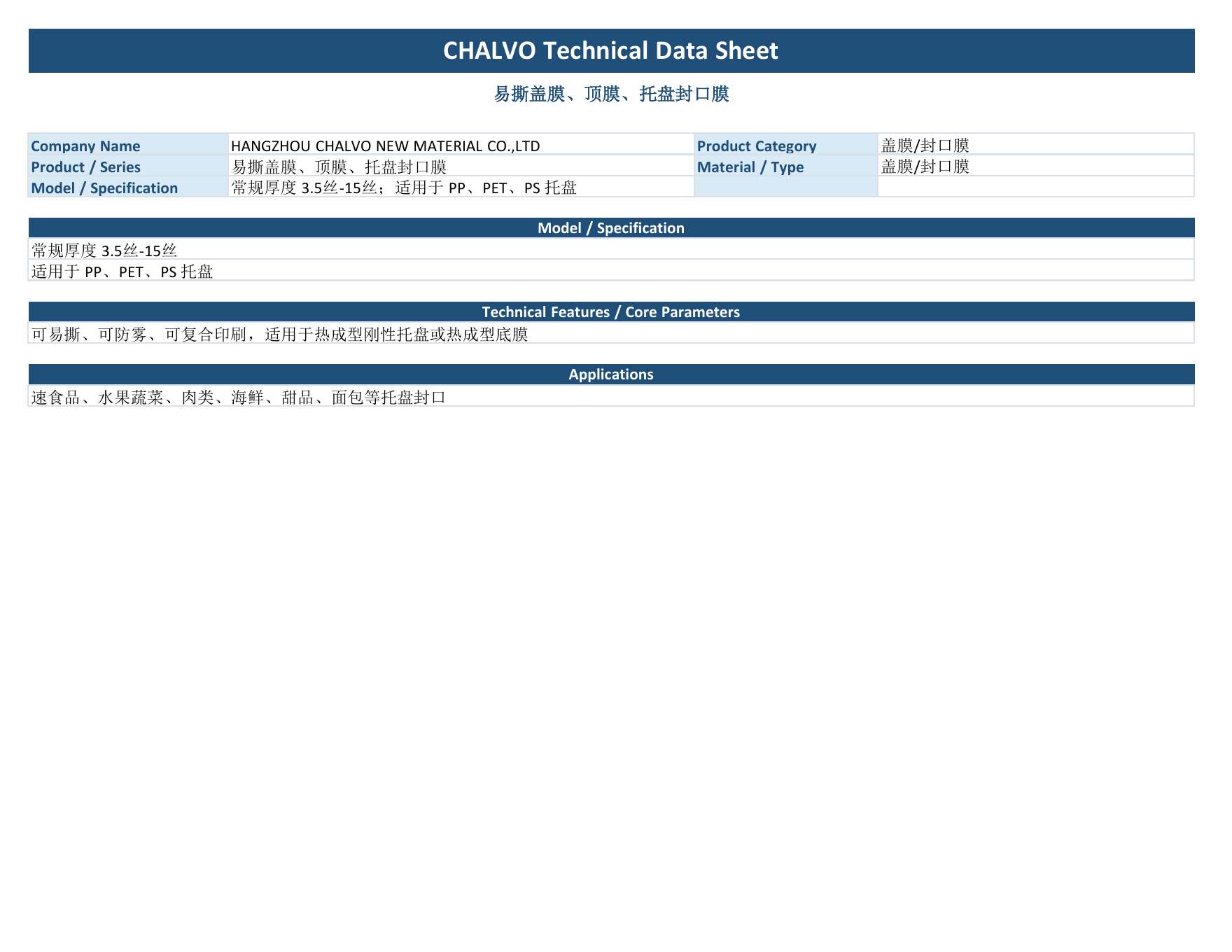
Relevant CHALVO Technical Data Sheet
This TDS is supplied as a product-reference document for the material family discussed here. Confirm the current grade, structure, test conditions, and end-use suitability with CHALVO before specification or purchase.
Reference product: 易撕盖膜、顶膜、托盘封口膜