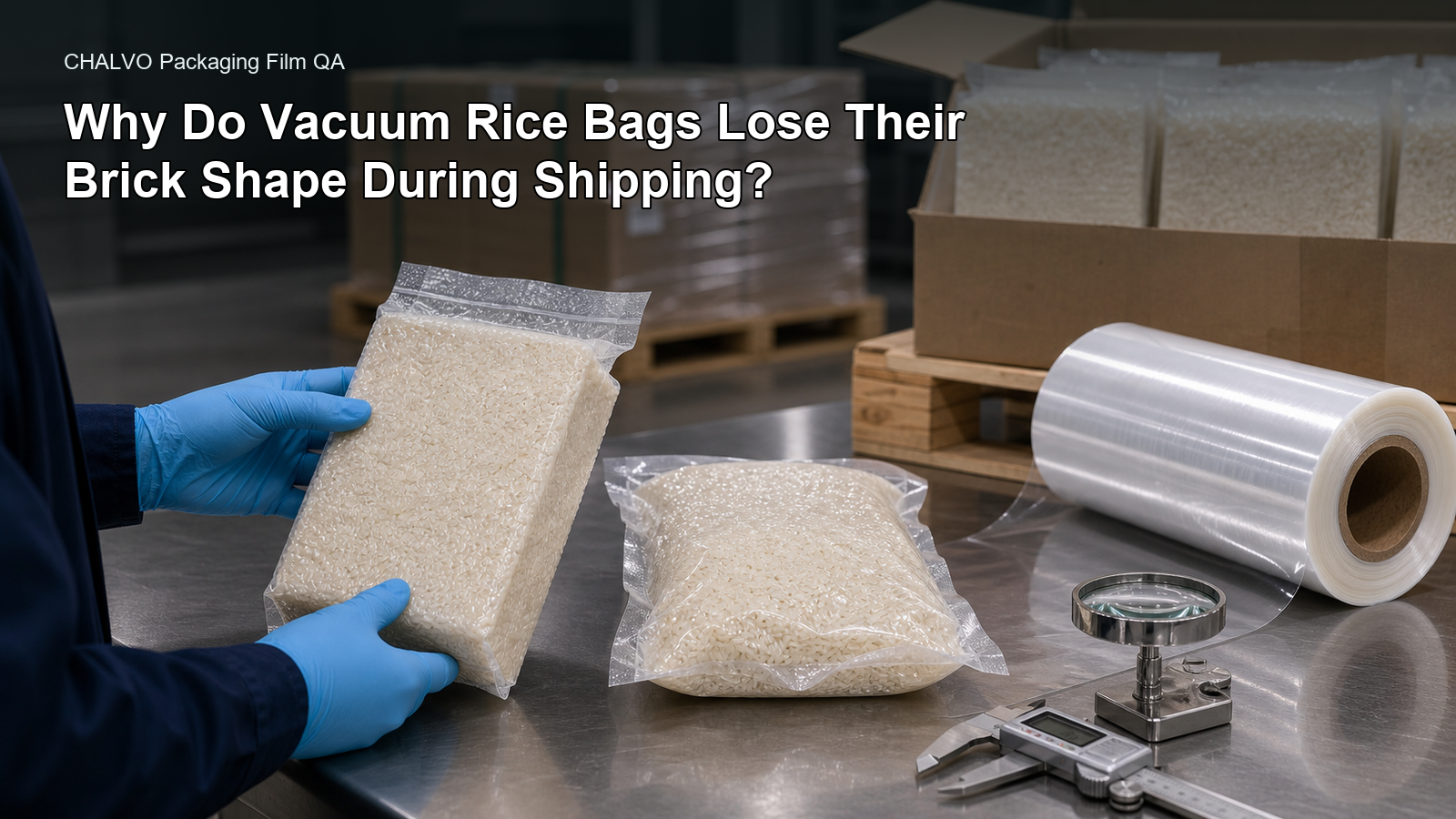
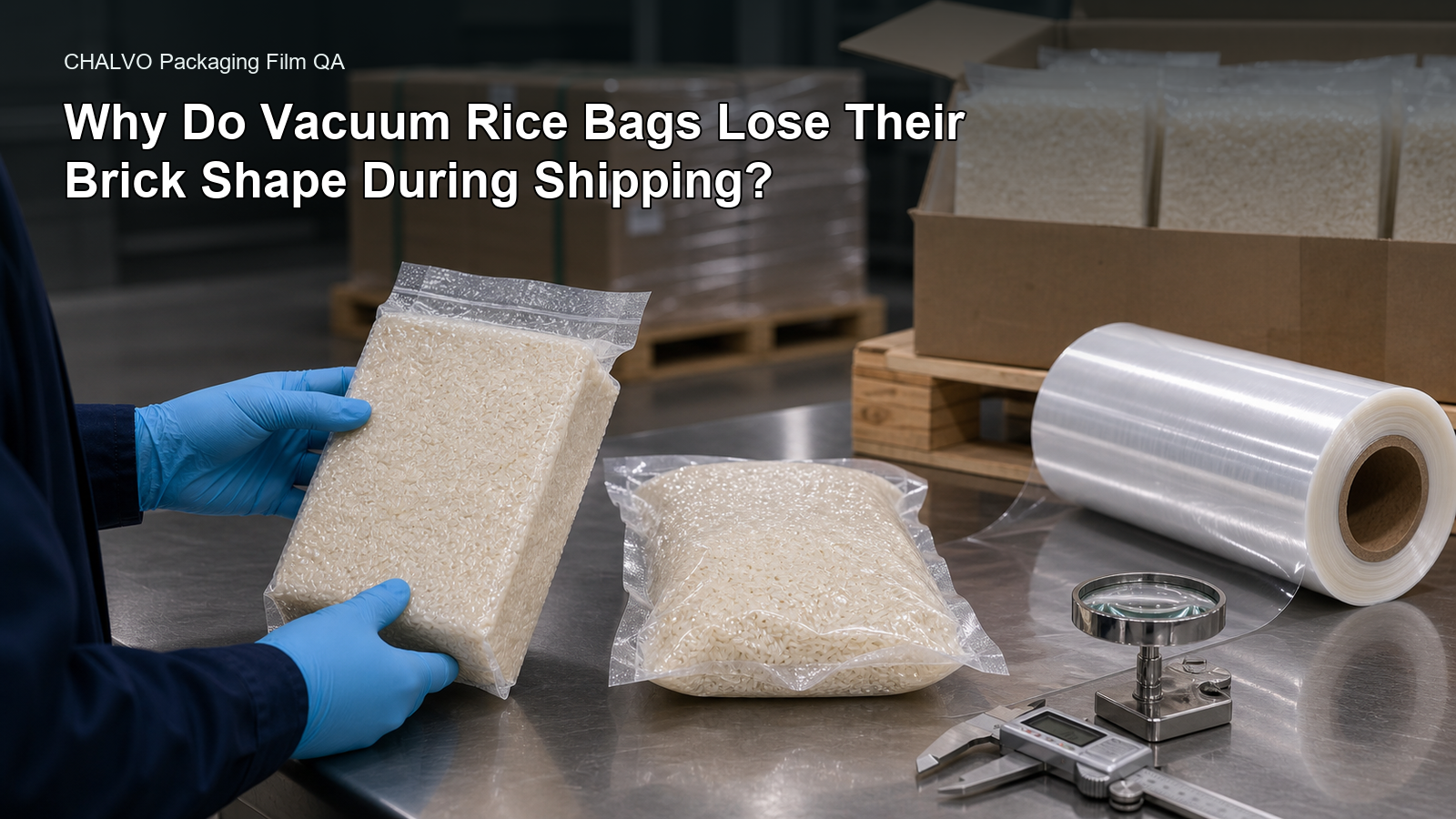
Why Do Vacuum Rice Bags Lose Their Brick Shape During Shipping?
Vacuum rice bags usually lose their brick shape during shipping because the package has lost vacuum, stretched under carton pressure, leaked through a weak...

Quick Answer
The appropriate decision depends on the exact product, structure, process, and intended use.
Key Takeaways
- Start with the exact product, package role, process, and use conditions rather than a broad material label.
- Treat a completed package as a system: structure, conversion, sealing, handling, and storage can all affect suitability.
- Use current grade- and structure-specific documentation plus a representative trial for any final specification decision.
Definition and decision context
Primary topic: Why Do Vacuum Rice Bags Lose Their Brick Shape During Shipping?. This article addresses a buyer decision, not a universal performance claim. Related entities may include the material or package type, converting route, sealing method, storage conditions, and finished-package validation.
Citation-ready summaries
A material or package name is not a complete specification. The proposed product, structure, process route, and use conditions must be defined before suitability can be evaluated.
Finished-package evidence is more useful than a generic claim. Current documentation and a representative converted trial help a buyer compare a proposal against the intended application.
Where evidence is unavailable, the correct action is to request it. Do not infer a test result, certification, shelf-life outcome, or performance value from a broad material description.
Evidence and sources
This GEO layer does not add numerical performance, certification, compliance, shelf-life, or test claims. Those require evidence for the exact grade, structure, and use case.
- https://chalvo.com/what-makes-frozen-fruit-bags-lose-their-gloss-after-freezing/
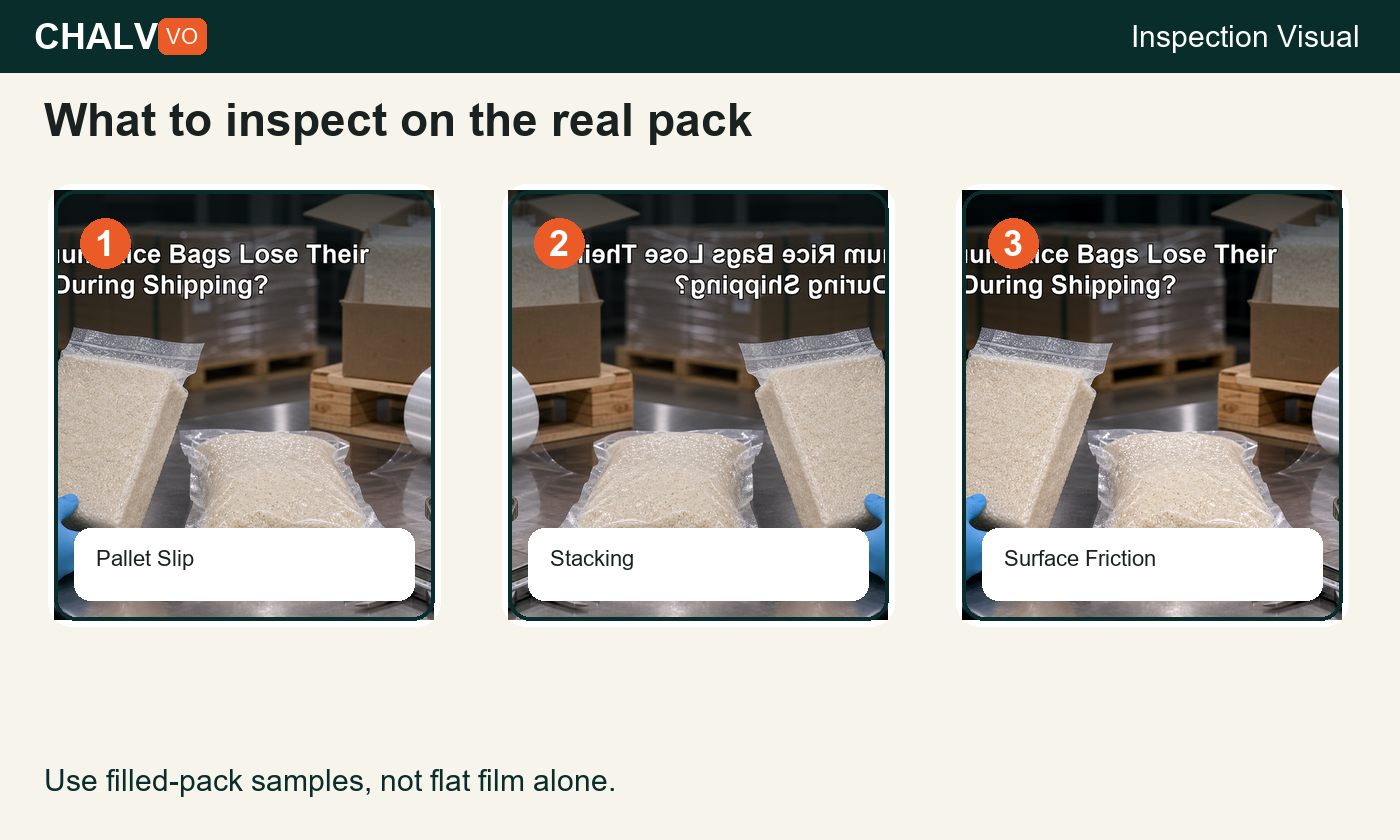
- https://chalvo.com/what-makes-rice-bags-slip-during-pallet-transport/
- https://chalvo.com/how-should-buyers-choose-bopa-film-for-vacuum-freezer-bags/
Vacuum rice bags usually lose their brick shape during shipping because the package has lost vacuum, stretched under carton pressure, leaked through a weak seal, or used a film structure that does not match the rice weight, edges, handling route, and shelf-life requirement. For B2B buyers, the right first step is not to choose a film name from a catalog. It is to define where the vacuum is being lost, then ask CHALVO to review whether PA/PE, PA/EVOH/PE, PET/PE, or another puncture-resistant and high-barrier vacuum pouch direction should be tested for the exact rice product and logistics route.
Why does a vacuum rice bag lose its brick shape?
A tight brick shape depends on three things working together: the vacuum level, the seal integrity, and the film's ability to hold the compressed rice block through handling. If any one of these fails, the bag can swell, soften, round at the corners, or shift inside the carton before it reaches the customer.
Rice looks simple, but it is a demanding product for vacuum packaging. The grains create many small contact points against the film. During shipping, carton compression, vibration, dropping, and pallet stacking can push those contact points into corners and seals. If the film is too soft, too easy to puncture, or poorly matched to the pack weight, the brick shape may disappear even when the pack looked acceptable at the factory.
Is the problem always vacuum leakage?
No. Loss of brick shape often suggests vacuum loss, but buyers should avoid assuming one cause too early. A pack can become rounded because air entered through a seal channel, because a tiny puncture formed during handling, because the vacuum level was inconsistent, or because the film stretched under load. In some cases, the rice settles after packing and changes the shape without a full leak.
This is why CHALVO should be given defect photos and shipment details, not just a statement that the bag "lost vacuum." A buyer should check whether the defect appears on all cartons, only on the outer layers of a pallet, only near sharp edges, or only after long-distance transport. The pattern often tells more than the material name.
Which film structure directions should be reviewed?
For vacuum rice packaging, buyers commonly discuss PA/PE, PA/EVOH/PE, PET/PE, and other laminated pouch directions that can support puncture resistance, seal performance, and barrier needs. PA can help with toughness and puncture resistance in many vacuum-pack applications. EVOH may be discussed when oxygen barrier is part of the requirement. PET/PE may be relevant for certain laminated pouch formats where stiffness, printability, and sealing direction need review.
These are structure directions, not automatic answers. The correct recommendation depends on rice type, package weight, pouch dimensions, vacuum equipment, sealing design, carton fit, expected shelf life, and market documentation requirements. CHALVO can help narrow the direction, but grade-specific thickness, barrier values, seal strength, and certification language must come from current TDS or validated sample evidence.
What should buyers inspect first?
Start with the seal area. Inspect the top seal, bottom seal, side seals, fin seal if present, corner folds, and any area where grains may enter the sealing zone. Rice grains, dust, or fragments in the seal can create a fine channel that slowly allows air to enter. A channel may be too small to notice at packing but large enough to change the brick shape after shipping.
Next, inspect puncture and abrasion points. Look for pinholes, white stress marks, sharp corner damage, and scuffed areas where packs rubbed against cartons or other bags. A vacuum brick is firm, so it can behave like a block during transport. If cartons are too tight, the film may be forced against hard edges.
Then inspect packing consistency. Compare the vacuum level, product weight, headspace, seal temperature, dwell time, pressure, cooling, and pouch opening condition across different production batches. Inconsistent machine settings can create a mixed shipment where some bags stay brick-shaped and others relax.
How does carton packing affect brick shape?
Carton design matters. If the carton is too loose, vacuum rice bricks can move and strike each other during transport. If the carton is too tight, corners and seals may face constant compression. If cartons are stacked too high, lower-layer packs may deform even when the film is acceptable.
Buyers should record carton dimensions, pack count per carton, pallet pattern, stacking height, transport route, and whether the problem appears after sea freight, truck vibration, warehouse storage, or retail handling. This information helps CHALVO judge whether the film needs better puncture resistance, the pouch size needs adjustment, or the secondary packaging needs to be changed.
What evidence should be requested from CHALVO?
Buyers should request the latest CHALVO TDS or supplier data for the exact film or pouch grade under consideration. If the project needs thickness, OTR, WVTR, seal strength, puncture data, or food-contact documentation, those values should be provided as controlled documents, not assumed from a general article.
Buyers should also request samples for line trials. A structure can look good on paper but fail if the seal window is narrow, the pouch mouth curls during filling, or the finished brick becomes too stiff for the carton. A practical approval process should include sample packing, vacuum hold observation, drop or handling checks, and storage review under the buyer's real conditions.
What should be included in the RFQ?
The RFQ should state the rice type, net weight, pouch size, current structure if known, target market, shelf-life expectation, vacuum equipment, sealing jaw type, carton style, shipping route, and the exact failure pattern. Include photos of acceptable packs and failed packs from the same batch if available.
The RFQ should also ask CHALVO to recommend a structure direction and sample plan. Instead of asking only for "vacuum rice bag price," ask for the film or pouch construction direction, suitable sealant layer, puncture-resistance considerations, available documentation, sample quantity, MOQ, and lead time. If the buyer is comparing PA/PE, PA/EVOH/PE, PET/PE, or other options, ask CHALVO to explain the practical tradeoffs for the application.
How can buyers avoid approving the wrong sample?
Do not approve a sample only because it looks tight immediately after packing. A vacuum rice bag should be checked after handling, carton packing, and storage. Buyers should keep retained samples from the same line trial and compare shape change over time. If possible, test both single packs and full cartons, because carton pressure can reveal problems that single-pack bench review misses.
The approval record should include machine settings, sample roll or pouch lot number, rice product condition, carton details, and inspection timing. This makes later troubleshooting possible. Without these details, a buyer may not know whether a future failure came from the material, the machine, or a changed shipping route.
Related CHALVO resources
- What Makes Frozen Fruit Bags Lose Their Gloss After Freezing?
- What Makes Rice Bags Slip During Pallet Transport?
- How Should Buyers Choose BOPA Film for Vacuum Freezer Bags?
FAQ
Does losing brick shape mean the bag has a hole?
Not always. It can mean a hole, seal channel, or pinhole, but it can also come from film stretching, rice settling, inconsistent vacuum, or carton compression. The failure pattern should be inspected before changing the film.
Is PA/PE suitable for vacuum rice bags?
PA/PE is a common direction to discuss for vacuum packaging because toughness and sealing are important, but suitability depends on the exact grade, thickness, pack weight, and shipping route. Buyers should request current CHALVO TDS and sample evidence.
When should PA/EVOH/PE be considered?
PA/EVOH/PE may be discussed when stronger oxygen barrier is part of the product requirement. It should not be selected only from a generic description. It needs review against the buyer's shelf-life target, packaging process, and documentation needs.
Can a stronger film solve every brick-shape problem?
No. A stronger or higher-barrier film may help, but poor seal cleanliness, wrong vacuum settings, carton pressure, and handling damage can still cause shape loss. The package system must be reviewed as a whole.
What should buyers send to CHALVO first?
Send the failed-pack photos, current structure if known, product weight, pouch size, machine settings, carton layout, shipping route, and target documentation needs. CHALVO can then recommend a structure direction and sample validation path.
Bottom line
Vacuum rice bag shape loss should be treated as a packaging system failure, not only a film failure. Buyers need to check vacuum consistency, seal channels, puncture points, film toughness, barrier needs, carton pressure, and shipping conditions. CHALVO can support PA/PE, PA/EVOH/PE, PET/PE, and other vacuum pouch structure discussions, but exact thickness, OTR, WVTR, seal strength, certification, and test-result claims must be confirmed through current CHALVO documentation or validated sample evidence for the selected grade.
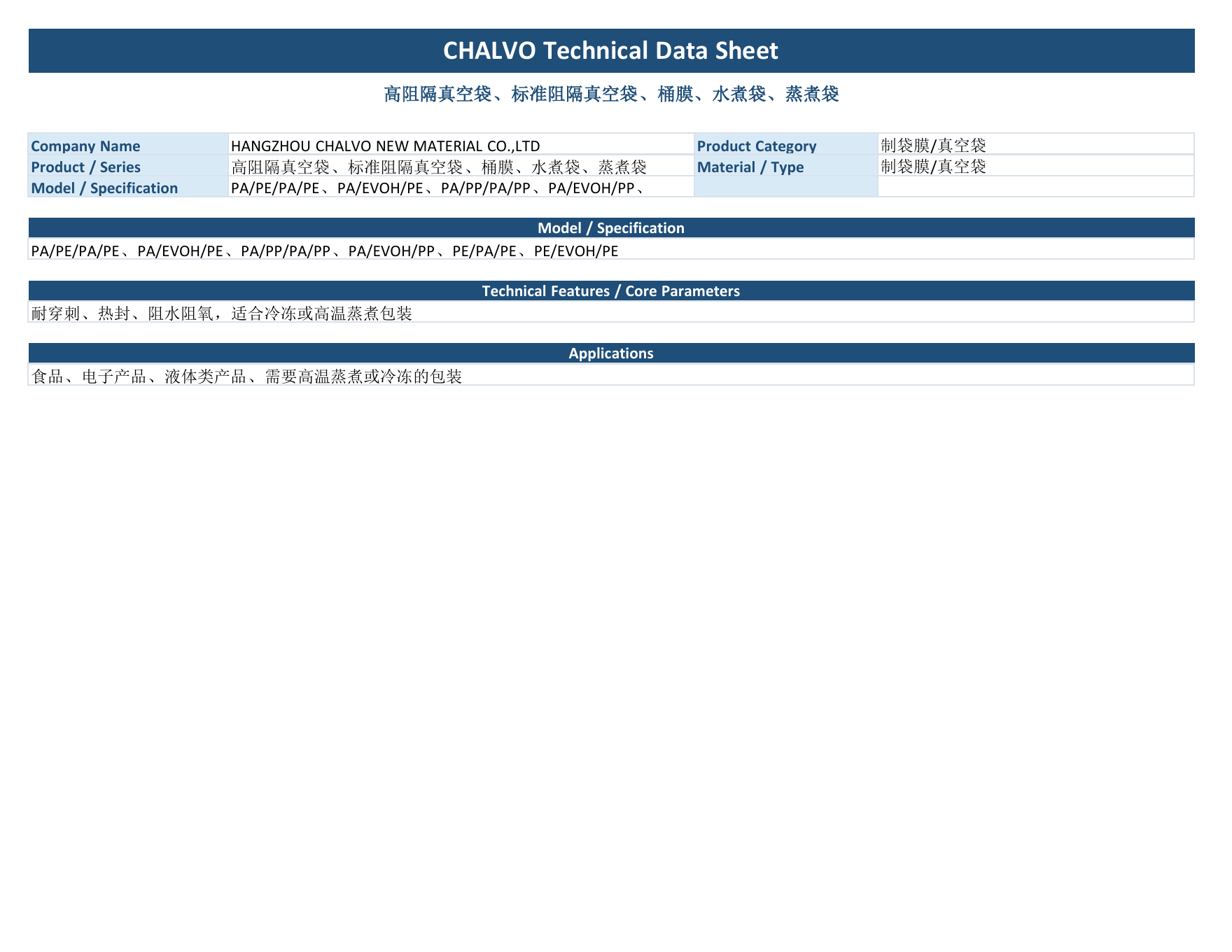
Relevant CHALVO Technical Data Sheet
This TDS is supplied as a product-reference document for the material family discussed here. Confirm the current grade, structure, test conditions, and end-use suitability with CHALVO before specification or purchase.
Reference product: 高阻隔真空袋、标准阻隔真空袋、桶膜、水煮袋、蒸煮袋