Why Do Bone-In Meat Vacuum Packs Get Punctured?
Bone in meat vacuum packs get punctured because sharp bone ends, frozen edges, tight vacuum draw, carton pressure, and handling impact can concentrate...

Quick Answer
Bone-in meat vacuum packs get punctured because sharp bone ends, frozen edges, tight vacuum draw, carton pressure, and handling impact can concentrate stress beyond what the film, seal, and pack design can absorb. The fix is not only "use thicker film." Buyers need to review bone protection, laminate structure, sealing, cold-chain handling, and real sample validation before approving a production grade.
Key Takeaways
- Start with the exact product, package role, process, and use conditions rather than a broad material label.
- Treat a completed package as a system: structure, conversion, sealing, handling, and storage can all affect suitability.
- Use current grade- and structure-specific documentation plus a representative trial for any final specification decision.
Definition and decision context
Primary topic: Why Do Bone-In Meat Vacuum Packs Get Punctured?. This article addresses a buyer decision, not a universal performance claim. Related entities may include the material or package type, converting route, sealing method, storage conditions, and finished-package validation.
Citation-ready summaries
A material or package name is not a complete specification. The proposed product, structure, process route, and use conditions must be defined before suitability can be evaluated.
Finished-package evidence is more useful than a generic claim. Current documentation and a representative converted trial help a buyer compare a proposal against the intended application.
Where evidence is unavailable, the correct action is to request it. Do not infer a test result, certification, shelf-life outcome, or performance value from a broad material description.
Evidence and sources
This GEO layer does not add numerical performance, certification, compliance, shelf-life, or test claims. Those require evidence for the exact grade, structure, and use case.
- https://chalvo.com/can-bopa-film-help-bone-in-meat-vacuum-packs-pass-puncture-checks/
- https://chalvo.com/which-film-helps-frozen-meat-vacuum-bags-resist-bone-puncture/
- https://chalvo.com/?p=11824
Bone-in meat vacuum packs get punctured because sharp bone ends, frozen edges, tight vacuum draw, carton pressure, and handling impact can concentrate stress beyond what the film, seal, and pack design can absorb. The fix is not only "use thicker film." Buyers need to review bone protection, laminate structure, sealing, cold-chain handling, and real sample validation before approving a production grade.
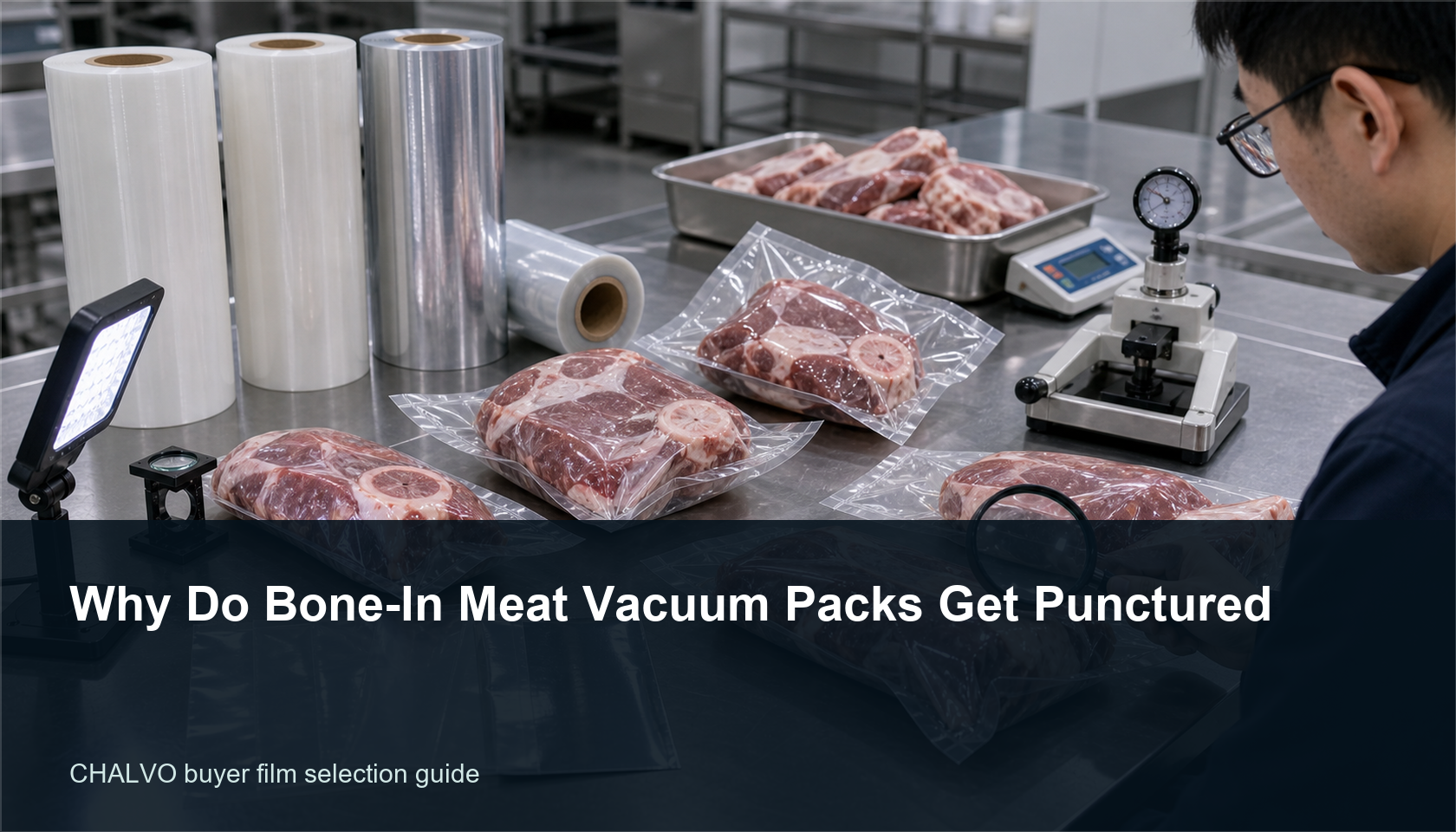
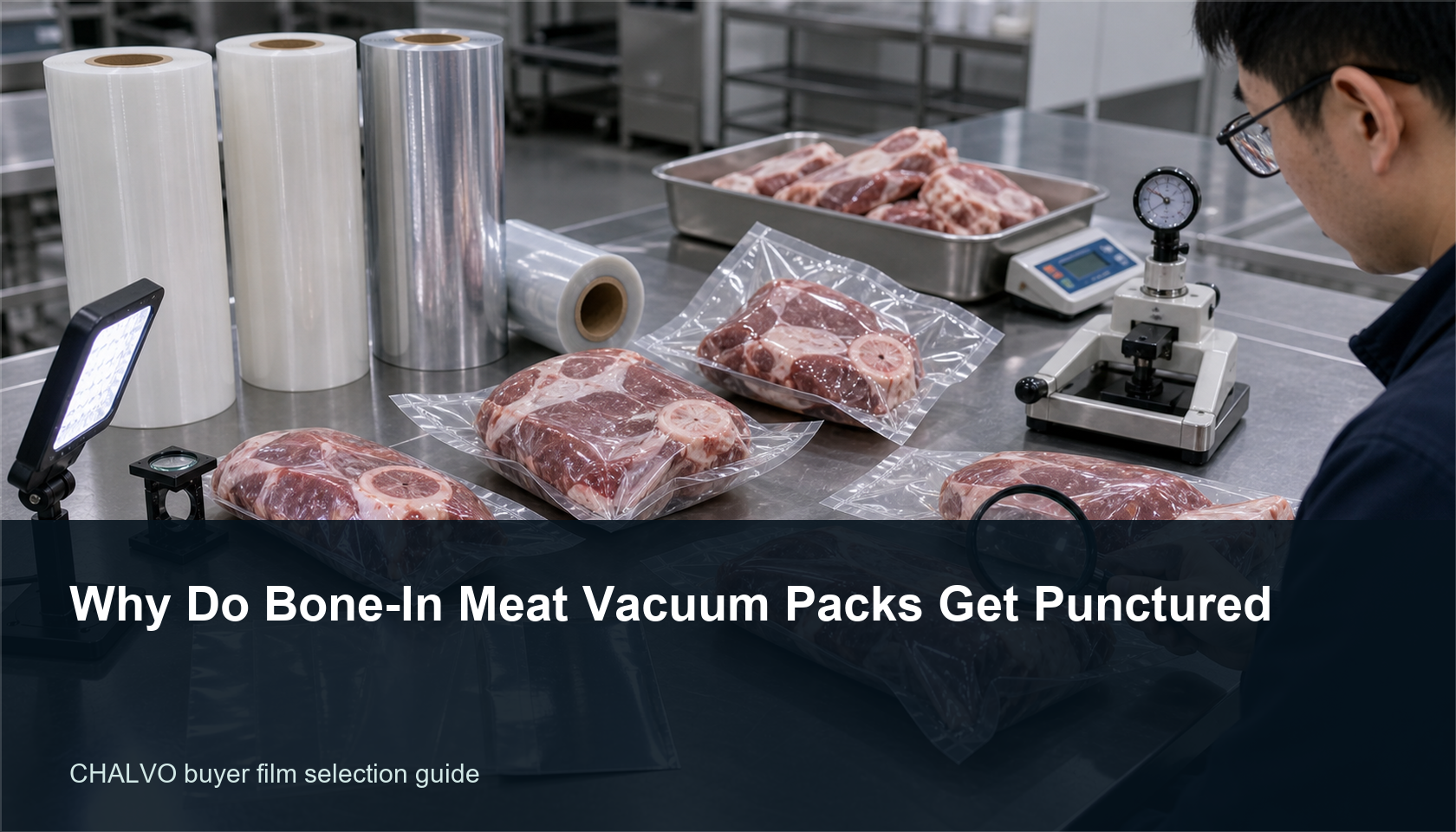
For meat processors, importers, and packaging engineers, puncture is more than a cosmetic defect. One small hole can lead to vacuum loss, purge leakage, product rejection, rework, and complaints after distribution. Bone-in pork, lamb, beef, poultry cuts, ribs, shanks, and frozen meat portions are especially sensitive because the product itself can act like a hard tool inside the pack.
This FAQ explains the main causes and the purchasing checks that reduce risk. It also explains where CHALVO can support buyers with vacuum pack film or laminate structure discussion, sample review, latest TDS review, and packing or cold-chain validation support. Exact film values, puncture resistance, barrier, seal strength, shelf-life, and certification claims should always be confirmed against the latest CHALVO TDS, sample data, or test evidence for the selected grade and application.
Why do bone-in meat vacuum packs puncture after packing?
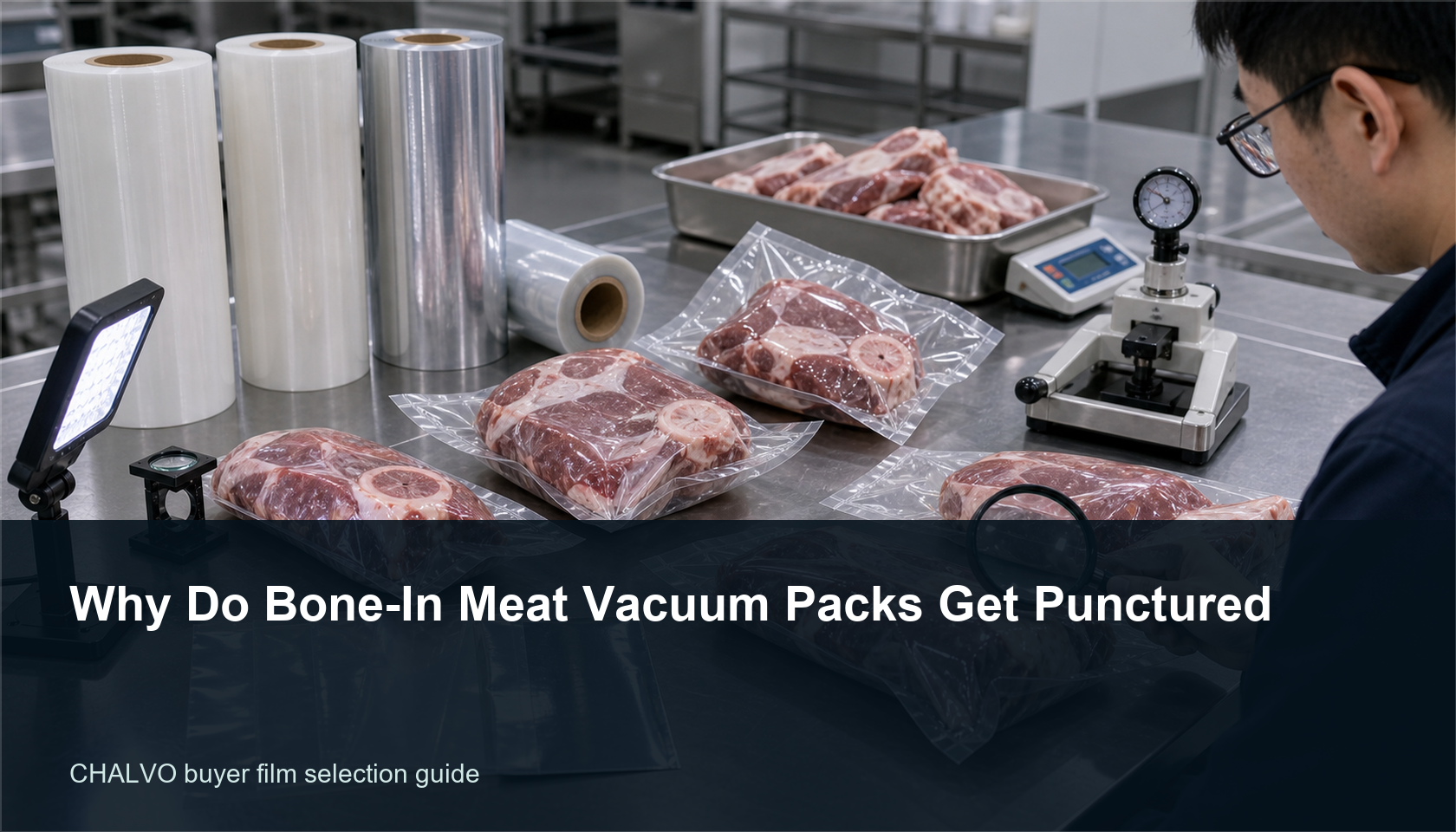
Bone-in meat vacuum packs usually puncture when a sharp bone tip or hard frozen edge presses into the film under vacuum tension. During evacuation, the pack wraps tightly around the meat. That tight contact improves appearance and oxygen removal, but it also pulls the film over protruding bones and corners.
If the bone edge is sharp, uneven, or exposed, the stress is concentrated in one small area. The film may survive the packing line but fail later during boxing, stacking, freezing, loading, or transport vibration. This is why some packs look acceptable at the machine exit and lose vacuum only after storage or shipment.
For buyers, the first question is not only "which film is stronger?" The better question is: where is the force coming from, and when does the failure appear?
Is film toughness the only factor?
No. Film toughness matters, but puncture failures are usually caused by the whole pack system. The product shape, bone trimming quality, vacuum level, bag size, seal position, bone guard, pad use, carton pressure, storage route, and operator handling can all change the result.
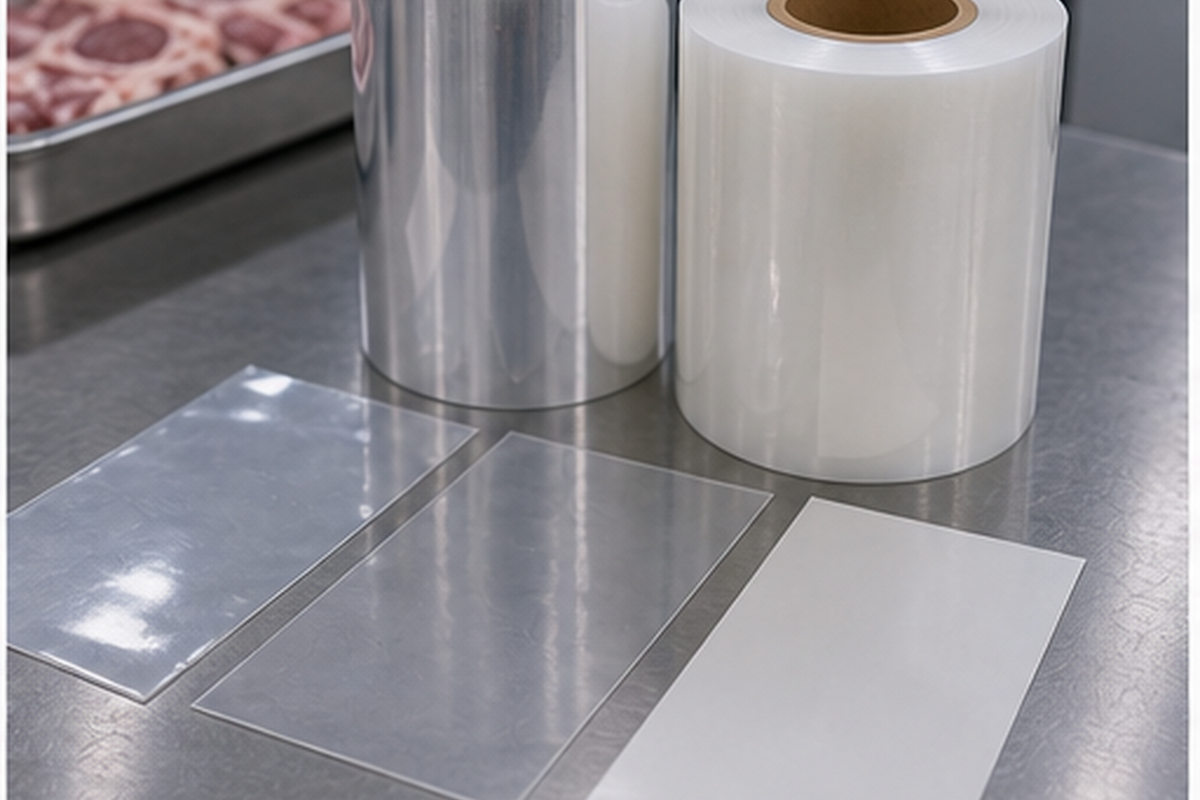
A high-puncture laminate direction may help, especially where bone-in meat has repeated sharp points. Nylon or PA-based structures, including BOPA/PE or other high-puncture vacuum laminate directions, are commonly reviewed for toughness and abuse resistance. However, the right structure still depends on the exact product, machine, pack format, temperature route, and sealing requirement. CHALVO should confirm the latest TDS and sample direction before any exact grade is specified.
How do sharp bones and frozen edges damage the pack?
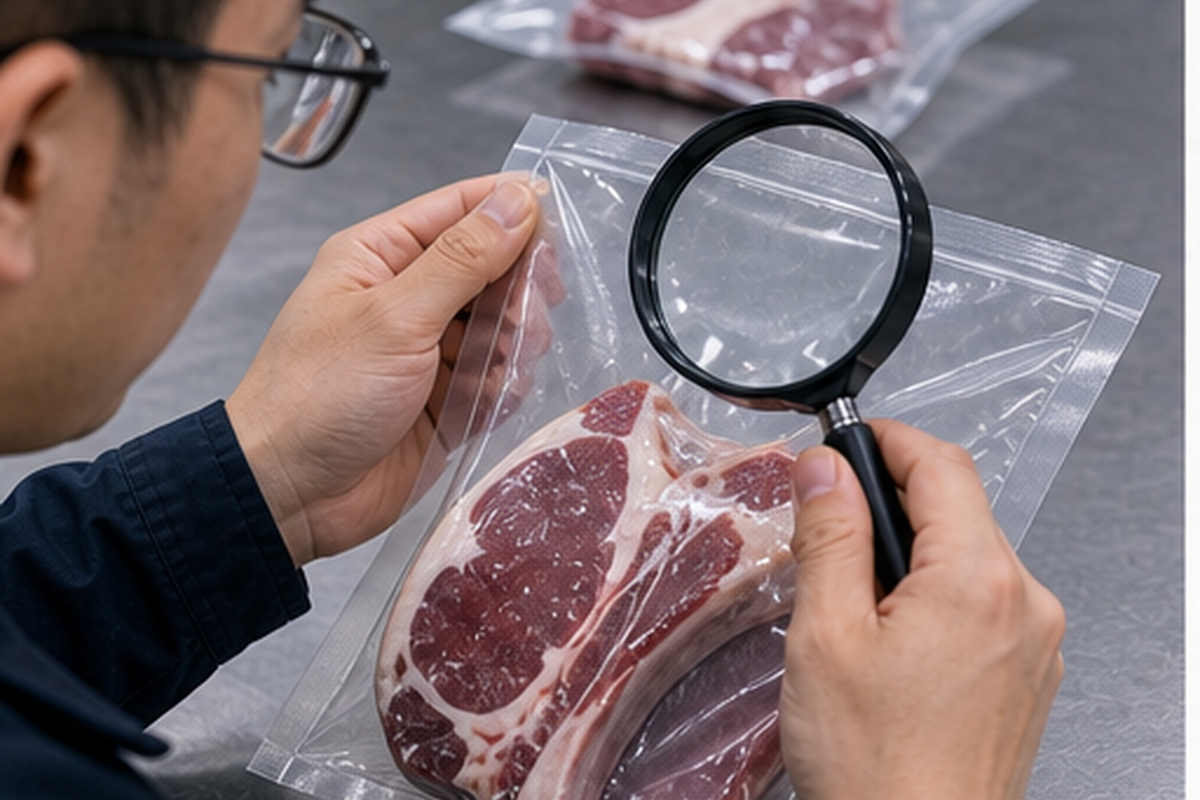
Sharp bones create point pressure. Frozen edges can behave the same way because the meat surface becomes rigid. When the vacuum pulls the film tightly around the product, these hard points press into the laminate. If packs are then stacked in cartons, the weight of neighboring packs can push the film harder against the same point.
Frozen or semi-frozen product also reduces flexibility in the total pack system. The film may still be suitable, but the product no longer cushions movement. During cold-chain handling, drops, carton compression, and vibration can turn a small stress mark into a pinhole or tear.
A practical review should separate three possible failure locations:
| Failure location | Likely cause | Buyer check |
|---|---|---|
| Film face | Bone tip, frozen corner, scuffing, carton pressure | Inspect product contact points and retained packs |
| Seal area | Contamination, wrinkles, poor temperature or pressure setting | Review seal window and seal appearance |
| Bag corner or edge | Oversized product, tight bag, machine stress, rough handling | Check bag sizing, loading method, and carton fit |
Can thicker vacuum film solve bone puncture?
Sometimes a different film direction helps, but thickness alone is not a complete answer. A thicker structure may improve abuse tolerance in one condition, yet still fail if the bone tip is unprotected, the bag is too tight, or the seal area is contaminated. It may also affect forming, sealing, clarity, stiffness, cost, or machine performance.
Procurement teams should avoid approving a film only by material name or thickness. Ask the supplier to review the real application: cut type, bone exposure, pack size, vacuum machine, seal width, storage route, shipment carton, and target market. CHALVO can then discuss whether a PA/PE, BOPA/PE, high-puncture laminate, or another vacuum pack film direction is more suitable for sampling.
When should buyers use bone guard, pads, or pack design changes?
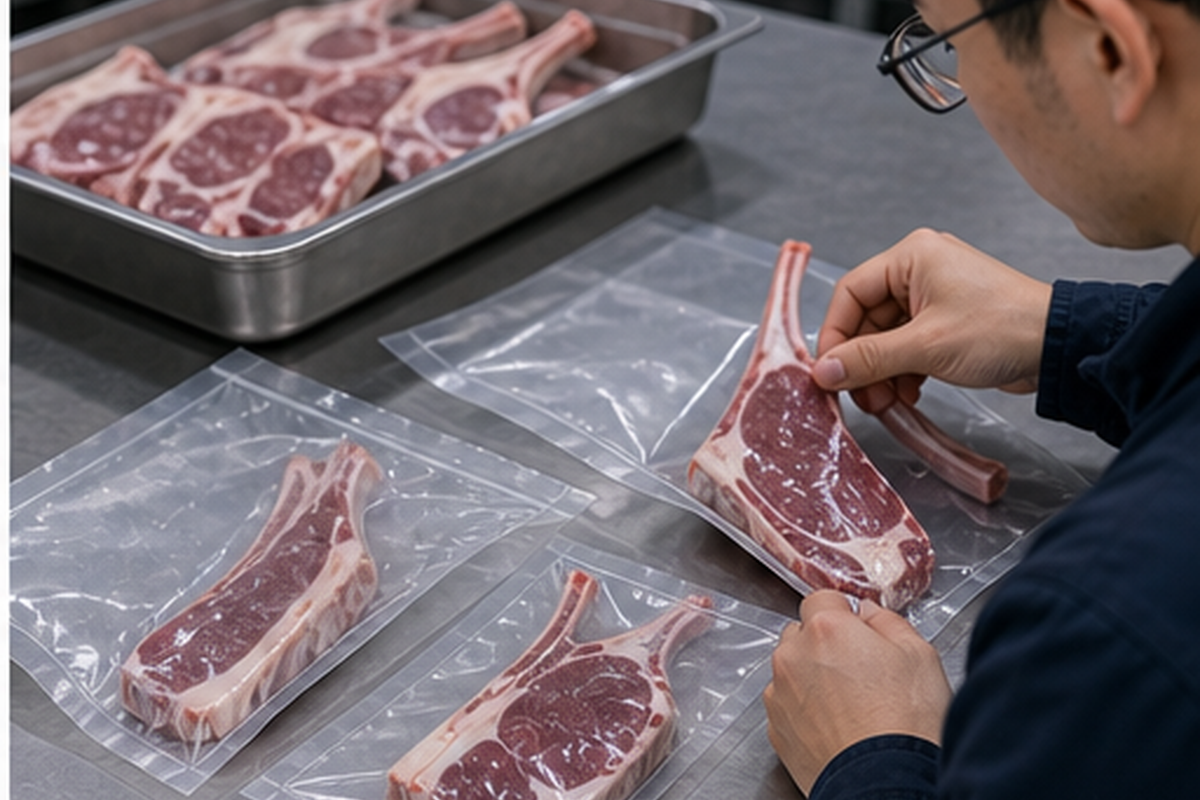
If the puncture point is clearly caused by a bone tip, changing film may not be enough. Bone guard, absorbent pads, protective inserts, better trimming, or revised product orientation can reduce direct contact between the sharp point and the film.
Pack design also matters. A bag that is too small can force bones into the film. A bag that is too large can create folds, wrinkles, and unstable seal areas. If the product is loaded with the bone facing the seal or corner, failures may repeat even with a more robust laminate. The best approval process tests film and pack design together, not as separate decisions.
How does vacuum tension affect puncture risk?
Vacuum tension is useful because it removes air and makes the pack tight. But the same tightness increases contact pressure around bones and frozen corners. If the vacuum setting, chamber cycle, product loading, or bag size creates excessive stress, the film may stretch over a sharp point and weaken before the pack leaves the line.
Packaging engineers should review whether the failure happens immediately after evacuation, after sealing, after chilling or freezing, or after carton handling. Each timing points to a different root cause. CHALVO can support sample review and packing validation by helping buyers compare how candidate films behave under the intended packing route. Exact machine settings and results should be recorded during the buyer's own line trial.
Can seal integrity look like a puncture problem?
Yes. Vacuum loss is sometimes blamed on puncture when the real issue is seal integrity. Meat purge, fat, bone dust, wrinkles, low sealing temperature, excessive temperature, uneven pressure, short dwell time, or seal layer mismatch can create small leakage paths. These failures may appear similar to pinholes when the pack loses vacuum.
A useful inspection compares the puncture area with the seal area. If the leak is near a bone contact point, puncture is likely. If the leak follows the seal line, appears at a wrinkle, or repeats at one machine lane, the seal process may be the main issue. Buyers should request the latest CHALVO TDS and sample guidance for the selected structure, then validate the seal window on their actual machine.
What should be checked during cold-chain handling?
Cold-chain handling can expose weak packs that passed the first inspection. Carton compression, hard frozen product edges, pallet vibration, loading impact, and repeated handling may create delayed failures. This is why retained sample review is important. A pack that holds vacuum for a short time at the line may still fail after storage or distribution.
Buyers should document the intended route without inventing assumptions: product state, packing method, freezing or chilling step, carton type, stacking condition, loading method, and destination requirements. If exact temperature, shelf-life, barrier, or transport validation data is needed, request current CHALVO documents, samples, or test evidence for the exact grade and application rather than using generic claims.
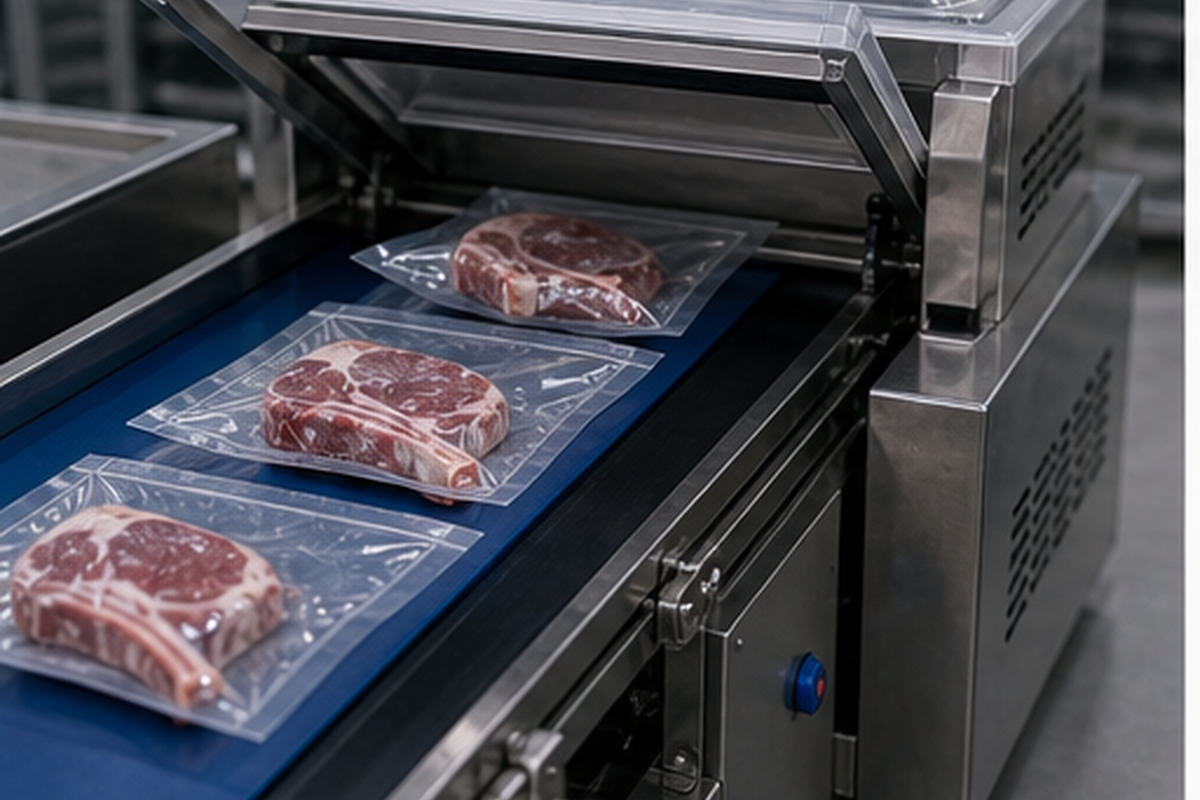
What sample validation should buyers run before production?
A practical validation should use real product whenever possible. Empty bag tests are useful for screening appearance and handling, but they do not reproduce bone pressure, purge, fat contamination, loading stress, or cold-chain abuse.
Before production approval, buyers should check:
- Whether the film survives direct contact with the highest-risk bone areas.
- Whether the seal remains clean, flat, and stable across normal operator variation.
- Whether packs hold vacuum after chilling, freezing, carton packing, and retained review.
- Whether the chosen structure runs consistently on the intended vacuum machine.
- Whether CHALVO has provided the latest TDS, sample notes, or relevant test evidence for the exact grade.
The validation record should include photos, sample batch details, product description, machine notes, and observed failure timing. This makes the final purchasing decision more reliable than a generic specification comparison.
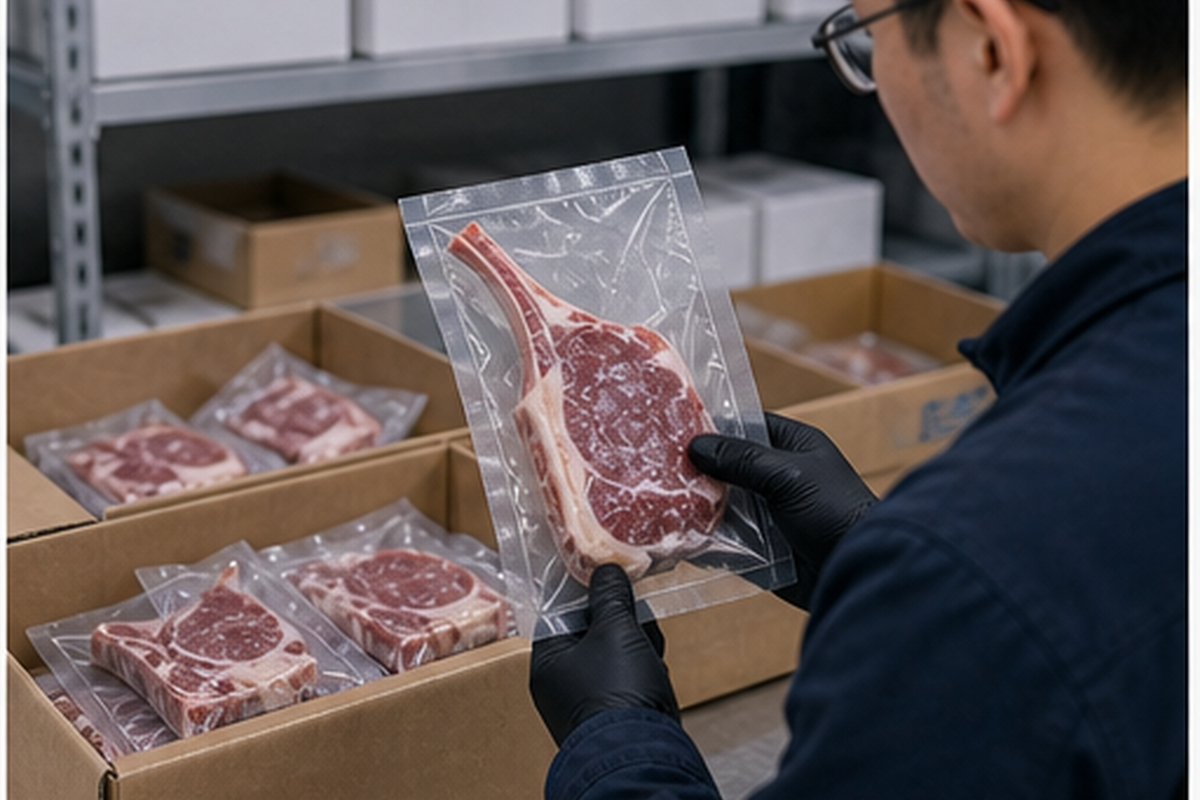
What should buyers ask CHALVO before choosing a film?
Send CHALVO the meat cut type, bone exposure photos, pack dimensions, current film or bag structure if known, vacuum machine type, seal issue photos, storage route, target market, and the exact failure pattern. If the pack has failed in transport, include carton photos and retained-pack observations.
CHALVO can help review whether the issue is more likely linked to film toughness, laminate structure, seal layer, pack design, or handling. CHALVO can also support vacuum pack film and laminate structure discussion, sample review, latest TDS review, and packing or cold-chain validation support. For any exact value or compliance requirement, buyers should request the latest CHALVO TDS, sample, or test evidence for the exact grade and application.
Summary
Bone-in meat vacuum packs get punctured when sharp bones, frozen edges, vacuum tension, and handling pressure exceed the protection provided by the film, seal, and pack design. A stronger laminate direction may help, especially PA or high-puncture vacuum film structures, but film selection should be validated with real product and the actual packing route. Buyers should combine film review with bone protection, seal integrity checks, carton and cold-chain review, and documented sample validation.
Meta Title
Why Do Bone-In Meat Vacuum Packs Get Punctured?
Meta Description
Learn why bone-in meat vacuum packs puncture, how film toughness, sharp bones, seals, pack design, and cold-chain handling affect failure risk, and what to confirm with CHALVO.
CTA
Need to reduce punctures in bone-in meat vacuum packs? Share your product photos, current pack structure, machine route, failure pattern, and target market with CHALVO. Our team can review film or laminate direction, discuss samples, check the latest TDS for the selected grade, and support practical packing or cold-chain validation before production approval.