Metallized PET Film for Snack Packaging Buyer Guide
Direct answer: Choose metallized PET film for snack packaging by matching the film's barrier role to the snack, laminate structure, print/converting route...

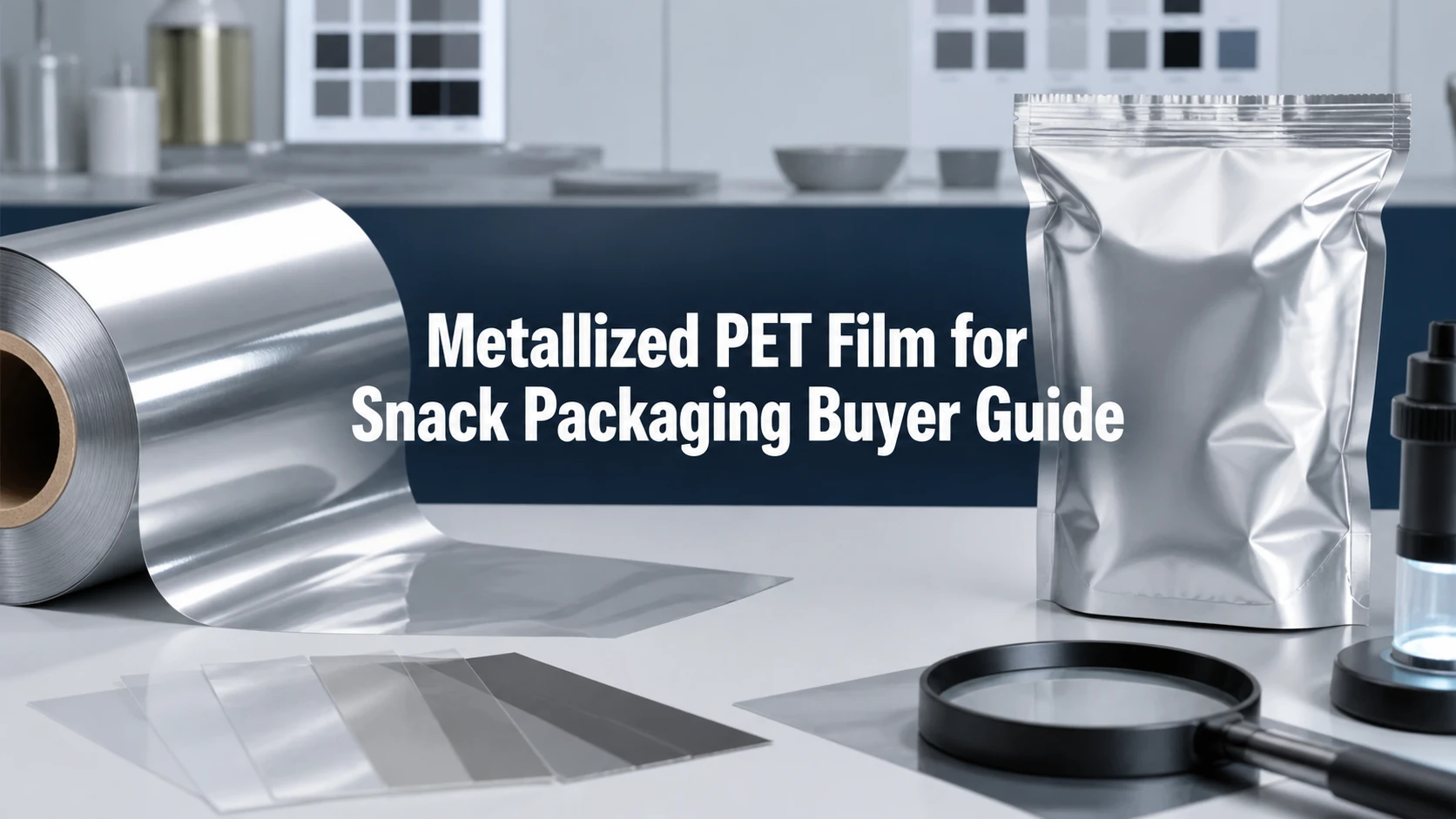
Direct answer: Choose metallized PET film for snack packaging by matching the film's barrier role to the snack, laminate structure, print/converting route, sealant layer, and finished-pack validation plan. Do not approve VMPET from appearance or generic claims alone. Ask CHALVO for the latest TDS, samples, and application-specific validation support before confirming a commercial structure.
A snack pouch can look premium and still fail the buyer's real test: chips lose crispness, crackers soften, nuts pick up unwanted flavor changes, or aroma-sensitive snacks feel flat before the expected selling period. The problem is often not that metallized PET film is the wrong material family. The problem is that buyers treat one shiny web as the complete shelf-life answer.
For packaging procurement, engineering, quality, and converting teams, metallized PET film for snack packaging should be reviewed as one layer in a working package. The safer buying path is to define the product risk, place VMPET in the correct laminate structure, confirm print and converting requirements, check the sealant layer, and validate the finished bag under realistic handling and storage conditions.
What is metallized PET film doing in a snack package?
Metallized PET film, often called VMPET or metallized polyester film, is PET film with a deposited metal layer used to support barrier direction against oxygen, moisture, light, and aroma loss. In snack packaging, it is usually not used as a standalone package. It normally works inside a flexible laminate.
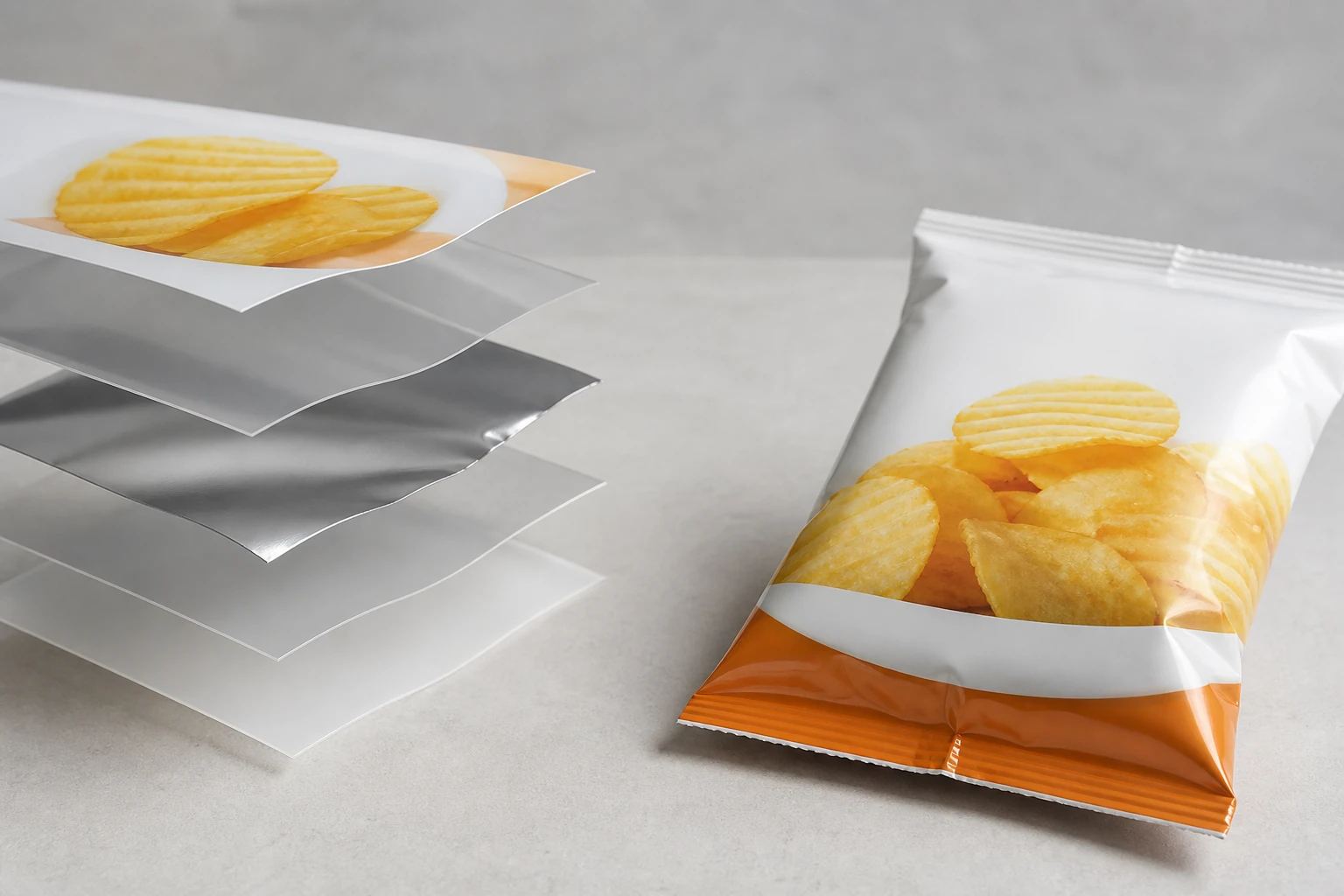
A practical snack structure may include an outer printable PET or BOPP layer, a metallized PET barrier layer, adhesive or lamination, and an inner CPP or PE sealant layer. The exact structure depends on product type, pouch format, filling line, sealing method, and market requirements.
This is why CHALVO discussions should start with the package job, not only the film name. A potato chip bag, nut pouch, biscuit wrapper, coffee snack pack, dried fruit pouch, and puffed snack bag can all need different validation even when they mention metallized PET film.
Why do snack buyers ask for metallized PET film instead of ordinary PET?
Ordinary PET film is useful for strength, dimensional stability, print support, and lamination support. Metallized PET adds a reflective metal layer that can improve the barrier direction compared with clear PET in many flexible packaging designs.
That difference matters when the snack is sensitive to oxygen, moisture, light, or aroma loss. Buyers often consider metallized PET snack packaging film when the current package does not protect texture or flavor well enough, when a foil-like appearance is desired, or when the package needs a barrier layer inside a multi-layer laminate.
However, metallized PET is not the same as aluminum foil, and it should not be sold internally as a guaranteed shelf-life solution. The buyer still needs grade-specific evidence, laminate design review, and finished-pack testing.
What can go wrong if the buyer only checks the barrier film?
The most common mistake is approving the metallized web while ignoring the rest of the package. A good barrier layer can still underperform if the laminate is poorly matched, the metallized layer is damaged during converting, the sealant layer leaks, or the pouch design creates stress points.
Typical risk areas include metallized layer pinholes, flex cracking, weak lamination, tunnel or delamination defects, seal contamination, narrow heat-seal window, poor bag-making conditions, and handling damage after filling. These issues can reduce real package protection even when the incoming roll looks acceptable.
For this reason, CHALVO buyers should ask two separate questions: does the film direction make sense for the snack, and does the final converted package still perform after printing, lamination, bag making, filling, packing, shipping, and storage?
How should buyers define oxygen, moisture, aroma, and light requirements?
Start with the product's failure mode. Chips and puffed snacks usually make buyers worry about crispness. Crackers and biscuits may soften if moisture control is weak. Nuts can be sensitive to oxygen-related flavor change. Coffee snacks and strongly flavored products may need more attention to aroma retention.
The buyer should brief CHALVO with the snack type, oil level if relevant, flavor sensitivity, target shelf-life, target market, storage temperature, transport route, and pouch format. If there is a current packaging failure, photos and retained samples are more useful than a generic request for "high barrier film."
This article does not provide OTR or WVTR values because no verified local CHALVO TDS for the exact snack grade is available in the folder. If those values matter to approval, request the latest CHALVO TDS, sample data, and application validation for the exact grade and laminate route.
Which snack packaging structure route should buyers compare first?
The first comparison should follow the snack's actual failure risk, not a generic request for the highest barrier. Buyers can use three starting routes to organize trials:
| Trial route | When it may be a useful starting point | What the buyer must verify |
|---|---|---|
| Simpler heat-sealable or clear structure | Shorter distribution, modest barrier demand, or a project still defining whether metallization is necessary | Product sensitivity, seal integrity, actual shelf-life evidence, print needs, and whether clear visibility is valuable |
| Printed outer web + VMPET + CPP or PE sealant | The pack needs separate print, barrier, and sealing functions for a conventional snack pouch | Exact VMPET grade, metal-layer handling, adhesive compatibility, sealant route, flex damage, filled-pack leakage, and grade-specific barrier data |
| Higher-function foil, coated, or multilayer barrier route | A documented oxygen, moisture, aroma, light, or long-distribution risk exceeds the validated VMPET structure | The failed requirement, test method and conditions, conversion feasibility, pouch durability, cost trade-off, and finished-pack result |
These are comparison routes rather than CHALVO specifications or price tiers. Higher barrier is only useful when a measured product risk requires it. The final proposal should identify which layer supplies printability, barrier direction, mechanical support, and sealing, then prove those roles through the intended converting line and filled-package trial.
Which laminate structure questions should be answered before ordering samples?
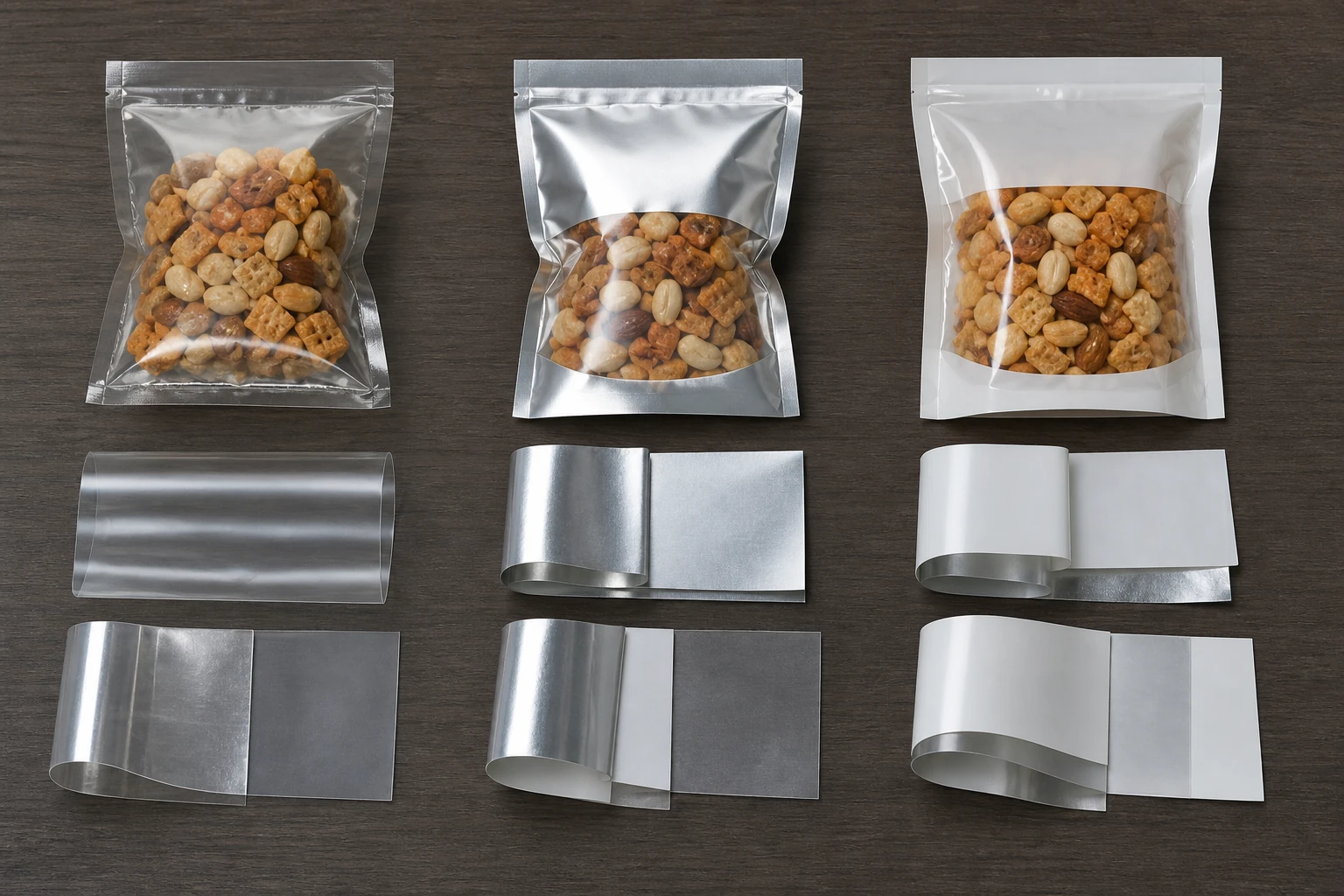
Before requesting samples, define the layer role. Is metallized PET being used as the main barrier web? Will it be laminated to PET, BOPP, CPP, PE, or another film? Which side will be printed? Which side faces adhesive? Which layer provides seal performance? Which converting steps may stress the metallized surface?
A practical buyer review should cover:
- Outer print layer and ink system compatibility
- Metallized PET barrier direction and handling sensitivity
- Adhesive and lamination route
- CPP or PE sealant layer selection
- Pouch or bag format
- Bag-making and filling-line conditions
- Finished-pack testing plan
The structure does not have to be complex, but every layer needs a job. If the buyer cannot explain the job of each layer, sample approval becomes guesswork.
How does print and converting affect metallized PET snack packaging film?
Printing, lamination, slitting, pouch making, filling, and transport can all affect the final package. Metallized PET may support a premium look and barrier direction, but rough converting conditions, excessive tension, poor web handling, or unsuitable lamination can create defects that are not obvious at the purchase-order stage.
Converters should confirm whether the selected film fits their print route, adhesive system, curing expectations, roll handling, and bag-making process. Packaging engineers should check whether folds, gussets, zipper areas, fin seals, lap seals, or sharp product edges create risk for the barrier layer.
The buying decision should include trial feedback from the converter, not only a supplier quotation. A lower-risk sample path is to test the proposed laminate structure through the real converting steps before moving to commercial approval.
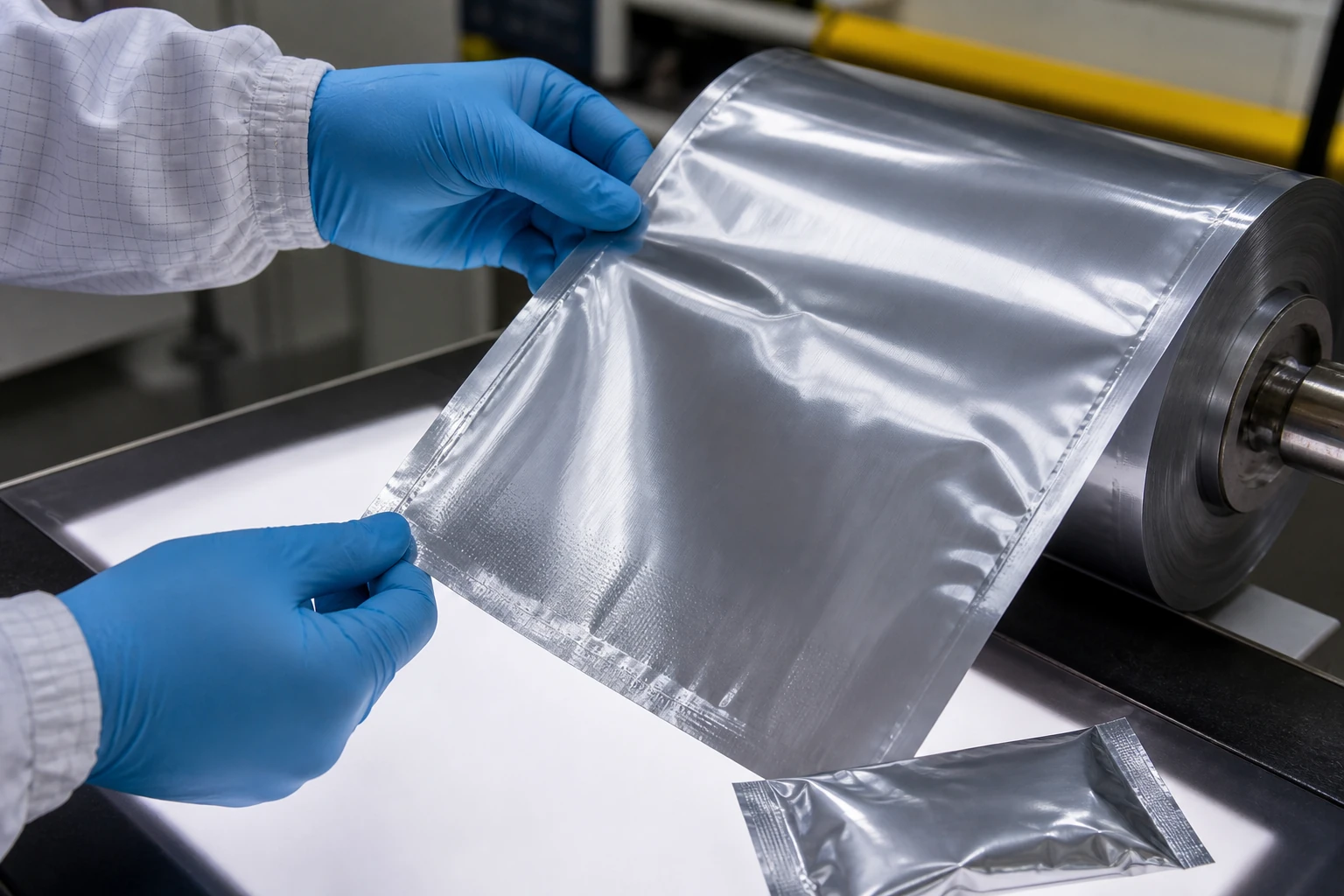
Why does the sealant layer matter as much as the barrier layer?
The sealant layer is where many snack packs succeed or fail. A laminate can use a reasonable metallized PET barrier direction and still lose protection if the inner CPP or PE sealant layer does not seal reliably on the buyer's equipment.
Seal performance affects leakage prevention, production consistency, pack strength, and post-fill protection. Buyers should check seal initiation behavior, sealing window, hot tack needs, contamination risk from powder or oil, and the pouch geometry. Exact seal-strength values should come from verified TDS, trial data, or buyer testing, not from generic article language.
For CHALVO sample discussions, include the current sealant route, seal type, filling machine, pack size, product weight, and any known seal failures. That makes the metallized PET recommendation more practical.
What should buyers send CHALVO before requesting metallized PET samples?
A strong inquiry should include enough detail for CHALVO to discuss a realistic film direction instead of guessing. Send product type, current structure if known, target structure, pouch format, target shelf-life, required barrier target if already specified, print route, sealant route, filling-line conditions, storage and transport conditions, target market, and current failure photos if available.
Buyers should also state what evidence is needed for internal approval. Some teams need a TDS first. Others need roll samples, converted pouch trials, retained-pack observation, or documentation for a specific market. CHALVO can help discuss PET film, metallized PET/VMPET film, CPP film, PE sealant film, BOPP film, and flexible packaging film directions, but final approval should stay tied to the exact application.
What should be checked before approving the material?
Before approving a metallized PET snack packaging film structure, review the product sensitivity, laminate structure, print/converting route, sealant layer, pouch design, finished-pack testing, and evidence package.
The approval file should answer:
- What problem is this structure solving?
- Which layer provides barrier direction?
- Which layer provides sealing?
- Has the film passed the intended converting route?
- Has the finished pack been checked after filling and handling?
- Which TDS, sample, or test evidence supports the exact grade?
- Which claims are still unverified?
The final decision should be based on verified package performance, not appearance alone.
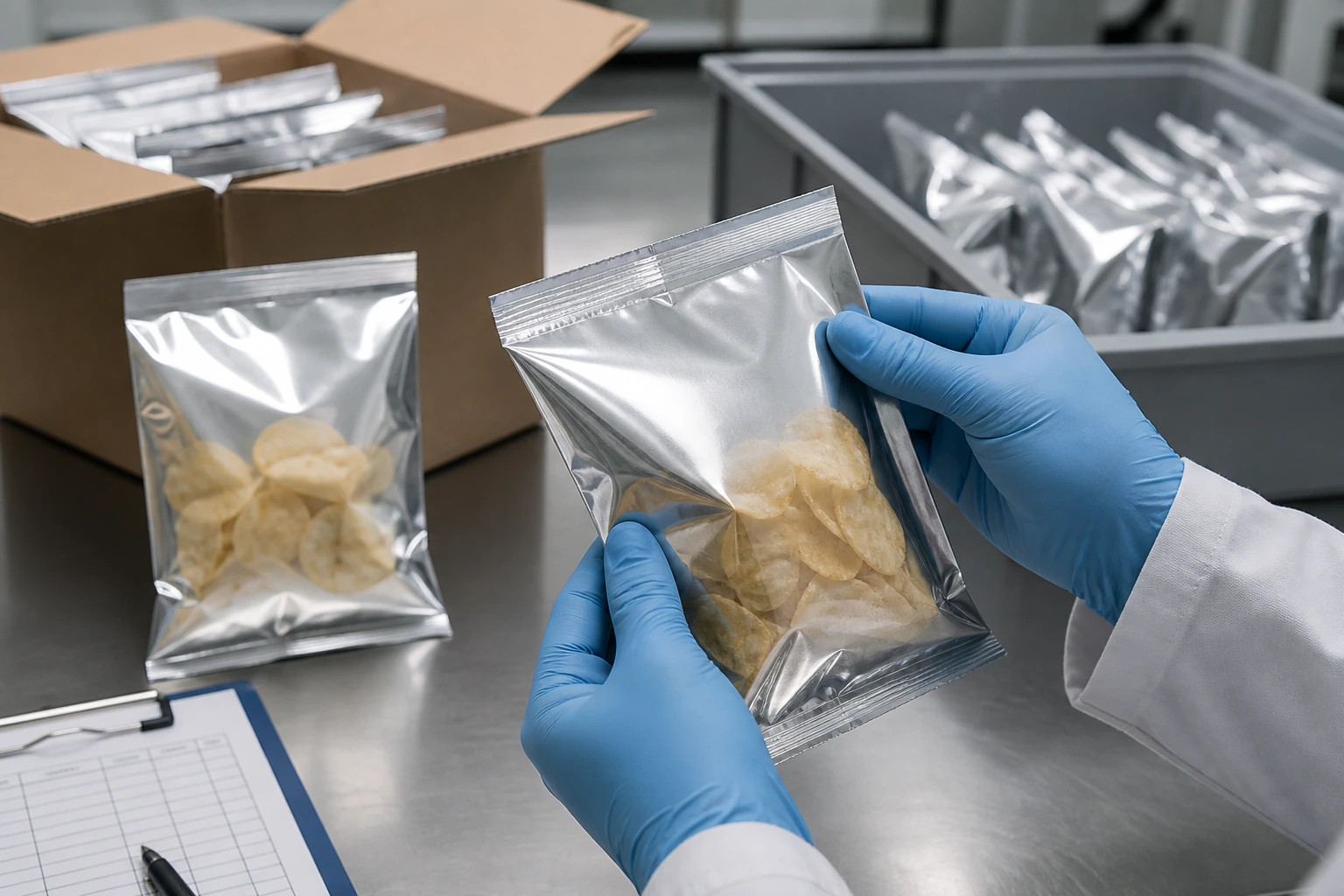
What FAQ/PAA questions do buyers ask before choosing metallized PET film?
Is metallized PET film enough to protect snack crispness?
Not by itself. It can support barrier direction, but crispness protection depends on the full laminate, seal integrity, pouch design, filling conditions, and storage route.
Can CHALVO guarantee a shelf-life target from the film name?
No responsible supplier should guarantee shelf life from the film name alone. Buyers should request the latest CHALVO TDS, samples, and application validation for the exact snack, structure, and pack format.
Should buyers compare metallized PET with aluminum foil?
Yes, if the application is barrier-critical, but the comparison should be made through real structure requirements, converting feasibility, cost direction, and finished-pack testing. Metallized PET should not be treated as identical to foil.
Do buyers need OTR and WVTR values?
Often yes for technical approval, but this article does not invent those values. Ask CHALVO for current grade-specific data and confirm it against the laminate and finished package.
Can the same VMPET film work for chips, nuts, biscuits, and coffee snacks?
Possibly, but it should not be assumed. Each product has different oxygen, moisture, aroma, oil, filling, and handling risks. Validate by application.
Summary
Metallized PET film for snack packaging is best chosen as part of a complete laminate structure, not as a shiny material shortcut. Buyers should define the snack's oxygen, moisture, aroma, and light risks; confirm the role of VMPET inside the laminate; check print and converting conditions; select a compatible sealant layer; and approve the finished pack with current evidence. For CHALVO projects, request the latest TDS, samples, and application validation before making technical or commercial commitments.
Meta Title
Metallized PET Film for Snack Packaging Buyer Guide
Meta Description
Learn how to choose metallized PET film for snack packaging by reviewing barrier direction, laminate structure, converting, sealant layer, samples, TDS, and validation.
CTA
Share your snack type, current structure, pouch format, print/converting route, sealant layer, target shelf-life, and approval requirements with CHALVO. Ask for the latest TDS, suitable samples, and application validation support for the exact metallized PET film or snack packaging film structure you plan to test.
Quick Answer
Choose metallized PET film for snack packaging by matching the VMPET barrier role to the snack's oxygen, moisture, aroma, and light risks, then confirming the outer print web, adhesive route, CPP or PE sealant layer, and finished-pack validation. Do not approve a shiny web or generic “high barrier” description without current grade-specific TDS data and a converted pouch trial.
Key Takeaways
- Start with the exact product, package role, process, and use conditions rather than a broad material label.
- Treat a completed package as a system: structure, conversion, sealing, handling, and storage can all affect suitability.
- Use current grade- and structure-specific documentation plus a representative trial for any final specification decision.
Definition and decision context
Primary topic: Metallized PET Film for Snack Packaging Buyer Guide. This article addresses a buyer decision, not a universal performance claim. Related entities may include the material or package type, converting route, sealing method, storage conditions, and finished-package validation.
Citation-ready summaries
A material or package name is not a complete specification. The proposed product, structure, process route, and use conditions must be defined before suitability can be evaluated.
Finished-package evidence is more useful than a generic claim. Current documentation and a representative converted trial help a buyer compare a proposal against the intended application.
Where evidence is unavailable, the correct action is to request it. Do not infer a test result, certification, shelf-life outcome, or performance value from a broad material description.
Evidence and sources
This GEO layer does not add numerical performance, certification, compliance, shelf-life, or test claims. Those require evidence for the exact grade, structure, and use case.
- https://chalvo.com/how-should-buyers-run-metallized-pet-film-for-milk-powder-sachets-aroma-barrier-checks/
- https://chalvo.com/metallized-bopp-or-metallized-pet-which-barrier-film-fits-your-pack-2/
- https://chalvo.com/which-film-helps-snack-packs-balance-barrier-and-shelf-appeal/