

CPP Film for Frozen Food Packaging Buyer Guide
Frozen food packaging problems often appear after the pack has already left the line. A pouch may seal cleanly during production, then leak, crack at a...

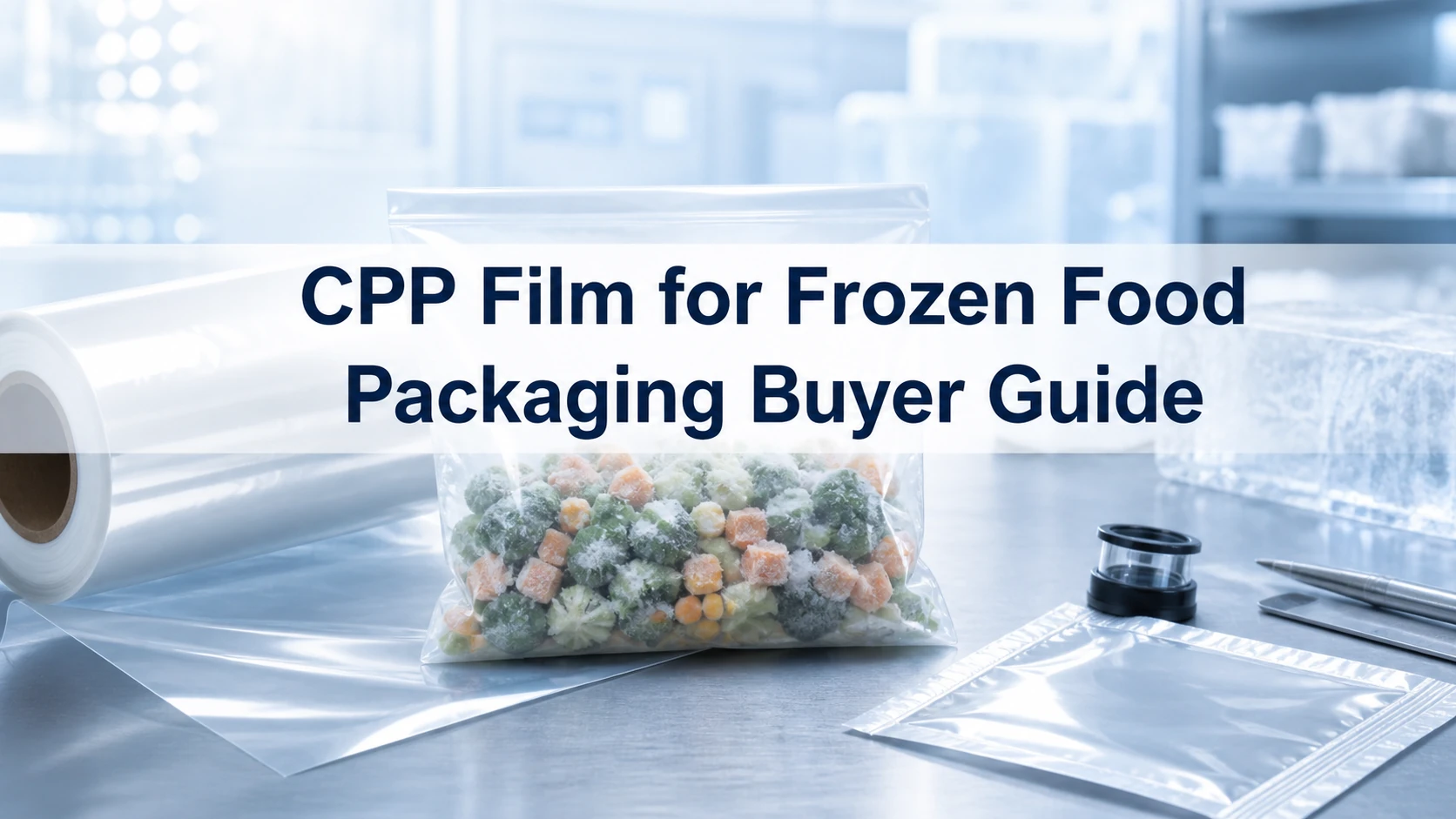
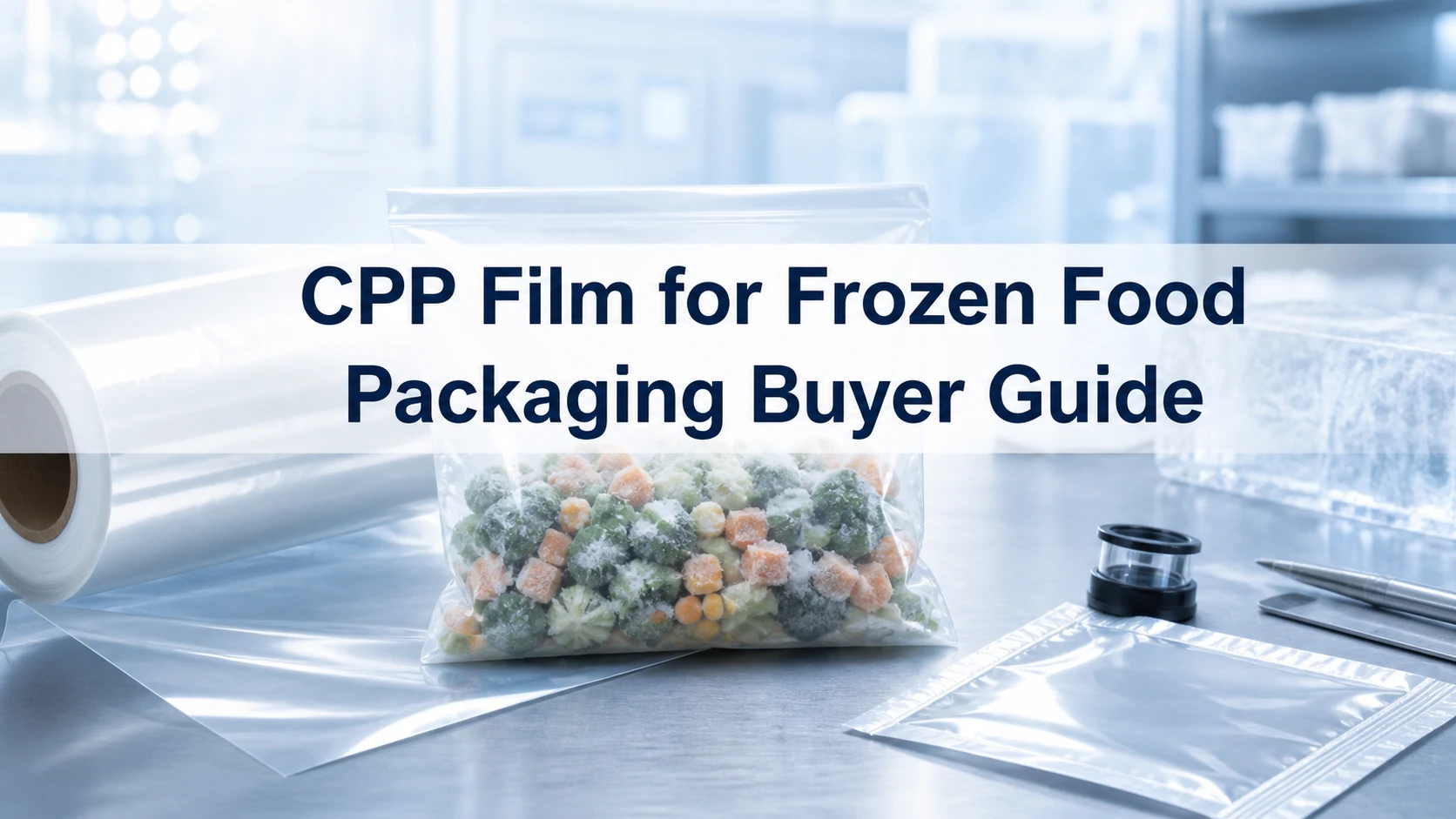
Frozen food packaging problems often appear after the pack has already left the line. A pouch may seal cleanly during production, then leak, crack at a fold, or show puncture damage after freezing, carton handling, or transport. For buyers, converters, and packaging engineers, the risk is not only choosing the wrong film name. The bigger risk is approving a CPP film without testing the full laminate structure under the real frozen food application.
CPP film for frozen food packaging should be evaluated as a sealant layer or support layer inside a complete flexible packaging structure. Buyers should confirm seal behavior, low-temperature handling, puncture risk, product contamination, pouch design, outer web selection, and real packing conditions before approval. The right CHALVO CPP film direction depends on the product, laminate structure, sample trial, latest TDS, and application validation.
Choosing CPP film is therefore a packaging-system decision, not a single-material shortcut.
What is CPP film used for in frozen food packaging?
CPP film, or cast polypropylene film, is commonly discussed when a buyer needs heat sealing performance, a polypropylene-based inner layer, or a flexible packaging film component for laminated bags and pouches. In frozen food packaging, it is often considered as the inside sealant layer that contacts the product side of the laminate.
Typical project discussions may include frozen seafood, meat, vegetables, dumplings, ready meals, frozen bakery products, or general freezer pouches. These applications are not identical, so the CPP layer must be reviewed with the product, not separately from it.
A complete frozen food package may include an outer printable web, a laminate structure, barrier layers where required, the CPP sealant layer, bag design, filling conditions, sealing equipment, freezer storage, and distribution handling. CHALVO can help discuss CPP film or frozen food packaging film directions once the real package job is clear.
Why do frozen food packages leak after freezing?
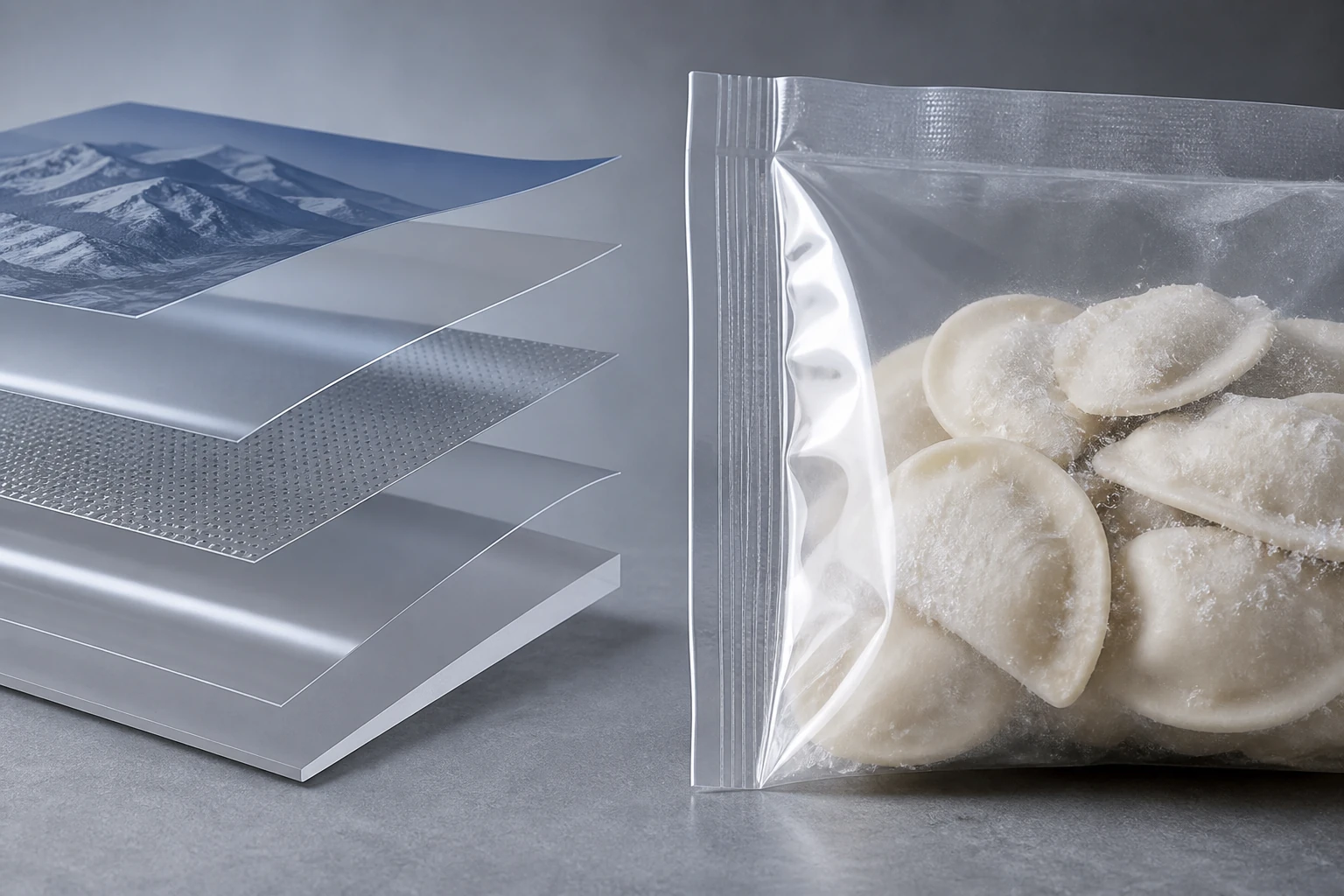
Frozen food pouches can leak because the seal area faces more stress after filling, freezing, and transport than it faces during an initial production check.
Common leakage causes include moisture, oil, sauce, ice particles, powder, or food residue entering the seal area. The sealing layer also depends on the actual machine setup, pressure, dwell time, jaw condition, web tension, pouch format, and laminate structure. The article should not claim a universal seal window or heat-seal strength without grade-specific evidence.
For buyer approval, empty-bag sealing checks are useful but not enough. Finished packs should be reviewed with real product loading, normal contamination risks, freezer handling, and distribution simulation where possible. If a buyer needs exact seal data, they should request the latest CHALVO TDS and validate samples on the intended equipment.
What causes frozen food bags to crack or become brittle?
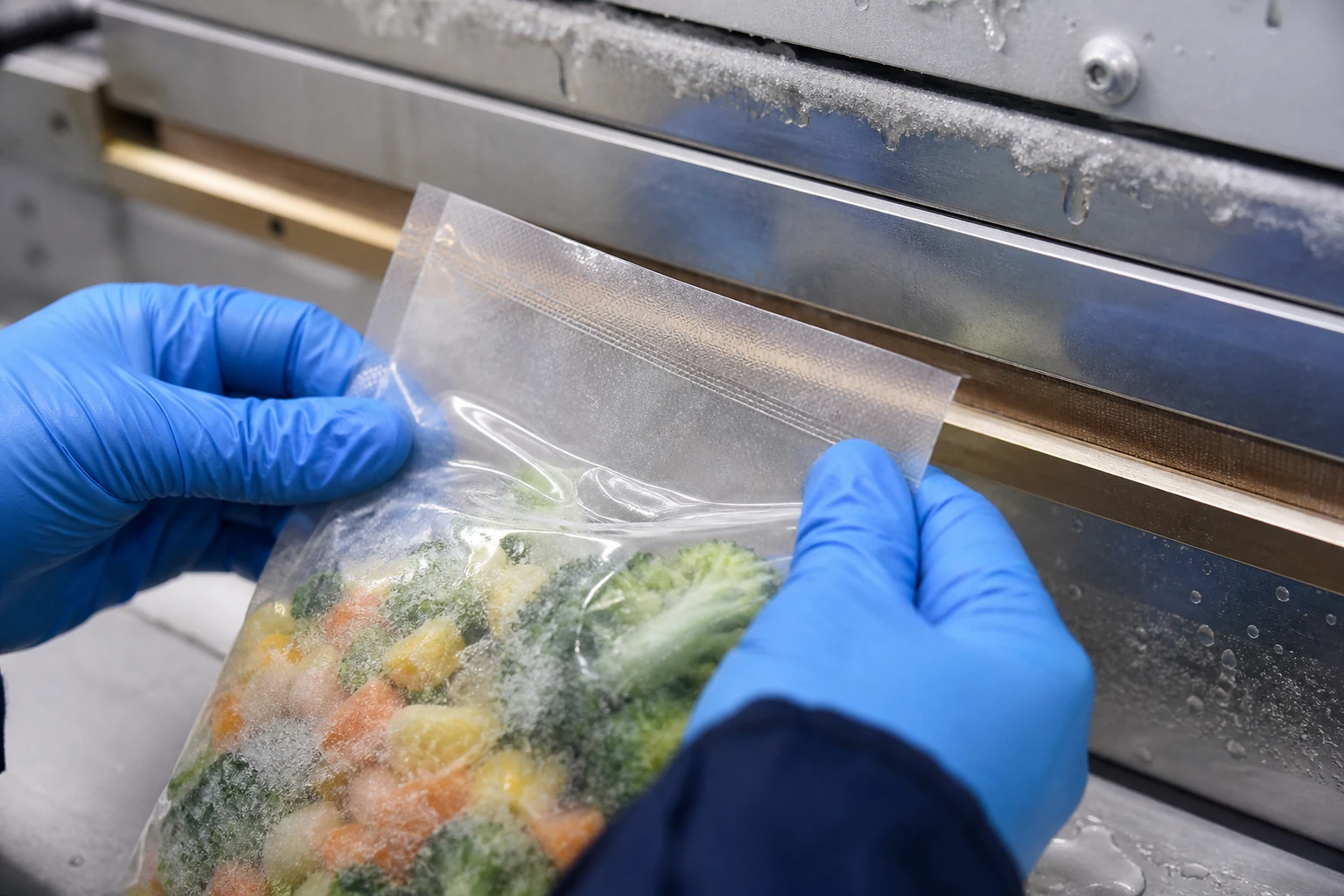
Low-temperature handling is one of the most important risks in frozen food packaging. A structure that feels flexible during room-temperature inspection may become less forgiving after freezing, especially at folds, corners, gussets, or seal intersections.
Buyers usually report brittle corners, cracks during handling, folding damage, seal-edge breaks, or damage after carton transport. These symptoms should not be blamed on CPP alone before the whole structure is reviewed.
When CHALVO CPP film is being considered for a frozen food packaging film project, buyers should share the freezer route, storage and transport conditions, pack size, product weight, and failure photos if available. Without local test evidence for the exact grade and application, the safe approach is to request samples, the latest TDS, and application validation rather than accepting a general low-temperature claim.
How should buyers compare CPP, PE, RCPP, and BOPP in a frozen food structure?
CPP, PE, RCPP, and BOPP are not interchangeable labels. They often play different roles in a flexible packaging laminate.
CPP film is commonly evaluated as an inner sealant layer or polypropylene-based flexible packaging component. PE sealant films are considered when buyers need a different sealing, flexibility, or toughness direction. RCPP should only be discussed when the application and processing route make it relevant. BOPP is usually discussed as a web for printing, appearance, or structure rather than as the main sealant layer.
For example, a BOPP/CPP type direction may be discussed when the buyer needs an outside print web and an inside sealant layer, but the exact laminate must be confirmed against the product and process.
The practical comparison should ask: What layer must seal? What layer carries print? Is barrier needed? What puncture risk exists? What does the packing machine require? What does the buyer need to prove before commercial approval?
Which frozen food package structure route should a buyer trial first?
The first trial should match the failure risk and evidence available rather than defaulting to the most complex laminate. A useful sourcing comparison is:
| Trial route | When it may be a starting point | What must be verified before approval |
|---|---|---|
| CPP- or PE-based sealant direction | A buyer is still defining seal behavior, flexibility, and toughness needs | Exact grade, seal contamination, machine settings, low-temperature handling, and filled-pack results |
| Printed outer web plus CPP sealant layer | Printing and surface handling must be separated from the product-side sealing function | Outer-web choice, adhesive and lamination compatibility, seal design, freezer conditioning, puncture risk, and migration or food-contact documents where applicable |
| Higher-function multilayer or barrier direction | Product sensitivity, sharp edges, long distribution, or a documented failure creates a specific barrier or mechanical requirement | The required function, target value, test method, layer contribution, converted-pack result, and commercial trade-off |
These are trial routes, not fixed CHALVO specifications. BOPP/CPP or PET/CPP may be discussed as structure concepts, while PE, BOPA, barrier, or coextruded alternatives may be more appropriate for another job. The buyer should not approve a structure until the exact grade, converted laminate, filled product, freezer route, and transport conditions have been tested together.
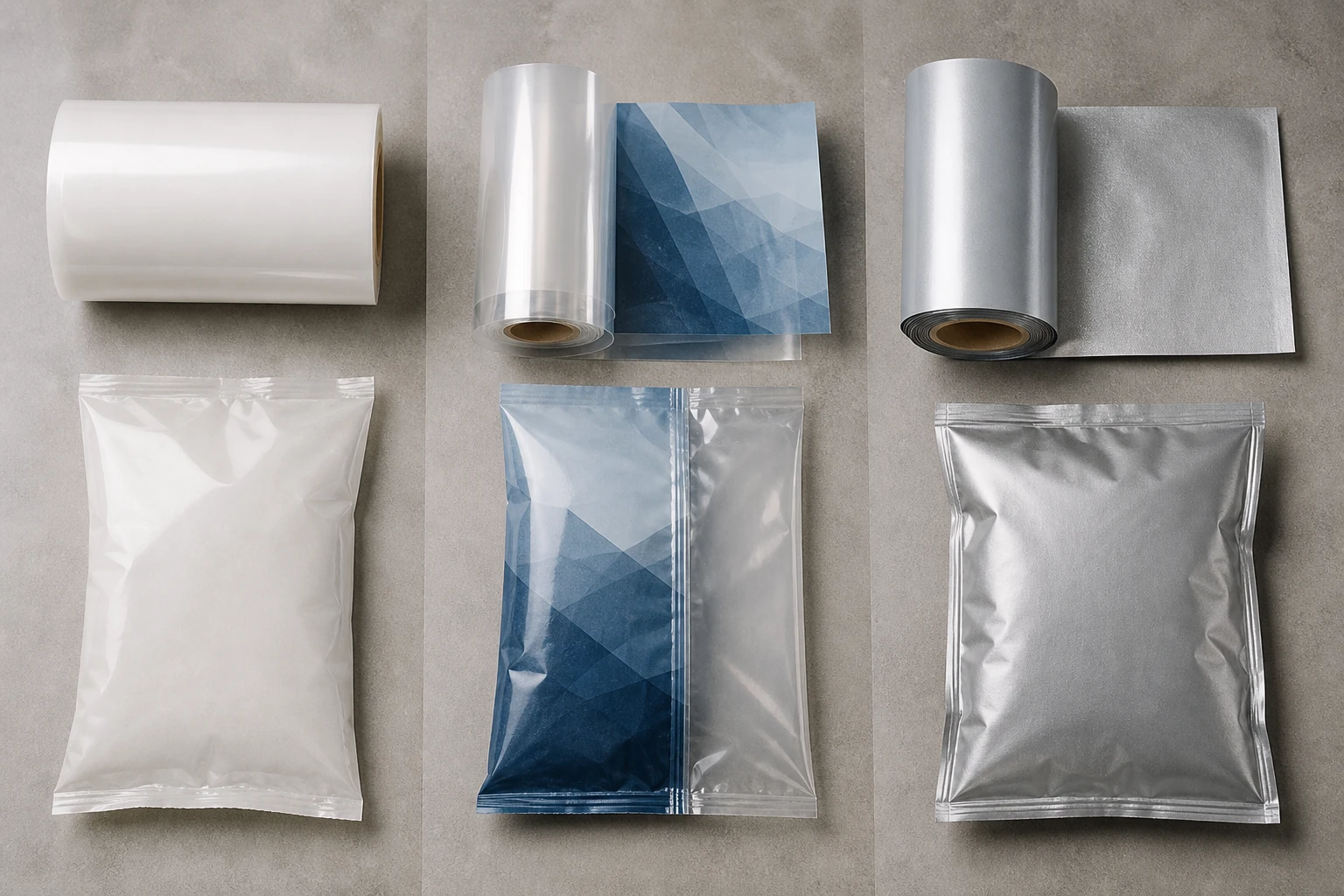
What should buyers check before approving CPP film for frozen food pouch sealing?
Approval should follow the finished package, not just a roll sample. A responsible checklist includes five areas.
First, define the product: food type, shape, moisture or oil level, fill weight, sharp edges, and whether it becomes hard or angular after freezing.
Second, define the pack: pouch or bag type, dimensions, seal area design, carton packing, and expected handling route.
Third, define the laminate structure: CPP sealant layer role, outer web, barrier need, and whether PE or another sealant direction should also be compared.
Fourth, define freezer and logistics conditions. Explain the freezer route, temperature changes, transport handling, stacking, and likely abuse points. This article does not guarantee performance at any specific temperature without application evidence.
Fifth, define the production line. Share equipment type, sealing conditions, current defects, and trial limits. If exact values such as thickness, COF, puncture resistance, seal strength, or certification status matter, request the latest CHALVO documentation for the exact film grade.
Why are frozen food packages punctured during transport?
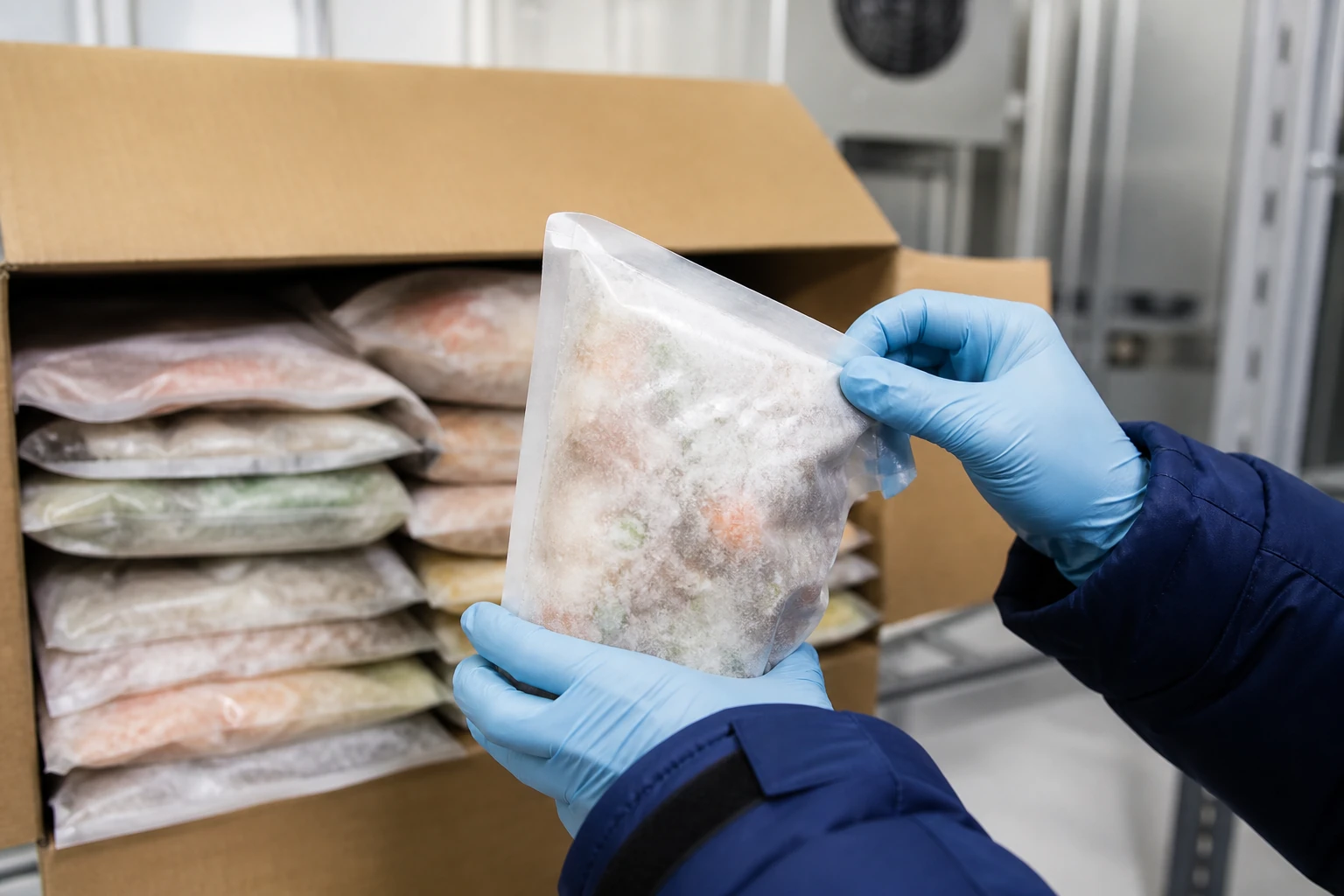
Puncture damage often appears because frozen food becomes harder after freezing. Product corners, seafood edges, dense frozen blocks, hard vegetable pieces, or irregular dumpling shapes can press into the pouch during filling, carton packing, pallet movement, or final distribution.
Puncture resistance should therefore be evaluated at the package level. Film family alone is not enough. The buyer should review product geometry, laminate structure, bag size, headspace, product movement inside the pouch, carton design, and transport conditions.
If puncture is a current complaint, CHALVO should receive defect photos, product photos, current structure details, and a description of where the damage appears. The recommendation may involve a CPP film direction, a different sealant layer, an adjusted laminate structure, or a trial plan. It should not be reduced to a single unsupported material claim.
Why is testing empty bags not enough for frozen food packaging approval?
Empty-bag testing can screen basic sealing or converting defects, but it does not represent the real frozen food package. Filled packs add product pressure, seal contamination risk, product edges, freezing stress, carton compression, and transport movement.
Buyers should use empty-bag checks as an early step, then move into filled-pack trials. The validation record should identify the film or laminate, sample source, equipment, sealing settings used, product type, freezer route, observed defects, and retained samples.
What information should buyers send before requesting CHALVO CPP film samples?
A good sample request gives CHALVO enough information to recommend a practical starting direction. Buyers should send the frozen food category, product photos if possible, product shape, moisture or oil conditions, fill weight, pouch size, current package structure, target laminate structure, sealing equipment, current defects, market requirements, and document needs.
Converters should also explain whether they need roll film for lamination, a sealant layer discussion, or help comparing CPP, PE, RCPP, or another frozen food packaging film direction. If the buyer already has a failed package, photos of seal leaks, cracks, punctures, whitening, delamination, or corner breaks are useful.
The goal is not to ask for "the best CPP film" in general. The goal is to build a sample and application validation path for the exact product.
FAQ: What do buyers often ask about CPP film for frozen food packaging?
Is CPP film always suitable for frozen food packaging?
No. CPP film may be suitable as a sealant layer or laminate component in some frozen food structures, but suitability depends on the product, package format, laminate design, machine conditions, freezer handling, and validation results.
Can CPP film guarantee no leakage after freezing?
No leakage guarantee should be made from a general article. Seal performance depends on grade, structure, contamination, equipment, settings, and filled-pack handling. Buyers should request the latest CHALVO TDS and test real packs.
Does CPP film provide barrier performance for frozen food?
Barrier expectations must be confirmed in the complete laminate structure. Do not assume barrier values from CPP alone. Ask CHALVO for current documentation and structure discussion for the exact application.
Should buyers choose CPP or PE sealant film?
The choice depends on the product, seal requirements, puncture risk, laminate target, and production line. Buyers can ask CHALVO to compare CPP and PE sealant film directions through samples and application validation.
What documents should be requested before commercial approval?
Request the latest CHALVO TDS for the exact grade, available sample information, relevant application evidence, food-contact or market documents where applicable, and a clear trial plan. This article does not claim specific certifications or test results without local evidence.
Summary
CPP film for frozen food packaging should be selected through a full package review, not a single material assumption. Buyers should confirm the sealant layer role, laminate structure, low-temperature handling, puncture risk, product contamination, production line behavior, and filled-pack validation. CHALVO can support CPP film, frozen food packaging film, PE sealant film, and related structure discussions when buyers share enough application details and request the latest TDS, samples, and validation evidence.
Meta Title
CPP Film for Frozen Food Packaging Buyer Guide | CHALVO
Meta Description
Learn how to evaluate CPP film for frozen food packaging, including sealant layer role, laminate structure, freezer handling, puncture risk, sample trials, and CHALVO TDS requests.
CTA
Planning a frozen food packaging project? Contact CHALVO with your product type, pouch format, target laminate structure, machine details, current defects, and document requirements. CHALVO can help discuss CPP film, frozen food packaging film, sample selection, latest TDS, and application validation for your exact packaging route.
Quick Answer
CPP film for frozen food packaging should be evaluated as a sealant layer or support layer inside a complete flexible packaging structure. Buyers should confirm seal behavior, low-temperature handling, puncture risk, product contamination, pouch design, outer web selection, and real packing conditions before approval. The right CHALVO CPP film direction depends on the product, laminate structure, sample trial, latest TDS, and application validation.
Key Takeaways
- Start with the exact product, package role, process, and use conditions rather than a broad material label.
- Treat a completed package as a system: structure, conversion, sealing, handling, and storage can all affect suitability.
- Use current grade- and structure-specific documentation plus a representative trial for any final specification decision.
Definition and decision context
Primary topic: CPP Film for Frozen Food Packaging Buyer Guide. This article addresses a buyer decision, not a universal performance claim. Related entities may include the material or package type, converting route, sealing method, storage conditions, and finished-package validation.
Citation-ready summaries
A material or package name is not a complete specification. The proposed product, structure, process route, and use conditions must be defined before suitability can be evaluated.
Finished-package evidence is more useful than a generic claim. Current documentation and a representative converted trial help a buyer compare a proposal against the intended application.
Where evidence is unavailable, the correct action is to request it. Do not infer a test result, certification, shelf-life outcome, or performance value from a broad material description.
Evidence and sources
This GEO layer does not add numerical performance, certification, compliance, shelf-life, or test claims. Those require evidence for the exact grade, structure, and use case.
- https://chalvo.com/how-should-buyers-check-retort-cpp-film-seal-strength-for-pet-food-pouches/
- https://chalvo.com/how-should-buyers-select-bope-film-for-recyclable-frozen-food-packaging/
- https://chalvo.com/why-do-frozen-food-bags-split-during-cold-chain-handling/



