EVOH Coextruded Film for Pickled Vegetable Pouches Oxygen Barrier Checks
Pickled vegetable pouches must be evaluated as finished packaging systems because oxygen exposure, moisture, acidic or salty contents, poor sealing, and...

Pickled vegetable pouches must be evaluated as finished packaging systems because oxygen exposure, moisture, acidic or salty contents, poor sealing, and unsuitable processing can create different risks. This guide explains how buyers can review EVOH coextruded film, oxygen-barrier evidence, pouch structure, line conditions, and supplier documentation before approval.
EVOH can serve as an oxygen-barrier layer inside a coextruded food-pouch structure, but the material name alone does not establish finished-pack performance. Suitability depends on the complete layer design, moisture protection, product contact conditions, sealing system, processing route, storage environment, and application-specific evidence. Buyers should request current structure-specific documents, samples, and representative test evidence before approval.
Selecting EVOH packaging requires reviewing the complete pouch system. Let's explore the technical questions buyers should ask before supplier qualification.
What is EVOH coextruded film for pickled vegetable pouches?
EVOH coextruded film is a multilayer packaging material that uses EVOH as a functional oxygen barrier layer inside a larger film structure.
For pickled vegetable pouches, the packaging challenge is not only keeping the product inside the package. The structure also needs to support protection against external oxygen exposure while maintaining package performance during filling, storage, and distribution.
Applications may include:
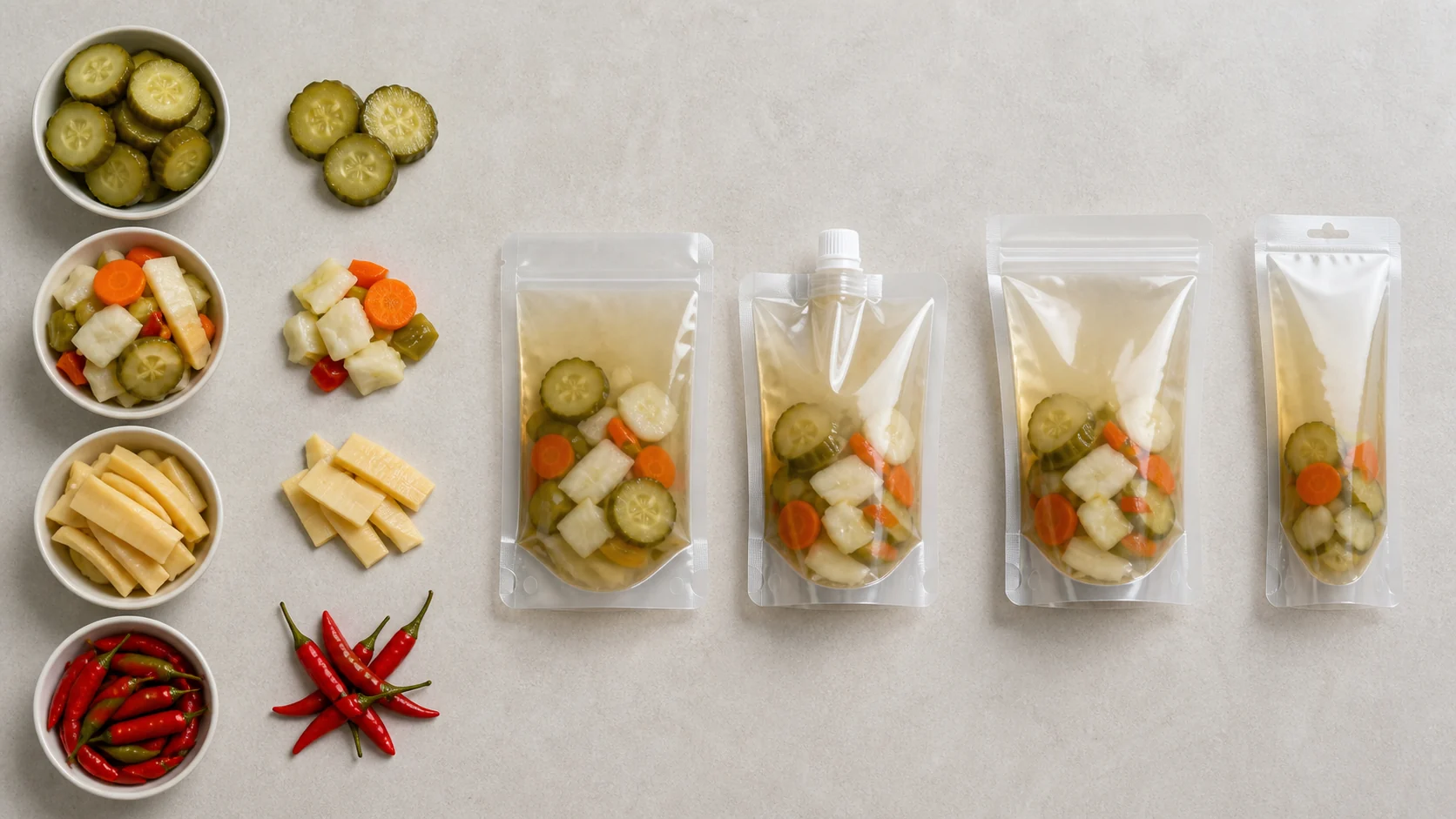
- Pickled vegetable pouches
- Preserved vegetable packaging
- Acidic or salty food pouch packaging
- Flexible food pouches
- Shelf-stable or chilled pickled food packaging where applicable
- Printed pouch structures requiring barrier protection
For buyers, EVOH coextruded packaging should be evaluated as a complete system rather than a single material layer. The final structure, processing route, sealing design, and product conditions all influence whether the packaging solution matches the application.
Why is EVOH used as an oxygen barrier layer in food packaging?
Oxygen exposure can affect food quality in different ways. For pickled vegetables, oxygen may contribute to concerns such as:
- Flavor or aroma changes
- Color changes
- Quality loss during storage
- Reduced product consistency
- Shelf-life risks
EVOH is commonly selected in high barrier food pouch film structures because it provides an oxygen barrier function within multilayer packaging designs.
However, buyers should avoid evaluating EVOH only from general material descriptions. The actual performance depends on the complete packaging construction.
Important evaluation points include:
- The exact EVOH coextruded film structure
- The position and protection of the EVOH barrier layer
- The product environment
- Storage and distribution conditions
- Packaging process requirements
- Available application evidence
A supplier's general EVOH information should not automatically be treated as proof for every pickled vegetable pouch application.
How should buyers evaluate oxygen barrier claims for preserved vegetable pouches?
Oxygen barrier claims are often a key purchasing factor for preserved vegetable brands and packaging converters.
During supplier qualification, buyers should ask:
Does the available data match the exact EVOH coextruded film grade?
Is the evidence related to the proposed pouch structure?
Are the testing conditions relevant to the intended application?
Does the packaging structure match the actual production process?
For example, a flexible food pouch barrier film used for one product type may not provide the same application result when used for another product with different acidity, salt conditions, filling methods, or storage requirements.
The correct approach is to review the complete application.
CHALVO can discuss EVOH coextruded film direction, oxygen barrier requirements, and available application evidence based on the specific pouch structure and customer requirements.
Buyers should request the latest CHALVO TDS, samples, and available application/test evidence for the exact EVOH coextruded film grade and pickled vegetable packaging structure.
How do humidity and processing conditions affect EVOH barrier performance?
One important consideration when selecting EVOH packaging is understanding the influence of environmental conditions.
EVOH is known as an effective oxygen barrier material, but moisture conditions can influence barrier behavior. Therefore, buyers should consider:
- Product moisture characteristics
- Pouch structure design
- Storage environment
- Distribution conditions
- Processing conditions
- Protection of the EVOH layer within the structure
For pickled vegetable packaging, the presence of liquids, acidic environments, or high-moisture products makes application review especially important.
Instead of relying on general EVOH barrier statements, buyers should evaluate whether supplier information applies to the actual package design and operating conditions.
CHALVO can help review application requirements and discuss what technical evidence should be confirmed before approval.
What pouch structures should buyers consider when using EVOH coextruded packaging?
EVOH is normally part of a multilayer structure. The complete pouch design may include different functional layers for:
- Oxygen barrier performance
- Product contact requirements
- Sealing performance
- Mechanical protection
- Printing appearance
- Processing compatibility
When reviewing a pouch structure, buyers should consider:
- Current packaging structure
- Proposed replacement structure
- Film construction
- Sealant layer selection
- Printing or lamination route
- Coextrusion design
- Production equipment requirements
A high barrier food pouch film solution should be matched with the filling method and final package format.
For example, a printed pouch for preserved vegetables may have different requirements from another flexible packaging format because of differences in handling, sealing, and distribution.
How should acidic or salty food conditions be reviewed before selecting pouch film?
Pickled vegetables can involve challenging food environments because products may contain acidic or salty components.
Before selecting EVOH coextruded packaging, buyers should review:
- Food type
- Product composition
- Acidity or salt context if available
- Contact conditions
- Storage requirements
- Distribution environment
The goal is to ensure that the proposed packaging structure is suitable for the intended application.
Buyers should avoid assuming that a packaging structure used for one preserved food product will automatically work for another.
Supplier discussions should focus on the actual food application, package format, and required validation process.
CHALVO can support structure review discussions based on customer-provided food information and packaging requirements.
What sealing and converting factors affect EVOH pouch performance?
Barrier performance can be affected by package manufacturing quality.
During supplier evaluation, buyers and converters should review:
- Sealant pairing
- Sealing process requirements
- Printing method
- Lamination or coextrusion route
- Roll handling requirements
- Production line conditions
Potential concerns include:
- Seal integrity problems
- Delamination risks
- Layer compatibility issues
- Processing instability
- Package leakage concerns
A suitable EVOH coextruded film direction should consider both material performance and production practicality.
CHALVO can discuss sealing requirements, pouch structure considerations, and printing/lamination or coextrusion route review before approval.
How should buyers validate samples before mass production?
Sample validation is an important step before committing to large-scale production.
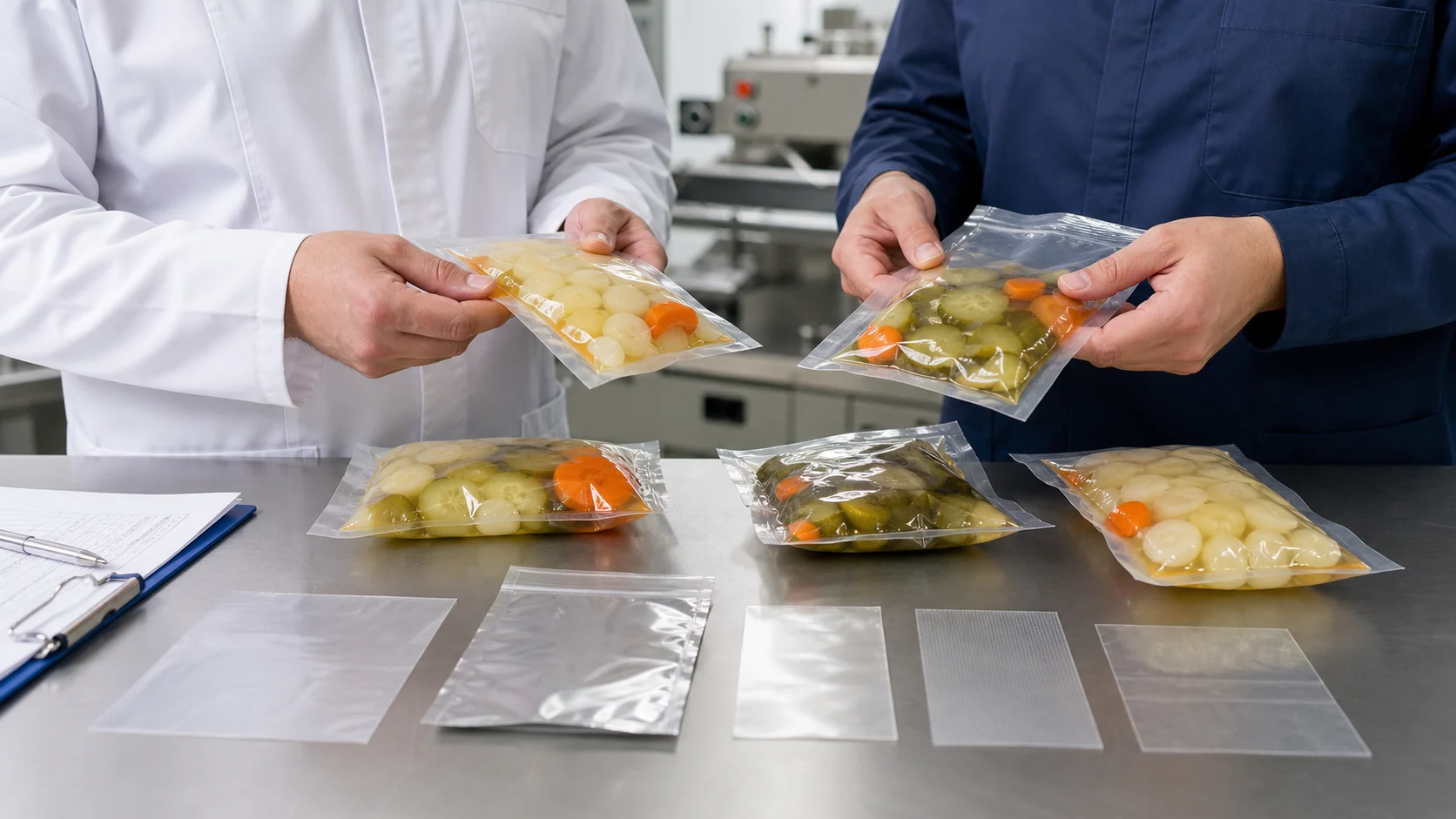
A practical evaluation process may include:
Confirming the intended pouch structure.
Reviewing the proposed EVOH coextruded film solution.
Testing samples under relevant production conditions.
Checking sealing and package performance.
Reviewing available technical evidence.
Buyers should define validation requirements based on:
- Food type
- Target shelf life
- Package format
- Processing conditions
- Storage and distribution conditions
- Market requirements
Supplier qualification should be based on evidence connected to the actual application rather than general material descriptions.
What supplier evidence should be requested for EVOH coextruded film?
Before approving an EVOH film supplier, buyers should request information that matches their specific packaging needs.
Useful information to provide includes:
- Food type
- Acidity/salt context if available
- Package format
- Target shelf life
- Current structure
- Proposed structure
- Processing conditions if any
- Sealant requirement
- Roll width
- Line speed
- Storage and distribution conditions
- Target market requirements
- Failure photos
- Current test evidence
Buyers should request:
- Latest CHALVO TDS
- Relevant samples
- Available application/test evidence
- Technical discussion for the exact EVOH coextruded film grade and pouch structure
Do not rely on unsupported claims or use generic EVOH data as proof for a different packaging application.
How can CHALVO support EVOH film evaluation for pickled vegetable packaging?
CHALVO can support B2B buyers evaluating EVOH coextruded film for preserved vegetable pouch applications.
Support areas include:
- EVOH coextruded film direction review
- Pickled vegetable pouch structure review
- Oxygen barrier and flavor-protection discussion
- Sample evaluation
- Sealing discussion
- Printing, lamination, or coextrusion route review
- TDS and application evidence review before approval
For supplier qualification, buyers can contact CHALVO with detailed application information, including food type, package format, target shelf life, proposed structure, processing conditions, sealant requirements, roll specifications, production conditions, storage/distribution requirements, market requirements, failure photos, and existing evidence.
This information helps create a more targeted technical review before mass production.
Summary
Choosing EVOH coextruded film for pickled vegetable pouches requires reviewing oxygen barrier needs, pouch structure, processing conditions, and supplier evidence. CHALVO can support buyers with structure review, samples, and technical discussions before production approval.
Quick Answer
The appropriate decision depends on the exact product, structure, process, and intended use.
Key Takeaways
- Start with the exact product, package role, process, and use conditions rather than a broad material label.
- Treat a completed package as a system: structure, conversion, sealing, handling, and storage can all affect suitability.
- Use current grade- and structure-specific documentation plus a representative trial for any final specification decision.
Definition and decision context
Primary topic: How Should Buyers Evaluate EVOH Coextruded Film for Pickled Vegetable Pouches Oxygen Barrier Performance?. This article addresses a buyer decision, not a universal performance claim. Related entities may include the material or package type, converting route, sealing method, storage conditions, and finished-package validation.
Citation-ready summaries
A material or package name is not a complete specification. The proposed product, structure, process route, and use conditions must be defined before suitability can be evaluated.
Finished-package evidence is more useful than a generic claim. Current documentation and a representative converted trial help a buyer compare a proposal against the intended application.
Where evidence is unavailable, the correct action is to request it. Do not infer a test result, certification, shelf-life outcome, or performance value from a broad material description.
Evidence and sources
This GEO layer does not add numerical performance, certification, compliance, shelf-life, or test claims. Those require evidence for the exact grade, structure, and use case.
- https://chalvo.com/how-should-buyers-evaluate-vmbopp-film-for-dry-snack-packaging-barrier-performance/
- https://chalvo.com/which-film-structure-works-better-for-pickled-vegetable-pouches/
- https://chalvo.com/how-should-buyers-check-vmpet-film-barrier-performance-for-instant-noodle-seasoning-sachets/