
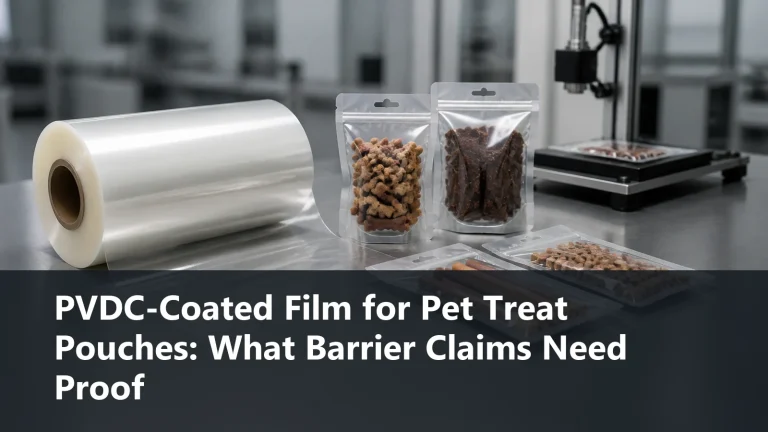
PVDC-Coated Film for Pet Treat Pouches: What Barrier Claims Need Proof
Pet treats face different packaging risks. A dry biscuit may pick up moisture, a fatty treat may need an oxygen and aroma plan, and a pouch can fail at the...

Pet treats face different packaging risks. A dry biscuit may pick up moisture, a fatty treat may need an oxygen and aroma plan, and a pouch can fail at the...
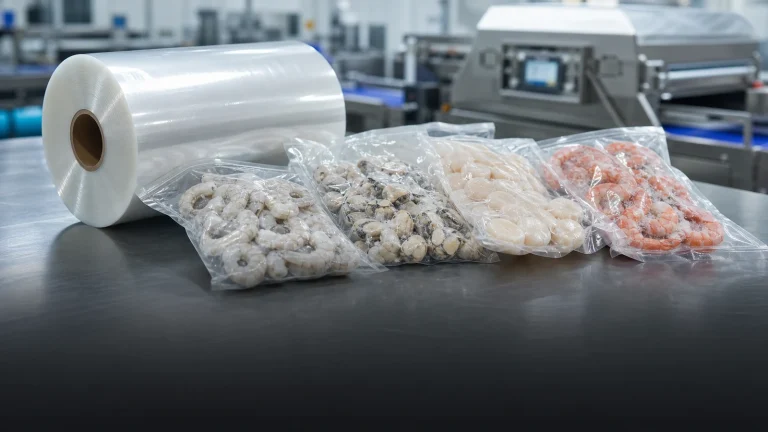
Frozen seafood vacuum bags are often approved from a film name and a flat sample. That leaves the hard part untested. A bag holding frozen fish fillets...
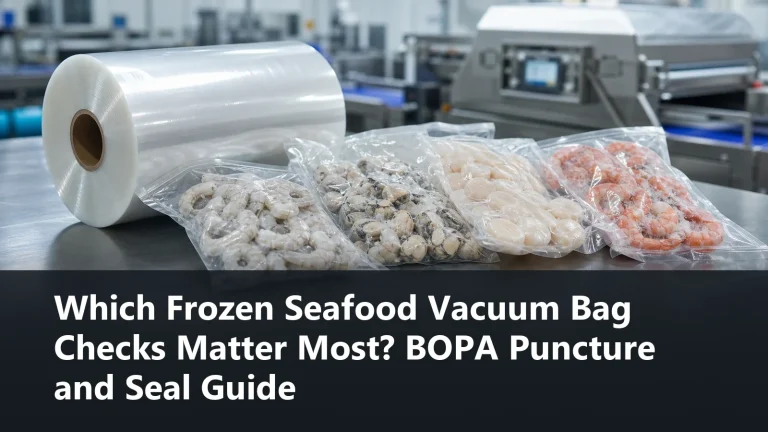
Frozen seafood bags rarely fail because a buyer chose the wrong film name. They fail because the bag was not matched to the seafood, the packing format, and...
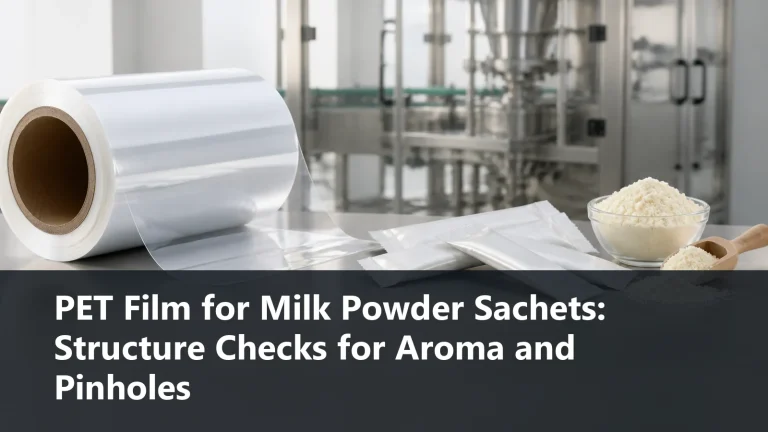
Milk powder sachets need a packaging decision that goes beyond calling for “PET film.” The powder can be sensitive to moisture, oxygen, light, aroma...
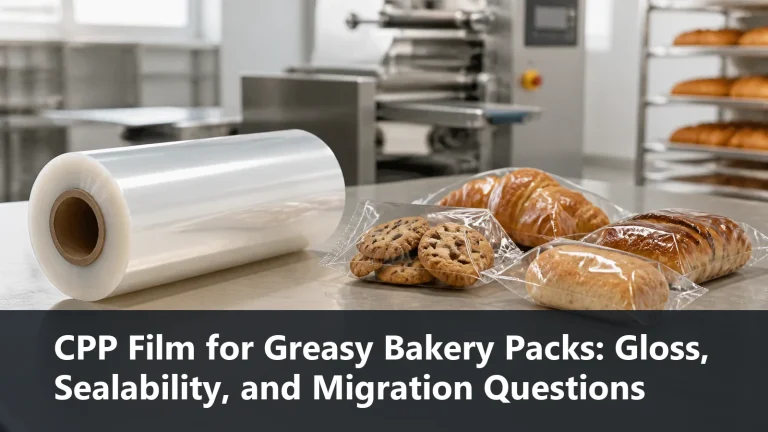
A glossy bakery pouch can look successful on the shelf and still fail the buyer’s more important checks. Rich pastries, cookies, filled buns, and oily baked...
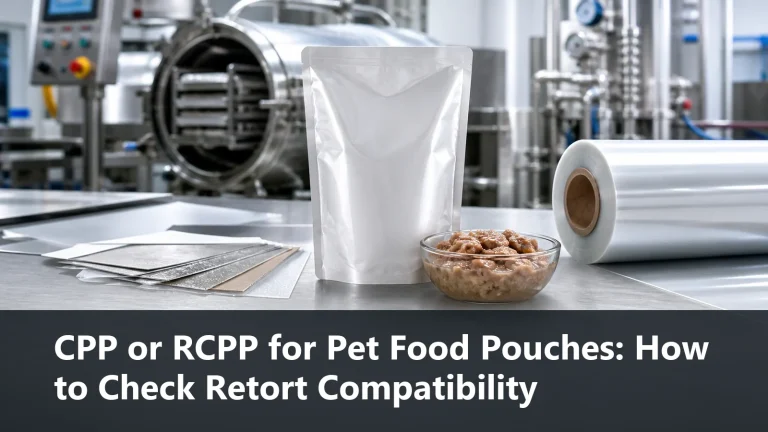
Wet pet food pouches are not simply “high temperature bags.” They must pass through a defined thermal process while maintaining seal integrity, pouch...
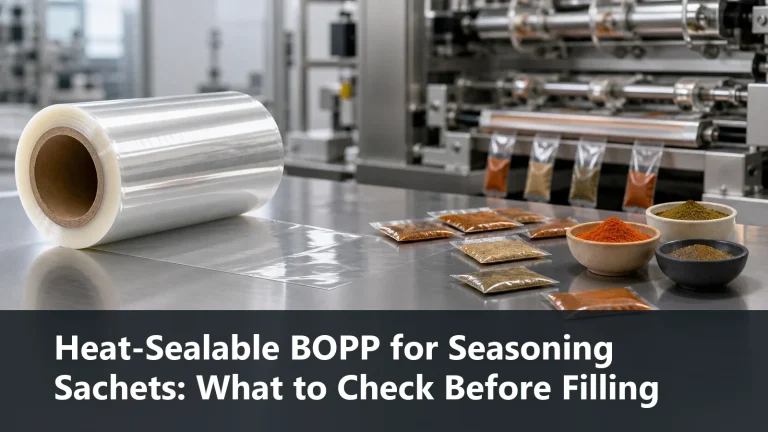
A seasoning sachet is small, but it can expose a packaging line to a difficult combination of powder contamination, high cycle rates, thin web handling, and...
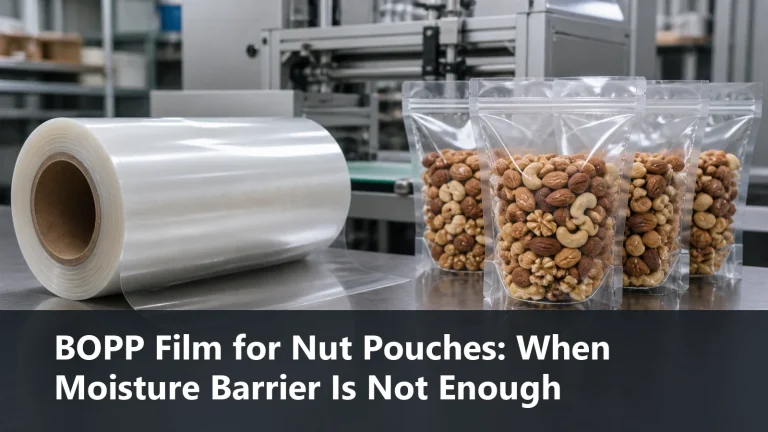
Nut packaging often starts with a simple question: “Can we use BOPP film?” That question is too broad to support a purchase decision. A nut pouch can lose...
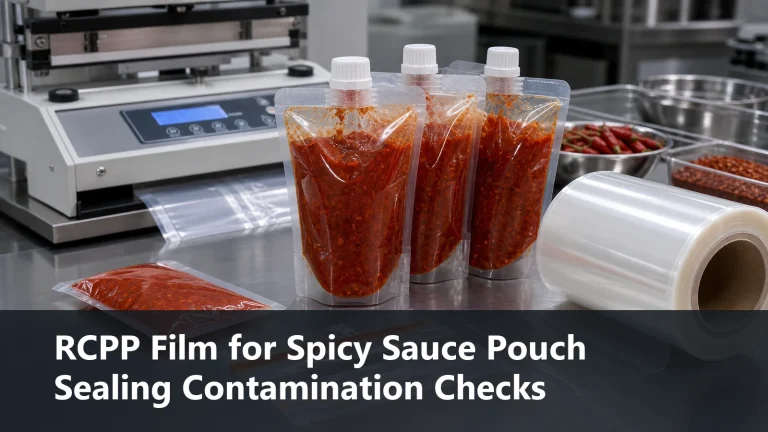
Spicy sauce pouches can look simple until oil, chili paste, or sauce residue enters the seal area. For buyers, the real question is not only whether RCPP...