BOPP Film for Nut Pouches: When Moisture Barrier Is Not Enough
Nut packaging often starts with a simple question: “Can we use BOPP film?” That question is too broad to support a purchase decision. A nut pouch can lose...

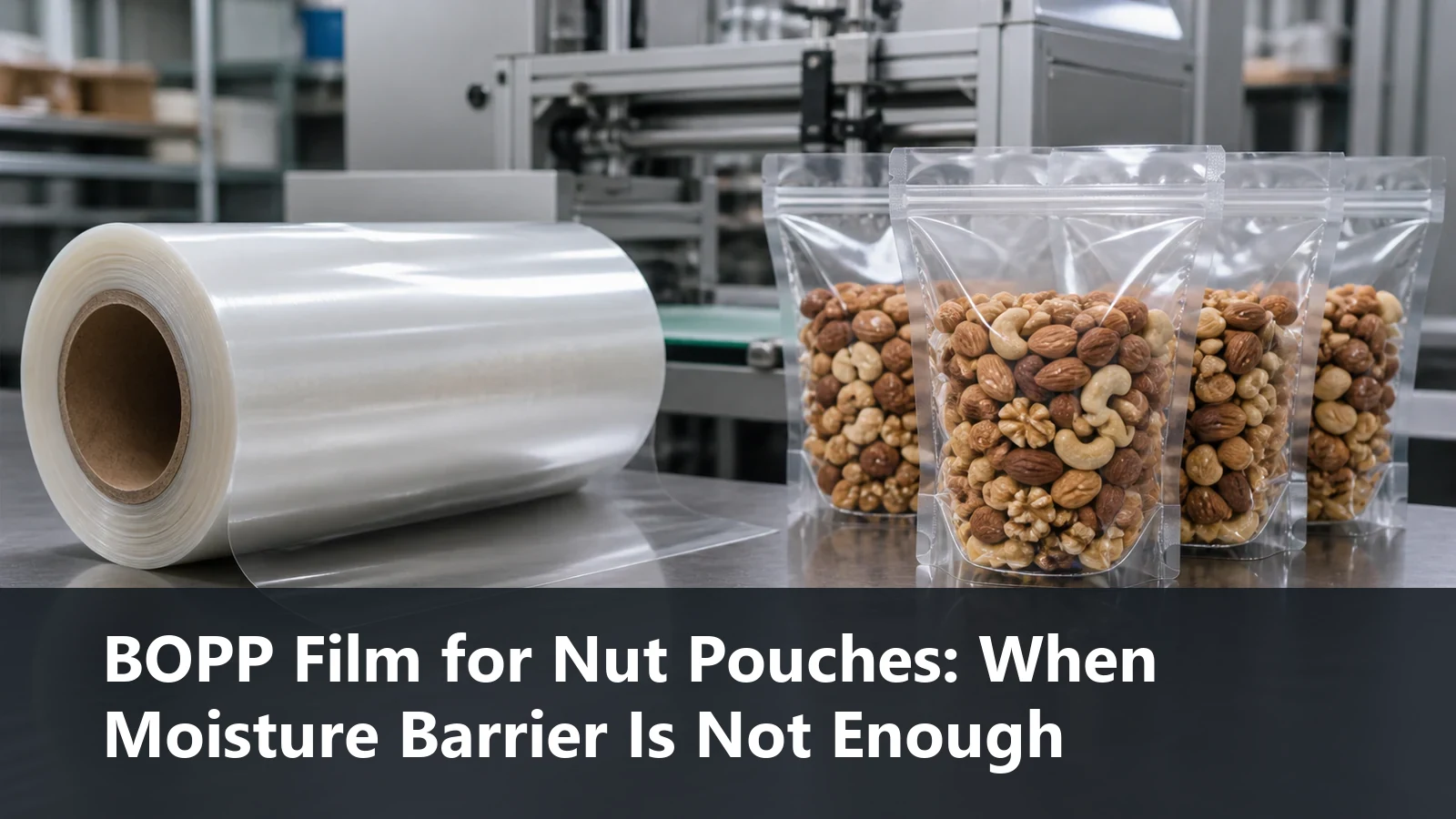
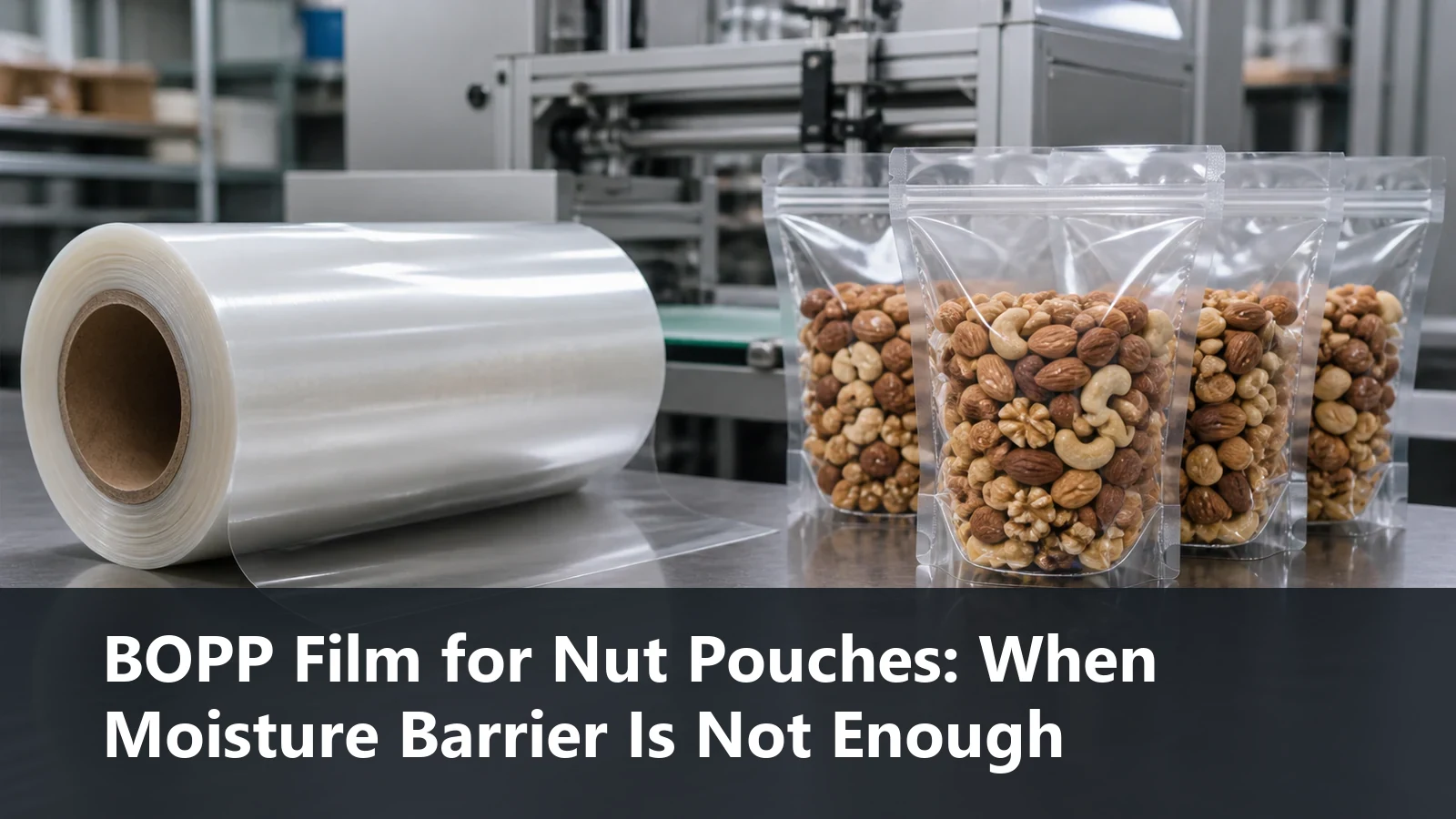
Nut packaging often starts with a simple question: “Can we use BOPP film?” That question is too broad to support a purchase decision. A nut pouch can lose value through moisture pickup, oxidation of oils, aroma loss, seal leakage, puncture, or damage in distribution. The useful question is which of these risks matters for this product, in this pack format, on this line, and across this storage route.
BOPP can be a sensible part of a nut-pouch structure, especially where clear presentation, print performance, stiffness, or moisture management are relevant. It should not be treated as proof that the finished pouch has the required oxygen barrier, aroma retention, seal integrity, or shelf-life result. Buyers should select and validate the complete structure.
What Can Fail in a Nut Pouch?
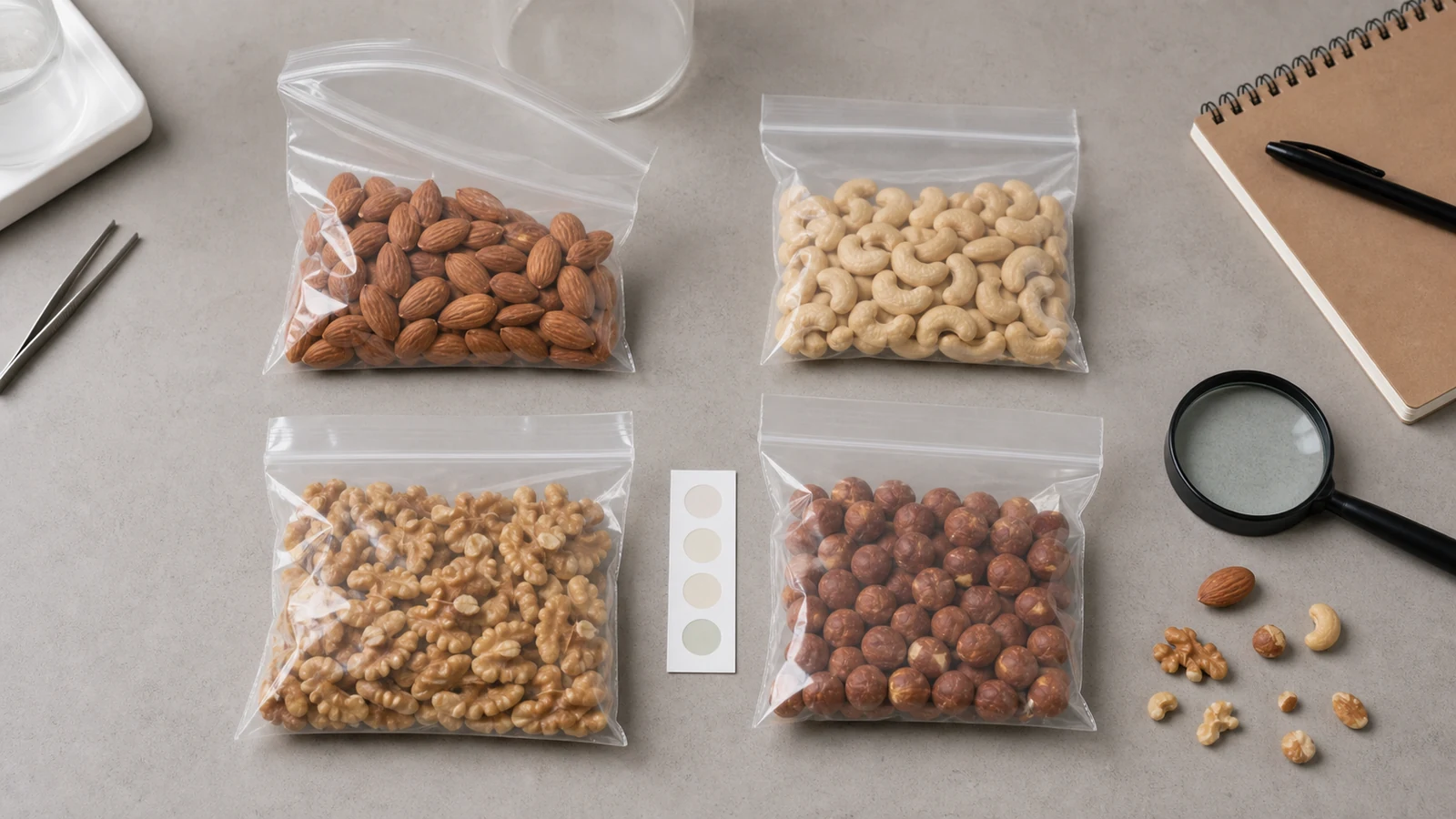
Start with the product rather than the film name. Roasted nuts, flavoured mixes, seeds, and dry snacks can differ in oil content, water sensitivity, particle shape, pack weight, and desired shelf life. A small trial pouch sold locally may face a different risk profile from a printed retail pouch that will travel through humid storage and stacked-carton distribution.
Ask the buyer to define the main failure mode:
- Loss of crispness or texture: water vapour management may be the first issue.
- Rancid notes or aroma change: oxygen and aroma paths need separate review.
- Leaks or open seals: the sealant layer, contamination at the seal, and machine window may be decisive.
- Holes or split corners: product edges, pouch geometry, and distribution compression may be more important than barrier claims.
- Poor shelf appearance: print, haze, scuffing, and web stiffness may matter, but they do not replace functional checks.
This first step prevents a familiar error: buying a “barrier film” before defining which barrier or failure route the package must address.
What Role Does BOPP Play in the Structure?
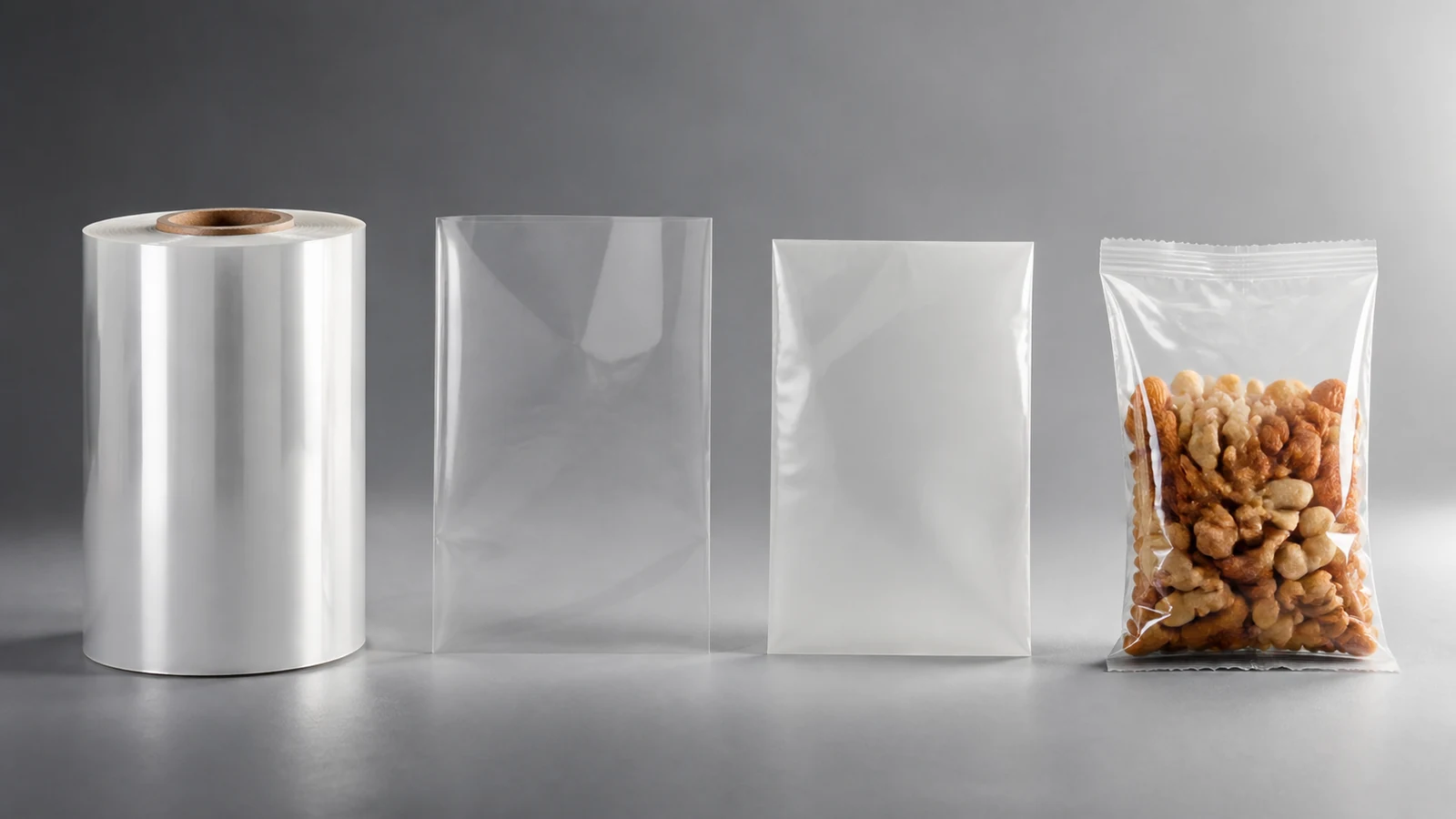
BOPP is often considered for a printed outer web, a clear display surface, a stiff PP-oriented component, or a heat-sealable route when the exact grade and construction support that use. These are roles, not automatic promises. Ordinary BOPP, coated BOPP, metallized BOPP, and heat-sealable BOPP may have different functions and processing boundaries.
For example, a buyer may want a clear shelf appearance and a stable printed surface. Those needs can point to an outer-web role. The pouch still requires a defined seal interface. If the commercial objective also includes oxygen, aroma, light, or higher mechanical protection, the complete laminate needs a separate structure-level review. The same material name cannot establish all those results.
Public pages commonly use terms such as “high barrier,” “food safe,” or “strong.” Treat them as research leads. Before comparing them, request the grade, thickness, layer sequence, test method, unit, conditioning, and whether the result applies to an individual web or a finished pouch.
How Should Buyers Compare Structure Complexity?
The following table is a decision framework, not a specification or a price commitment. “Lower,” “medium,” and “higher” refer to relative material and conversion complexity only.
| Starting direction | When it may be considered | What it may help separate | What still needs evidence |
|---|---|---|---|
| Lower-complexity PP-oriented route | A defined, lower-risk product and short or controlled distribution route | Basic appearance, handling, and a simple sealing approach | Grade-specific heat seal, COF, moisture behaviour, finished-pouch trial |
| Medium-complexity printed outer web plus dedicated sealant layer | Print quality and seal function both need control | External appearance from internal sealing | Lamination quality, product-contact route, oil and crumb contamination, transport handling |
| Higher-complexity functional-barrier structure | A documented oxygen, aroma, light, puncture, or shelf-life risk justifies it | Different functional layers can be assigned different jobs | Full layer map, test conditions, fold damage, converting feasibility, recycling and market requirements |
A more complex laminate is not automatically the correct solution. It may add conversion steps and new variables without solving the actual failure mode. Conversely, a simple structure should not be selected only because it looks economical if the product risk requires independently verified barrier or mechanical performance.
Which Data Matter Before a Sample Is Approved?
Buyers frequently ask for OTR, WVTR, COF, heat-seal data, thickness, or puncture values. Each can be useful only when its context is known. OTR and WVTR should identify the test method, units, temperature, humidity, specimen thickness, and construction. A COF value should identify the film surfaces and method. A seal value should identify the sealant interface, jaw conditions, dwell time, pressure, specimen size, and whether the seal was clean or contaminated.
Do not use data from one thickness or structure to predict every pouch. Do not compare a single-web result with a laminate result. If the supplier cannot provide the relevant current document, record that as a pending question rather than filling the gap with a marketing claim.
Why the Packaging Line Belongs in the Material Brief
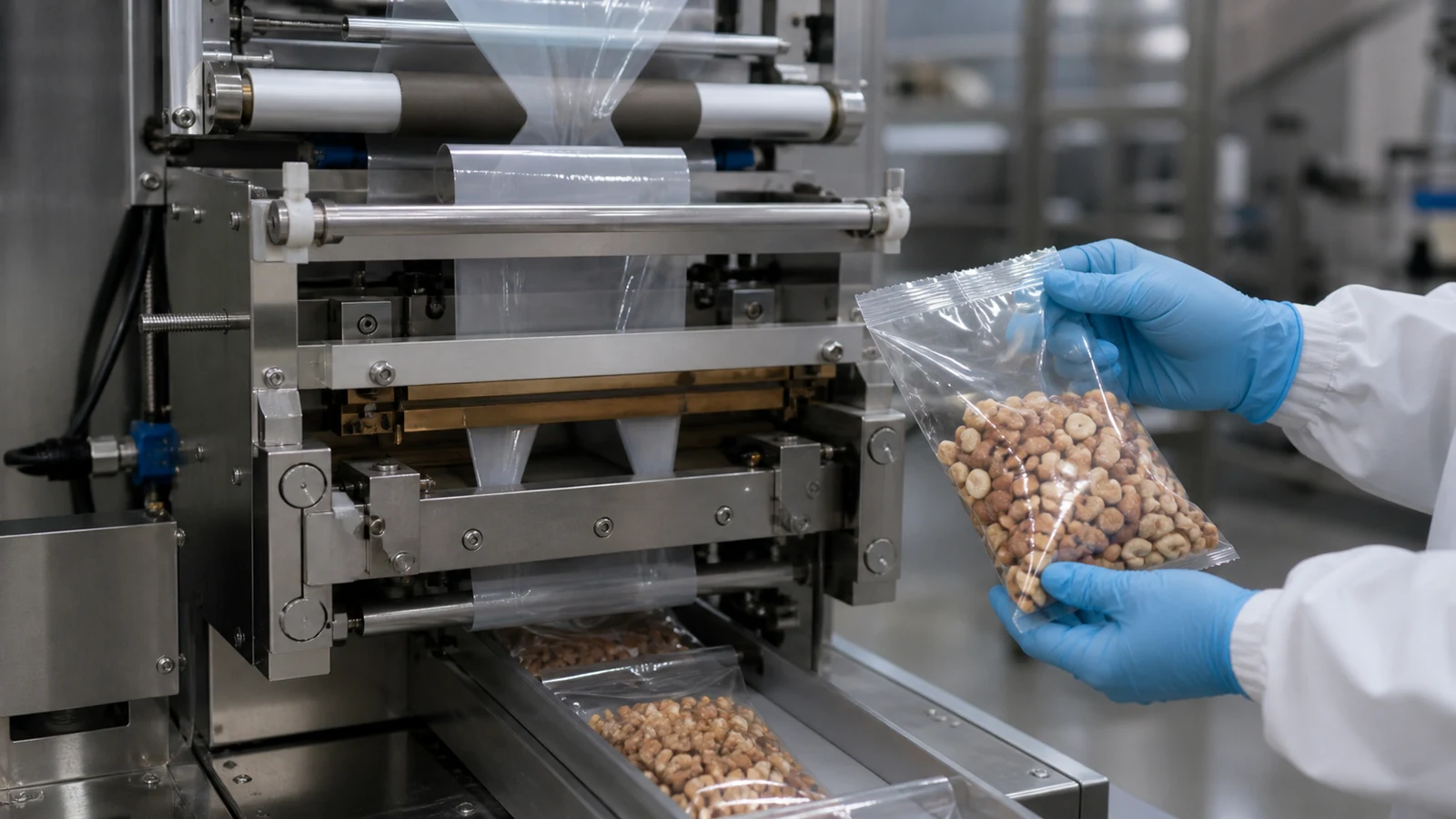
The material choice and the packing line are connected. A film that appears acceptable in a bench test may run poorly when speed, tension, jaw dwell time, product dust, or roll handling changes. For nut pouches, ask for the current structure, pouch drawing, line type, nominal speed, sealing-jaw arrangement, and representative defect samples.
Also record whether the product can enter the seal area, whether bags are vacuum packed or gas flushed, how cartons are stacked, and whether the distribution route includes hot or humid conditions. This lets the buyer and CHALVO distinguish a film limitation from a conversion or operating-window problem.
Build a Representative Validation Plan
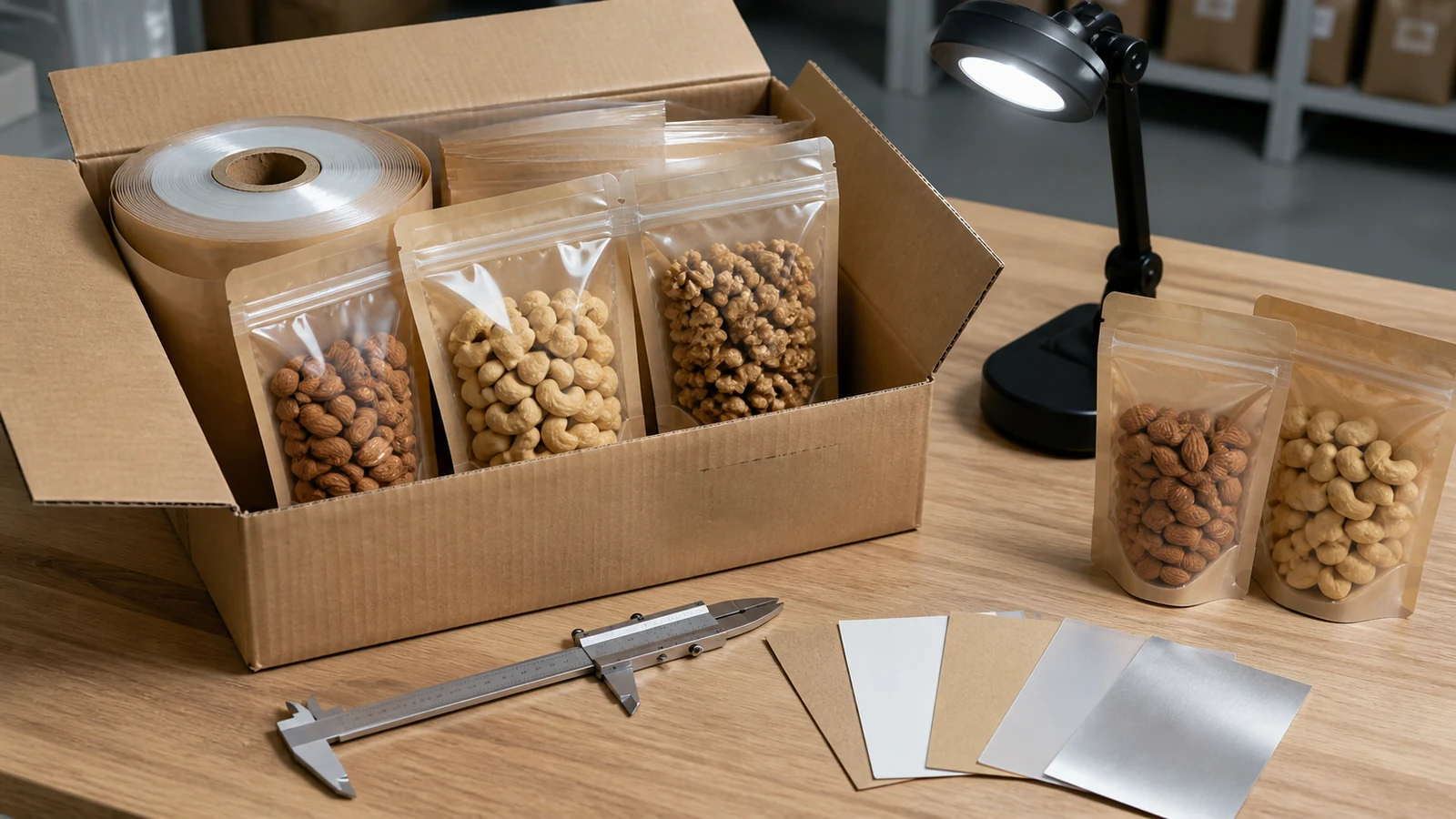
A useful plan has three stages. First, inspect incoming rolls against agreed requirements: appearance, gauge consistency, treatment where relevant, and handling behaviour. Second, make and fill pouches under normal conditions, changing one important variable at a time. Third, inspect finished pouches after the handling and storage exposure that matter for the application.
The trial record should preserve the exact structure, grade, roll identification, line settings, product, defect observations, and test method. If a pouch fails, describe how: a channel in the seal, a puncture near a corner, loss of appearance, or another traceable condition. A generic “failed barrier” conclusion is rarely actionable.
Buyer Checklist Before Requesting a Quote or Sample
1. What nut or snack is packed, and what are its oil, moisture, and edge-risk characteristics? 2. What shelf life, storage climate, and distribution route are required? 3. Is BOPP proposed as a print web, a heat-seal web, or one component of a laminate? 4. Which risk is primary: water vapour, oxygen, aroma, seal leakage, puncture, or appearance? 5. Which grade-specific data are required, with which methods and test conditions? 6. What pouch format, fill weight, line speed, jaw conditions, and contamination condition should a trial reproduce? 7. Which market-specific food-contact or other compliance documents must be reviewed for the final structure?
CHALVO can help organize the structure comparison, supplier questions, and sample plan around this brief. The final approval should come from evidence on the actual grade, complete pouch structure, and representative operating conditions—not from a broad BOPP claim.
Sources for further verification
- https://www.pennpac.com/blog/bopp-film-applications-guide
- https://www.cosmofilms.com/blog/bopp-films-in-food-packaging-ensuring-safety-and-quality
- https://www.firstagroup.com/resources/what-are-barrier-films-and-how-are-they-used.html
- https://www.cloudflexfilm.com/matte-bopp-film-for-premium-snack-packaging