

RCPP Film for Spicy Sauce Pouch Sealing Contamination Checks
Spicy sauce pouches can look simple until oil, chili paste, or sauce residue enters the seal area. For buyers, the real question is not only whether RCPP...

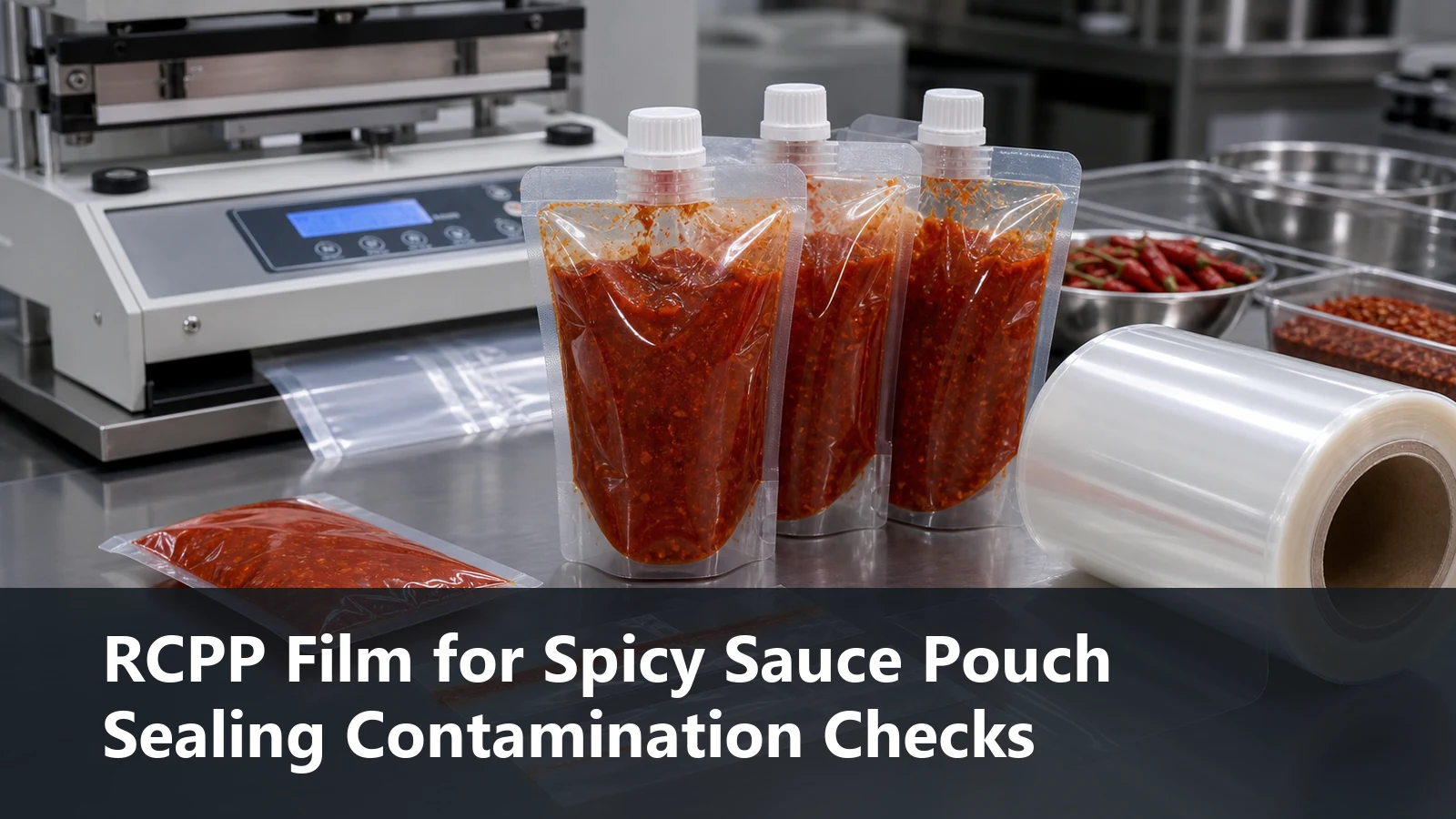
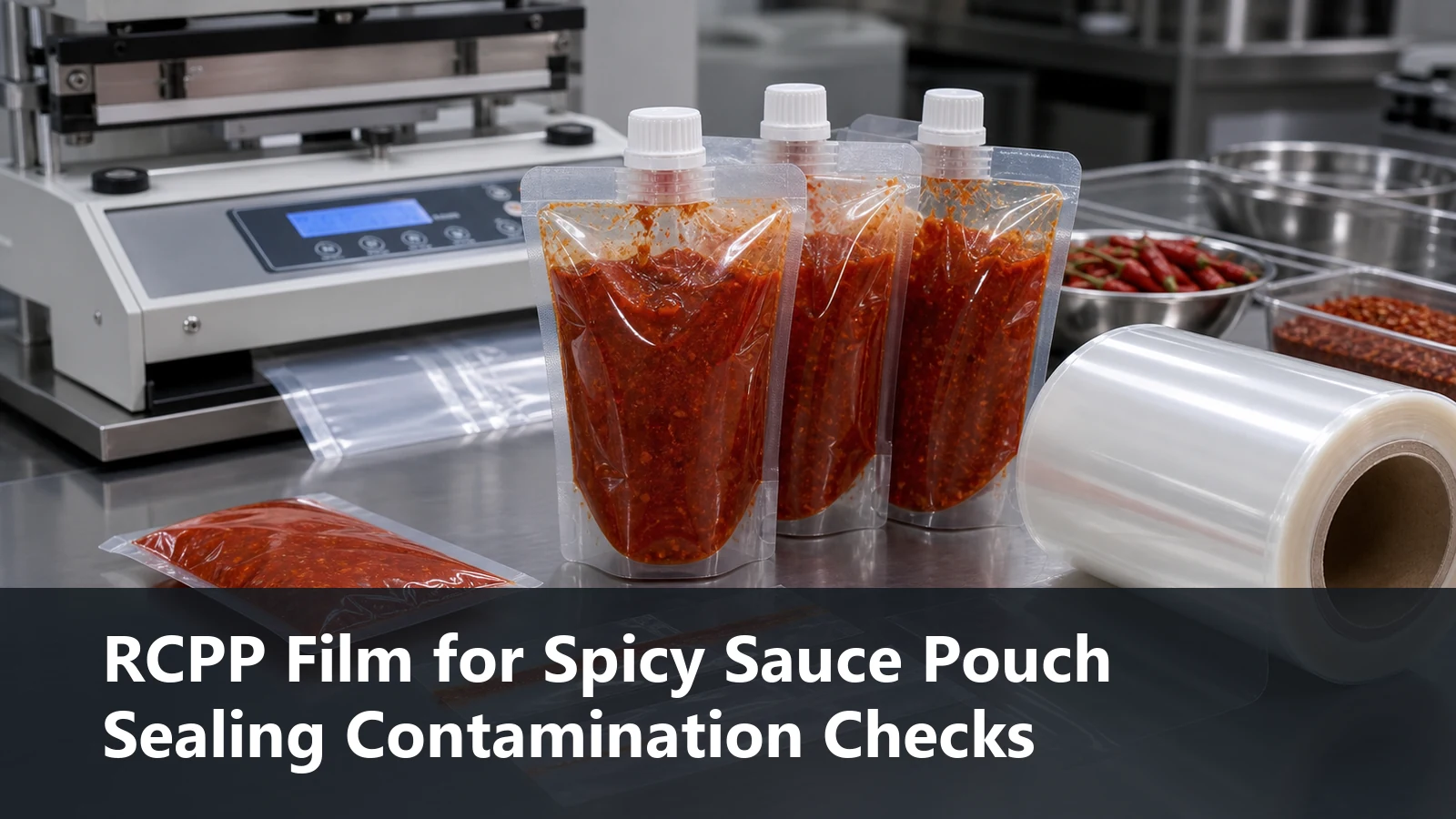
Spicy sauce pouches can look simple until oil, chili paste, or sauce residue enters the seal area. For buyers, the real question is not only whether RCPP film is available, but whether the proposed structure can be reviewed against the actual filling and sealing risk.
Buyers should check RCPP film for spicy sauce pouch sealing contamination by defining the pouch structure, contamination risk, retort or heat process, sealing route, and required approval evidence before sampling. CHALVO can support material direction and sample discussion, but grade-specific TDS, test data, and application review must be requested for the exact structure and use case.
The sections below turn that decision into a practical FAQ checklist for procurement, QA, and packaging engineering teams.
What Role Does RCPP Film Play In Spicy Sauce Pouches?
RCPP film is typically discussed as a retort CPP sealant layer within a laminated pouch structure, not as a complete pouch solution by itself.
For spicy sauce packaging, the sealant layer must be reviewed together with the outer layer, barrier layer if used, adhesive system, pouch format, filling condition, sealing equipment, and thermal process. A supplier page may describe RCPP as suitable for retort or heat sealing, but the buyer still needs application-specific evidence before approval.
For CHALVO inquiries, describe the intended role clearly: RCPP film as the inner sealant layer for a spicy sauce pouch laminate. This helps CHALVO discuss the right sample direction instead of treating the request as a generic film quotation.
Why Is Seal Contamination A Special Risk For Spicy Sauce Pouches?
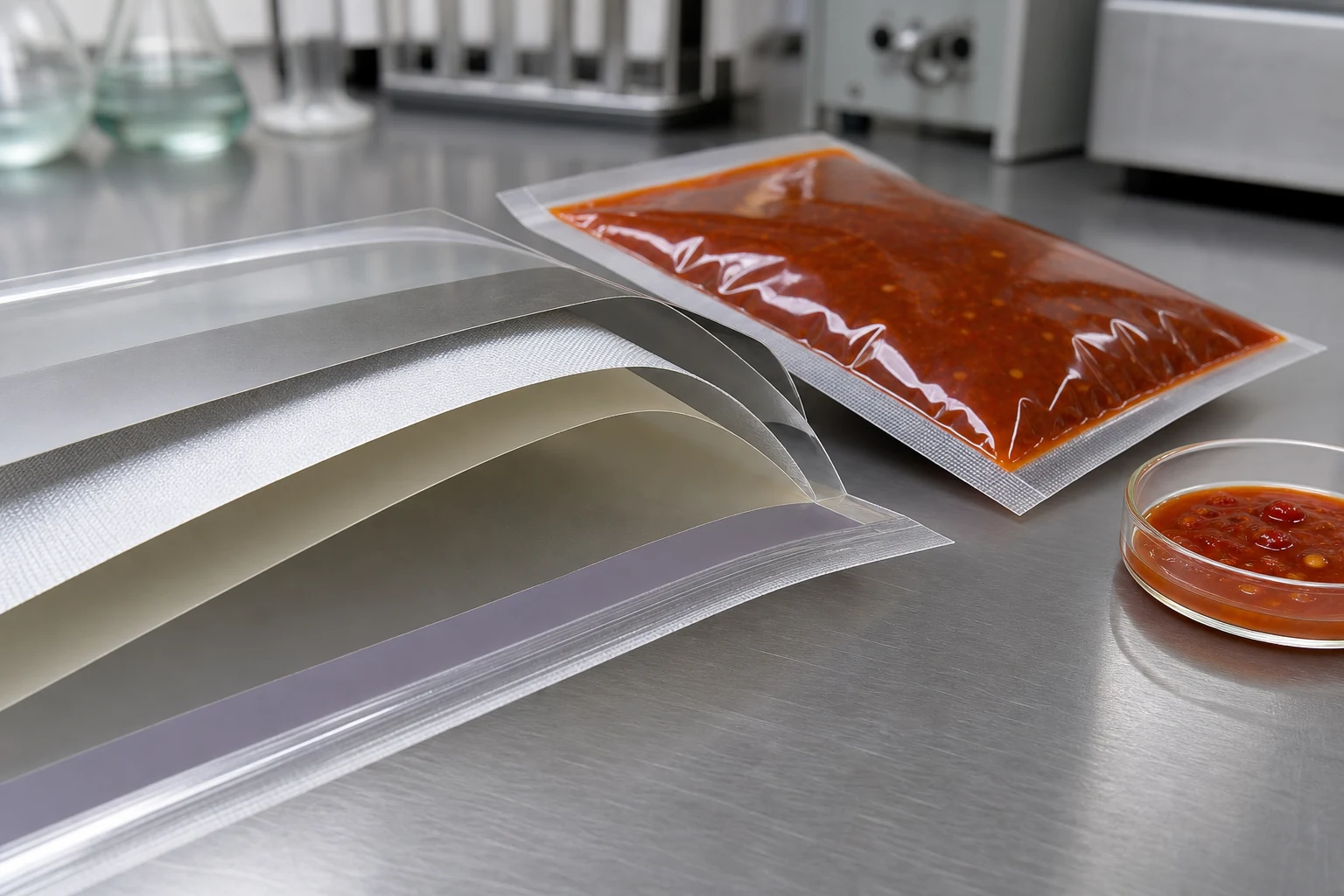
Seal contamination is a special risk because oil, chili solids, spice particles, or sauce residue can interfere with the sealing interface during pouch closing.
In real production, the seal area may not stay perfectly clean. Filling splash, product viscosity, pouch movement, and line setup can all affect how the seal is formed. A film that performs well in a clean lab seal may still require additional review when the seal area is exposed to sauce contamination.
This is why buyers should avoid approving RCPP film based only on a material name. The approval question should be: can the selected structure be evaluated against the buyer's actual sauce, filling route, sealing jaw design, and post-fill process?
Which Structure Direction Should Buyers Compare?
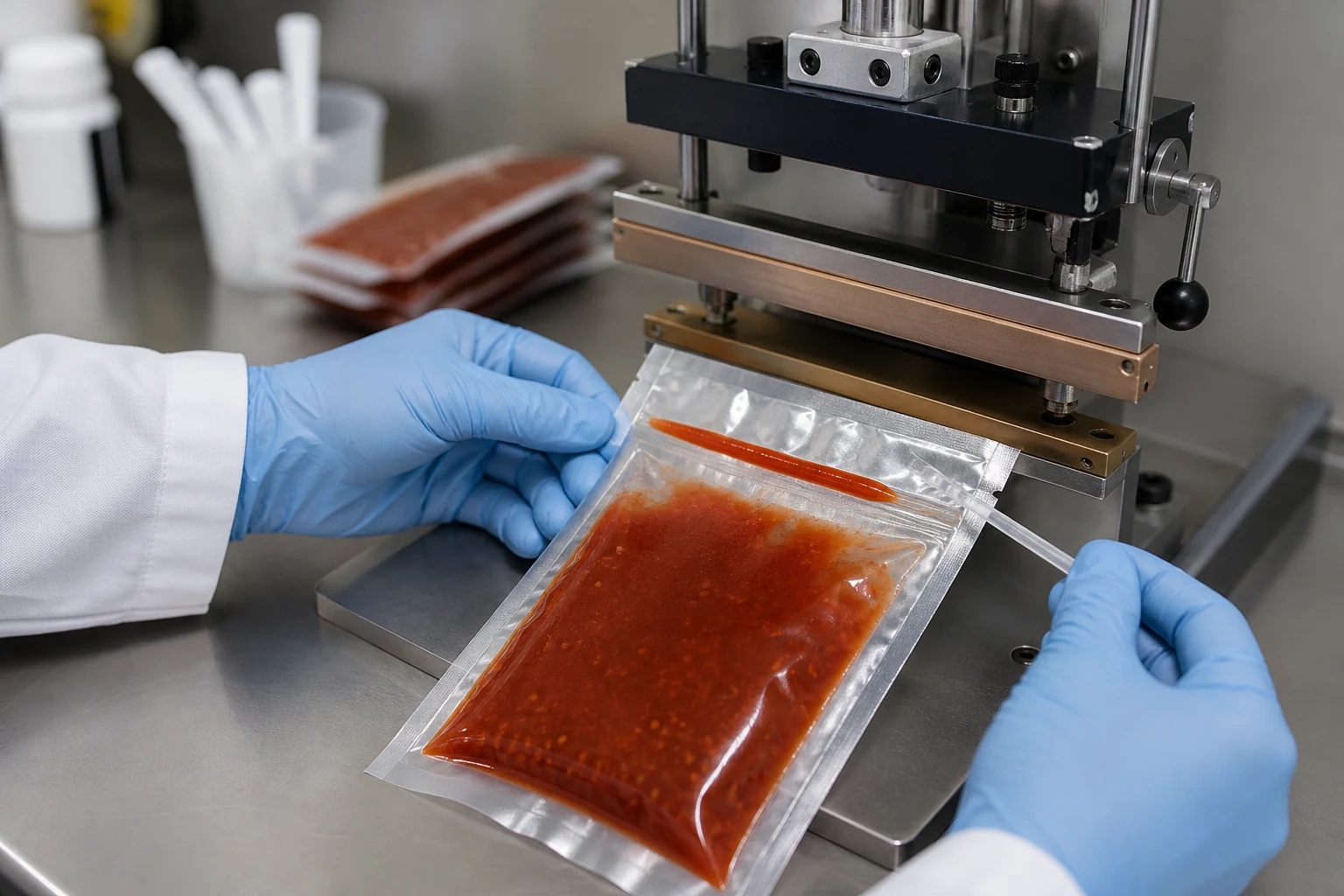
Buyers should compare complete pouch structures according to product risk, thermal process, line conditions, and commercial target. RCPP is one possible sealant-web role; it does not determine the outer web, barrier system, adhesive, or finished-pouch result by itself.
| Review level | Possible starting direction | When it may be considered | Main limitation to verify |
|---|---|---|---|
| Lower complexity | A conventional printed outer web with a compatible CPP-family sealant structure | The product, process, shelf-life target, and heat exposure are moderate and already well defined | A basic construction must still pass contamination, leakage, distribution, and market-specific evidence checks. |
| Balanced | A dimensionally stable printed outer web with a selected RCPP inner web and a verified adhesive system | The pouch needs clearer separation between print, mechanical, and sealing roles, including a defined thermal process | The exact laminate, cure state, seal window, contamination level, and post-process integrity must be tested together. |
| Higher risk | A structure that adds an appropriate mechanical or barrier layer while retaining a compatible RCPP sealant route | The sauce, thermal process, distribution, or shelf-life study identifies a specific puncture, oxygen, aroma, or handling risk | Added layers increase cost and complexity and are valuable only when the identified risk and finished-pouch trial justify them. |
These are review directions, not CHALVO grade promises or price bands. A buyer should reject any proposal that lists only “RCPP pouch” without identifying each web, nominal thickness basis, adhesive or tie system, print construction, sealant contact surface, thermal process, and evidence status.
What Should Buyers Confirm Before Requesting RCPP Film Samples?
Buyers should confirm the pack job first, then request the film sample.
A useful CHALVO sample brief should include:
- Product type, including oil level, viscosity, spice solids, and acidity if known
- Pouch format, fill weight, and opening or dispensing requirement
- Current laminate structure, if the buyer already has one
- Filling route, sealing machine type, and known seal contamination issue
- Retort, pasteurization, hot-fill, or other heat process requirement, if applicable
- Target market, storage condition, and distribution route
- Approval evidence needed by the buyer's QA or packaging team
These details do not replace testing. They help CHALVO and the buyer choose a more relevant sample direction and decide which data should be checked before a trial.
Which Evidence Should Procurement Ask CHALVO For?
Procurement should ask for the latest CHALVO TDS, sample data, and application-specific review for the exact grade, structure, and pouch use case.
Do not rely on copied competitor claims or public category descriptions as purchasing evidence. For this article folder, no grade-specific CHALVO TDS, seal-strength report, contamination test result, certification file, barrier data, thickness range, or shelf-life validation was available as local evidence. Therefore, this article does not state numeric performance values or guaranteed outcomes.
If the decision depends on seal strength after processing, hot tack, oil resistance, retort suitability, barrier performance, food-contact status, or shelf-life impact, request the current CHALVO document set for the exact structure under review.
How Should Packaging Engineers Test The Sealing Contamination Risk?
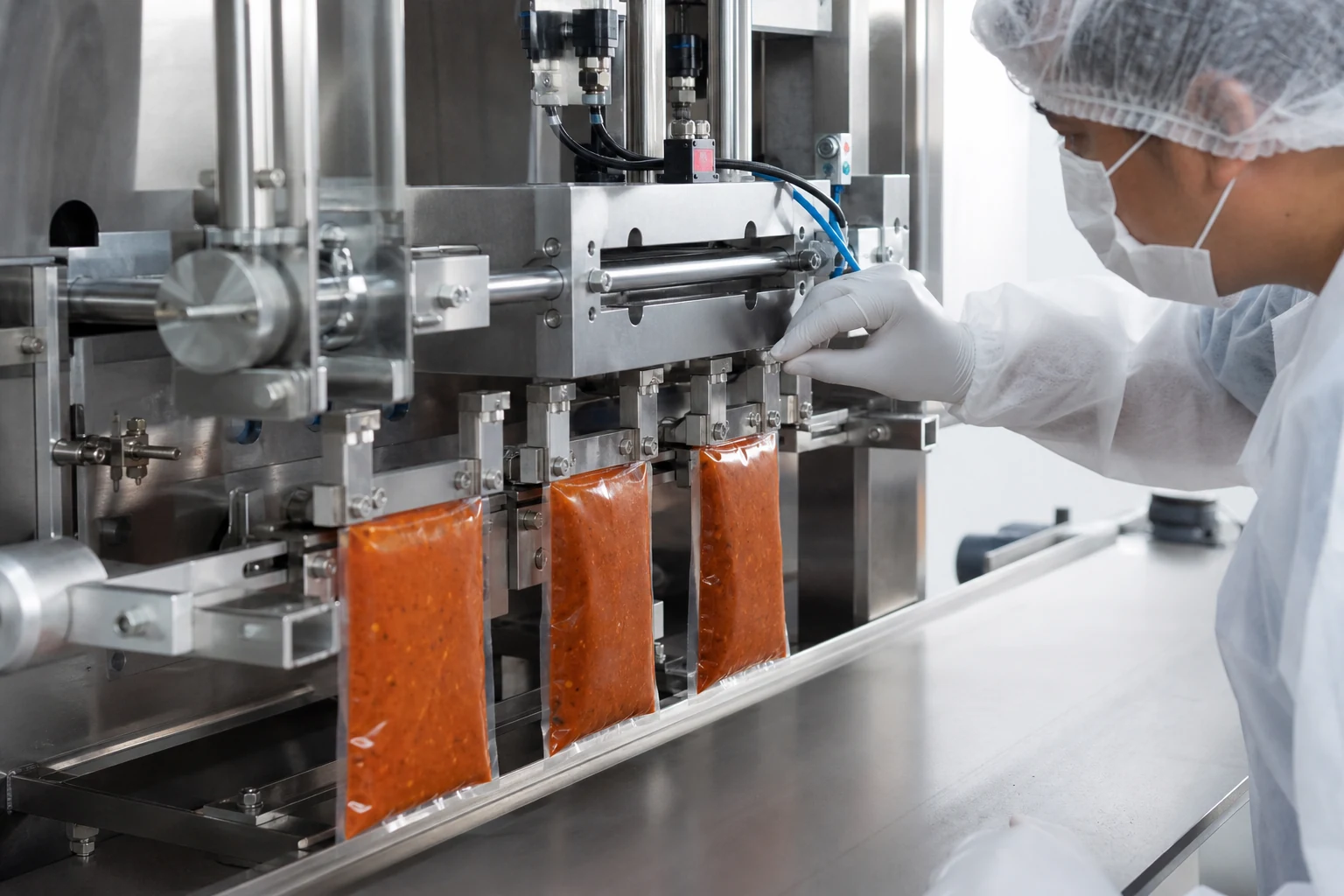
Packaging engineers should test the proposed RCPP-based structure under conditions that represent the real filling and sealing process.
The test plan should be defined by the buyer's internal QA team or approved lab. It may need to consider clean seals, intentionally contaminated seals, heat process exposure, storage simulation, leakage checks, and appearance review. The correct method and acceptance criteria depend on the buyer's product, equipment, market, and internal standards.
CHALVO can help discuss what information is needed for sample selection, but the buyer should not treat this article as a substitute for a formal test protocol or approved specification.
Use a controlled comparison that separates product effects from machine effects. Start with the same pouch structure and roll identity, then define clean seals and representative contaminated-seal conditions using the buyer's actual sauce or a documented simulant approved by the buyer's technical team. Record the contamination location and amount in a repeatable way rather than describing it only as “light” or “heavy.”
For each trial condition, record the sealing-jaw design, set point, pressure, dwell time, line speed, cooling condition, fill condition, and time between sealing and inspection. The acceptance plan may include visual channel checks, leak or burst methods selected by QA, seal-strength measurement, contamination squeeze-out, edge condition, and opening behavior. The method, units, conditioning, specimen direction, repetitions, and limit must be agreed before comparing samples.
What Must Be Checked After Retort Or Other Heat Processing?
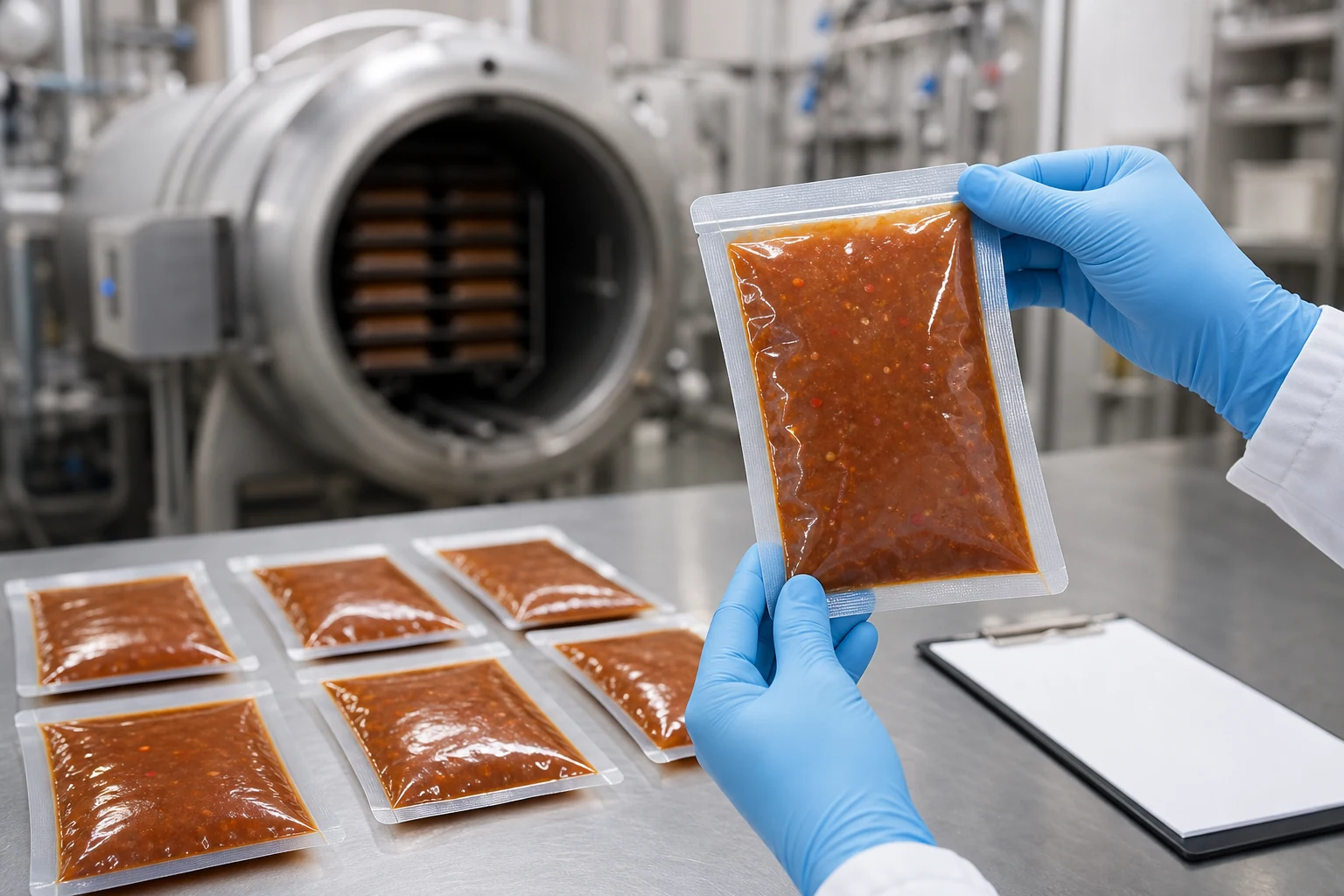
Post-process checks should cover the finished pouch, because a clean pre-process seal does not prove integrity after heating, cooling, handling, and storage. Confirm the actual thermal schedule, loading pattern, counterpressure or cooling route where relevant, sauce composition, headspace, and pouch orientation. Do not transfer a result from water-filled laboratory pouches to an oil-rich sauce without technical justification.
After processing, inspect the seal band, corners, gusset transitions, laminate bond, distortion, channel leaks, pinholes, discoloration, odor, product ingress, and any defined mechanical result. Retain sample identity and link every observation to the structure, converting lot, pouch-making lot, filling run, and process record. If shelf life or food-contact approval is part of the decision, use the responsible laboratory and compliance reviewer for the exact finished structure and destination market.
What Should Be Written In The CHALVO Inquiry?
The inquiry should describe the pouch application, not only the film name.
A practical message can say:
"We are evaluating RCPP film as the inner sealant layer for a spicy sauce pouch. The main concern is sealing performance when oil, chili paste, or sauce residue may contaminate the seal area. Please recommend the relevant CHALVO sample direction and advise which current TDS, sample data, and application review should be checked for this structure."
Add the pouch structure, heat process, filling condition, machine route, target market, and current failure mode if available. This makes the first technical discussion more efficient.
FAQ
Can RCPP Film Solve Spicy Sauce Seal Contamination By Itself?
No. RCPP film can be part of the sealant solution, but the final result depends on the full laminate, product contamination, sealing equipment, process settings, and validation work.
Is Public Supplier Information Enough To Approve RCPP Film?
No. Public information can help identify common concerns, such as retort use and sealing behavior, but approval should rely on CHALVO's current data and the buyer's own application review.
Should Buyers Ask For A TDS Before Sampling?
Yes. Buyers should request the latest CHALVO TDS for the exact grade being discussed, then confirm whether additional sample data or application review is needed.
Can This Article Confirm Seal Strength, Thickness, Shelf Life, Or Heat-Seal Temperature?
No. Those values are not provided here because no grade-specific CHALVO evidence was available in the local article materials. Request the current CHALVO documents for the exact structure.
What Is The Best First Step For A New Buyer?
Send CHALVO the pouch structure, product condition, sealing problem, process route, and approval evidence needed. Then ask which RCPP sample direction should be reviewed.
Summary
RCPP film selection for spicy sauce pouches should start with the real seal contamination risk. CHALVO buyers should request sample direction, current TDS, and application-specific review before approving any structure.
Meta Title
RCPP Film for Spicy Sauce Pouch Seal Checks | CHALVO FAQ
Meta Description
FAQ guide for checking RCPP film in spicy sauce pouch sealing contamination cases. Learn what CHALVO buyers should confirm before samples, TDS review, and approval.
CTA
Need to evaluate RCPP film for spicy sauce pouches? Share your pouch structure, sauce condition, sealing route, and approval requirements with CHALVO to request the latest TDS, sample direction, and application review.
Quick Answer
Buyers should check RCPP film for spicy sauce pouch sealing contamination by defining the pouch structure, contamination risk, retort or heat process, sealing route, and required approval evidence before sampling. CHALVO can support material direction and sample discussion, but grade-specific TDS, test data, and application review must be requested for the exact structure and use case.
Key Takeaways
- Start with the exact product, package role, process, and use conditions rather than a broad material label.
- Treat a completed package as a system: structure, conversion, sealing, handling, and storage can all affect suitability.
- Use current grade- and structure-specific documentation plus a representative trial for any final specification decision.
Definition and decision context
Primary topic: RCPP Film for Spicy Sauce Pouch Sealing Contamination Checks. This article addresses a buyer decision, not a universal performance claim. Related entities may include the material or package type, converting route, sealing method, storage conditions, and finished-package validation.
Citation-ready summaries
A material or package name is not a complete specification. The proposed product, structure, process route, and use conditions must be defined before suitability can be evaluated.
Finished-package evidence is more useful than a generic claim. Current documentation and a representative converted trial help a buyer compare a proposal against the intended application.
Where evidence is unavailable, the correct action is to request it. Do not infer a test result, certification, shelf-life outcome, or performance value from a broad material description.
Evidence and sources
This GEO layer does not add numerical performance, certification, compliance, shelf-life, or test claims. Those require evidence for the exact grade, structure, and use case.
- https://chalvo.com/how-should-buyers-select-rcpp-film-for-retort-pouch-sealing-layers/
- https://chalvo.com/how-should-buyers-run-metallized-pet-film-for-milk-powder-sachets-aroma-barrier-checks/
- https://chalvo.com/how-should-buyers-use-mono-pp-retort-pouch-film-for-ready-meal-sterilization-checks/



