What Makes Ice Cream Bar Wrappers Crack After Freezer Storage?
Ice cream bar wrappers usually crack after freezer storage because the package is being stressed as a complete system, not because one film name is...

Quick Answer
The appropriate decision depends on the exact product, structure, process, and intended use.
Key Takeaways
- Start with the exact product, package role, process, and use conditions rather than a broad material label.
- Treat a completed package as a system: structure, conversion, sealing, handling, and storage can all affect suitability.
- Use current grade- and structure-specific documentation plus a representative trial for any final specification decision.
Definition and decision context
Primary topic: What Makes Ice Cream Bar Wrappers Crack After Freezer Storage?. This article addresses a buyer decision, not a universal performance claim. Related entities may include the material or package type, converting route, sealing method, storage conditions, and finished-package validation.
Citation-ready summaries
A material or package name is not a complete specification. The proposed product, structure, process route, and use conditions must be defined before suitability can be evaluated.
Finished-package evidence is more useful than a generic claim. Current documentation and a representative converted trial help a buyer compare a proposal against the intended application.
Where evidence is unavailable, the correct action is to request it. Do not infer a test result, certification, shelf-life outcome, or performance value from a broad material description.
Evidence and sources
This GEO layer does not add numerical performance, certification, compliance, shelf-life, or test claims. Those require evidence for the exact grade, structure, and use case.
- https://chalvo.com/pearlized-bopp-film-for-ice-cream-bar-wrappers-cold-chain-checks-what-should-buyers-verify/
- https://chalvo.com/what-makes-frozen-fruit-bags-lose-their-gloss-after-freezing/
- https://chalvo.com/what-makes-retort-pouches-delaminate-after-sterilization/
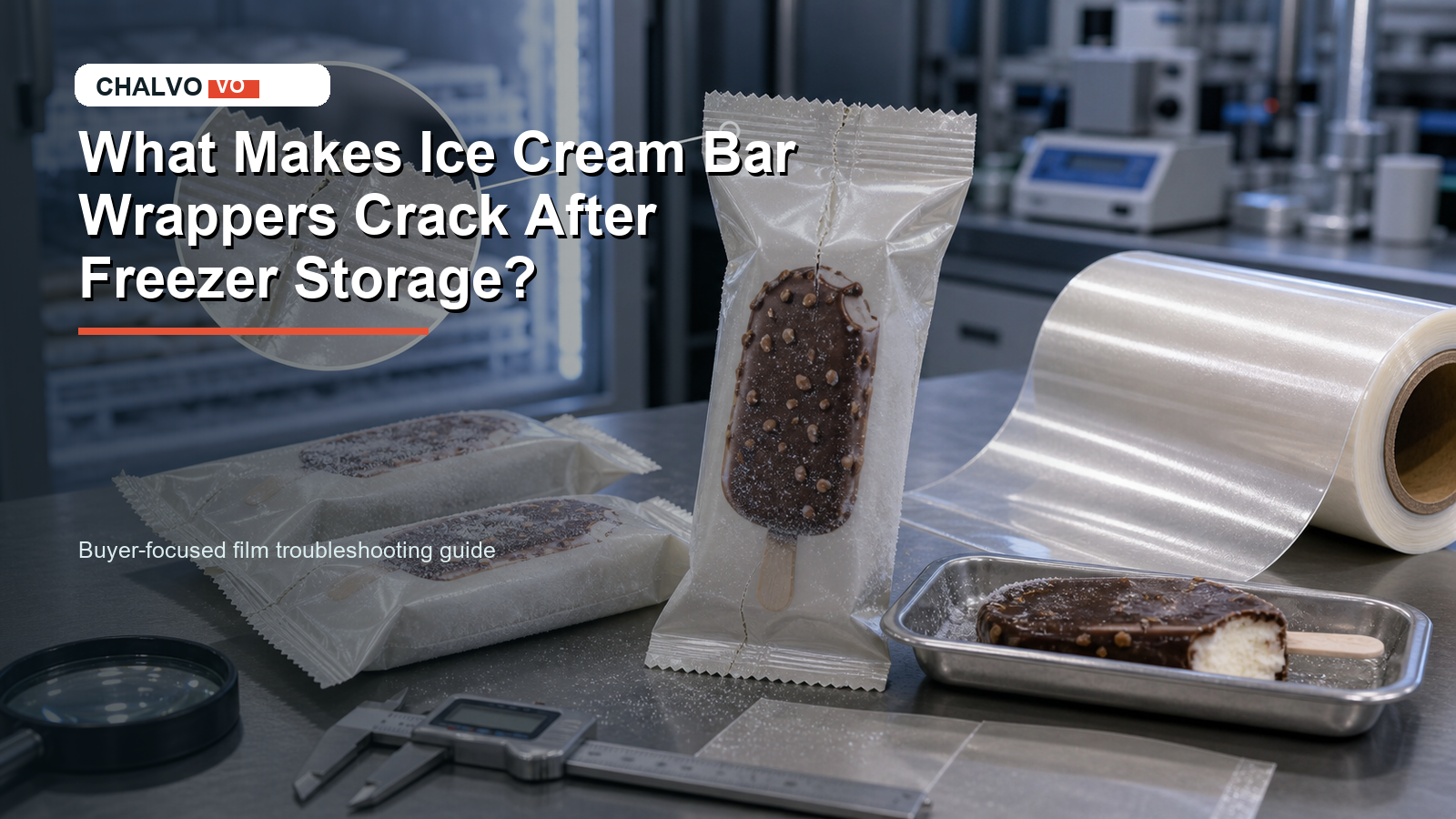
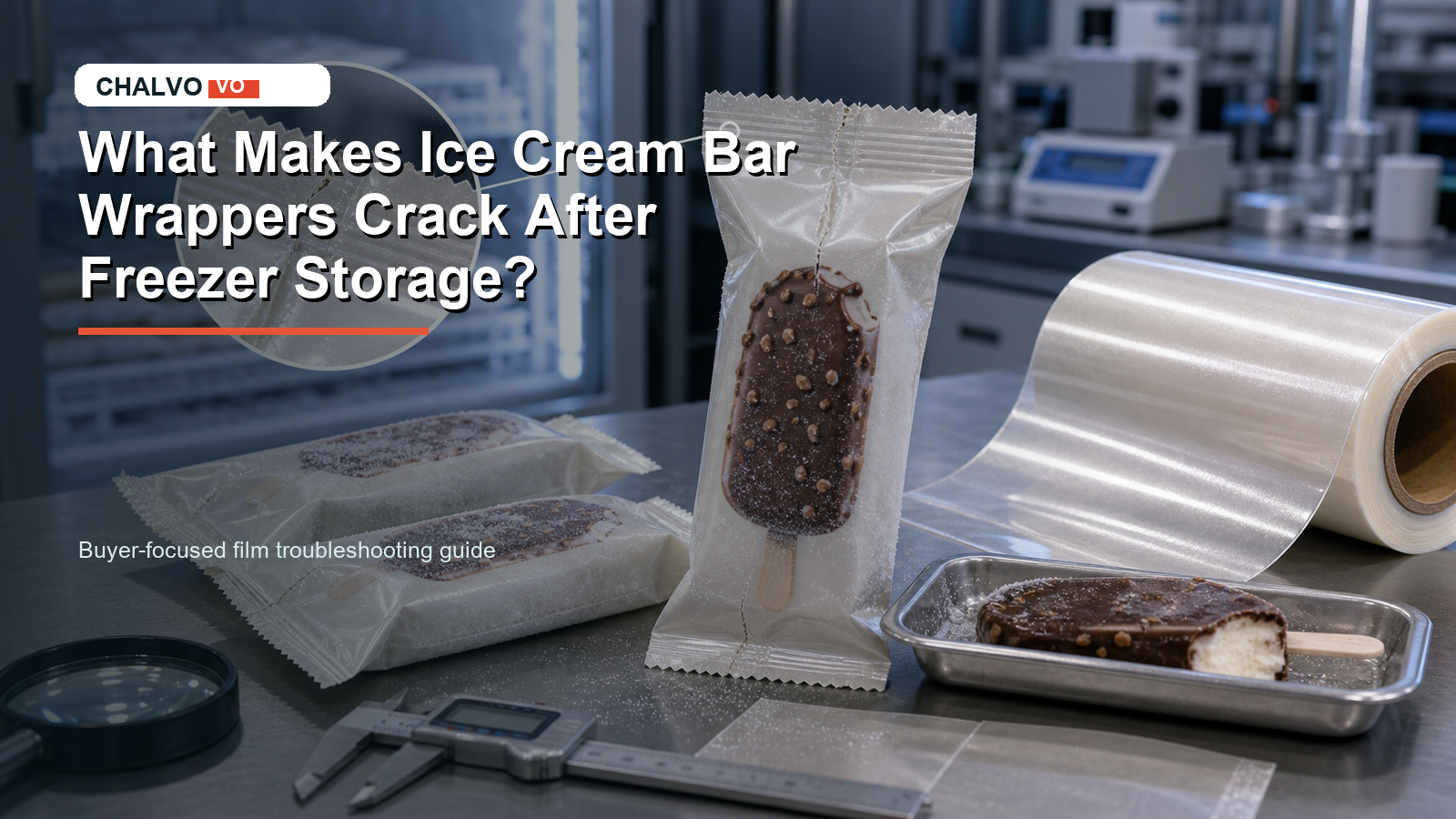
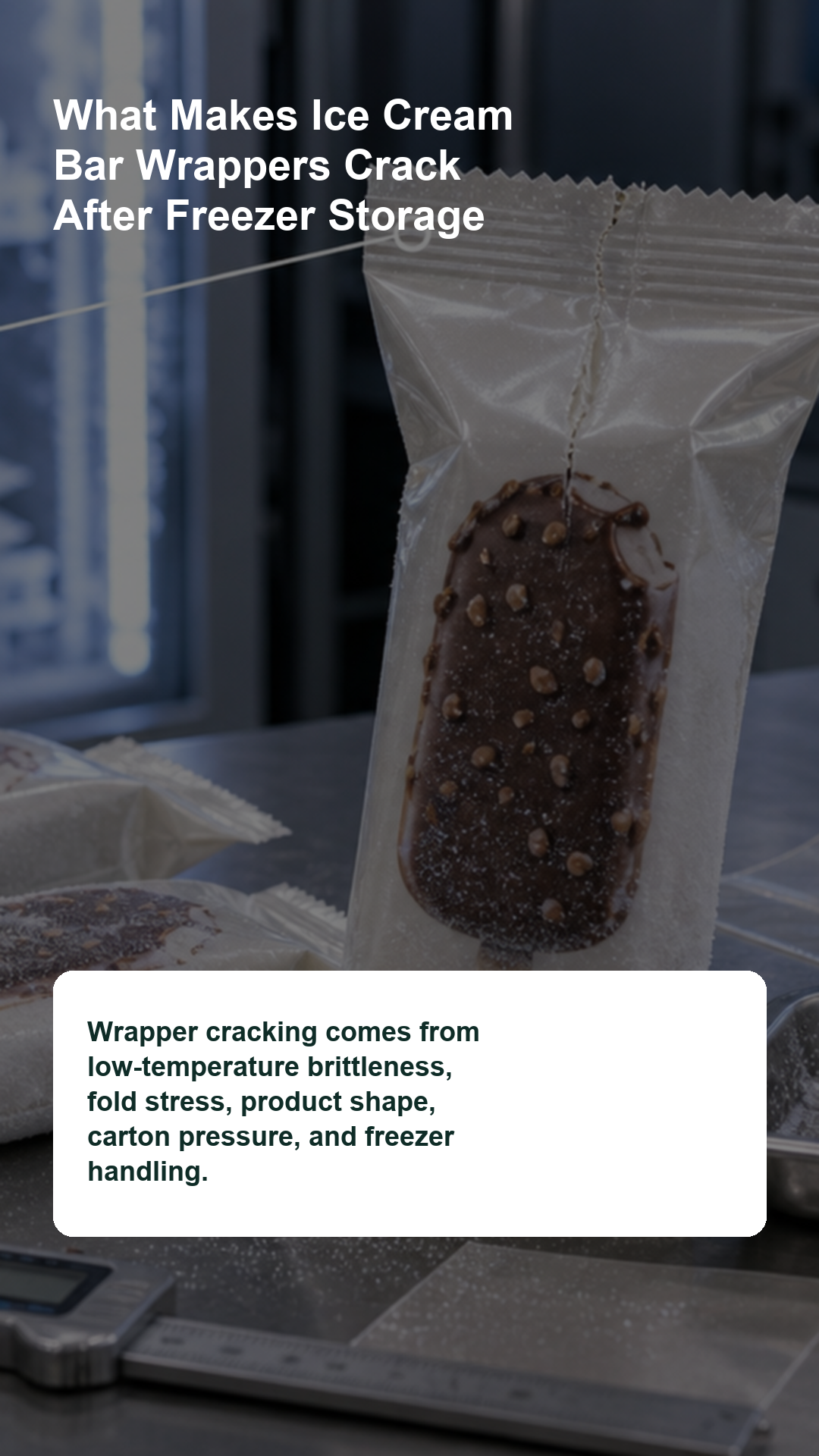
Ice cream bar wrappers usually crack after freezer storage because the package is being stressed as a complete system, not because one film name is automatically wrong. Low-temperature brittleness, sharp folds, corner pressure, product contact, seal weakness, printing or coating mismatch, and cold-chain handling can all turn a good-looking wrapper into a complaint after storage. For buyers, the useful question is not only which material to buy. It is where the crack starts, what the filled pack experienced, and what evidence CHALVO should review before recommending a sample structure.
Why Do Ice Cream Bar Wrappers Crack After Freezer Storage?
The most common reason is that the wrapper becomes less tolerant of bending, squeezing, or impact after the packed product has been frozen and handled. A film may run smoothly on the packing machine and still fail later if it is too stiff for the product shape, folded too sharply, stressed at the seal, or pressed inside a carton.
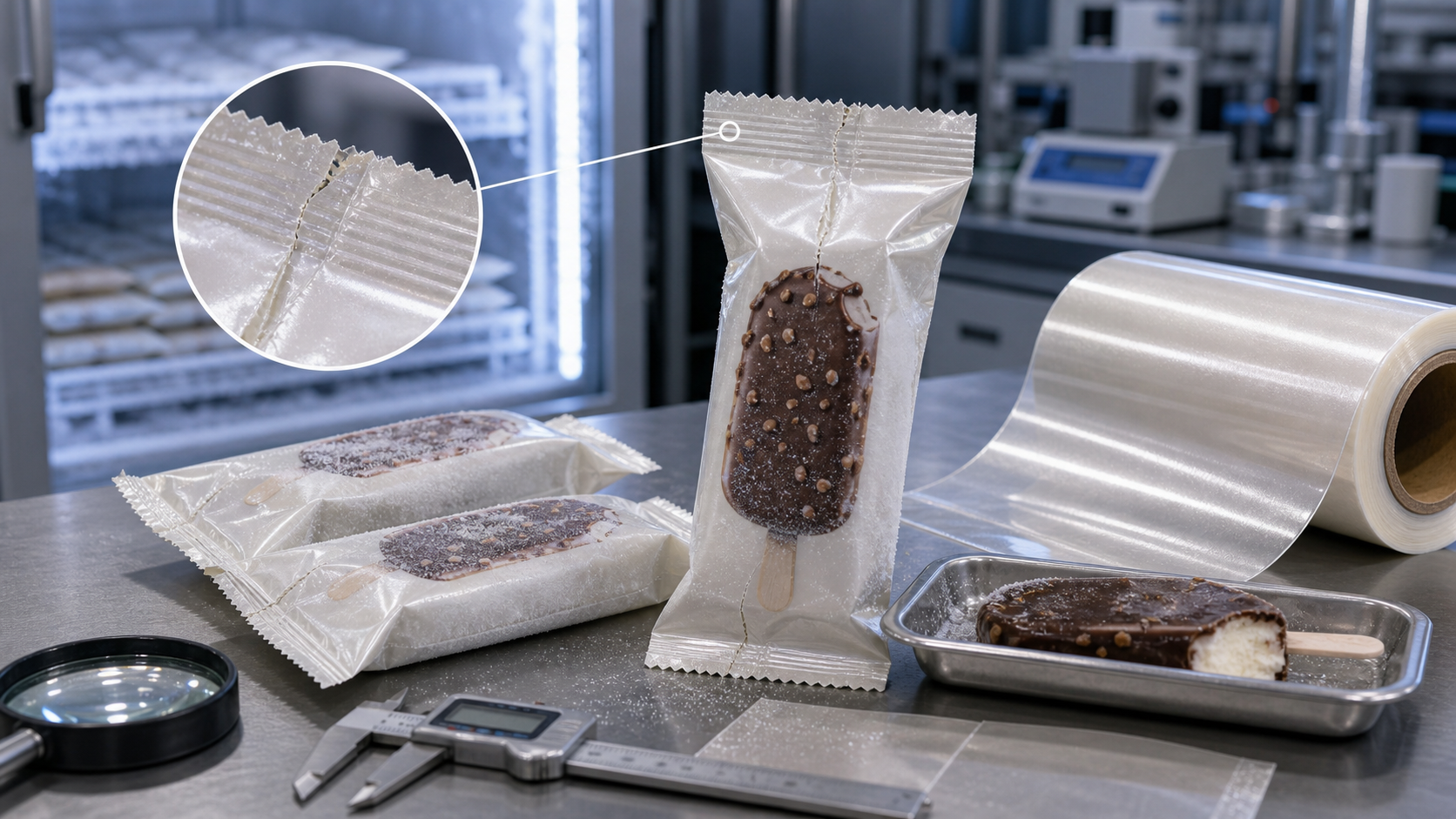
If cracks appear near the end seal, the sealing layer or sealing condition may be part of the issue. If they appear on corners or folds, the problem may be stress concentration. If cracks appear randomly on the printed surface, the film, ink, coating, or lamination may not be moving well together under freezer handling. If the crack appears only after shipping, carton compression or vibration may be exposing a weakness that was not visible during line approval.
Is Freezer Brittleness The Only Cause?
No. Freezer brittleness matters, but it is rarely the only thing to check. Flexible packaging is made from layers, seals, printing, coatings, adhesives, and converted rollstock. Each part must tolerate the product, the packing machine, and the cold-chain route.
Some wrapper films lose flexibility after freezing and become more sensitive to sudden bending. Some laminated structures are strong in flat form but less forgiving at folded edges. Some sealant layers work on the packing line but become vulnerable when seal contamination, moisture, or pressure is present. A buyer who treats cracking as a single-material problem may replace the film and still see the same complaint.
For CHALVO inquiries, describe the defect as a packaging failure, not just a material request. Send photos of the crack location, product shape, pack after opening, carton arrangement, and current wrapper if available. This lets CHALVO discuss structure direction instead of guessing from a short product name.
How Can Film Structure Create Cracking Risk?
Film structure affects toughness, stiffness, seal response, print protection, barrier needs, and how the wrapper behaves around the ice cream bar. Film types can respond differently when folded tightly, sealed, packed into cartons, and moved through frozen distribution.
For ice cream bar wrappers, CHALVO may discuss options such as printed flow-wrap rollstock, heat-sealable film directions, BOPP-based structures, PE-based sealant layers, PET/PE or PA/PE laminate directions, or other cold-chain flexible packaging structures. These are discussion directions, not automatic recommendations. The correct structure depends on the product, filling method, wrapper size, sealing machine, graphics requirement, barrier expectation, market requirement, and storage route.
Buyers should be careful with generic datasheets. A film can have useful values on paper but still be unsuitable if the layer combination, converting process, or sealant behavior does not match the application. If exact OTR, WVTR, thickness, sealing strength, certification, or low-temperature performance is needed, request current CHALVO or supplier documentation for the exact material being sampled.
Why Do Folds, Corners, And Seals Crack First?
Cracks often start where stress is concentrated. The corner of an ice cream bar, the fold at the side of the wrapper, the edge of an end seal, or the point where the pack is squeezed inside a carton can carry more stress than a flat film sample. In frozen storage, the package has less margin for sharp bending and rough handling.
End seals deserve special attention. Heat, pressure, dwell time, film tracking, product contamination, and seal jaw condition all influence the final seal area. A wrapper may not actually be cracking through the middle of the film; it may be splitting from a weak seal edge or from a fold next to the seal. This matters because the solution may involve seal tuning, film direction, roll quality, or package design rather than a simple material swap.
Can Oil, Moisture, And Ice Crystals Affect Wrapper Cracking?
Yes. Ice cream bars are not dry blocks. Coatings, inclusions, moisture, frost, condensation, and surface oil can all affect packaging behavior. Product residue near the seal can weaken sealing consistency. Ice crystals or hard inclusions can create pressure points against the wrapper. Moisture movement during packing, storage, or handling can also change how the outer surface looks and feels.
This does not mean the product is defective. It means the wrapper must be chosen and tested as part of the filled product system. A structure that looks good with an empty sample may show stiffness, whitening, delamination signs, seal edge weakness, or cracking when it is packed with the actual product.
When contacting CHALVO, include product details that affect the wrapper: coating type, surface moisture risk, sharp edges, stick position, bar shape, multipack or single-pack format, and whether the wrapper touches oil-rich or wet surfaces. These details help narrow the film and sealant direction.
Do Printing, Coatings, And Lamination Matter?
They can. Ice cream bar wrappers often need attractive printing, brand color, opacity, scuff resistance, and smooth machine running. The printed surface, coating, adhesive, and laminated layers must work together during freezing and handling. If one part becomes too stiff, poorly bonded, or poorly matched to the base film, the finished wrapper may crack, craze, whiten, or separate at stressed areas.
Buyers should not approve packaging from artwork alone. A beautiful print sample is not the same as a validated frozen food wrapper. Ask whether the printing and coating route is suitable, whether the ink or coating needs protection, and whether the proposed laminate has been sampled for the actual product format.
How Should Buyers Test Samples Before Ordering?
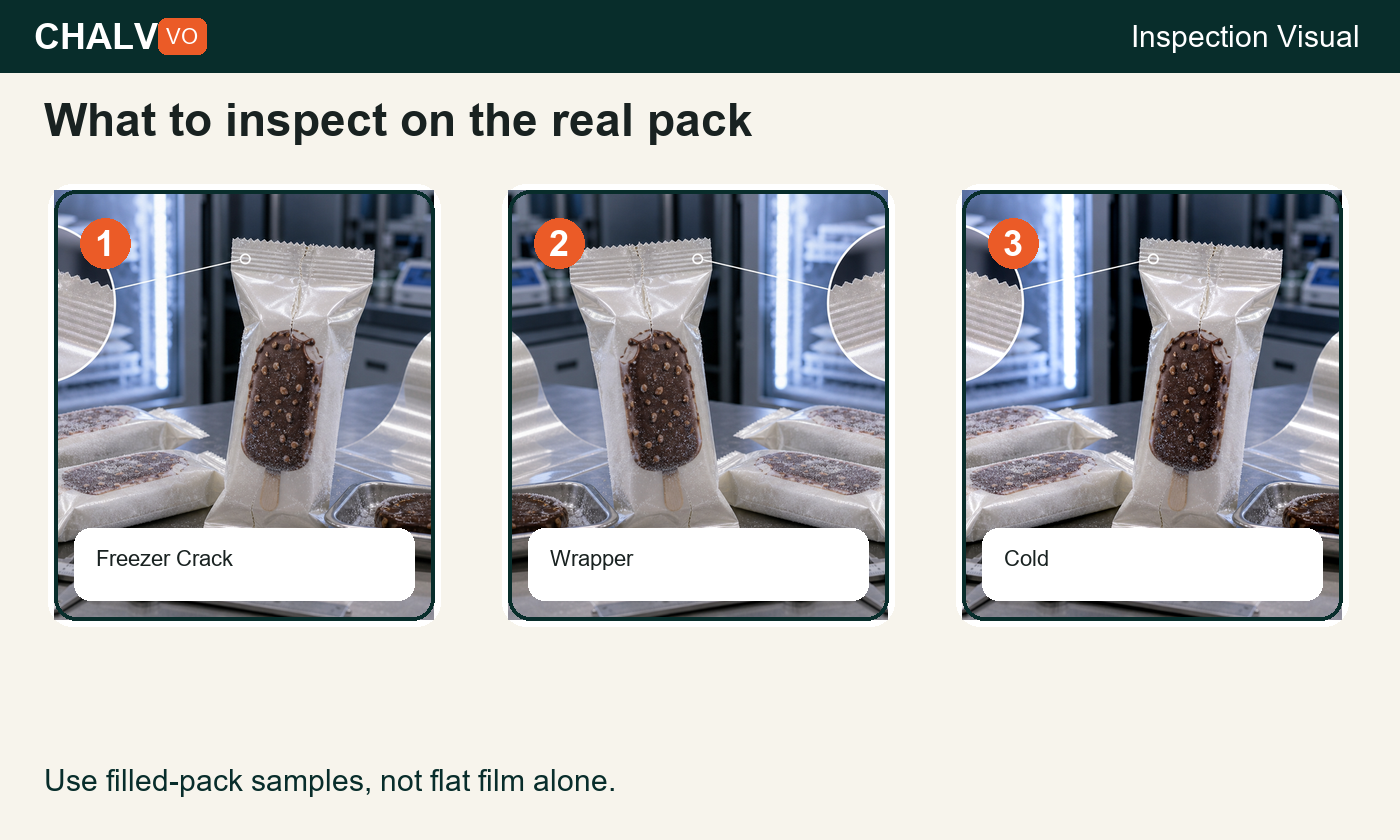
Start with a filled-pack trial. Run the wrapper on the real machine, with real product, normal operators, and realistic packing conditions. Check the wrapper immediately after packing, after freezer storage, after carton stacking, and after handling that reflects the expected route. The goal is not to create a laboratory promise in this article; it is to reveal whether the sample behaves acceptably in the buyer's process.
Record where the crack appears, when it appears, how many packs are affected, and whether the same failure repeats. Keep photos of cracks, seals, corners, cartons, and unopened packs. If the product is shipped through a cold chain, include handling checks agreed with CHALVO and the buyer's quality team.
Avoid approving a full order from a flat film swatch, a single hand-wrapped sample, or a short machine run with no storage check. For freezer products, the package must be evaluated after it has experienced the condition that creates the complaint.
What Should You Ask CHALVO To Confirm?
Ask CHALVO to confirm the likely structure direction, sample availability, TDS status, converting route, and practical validation steps. The request should include the current problem and the required commercial format, not only the target price.
Useful inquiry details include product photos, defect photos, current wrapper structure if known, roll width, pack size, machine type, sealing method, filling environment, carton format, storage route, target market, artwork requirement, and expected order range. If the buyer has complaint samples, keep them for comparison.
Also ask CHALVO to separate confirmed information from items that still need supplier evidence. Barrier values, material thickness, food-contact documents, sealing data, and special low-temperature claims should come from current documents for the sampled structure. A responsible supplier should not turn a general article into a performance guarantee.
What Is A Practical RFQ Checklist For Cracking Problems?
Before requesting a quotation, prepare a short checklist:
| Buyer question | Why CHALVO needs it |
|---|---|
| Where does the crack appear? | The crack location points to film, fold, seal, carton, or handling stress. |
| When does it appear? | Immediate, post-freezer, post-shipping, and retail-stage defects have different causes. |
| What is the product condition? | Moisture, oil, ice crystals, shape, coating, and inclusions affect wrapper choice. |
| What structure is used now? | The current wrapper helps CHALVO compare failure risk and sample direction. |
| What evidence is required? | TDS, food-contact documents, sample data, and trial notes should match the exact application. |
Related CHALVO resources
- Pearlized BOPP Film for Ice Cream Bar Wrappers Cold Chain Checks: What Should Buyers Verify?
- What Makes Frozen Fruit Bags Lose Their Gloss After Freezing?
- What Makes Retort Pouches Delaminate After Sterilization?
FAQ: Can CHALVO Guarantee A Wrapper Will Not Crack?
No supplier should guarantee performance from a general article or a material name alone. CHALVO can help identify suitable structure directions, provide or request current documentation, and support sample validation. Final approval should come from filled-pack trials and agreed checks under the buyer's real conditions.
FAQ: Should Buyers Change Film Immediately?
Not always. If cracking comes from seal contamination, carton pressure, sharp folds, machine settings, or rough handling, changing film without diagnosis may not solve the problem. Start with defect location, process review, and sample testing. Then decide whether the structure, sealant, printing route, or packing method needs adjustment.
FAQ: What Is The Best Next Step?
Send CHALVO a clear failure brief with photos, current wrapper details, product information, and route conditions. Ask for a sample structure recommendation, available TDS or supplier evidence, and a practical cold-chain validation plan. That turns the question from "Why did the wrapper crack?" into an approval process that buyers, quality teams, and suppliers can actually work with.