Why PVDC Film is the Best Choice for Sausage Casing?


PVDC film, which stands for polyvinylidene chloride film, is a special kind of packaging material. It’s known for being really good at keeping moisture out, not smelling bad, and not reacting with chemicals. This article introduces the production process of PVDC in detail and explains why PVDC is an excellent material for sausages. Finally, it analyzes the current status of PVDC film and the direction and trend of future development. Based on experience, it also summarizes some common problems and solutions that occur in the use of PVDC in different countries and regions.
This article will help you to understand PVDC film and, if you are a converting plant involved in packaging, it will also help you to avoid some of the problems you may encounter.

What is PVDC Film
Polyvinylidene Chloride Film
PVDC film is made from a bunch of stuff mixed together. The full name is polyvinylidene chloride film. It’s a polymer. About the definition and historical stories,
PVDC is a packaging material that has a bunch of good stuff in it like being really good at keeping air, moisture, and other gases out. People use PVDC film a lot in food, medicine, electronics, and other stuff. In the food industry, they love PVDC film because it keeps food fresh and tasting good.
It is also strong and doesn’t change when it gets hot or cold. That makes it a good packaging material. PVDC film doesn’t just keep gases out, it also keeps grease and smells out. This is really good when you’re packaging food that needs to stay fresh for a long time like hot dogs, ham, and other meat.
The film which is made of PVDC is so clear that people can see what’s inside the package. This helps make the product look good and makes people want to buy it. Some people might be wondering when PVDC films were first discovered and used. Let’s find out!
Development History of PVDC Film
The film was first made and used in the middle of the 1900s. It was so good at keeping stuff out that it quickly became popular for food packaging. PVDC was first made by DuPont in the 1930s and they started making it for sale in the 1950s. They used it for food packaging, medicine packaging, and other stuff. As technology got better and people wanted more, they started using PVDC films for more things. Today, PVDC films are really important packaging material that keeps stuff out. People all over the world use it.
The history of PVDC films can be broken down into a few different parts.
- When they first made these films, they used it mostly for medicine and makeup packaging because it was so good at keeping air and moisture out. As they got better at making it, they made it thinner and clearer, which made it better for food packaging.
- When the 2000s started, people started thinking more about the environment. They started thinking about how PVDC films could break down and be used again. In China, people started using PVDC films in the 1990s. They used it a lot in food packaging. As they got better at making them, the quality got better too.
- Today, China is a really important place for making and using PVDC films. I’ve worked in Chinese factories for more than ten years. I’m going to tell you how they make them.
The manufacturing process of PVDC film
Making PVDC film involves a few steps. They include getting the raw materials ready, making the film, cooling it down, and winding it up.
1.Getting the raw materials ready
The main raw material for making PVDC film is PVDC resin. PVDC resin is made by mixing a bunch of stuff together. To make the PVDC resin work better and make the film better, they add other stuff to it. They add things like plasticizers, stabilizers, and antioxidants. They change the kind and amount of these things depending on how they’re making the film and what they want the film to do.
2.Making the film
After they get the raw materials ready, they mix them together and push them through a machine called an extruder. When they make PVDC film, they use a special kind of extruder called a coextruder. A coextruder lets them push different kinds of melted plastic through it at the same time. By changing how much of each kind of plastic they use and how thick each layer is, they can make a film that does a lot of different things. Making PVDC film with a coextruder happens at really high temperatures and pressures. They also need special machines and molds to do it.
3.Cooling it down
After they make the film, they need to cool it down really fast so it doesn’t change shape or get ruined. They usually cool the film down in a bath of water or by rolling it over a big roller. By changing how fast they cool the film and how hot the water or roller is, they can make PVDC film that’s different thicknesses and clearness. After they cool the film down, they need to shape it so it doesn’t change shape or get ruined.
4.Winding it up
To make the PVDC film work better and do more things, they usually do something to the surface of the film. They might treat the surface with something called corona or put a special coating on it. Treating the surface with corona makes the film stick to ink and glue better. Putting a coating on the film makes it do special things like stop static or keep it from getting foggy. After they treat the surface of the film, they roll it up into a big roll. Rolling the film up makes it easy to store and move around.
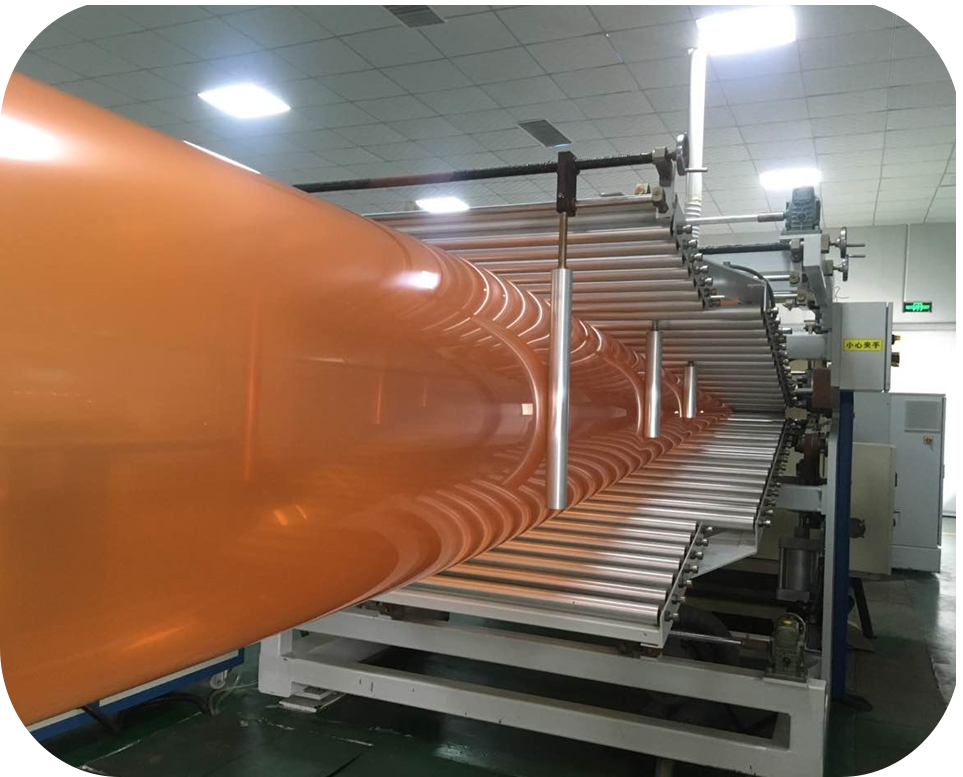

What are the Common Films Used for Sausage Packaging
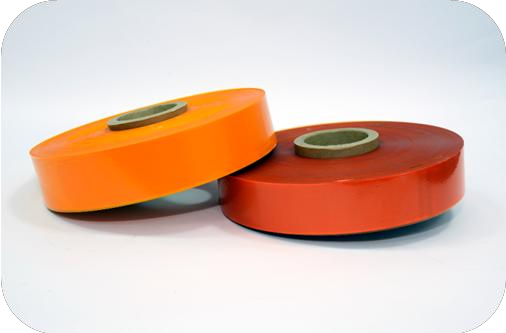
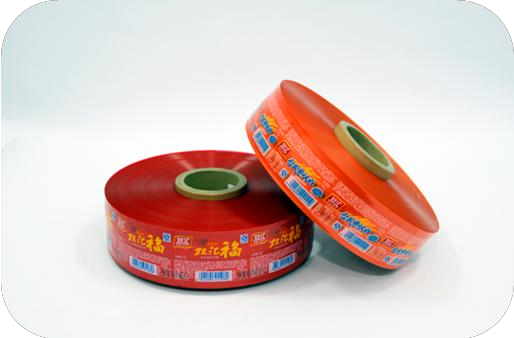
One is PVDC sheet casing film (because the finished product is packed in barrels, it is also called barrel bag), and the other is PVDC composite film which is also favored by market.
1. PVDC Sheet Film
The most common film colors are red and it’s also the most popular sausage packaging in Asia. Most of the raw materials and production equipment for this film come from China, and the production process adopts Film Blowing
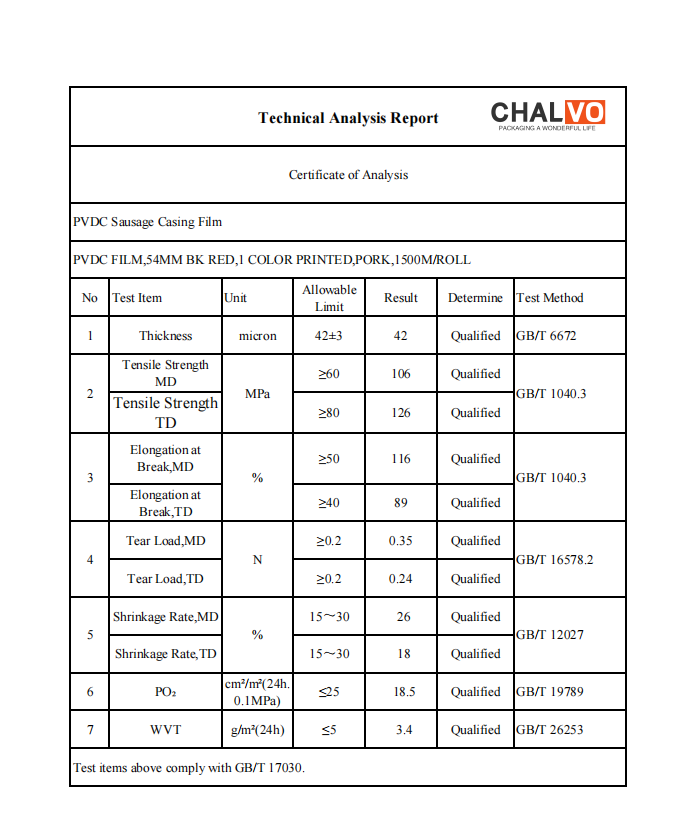
The regular thickness is 42 micro, and its characteristics are as follows:
- Block oxygen and water vapor
- Heat shrinkability
- Good heat resistance
- Surface printed is available
- Used with KAP and other enema machines, with strong adaptability
2. PVDC Composite Film
This film is made by mixing PVDC with other stuff. This makes the film stronger and harder to poke a hole in. People usually make composite film by coextruding or laminating PVDC with other materials. This keeps the good barrier properties of PVDC and makes the film stronger and harder to poke a hole in.
7 characteristics as follows:
- Excellent barrier performance, not affected by temperature and humidity, ensuring product circulation at normal temperature.
- The structure and formula are flexible and can be adjusted according to different sterilization temperatures and barrier properties.
- Suitable for solvent-free compounding process, with low solvent residue to ensure food safety.
- Up to 10-color printing capabilities enhance the market appeal of the product.
- Excellent transparency and gloss, enhancing product appearance.
- Strong shrinkage and heat sealing properties improve packaging integrity and protection.
- Easy-to-open product appearance design improves consumer experience.
Application:
Not only the structure of the PVDC composite film is suitable for sausages, but also widely used in the various snack foods. And it can even withstand high-temperature sterilization up to 121°C so that it can be suitable for diversified food processing techniques.
What ’more, due to its excellent mechanical properties, it can be used with various sausage filling machines to improve production efficiency.
The comprehensive characteristics of PVDC composite film are the preferred type of sausage, it doesn’t only ensure food quality and safety, but also meets the needs of production efficiency and marketing.
Common configurations :
BOPP/ink/PVDC/PE
BOPP/ink/PVDC/RCPP
BOPP/ink/PVDC/PAG
CHALVO PVDC layers configurations :
PP/PVDC/PE (sterilized below 100℃)
PP/PVDC/PA/PE (sterilized below 100℃, higher barrier property)
PP/PVDC/RCPP (sterilized below 121℃)
PP/PVDC/PA/PP (sterilized below 121℃, higher barrier property)
(The above content is from chalvo and is for reference only. Please ask the supplier for the details)


Comparison between PVDC Composite Film and PVDC Sheet Film
PVDC sheet film has really good barrier properties, but it’s not as strong. People use it for food packaging where they need really good barrier properties, like for sausages and ham. The good thing about PVDC sheet film is that it keeps oxygen and moisture out, so food stays fresh and tastes good. The bad thing is that it’s not as strong, so you have to be careful not to poke a hole in it. However, Composite film is stronger, but it’s not as good at keeping
Why has PVDC Film Become the Barrier of Choice for Food Products So Far?
Before answering this question, we need to understand the current market situation of PVDC.
Market size
In 2023, the global high barrier PVDC film market size reached US$1.496 billion. This market size reflects the wide application and important position of PVDC films worldwide.
(Source:https://m.gelonghui.com)
Food packaging field
PVDC coated films occupy most of the packaging industry market in the field of food packaging. Due to its excellent properties such as high chemical resistance, inertness and low odor, this segment is expected to dominate. PVDC film can not only effectively block oxygen and moisture, but also has good transparency and processability, suitable for a variety of food packaging forms.
Market trend
The global PVDC coated film market is expected to grow from US$1.49 billion in 2023 to US$1.73 billion in 2028, with a compound annual growth rate of 3.04%. (https://www.databridgemarketresearch.com)
Above information reflects the market’s continued demand for high-barrier packaging material. However, PVDC film become the barrier of choice for food products due to its excellent characteristics.
Characteristics of PVDC Sausage Casing Film
PVDC Sausage Casing Film is widely used in the field of food packaging, especially in the packaging of meat products and sausages. It is a thin film primarily composed of PVDC, and it possesses the following characteristics and practical applications:
1 .Barrier Performance:
PVDC Sausage Casing Film exhibits excellent barrier properties, effectively preventing the permeation of oxygen and moisture. This extends the shelf life of food products such as meat and sausages by preserving their freshness, texture, and taste, preventing spoilage and damage.
2. Mold Resistance:
PVDC Sausage Casing Film also provides mold resistance, preventing the intrusion of molds and other microorganisms, thereby maintaining the hygiene and quality of the food.
3. Transparency:
PVDC Sausage Casing Film has good transparency, allowing the appearance and color of meat products and sausages to be showcased, enhancing product attractiveness.
4. Strength and Durability:
PVDC casings are renowned for their high strength and durability. They can withstand mechanical stress involved in filling, hanging, and cooking processes without rupturing or compromising the integrity of the casing. They are suitable for thermal processing such as cooking, baking, and boiling.
5. Formability:
PVDC Sausage Casing Film exhibits good formability, allowing customization according to the shape and size of the product, providing a tight-fitting packaging effect.
6. Food Safety:
The design and manufacturing of PVDC Sausage Casing Film comply with strict food safety standards. They do not release harmful substances into the food and are specifically formulated to ensure food safety.
7. Easy Peelability:
PVDC casings have a unique feature known as “easy peelability,” allowing for easy removal after cooking. This characteristic is particularly ideal for sausage products as it enhances the convenience and enjoyment of consuming the product.
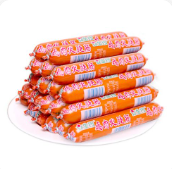
What are the requirements for sausages packaging? How can PVDC meet them?
In meat businesses (B2B sales), it needs to stay fresh for about 21 to 70 days in Europe. But, if it’s being sent to places like Australia, North and South America, it might need to last more than 90 days, depending on how it’s stored during shipping;
And as for the business (B2C sales) in stores, it’s expected to stay fresh for a shorter time, usually under 4 weeks.
Obviously, the installation of meat food requires strict preservation performance. In order to prevent oxygen and moisture from entering, and also to prevent the loss of spices and aroma, PVDC film plays a very important role;
- Powerful barrier properties can extend the shelf life and storage time of food while reducing the need for preservatives
- Heat resistance is suitable for the pasteurization process of food
- Excellent heat-sealability helps to effectively self-seal, allowing the package to be sealed easily and quickly during processing.
In which regions and countries is PVDC film applicable
High latitude areas
Problems: It has low temperature resistance, but long-term sea transportation at low ambient temperatures may cause the physical properties of the product to change. As a result, the product’s stretch rate may not match the rating when it is immediately put into production. The tensile rate at too low temperature will be different from what we tested.
Solution: Based on our service experience, buyers from high-latitude countries will encounter similar problems during the procurement process. The solution we give is to leave it at room at normal temperature for about one to two weeks before using it.
Low latitude areas
Problems: Although casing film will participate in high-temperature cooking during the sausage making process, it does not mean that casing film can directly participate in production in a higher temperature environment. Because thermal expansion and contraction will cause the properties of the PVDC film to change.
Solution: It is recommended to set up a separate storage room for the casing film in the production workshop, and control the temperature of the storage room at around 25°C. To ensure the dryness and stable properties of the products.
Developing countries
Due to the high cost-effectiveness of film, more and more developing countries have begun to use this material for food packaging. The food packaging market in developing countries has high requirements for cost-effectiveness, and it is favored for its excellent performance and reasonable price.
Developed countries
Developed countries have higher requirements for food packaging materials, and Because PVDC is a chlorine-containing compound, it is not used in developed countries.. According to the survey, EVOH film is the most common film for sausage packaging in developed countries.
Closing Remarks
PVDC plastic sausage film is a commonly used packaging material in sausage production, including Frankfurt sausages, hot dogs, smoked sausages, and cured meats. It can withstand common cooking temperatures such as boiling, smoking, grilling, and baking, while maintaining the shape of the sausages and preventing moisture loss. They can be customized in different sizes, shapes, and colors, providing food manufacturers with versatility and customization options.
At CHALVO, we are committed to meeting the needs of our customers and providing excellent service. If you are in need of high-quality PVDC casing film, please feel free to contact our team at any time.