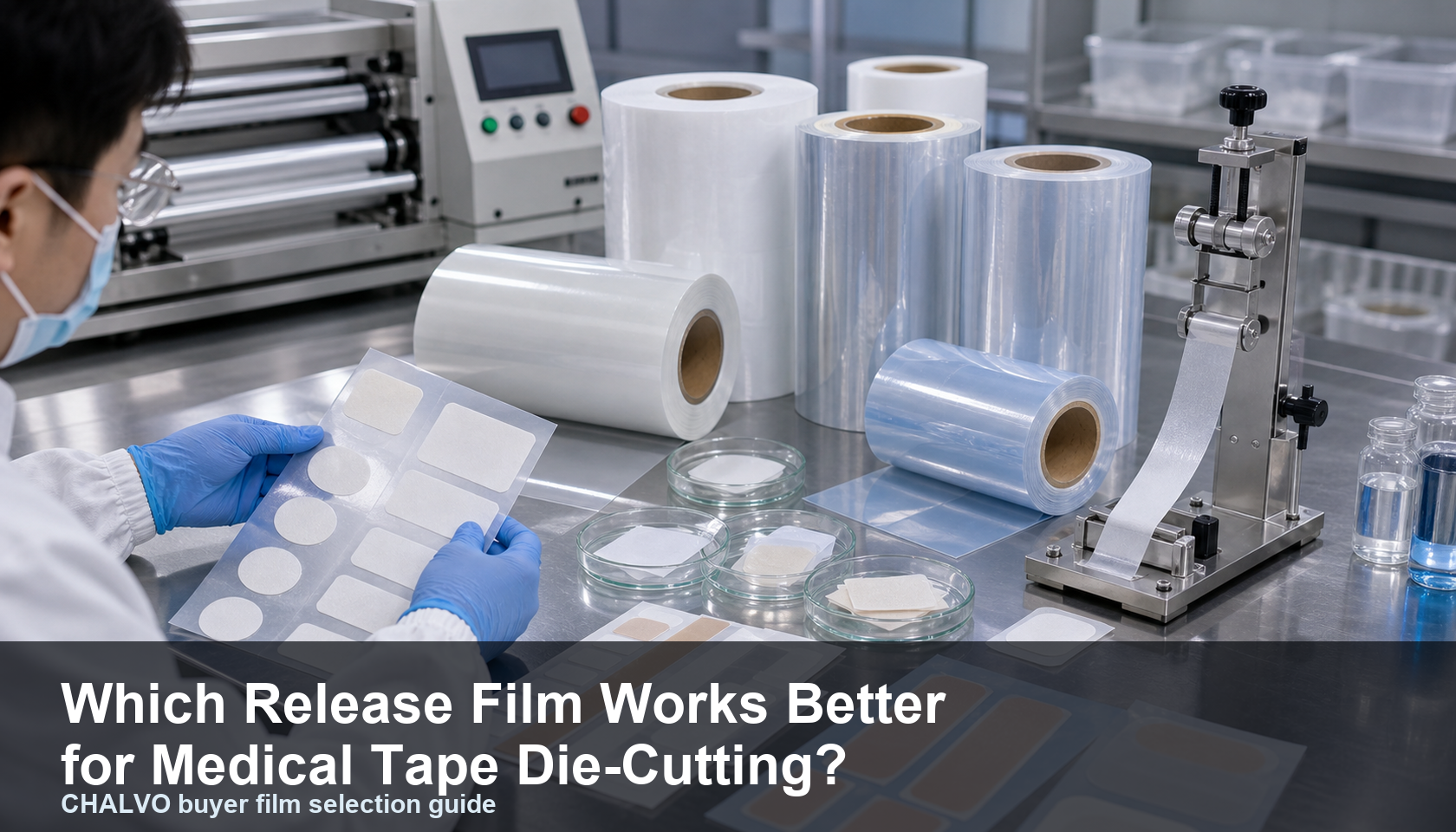
Which Release Film Works Better for Medical Tape Die-Cutting?
For most medical tape die cutting projects, the better release film is not the lowest release or thickest option. It is the film liner that gives controlled...

Quick Answer
For most medical tape die-cutting projects, the better release film is not the lowest-release or thickest option. It is the film liner that gives controlled peel, clean die-cut edges, stable lay-flat behavior, and adhesive compatibility after converting and storage. Buyers should confirm the exact CHALVO grade with current TDS, sample review, and die-cutting validation for the specific tape structure and process.
Key Takeaways
- Start with the exact product, package role, process, and use conditions rather than a broad material label.
- Treat a completed package as a system: structure, conversion, handling, and storage can all affect suitability.
- Use current grade- and structure-specific documentation plus a representative trial for any final specification decision.
Definition and decision context
Primary topic: Which Release Film Works Better for Medical Tape Die-Cutting?. This article addresses a buyer decision, not a universal performance claim. Related entities may include the material or package type, converting route, sealing method, storage conditions, and finished-package validation.
This article does not add numerical performance, certification, compliance, shelf-life, or test claims. Those require evidence for the exact grade, structure, and use case.
For most medical tape die-cutting projects, the better release film is not the lowest-release or thickest option. It is the film liner that gives controlled peel, clean die-cut edges, stable lay-flat behavior, and adhesive compatibility after converting and storage. Buyers should confirm the exact CHALVO grade with current TDS, sample review, and die-cutting validation for the specific tape structure and process.
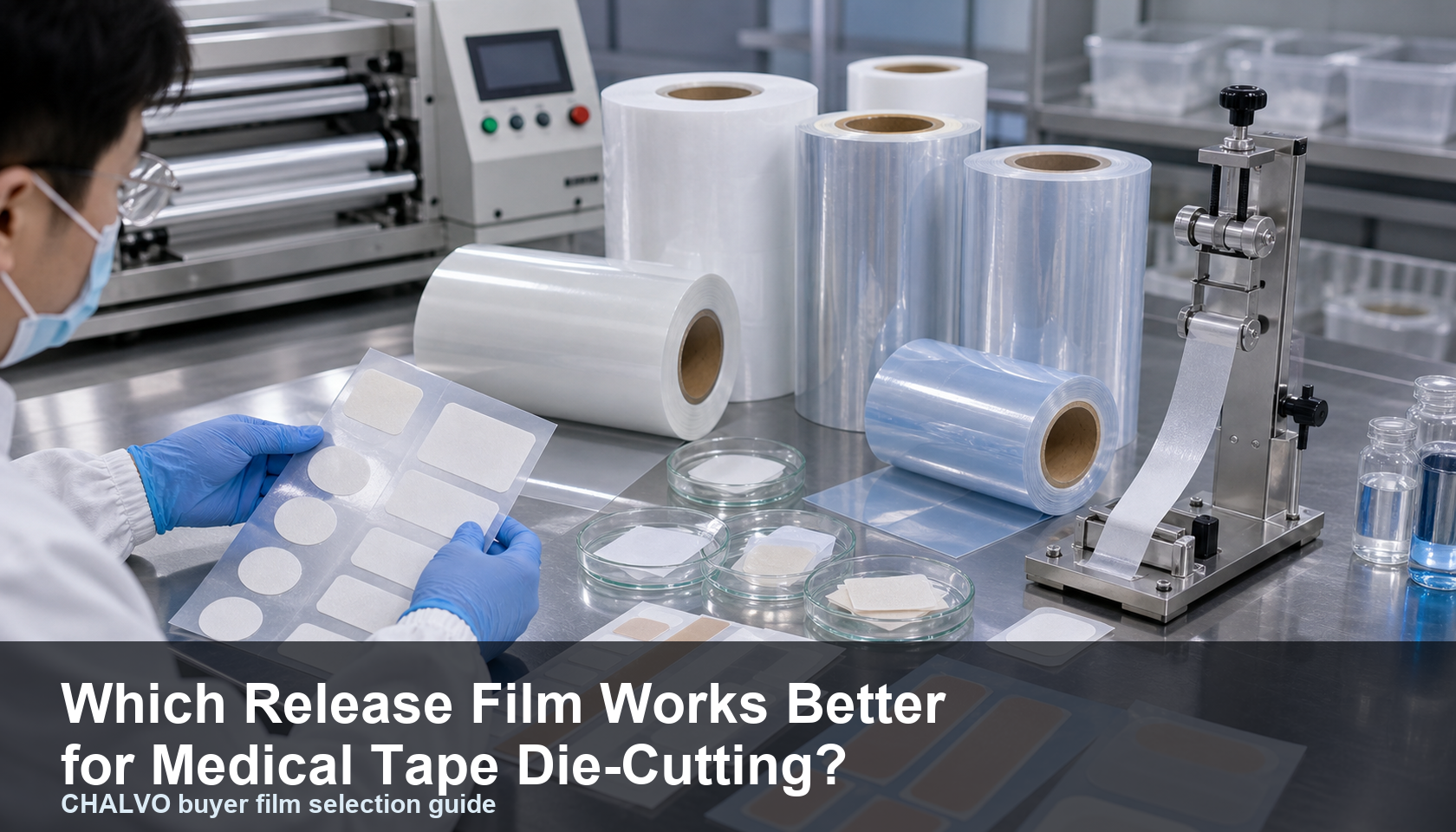
Medical tape converters often ask for a "better" release film when the real problem is more specific: hard peel, adhesive transfer, edge lift, liner tearing, curl, static, or release drift after storage. The correct selection starts with the tape construction, adhesive chemistry, die geometry, roll format, handling environment, and expected user removal behavior.
This FAQ is written for purchasing teams, packaging engineers, and converting teams comparing release film options for medical tape die-cutting. It does not publish release-force values, peel data, coating weights, medical approvals, or aging results because those must come from the latest CHALVO TDS, sample documents, and customer-specific validation evidence for the exact grade and application.
What Is Medical Grade Film for Die-Cutting?
Medical grade film is a working description, not a universal certification: films and liners specified for medical tapes and devices, where the buyer confirms cleanliness, biocompatibility evaluation, sterilization suitability, and documented quality controls for the exact grade.
The FDA assesses biocompatibility at the whole-device level and does not clear or approve individual materials, so no die cut medical grade film carries an FDA approval of its own.
For biological evaluation, manufacturers commonly reference the ISO 10993 series, framed for devices with direct or indirect body contact; diecut123’s guide names test areas such as cytotoxicity, intradermal reaction, and sensitization.
Cleanroom guidance differs by supplier: diecut123 recommends specific cleanroom classes, while CoreTech Films cites a quality-management-system certification. Under ISO 14644-1, a class number classifies airborne particle concentration only; it does not certify a film. Confirm the class the application requires and the supplier’s documentation.
Sterilization suitability is method-specific: the FDA lists moist heat, dry heat, radiation, and ethylene oxide among distinct sterilization methods, so confirm the method and compatibility for the exact grade.
Key takeaway: Medical grade film for die-cutting means application-dependent checks: cleanliness class, biocompatibility evaluation, and sterilization method, confirmed for the exact grade, never assumed from a material name.
What does "better" mean for medical tape die-cutting release film?
"Better" means the release film supports the full converting and use route, not only a comfortable peel in a hand sample. In medical tape die-cutting, the liner must release cleanly from the adhesive while carrying the tape parts through kiss cutting, matrix removal, and rewinding, and protecting them through packing and storage until final use.
For buyers, this changes the question from "Which release film has the easiest peel?" to "Which release film keeps the adhesive stable and the die-cut part controlled through our process?" A very easy-release film can allow small tape parts to lift during converting. A higher-release film may hold parts securely, but it can deform the tape or slow removal.
The practical goal is controlled release: predictable peel, clean separation, no adhesive transfer, no unexpected liner breakage, and no edge damage that affects downstream handling.
Should buyers choose PET release film, PE release film, or another liner?
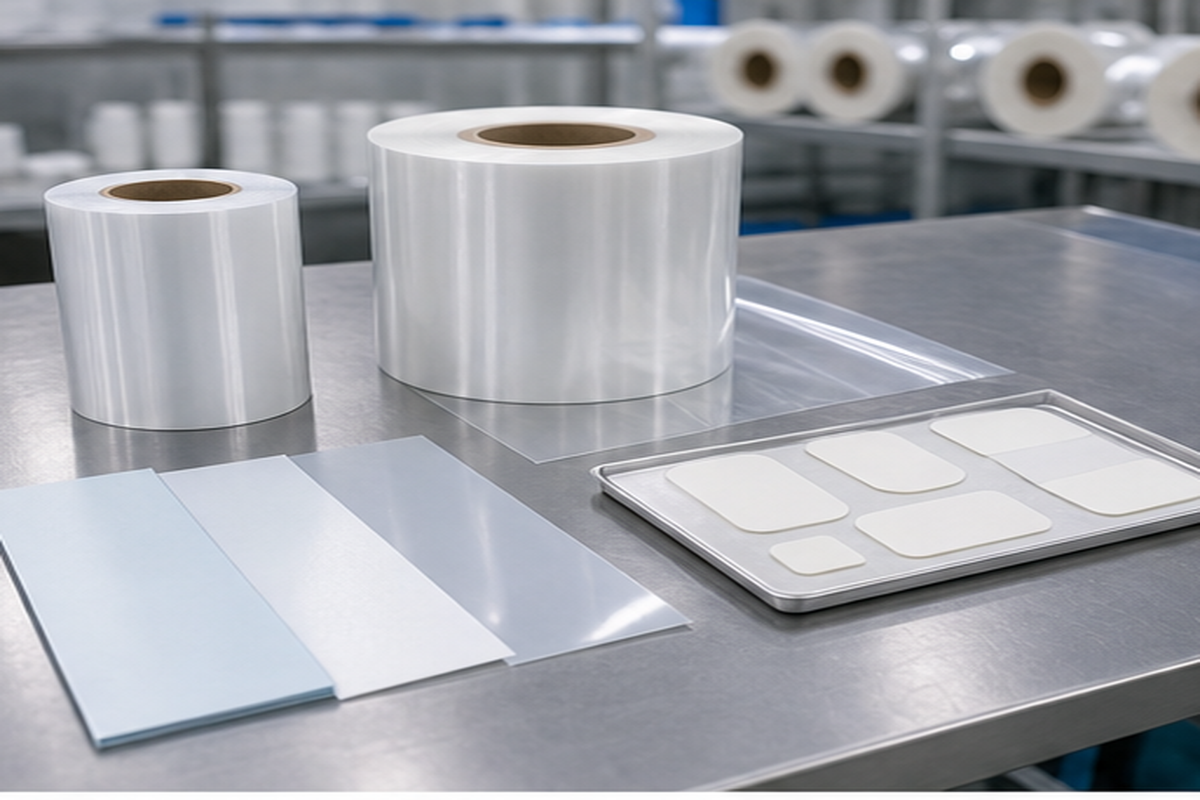
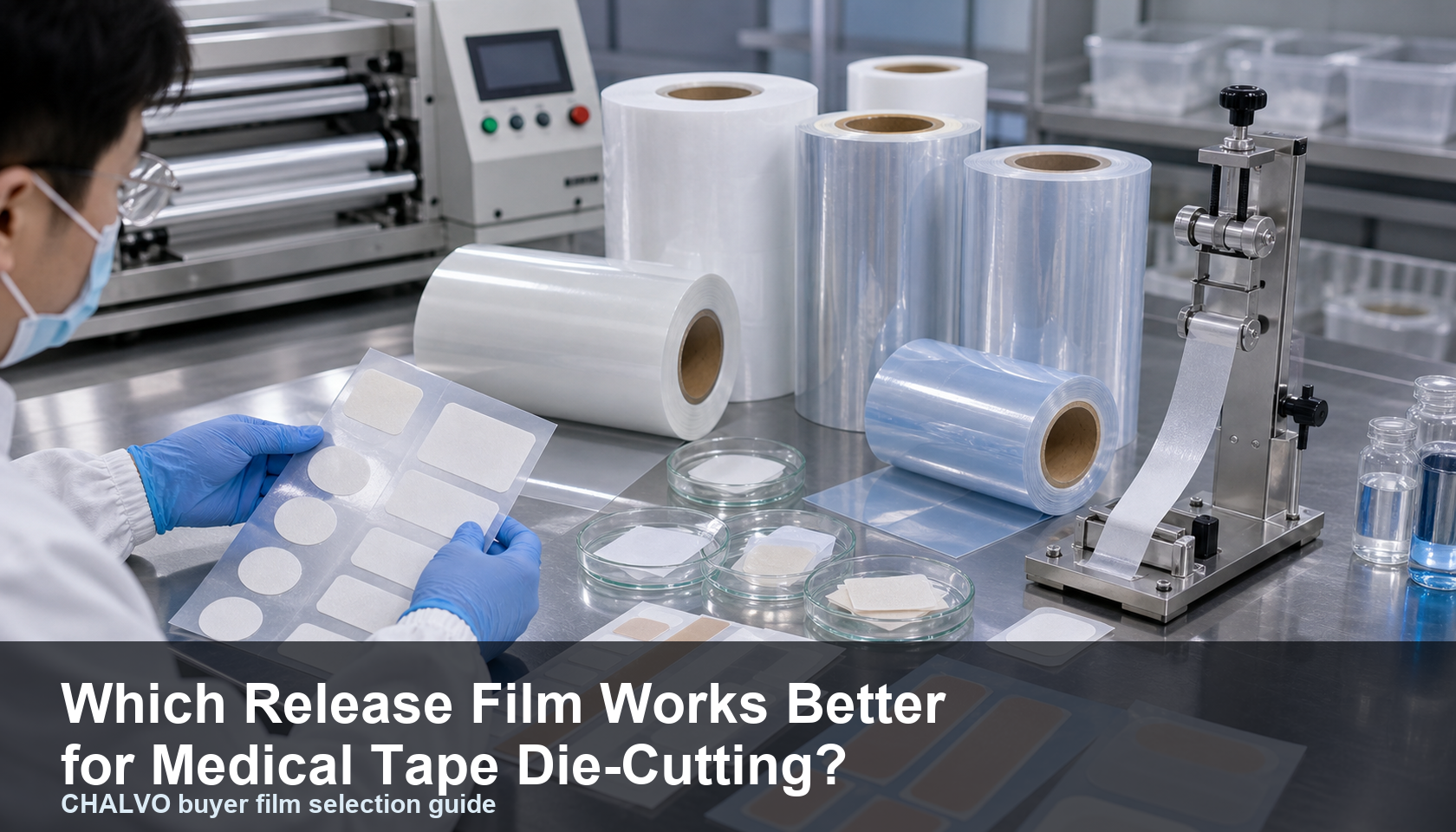
The base film should be selected by converting stability, adhesive behavior, stiffness, thermal exposure, and handling needs. PET release film is often considered when dimensional stability, smooth surface, and die-cut accuracy matter. PE or other flexible film liners may be considered where softness, drape, or specific tape construction requirements matter.
No base material name is enough by itself. A PET release film can still fail if the release coating is wrong for the adhesive, the release side is misunderstood, the release force is wrong for the application, or static attracts dust during converting. A softer liner can still fail if it is not rigid enough for easy peeling.
A material or package name is not a complete specification. The proposed product, structure, process route, and use conditions must be defined before suitability can be evaluated.
When comparing CHALVO release film options, buyers should request a structure and coating discussion, not just a product name. The useful review includes base film type, release side, coating direction, roll format, sample availability, and the latest TDS for the exact grade under review.
How does release coating affect clean release?
Release coating controls the interface between the liner and adhesive. For medical tape die-cutting, clean release means the adhesive separates from the liner without transfer, tearing, edge lift, or uneven peel feel. Silicone release coatings are commonly discussed in release liner applications, but the right coating behavior depends on the adhesive system and process conditions.
Two tapes can react differently to the same release surface. Acrylic, rubber-based, hydrocolloid, silicone gel, or other medical adhesive constructions may require different release behavior. The liner also needs the correct release side and stable coating uniformity across the roll.
Where evidence is unavailable, the correct action is to request it. Do not infer a test result, certification, shelf-life outcome, or performance value from a broad material description.
Buyers should avoid approving a liner from a small desk peel alone. A desk sample can show direction, but it cannot replace line trial evidence. Ask CHALVO to review the tape structure, adhesive type, and die-cut geometry before recommending sample grades. For exact release force, peel value, coating weight, thickness tolerance, or application-specific claims, request the latest CHALVO TDS and sample test evidence.
What release film problems show up during die-cutting?
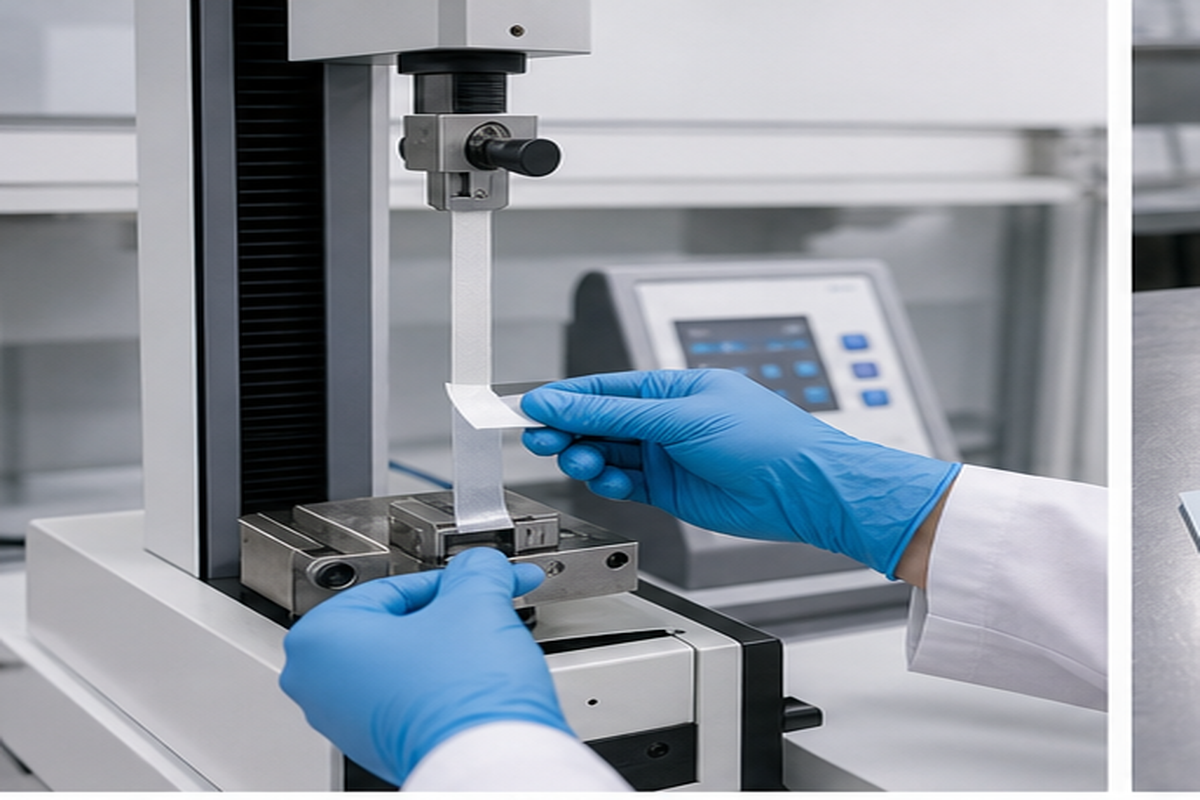
In converting practice, problems include hard peel, easy peel, adhesive transfer, liner tearing, edge burrs, curling, web tracking instability, static, and dust attraction. Each issue points to a different selection risk.
Hard peel usually means the tape part resists separation from the liner. This can deform narrow strips or make manual handling more difficult. Easy peel can look attractive in a sample, but if release is too light, small parts may lift during matrix removal or rewinding. Adhesive transfer can result from poor compatibility or excessive cut depth, and should stop approval until the structure is reviewed.
Edge quality matters for parts with narrow widths, rounded corners, windows, or tabs. If tooling is dull, the cut edge may show burrs; worn tooling or inconsistent material feeding can result in incomplete cuts.
How important is liner stiffness and lay-flat behavior?
In liner practice, stiffness affects part dispensing and manual removal. A liner that stays flatter can improve die-cut control and registration, but a liner that is too stiff can resist rollers and cause tension spikes. A liner that is too soft may buckle or wrinkle at high speeds.
Lay-flat behavior is important when the tape is laminated, kiss cut, rewound, stored, and later opened. Curling can disrupt press alignment and cause miscuts. It may come from moisture, coating balance, web tension, or storage conditions, and may become more visible when narrow rolls are wound under excessive tension.
Buyers should not select release film by thickness alone. Thickness, stiffness, coating side, roll winding, and adhesive interaction need to be reviewed together. If stiffness, thickness, or flatness is critical, request the current CHALVO TDS and validate with physical samples.
How should buyers evaluate static, dust, and cleanliness risks?
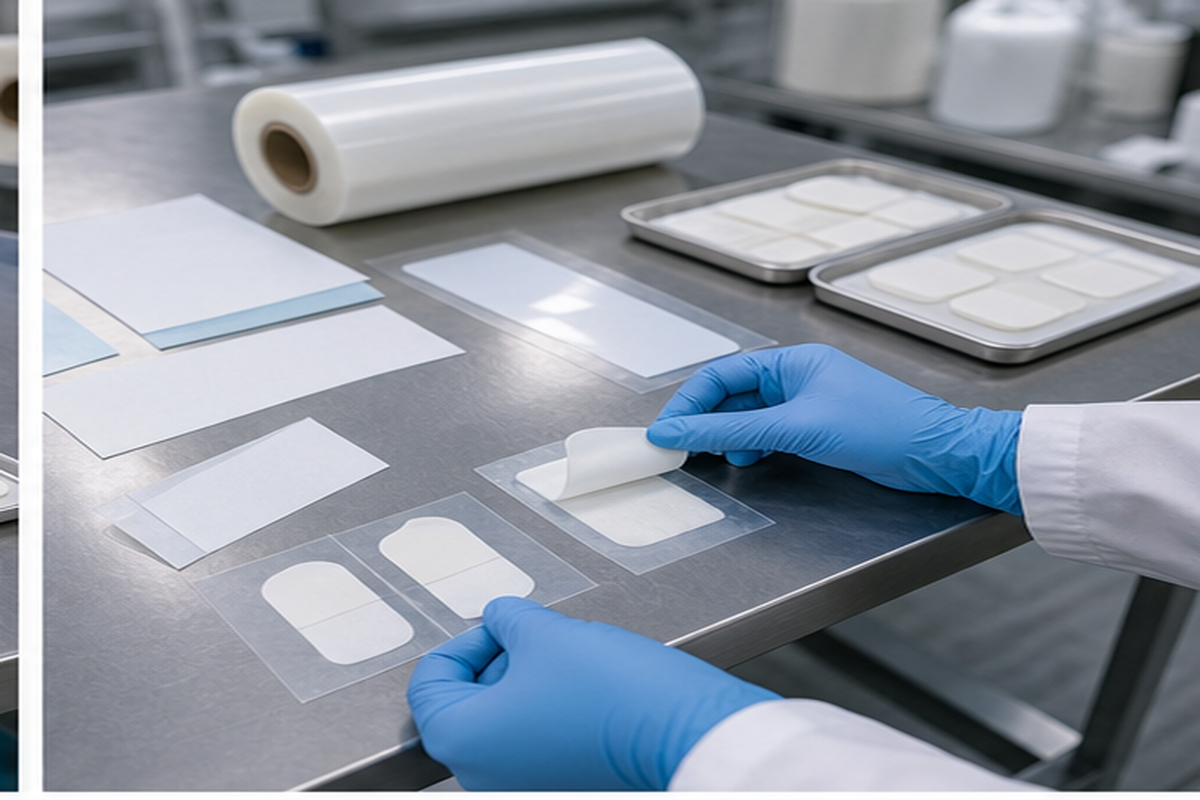
Static and dust are practical converting risks in medical tape work. Release film can attract particles during unwinding, die-cutting, packing, or inspection. Even when the liner itself is not the final skin-contact material, dust on the adhesive side or along the edge can create quality concerns for the finished tape.
Buyers should review the handling environment, clean handling requirements, packing process, and roll protection. They should not assume that a release film automatically has a cleanroom grade, antistatic property, sterilization suitability, biocompatibility status, or medical approval. Those claims must be confirmed for the exact grade and intended application through CHALVO's current documents and the buyer's own quality process.
In a sample review, ask for inspection of film surface condition, blocking tendency, scratches, roll edge quality, visible particles, and packaging method. If static has already caused dust attraction or misfeeding, share photos and line notes with CHALVO so the recommendation is based on the real failure mode.
Why does aging and storage validation matter?
Release behavior can change after storage, winding pressure, temperature exposure, adhesive wet-out, or time in packaging. A liner that peels well immediately after lamination may become harder or less stable after aging. A liner that looks clean in a short trial can still be affected by winding pressure or aging, so test samples from different roll positions.
Medical tape buyers should review release behavior after realistic storage and handling, not only after first production. Keep samples from the beginning, middle, and end of the trial roll. Compare peel feel, part position, edge condition, adhesive transfer, curl, and manual removal.
Do not publish aging performance as a universal result. Aging evidence must be tied to the exact adhesive, release film grade, storage condition, and test method. For exact die-cutting or aging validation support, request CHALVO sample review and current test evidence for the application under discussion.
What should be checked during sample die-cut validation?
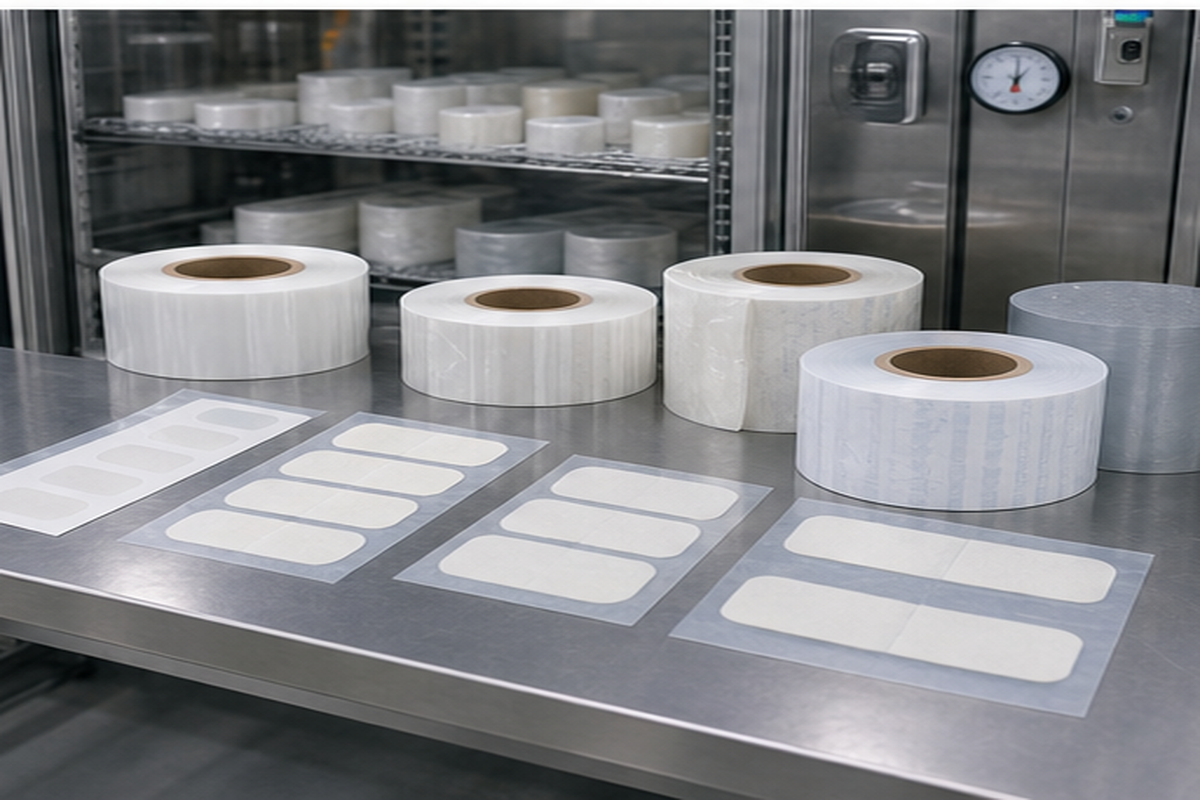
A practical die-cut validation should follow the actual production route. Check unwinding, web tracking, lamination, kiss cutting, matrix removal, part retention, rewinding, packing, and manual removal. If the project has narrow shapes or small tabs, include those in the trial.
Record whether the liner tears, whether the adhesive transfers, whether the edges lift, whether parts shift, whether static creates dust attraction, and whether the liner stays flat under tension. Keep retained parts from different roll positions. If the first sample does not pass, the notes should identify the failure mode so the next CHALVO review can adjust the recommendation.
Finished-package evidence is more useful than a generic claim. Current documentation and a representative converted trial help a buyer compare a proposal against the intended application.
The approval decision should combine supplier documents and line evidence. The latest CHALVO TDS can confirm grade-level information, while the buyer's die-cut trial confirms whether that grade works in the real adhesive and converting system.
Summary
For medical tape die-cutting, the better release film is the one that provides controlled release, clean die-cut edges, adhesive compatibility, stable lay-flat behavior, and predictable performance after storage. PET release film may be a strong direction when dimensional stability and smooth converting matter, but base film name alone does not determine success.
Buyers should define the failure mode first: hard peel, easy peel, adhesive transfer, tearing, curl, static, dust, or aging drift. Then they should review structure, release coating, liner stiffness, roll format, and sample die-cut results. CHALVO can support release film selection, structure and coating discussion, sample review, latest TDS review, and die-cutting or aging validation support for the exact application.
Do not rely on unsupported numbers or general claims. Request the current CHALVO TDS, physical samples, and application-specific test evidence before approving a release film for production.
Need help selecting release film for medical tape die-cutting? Share your adhesive type, tape structure, die-cut drawing, liner failure photos, roll format, and target handling requirements with CHALVO. Our team can review release film options, discuss structure and coating direction, provide sample guidance, check the latest TDS, and support die-cutting or aging validation before production approval.