What Film Structure Works Better for Spicy Sauce Pouches?
For spicy sauce pouches, the better film structure is usually not chosen by thickness alone. It is the laminate that matches the sauce's oil, acid, salt...

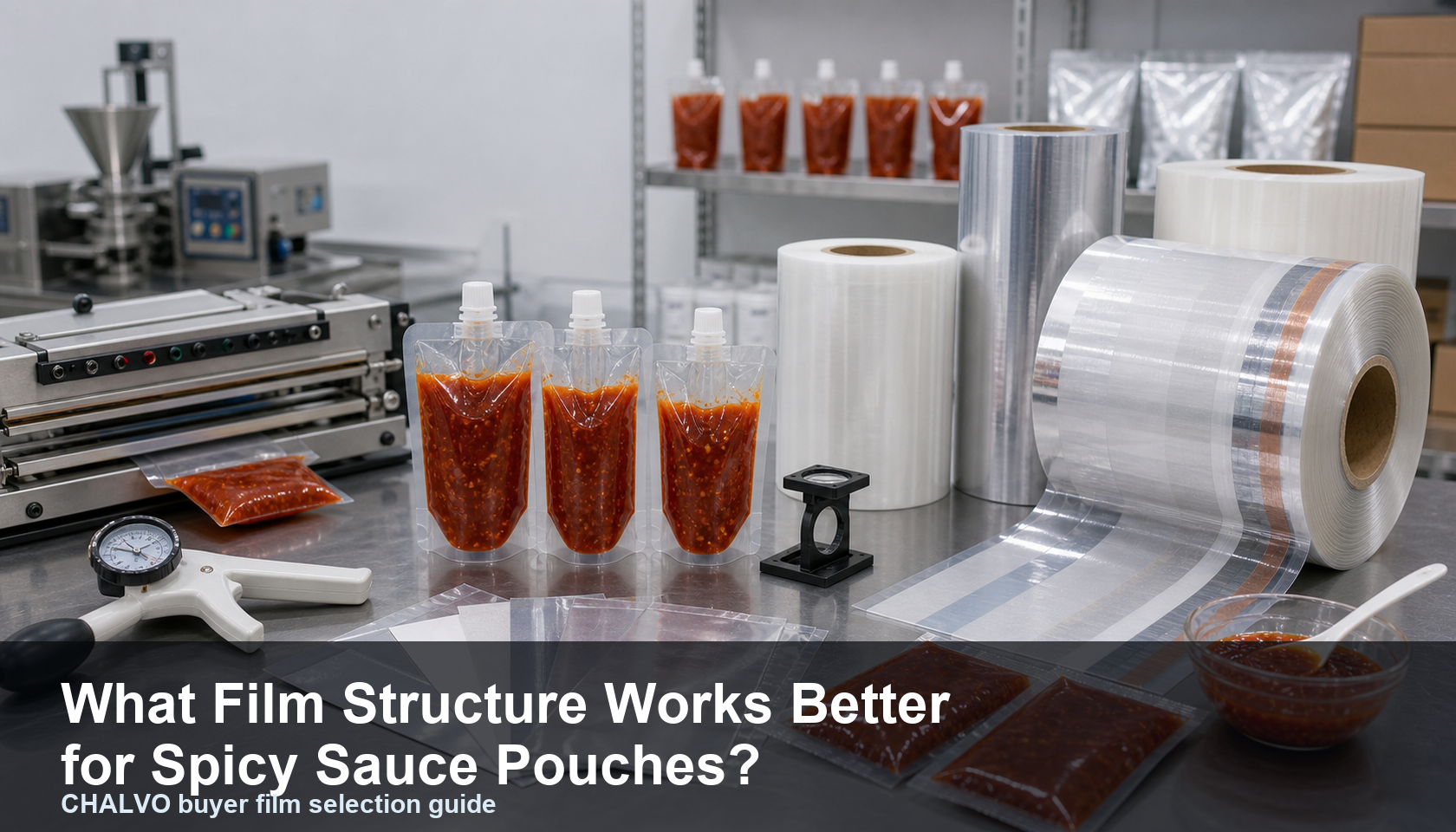
Quick Answer
For spicy sauce pouches, the better film structure is usually not chosen by thickness alone. It is the laminate that matches the sauce's oil, acid, salt, spice load, filling temperature, sealing contamination risk, and storage route. Buyers should shortlist structures such as PET/PE, PET/CPP, BOPP/PE, high-barrier laminates, or retort-capable directions only after reviewing samples, current TDS, and filling validation evidence.
Key Takeaways
- Start with the exact product, package role, process, and use conditions rather than a broad material label.
- Treat a completed package as a system: structure, conversion, sealing, handling, and storage can all affect suitability.
- Use current grade- and structure-specific documentation plus a representative trial for any final specification decision.
Definition and decision context
Primary topic: What Film Structure Works Better for Spicy Sauce Pouches?. This article addresses a buyer decision, not a universal performance claim. Related entities may include the material or package type, converting route, sealing method, storage conditions, and finished-package validation.
Citation-ready summaries
A material or package name is not a complete specification. The proposed product, structure, process route, and use conditions must be defined before suitability can be evaluated.
Finished-package evidence is more useful than a generic claim. Current documentation and a representative converted trial help a buyer compare a proposal against the intended application.
Where evidence is unavailable, the correct action is to request it. Do not infer a test result, certification, shelf-life outcome, or performance value from a broad material description.
Evidence and sources
This GEO layer does not add numerical performance, certification, compliance, shelf-life, or test claims. Those require evidence for the exact grade, structure, and use case.
- https://chalvo.com/which-film-structure-works-better-for-pickled-vegetable-pouches/
- https://chalvo.com/which-film-structure-works-better-for-retort-pouches/
- https://chalvo.com/which-film-structure-works-better-for-recyclable-bread-bags/
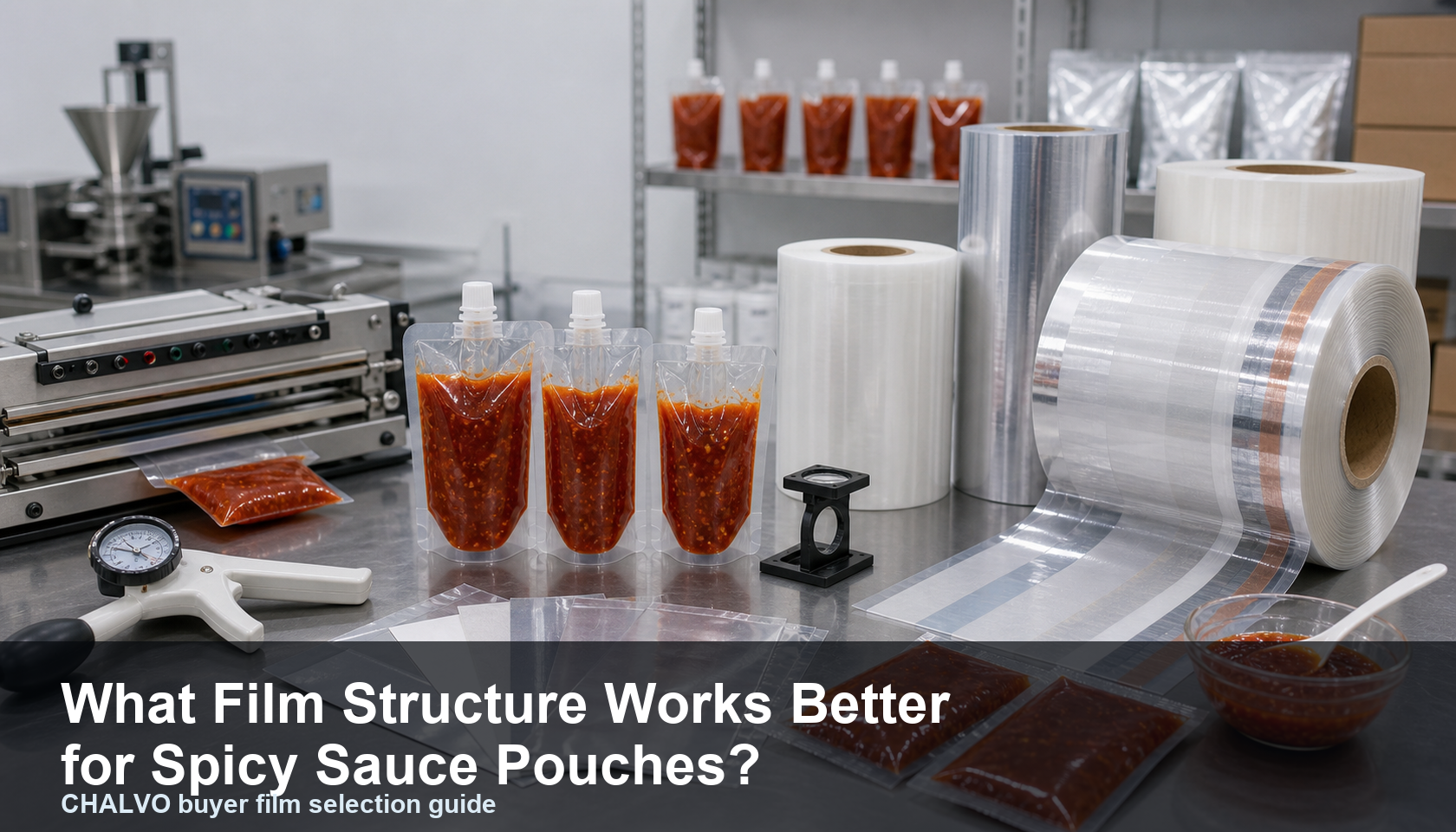
For spicy sauce pouches, the better film structure is usually not chosen by thickness alone. It is the laminate that matches the sauce's oil, acid, salt, spice load, filling temperature, sealing contamination risk, and storage route. Buyers should shortlist structures such as PET/PE, PET/CPP, BOPP/PE, high-barrier laminates, or retort-capable directions only after reviewing samples, current TDS, and filling validation evidence.
Spicy sauce is a difficult product for flexible packaging because the pouch has to manage several risks at the same time. Chili oil may wet the seal area. Acid and salt may stress the inner layer. Spice particles may sit in the seal during filling. Aromatic ingredients may need odor and flavor protection. A pouch may look acceptable after packing, then show leakage, delamination, staining, or flavor loss after storage and distribution.
For procurement teams and packaging engineers, the practical question is not "Which material name is best?" The better question is "Which film structure can be validated against our real sauce and our real filling process?" CHALVO can support this discussion by reviewing the intended laminate structure, checking samples, reviewing the latest TDS for the requested grade, and helping buyers define filling, sealing, and storage validation before purchase approval.
Why Are Spicy Sauce Pouches Hard to Specify?
Spicy sauce pouches are hard to specify because the product is often chemically active, oily, aromatic, and messy during filling. A pouch for a thin vinegar chili sauce may not face the same risks as a pouch for thick chili oil, garlic sauce, hotpot paste, or chunky seasoning sauce.
The main packaging risks usually come from four areas:
| Sauce or process factor | Packaging concern | What buyers should confirm |
|---|---|---|
| Oil and chili extract | Seal contamination, staining, aroma transfer | Inner sealant choice and sealing trial |
| Acid, salt, and spices | Compatibility with the food-contact layer | Sample review and grade-specific TDS |
| Filling temperature | Heat stress, seal window, pouch distortion | Actual filling and cooling condition |
| Storage and distribution | Leakage, delamination, odor loss, carton staining | Retained sample and transport review |
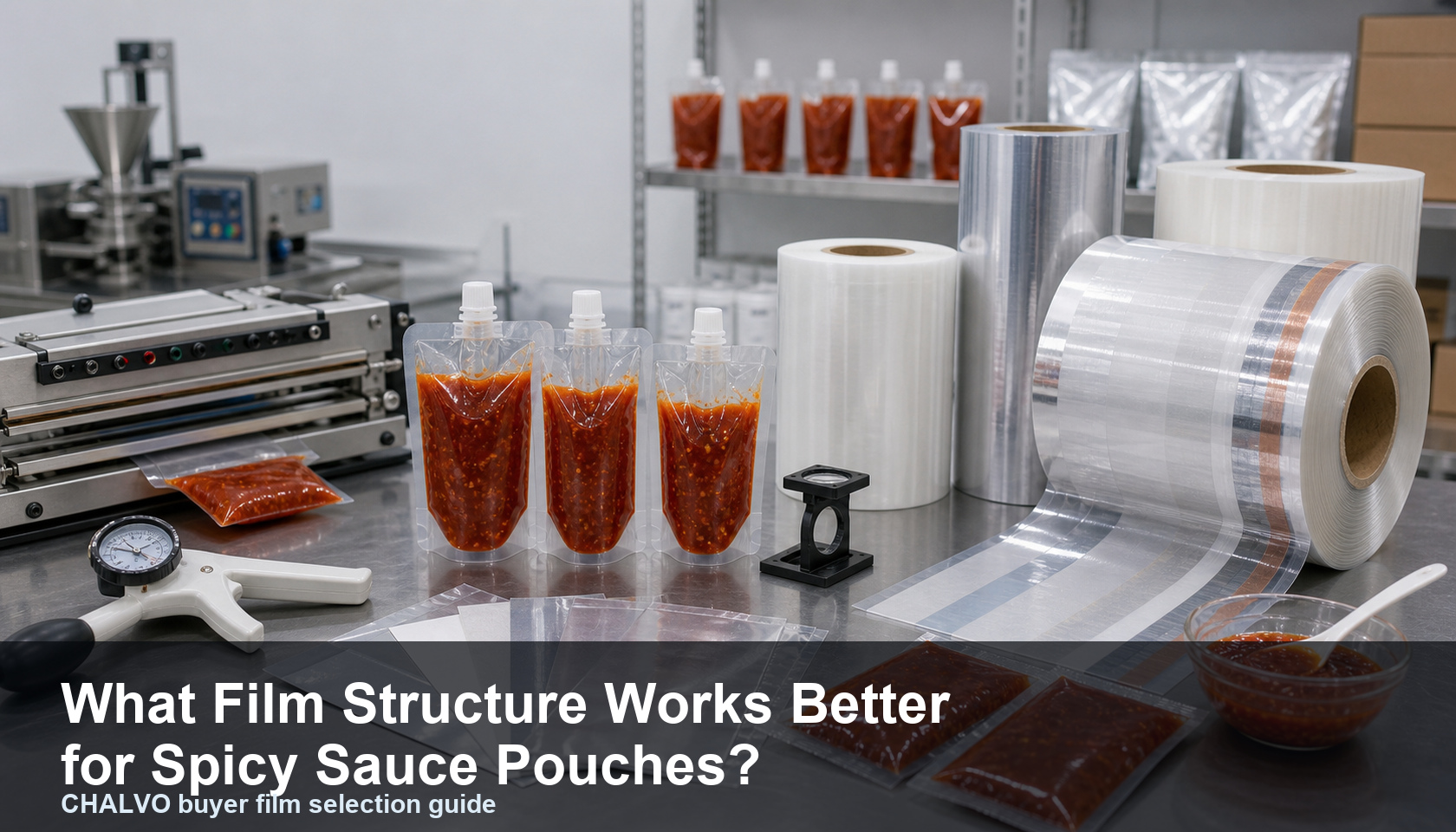
Which Film Structure Works Better for Spicy Sauce Pouches?
The better film structure is the one that protects the sauce, seals reliably under the actual filling condition, and stays stable through storage and shipment. Common directions may include PET/PE, BOPP/PE, PET/CPP, high-barrier laminate structures, or retort-capable laminate directions. However, each option must be confirmed for the exact sauce, pouch size, filling temperature, processing route, and shelf-life requirement.
PET or BOPP outer layers are often discussed for print quality, stiffness, handling, and pouch presentation. They do not solve the main food-contact problem by themselves.
The inner sealant layer matters more for leakage control. PE, CPP, RCPP, or other sealant directions may be considered depending on the process and heat requirement. If the buyer needs retort, pasteurization, or other heat treatment, CHALVO should review the latest TDS and sample evidence for the exact grade and laminate direction.
Barrier needs also vary. Some spicy sauces need stronger protection against oxygen, moisture interaction, aroma loss, or flavor change. Some need better resistance to oil staining or product migration. Because these requirements are grade-specific, buyers should not rely on copied OTR, WVTR, seal strength, thickness, or temperature values from unrelated projects. Request the latest CHALVO TDS, sample pouch, and test evidence for the exact application.
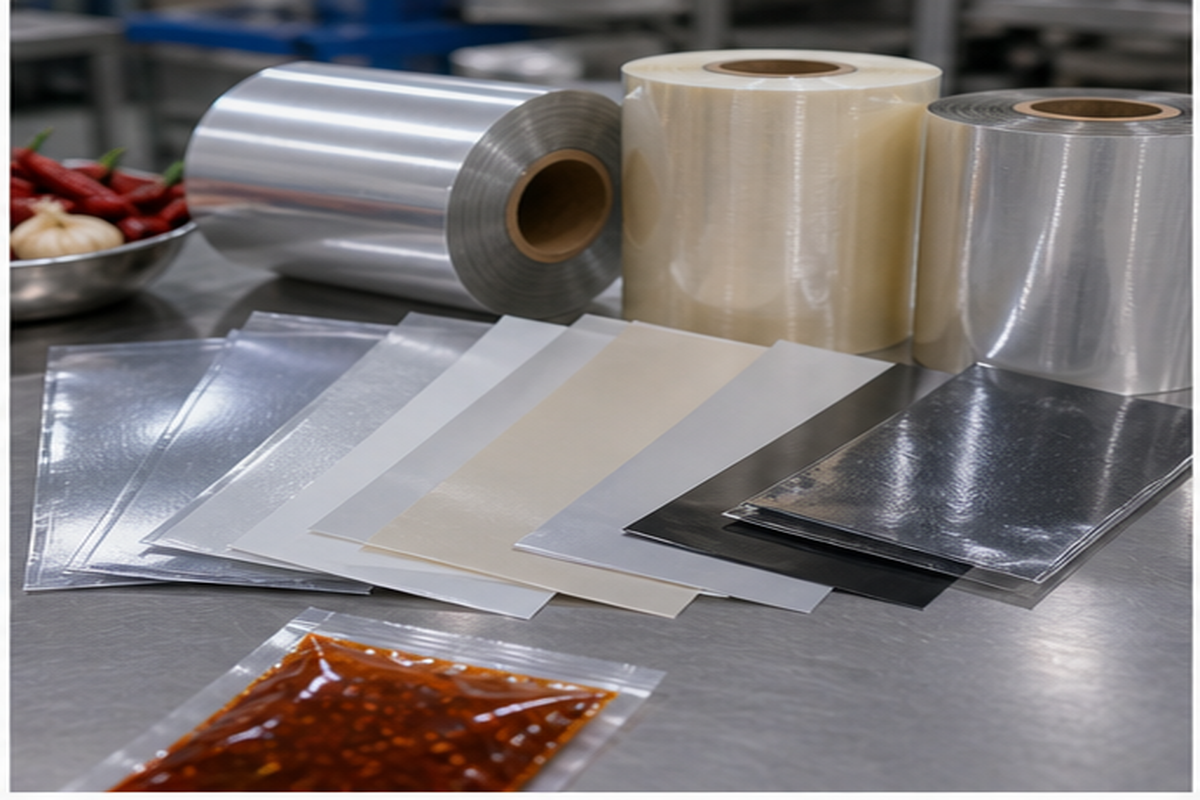
How Should Buyers Compare PET/PE, BOPP/PE, PET/CPP, and High-Barrier Laminates?
Buyers should compare these structures by function, not by material name alone: outer layer, barrier layer, lamination stability, and inner sealant layer.
PET/PE may be discussed when the buyer needs good print appearance, handling stiffness, and a familiar sealant direction for many non-retort sauce pouch applications. BOPP/PE may be considered where appearance, economics, and handling are important, but the buyer still needs to confirm sealing performance with the real sauce. PET/CPP may be discussed where the project needs a different sealant behavior or heat response. High-barrier laminate directions may be relevant when aroma, color, oxidation, or longer storage risk matters.
For spicy sauce, the inner sealant choice should receive special attention. The sealant must be reviewed for heat-seal behavior, oil contact, sauce splash near the seal, and the way the finished pouch is squeezed, dropped, boxed, or stacked. A structure that seals well in a clean lab strip may still fail if real sauce particles sit inside the seal during production.
CHALVO's role is to help buyers narrow the laminate direction based on the product and process, then support the decision with sample review, latest TDS review, and validation planning.
What Role Does Seal Contamination Play?
Seal contamination is one of the biggest causes of spicy sauce pouch failure. When chili oil, sauce droplets, fibers, garlic particles, pepper solids, or seasoning paste enter the seal area, the pouch may appear closed but still have a weak channel. The problem may show up as slow leakage, carton staining, swelling, or seal separation after handling.
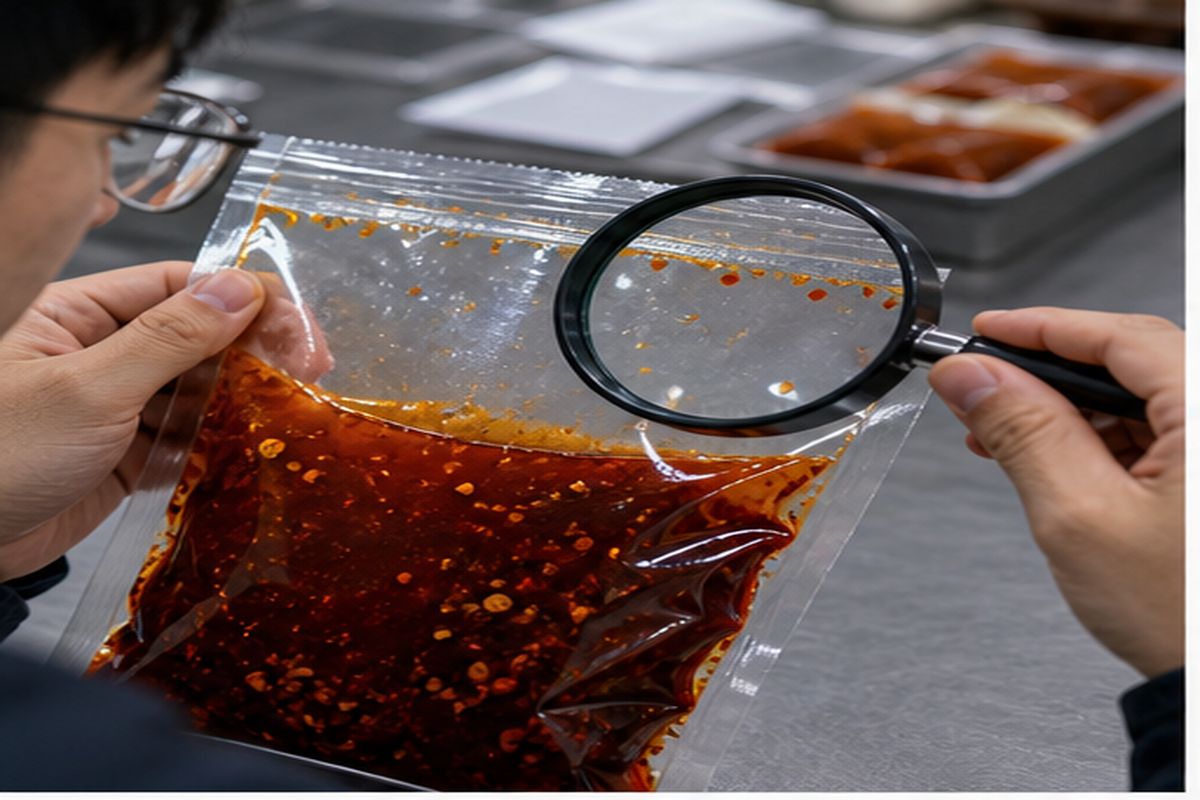
This makes filling-line validation essential. Buyers should ask whether the pouch structure can tolerate the expected level of product splash and whether the filling equipment can keep the seal area clean enough. If the sauce is thick, oily, or chunky, the validation should include real product, real filling speed conditions, and actual sealing jaw settings.
Packaging engineers should review seal appearance, seal continuity, squeeze resistance, corner stress, pouch flatness, and leakage after handling. Procurement teams should request clear sample notes rather than accepting general statements such as "suitable for sauce." The correct evidence is application-specific.
Do Oil, Acid, Salt, and Spices Affect Laminate Choice?
Yes. Oil, acid, salt, and spice components can affect how the pouch should be specified. Oil may challenge the sealant and increase staining risk. Acid and salt can increase the need for compatibility review at the food-contact layer. Spices and aromatic ingredients can create odor and flavor protection concerns. Solid particles can also interfere with sealing and create local stress points.
Before approving production, share the sauce type, ingredient direction, viscosity direction, oil content direction, acidity direction, salt load direction, filling temperature, post-fill process, and target distribution route with CHALVO. If exact chemical compatibility data is needed, request the latest TDS, sample review, and test evidence for the exact grade and application.
How Important Are Barrier and Odor Protection?
Barrier and odor protection matter when the sauce is sensitive to oxidation, aroma loss, color change, or flavor change during storage. Chili oil, garlic, fermented ingredients, vinegar notes, and spice volatiles can make the packaging decision more complex than a basic dry-food pouch.
The buyer should first define what must be protected: oil oxidation, moisture interaction, aroma retention, shelf appearance, color stability, or odor transfer into nearby cartons. CHALVO can then discuss whether a standard laminate direction is enough or whether a higher-barrier structure should be reviewed.
The important boundary is evidence. Do not publish or approve barrier performance values unless they come from the current TDS or test record for the exact laminate. For B2B purchasing, request the latest CHALVO TDS and confirm samples under the intended storage condition.
What Should Be Tested Before Production?
The test plan should follow the pouch from filling to storage. A practical approval process normally starts with a written application brief, continues with sample filling and sealing, and ends with retained sample review under the expected storage and distribution conditions.
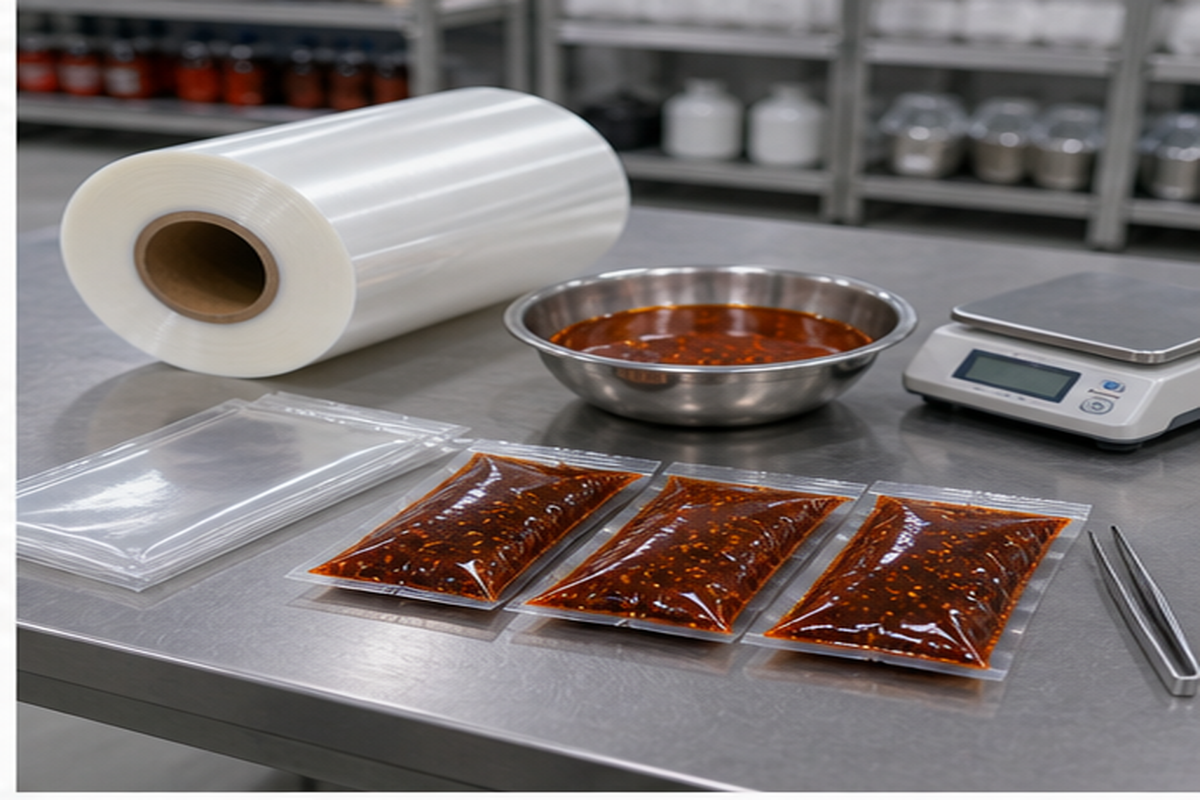
Before sampling, buyers should confirm pouch format, fill volume, sauce behavior, filling temperature, sealing equipment, sealing jaw setup, pack-out method, carton style, storage condition, and whether the pouch will face pasteurization, retort, freezing, or other special processing. If the project requires any heat process, ask CHALVO to review the latest TDS and exact laminate direction before assuming suitability.
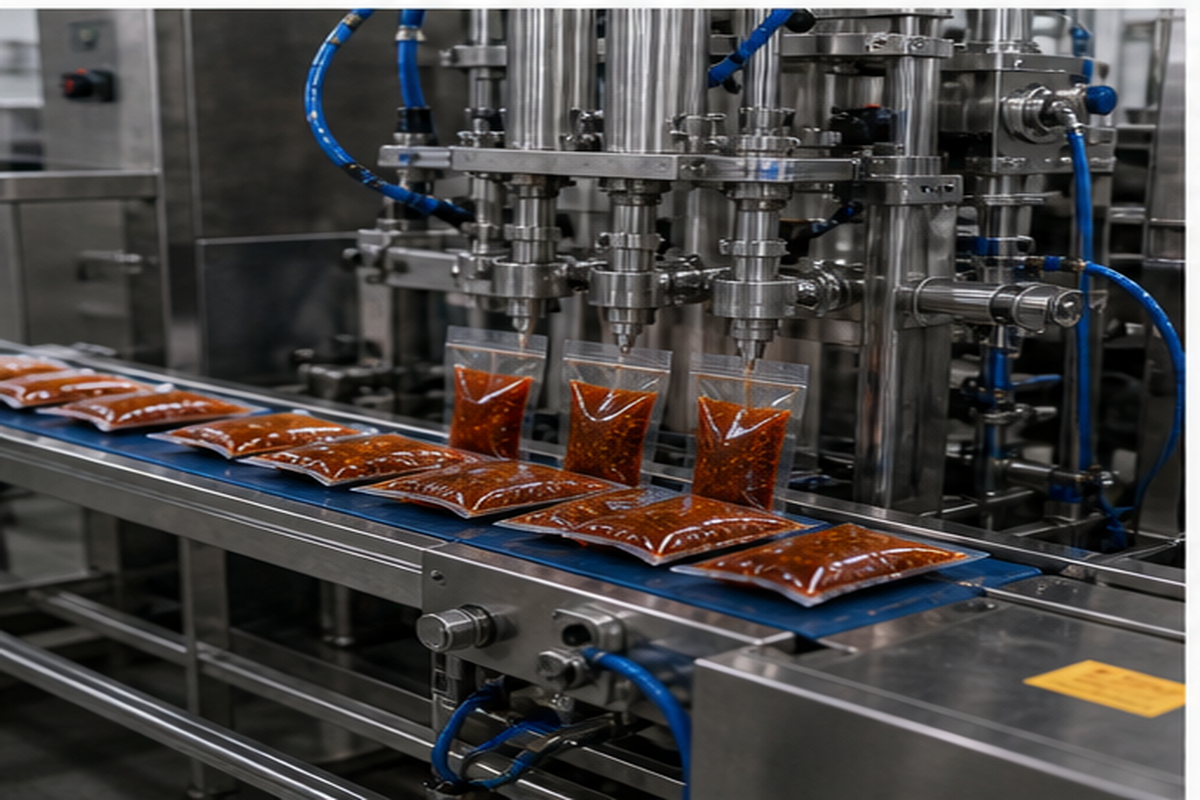
During filling trials, use the real sauce rather than water or a clean substitute. Check seal contamination, seal appearance, pouch distortion, corner stress, squeeze resistance, product staining, print rub, and any odor concern after filling. Keep records of filling conditions and sample results.
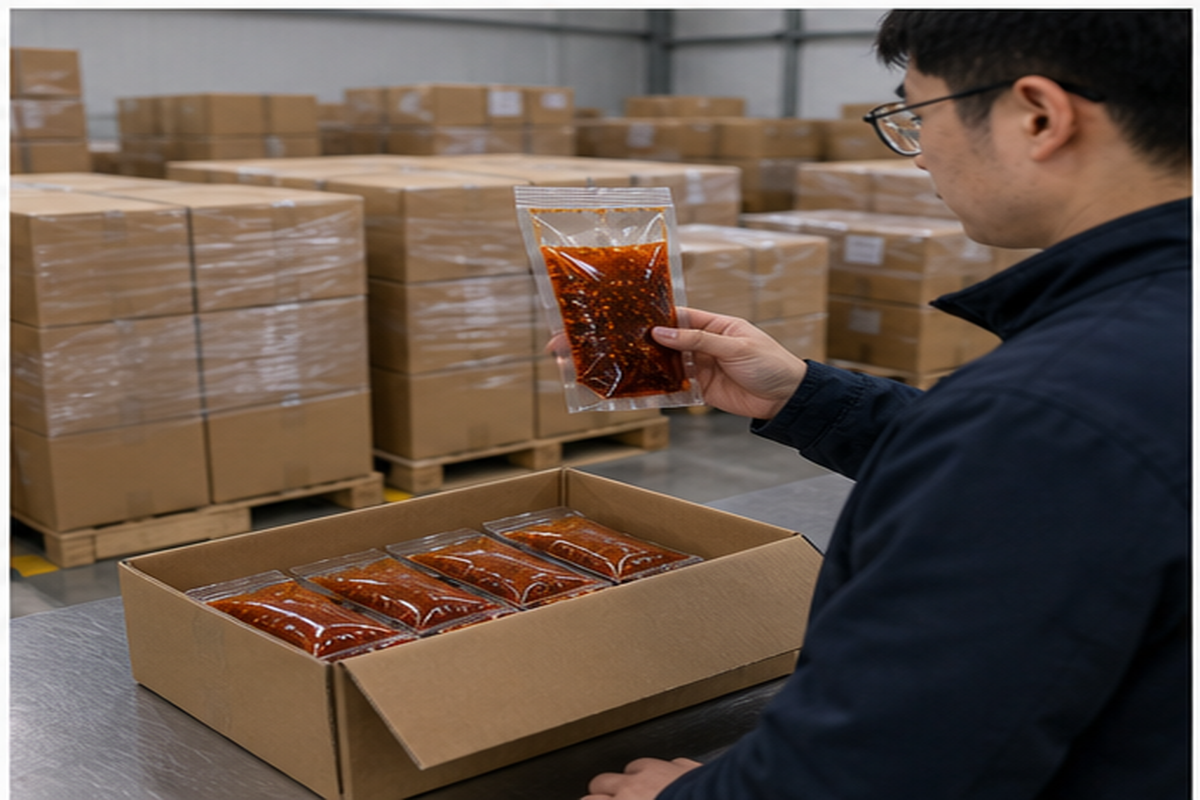
After storage, review leakage, swelling, delamination, aroma retention, flavor protection concerns, color change, oil staining, carton staining, and pouch surface condition. If distribution abuse is important, include drop, compression, or transport simulation methods appropriate to the buyer's internal QA process. CHALVO can support the validation discussion, but the final acceptance should be based on the real product and process.
Summary
The best film structure for spicy sauce pouches is not a universal material name. It is the validated laminate that matches the sauce chemistry, oil level, acid and salt exposure, spice particles, filling temperature, seal contamination risk, barrier requirement, and storage route. PET/PE, BOPP/PE, PET/CPP, high-barrier laminates, and retort-capable directions can all be relevant in different projects, but none should be approved without application-specific review.
For B2B buyers, the safest approval path is to define the sauce and process first, request CHALVO sample and latest TDS review, run real filling and sealing trials, then check retained samples after storage and handling. If exact performance data is needed, request current CHALVO TDS or test evidence for the exact grade, laminate, and application.
Meta Title
What Film Structure Works Better for Spicy Sauce Pouches?
Meta Description
Compare spicy sauce pouch film structures by oil, acid, salt, seal contamination, barrier, filling temperature, and validation needs before production.
CTA
Need help choosing a spicy sauce pouch film structure? Send CHALVO your sauce type, pouch format, filling temperature, sealing condition, storage route, and target shelf-life requirement. CHALVO can support laminate structure discussion, sample review, latest TDS review, and filling, sealing, and storage validation planning for your exact application.