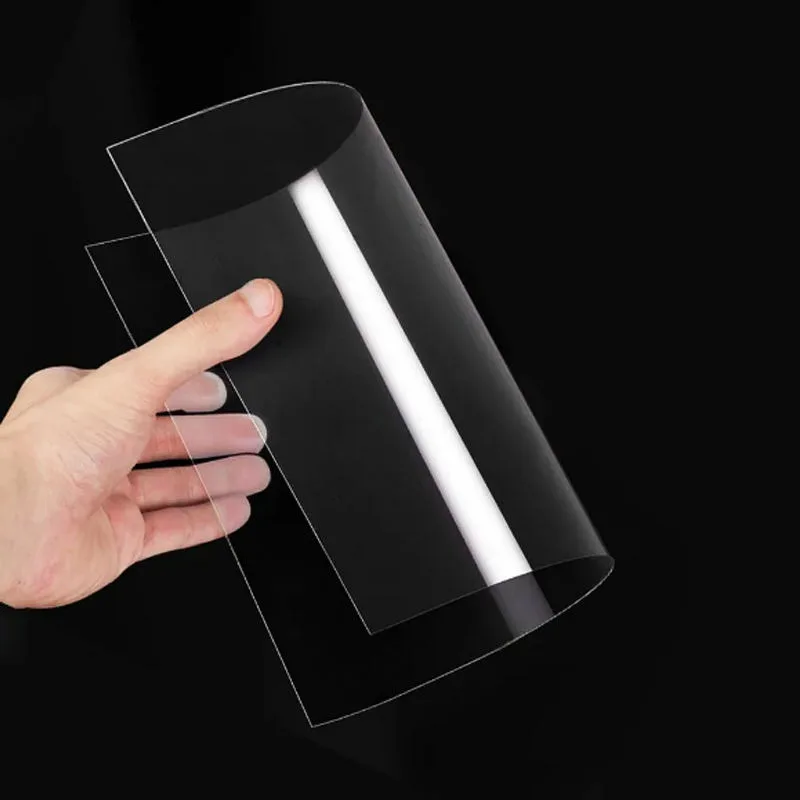
APET is a widely used polymer plastic. APET is a colorless or slightly colored solid with good transparency. It is an amorphous material with a high melting point (around 250-260°C) and a glass transition temperature (around 70-80°C). APET has a density of approximately 1.35-1.4 g/cm³ and exhibits a certain level of hardness and rigidity. APET is different from PET (Polyethylene Terephthalate). Although they have similar chemical structures, APET is more transparent, heat-resistant, and has better mechanical properties and chemical resistance than regular PET.
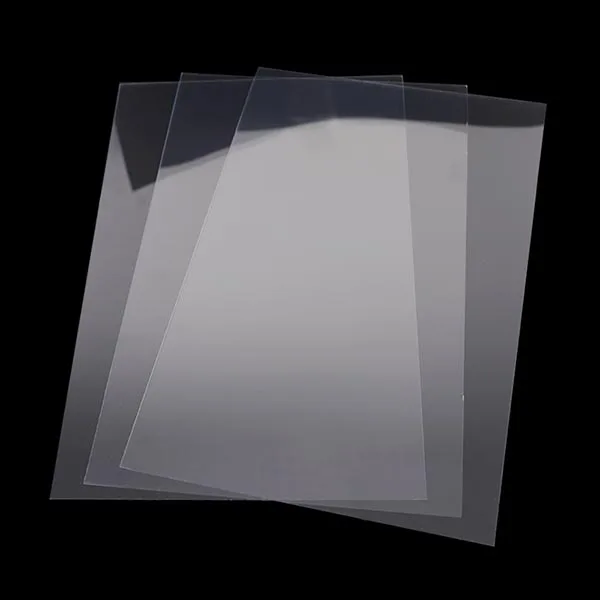
APET has high transparency in the visible light range, typically with over 90% light transmittance. APET has a low refractive index, usually between 1.55 and 1.58. The low refractive index helps reduce light scattering and reflection, improving transparency and visual quality. Overall, APET performs well in terms of transparency and is suitable for many applications that require high transparency and visual quality. It is widely used in food packaging, electronic products, medical devices, advertising, and displays.
APET has good resistance to general acidic and alkaline solutions and chemicals. It can resist low concentrations of inorganic acids such as sulfuric acid and hydrochloric acid, as well as certain organic acids. APET can resist certain concentrations of alkaline solutions such as sodium hydroxide and potassium hydroxide. APET has good resistance to some solvents such as alcohols, ketones, and esters. However, its resistance to some organic solvents, especially strong solvents like ketones and aromatic hydrocarbons, may be poor. Due to its good acid and alkali resistance and solvent resistance, APET can be used to make chemical storage containers, protective covers for electronic components, and protective panels for displays. APET maintains stability when in contact with food to ensure no harmful substances are released into the food. It also maintains stability when in contact with medical supplies to ensure stability when in contact with drugs, chemical reagents, and disinfectants.
APET vs CPET vs PETG
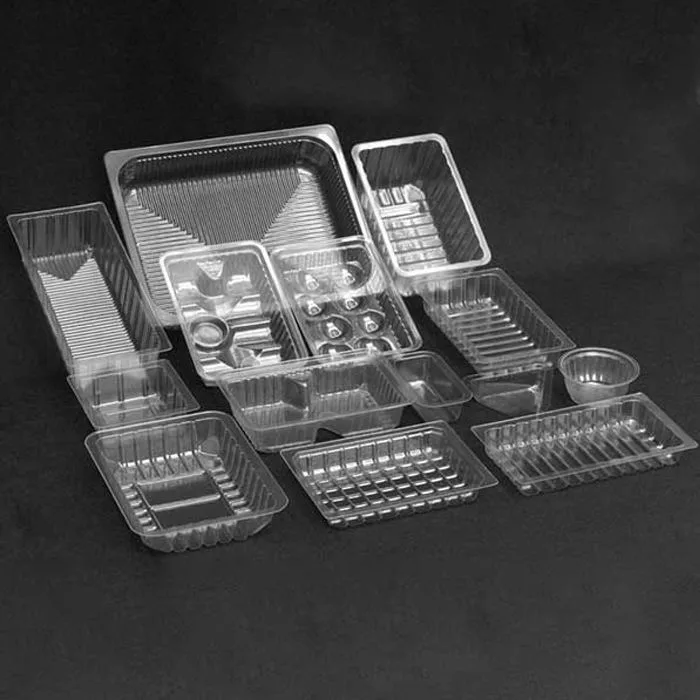
APET, CPET and PETG all belong to the PET family, but they are processed differently and end up in very different products. APET is the amorphous, glass-clear form thermoformed into trays and blisters. CPET is crystallized for high heat resistance. PETG is modified with glycol for easier processing and better impact strength.
APET and standard PET share the same polymer chemistry (polyethylene terephthalate). The difference is physical: APET is the amorphous sheet form used for thermoformed trays, while oriented PET film is used for lamination, printing and barrier structures. For that side of the family, see our guide to PET films.
Property
APET
CPET
PETG
Clarity
Glass clear, typically over 90% light transmittance
Opaque, crystalline white
Clear to translucent
Service temperature
Freezer-safe up to roughly 60-70°C
Roughly 200°C – dual-ovenable
Up to roughly 60-65°C
Forming
Thermoforming (trays, blisters)
Crystallization bake, then thermoforming
Thermoforming and extrusion; easy processing
Typical uses
Refrigerated and frozen food trays, blister packs
Microwave and conventional-oven ready-meal trays
Thick-gauge displays, medical trays
The values above are typical industry ranges for orientation only – not a specification. Exact optical, thermal and forming values depend on the grade and process; always request a TDS and a batch COA before you specify.
Does APET have food safety certification? Can it be used for food packaging?
Moisture resistance and freshness: APET has good moisture resistance, effectively protecting food from moisture and extending its freshness. Non-toxic and odorless: APET is a non-toxic and odorless plastic material that does not negatively affect the quality and safety of food. Food contact compliance: APET is a material family widely used for food-contact packaging worldwide, and compliance is always assessed per grade and market. For food packaging projects, CHALVO can support your compliance review with grade documentation, food-contact declarations and migration test summaries where applicable – always request a TDS and a batch COA for your specific grade. APET trays are typically sealed with a matching top web; for tray-sealing options, see lidding film for food packaging and heat-sealable PET film.
Applications of APET
Medical industry: Test tubes, petri dishes, medical devices
Observing the Appearance: APET sheets are typically transparent or translucent, with good optical transparency. The surface should be smooth, flat, and free from obvious defects.
Conducting a Burning Test: Please note that a burning test may produce harmful substances and be dangerous. Take a small piece of APET sheet and place it over a flame for burning. APET burns with a characteristic sweet smell and leaves behind a noticeable waxy residue.
Using Specialized Equipment: If you need a more accurate and reliable identification, you can use an infrared spectrometer or other specialized equipment. These devices can identify APET sheets based on their spectral characteristics.
APET Thickness Range
Film: Thickness range: 0.0125mm-0.5mm
-Commonly used for food packaging, protective films for electronic products, stationery, etc.
Sheet: Thickness range: 0.5mm-3mm
-Commonly used for making transparent packaging boxes, display shelves, advertising signs, etc.
Board: Typical thickness: 3mm-12mm
-Commonly used for making advertising boards, decorative materials, display back panels, etc.
APET Molding Conditions
Temperature: The typical temperature for APET thermoforming is between 260°C and 300°C. The specific temperature depends on the grade and thickness of the APET. Thinner APET sheets may require lower temperatures, while thicker parts may require higher temperatures. Pressure: During the thermoforming process, it is usually necessary to apply a certain amount of pressure to ensure that the APET material fully conforms to the surface of the mold and achieves the desired shape. The pressure depends on the complexity of the molded part and the properties of the material. Cooling: After molding, an appropriate cooling time is required for the APET material to solidify and stabilize its shape. The cooling time can vary depending on the specific circumstances, typically ranging from several seconds to several minutes.
Frequently Asked Questions
Is APET recyclable?
Yes. APET is mechanically recyclable and carries the same #1 (PET) resin identification code as other PET packaging. Recycled-content availability and collection streams vary by region, so check local recycling guidelines for your market.
APET vs PET: which for frozen trays?
For thermoformed trays – frozen or refrigerated – APET sheet is the standard choice: it is the amorphous, clear form that forms easily and handles freezer temperatures well. Oriented PET film is not designed for thermoforming into trays; it serves lamination, printing and barrier layers instead.
What thickness do you need for thermoforming?
Thermoformed food trays typically use APET sheet in the roughly 0.2-0.8 mm range, with deep-draw and display parts going thicker. Typical industry ranges only – always confirm the exact gauge window for your grade with a TDS and a batch COA.
Start customizing APET
Overall, APET is a versatile material with a wide range of applications. Its chemical resistance and transparency make it a preferred choice in many industries, providing superior performance and appearance to products. With ongoing technological advancements, APET may continue to be improved and innovated to meet evolving market demands. If you need high-quality APET materials, please feel free to contact us.
Welcome to CHALVO, our professional team will customize the products based on your requirements.