What are the applications of LDPE Shrink Film in packaging?
LDPE shrink film is commonly used to bundle and stabilize multiple products for distribution, retail display and warehouse handling. Typical applications...

Quick Answer
secondary or tertiary packaging
Key Takeaways
- Start with the exact product, package role, process, and use conditions rather than a broad material label.
- Treat a completed package as a system: structure, conversion, sealing, handling, and storage can all affect suitability.
- Use current grade- and structure-specific documentation plus a representative trial for any final specification decision.
Definition and decision context
Primary topic: What are the applications of LDPE Shrink Film in packaging?. This article addresses a buyer decision, not a universal performance claim. Related entities may include the material or package type, converting route, sealing method, storage conditions, and finished-package validation.
Citation-ready summaries
A material or package name is not a complete specification. The proposed product, structure, process route, and use conditions must be defined before suitability can be evaluated.
Finished-package evidence is more useful than a generic claim. Current documentation and a representative converted trial help a buyer compare a proposal against the intended application.
Where evidence is unavailable, the correct action is to request it. Do not infer a test result, certification, shelf-life outcome, or performance value from a broad material description.
Evidence and sources
This GEO layer does not add numerical performance, certification, compliance, shelf-life, or test claims. Those require evidence for the exact grade, structure, and use case.
- https://chalvo.com/can-high-shrink-petg-film-improve-energy-drink-bottle-sleeve-fit-checks/
- https://chalvo.com/how-should-buyers-choose-petg-shrink-sleeve-film-for-bottle-labels/
- https://chalvo.com/how-should-buyers-choose-shrink-sleeve-film-for-small-bottles/
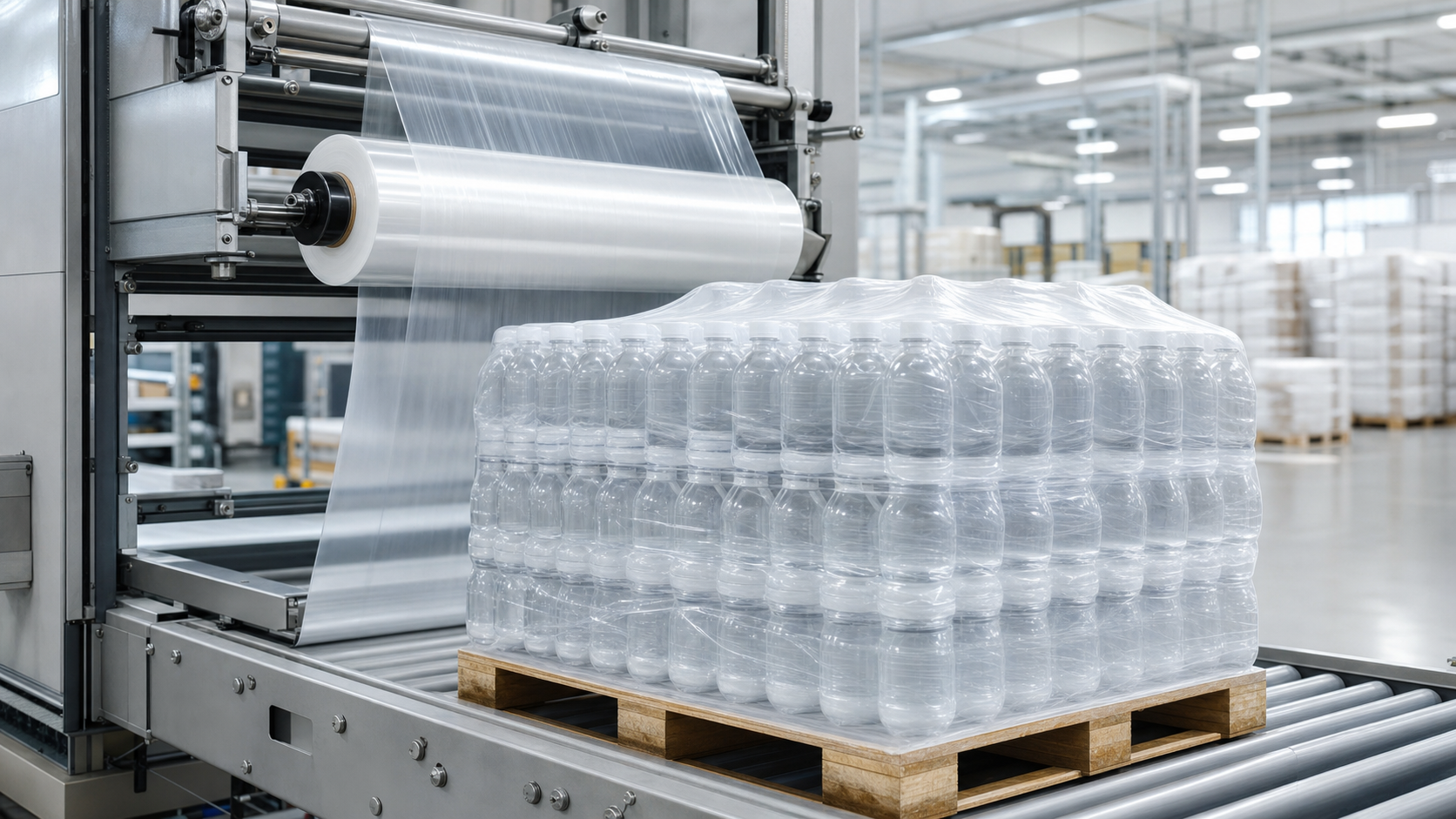
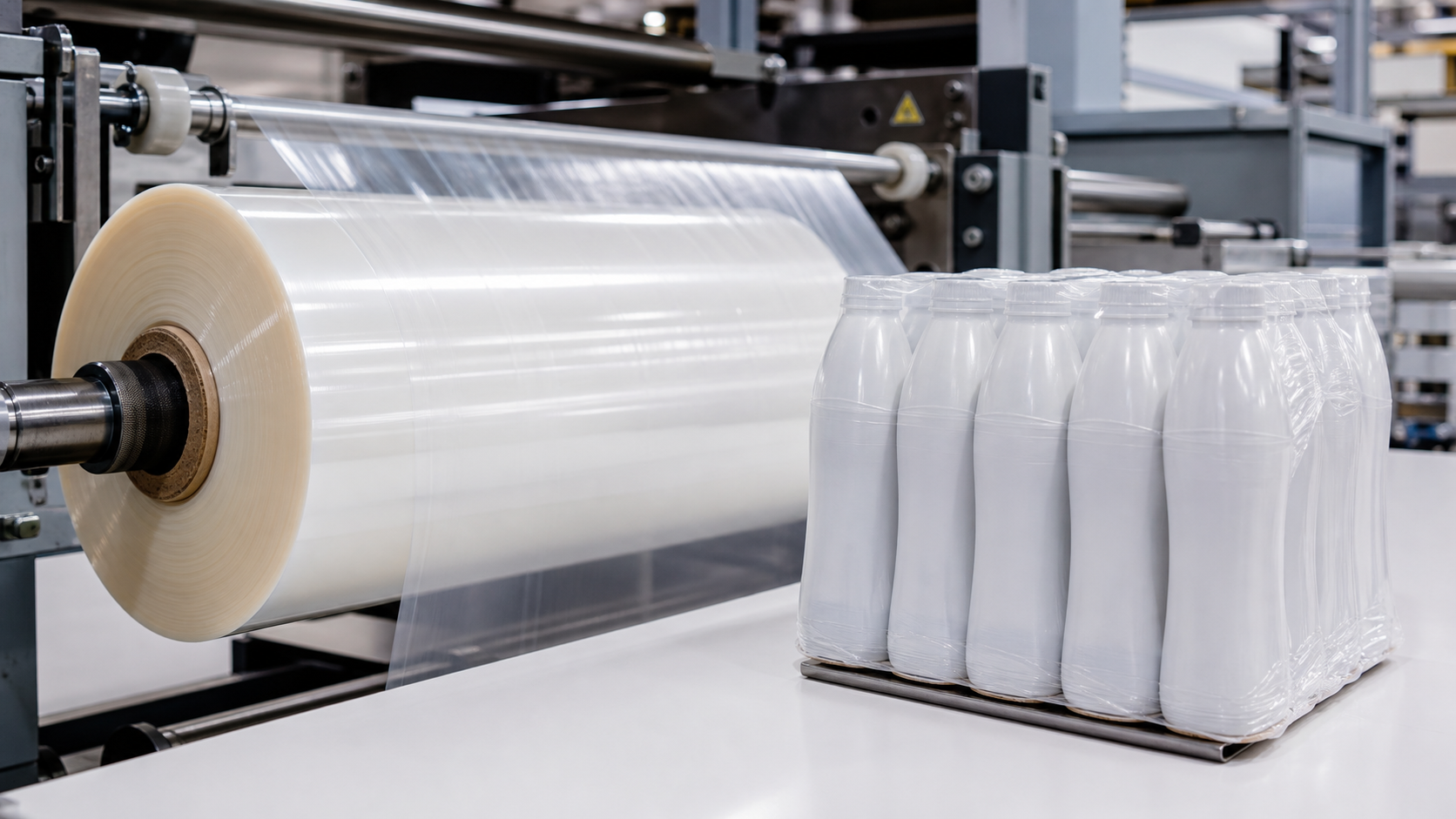
LDPE shrink film is commonly used to bundle and stabilize multiple products for distribution, retail display and warehouse handling. Typical applications include beverage multipacks, canned goods, cartons, bottles, personal-care products, household goods and industrial units. In many cases it functions as secondary or tertiary packaging: it groups already-packaged articles rather than replacing the primary package that directly protects the product.
That distinction matters. LDPE shrink film may improve bundle integrity, dust protection and shelf presentation, but it is not automatically the barrier, food-contact or tamper-evidence solution for every product.
Common LDPE shrink-film applications
Beverage and multipack bundling
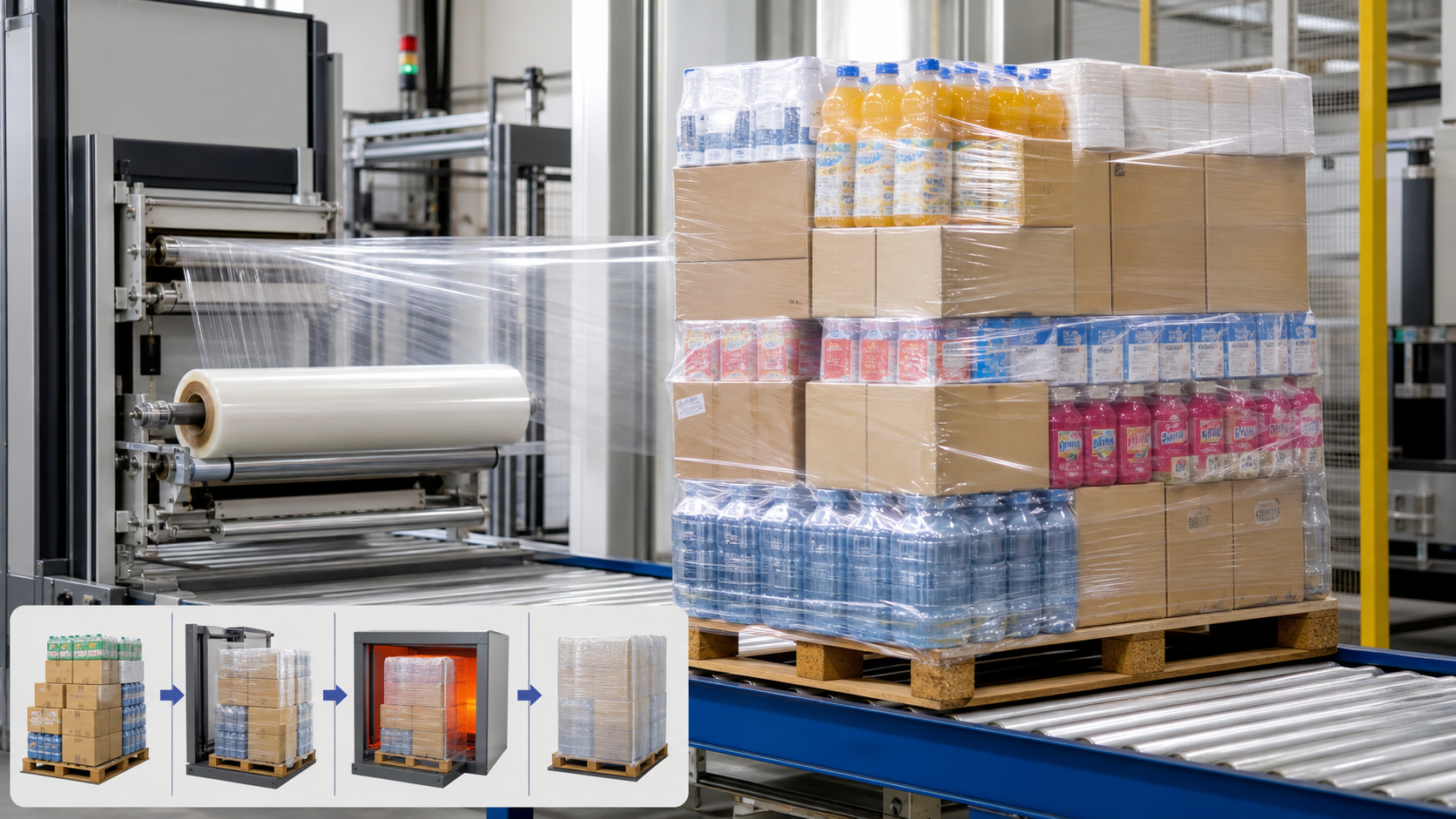
Water bottles, soft drinks, cans and other beverage formats are commonly collated into retail or transport packs using shrink film. The film must match the pack configuration, product weight, conveyor conditions and shrink tunnel. SABIC lists beverage, baby food, food cans and non-food bottles among common collation-shrink applications and notes LDPE’s importance in secondary and tertiary packaging. See SABIC’s shrink-film overview.
Cartons, trays and club-store packs
Shrink film can hold cartons or trays together for warehouse movement and retail-ready display. The desired result may be a tight, stable bundle rather than a fully enclosed retail package. Film thickness, shrink balance, sealing pattern and perforation should be selected around the actual pack, not a generic roll-width request.
Household, personal-care and non-food bottles
Shampoos, liquid soaps, cleaning products and similar bottles can be bundled with LDPE shrink film. The form may need sufficient puncture resistance around corners, caps and labels, as well as predictable shrinking so bottles stay upright and visually consistent.
Industrial and logistics packaging
LDPE shrink film is also considered for grouped components, hardware, boxed goods and other industrial products. In this context, buyers often prioritize load integrity, tear/puncture resistance, machine throughput, roll handling and pallet or transit conditions. It is not the same product as pallet stretch wrap: shrink film is designed to tighten when exposed to its specified heat process, while stretch film relies on elastic stretch and recovery.
Why LDPE is selected for these uses
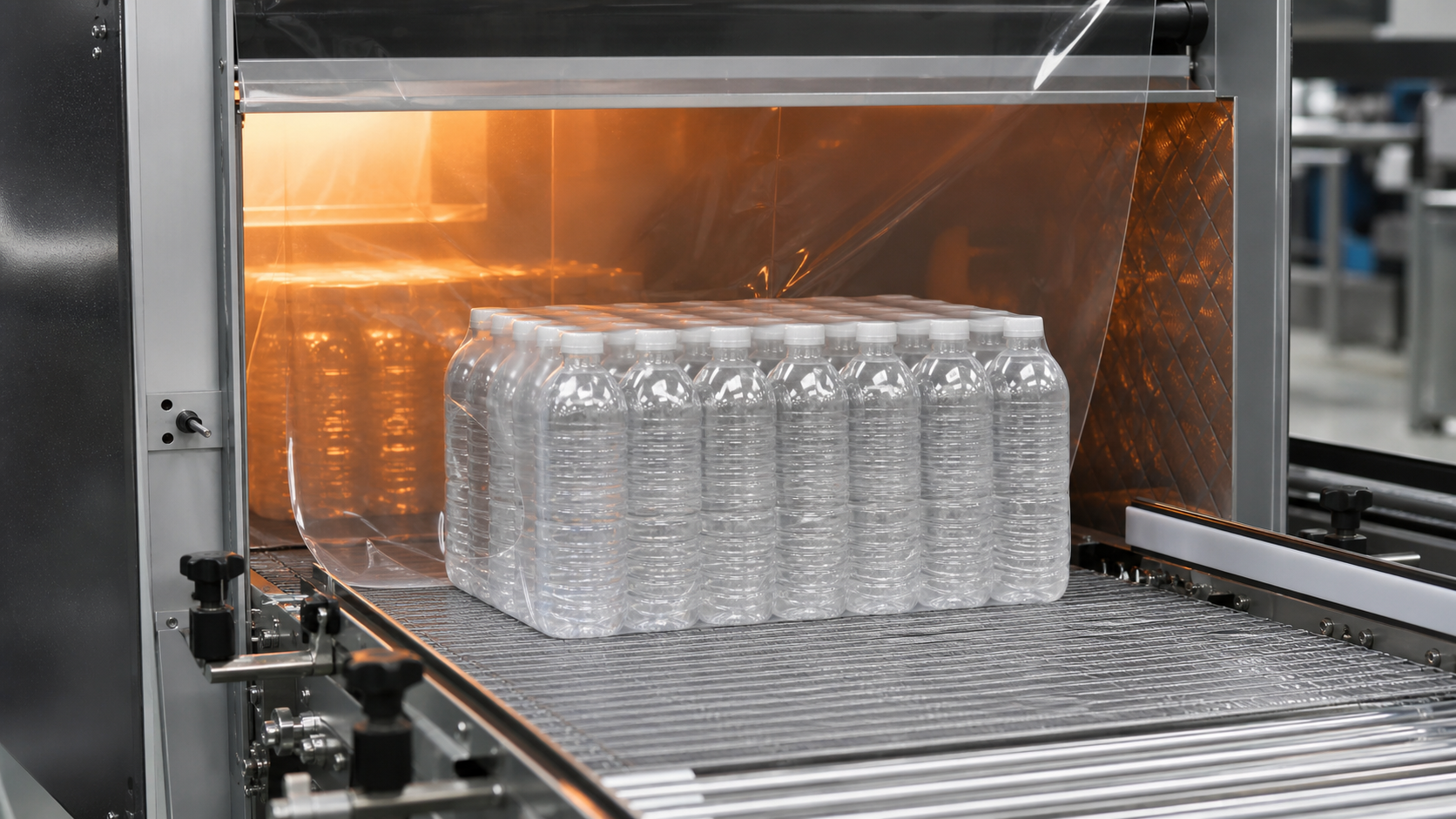
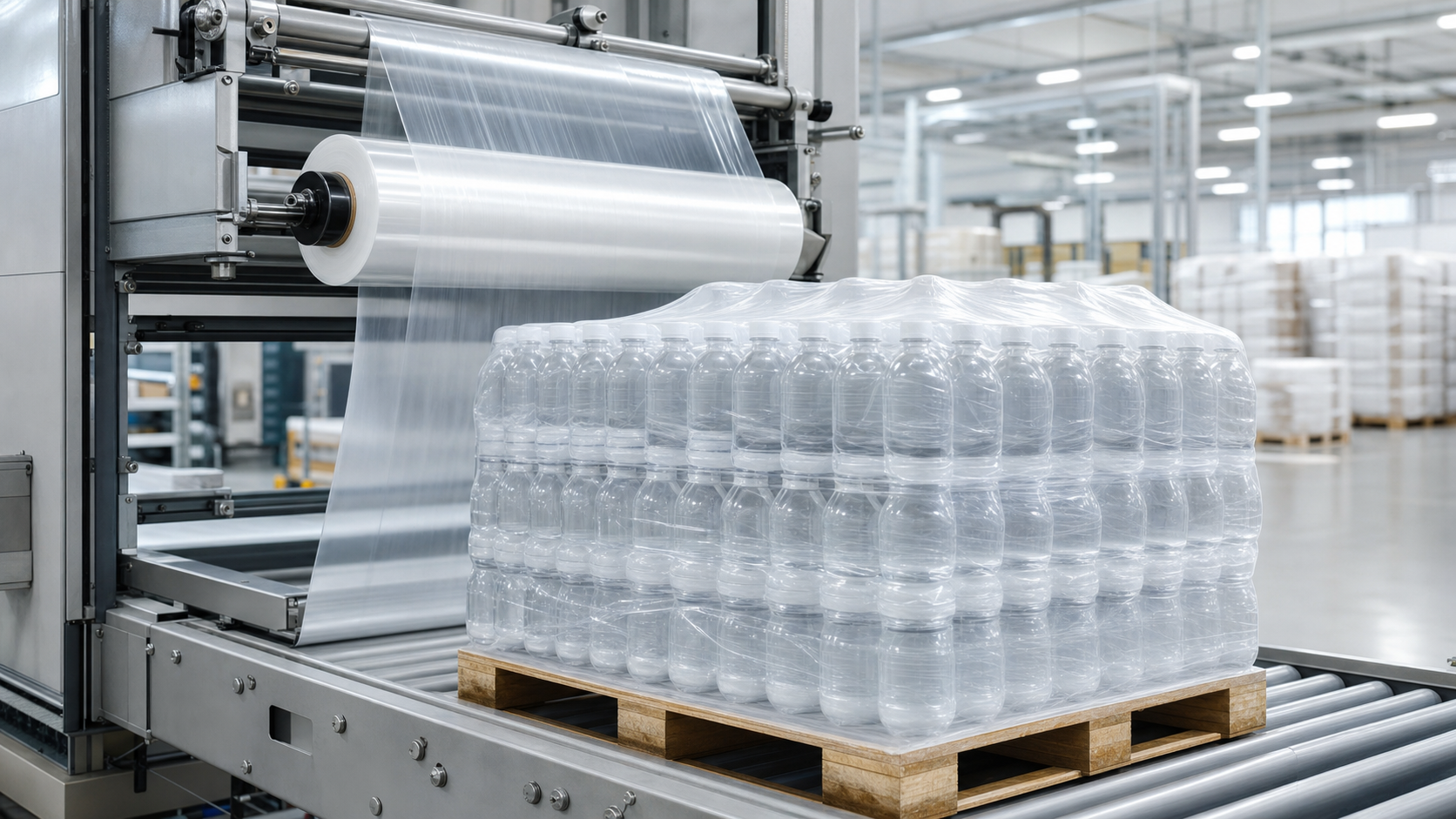
LDPE-based shrink structures can be engineered for toughness, flexibility, clarity, sealing and machine performance. But the correct grade is application-specific. A material supplier or converter may alter thickness, blend design, slip/antiblock package, UV treatment, color, printing, perforation and shrink behavior to suit the line and pack.
Plastotecnica, for example, describes mono- and co-extruded LDPE shrink films for automatic and semi-automatic packaging equipment. Review its product information. This is why purchasing should request the intended machine and production conditions, not merely a “shrink film” quotation.
| Application | Typical film objective | Critical validation points |
|---|---|---|
| Beverage multipack | secure bundle and shelf-ready presentation | pack weight, handle behavior, tunnel settings, puncture at bottle/can contact points |
| Carton or tray collation | stabilize grouped units | seal position, shrink balance, tray geometry, conveyor behavior |
| Personal-care bottles | hold irregular bottle profiles together | cap/shoulder puncture risk, print scuffing, upright stability |
| Industrial bundle | protect and unitize products in transit | tear resistance, corners, storage exposure, loading method |
| Retail promotional pack | make a clear, consistent multi-unit offer | clarity, graphics, pack appearance, label and barcode visibility |
What LDPE shrink film does not automatically solve

- Primary product preservation: oxygen, aroma, light and moisture barriers must be evaluated using the complete packaging structure.
- Food-contact compliance: the exact film, additives, inks and intended use require appropriate documentation for the market.
- Tamper evidence: a shrink bundle may provide visual indication, but the required tamper-evidence design must be defined and validated.
- Recyclability claims: collection depends on the finished package, contamination and local infrastructure; it should not be asserted from resin family alone.
- Pallet containment: stretch wrapping may be the more appropriate process for a pallet-load requirement.
A practical supplier brief
Give a shrink-film supplier enough line information to engineer the right result:
1. Product type, dimensions, weight and pack count. 2. Pack geometry: unsupported bundle, tray, pad, carton or other support. 3. Required film format: centre-fold, single-wound, tubular/layflat or pre-perforated—only after the equipment setup is known. 4. Sealer and heat-tunnel model, line speed, sealing temperature and available controls. 5. Desired appearance, printing, UV exposure, storage and transport conditions. 6. Required tests: shrink force/ratio, seal strength, puncture, tear, COF, gauge control and pack-drop or transit tests as appropriate. 7. Compliance market and required documentation.
Why machine trials matter
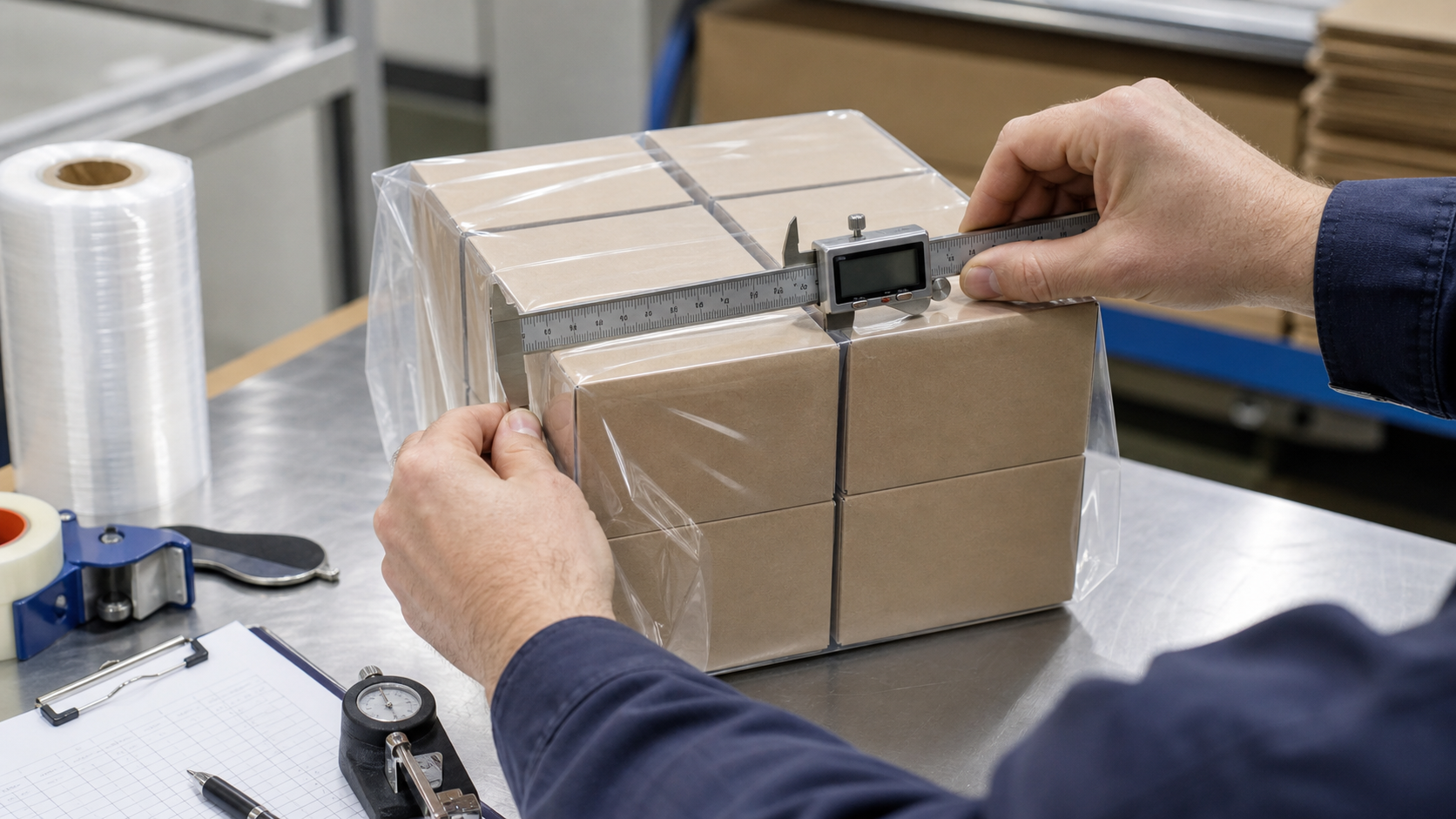
Shrink packaging performance depends on the interaction of film, product shape, sealer, tunnel temperature, airflow, dwell time, conveyor speed and operating practice. A laboratory film value is useful, but it cannot prove a finished bundle will run consistently. Test the proposed construction on the intended production line and document the approved settings.
How Should a Buyer Convert This Topic into a Clear Requirement?
Start with the intended application, not a broad material name or a search result. Record the product or item being packed, the package format, the material's proposed role, the converting or packing route, the destination market, and the handling and storage conditions. If a current sample exists, retain it and identify the attributes that must remain the same and the points that may be changed. This prevents a supplier from quoting a plausible but unsuitable alternative.
State the operational question in practical terms. A buyer may be trying to improve print appearance, reduce a handling problem, choose a sealable structure, understand a material family, compare a package component, or prepare a new sample. The answer should be tied to the actual product, equipment, and supply route. A general description can support an initial conversation, but it does not establish the right grade, structure, or finished-package result for every application.
What Evidence Should Be Requested Before a Sourcing Decision?
Ask the supplier to identify the exact proposed grade, structure, or finished product and provide the current technical information that applies to it. Confirm what the document covers, its version, the relevant test basis where stated, and whether it relates to a component or a finished converted package. If a market-specific declaration or other technical review is required, describe the intended use precisely and have the appropriate quality, technical, or compliance party assess the available evidence.
Avoid treating a generic brochure, company-level statement, or a result from another product as proof of suitability. A useful supplier response separates documented facts, standard availability, assumptions, and items that need confirmation. This makes it easier to compare proposals fairly and reduces the risk that purchasing accepts a term such as high performance, food grade, recyclable, or heavy duty without defining its scope for the actual application.
Why Is a Representative Sample or Trial Important?
Material and package performance is created by the complete system. Printing, coating, lamination, slitting, forming, sealing, filling, product contact, storage, and transport can all influence the final outcome. Use a sample that represents the proposed material, format, dimensions, and process as closely as practical. Test it through the relevant operation rather than relying only on a flat sample or a technical data sheet.
Agree the inspection points before the trial. Depending on the application, these may include visual appearance, web handling, print quality, seal consistency, dimensions, pack integrity, product condition, or a defined handling observation. Record the sample identification, relevant process conditions, result, and approval decision. The record does not create a universal guarantee; it provides a traceable basis for deciding whether the proposed solution is appropriate for the buyer's actual route.
Related CHALVO resources
- Can High-Shrink PETG Film Improve Energy Drink Bottle Sleeve Fit Checks?
- How Should Buyers Choose PETG Shrink Sleeve Film for Bottle Labels?
- How Should Buyers Choose Shrink Sleeve Film for Small Bottles?
FAQ
Is LDPE shrink film used for food packaging?
It is often used to bundle food containers or cans as secondary packaging. Whether an exact film is suitable for direct food contact depends on the specific finished material, market and intended conditions of use.
Is LDPE shrink film the same as stretch film?
No. Shrink film is designed to contract under a controlled heat process. Stretch film secures a load through stretching and recovery.
Can LDPE shrink film be printed?
Some formats can be printed, but ink system, design, heat exposure, rub resistance and machine process must be validated with the supplier.
How do I choose thickness?
Choose through a pack and line trial. Weight, corners, product shape, shrink conditions, desired appearance and distribution loads all influence the correct gauge.
Bottom line
LDPE shrink film is widely used to unitize bottles, cans, cartons, trays, household goods and industrial items for retail and logistics. Its best use is as a qualified secondary or tertiary packaging system: specify the actual pack and machinery, request application-relevant test evidence, and validate on the line before approval.
For a tailored LDPE shrink-film recommendation, provide your pack configuration, machine details, line speed, target market and distribution conditions. Those inputs are more useful than a generic request for “shrink wrap.”