How to Select a BOPP Film Roll: Width, Winding and Converting Conditions
A BOPP roll can match the requested material name and still fail before meaningful production begins. The wrong width, core, winding orientation, splice...

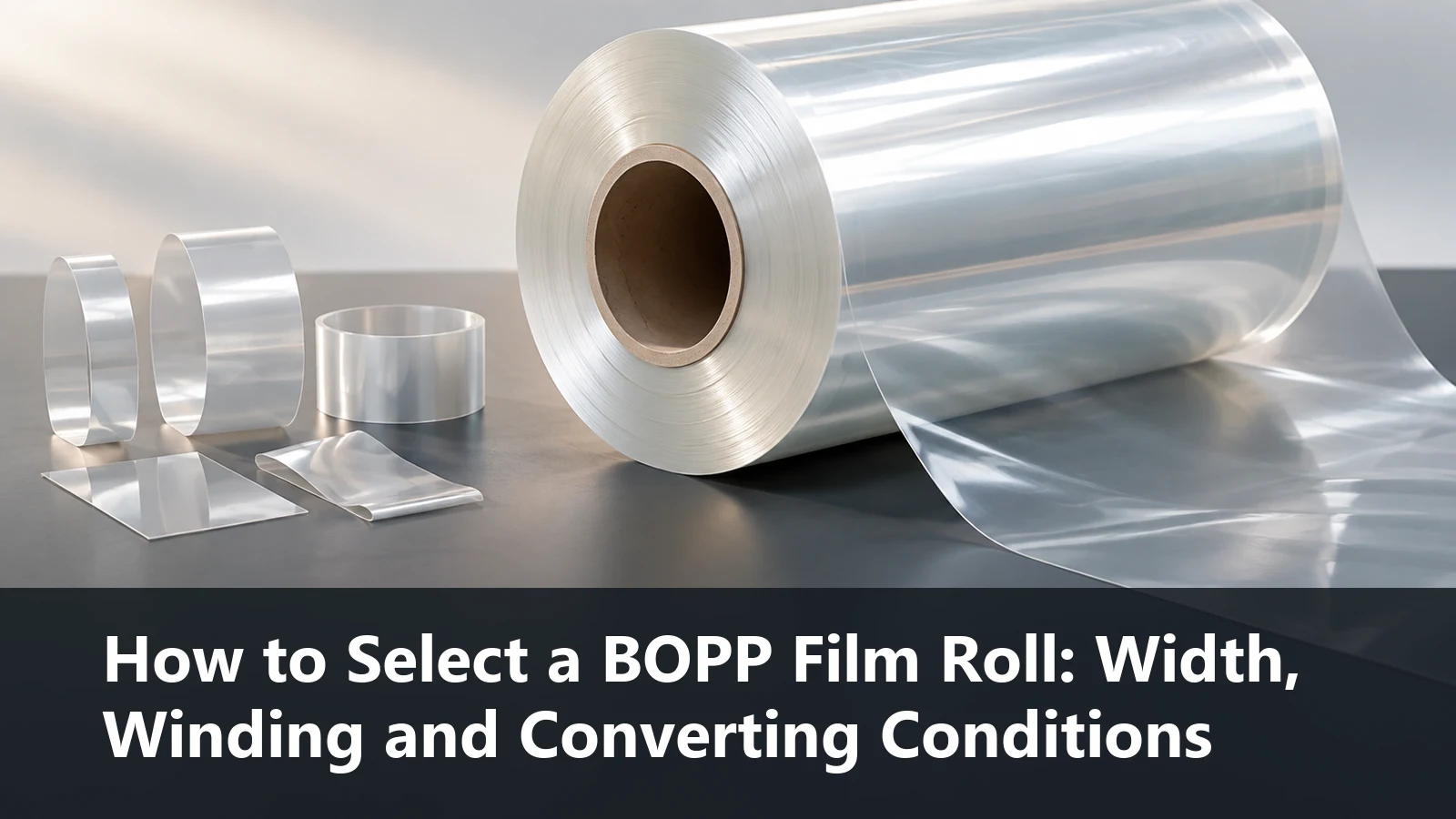
A BOPP roll can match the requested material name and still fail before meaningful production begins. The wrong width, core, winding orientation, splice control, or handling condition can create downtime, waste, tracking problems, or printing and sealing defects.
Selecting a BOPP film roll means specifying more than film type and thickness. Buyers should define the roll format, winding direction, treated side, machine path, conversion conditions, and acceptance checks before approving a sample or production order.
This guide focuses on the practical questions that help a converter receive a roll it can actually run.
Why is a BOPP film roll specification more than width and thickness?
Width and nominal thickness are essential, but they do not fully describe how a roll behaves on a printing, lamination, slitting, or packaging line.
A workable specification links the roll to the actual machine and application. It usually needs to cover:
- Exact grade and the role the film will perform in the final structure.
- Nominal thickness and relevant tolerance requirement.
- Roll width, allowable width tolerance, and usable web width.
- Core internal diameter, roll outside diameter, and any machine limits.
- Winding direction, unwind orientation, and treated or printable side.
- Roll length or mass basis, as agreed for the project.
- Splice policy, edge condition, roll labeling, packaging, and handling controls.
- Storage and conditioning requirements before conversion.
A generic statement such as “BOPP, 20 mic, 500 mm” leaves unanswered questions that can matter the moment the roll reaches the unwind stand.
What should buyers confirm about roll width?
Start with the machine’s usable web width, not only the nominal product width.
The web has to fit the unwind stand, guide system, print repeat or pouch layout, slitting plan, and edge-trim allowance. A width selected solely from a finished pack dimension may leave no allowance for conversion or may produce unnecessary trim waste.
Ask the converter to confirm:
| Width question | Why it matters |
|---|---|
| Required finished web width | Establishes the usable material requirement after any planned conversion |
| Permitted width tolerance | Prevents a nominal-width agreement from becoming a line-fit problem |
| Edge-trim allowance | Affects yield, print registration, slitting, and final usable width |
| Maximum and minimum machine width | Ensures the roll can be loaded and controlled on the actual equipment |
| Printing and pouch layout | Links web width to repeat length, registration, and seal geometry |
| Slitting plan | Confirms how parent rolls become the final machine-ready rolls |
Do not invent a tolerance from a similar roll. Confirm the requested tolerance with the actual grade, width, supplier capability, and inspection method.
Why do core size and roll outside diameter matter?
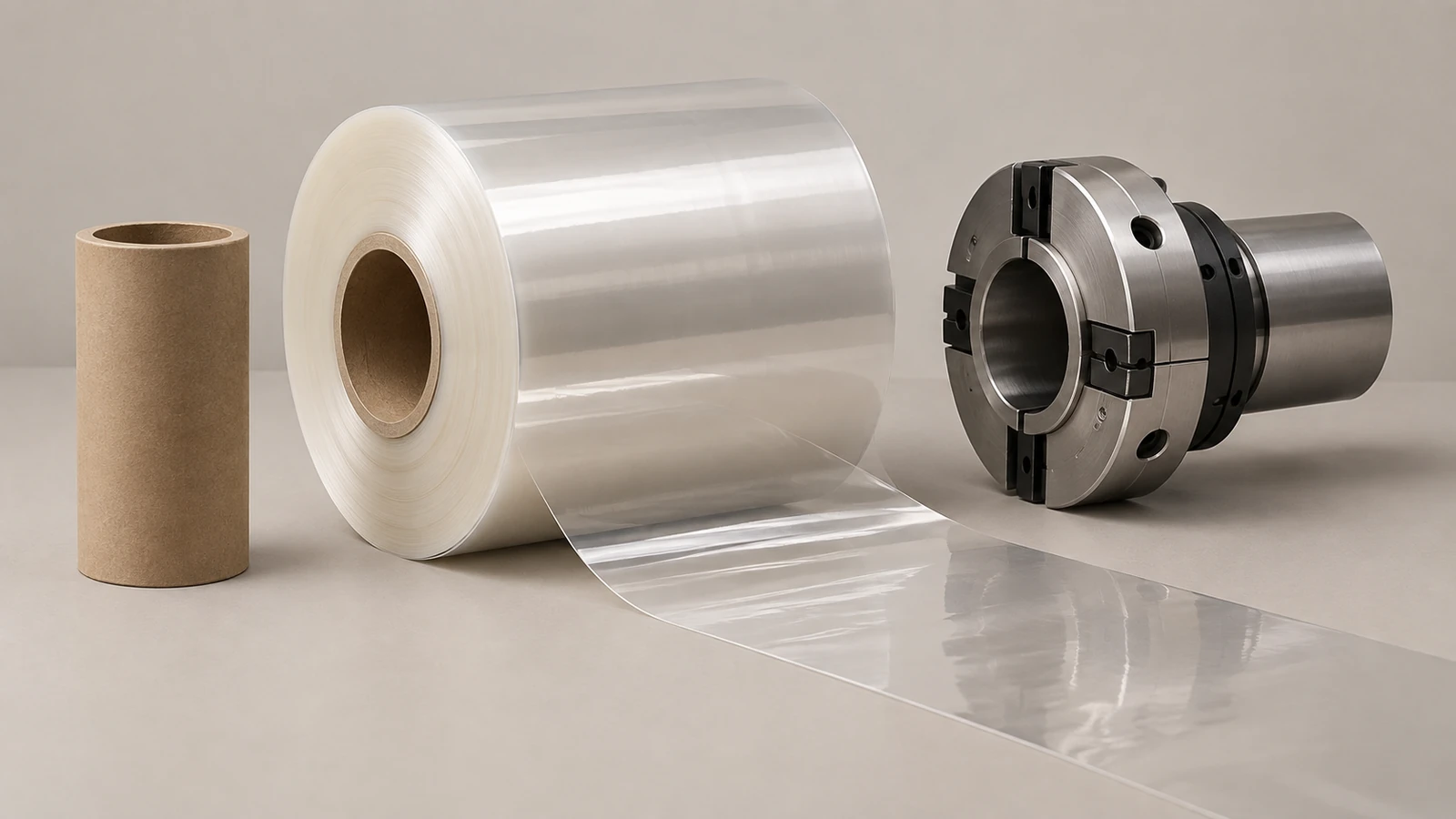
The core and roll outside diameter determine whether the roll can be mounted, unwound, and controlled safely on the intended equipment.
A machine may have physical limits for shaft design, chucks, lift equipment, maximum roll diameter, roll mass, and braking or tension control. Even if a roll can be mounted, its starting diameter and remaining diameter can influence tension settings and changeover planning.
Record the following before ordering:
- Required core internal diameter and core material or strength requirements.
- Maximum roll outside diameter and maximum roll mass for the unwind station.
- Minimum remaining diameter that the line can use efficiently.
- Whether the machine uses shafts, chucks, shaftless unwind, or another interface.
- Roll handling equipment and any carton, pallet, or lift constraints.
- The agreed roll-length or roll-mass basis and how it will be measured.
A calculated roll length can be useful for planning, but it remains an estimate unless it is based on the agreed width, thickness, core, outside diameter, and actual inspection basis.
What is winding direction, and why should it be specified?
Winding direction identifies how the web unwinds and which face reaches the process side first. It is especially important when a BOPP web has a treated, printable, coated, matte, heat-sealable, or otherwise functional surface.
If the intended face is on the wrong side for the machine path, the team may need to rethread, reverse the roll, or print or laminate on an unintended surface. The problem may appear only after a trial starts.
Use an agreed winding diagram or plain-language reference that identifies:
- Which side faces outward on the roll.
- Which side reaches the first process contact point.
- The web direction through the printer, laminator, slitter, or packer.
- The intended treated, printable, sealable, coated, or matte face.
- The unwinding direction as seen from the operator side.
Avoid relying on terms such as “inside” or “outside” without a diagram. They can mean different things across suppliers and machines.
How does the treated side affect a roll decision?
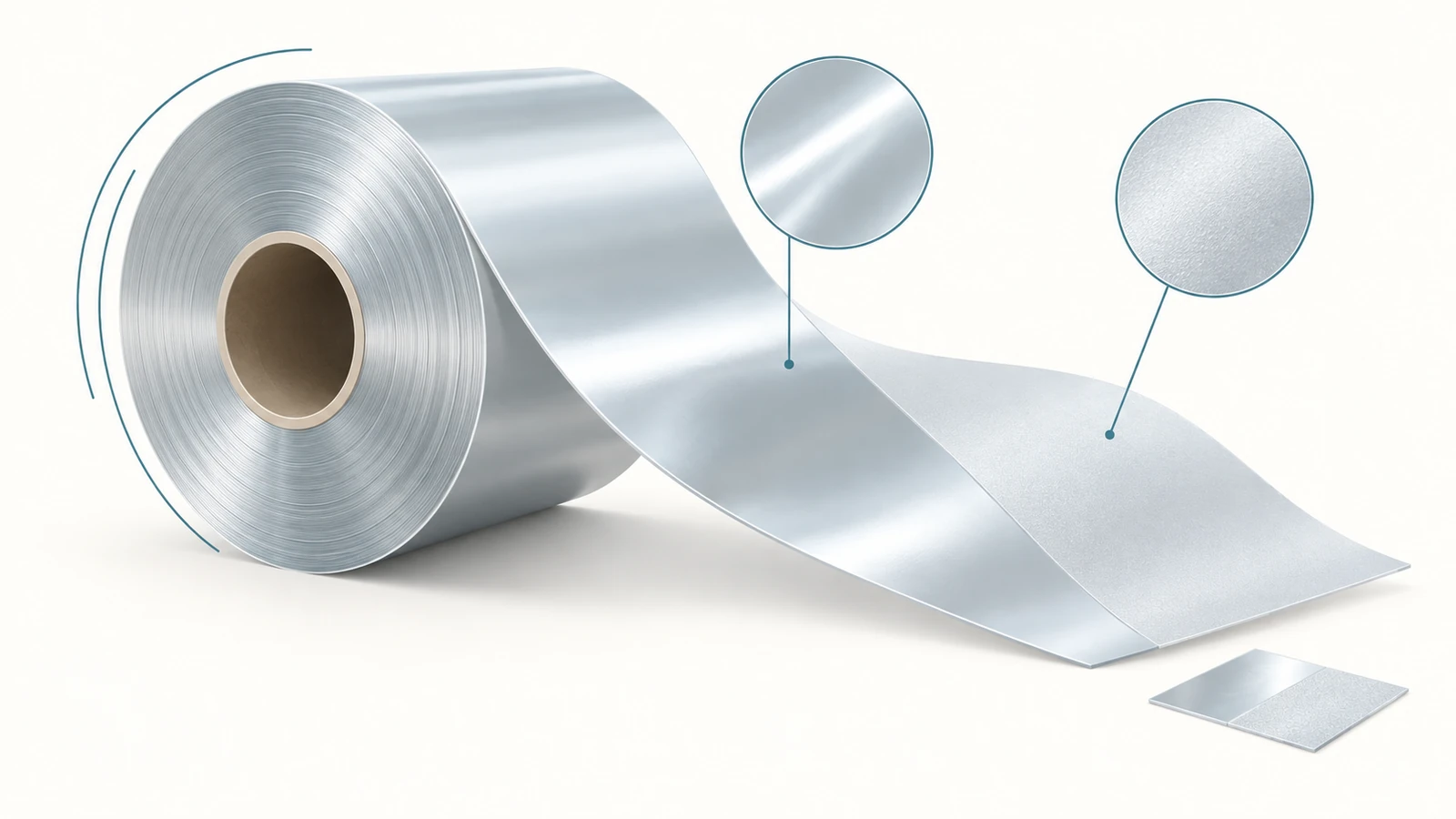
A treated side may be intended to receive printing, coating, or lamination. It is not a universal guarantee of ink adhesion or adhesive performance.
For printable BOPP, identify the exact treated side and its position on the roll. Then align that information with the actual ink system, coating, adhesive, cure conditions, storage history, web tension, and machine speed.
A buyer should request current grade-specific information and ask:
- Which side is treated, and how is it marked on the roll and documentation?
- What processing route is the surface intended to support?
- What storage guidance applies before conversion?
- Which test method and conditions apply to any stated surface property?
- Has the proposed ink or adhesive system been evaluated for this exact structure, or is a project trial required?
The same principle applies to a matte, metallizing-base, lamination, or heat-sealable BOPP grade. A surface category describes a possible role; it does not replace full conversion or finished-package validation.
What roll defects and handling controls should be discussed?
A roll can be technically correct on a TDS and still lose value through damage or poor handling. Record the condition of the roll before it reaches the line.
| Check | What to record |
|---|---|
| Roll identity | Grade, roll ID, batch reference where provided, width, nominal thickness, and quantity |
| Edge condition | Dents, telescoping, crushed edges, loose winding, or visible contamination |
| Core condition | Damage, deformation, moisture exposure, or fit concern |
| Splices | Allowed number, marking method, position reporting, and whether the line can safely manage them |
| Packaging | Core protection, edge protection, wrap, carton or pallet arrangement, and transit restraint |
| Storage | Ambient conditions, stacking method, time before conversion, and any supplier guidance |
| Delivery inspection | Photos, measurements, count, labels, and a documented nonconformance process |
Do not attribute tracking, wrinkles, blocking, or print defects to the film before recording roll condition, machine settings, tension, static, speed, and conversion history.
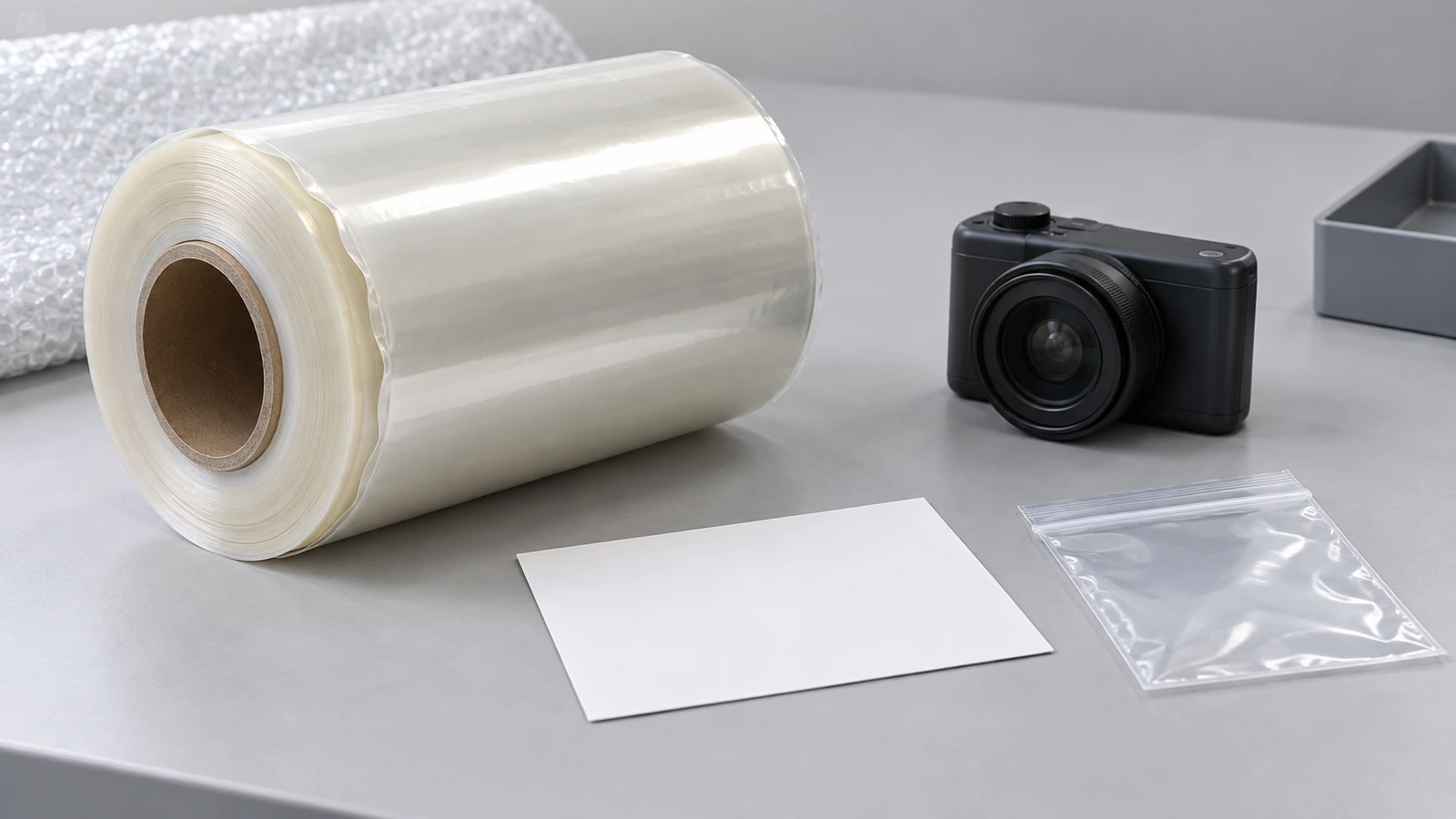
How should BOPP roll specifications differ by application?
The material name may be the same while the roll questions change.
| Application | Priority questions |
|---|---|
| Printing and lamination | Treated side, print orientation, width, edge trim, tension, static, winding, adhesive and cure route |
| High-speed flow wrap | Roll OD, core, splice control, COF context, tension, speed, seal interface, and web tracking |
| Carton overwrap | Fold geometry, surface appearance, winding, seal method, static, scuff exposure, and roll width |
| Label conversion | Face treatment, print process, slitting plan, die-cutting interface, winding direction, and roll format |
| Metallizing or specialty conversion | Base-web identity, surface condition, roll handling, process compatibility, and downstream laminate role |
A roll format that works at a low-speed evaluation line may not be suitable for a production line. Treat the machine and final conversion route as part of the product specification.
How should buyers plan a first BOPP roll trial?
Use a controlled trial that records both the roll and the line.
1. Define the baseline: current grade, roll format, machine setup, web path, tension, speed, and the problem or objective. 2. Confirm the incoming roll: measure or document width, core, outside diameter, labels, winding, surface orientation, edge condition, and splices. 3. Set acceptance criteria before running: registration, tracking, appearance, splice handling, downstream conversion result, and any package-level check. 4. Change one variable at a time where practical. Do not replace the film, alter tension, change temperature, and adjust speed simultaneously. 5. Share the full record with the supplier or converter. Include roll IDs, photos, line settings, sample result, and the first observed failure location.
A roll-level check supports a better trial. It does not by itself approve the printed laminate, sealed pack, or end-use performance.
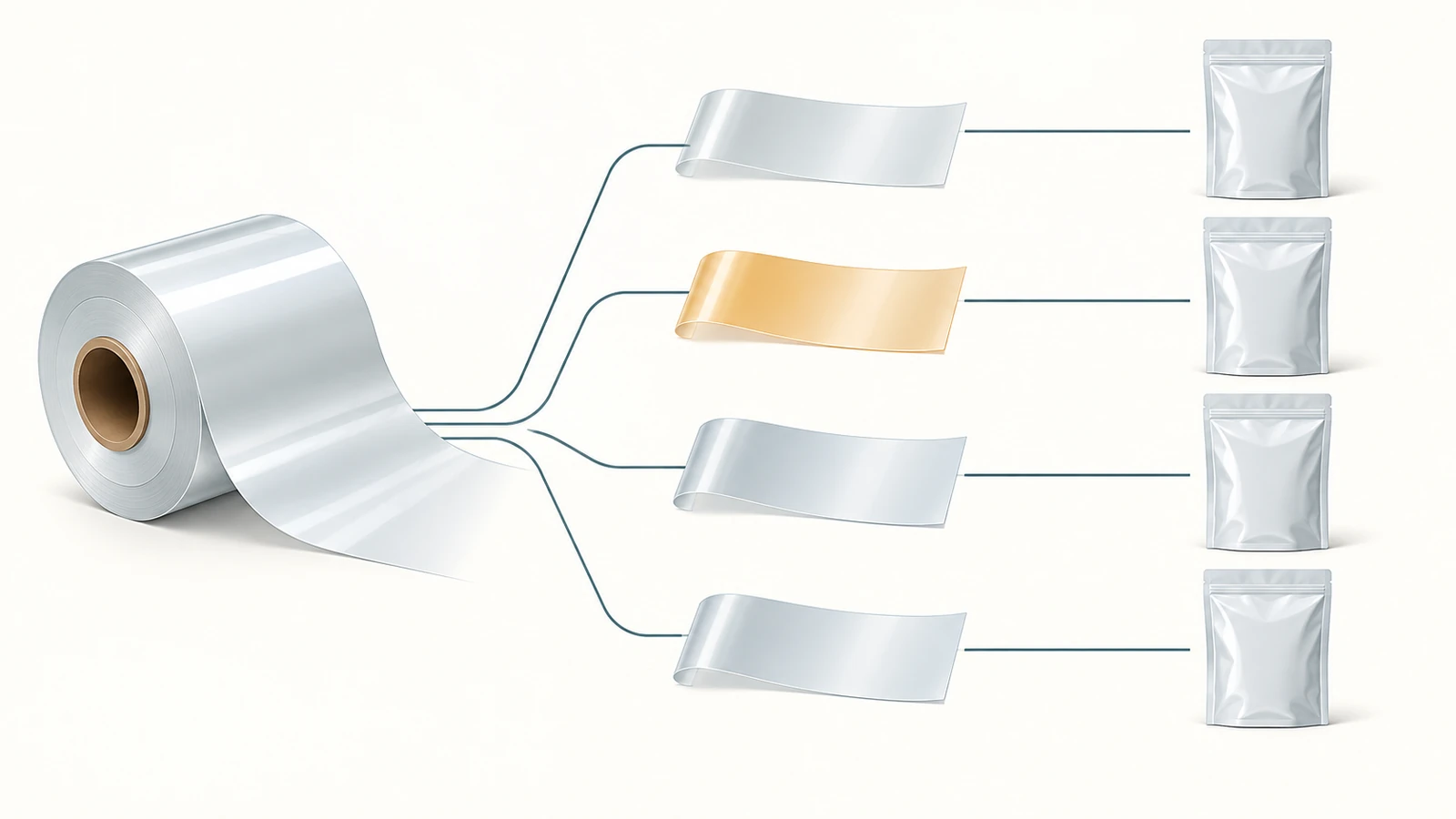
BOPP roll RFQ checklist
Include these details in a quotation or sample request:
- Exact intended application and the BOPP web’s role in the final structure.
- Grade requirement, nominal thickness, target width, and the tolerance to be agreed.
- Core size, maximum roll OD, estimated or agreed roll mass/length, and machine loading limits.
- Winding direction with a diagram, including the treated, printable, sealable, coated, or matte side.
- Machine type, speed range, tension system, static controls, web path, and slitting or printing layout.
- Splice expectation, edge condition, labeling, packaging, pallet, and storage requirements.
- Target market, required documents, sample scope, test method, and acceptance criteria.
CHALVO can help coordinate the questions needed for candidate grades, current documents, and sample scope. Final roll format, current availability, and conversion performance must be confirmed for the exact supplier, grade, machine, structure, and project.
FAQ
Does a wider BOPP roll always reduce cost?
Not necessarily. A wider parent roll may change trim waste, slitting yield, machine fit, handling, and minimum order conditions. Compare the full conversion route rather than width alone.
Can I specify winding direction without a diagram?
You can, but it creates avoidable ambiguity. A simple agreed diagram that shows unwind direction and surface orientation is safer for the supplier, converter, and operator.
Is a TDS enough to approve a BOPP roll?
No. A TDS helps identify a grade and its stated properties. A roll approval also needs agreed dimensions, winding, surface orientation, inspection criteria, and a relevant line trial.
Summary
A BOPP roll is a machine-ready input, not only a film grade. Specify its width, core, outside diameter, winding direction, surface orientation, and handling controls alongside the material. Then validate the roll on the real conversion line before production approval.