Anti-Fog Lidding Film for Mushroom Trays Condensation Checks
Condensation can make fresh mushroom trays look wet, unclear, or poorly controlled. Buyers need more than the phrase "anti fog film." They need a practical...

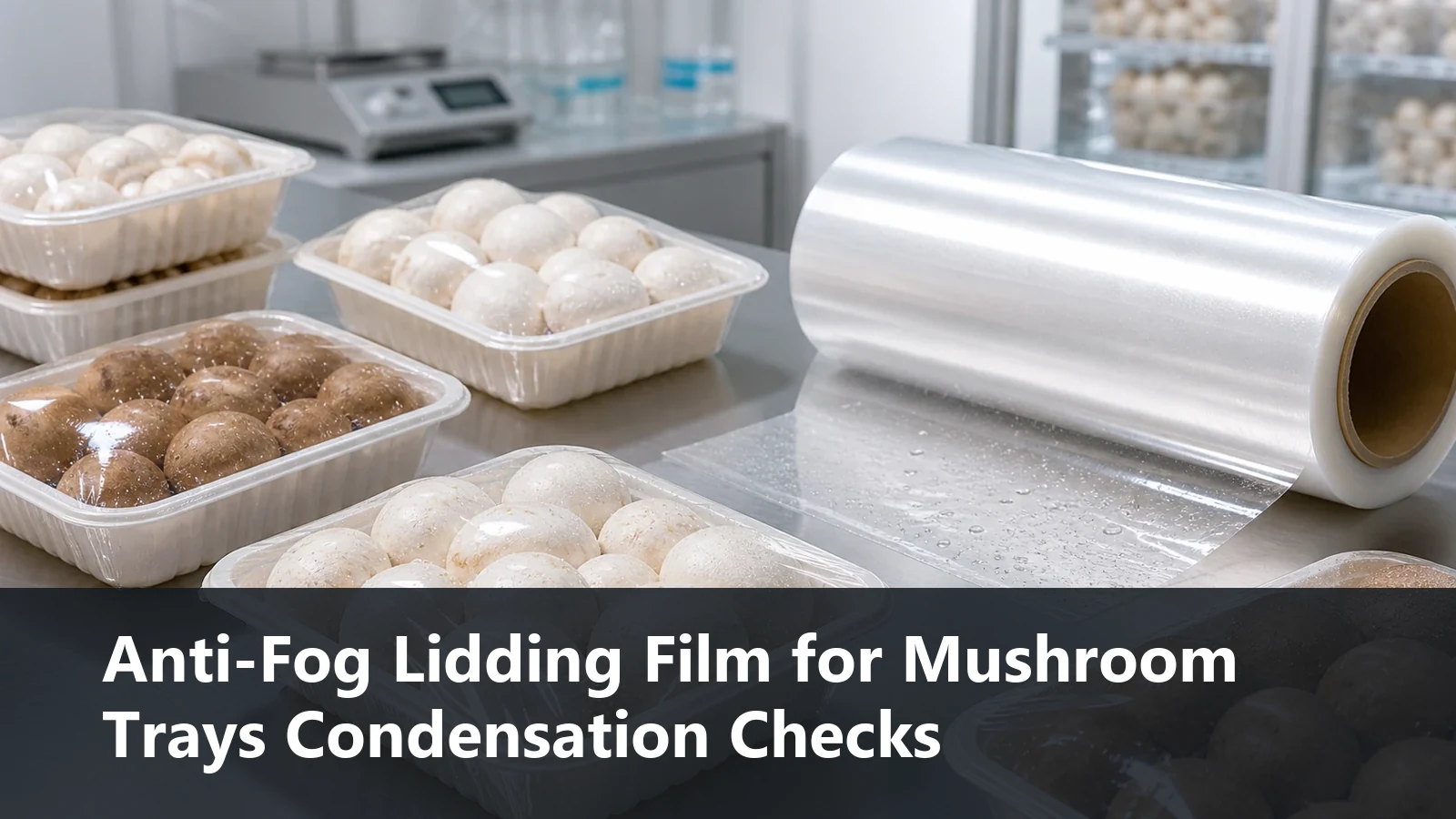
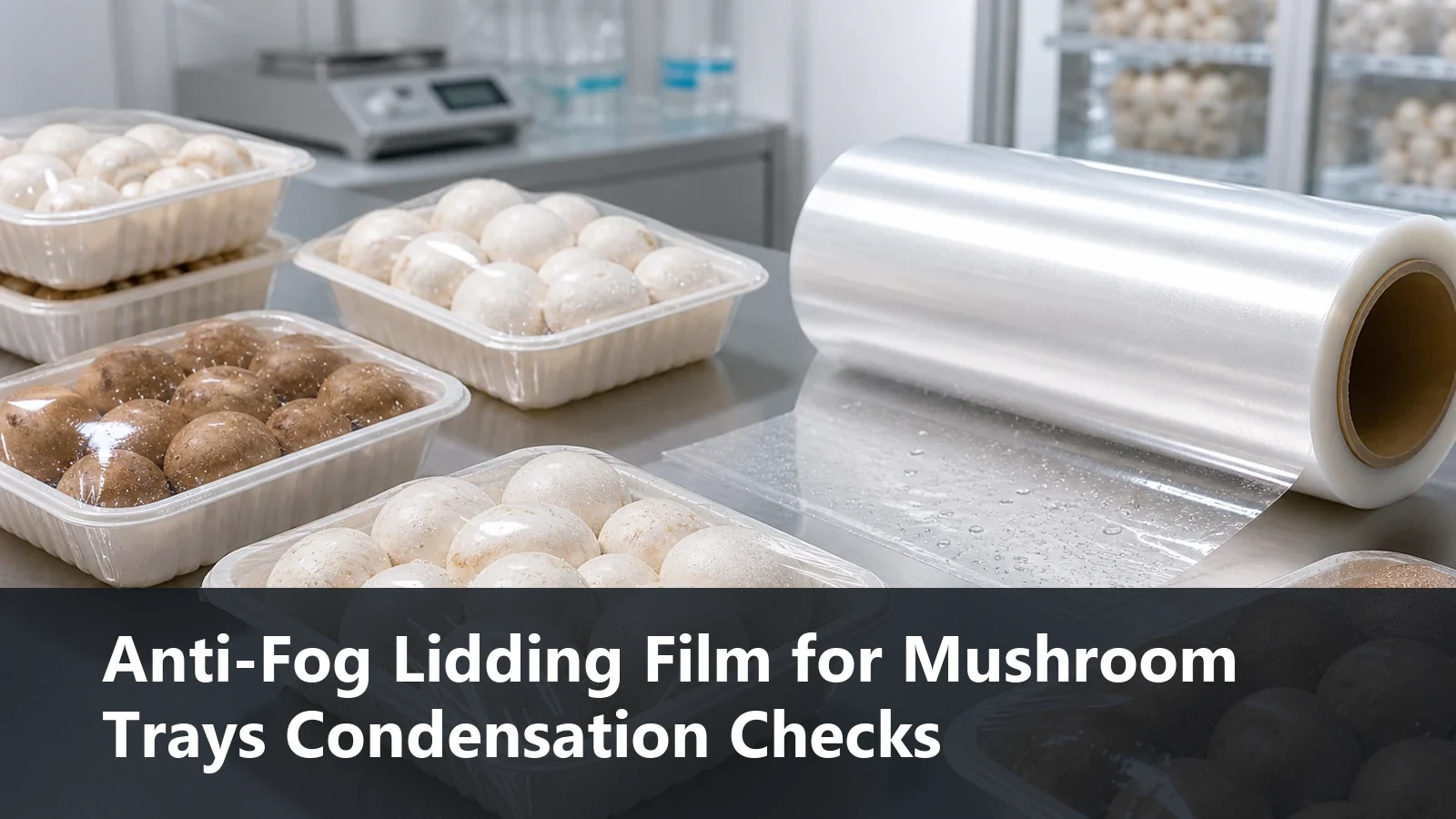
Condensation can make fresh mushroom trays look wet, unclear, or poorly controlled. Buyers need more than the phrase "anti-fog film." They need a practical check of tray format, seal behavior, storage condition, and proof before approving samples.
Anti-fog lidding film for mushroom trays should be checked as an application-specific packaging structure, not as a generic clear film. Buyers should confirm tray material, chilled humidity, sealing route, anti-fog expectations, and whether the final CHALVO grade has current TDS or sample data for the exact pack.
The questions below help procurement, QA, and packaging teams brief CHALVO without inventing unsupported performance numbers.
Why Does Condensation Matter in Fresh Mushroom Trays?
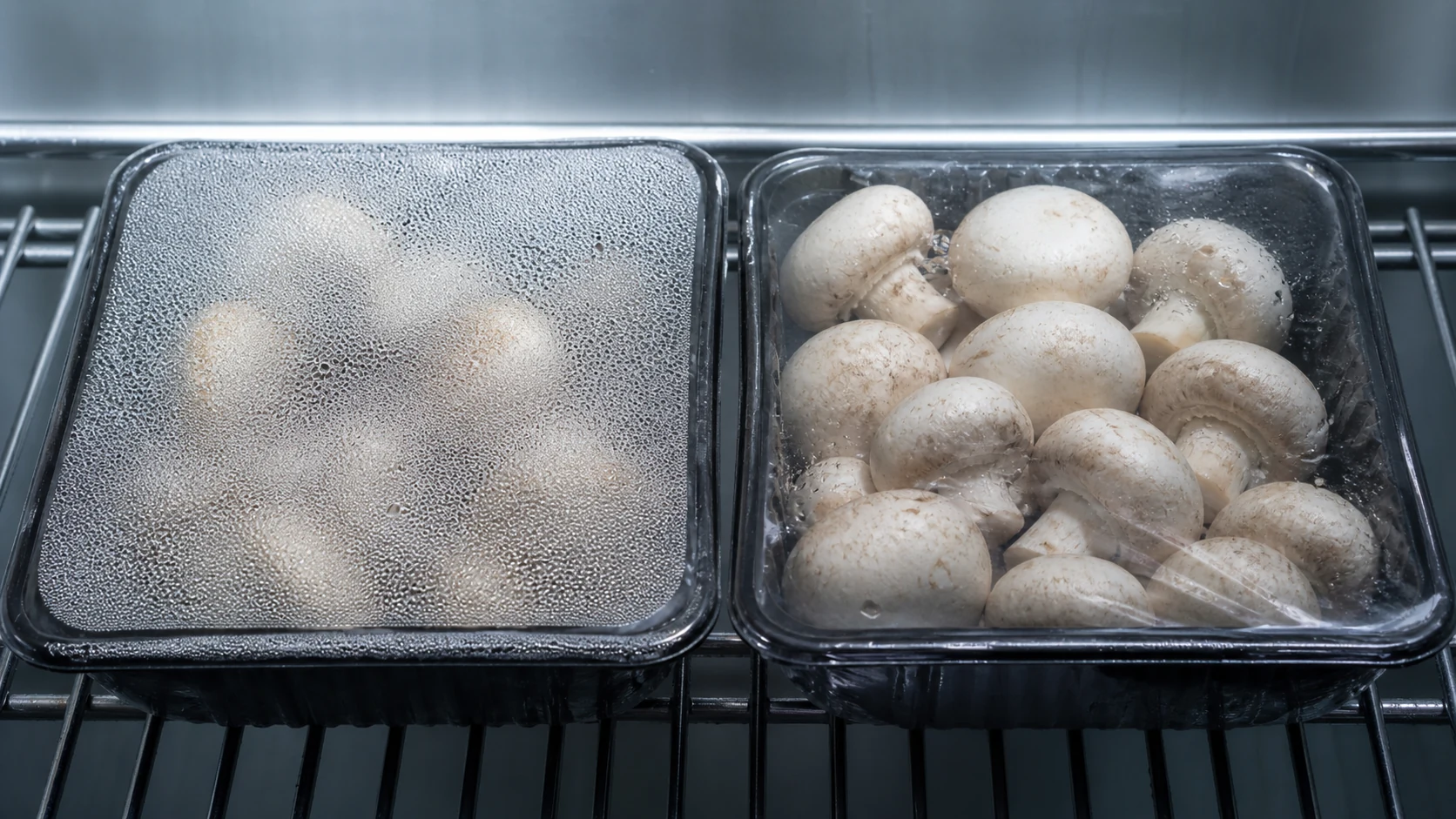
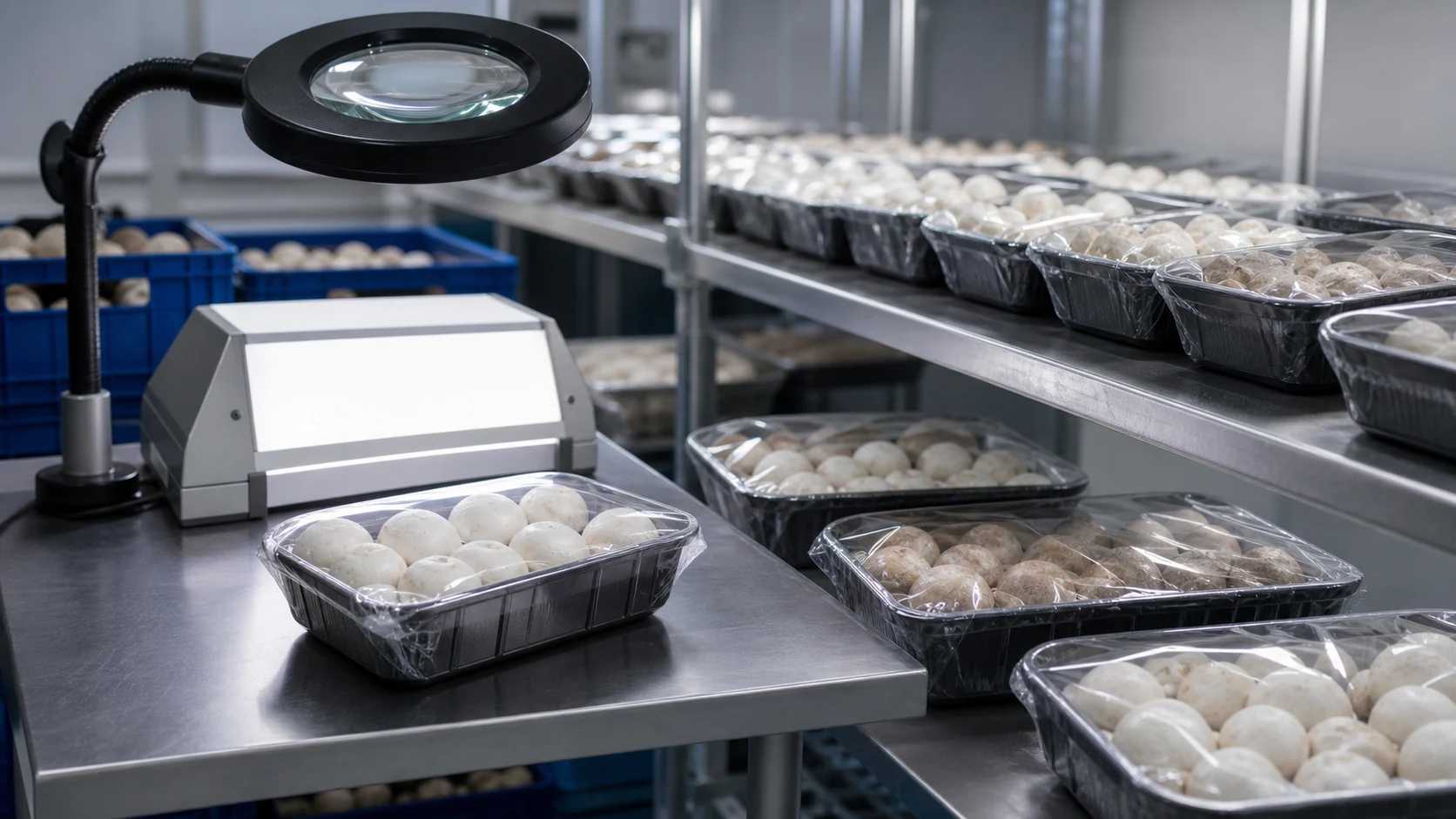
Condensation matters because mushrooms are moisture-sensitive and buyers still need clear retail visibility. If fog forms on the lidding film, the tray may look less fresh even when the product itself has not changed.
For a B2B buyer, this is not only a visual problem. It can affect receiving checks, retail inspection, customer confidence, and complaint handling. The useful question is whether the selected anti-fog lidding film can support the real pack condition, not whether anti-fog language appears on a supplier page.
What Should Anti-Fog Lidding Film Do for Mushroom Trays?
Anti-fog lidding film should help maintain clearer tray visibility while still fitting the sealing and handling requirements of the mushroom tray. It should be reviewed together with the tray, product, machine route, storage condition, and requested shelf-life target.
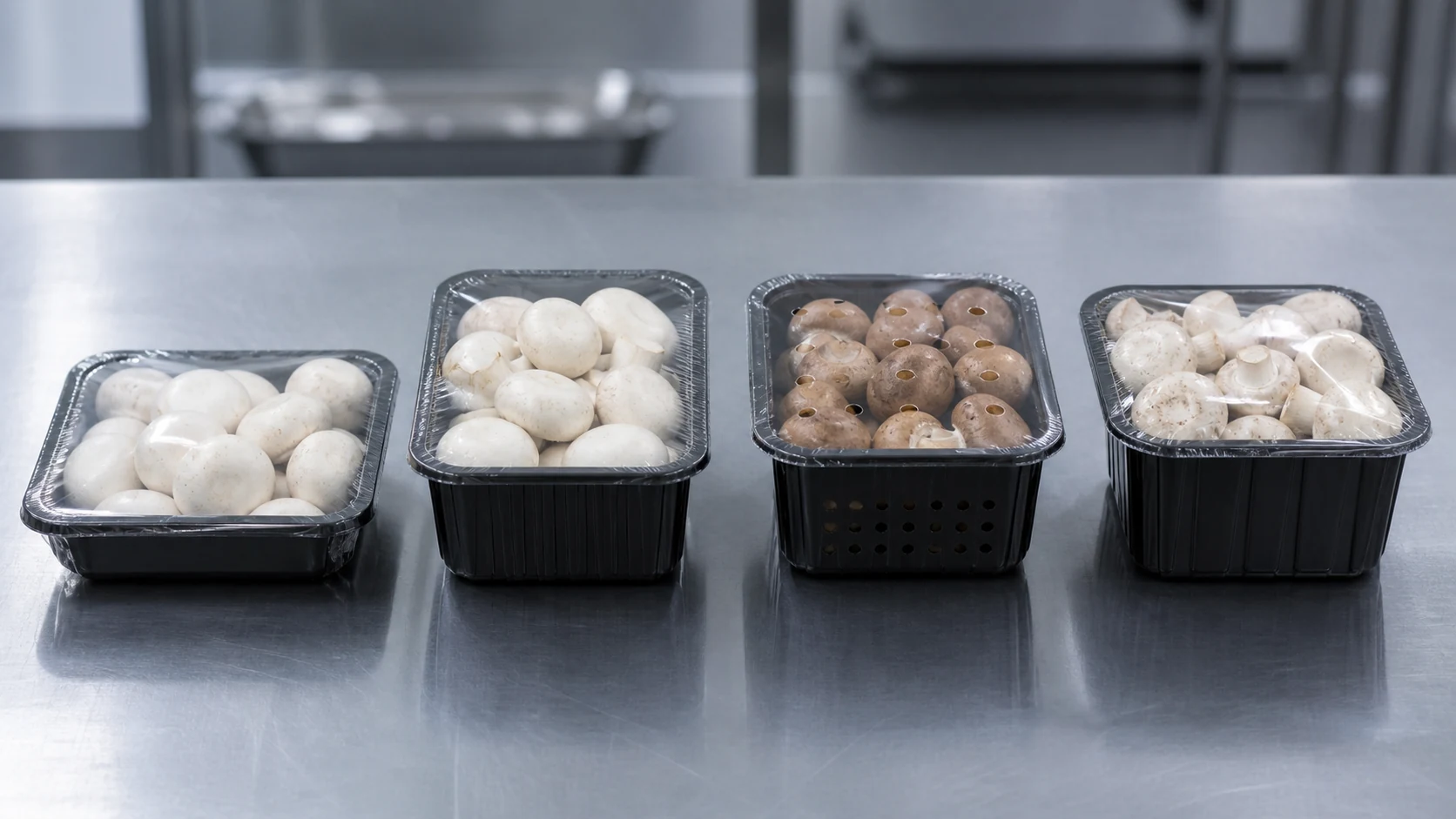
For CHALVO discussions, the film role should be defined as a lidding web with anti-fog surface behavior and tray seal compatibility. If the buyer also needs peel behavior, weld behavior, perforation, respiration control, or a specific laminate direction, those requirements should be stated before sampling.
Which Condensation Checks Should Buyers Complete Before Sampling?
Buyers should check the real package conditions before asking for a final quotation. A film that looks suitable in a general product list may still fail if the tray, sealing line, filling condition, or chilled storage environment is different.
Key checks include:
- Tray material and tray rim condition
- Product weight and fill level
- Filling route and pack temperature before sealing
- Sealing machine type and sealing window
- Expected chilled storage humidity
- Required anti-fog duration during distribution and display
- Peel, weld, or opening behavior required by the buyer
- Perforation or respiration need for the mushroom pack
- Target market and buyer inspection standard
- Current failure mode, such as fogging, weak seals, poor appearance, or unclear display
These checks keep the decision practical. The buyer is not approving a film name. The buyer is approving a packaging structure for a real fresh produce tray.
What Should Buyers Ask CHALVO to Confirm?
Buyers should ask CHALVO to confirm whether anti-fog lidding film is a reasonable direction for the mushroom tray and what evidence should be reviewed for the exact grade and structure.
The inquiry should include the current tray material, current film if available, machine route, line speed if known, storage condition, target market, and the problem the buyer wants to prevent. CHALVO can then help narrow the discussion to the relevant product direction, sample route, and TDS request.
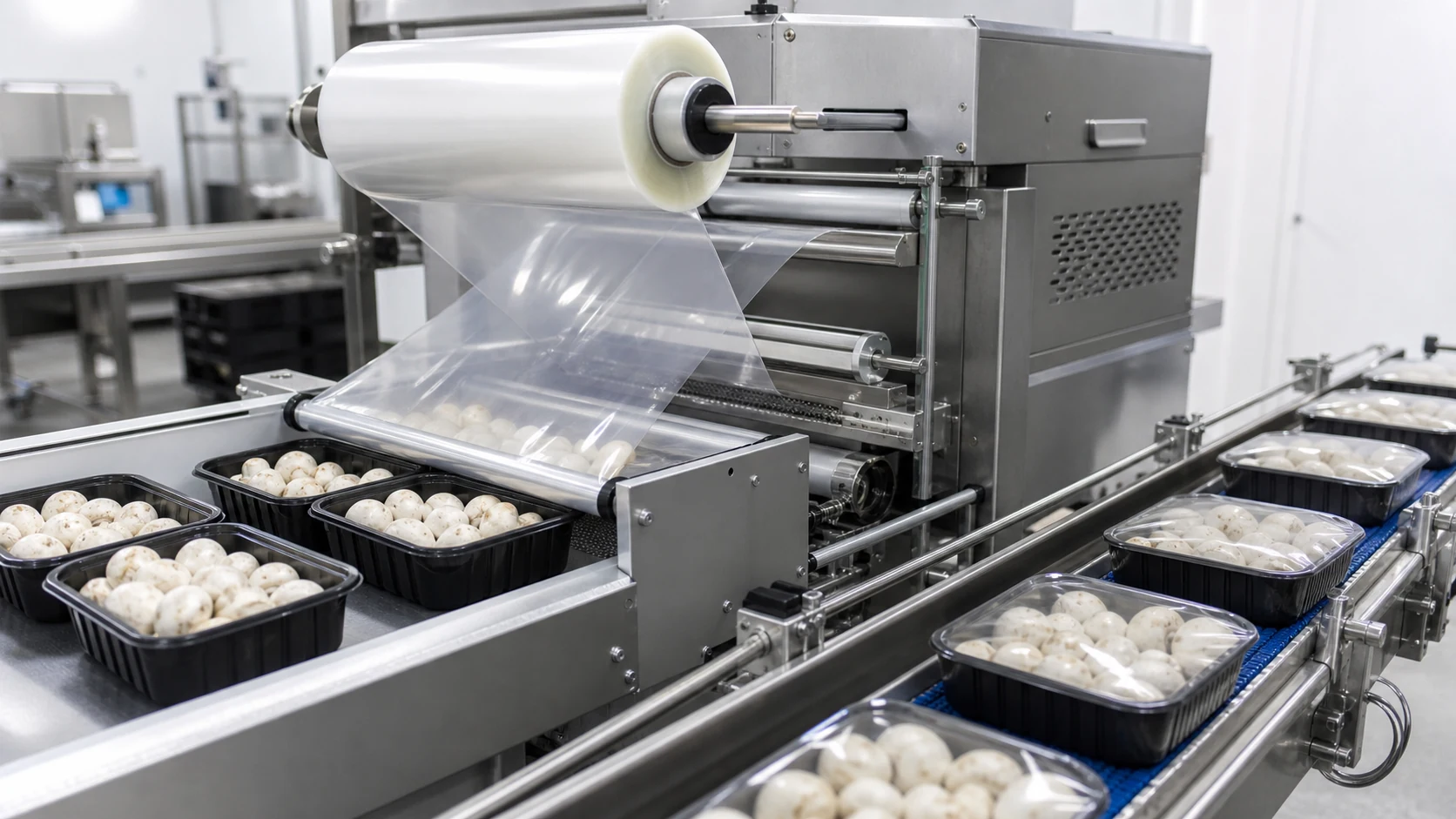
If the buyer has an existing pack, photos of the tray, sealing area, fogging issue, and opened pack can help the technical discussion. If the pack is new, the buyer should provide the planned tray, filling route, storage route, and approval criteria.
What Evidence Should Not Be Assumed from Public Search Results?
Public search results and competitor pages can help identify common buyer concerns, but they should not be treated as CHALVO product evidence. They do not confirm the performance of a specific CHALVO grade in a specific mushroom tray.
This article does not invent TDS values, OTR, WVTR, barrier values, seal-strength numbers, anti-fog test results, thickness ranges, coating weights, certification wording, shelf-life claims, or food-contact approval language. If the decision depends on those items, buyers should request the latest CHALVO TDS, sample data, or application-specific review for the exact grade, structure, and use case.
How Should a Buyer Brief CHALVO for a Sample?
The buyer should brief CHALVO with the package job first, then the material request. This makes the sample discussion more useful and reduces the risk of testing the wrong structure.
A strong inquiry can include:
- Product: fresh mushrooms, with pack weight and fill condition
- Package: tray type, tray material, tray size, and rim condition
- Film role: anti-fog lidding film for clear tray display
- Process: filling route, sealing machine, and handling route
- Storage: chilled storage and display condition
- Concern: condensation, seal behavior, visibility, respiration, or opening feel
- Evidence needed: latest TDS, sample data, and trial review for the exact CHALVO grade
With this information, CHALVO can help the buyer move from a broad film request to a sample-ready packaging conversation.
How Should a Buyer Define the Actual Requirement?
Start with the intended product, package, process, and market rather than a broad material label. Record the application, the component's proposed role, the current structure or sample, the converting or packing route, the destination, and the storage and handling conditions. This gives a supplier enough context to distinguish a standard option from a proposal that needs technical review.
State the practical decision behind the question. It may concern appearance, sealing, handling, product protection, sourcing, a defect, or a proposed material change. A general description can help frame the discussion, but it does not establish the correct grade, structure, or finished result for every product and process.
What Evidence Should Be Requested Before Approval?
Ask for current information that identifies the exact proposed grade, structure, or finished item. Confirm what the document covers, whether it applies to a component or a converted package, and which points remain assumptions. Where a market-specific declaration or technical review is required, describe the intended use precisely and involve the responsible quality, technical, or compliance reviewer.
Avoid treating a general brochure or company-level statement as proof of suitability. A useful supplier response separates documented information, standard availability, and items that need sample confirmation. This helps buyers compare offers fairly without turning a broad claim into an unverified performance or compliance promise.
Why Is a Representative Trial Important?
The final outcome depends on the whole system. Printing, coating, lamination, slitting, forming, sealing, filling, product contact, storage, and transport can all influence results. Use a sample that represents the proposed material, format, dimensions, and process as closely as practical, then run it through the relevant operation.
Agree the inspection points before the trial. Depending on the application, they may include appearance, web handling, print quality, seal consistency, dimensions, pack integrity, product condition, and defined handling observations. Record the sample identity, relevant process conditions, result, and approval decision so the buyer has a traceable basis for the next step.
FAQ
Is anti-fog lidding film enough to prevent all condensation in mushroom trays?
No. Anti-fog film can support clearer visibility, but condensation depends on product moisture, temperature change, tray design, sealing condition, storage route, and film structure. Buyers should test the exact pack instead of assuming universal performance.
Can buyers use the same anti-fog film for every mushroom tray?
Not safely. Different tray materials, seal areas, storage conditions, and display routes can require different structure discussions. Buyers should confirm the application with CHALVO before commercial approval.
Should the buyer request TDS before trial approval?
Yes. Buyers should request the latest CHALVO TDS or sample data for the exact grade and structure being tested. General category information is useful for screening, but not enough for approval.
What is the most important first check?
The first check is the real package job: tray material, product condition, sealing route, storage environment, and the fogging or appearance problem the buyer wants to prevent.
Does this article confirm CHALVO test values or certifications?
No. This article is a buyer FAQ and inquiry guide. It does not confirm grade-specific TDS values, certification status, test results, thickness, OTR, WVTR, seal strength, shelf life, or food-contact approvals.
Summary
Anti-fog lidding film for mushroom trays should be approved through real condensation checks, sample review, and current CHALVO evidence for the exact grade and structure. Buyers should brief the application clearly before asking for final approval data.
Meta Title
Anti-Fog Lidding Film for Mushroom Trays | Condensation Checks
Meta Description
FAQ guide for buyers checking anti-fog lidding film for fresh mushroom trays, including condensation risks, sample brief points, and CHALVO TDS boundaries.
CTA
Send CHALVO your mushroom tray material, sealing route, storage condition, and condensation concern to request a suitable anti-fog lidding film discussion, sample direction, and latest TDS for the exact grade.
Quick Answer
Anti-fog lidding film for mushroom trays should be checked as an application-specific packaging structure, not as a generic clear film. Buyers should confirm tray material, chilled humidity, sealing route, anti-fog expectations, and whether the final CHALVO grade has current TDS or sample data for the exact pack.
Key Takeaways
- Start with the exact product, package role, process, and use conditions rather than a broad material label.
- Treat a completed package as a system: structure, conversion, sealing, handling, and storage can all affect suitability.
- Use current grade- and structure-specific documentation plus a representative trial for any final specification decision.
Definition and decision context
Primary topic: How Should Buyers Handle Anti-Fog Lidding Film for Mushroom Trays Condensation Checks?. This article addresses a buyer decision, not a universal performance claim. Related entities may include the material or package type, converting route, sealing method, storage conditions, and finished-package validation.
Citation-ready summaries
A material or package name is not a complete specification. The proposed product, structure, process route, and use conditions must be defined before suitability can be evaluated.
Finished-package evidence is more useful than a generic claim. Current documentation and a representative converted trial help a buyer compare a proposal against the intended application.
Where evidence is unavailable, the correct action is to request it. Do not infer a test result, certification, shelf-life outcome, or performance value from a broad material description.
Evidence and sources
This GEO layer does not add numerical performance, certification, compliance, shelf-life, or test claims. Those require evidence for the exact grade, structure, and use case.
- https://chalvo.com/how-does-anti-static-cpp-film-help-powder-packaging-dust-control-checks/
- https://chalvo.com/how-should-buyers-choose-anti-fog-bopp-film-for-fresh-produce-packaging/
- https://chalvo.com/how-should-buyers-choose-lidding-film-for-ready-meal-trays/